Bradford S. Bell is the William J. Conaty Professor in Strategic Human Resources and Director of the Center for Advanced Human Resource Studies at Cornell University's ILR School. His academic career spans roles as editor of Personnel Psychology and fellowships with the Society for Industrial and Organizational Psychology and American Psychological Association. He holds a Ph.D. in Industrial and Organizational Psychology from Michigan State University. Education: B.A. Psychology, University of Maryland (College Park) M.A. and Ph.D. Industrial and Organizational Psychology, Michigan State University Research Focus: Dr. Bell's work centers on training/development, team dynamics, virtual work, and technology's impact on organizations. He has published widely in journals like Journal of Applied Psychology and Academy of Management Learning & Education , with over 150+ publications. His research emphasizes practical applications in workplace learning systems and team effectiveness. Awards: Early Career Achievement Award (Academy of Management HR Division, 2008) Professional Contributions: Advises organizations globally on HR strategy through the Center for Advanced Human Resource Studies. His consulting spans banking, manufacturing, and public sectors. Active in professional development, he teaches courses on HR management, training, and work teams.
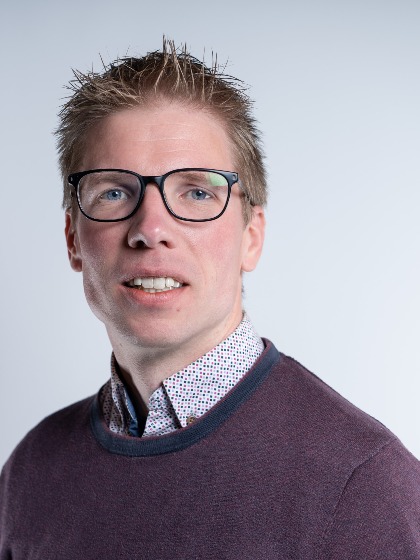
Thom de Vries is an Associate Professor at the University of Groningen's Faculty of Economics and Business, based in the HRM & Organizational Behavior department. He also serves as Program Director for the Master of Science in Human Resource Management and holds a lecturer position in Industrial Engineering Management. His expertise focuses on organizational resilience, team boundary spanning, and infrastructure management. He holds a Ph.D. in Business Administration (cum laude) from the University of Groningen (2015), with prior experience as a Business Researcher at TNO and academic leadership roles in program committees. Education highlights include: Ph.D. in Business Administration (cum laude), University of Groningen (2015) Res. M.A. and M.A. in Business Administration (cum laude), University of Groningen (2011, 2009) B.A. in Public Administration, Thorbecke Academie (2007) Research interests emphasize team dynamics in complex environments, particularly: Resilience and adaptability in critical infrastructure organizations Boundary spanning across teams/organizations Design of multiteam systems for complex tasks Disruption management in supply chains Notable projects include the NGinfra-funded ConCorCom initiative studying coordination during infrastructure challenges, and NWO grants exploring resilience and decision-making under uncertainty. His work has earned awards like the Academy of Management Best Paper Award and multiple teaching recognitions. Grants include: NGINFRA/NWO: ConCorCom (Context, Coordination, Competencies) NWO VENI: Team Boundary Spanning in Disruptions NWO: Resilience-Efficiency Balance in Planning Teaching roles span disciplines including Organizational Behavior, Survey Research, and Experimental Design across faculties. He actively supervises research master students and contributes to executive education programs.
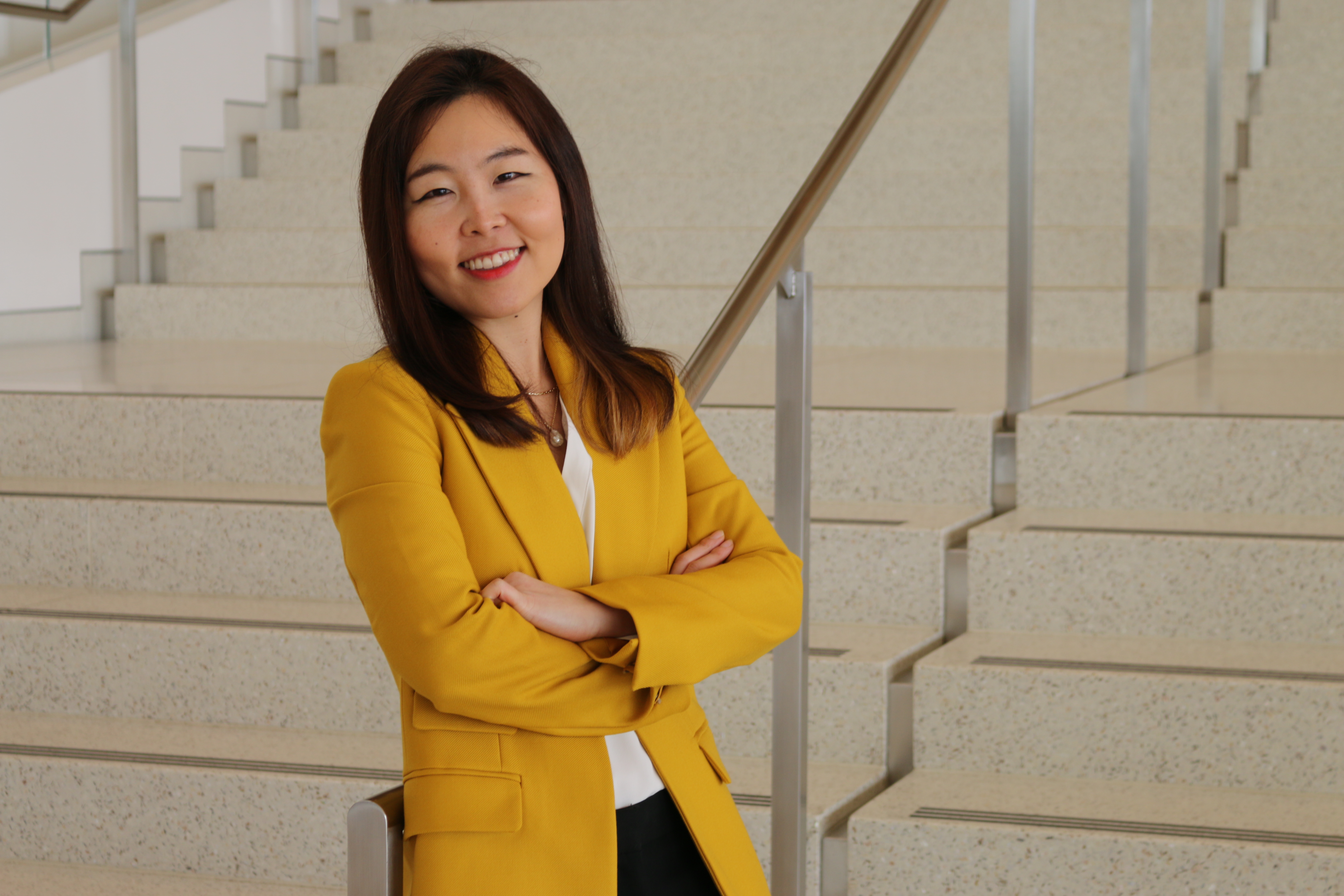
Semin Park is an Assistant Professor in the Management and Organization department at the Smeal College of Business, Pennsylvania State University. Her research focuses on relational dynamics within and between teams, employing a social network perspective to analyze longitudinal changes in work collectives across diverse contexts such as emergency response systems and organizational teams. Education: PhD in Management, University of Connecticut (2019) MSc in Management, Seoul National University (2013) BBA in Business Administration, Seoul National University (2011) Research Interests: Dr. Park investigates team dynamics using network analysis to explore conflict resolution, leadership transitions, and collective behavior. She emphasizes structural elements of multi-team systems, emergency response configurations, and the application of big data methods for organizational insights. Her work bridges theoretical frameworks with practical solutions for improving team performance and workplace safety. Publications Trends: Her most recent articles (2020–2024) emphasize network-based approaches to team conflict, leadership transitions in crises, and dynamic constructs in organizational settings. Earlier work (2012–2018) includes foundational studies on team creativity, peer evaluations, and historical evolution of work teams. Affiliations & Resources: She is affiliated with Penn State’s Smeal College and maintains an active Google Scholar profile. No grants or awards are explicitly listed in the provided texts.
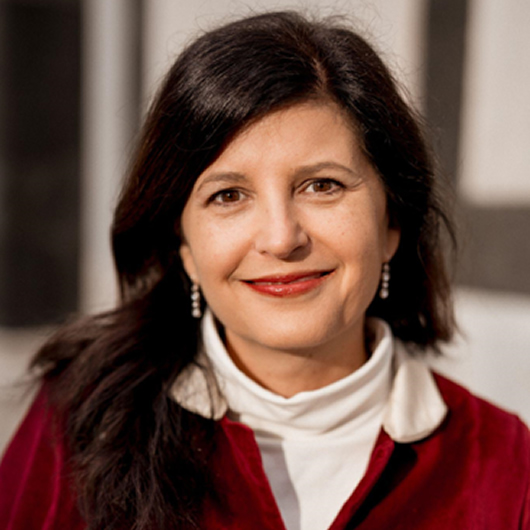
Leslie A. DeChurch is a Professor and Department Chair at Northwestern University's School of Communication. She holds courtesy appointments in Management & Organizations at the Kellogg School of Management and Psychology at Weinberg College of Arts & Sciences. Her research focuses on organizational leadership, teamwork, multiteam systems, and human-AI collaboration, with applications in space exploration, Renaissance leadership, and virtual teams. PhD in Organizational Psychology, Florida International University MS in Organizational Psychology, Florida International University BS in Communication, University of Miami DeChurch established the ATLAS lab (Advancing Teams, Leaders, and Systems) to study leadership and teamwork through experiments, meta-analyses, and field studies. Her work spans space missions (NASA), virtual organizational effectiveness (NSF CAREER award), and historical leadership in Renaissance Florence. Recent publications highlight team diversity, communication networks in extreme environments, and human-AI collaboration. Awards include Fellowships from APA, APS, and SIOP. She served as President of INGRoup and co-edited *Multiteam Systems: An Organization Form for Dynamic and Complex Environments*. 2024/2023 Sage Publishing Awards for leadership research NSF CAREER Grant (2011-2017) Editorial leadership and National Research Council committee roles Her courses include organizational leadership, team decision-making, and managing AI. She directs the immersive Leading a Renaissance program in Florence, Italy.
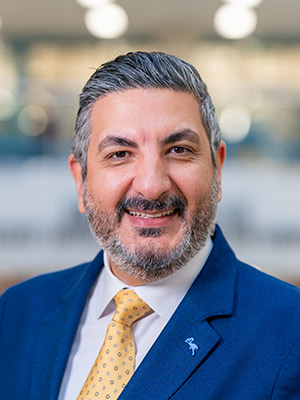
Dr. Farzan Sasangohar is an Associate Professor in the Department of Industrial & Systems Engineering at Texas A&M University, holding the Mike and Sugar Barnes Faculty Fellowship. He also serves as an Assistant Professor at Houston Methodist Hospital's Center for Outcomes Research and Department of Surgery. His academic roles include affiliations with the Environmental and Occupational Health, Biomedical Engineering, and multiple centers focused on health technologies and systems design. Education: PhD in Industrial Engineering (Human Factors Engineering), University of Toronto (2015) Research Interests: Human factors in healthcare delivery and telehealth systems Wearable technology for stress/health monitoring Crisis management team cognition and decision-making Remote patient monitoring systems Mental health self-management interventions Awards: Jack A. Kraft Innovator Award (HFES, 2023) Dr. Hamed K. Eldin Early Career Award (2022) William C. Howell Young Investigator Award (2021) TEES Young Faculty Fellow (2021) Nominated for Ergonomics Journal Best Paper (2021) Advising & Grants: Mentored over 15 graduate students including Dr. Mahnoosh Sadeghi (PhD 2023) Recipient of NSF PATHS-UP Engineering Research Center funding Active grants in offshore worker fatigue management and telehealth integration Labs/Teams: Director of the Applied Cognitive Ergonomics Lab (ACE-lab) , focusing on human-system interactions in healthcare, aviation, and disaster management. Current projects include: - Wearable stress monitoring systems - Telehealth integration frameworks - Crisis team cognition analysis
Alina Lungeanu is an Assistant Professor at Northeastern University, with dual appointments in the College of Arts, Media and Design (Communication Studies) and the D'Amore-McKim School of Business (Management and Organizational Development Group). She is a Core Member of the Network Science Institute (NetSI) and studies team dynamics in scientific collaborations and space exploration contexts. Research Interests : Team network configurations, cross-boundary collaboration, leadership structures, computational modeling, and extreme team performance in space missions. Grants : Funded by NASA, National Science Foundation (Award #1856090), and National Institute of General Medical Sciences (Award #1R01GM137410). Awards : Sage Publishers Award (2025). Article Trends : Focus on team composition in space analog missions, expertise diversity, shared mental models, network science methodologies, and multiteam systems in extreme environments. Her work bridges social science and network science, emphasizing innovation in interdisciplinary teams and NASA partnerships.
Prof. Dr. Julia Backmann is a Full Professor and Chair of Transformation of the World of Work at the University of Münster, where she also serves as Co-Director of the Research Center for Business Transformation in Times of Radical Change. Previously, she held positions as Assistant Professor at University College Dublin (2019–2022) and Ludwig Maximilian University of Munich (2014–2018). Her academic journey includes a habilitation (2021) on 'Leadership and Collaboration in Challenging Contexts' and a PhD summa cum laude (2014) from WHU – Otto Beisheim School of Management. Prior to academia, she worked as a consultant at Accenture. Her research focuses on collaboration, leadership resilience, organizational transformation, and the impact of emerging technologies like AI and virtual reality on work structures. Current projects include exploring the four-day workweek in Germany and adaptive strategies for companies in disruptive environments. Her work has been published in top journals such as the Academy of Management Journal and Organization Science . Teaching-wise, she designs MBA programs in Management & Innovation, Sports Management, and Nonprofit Governance, emphasizing interactive learning and critical thinking. Awards include Best Paper Awards, the 2021 Teaching Award, and recognition on UCD’s Dean’s List. Her research trends highlight themes like team boundary management, stress resilience in leadership, and the dynamics of technology adoption in healthcare. She investigates how organizational changes interact to create systemic challenges, and how cultural gaps affect multinational team performance. Awards include multiple Best Paper Awards, the 2021 Teaching Award, and inclusion in the Dean’s List at University College Dublin. Her work bridges academic theory with practical business transformation, addressing modern workplace challenges through interdisciplinary methods.
Amy Bartels serves as Associate Professor of Management in the College of Business at the University of Nebraska-Lincoln, where she teaches foundational and advanced Organizational Behavior courses including MNGT 360 and MNGT 960. Her academic journey reflects deep institutional roots, having earned all prior degrees at UNL before completing her Ph.D. at Arizona State University. Her educational background encompasses: Ph.D. in Management (Organizational Behavior), Arizona State University Juris Doctorate, University of Nebraska-Lincoln Master of Arts in Higher Educational Administration, University of Nebraska-Lincoln B.A. in History, University of Nebraska-Lincoln Dr. Bartels' research critically examines leadership dynamics across organizational levels, with particular focus on team interactions and the physiological-psychological impacts of workplace stress on employee well-being. Her multi-method approach bridges theoretical frameworks with practical organizational challenges, emphasizing how emotional labor and identity processes shape work outcomes. Analysis of her 15 most recent publications reveals consistent exploration of leader-follower reciprocity, stress spillover mechanisms, and well-being measurement. Key trends include developing psychometric tools for workplace flourishing, investigating emotional contagion in leadership exchanges, and analyzing how side-hustles create unexpected performance benefits in primary roles. Her work frequently appears in premier outlets like Academy of Management Journal and Journal of Applied Psychology . While specific details about student mentorship and research funding remain unreported in available materials, her publication trajectory indicates sustained scholarly productivity with increasing focus on practical applications of organizational behavior principles to contemporary workplace challenges.
Dr. Stephen J. Zaccaro is a Professor of Psychology at George Mason University, specializing in Industrial-Organizational and Military Psychology. His research focuses on leadership development, multiteam systems, cybersecurity team performance, and leader adaptability. He has authored over 125 publications and co-edited books on leadership, multiteam systems, and cybersecurity. He serves on editorial boards for journals like The Leadership Quarterly and is a Fellow of the Association for Psychological Science and APA Divisions 14 and 19. Dr. Zaccaro has directed funded projects on leadership training, cyber security incident response teams, and team performance. He has advised numerous graduate students and collaborates with private, public, and military sectors. His work integrates theoretical and applied perspectives, emphasizing practical implications for leadership and team effectiveness. His research interests include the psychosocial dynamics of cybersecurity, leader-team interfaces, and the development of adaptive leadership skills. He has contributed to frameworks for evaluating leadership coaching and multiteam system performance, with a focus on innovation, communication, and organizational agility. Key scientific awards include his Fellowships in the Association for Psychological Science and American Psychological Association. His work bridges academia and practice, addressing challenges in leadership development, team dynamics, and crisis response.
Dr. Katrina Graham is an Associate Professor of Management and Entrepreneurship and Director of the Management and Organizational Leadership program at Suffolk University's Sawyer Business School. She holds a PhD in Organizational Behavior from Drexel University, an M.S. in Human Resource Development from Villanova University, and a B.A. in History from the University of Virginia. Her research focuses on leadership dynamics, ethical decision-making, and workplace conflict, with publications in top journals like Academy of Management Journal and Journal of Applied Psychology . She serves on the editorial board of the Journal of Organizational Behavior . Her teaching specialties include organizational psychology, leadership, and managing difficult workplace interactions. She developed Suffolk's Managing Difficult People at Work course and teaches leadership and organizational behavior topics. Dr. Graham brings prior experience as a U.S. Air Force personnel officer and a consultant in the physical therapy industry, collaborating with organizations like Lockheed Martin on leadership programs. Her awards include the 2021 Sawyer Business School Outstanding Faculty Member and the 2015 Drexel University Outstanding Dissertation Award. Her recent work explores leadership duality in marketing contexts, abusive supervision dynamics, and multiteam system performance. She actively contributes to executive education workshops on difficult conversations and serves on the Suffolk Alumni Veterans Committee.
Margaret Luciano is an Associate Professor of Management & Organization at the Smeal College of Business, The Pennsylvania State University, and holds the BNY Mellon Faculty Fellowship. Previously, she served as an Associate Professor at Arizona State University’s W. P. Carey School of Business. Her expertise spans Team Dynamics, Multiteam Systems, Leadership, and Healthcare Management, with a focus on organizational behavior and complex system interactions. Dr. Luciano’s academic journey includes a Ph.D. in Management (Organizational Behavior) from the University of Connecticut (2015), an MBA in Leadership Research from Clark University (2010), and a BA in Psychology with a Management focus (2009). Her research emphasizes structural frameworks for multiteam coordination, virtual team collaboration, and healthcare leadership challenges. Her work investigates themes such as paradox management in virtual teams, surgical team performance dynamics, and institutional scaling of healthcare initiatives. Recent studies address intra-individual conflict in multiteam environments and the role of core/non-core roles in healthcare teams. Awarded the BNY Mellon Faculty Fellowship, her contributions bridge theoretical advancements in multiteam systems with practical applications in healthcare and emergency response leadership. Her publications explore topics ranging from computer-aided text analysis of team processes to adaptive leadership during task transitions in crises. While specific grant details and student advisees are not listed, her research portfolio highlights interdisciplinary collaboration and real-world organizational challenges. She actively engages with healthcare institutions like Emory Health System, demonstrating applied research impact.
Corinne Coen is an Associate Professor of Organizational Behavior at the Weatherhead School of Management, Case Western Reserve University. She joined the faculty in 2009 and has established herself as an expert in team dynamics, cooperative behavior, and complex systems within organizational contexts. Her work bridges theoretical organizational behavior with practical applications for enhancing team performance and cooperation. Dr. Coen's educational background includes: PhD in Business from University of Michigan Business School (2001) Master of Business Administration from University of Chicago Graduate School of Business (1987) Bachelor of Arts from University of Michigan, School of Literature, Science & Arts (1981) Professor Coen's research focuses on understanding why people cooperate in teams and how managers can foster greater cooperation. She investigates cooperative dynamics within teams, between teams, and designs team structures that elicit productive interdependence. As an expert in complex systems and emergence, she applies computational and simulation approaches to study organizational phenomena. Her work examines how simple interactions among individuals lead to complex group behaviors and outcomes, with particular attention to team problem-solving, resource allocation, and the effects of team structure on performance. Her extensive publication record reveals consistent themes in team cognition, cooperation dynamics, and complex systems approaches to organizational behavior. Over the past two decades, her research has evolved from examining basic cooperation mechanisms in social dilemmas to more complex investigations of multiteam systems, emergent properties in teams, and the application of computational modeling to organizational phenomena. Recent work emphasizes practical applications of team structure design to balance efficiency and diversity in problem-solving contexts. Dr. Coen has received numerous prestigious awards recognizing her contributions to research and teaching: Doctoral Teaching and Mentoring Award (2022, Weatherhead School of Management) Diekhoff Award for Best Graduate Mentor Nominee (2016, Case Western Reserve University) WSOM Undergraduate Teaching Award - First Runner Up (2016) Doctoral Teaching and Mentoring Award (2015) Emerging Impact Award (2014) Outstanding Leadership and Contribution Award (2008, Academy of Management) Lewis-Progressive Fellowship (2014, 2015) As an educator, Dr. Coen teaches courses including Developing Interpersonal Skills for Managers, Leading Organizations, Leading Teams through Interpersonal Relationships, and Research Methods. She has received multiple teaching awards recognizing her effectiveness in the classroom and her mentorship of doctoral students. Her service to the academic community includes committee work at Case Western Reserve University, editorial roles for academic journals, and panel participation for the National Science Foundation.
John Bunderson is a Professor at the Faculty of Economics and Business, specializing in Organisational Behaviour. His research focuses on team dynamics, knowledge diversity, and hierarchical structures, contributing to sustainable development goals related to poverty alleviation and global prosperity. Institution: Faculty of Economics and Business Research Areas: Organizational Behavior, Team Performance, Hierarchy Dynamics His work explores the impact of hierarchical stability on team performance, diversity management in multiteam systems, and status dynamics in role-differentiated teams. Recent publications address knowledge integration in hierarchical teams and boundary management challenges in complex organizational structures. Key findings from his research include: Stable hierarchies enhance knowledge diversity utilization Integrated pluralism mitigates parochialism in multiteam systems Status inertia affects member replacement processes
Stephanie M. L. Kunst is an Assistant Professor of Management at the Hankamer School of Business, Baylor University. Her research explores leader and follower behaviors in team contexts, focusing on influence, leadership status, and employee voice behavior's role in achieving positive group and individual outcomes. Education: PhD in Business Administration (Organizational Behavior and Human Resource Management) from Michigan State University; BA in Psychology from California State University – Fullerton. Her work examines: How leadership behaviors establish influence and status Leader effectiveness in shaping follower attitudes Employee voice dynamics and their organizational impacts Kunst's research appears in top-tier journals like Academy of Management Journal and Journal of Applied Psychology , addressing topics in leadership emergence, team dynamics, and social influence across male-dominated teams and innovation contexts. Contact: Stephanie_Kunst@baylor.edu | Office: Foster Business and Innovation 220.37, Waco, Texas
Jette Egelund Holgaard is an Associate Professor at the Department of Sustainability and Planning, Aalborg University, within The Technical Faculty of IT and Design. Her work focuses on Problem-Based Learning (PBL) methodologies, interdisciplinary collaboration, and sustainability integration in engineering education. She actively contributes to advancing educational frameworks that align with the UN Sustainable Development Goals (SDGs). Key affiliations: Aalborg Centre for Problem-Based Learning in Engineering Science and Sustainability, Institute for Advanced Study in PBL Research interests: Interdisciplinary PBL, learning outcomes, sustainability education, and employability in engineering Her recent publications analyze PBL pedagogy, interdisciplinary teamwork, and ethical integration in project design. These works are contextualized within engineering education, emphasizing global challenges and workforce readiness. Scientific award: IEEE Transactions on Education Theodore E. Batchman Best Paper Award (2024) She supervises PhD and Master’s students, collaborates on international projects (e.g., Lodz University of Technology, South East Asia-Europe plastic recycling networks), and consults on PBL implementation. Her work bridges academia and industry through practical problem-solving frameworks.