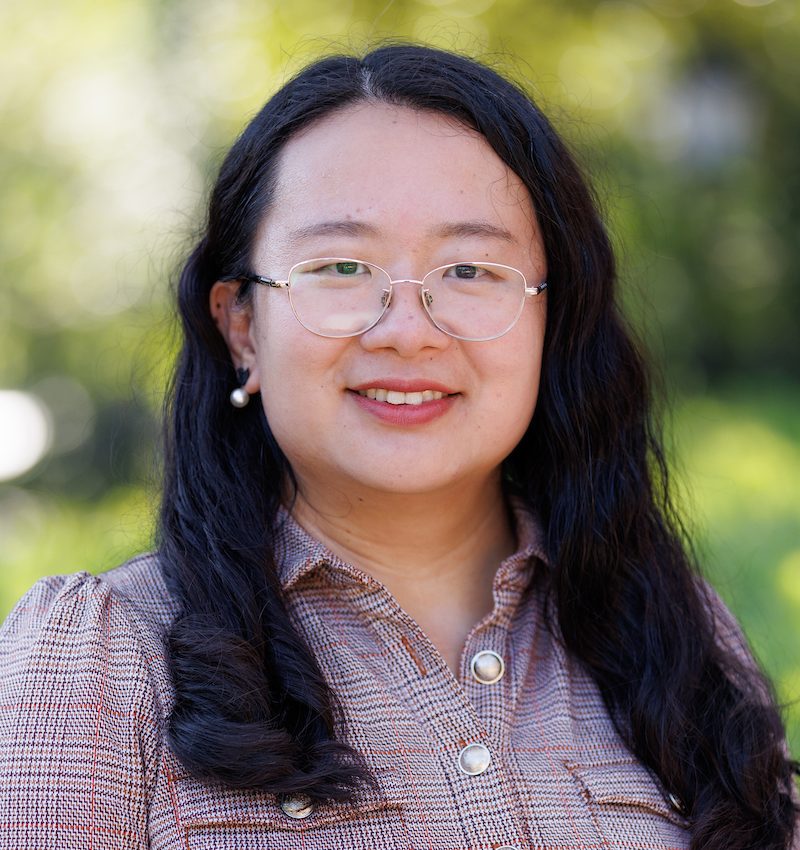
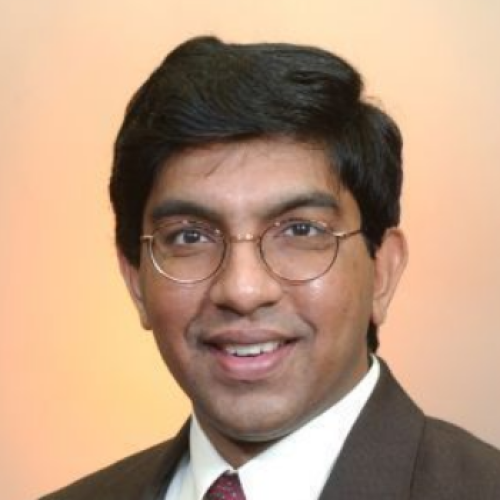
Prof. Dr. Mustafa Kucukislamoglu is a full professor at the Department of Chemistry , Faculty of Science , Sakarya University , Turkey. He has actively contributed to organic chemistry research, particularly in enzyme inhibition studies and natural compound synthesis, since the early 2000s. Research Interests: Synthesis of natural compounds (flavonoids, coumarins, anthocyanins) Structure-activity relationships (SAR) in enzyme inhibitors Carbonic anhydrase and tyrosinase inhibition mechanisms Solvent-free and green catalytic methods Phthalocyanine and Schiff base derivatives Adsorption of pollutants using bio-based materials Recent Publications focus on medicinally relevant heterocycles, anticancer agents, and Alzheimer's disease multitarget compounds. He has also supervised over 20 thesis projects, including doctoral and master's works on flavonoid synthesis, anthocyanin derivatives, and industrial catalyst applications.
Elham Fini is an Associate Professor at the School of Sustainable Engineering and the Built Environment at Arizona State University. She serves as a Senior Global Futures Scientist at the Global Institute of Sustainability and Innovation, Director of the Innovation Network for Materials, Methods and Management, and holds affiliations with the Center for Negative Carbon Emissions. Education: Ph.D. from University of Illinois-Urbana-Champaign Her research focuses on Built Environment and Health , Bio-based Materials , and Multi-scale Characterization , aiming to advance sustainable infrastructure through novel material design and environmental impact mitigation. She has published over 200 scholarly works and her research has been highlighted by BBC Women in STEM, Science Nation, and Wired Magazine. Recent publications analyze bio-based rejuvenators , waste plastic integration , and biochar applications in asphalt systems, addressing carbon management , pollutant adsorption , and asphalt durability . Her work bridges chemical engineering principles with civil infrastructure challenges. Scientific Awards: NSF CAREER award, ASEE Gerald Seeley award, BEYA Emerald STEM Innovation award, NC BioTech Research Excellence award, WTS Innovative Transportation Solution award Dr. Fini serves as editor for the ASCE Journal of Materials and the Journal of Resources, Conservation & Recycling. She previously held leadership roles as ASCE North Carolina Northern Branch president and NSF program director.
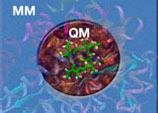
Hans Senn is a Lecturer in Theoretical & Computational Chemistry at the School of Chemistry, University of Glasgow. His research focuses on computational approaches to chemical reactions, particularly through combined quantum mechanics/molecular mechanics (QM/MM) methods. He leads a research group dedicated to understanding enzymatic reactions, transition-metal chemistry, and catalytic systems through advanced computational techniques. His research interests encompass computational studies of enzymatic reactions using QM/MM, computational transition-metal and organometallic chemistry including homogeneous catalysis, first-principles and QM/MM molecular dynamics, sampling techniques and free-energy calculations, and modeling of solvation effects. His work bridges theoretical chemistry with practical applications in biochemistry and materials science, with recent publications showing increased interdisciplinary collaboration across physical chemistry, biochemistry, and materials science domains. His recent publication trend reveals a strong focus on multiscale modeling approaches, with significant contributions to understanding enzymatic mechanisms, molecular vibrations in complex systems, and the development of computational tools for spectroscopic prediction. His work spans both fundamental theoretical developments and applications to biological and materials systems. Dr sc nat (ETH Zurich) MRSC As an educator, Senn serves as Head of Chemistry-1 and teaches advanced courses including Symmetry and Bonding (Chem-3) and Theoretical and Computational Chemistry (Chem-4). His research group actively collaborates across disciplines, with recent work involving teams in biophysics, materials science, and medicinal chemistry. He has presented at major conferences including Gordon Research Conferences and ACS National Meetings, demonstrating his active engagement with the international computational chemistry community.
Dr. Mario Milazzo is a researcher at the BioRobotics Institute of Sant'Anna School for Advanced Studies , with a current appointment at Massachusetts Institute of Technology (USA). His work bridges robotics, biomaterials, and computational modeling through interdisciplinary projects. He earned a PhD in BioRobotics (2016) from Sant'Anna School for Advanced Studies after completing his Mechanical Engineering degree at the University of Pisa (2010). Research Areas: Multiscale modeling, industrial robotics, biomaterials, and bioinspired design using deep learning. Industry Collaborations: Ge Oil&Gas, Brembo, Magneti Marelli, Piaggio. His recent publications highlight trends in industrial robotics (autonomous platforms, path planning, electro-hydraulic systems) and biomedical applications (bone regeneration, protein nanostructures, tympanic scaffolds). Key methodologies include sonification, molecular modeling, and AI-driven material design. Scientific Awards : Marie Skłodowska-Curie Individual Fellowships (MSCA-IF-GF) with MIT, University of Antwerp, Tufts, and University of Pisa He has co-authored 25+ international journal papers , 9 patents , and 24 conference contributions , while serving as a reviewer for 20+ journals and guest editor for Polymers (MDPI). His leadership roles in industry projects and symposium organization demonstrate his translational research focus.
Javier Llorca is a Professor in the Department of Materials Science at the Polytechnic University of Madrid and serves as Scientific Director of the Madrid Institute for Advanced Studies of Materials (IMDEA Materials Institute) since 2017. He has held leadership roles including Director of IMDEA (2007-2017) and Head of the research group on 'Advanced Structural Materials & Nanomaterials' since 2006. His academic career spans over 35 years at the same university, transitioning from Assistant to Associate to Full Professor. BEng & MEng in Civil Engineering, Polytechnic University of Madrid (1983) PhD in Materials Science, Polytechnic University of Madrid (1986) - Award to the best PhD Thesis Llorca specializes in Nanomechanics , Mechanics of advanced structural materials , and Computational materials engineering , with a focus on characterizing material behavior under extreme conditions. His research bridges experimental and numerical approaches to develop multiscale models for metallic materials and composites. His scientific achievements have been recognized through prestigious awards, including the Career Award from SOCIEMAT (2018), Gold Medal from the Spanish Society of Structural Integrity (2000), and fellowships from the European Mechanics Society (2012). He has also held visiting professorships at Brown University, the Indian Institute of Science, and Chinese universities.
Michael Gee is a Professor at Technische Universität München (TUM), specializing in Mechanics on High-Performance Computers. His research focuses on computational biomechanics, fluid-structure interaction, and patient-specific modeling of cardiovascular systems, particularly abdominal aortic aneurysms (AAAs). He employs advanced numerical methods like algebraic multigrid and mortar contact formulations to address complex biomechanical challenges. Recent work highlights include the development of digital twin technologies for endovascular repair, integration of artificial intelligence in vascular diagnostics, and multiscale modeling of atherosclerosis. His publications emphasize high-performance computing applications in cardiovascular disease modeling, medical device simulation, and rupture risk assessment. Institution: Technische Universität München Department: Mechanics on High-Performance Computers Contact: gee@tum.de
Dr. Benjamin Brands is a Research Fellow at the Department of Mechanical Engineering, Faculty of Engineering, Friedrich-Alexander University Erlangen-Nürnberg (FAU), specializing in computational mechanics and multiscale material modeling. He works under the Chair of Engineering Mechanics (LTM), led by Prof. Paul Steinmann. Core Research: Multi-scale, multi-physics modeling of magneto-sensitive polymeric materials and reduced-order modeling techniques. Technical Focus: Computational homogenization, finite element methods, and magneto-mechanical material analysis. Key Projects: Involved in the ERC-funded MOCOPOLY project (2012–2017), which explored process-microstructure-property relationships in smart materials. His publications span computational mechanics, material science, and advanced numerical methods, emphasizing magneto-sensitive polymers and multi-scale simulations. No scientific awards or student advisement details are explicitly mentioned.
MALLEJAC Matthieu is a researcher affiliated with the University of Bordeaux, focusing on physical acoustics and functional materials for acoustic applications. He is part of the GCE (Civil and Environmental Engineering) department, specifically contributing to research groups such as 3MAH (Multiscale Modeling and Behavior of Heterogeneous Materials) and the non-destructive evaluation (NDE) axis. Research Areas: Physical Acoustics, Functional Materials for Acoustics, Ultrasound, Material Characterization, Ultrasonic Imaging, and Multiscale Modeling of Heterogeneous Materials Projects: Involved in ANR, PEPR, CARNOT, and European projects related to material sustainability, fatigue, and structural reliability Labs: Collaborates with platforms like GHYGA (Geophysics, Hydrogeology, Geotechnics), CND (Non-Destructive Testing) labs, and advanced simulation clusters
Dimitrios Chronopoulos is an Associate Professor in the Department of Mechanical Engineering at KU Leuven , Faculty of Engineering Technology. His research focuses on structural health monitoring, design optimization of composite and metamaterial structures, and wave propagation analysis for damage prognosis. Unit: Mecha(tro)nic System Dynamics (LMSD), Ghent and Aalst Campuses Research Affiliations: Leuven Centre for Affordable Sustainable Technology, LIM - KU Leuven Institute for Mobility His work integrates physics-informed machine learning and computational modeling to address challenges in predictive maintenance of smart composite systems, including aircraft and wind turbine components. Recent projects emphasize digital twins, Bayesian frameworks, and ultrasonic sensor networks for real-time damage assessment. Publications highlight trends in deep learning for SHM , topological phononic crystals , and multi-scale damage detection using hybrid models. He actively supervises students in advanced ultrasonic monitoring and predictive analytics.
Dr. Mingfei Zhao is an Assistant Professor in the Department of Chemical and Biological Engineering at the University of Alabama's College of Engineering, having joined in August 2024. Her research employs multiscale computational modeling (atomistic to continuum) to design bioinspired nanomaterials, focusing on peptoid self-assembly for drug delivery and nanofabrication. Education: B.S. in Energy and Power Engineering, Shandong University (2012) M.S. in Power Engineering Thermodynamics, Shandong University (2015) Ph.D. in Mechanical Engineering, State University of New York at Binghamton (2019) Postdoctoral Training: Molecular Engineering, University of Chicago (2022) Postdoctoral Training: Theoretical Biology and Biophysics, Los Alamos National Laboratory (2024) Research Interests: Dr. Zhao specializes in computational design of biomaterials using machine learning, molecular dynamics, and high-performance computing. Key areas include peptoid nanostructures for biomedical applications, data-driven biopolymer design, and colloidal assembly. Her work bridges chemical engineering, biophysics, and nanomaterials science. Publication Trends: Recent articles (2021-2025) reveal a strong focus on multiscale simulations of biological systems—SARS-CoV-2 spike proteins, B cell receptors, and HIV fusion peptides—alongside methodological advances in coarse-grained force fields. Dominant themes include controllable peptoid self-assembly, viral infection mechanisms, and nanostructure stability. Awards: 2024: CoMSEF Postdoctoral Scholar Award (AIChE) 2022: FOMMS Early Career Researcher Award (U.S. DOE) 2018: Graduate Research Ambassador Award (Binghamton University) Affiliations: Dr. Zhao leads research at the Poly-SM Research Center, focusing on polymers and soft materials. Her lab develops computational tools for advanced nanomaterial design.
Professor Arvind Kumar is a distinguished faculty member in the Department of Mechanical Engineering at the Indian Institute of Technology Kanpur. His research focuses on additive manufacturing technologies, heat transfer and CFD modeling, manufacturing process modeling, solidification, thermal storage technologies, and laser/plasma surface coating technologies. Professor Kumar earned his PhD and M.Sc (Engg) from the Indian Institute of Science Bangalore in 2008 and 2003 respectively, and completed his B.Tech from NIFFT, Ranchi in 2001. His academic journey has established him as a leading researcher in advanced manufacturing processes. His research interests span metal additive manufacturing (including DfAM and AM process development), heat transfer and computational fluid dynamics, multiphysics and multiscale modeling of manufacturing processes, machine learning applications in manufacturing, droplet-surface interactions, and thermal energy storage systems. His work bridges the gap between theoretical modeling and practical industrial applications. Professor Kumar's publication record shows a strong focus on laser-based additive manufacturing, particularly with titanium and aluminum alloys. His research examines thermal modeling, solidification phenomena, defect formation, and process optimization. Recent work (2023-2024) has concentrated on high-fidelity modeling of laser-material interactions, lattice structure performance, and thermal management in additive manufacturing processes. H.A.L. Chair Professor Position, IIT Kanpur (2024-2027) Best Poster Award, 7th International Conference on Solidification Science and Processing (2018) Best Research Paper Award, 12th IIR Conference on Phase Change Material (2018) PK Kelkar Young Faculty Research Fellowship (2018-2021) Marie Curie Fellowship, University of Southampton, UK (2011-12) Professor Kumar leads multiple research projects funded by CSIR, SERB, ISRO, and EU-Indo collaborations. His research group operates the Manufacturing Science Lab in the Northern Laboratories at IIT Kanpur, focusing on experimental and computational analysis of advanced manufacturing processes. Current projects include additive manufacturing of aerospace components, development of thermal models for laser powder bed fusion, and innovative thermal energy storage systems.
Siddiqui Gohar Ali is a Researcher at the Technische Universität München (Technical University of Munich), affiliated with the TUM School of Computation, Information and Technology and the Associate Professorship of Simulation of Nanosystems for Energy Conversion led by Prof. Alessio Gagliardi. His work focuses on computational methods, machine learning, and energy conversion systems. Research Areas : Machine Learning, Multiscale Modelling, Energy Conversion, Electrocatalysis, Organic Solar Cells, Catalyst Modeling Teaching : Collaborates in lectures and seminars on computational nanoelectronics and quantum engineering Recent research highlights include applying machine learning to enhance metadynamics for drug interaction studies and optimizing configuration space sampling techniques. He is actively involved in projects under the DFG e-Conversion Cluster and EU-funded initiatives.
Dr. Emine Sümeyra Turalı-Emre is an Assistant Professor at the Institute of Biomedical Engineering, Bogazici University, where she joined in 2024. She combines expertise in nanotechnology, biomedical engineering, and data science to solve critical healthcare challenges. Previously, she was a Postdoctoral Research Fellow in Chemical Engineering at the University of Michigan (2021-2024) and completed her PhD in Biomedical Engineering from the same institution in 2021. Her educational background includes: PhD in Biomedical Engineering, University of Michigan, 2021 MSc in Biomedical Engineering, University of Michigan, 2015 BSc in Molecular Biology and Genetics, Istanbul University, 2008 Dr. Turalı-Emre's research focuses on engineering inorganic nanoparticles for applications such as drug and gene delivery, antibacterial and anticancer treatments, bone regeneration, and extracellular vesicle capturing for diagnostics. Her work spans chiral nanoparticles, antibacterial nanoparticles, extracellular vesicle capturing, AI-driven nanoparticle-protein interactions, drug and gene delivery systems, cancer therapies, and translational nanotechnology. She approaches biomedical challenges through multidisciplinary collaborations that bridge engineering, life sciences, and computer science. Her recent publications in leading journals like Advanced Materials, Matter, and PNAS demonstrate strong trends in chiral nanomaterials for diagnostics and therapeutics, antibacterial applications against biofilms and antibiotic-resistant bacteria, and the integration of artificial intelligence with nanotechnology. Her work shows a clear progression from fundamental nanoparticle synthesis to translational applications in healthcare. Scientific awards and recognitions include: BioInterfaces Research Community Innovator Award, 2024 Full Member, Sigma Xi, The Scientific Research Honor Society, 2024 Women in Science and Engineering, Cinda Sue Davis STEM Equity Leadership Award (Nominee), 2024 Women in Science and Engineering, Willie Hobbs Moore Achievement Award (Nominee), 2024 Selected Participant, AI in Science & Engineering Summer Academy, 2023 And several other prestigious awards and recognitions Dr. Turalı-Emre is actively involved in mentoring students and fostering interdisciplinary collaboration. She currently leads a TÜBİTAK-BİLGEM project developing an AI-driven database to optimize antibacterial nanoparticles for diagnostics and treatments, in collaboration with Dr. Betül Özateş from the Institute of Data Science and Artificial Intelligence. She has also contributed to Coulter Translational Research Partnership projects focused on extracellular vesicle capture, optimizing RNA isolation from biofilms, and developing antibacterial surfaces using chiral nanoparticles. Her laboratory provides a vibrant environment for undergraduate, graduate, and non-traditional students from various fields, including engineering, life sciences, and computer science, to conduct impactful research and contribute to transformative innovations in healthcare.
Professor Venkat Ganesan holds the Les and Sherri Stuewer Chair in Chemical Engineering at The University of Texas at Austin, where he conducts theoretical and computational research on advanced materials. He serves as a Co-Investigator for both GAP B (focusing on hydration in ion transport and separations) and GAP C (focusing on robust membrane manufacturing). His educational background includes a B. Tech. in Chemical Engineering from the Indian Institute of Technology, Madras (1995), followed by both M.S. and Ph.D. degrees in Chemical Engineering from MIT (1999), and postdoctoral training at the University of California, Santa Barbara (1999-2001). Professor Ganesan's research centers on the theoretical foundations of self-assembled advanced materials, employing a multiscale approach that bridges molecular details with macroscopic properties. His work spans polymer physics, complex fluids, and biological systems with applications in water purification, energy storage, and biophysics. Through his Ganesan Polymer Physics Group, he utilizes molecular simulations to address challenges in membrane science and ion transport. His publication record reveals a strong focus on polymer dynamics, interfacial phenomena, and theoretical modeling of complex materials. Over time, his research has evolved from fundamental polymer physics toward applications in membrane technology and water purification systems, reflecting increasing emphasis on practical solutions to global challenges. John H. Dillon Medal, American Physical Society (2009) Alfred P. Sloan Foundation Fellow (2004-2006) NSF Career Award (2004-2009) Professor Ganesan maintains an active research group with numerous graduate students and postdoctoral researchers. His students have pursued diverse career paths including academic postdoctoral positions, industry research roles at companies like Tokyo Electron, and consulting positions. He collaborates extensively with experimental groups at UT Austin and institutions worldwide including UCSB, Berkeley, MIT, Rice University, and international partners in France, Germany, and India. His laboratory focuses on molecular simulations for water purification membranes, ion separations, and polymer electrolytes, with strong connections to the MWET center and industrial applications.
Dr. Arun Nair serves as an Associate Professor of Aerospace Engineering at the Air Force Institute of Technology (AFIT), contributing to graduate education and research in advanced aerospace systems. His academic foundation includes: Ph.D. in Engineering Science and Mechanics from Virginia Tech Postdoctoral training at the Massachusetts Institute of Technology (MIT) His research program centers on multiscale computational modeling of materials and wave mechanics , employing advanced simulation techniques to analyze material behavior across atomic to macroscopic scales and wave propagation phenomena in complex media. This work bridges computational science, solid mechanics, and aerospace engineering with applications in next-generation material design. No scientific awards were documented in the available source material. Information regarding graduate student mentorship and research funding sources was not provided in the profile. Details about research laboratories or collaborative teams were not included in the extracted content.