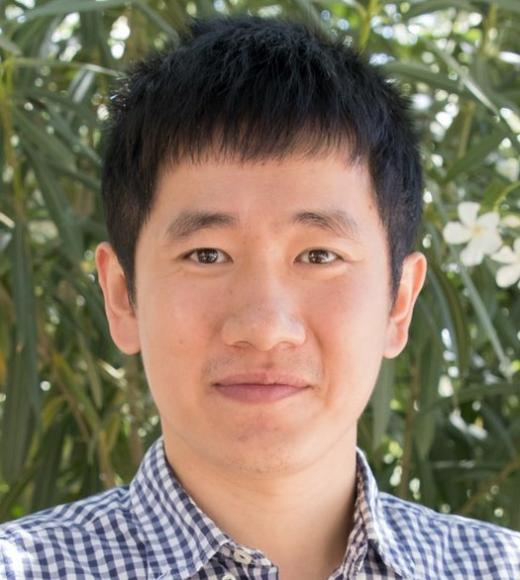
James Hubbard Jr. is Professor and Oscar S. Wyatt, Jr. '45 Chair I Professor at Texas A&M University's College of Engineering, Department of Mechanical Engineering. He holds a Ph.D., M.S., and B.S. from MIT and serves as Director of the RELLIS Starlab Facility. Research focuses on adaptive structures, morphing aircraft, drone control systems, and human-machine interfaces. Key areas include real-time shape control of aerospace systems and quantum decision-making for human-robot teaming. Awards include the ASME Adaptive Structures Award (2022), National Academy of Inventors Fellowship (2021), and SPIE Lifetime Achievement Award (2016).
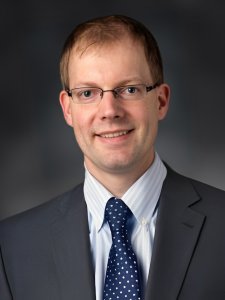
Dr. Nick Bojdo is a Senior Lecturer in Mechanical and Aerospace Engineering at The University of Manchester, affiliated with the School of MACE. He specializes in particle-fluid flow modeling, gas turbine degradation, and filtration systems. He holds roles including Manchester Branch Chair of the Royal Aeronautical Society and has led numerous industry-collaborative projects. Education: MEng in Aerospace Engineering (2008) PhD in Aerospace Engineering (completed 2011) EPSRC Doctoral Prize recipient (2012) Research Interests: Gas turbine durability under mineral dust/volcanic ash exposure CFD-driven design of filtration systems Reduced-order modeling for propulsion systems Recent Research Trends: Focus on thermal barrier coating delamination, additive-based engine protection, and multirotor aerodynamic interference. His work bridges experimental validation and computational simulation. Prizes: RAeS Written Paper Prize 2012 - Bronze RAeS Written Paper Prize 2021 - Silver UK VFS Award (2023) Advising & Grants: Supervises over 12 PhD students in areas like CMAS melt inhibition and rotorcraft performance. Leads projects such as ANTIFOD (Foreign Object Debris Removal) and MACE Aerodynamics. Labs & Teams: Active in the Modelling and Simulation Centre and Aerospace Research Institute, collaborating with industry partners on gas turbine durability solutions.
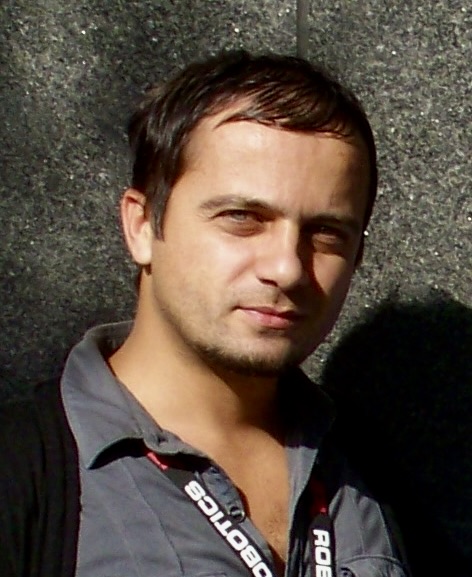
Ramon Sarrate Estruch is a Professor at the Universitat Politècnica de Catalunya (UPC), affiliated with the Escola Superior d'Enginyeries Industrial, Aeroespacial i Audiovisual de Terrassa (ESEIAAT) and the Department of Systems Engineering and Automation. His professional category is 'Professor Agregat,' reflecting his senior academic role. He leads research in the SIC (Sistemes Intel·ligents de Control) and CS2AC-UPC (Supervision, Safety and Automatic Control) groups, focusing on advanced control systems, fault diagnosis, and automation. His educational background includes a degree in Industrial Engineering and a Doctorate in Industrial Engineering from UPC. He has consistently contributed to academic projects and collaborations, evidenced by over 159 documented activities, including research projects, conference presentations, and publications in peer-reviewed journals such as Engineering Applications of Artificial Intelligence and International Journal of Applied Mathematics and Computer Science. Ramón's research interests revolve around fault-tolerant control, model predictive control (MPC), and reliability-aware systems. He has pioneered work in actuator fault estimation, LPV system control, and health-aware frameworks for critical infrastructure. His work emphasizes practical applications in industries like aerospace (UAV systems) and energy (gas turbines). Notable projects include coordination of autonomous vehicles, health management for UAVs, and safety-critical control systems. His contributions span 30+ years, with impactful publications from 1993 to 2024. He collaborates extensively with peers like F. Nejjari, V. Puig, and J. Quevedo, driving advancements in supervision, safety, and automatic control.
Prof. Francesco Ferracuti is a Researcher at the Department of Information Engineering (Università Politecnica delle Marche, Ancona, Italy). His work focuses on advanced control systems, robotics, brain-computer interfaces, and energy management. Key research themes include fault-tolerant control, autonomous navigation, and human-machine interaction through wearable sensors. Research interests span across: Control Engineering (MIMO systems, PID control, Model Predictive Control) Robotics (mobile robotics, UAVs, smart wheelchairs) Neuroengineering (EEG-based BCI, cognitive workload assessment) Energy Systems (renewable integration, home energy management) Data-Driven Methods (machine learning, system identification) Publications emphasize innovative solutions like EEG-driven obstacle avoidance and thermal stress monitoring for smart wheelchairs, demonstrating interdisciplinary approaches combining robotics with biometrics. His work on fault detection in multirotors and energy optimization algorithms highlights practical applications in both industrial and healthcare domains. Current projects include the E-MOTIVE initiative for mobility solutions via affective computing and BCI. His lab develops cutting-edge algorithms for cyber-physical systems security and predictive maintenance in industrial equipment.
Jesus Pestana Puerta is a researcher at the Institute of Computer Graphics and Vision (ICG) within the Faculty of Computer Science and Biomedical Engineering at TU Graz. He holds a PhD in Automation and Robotics from the Technical University of Madrid (UPM). With over 10 years of experience, he specializes in Aerial Robotics, focusing on vision-based solutions for drone navigation, obstacle avoidance, and autonomous systems. His work bridges research and industry, including prototypes for delivery drones (Post AG) and inventory management systems. Key projects include Overview Obstacle Maps for safe drone navigation and Micro Aerial Projector for stabilized aerial displays. Research interests span visual-inertial odometry, GPS-denied navigation, and technology transfer. He has contributed to robotics competitions (IC CEA, IMAV, IARC) and published extensively in journals like Journal of Field Robotics and conferences such as IROS. His recent work explores cloud-based navigation systems, AI for waste sorting, and automotive embedded systems optimization. Collaborations include startups and industrial partners, emphasizing practical applications of robotics. He has supervised projects in sensor degradation detection, redundant systems, and UAV lifecycle monitoring. His contributions are documented in over 50 publications, with a focus on advancing drone autonomy and real-world deployment.
Dr. Lecturer İnci Umakoglu is an Assistant Professor at the Faculty of Engineering , Kütahya Dumlupınar University . She holds a PhD in Electrical-Electronics Engineering from the same university and has been a Research Assistant in multiple laboratories since 2015, including Analog & Digital Communications, Measurement & Circuit, and Logic Design. Her research focuses on Wireless Communication Systems (NOMA, OTFS modulation) Antenna Design for 5G and beyond UAV-assisted network architectures IoT device security protocols She has led and advised numerous student research projects in avionics, telemetry, and low-altitude defense systems under the TÜBİTAK 2209-A and Scientific Research Project (BAP) programs. Recent publications highlight her work in deep learning for signal detection , LoRa-based telemetry systems , and IoT security methods , with a strong emphasis on practical implementations in 5G and UAV technologies. She is an active member of IEEE and the Applied Computational Electromagnetics Society (ACES) .
Fikret Çalışkan serves as a Professor in the Department of Control and Automation Engineering at Istanbul Technical University. With an h-index of 15 and 55 research outputs documented through Scopus, his academic career spans multiple decades of contributions to control systems engineering. His research profile shows consistent publication activity from 1995 through projected 2025 works, with significant output in recent years. Professor Çalışkan's research focuses on advanced control systems with particular expertise in Kalman filtering techniques , fault detection and isolation , and autonomous aircraft systems . His fingerprint analysis reveals strong specialization in actuator systems (80%), Kalman filters (100%), and multiple fault detection methodologies (47-53%). His work bridges theoretical control engineering with practical applications in UAV technology, indoor positioning systems, and aircraft propulsion. Analysis of his recent publications shows a clear trajectory toward increasingly complex autonomous systems, with growing integration of machine learning techniques (particularly reinforcement learning) with traditional control methodologies. His work demonstrates strong interdisciplinary connections between aerospace engineering, robotics, and signal processing, with applications spanning from indoor navigation to hybrid-electric aircraft propulsion. Professor Çalışkan has supervised 15 research projects throughout his career, securing funding for significant research initiatives including AI-based visual inspection systems for aircraft surfaces (2020-2022) and nonlinear multirotor modeling, fault detection, and implementation (2018-2021). His research demonstrates strong industry relevance with practical applications in aviation safety, autonomous systems, and energy-efficient control solutions.
Xinfan Lin is an Associate Professor in the Department of Mechanical and Aerospace Engineering at the University of California Davis, part of the College of Engineering. His research focuses on dynamic system modeling, diagnostics, and control, with a particular emphasis on machine learning, data analytics, and control-integrated design optimization. His work addresses applications in intelligent battery management systems, electric vehicles, unmanned aerial systems (UAS), electric-vertical-takeoff and landing (eVTOL) aircraft, and spacecraft. He leads the Lin Research Lab, which combines multi-physical domain knowledge, control theories, and machine learning to advance transportation and aerospace technologies. Lin has received the NSF CAREER Award and was elected as an IEEE Senior Member. His research interests include battery electrochemical dynamics, system-level estimation and control, and energy systems optimization. He has contributed to advancing methodologies for battery health monitoring, energy-efficient UAV mission planning, and hybrid physics-based machine learning models. Key applications of his work include improving battery management for electric vehicles, optimizing multirotor drone efficiency, and enhancing aerospace systems through integrated system modeling. His recent publications highlight advancements in energy-optimal trajectory planning, reinforcement learning for battery diagnostics, and lightweight electrochemical modeling techniques.
Marcela Mera Trujillo serves as Assistant Professor in the Department of Computer and Information Systems within the Herbert W. Boyer School of Natural Sciences, Mathematics and Computing at Saint Vincent College. She holds a Ph.D. in Computer Science from West Virginia University (2023), complemented by a Certificate in University Teaching and Master's degree in Mathematics. Education: Ph.D. in Computer Science, West Virginia University Certificate in University Teaching, West Virginia University M.S. in Mathematics, West Virginia University B.S. in Engineering Physics, University of Cauca, Colombia Research Interests: Her work bridges computer vision (interest point detection for hybrid camera systems, image-based 3D reconstruction) and robotics (UAV coordination, scene compression for localization) with STEM education innovations. She develops pedagogical strategies integrating robotics and hands-on programming to broaden participation in computing and enhance learning outcomes. Publication Trends: Publications from 2016-2023 reveal dual expertise in technical computer vision/robotics (fisheye-perspective image processing, multirotor 3D mapping) and educational research (online software engineering curricula). Recent work emphasizes interdisciplinary applications of emerging technologies in academic settings. Scientific Awards: No awards listed. Advising and Grants: No specific student advising relationships or research funding details are documented in available materials.
Agus Ismail Hasan is a Professor of Cyber-Physical Systems at the Department of ICT and Natural Sciences, Norwegian University of Science and Technology (NTNU), with a focus on Digital Twin , Autonomous Systems , and System Dynamics . His academic journey began with a BSc in Mathematics from Bandung Institute of Technology and a PhD in Control Systems from NTNU. His research spans interdisciplinary domains, integrating Control Theory , Machine Learning , and Industrial Applications to address challenges in autonomous vehicles , renewable energy systems , and public health modeling . Recent publications highlight advancements in Digital Twin fault diagnosis, Secure State Estimation for cyberattacks, and Marine Robotics optimization. Scientific contributions include the ASME Best Paper Award in Mechatronics (2015) and leadership roles in IEEE Technical Committee on Aerial Robotics and IFAC Technical Committee on Distributed Parameter Systems . His work bridges theoretical control systems with real-world implementations in maritime autonomy , wind energy , and epidemiological modeling .
Dr. Sven Schmitz is a Professor of Aerospace Engineering at Penn State University, affiliated with the Integrated Energy Systems theme at the Institute for Energy and the Environment (IEE). His research focuses on aerodynamics, wind energy systems, and rotorcraft aeromechanics. Key projects include optimizing wind turbine performance during ice storms and analyzing helicopter rotor hub flows using scaled models in the Garfield Thomas Water Tunnel. He leads efforts in floating offshore wind turbine technologies and mitigation of aviation contrail impacts on climate. Affiliations: Penn State Aerospace Engineering, IEE Faculty Member, Vertical Flight Society contributor Education: Promoted to Professor (2022), with prior academic milestones including a 2021 Atherton Teaching Award Research interests span computational fluid dynamics (CFD), rotor design optimization, and machine learning applications in multirotor performance prediction. Notable contributions include resolving century-old wind turbine equations and advancing coaxial rotor dynamics for urban air mobility. Awards include the 2024 Vertical Flight Society Technical Paper Award and leadership in the 2019 DOE Collegiate Wind Competition. His work bridges academia and industry through collaborations like the Penn State Vertical Lift Research Center of Excellence. Grants/Projects: Multi-Disciplinary Approach to Climate Impacts of Contrails, Next-Gen Floating Offshore Wind Turbines Labs: Applied Research Lab (ARL), Garfield Thomas Water Tunnel
Prof. Adnan Tahirovic is a Professor in the Department of Automatic Control at the University of Sarajevo's Faculty of Electrical Engineering. He leads the Lab for Cooperative Artificial Intelligence and Advanced Control Systems. His academic background includes a PhD from Politecnico di Milano and research stints at Imperial College London, NASA-JPL, and Caltech. Education: M.Sc. (Control Theory, 2006) and Ph.D. (Information Technology, 2011). His research focuses on nonlinear control, multi-agent systems, mobile robotics, computational neuroscience, and AI. Key projects include MORUS (NATO-funded maritime security), AeroSTREAM (EU-funded autonomous aerial systems), and MARBLE (blue economy robotics). Research Interests: Nonlinear systems, optimal control, multi-agent reinforcement learning, motion planning in robotics, and AI applications in medicine. His work addresses the curse-of-dimensionality in optimal control, yielding breakthroughs in nonlinear systems and multi-agent coordination. Publications: Over 30 journal/conference papers, including IEEE Transactions and high-impact robotics conferences. Books include works on MPC-based mobile vehicle navigation and motion planning algorithms. Awards: Silver Plaque award, Microsoft Azure Research Award, DAAD Fellowship, and Golden Plaque for academic excellence. He has supervised over 40 master’s/PhD students, many advancing to prestigious institutions. Labs/Teams: Directs the Cooperative AI & Control Lab, collaborating with institutions like Imperial College London and University of Zagreb. Current projects span maritime robotics, blue economy applications, and computational neuroscience modeling.
Micah Corah is an Assistant Professor of Computer Science at the Colorado School of Mines, directing the Navigation, Aerial-robots, and Perception Planning Laboratory (NAPPLab). His research focuses on aerial robotics, multi-robot systems, and active perception with applications in autonomous exploration, infrastructure inspection, and search and rescue. He holds a PhD in Robotics from Carnegie Mellon University (2020), and completed postdoctoral work at CMU’s AirLab and NASA’s Jet Propulsion Laboratory (JPL). His work emphasizes scalable algorithms for multi-robot coordination, submodular optimization, and perception planning in challenging environments. Education: PhD (2020) and MS (2017) in Robotics from Carnegie Mellon University; BS in Computer Science and Mechanical Engineering from Rensselaer Polytechnic Institute (2015). Research interests include: Multi-robot coordination and distributed planning Aerial robotics and autonomous filming Active perception and sensor optimization Subterranean and 3D environment exploration Applications in search and rescue, infrastructure inspection, and cinematography His recent publications highlight advancements in multi-drone view planning, coordinated motion capture for dynamic scenes, and resilient submodular maximization for large-scale systems. Micah actively mentors students in Computer Science, Robotics, and Mechanical Engineering, emphasizing both theoretical and experimental research.
Dimitra Soulioti is a Senior Lecturer in Materials Engineering at Sheffield Hallam University's Department of Engineering and Mathematics. She holds a PhD in Materials Engineering from the University of Ioannina and a Civil Engineering degree from Aristotle University of Thessaloniki. She joined SHU in 2014 as an Associate Lecturer and became Senior Lecturer in 2021. Her research focuses on mechanical behavior of structural and composite materials using destructive and non-destructive methodologies. Current projects include advanced lightweight composites for structural applications and non-destructive monitoring of advanced materials. Teaching areas: Aerospace Engineering Automotive Engineering Materials Engineering Sustainable Engineering Railway Engineering She has published 26 papers with over 1400 citations and is a Fellow of the Higher Education Academy since 2018.
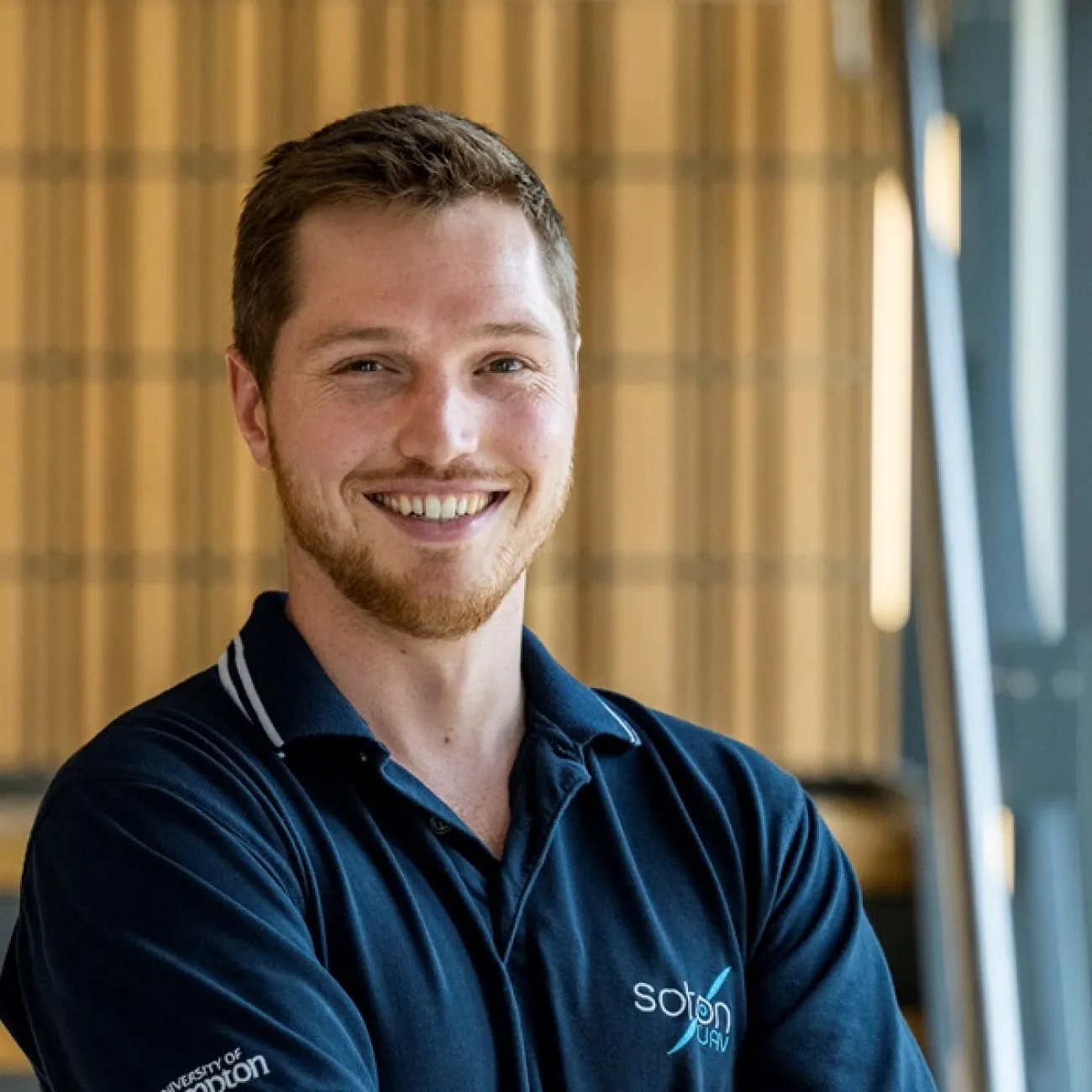
Dr Bob Entwistle serves as Principal Enterprise Fellow at the University of Southampton, affiliated with the Soton UAV research group. He specializes in advanced aerospace engineering with a focus on unmanned aerial vehicle (UAV) systems. His work spans aerodynamic performance optimization, electric vertical takeoff and landing (VTOL) systems, and noise modeling for UAV applications. He contributes to the Solent Future Transport Zone (FTZ) research initiative alongside senior academics like Professors John Preston and Tim Waters. His current projects include the CASCADE Open Aircraft Project, developing innovative VTOL drone technologies. Research interests emphasize practical aerospace applications, combining theoretical aerodynamics with experimental validation. Key areas include motor-rotor geometry optimization for electric propulsion systems, noise reduction strategies, and hybrid fixed-wing/VTOL configurations. Recent publications (2021-2023) focus on UAV wing performance, noise modeling, and electric propulsion systems. Collaborators include Mario Ferraro and Oliver Westcott from the Southampton aerospace team.


.png)