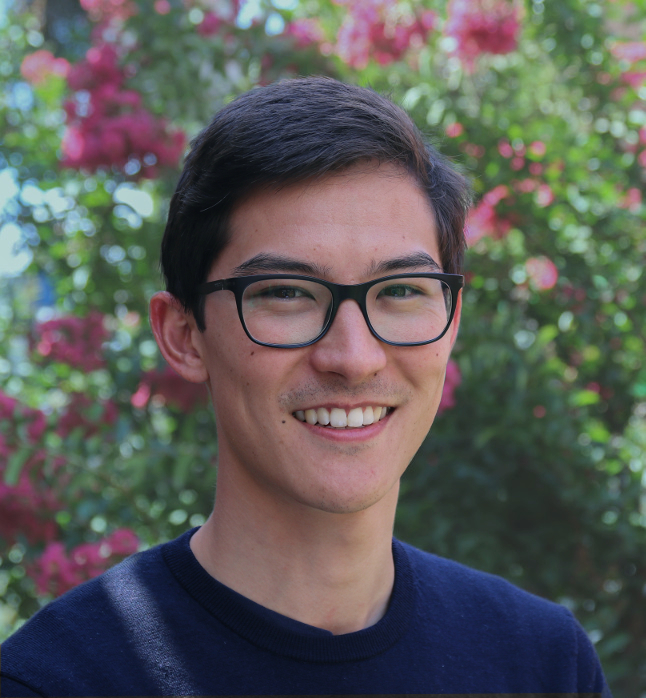
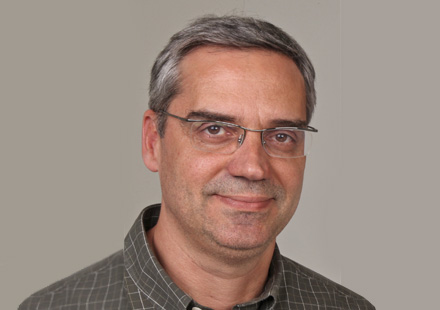
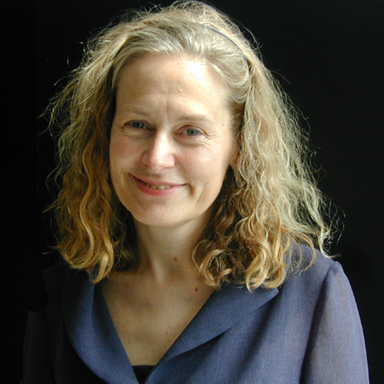
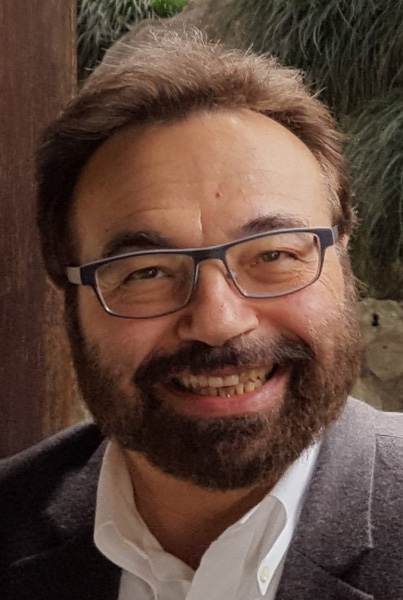
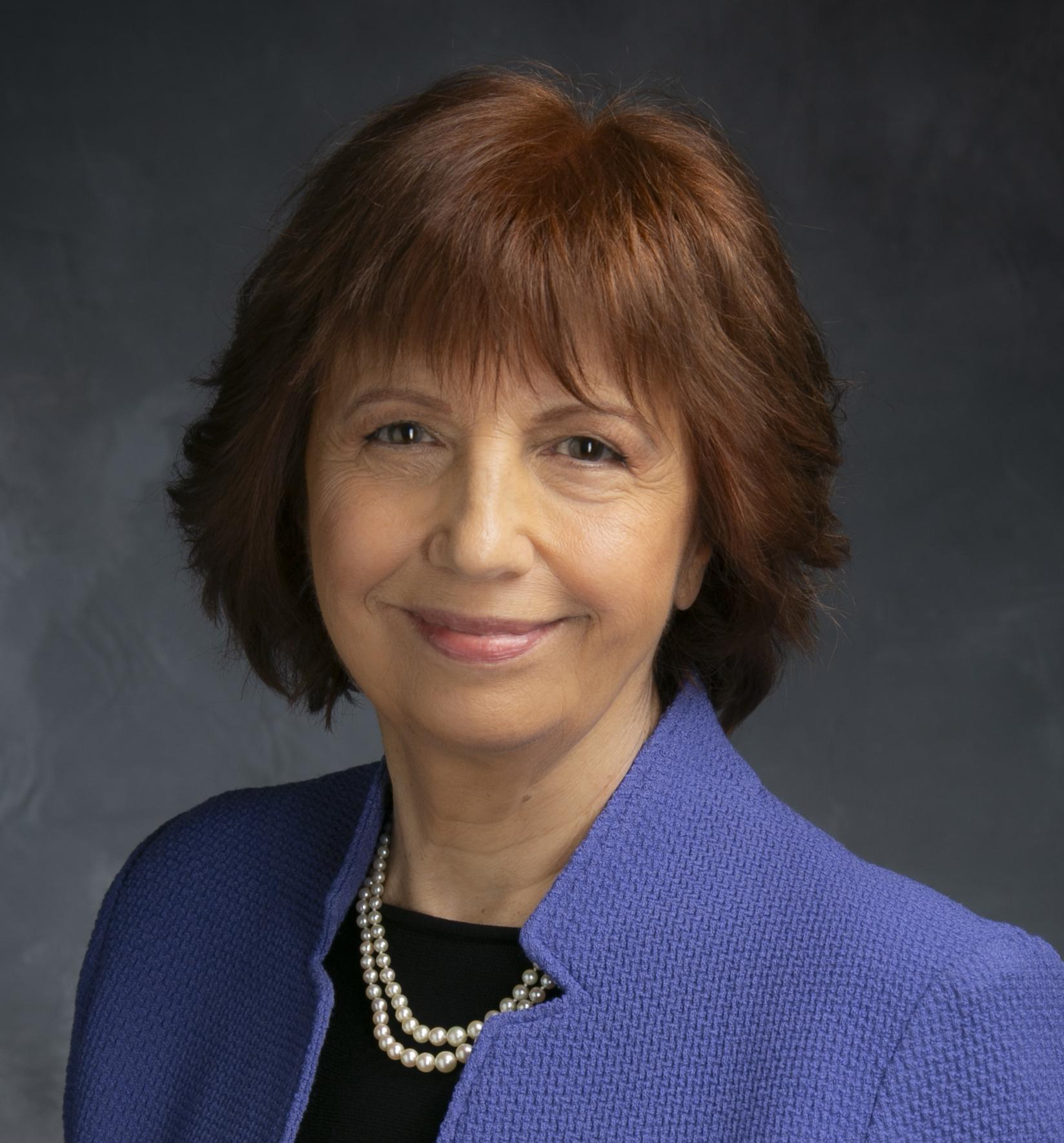
Associate Professor Vic Ciesielski is affiliated with RMIT University's School of Computing Technologies. His research focuses on Artificial Intelligence, Evolutionary Computing, Computer Vision, and Genetic Programming, with applications in areas like robot soccer and aesthetic analysis of images. He has supervised projects including efficient neural architecture search and off-line handwritten text recognition. His work bridges computational techniques with creative fields such as art history and digital media. Key research interests include machine learning, data management, and graphics/augmented reality. He actively contributes to conferences like GECCO and IJCNN, publishing on topics ranging from neural architecture optimization to sensor-based activity recognition. His research often integrates evolutionary algorithms with deep learning methodologies. He can be contacted via vic.ciesielski@rmit.edu.au and has an ORCID identifier: 0000-0001-7273-9566 .
Prof. Dr. sc. techn. ETH Oliver Staadt is Full Professor of Computer Science and Chair of Visual Computing at the University of Rostock , Germany. Since 2023 he also serves as Director of the Institute for Visual and Analytic Computing within the Faculty of Computer Science and Electrical Engineering . Previously he was Dean (2016–2018) and Vice Dean (2010–2016) of the same faculty. Education Ph.D. in Computer Science, ETH Zürich (2001) M.Sc. in Computer Science, TU Darmstadt (1994) Research Interests Prof. Staadt’s research spans virtual and augmented reality , computer graphics , visualization , telepresence , immersive analytics , and human–computer interaction . A particular focus lies on real-time rendering and display technologies for large high-resolution display systems, depth-image enhancement for RGB-D sensors, and interaction techniques that leverage spatial cognition and eye-tracking. His work is frequently applied to collaborative settings and microgravity environments, including experiments aboard parabolic flights and the International Space Station. Recent Publication Trends Between 2019 and 2021 his output centers on foveated rendering , AR viewpoint guidance , collaborative analytics on wall-sized displays , and embodied interaction metaphors . Earlier work addressed bandwidth-efficient telepresence, depth-image filtering, and physically-based animation. The corpus reveals a steady evolution from fundamental graphics algorithms toward applied immersive systems. Scientific Awards & Honors Fellow of the Eurographics Association Associate Editor, IEEE Transactions on Visualization and Computer Graphics (past) Associate Editor, Computers & Graphics (past) Associate Editor, Computer Animation and Virtual Worlds (past) Associate Editor, Frontiers in Virtual Reality (current) Chair, Expert Group on Virtual & Augmented Reality, German Informatics Society (2013–2020) Advising & Funding He has successfully supervised more than ten PhD graduates whose dissertations range from collision detection and physically-based animation to 3D interaction in microgravity and predictive user modeling. Current PhD researchers include Bipul Mohanto, Mana Takhsha, and Sven Kluge. His projects are supported by national and EU programs such as EVOCATION, SMOOTH, ARGuide, 3DPick, DIVA, and Telepresence. Labs & Teams Prof. Staadt leads the Visual Computing Group at Rostock, operating state-of-the-art facilities including large tiled display walls, VR/AR laboratories, and motion-capture systems. The institute hosts interdisciplinary collaborations with partners in visualization, computer vision, psychology, and aerospace engineering.
Samuel Kou is the Chair of the Department of Statistics and a Professor of Biostatistics at Harvard University. He holds dual affiliations with the Harvard T.H. Chan School of Public Health and the Department of Statistics, Faculty of Arts and Sciences. With a Ph.D. in Statistics from Stanford University (2001), he has held academic positions at Harvard since 2001, advancing from Assistant Professor (2001–2005) to John L. Loeb Associate Professor (2005–2008), and ultimately Professor (2008–present). His research focuses on stochastic inference in biophysics, Bayesian modeling, nonparametric methods, and Monte Carlo techniques, with applications in single-molecule biophysics, financial modeling, and big data analytics. Notable contributions include the development of the equi-energy sampler and foundational work on stochastic networks in nanoscale biophysics. Publications span high-impact journals like the Journal of the American Statistical Association and Biometrika, with a consistent emphasis on bridging statistical theory and real-world applications in biology and finance. His work often integrates computational methods to address complex systems at the molecular and macroeconomic scales. Administratively, he oversees the Department of Statistics and collaborates across interdisciplinary initiatives. His educational background includes a B.S. in Computational Mathematics from Peking University (1997) and an M.S. in Statistics from Stanford (2000).
Matthew K. Tam is an Associate Professor at the School of Mathematics and Statistics, The University of Melbourne, specializing in Operations Research. He is also an investigator at the Melbourne Centre for Data Science and an associate investigator in the ARC Training Centre OPTIMA. PhD in Mathematics (2016) from University of Newcastle under Jonathan Borwein Postdoctoral research at University of Göttingen with RTG-2088 and Alexander von Humboldt Foundation Junior Professor at University of Göttingen (2017-2020) His research focuses on continuous optimization, monotone operator theory, and variational analysis, with applications in wavelet construction and inverse problems. Key trends include distributed algorithms, resolvent splitting, and convergence analysis for feasibility problems. Discovery Early Career Researcher Award (DECRA) Alexander von Humboldt Fellowship He collaborates with institutions like ANZIAM, Springer, and IEEE, with publications spanning mathematical optimization, harmonic analysis, and computational mathematics. His work emphasizes algorithmic design for complex data systems and real-world applications in imaging and industrial modeling.
Stavros Sintos is an Assistant Professor in the Department of Computer Science at the University of Illinois at Chicago (UIC). He joined UIC after a postdoctoral fellowship at the University of Chicago, where he was part of the ChiData group under Sanjay Krishnan. He earned his Ph.D. in Computer Science from Duke University in 2020, advised by Pankaj K. Agarwal. His research focuses on designing efficient algorithms for databases, data mining, and computational geometry . Key themes include: Theoretical guarantees for practical problems Compact indexing structures for query efficiency Geometric optimization combined with database systems Fairness in algorithmic design (e.g., Fair Set Cover, FairHash) Temporal data analysis and dynamic query processing Notable scientific contributions include a Best Paper Award at ICDT 2024 for work on range entropy queries. His publications span top venues like SIGMOD, PODS, VLDB, and SODA, covering areas such as clustering algorithms, synthetic query witnesses, and temporal join optimizations.
Herb Winful is a Professor of Optics at the University of Michigan's College of Engineering, Department of Electrical and Computer Engineering. He specializes in nonlinear optics, laser physics, quantum tunneling , and photonics , with a focus on phenomena like superluminal group velocities, frequency comb generation, and light storage via stimulated Brillouin scattering. Research areas span quantum tunneling times , nonlinear photonic materials , and coherent beam combining in fiber laser arrays. His work includes frequency comb spectroscopy using quantum-well diode lasers, ultrafast erbium fiber lasers , and negative group delay engineering in birefringent waveguides. The article list reveals expertise in supercontinuum generation , evanescent wave dynamics , photonic crystals , and nonlinear pulse manipulation . Key subfields include stimulated Brillouin/Raman scattering , parabolic similaritons , and time-domain modeling of optical systems. Award-winning scientific contributions include resolving the Hartman effect paradox and optimizing fiber laser arrays for high-power applications. His research bridges theoretical insights with practical innovations in optical engineering and quantum optics .
Giuseppe Vecchi is a Full Professor at the Department of Electronics and Telecommunications (DET) of Politecnico di Torino , Italy. He leads the Applied Electromagnetics research group and contributes to projects in computational electromagnetics, metamaterials, and biomedical applications of electromagnetic fields. He has been a IEEE Fellow since 2010 and serves on PhD college committees for Electrical, Electronic, and Communications Engineering. Research Interests : Antennas, Applied and Computational Electromagnetics, Metamaterials, Microwave Imaging for medical applications, Nuclear Fusion Reactor Physics. Scientific Leadership : Principal Investigator for projects like METEOR, MTSA, and RESOLVED-K, focusing on terahertz generation, metasurface antennas, and real-time temperature mapping in hyperthermia. Awards : IEEE Fellow (2010), recognizing his contributions to electromagnetic simulations and antenna design. Students : Supervises PhD candidates in advanced antenna engineering, computational electromagnetics, and biomedical applications, including Owais Khan, Francesco Lattanzio, and Sara Paknezhad Panahi. Patents : Holds multiple patents in antenna diagnostics, encrypted metasurface antennas, and microwave soil disinfection systems.
Angelo Freni is an Associate Professor of Electromagnetism at the University of Florence with a primary focus on antenna design, microwave engineering, and terahertz imaging. His work spans theoretical and applied electromagnetism, including numerical methods for electromagnetic simulation, beamforming, and microwave component optimization. His most recent research includes: 2017: Simultaneous generation of pseudo-Bessel vortex modes with RLSA antennas 2017: THz imaging using uncooled wideband direct detection focal plane arrays 2017: Near-field focusing by non-diffracting Bessel beams Earlier work emphasizes microwave propagation modeling, reflectarray design, and tropospheric interference analysis. Key collaborations include researchers such as M. Albani, P. De Vita, and G. Vecchi.
Waldemar Celes Filho is an Associate Professor in the Department of Computer Science at Pontifical Catholic University of Rio de Janeiro (PUC-Rio) and serves as Director of the Tecgraf Institute/PUC-Rio. With a career spanning over three decades, he has established himself as a leading researcher in computer graphics and scientific visualization. His educational background includes a Civil Engineering degree from UFRJ (1986), a Master's in Civil Engineering from PUC-Rio (1990), a Doctorate in Computer Science from PUC-Rio (1995), and postdoctoral studies in Computer Graphics at Cornell University (1995-1997). Dr. Celes Filho's research focuses primarily on Computer Graphics with special emphasis on Scientific Visualization, Numerical Simulation, Distributed Visualization, and Real-Time Rendering. He is particularly known for his work on visualization techniques for black oil reservoir models and as a co-creator of the Lua programming language. His research has resulted in over 50 publications spanning nearly three decades, with consistent output continuing through 2025. His recent publications demonstrate a strong trend toward applying advanced visualization techniques to complex industrial problems, particularly in petroleum engineering and construction informatics. His work bridges theoretical computer graphics with practical applications in engineering domains, showing particular strength in volume rendering, CAD model visualization, and distributed rendering systems. As Director of the Tecgraf Institute, he leads research initiatives that connect academic work with industry applications, fostering collaborations that translate visualization research into practical tools. Dr. Celes Filho has mentored numerous students who have become co-authors on his publications, including Paulo Ivson, Fábio Markus Miranda, and Lucas Caracas de Figueiredo, among others. His work continues to be influential in both academic and industrial settings.
Marie Farge is a distinguished French mathematician and physicist currently serving as Directrice de Recherche 1ère classe at the French National Center for Scientific Research (CNRS) since 2008. She maintains strong affiliations with École Normale Supérieure in Paris where she has been based since 1981, and teaches at multiple institutions including Institut des Etudes Politiques (IEP) in Paris since 2011. Her extensive academic career includes visiting positions at prestigious institutions worldwide including Cambridge University, Harvard University, and the Max Planck Institute. Dr. Farge's research focuses on the intersection of mathematics and physics, with particular emphasis on wavelets , turbulence , and computational fluid dynamics . Her pioneering work has established wavelet analysis as a fundamental tool for studying turbulent flows and extracting coherent structures. She has developed the Coherent Vortex Simulation (CVS) method, which has become influential in turbulence modeling. Her research spans theoretical mathematics, numerical methods, and practical applications in fluid dynamics and plasma physics. Analysis of her publication record reveals a consistent focus on applying wavelet transforms to fluid dynamics problems, with increasing sophistication in handling three-dimensional turbulence and plasma phenomena. Her work demonstrates a progression from theoretical foundations of wavelet analysis to practical computational methods for complex fluid systems. The interdisciplinary nature of her research bridges mathematics, physics, and engineering applications. Prix Poncelet from the French Academy of Sciences (1993) American Physical Society Gallery of Fluid Motion award (1990) Seymour Cray Award for Scientific Computing (1988) Ministry of Foreign Affairs of Japan Award (1985) Fulbright Fellowship at Harvard University (1981) ESRO Award (1971) Elected member of Academia Europaea (2005) Grand Prix du CNRS 'La Recherche en Action' (1989) As an educator, Dr. Farge has taught extensively across France and internationally at institutions including Stanford University, Cambridge University, and numerous European and Asian universities. She has served on the editorial boards of major journals including the Journal of Applied and Computational Harmonic Analysis since 1993 and has been active in the Ethics Committee of CNRS since 2007. Her teaching spans wavelet theory, computational physics, turbulence, and signal processing, reflecting the breadth of her expertise. Dr. Farge maintains active research collaborations worldwide, evidenced by her numerous visiting positions at leading research centers including the Center for Turbulence Research at Stanford University, the Newton Institute in Cambridge, and the Institute for Advanced Study in Princeton. Her work continues to influence both theoretical developments in wavelet analysis and practical applications in fluid dynamics and related fields.
Georgios B. Giannakis is a Full Professor, Endowed Chair, and Presidential Chair in the Department of Electrical and Computer Engineering at the University of Minnesota since 1999. He directs the Digital Technology Center and has held academic roles at the University of Virginia (1987-1999) and USC (1982-1986). His research spans Data Science, Wireless Communications, Network Science, and Statistical Signal Processing , with applications to IoT and power systems. Diploma in Electrical Engineering, NTUA (1981) MSc in Electrical Engineering, USC (1983) MSc in Mathematics, USC (1986) PhD in Electrical Engineering, USC (1986) His publications (470+ journals, 770+ conferences, 34 patents) focus on fading channel modeling, UWB localization, blind signal estimation, and cross-layer wireless design . Articles emphasize multicarrier systems, time-varying channels, and ultra-wideband communication , with citations exceeding 76,000 (H-index 145). Scientific Awards : EURASIP 'Athanasios Papoulis' Society Award (2020) IEEE Fourier Technical Field Award (2015) Gugliermo Marconi Prize Paper Award (2003) 9 Best Journal Paper Awards (IEEE/SPS & ComSoc) IEEE SPS Technical Achievement Award (2001) He has mentored over 50 PhD students and 25 postdocs, served IEEE as Distinguished Lecturer, and contributed to Greek university accreditation panels. His work bridges theoretical signal processing and practical communication systems .
Hari Sundar is an Associate Professor in the Department of Computer Science at Tufts University, holding the Ada Lovelace Associate Professorship. Previously, he served as an Associate Professor at the Kahlert School of Computing, University of Utah. His research focuses on developing parallel algorithms for computational sciences and high-performance computing, addressing challenges in biosciences, geophysics, computational fluid dynamics, and computational relativity. He leads efforts in adaptive mesh refinement, geometric multigrid methods, and scalable scientific computing frameworks like Dendro-GR for numerical relativity. Education: Ph.D. in Computer Science from the University of Pennsylvania (2009), and a Bachelor of Engineering from the University of Delhi (2000). Postdoctoral work at the Oden Institute, University of Texas at Austin. Research Interests: Parallel algorithms, high-performance computing architectures, computational relativity (binary black hole simulations), multiphase flow modeling, and domain-specific languages for scientific computing. His work emphasizes scalability and efficiency on modern supercomputers. Key Contributions: Development of the Dendro-GR platform for gravitational wave simulations, scalable PDE solvers, and GPU-optimized algorithms for phonon transport and genomic sequence alignment. His recent work includes advancements in gravitational waveform modeling for LISA space missions and thermodynamically consistent two-phase flow simulations. Grants & Collaborations: Active in NSF-funded projects on computational relativity, multiphase flow algorithms, and scalable PDE solvers. Collaborates across disciplines in astrophysics, materials science, and bioinformatics.
Leila De Floriani is a Professor at the University of Maryland, with appointments in the Department of Geographical Sciences and the University of Maryland Institute for Advanced Computer Studies (UMIACS). She previously served as a professor at the University of Genova (Italy) since 1990, where she developed Italy's first undergraduate and graduate curricula in computer graphics and directed the Ph.D. program in Computer Science for eight years. Her professional activities include serving as the 2020 President of the IEEE Computer Society and currently as IEEE Division VIII Director for 2023-24. Professor De Floriani's research spans geometric modeling, data visualization, spatial data representation and processing, computer graphics, shape analysis, and topological data analysis. Her work focuses on developing mathematical models and algorithms for representing, analyzing, and visualizing complex spatial data, particularly through hierarchical models, mesh-based representations, and topology-based approaches. Her research group, the GeoVis group, investigates applications in terrain modeling, environmental data analysis, and forest structure mapping using LiDAR technology. Analysis of her recent publications reveals a strong focus on terrain representation and processing, with increasing emphasis on topological data analysis, machine learning integration, and efficient algorithms for large-scale spatial data. Her work bridges theoretical foundations in computational topology with practical applications in geospatial sciences, demonstrating consistent innovation in data structures and visualization techniques. Scientific Awards & Recognitions Fellow of IEEE (2016) for contributions to geometric modeling and scientific visualization Fellow of International Association for Pattern Recognition (IAPR) (1998) for contributions to geometric modeling and image analysis Fellow of Eurographics Association (2020) for outstanding contributions to computer graphics and visualization Pioneer of Solid Modeling Association (2017) for seminal work in solid and feature-based modeling Inducted Member of IEEE Visualization Academy (2020) IEEE Computer Society Golden Medal Award (2018) Inducted Member of IEEE Honor Society Eta Kappa Nu (2019) Multiple best paper awards at major conferences including Shape Modeling International (2015), IEEE/EG Symposium on Volume and Point-Based Graphics (2008), and ACM SIGSPATIAL (2008) Professor De Floriani has successfully advised numerous PhD students including Xin Xu, Yunting Song, and Noel Dyer, whose recent dissertations focused on topology-based individual tree mapping, efficient terrain analysis, and bathymetric data visualization respectively. Her research has been funded by prestigious agencies including the National Science Foundation, NASA, and the European Commission. As the leader of the UMD GeoVis group, she oversees a research program that develops open-source tools for spatial data analysis available on GitHub, with current projects focusing on forest point cloud processing and topology-based geospatial data visualization. The GeoVis group, affiliated with the Department of Geographical Sciences, UMIACS, and the Center for Geospatial Information Sciences, maintains a strong collaborative environment with ongoing projects in geometric modeling, spatial data structures, topology-based machine learning, and mesh-based terrain modeling. The group has received recent funding from NASA's HPOSS program for developing an open-source library for forest point cloud processing based on topological data analysis.
Luca Frediani is a Professor in Theoretical and Computational Chemistry at the Hylleraas Center, Department of Chemistry, UiT The Arctic University of Norway. His research focuses on advanced quantum chemistry methods, including density functional theory, multiwavelet basis sets, and solvation modeling. He actively develops computational tools like MRChem and VAMPyR for molecular electronic structure calculations. Current affiliation: UiT The Arctic University of Norway Research group: Theoretical and Computational Chemistry Teaching: KJE-2001 Theoretical Chemistry and Spectroscopy His work spans relativistic quantum chemistry, numerical methods for response properties, and benchmarking of basis set limits. Publications emphasize eliminating basis set errors, multiwavelet applications, and polarizable continuum models for solvation. He collaborates extensively on software development for quantum chemistry. Recent articles highlight multiwavelet-based DFT at the basis set limit, noise-tolerant force calculations, and relativistic effects in electronic structure. Sub-fields include scalar relativity, cavity-free solvation, and metal-ligand interaction accuracy.
Professor Dino Sejdinovic is a faculty member in the School of Computer and Mathematical Sciences at the University of Adelaide, part of the Faculty of Sciences, Engineering and Technology. Previously, he held positions as Lecturer and Associate Professor at the University of Oxford's Department of Statistics (2014–2022). His academic qualifications include a PhD in Electrical and Electronic Engineering from the University of Bristol (2009) and a Diplom in Mathematics and Theoretical Computer Science from the University of Sarajevo (2006). His research focuses on the intersection of statistical methodology and machine learning, encompassing large-scale nonparametric methods, robust machine learning, multiresolution data fusion, and measures of dependence. He has contributed to kernel methods, Bayesian inference, causal discovery, and applications in climate science, quantum computing, and social science data analysis. Education: PhD in Electrical and Electronic Engineering, University of Bristol (2009) Diplom in Mathematics and Theoretical Computer Science, University of Sarajevo (2006) Sejdinovic's work emphasizes bridging theoretical foundations with practical applications, such as cloud type classification using vision transformers and machine learning-driven quantum device optimization. His recent publications explore topics like kernel-based causal inference, Bayesian neural networks, and uncertainty quantification in statistical models. Advising and grants: Eligible to supervise Masters and PhD students in machine learning and statistics, though specific grants or student advisees are not explicitly listed in the provided texts.