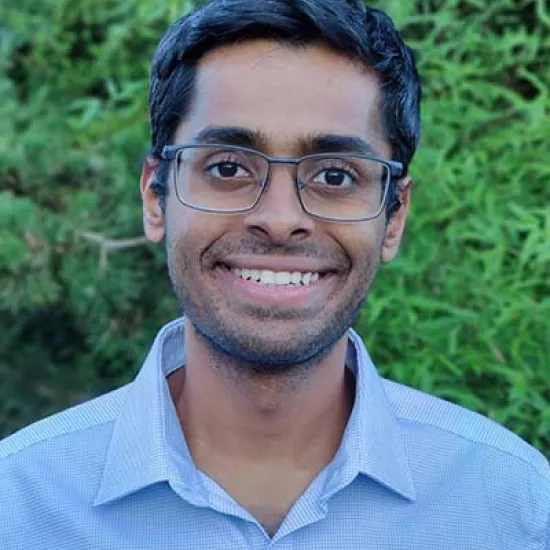
Soraya Laribi is a Lecturer at the National Institute of Oriental Languages and Civilizations (INALCO) specializing in Berber history and societies. She holds a doctorate in contemporary history with qualifications for a master's degree in section 22 of the CNU (National University Council). Her academic career spans multiple French institutions including Paris 8-Sorbonne and Paris IV-Sorbonne, where she has taught courses on colonial history, decolonization, and North African societies. Dr. Laribi's research focuses on the history of disappearances during the Algerian War (1954-1962) and its aftermath, with particular attention to the mystery surrounding missing persons after the Evian Accords. Her work examines forced disappearances, colonial violence, memory politics, and the psychological impacts of historical trauma. She has organized significant conferences on wartime disappearances and death in colonial contexts. Her publications reveal a strong emphasis on colonial and post-colonial history, particularly the complex legacy of French-Algerian relations. Through meticulous archival research and analysis of historical documents, she has contributed substantially to understanding the mechanisms of colonial violence and its long-term societal impacts. Her work appears in prestigious journals such as Outre-Mers. Revue d'histoire coloniale et impériale where she serves as co-editor-in-chief. 2015: Winner of the 'Young Researcher' prize from the Fondation des Treilles 2012: 'Cultural Areas' grant from Doctoral School No. 2 of Paris IV-Sorbonne 2010: 'Region without Borders' grant from the Regional Council of Upper Normandy 2007-2008: Scholarship based on university criteria (CROUS de Paris) Dr. Laribi actively contributes to academic discourse through her editorial work on Outre-Mers and membership on the reading committee of the Tsingy journal. She serves on examination juries including the École normale supérieure and has been an examiner for the baccalaureate's optional oral Berber language test. Her research bridges historical scholarship with contemporary issues of memory, justice, and reconciliation in post-colonial societies.


.jpg)