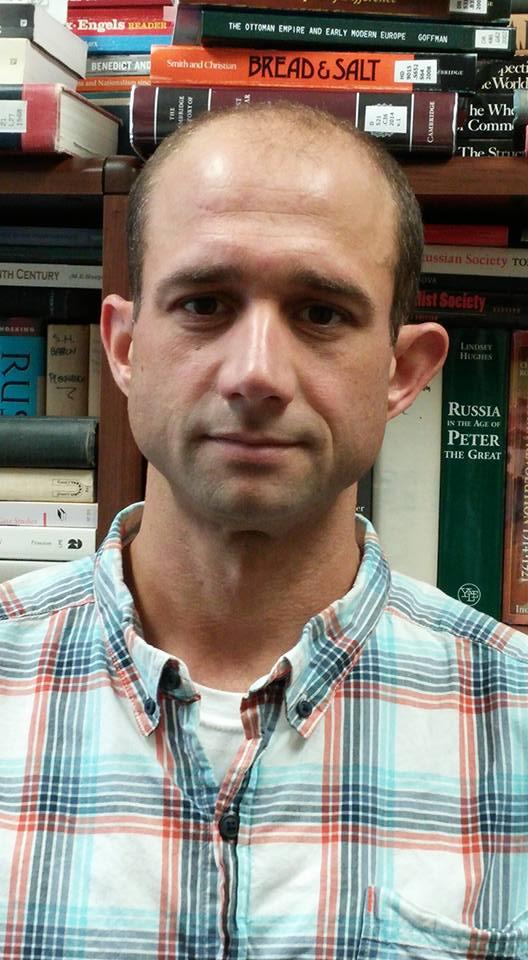
Dr. Lucien Frary is a Professor in the Department of History and Philosophy at Rider University, specializing in Mediterranean studies, Slavic research, and Eastern Orthodox history. His work focuses on Russian-Ottoman relations, particularly Russia's engagement with the Near East during the post-Byzantine era, and the Eastern Question. Russian-Ottoman Borderlands: The Eastern Question Reconsidered (2014) Russia and the Making of Modern Greek Identity, 1821-1844 (2015, co-edited with Mara Kozelsky) Thresholds into the Orthodox Commonwealth: Essays in Honor of Theofanis G. Stavrou (2017) Current book projects on Count Grigorii A. Stroganov and Russian-Byzantine heritage His research explores historical intersections between religion, politics, and national identity formation in the Balkans and Greece. He teaches courses on: Imperial and modern Russian history Ottoman Empire and Balkan studies Ancient/modern Greek history World War II and Nazi Germany History of socialism Online historical education Academic honors include multiple Summer Faculty Research Fellowships (2005-2016), editorial board memberships (2017-2021), and leadership roles in academic conferences (2009-2022). Recent publications analyze Russian diplomatic interventions, Orthodox community dynamics, and the geopolitical ramifications of the Eastern Question.
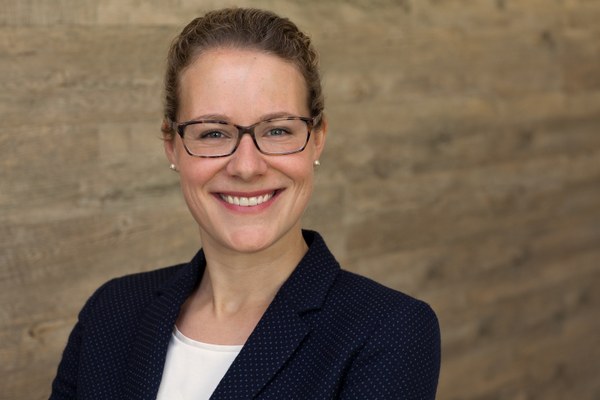
Mary Gallagher is Professor of French and Francophone Studies at University College Dublin, affiliated with the School of Languages, Cultures and Linguistics. She has held significant academic appointments at UCD since 1991, progressing from Lecturer to full Professor, and has served as a Visiting Professor in France, China, and Tunisia. Her scholarly leadership includes founding roles in the Association for the Study of Caribbean and African Literature in French (ASCALF) and the Irish Association of French and Francophone Studies (ADEFFI), where she was president from 2006 to 2008. She led the PRTLI-funded 'World Writing in French' research programme and has coordinated multiple Erasmus+ partnerships with institutions in the French Caribbean, Tunisia, and Vietnam. Education: BA in French and German, Trinity College Dublin DEA in French Literature, Université de Paris VII (Denis Diderot) Doctorat ès Lettres, Université de Paris VIII (Vincennes-Saint-Denis), supervised by Henri Meschonnic, viva chaired by Édouard Glissant Higher Diploma in Mediation and Diploma in Arbitration Law and Procedure, University College Dublin Her research focuses on postcolonial Francophone literature, Caribbean studies, Creole identity, migration, and ethical dimensions of writing. She has published extensively on Saint-John Perse, Lafcadio Hearn, and Paul Morand, with a recent emphasis on Holocaust testimony through her critical edition of Paul Léon’s letters from Drancy. Her work bridges literary scholarship, cultural critique, and historical recovery, often engaging with themes of displacement, memory, and transcultural dialogue. The 15 most recent publications illustrate a sustained engagement with global Francophone narratives, from Caribbean poetics and Creole hybridity to Shoah testimony and critiques of academic corporatism. Her scholarship reveals a trajectory from regional Caribbean studies to broader global and ethical concerns, emphasizing literary witness, intercultural translation, and the responsibilities of the intellectual in an age of globalization. Scientific Recognition and Editorial Roles: Editor of 22 issues of the biennial journal of ASCALF Editorial Board member, Journal of French and Francophone Philosophy (US) Editorial Board member, Forum Poetiki (Poland) Editorial committee roles for monograph series at Palgrave, Gallimard, Brill, and Peter Lang As an advisor and grant leader, she has supervised major research programmes and cross-institutional collaborations. She has not advised named students in the provided texts but has mentored through programme leadership and editorial guidance. She convened UCD’s Asia-Pacific Research Forum (2018–2022), now a formal Research Centre. Her work continues to shape interdisciplinary approaches to Francophone and postcolonial studies. Research Groups and Collaborations: Founder, Association of Francophone Postcolonial Studies (formerly ASCALF) President, Irish Association of French and Francophone Studies (ADEFFI, 2006–2008) Convenor, UCD Cross-College Asia-Pacific Research Forum (2018–2022) Initiator of Erasmus+ partnerships with Université des Antilles, Université de Tunis, and Université Nationale du Vietnam Developing an all-island Irish research group on Former French Island Colonies
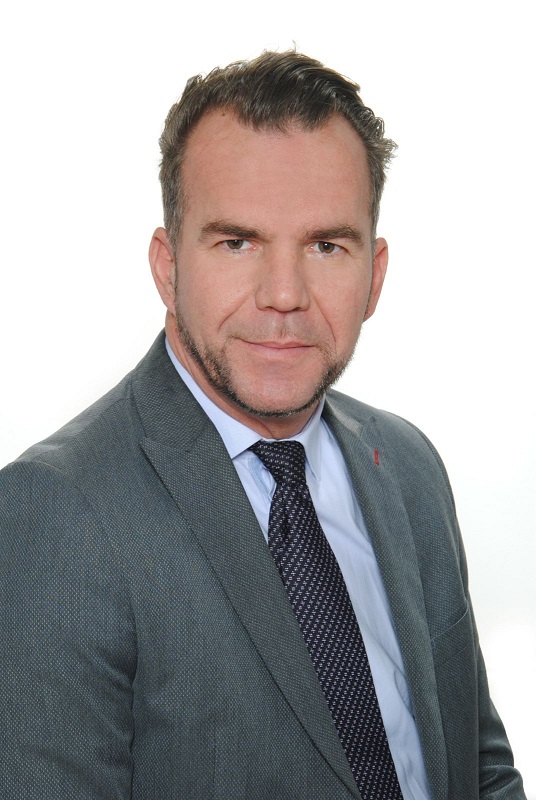
Lisa Cordes is a Professor of Latin Studies at the Institute of Classical Philology , Humboldt University of Berlin, since 2023. Her research focuses on fiction, literary figures, and authorship in Latin literature , with a strong emphasis on panegyric rhetoric, gender studies, and cultural theory . She has held notable positions, including a Humboldt Foundation Visiting Fellowship (2024-2025) and a Feodor Lynen Fellowship (2022-2023). PhD in Classical Philology, LMU Munich (2016) Juniorprofessorin für Latinistik at HU Berlin (2019-2023) Lisa Cordes' research explores panegyric fictionality , gendered first-person discourse , and literary character theory in premodern texts. Her work bridges classical philology with modern frameworks like discourse analysis and digital humanities , focusing on authors such as Cicero, Seneca, and Ovid. Her recent publications (2025-2021) analyze literary character modeling , Cicero’s dialogues , and authorship performativity , with recurring themes of imperial representation and autobiographical elements . She co-edits the Handbuch der lateinischen Literatur (Band 3.2) and leads the BridgeClassics research group for digital classics. Scientific Awards: Feodor Lynen Research Fellowship (2022-2023) Member, Jungen Akademie der Akademie der Wissenschaften und der Literatur, Mainz (since 2020) As a visiting fellow at Princeton University (2024-2025) and visiting scholar at Cambridge (2022-2023), Cordes has collaborated internationally. She has also contributed to digital classics projects and interdisciplinary workshops on textualization and authorship.
Sean Robson is a Professor of Policy Analysis at the RAND School of Public Policy and a Senior Behavioral/Social Scientist at the RAND Corporation. He serves as Associate Director of the Workforce, Development, and Health Program within RAND Project AIR FORCE, where he leads research on manpower, personnel, training, and readiness issues for the U.S. military. Robson holds a Ph.D. in industrial-organizational psychology from the University of Tulsa and a B.S. from James Madison University. His research expertise lies in the scientific validation of assessment and selection systems, physical and psychological fitness standards, and workforce development in military contexts. His research interests span military education and training, operational readiness, gender integration in the military, workforce diversity, enlisted personnel management, leadership, and competency modeling. He has led numerous projects to establish evidence-based physical fitness tests for Air Force Special Warfare and combat specialties in the Army, and has contributed to reforms in recruiting, classification, and resilience programs. Recent publications highlight a strong trend in applying data science, machine learning, and policy analysis to improve human resource management in the Air Force and Department of Defense. His work increasingly integrates artificial intelligence and optimization models to modernize workforce systems, while maintaining a core focus on human performance, resilience, and readiness. Assessment and selection for special operations Physical and behavioral fitness standards Military workforce development Machine learning in HR STEM talent in defense Robson has made significant contributions through RAND’s research portfolio, with over 37 research publications and multiple expert insights. His scientific work informs high-level defense policy and operational practices, particularly in the U.S. Air Force and Army. He has also advised on diversity initiatives, abuse prevention in training, and energy-sector workforce development. He is actively involved in current defense research, with recent and forthcoming publications in 2024 and 2025, indicating ongoing leadership and scholarly impact. He is based at RAND and can be contacted at Sean_Robson@rand.org.
Florin Curta is a Professor in the Department of History at the University of Florida, within the College of Liberal Arts and Sciences. He is a leading scholar in medieval history and archaeology, with a focus on Eastern and East Central Europe between 500 and 1250. He is the founding member of the Medieval and Early Modern Studies program and the director of the Certificate in Medieval Archaeology at UF. Curta received his Ph.D. from Western Michigan University in 1998 and an M.A. in Medieval Studies from Cornell University. His academic journey reflects a deep engagement with both historical and archaeological methodologies, positioning him at the forefront of interdisciplinary medieval studies. His research interests center on migration, identity, ethnicity, and material culture in the early Middle Ages. He is particularly renowned for his work on the formation of Slavic identities and the archaeology of the Avar period. His scholarship challenges traditional narratives and emphasizes the complexity of ethnogenesis and cultural interaction in medieval Eastern Europe. The most recent articles highlight his ongoing focus on the Avar age, Slavic ethnogenesis, and critical reinterpretations of Eastern European medieval history. His publications span archaeological analysis, historical synthesis, and theoretical reflection, demonstrating a consistent commitment to advancing the understanding of medieval societies through interdisciplinary lenses. Herbert Baxter Adams Award, American Historical Association, 2003 Membership in the Institute for Advanced Study, Princeton, 2007 Fellow, Dumbarton Oaks, 2006/2007 ACLS Fellowship, 2006/2007 NEH Fellowship (declined), 2006/2007 Waldo W. Neikirk Professor, 2013–2014 University of Florida Term Professor, 2017–2020 Teaching Award of the Year, College of Liberal Arts and Sciences, 2014 International Educator of the Year, 2012 Honorary member, Romanian Academy, 2023 Florin Curta has advised numerous graduate students and has been actively involved in mentoring visiting scholars and international researchers. He has directed multiple archaeological field schools across Europe and has played a key role in fostering academic exchange through programs such as Erasmus+ and Fulbright. His editorial work includes leadership of the Brill series East Central and Eastern Europe in the Middle Ages and the Palgrave Macmillan series New Approaches to Byzantine History and Culture , significantly shaping scholarly discourse in the field. He leads the Certificate Program in Medieval Archaeology and has organized numerous international academic events, including conference sessions at Kalamazoo and workshops on material culture and heritage. His work bridges academia and public engagement, particularly through initiatives in heritage tourism and digital humanities.
Dr. Jasmin Hodžić is Director of the Institute of Language at the University of Sarajevo (since 2021) and teaches at the University of Novi Pazar. In April 2025 he was promoted to Scientific Advisor. His expertise spans syntax, sociolinguistics, accentology, and cognitive linguistics, with a central focus on the Bosnian language. Education 2017 – Ph.D. in Linguistics, Faculty of Humanities, Džemal Bijedić University of Mostar 2013 – M.Sc. in Linguistics, Faculty of Humanities, Džemal Bijedić University of Mostar 2009 – B.A. in Bosnian Language and Literature, Faculty of Humanities, Džemal Bijedić University of Mostar 2003 – Electrical Engineering Diploma, High School of Electrical Engineering, Mostar Research Interests Hodžić’s work integrates formal syntactic analysis with sociolinguistic inquiry. He investigates syntactic ambiguity, accentual variation in Neo-Štokavian standards, and the historical status of Bosnian. Cognitively oriented studies explore metaphor and conceptual framing in literary and religious texts, while sociolinguistic projects examine language policy, education, and identity in Bosnia-Herzegovina and the Sandžak region. Recent publications reveal intensified attention to language ideology during the 1990s conflict, the codification of orthoepic norms, and the use of Ottoman-era sources to reconstruct linguistic history. Together, these strands position him as a leading voice in Bosniak linguistic scholarship. Scientific Awards Special Mention at the 36th Sarajevo Book Fair (2025) University of Sarajevo Council for Science & Art Award (2020) Designation “Publication of Special National Interest” (2020) Grants, Advising & Teams While specific grant identifiers are not detailed, Hodžić’s continuous appointment as Senior Research Associate (2021–2025) and now Scientific Advisor presumes sustained national research funding. He has organised or delivered keynote lectures at more than 60 conferences, indicating leadership of multiple collaborative projects. Media engagements (TV Sarajevo, Hayat TV, BIR) further extend his role as public intellectual and mentor. Laboratory & Institute Leadership As Director of the Institute of Language at the University of Sarajevo, Hodžić oversees a national centre for linguistic research, standardisation, and public policy consultation, coordinating teams working on accentuation, syntax, and sociolinguistic atlas projects.
Dr. Anna Bendrat is an Assistant Professor at the Department of English and American Studies, Maria Curie-Skłodowska University, Poland. A scholar in Rhetoric, American Drama, and Cognitive Poetics, she is actively involved in interdisciplinary research, particularly through the Cognitive Studies Team and the International Federation for Theatre Research (IFTR). Her research interests span Rhetoric, Social Communication, Identity Studies, New Media, and Affect Studies. She has led the EU Erasmus+ project MigraMedia (2023–2026) and co-founded the journal New Horizons in English Studies . Her work bridges academic rigor with public engagement, including organizing the Media in America, America in Media conference series. Anna’s recent publications interrogate urban trauma in Pulitzer-winning drama, AI’s role in reconstructing memory, and cognitive texture in multi-perspective narratives. Her scholarly activities are enriched by editorial roles in Res Rhetorica and New Horizons in English Studies , alongside grants for research in New York and Poland. She mentors the UMCS Philology Student Circle, promoting anglophone cultures, and maintains a focus on Polish-American academic collaborations. Her research team explores digital rhetoric, migration narratives, and the intersection of literature with cognitive theory.
Max Planck Institute for Legal History and Legal TheoryGermany
Dr. Armando Guevara Gil is a Peruvian legal anthropologist and historian currently serving as Director of Research at the Universidad para el Desarrollo Andino (UDEA, Huancavelica, Perú), Professor of Law at the Universidad Peruana de Ciencias Aplicadas (UPC, Lima), and Associate Researcher at the Instituto del Perú (USMP, Lima). He has held visiting positions at the University of Torino (2019) and as a guest researcher at the Max Planck Institute for European Legal History (Frankfurt, 2019-2020). His academic background includes: Law degree from Pontificia Universidad Católica del Perú Master's degree in cultural anthropology from University of Wisconsin-Madison Doctorate in law from University of Amsterdam Dr. Guevara Gil specializes in legal pluralism, colonial and republican law in the Andes, water law, and indigenous rights. His research explores historical normativity regimes in Andean societies, examining how indigenous communities maintain and assert their legal systems within modern nation-states. He employs interdisciplinary approaches combining legal history, anthropology, and political science to analyze the complex interactions between official state law and indigenous legal traditions, with particular focus on water rights, land tenure, and prior consultation processes. His scholarly work demonstrates consistent thematic development around Andean legal systems, evolving from colonial legal history to contemporary issues of indigenous rights recognition. Recent publications reveal increasing attention to the concept of 'multiversos narrativos' - exploring alternative historical narratives of water and land rights in the Andes through oral history methodologies. His research consistently challenges essentialist approaches to indigenous identity and legal recognition, documenting how bureaucratic and administrative practices often undermine indigenous rights despite international legal frameworks. Dr. Guevara Gil's research has been recognized through numerous fellowships and awards: Postdoc Scholarship at Max Planck Institute for European Legal History (2019-2020) Multiple fellowships at Max Planck Institutes (2012-2014) Eight research prizes from Pontificia Universidad Católica del Perú (2008-2018) MacArthur Foundation Scholar Grant (1994-1995) Wenner-Gren Foundation Fellowship (1988-1989) As principal investigator, Dr. Guevara Gil has secured significant research funding for projects examining legal pluralism in Andean communities. He currently co-directs the 'Multiversos Narrativos' research project with Thomas Duve at the Max Planck Institute for Legal History and Legal Theory, which employs dialogical and participatory methodologies to document communal narratives about water rights, land, and natural resources in Huancavelica, Peru. His work with the Universidad para el Desarrollo Andino focuses on community-based legal research and capacity building. Dr. Guevara Gil maintains active affiliations with multiple research networks including the American Anthropological Association, Commission on Legal Pluralism, Instituto Internacional de Historia del Derecho Indiano, Latin American Studies Association, and Law and Society Association. His current research examines how Peruvian administrative practices undermine indigenous rights through essentialist interpretations of indigenous identity, particularly in mining contexts where consultation processes are frequently circumvented.
Hsiao-Dong Chiang is a Professor in the School of Electrical and Computer Engineering at Cornell University. He holds a Ph.D. in Electrical Engineering from the University of California, Berkeley, and has made significant contributions to nonlinear system theory and power system stability. His research spans theoretical development and practical applications in electric power systems, nonlinear optimization, and machine learning. B.S., Electrical Engineering, National Taiwan University, 1979 M.S., Electrical Engineering, National Taiwan University, 1981 Ph.D., Electrical Engineering, University of California, Berkeley, 1986 Chiang's research interests focus on nonlinear system theory , power system stability and control , nonlinear optimization , and their applications to modern power grids with high penetration of inverter-based resources. He is renowned for developing the BCU method and TRUST-TECH methodology , which have enabled fast direct stability assessment and global optimization in complex systems. His work bridges fundamental theory with industrial deployment through his companies, Bigwood Systems, Inc. and Global Optimal Technology, Inc. His recent publications (2024–2025) reflect a strong trend toward integrating machine learning and deep neural networks with power system analysis , particularly in state estimation, optimal power flow, and voltage control. There is a clear emphasis on handling uncertainty, non-convexity, and multi-scale dynamics in active distribution networks and integrated energy systems . His work increasingly focuses on resilience , real-time control , and user-centered methodologies for modern grid operations. Chiang has received numerous scientific honors, including: IEEE Fellow (1997) United States Presidential Young Investigator Award (1989) Multiple DOE Grid Optimization Challenge Awards (2020–2023) Best Paper Awards from IEEE Transactions and Conferences Outstanding Education Award, Cornell University (1990) He has successfully managed over 100 research projects and holds 28 U.S. and international patents. As the founder of Bigwood Systems, Inc., he has commercialized advanced software for utility companies across the U.S. and Japan. His team has published over 480 refereed papers and received more than 17,500 citations. He advises a large research group and leads innovations in computational methods for energy systems. His lab is actively involved in developing next-generation tools for grid security, optimization, and machine learning integration.
Kati Tonkin is an active Associate Professor of German Studies and History in the Discipline of European Languages and Cultures at The University of Western Australia's School of Humanities. She holds a PhD in German and European Studies from UWA and studied previously in Germany and Austria. Her academic leadership includes serving as Associate Chair of the Academic Board and Chair of the Board of Studies (Society and Culture). Her educational background includes significant study in Germany and Austria, culminating in a PhD from UWA. She is a Senior Fellow of the Higher Education Academy (2020), demonstrating her commitment to teaching excellence. Tonkin's research spans two primary domains: literary studies focused on Jewish Austrian writer Joseph Roth and pedagogical innovation centered on flipped and online learning. Her work on Roth examines themes of Habsburg identity, Jewish experience, and cultural memory in interwar Austrian literature. In educational research, she explores cognitive load management, adaptive learning platforms, and student engagement in language education. She co-founded a university-wide Community of Practice dedicated to active learning and the flipped classroom in 2019. Her publication record shows a clear evolution from literary scholarship on Joseph Roth and Austrian-Jewish writers toward increasingly innovative educational research. While her early work focused on Austrian literature and cultural history, her more recent publications emphasize educational technology, flipped classroom methodologies, and intercultural learning. This trajectory reflects her dual expertise in German studies and educational innovation. AAUT Citation for Outstanding Contributions to Student Learning (2023) UWA Award for Excellence in Teaching (2022) School of Humanities Excellence in Teaching Award (2021) Senior Fellow of the Higher Education Academy (2020) UWA Guild's Student Choice Award (2019) Tonkin actively supervises students, currently mentoring four PhD candidates working on European history and literature topics. Her grant history demonstrates sustained research support, including a World Universities Network Grant (2020) on University Students in the Time of Corona, Centre for Education Futures Grant (2016), UWA Teaching Fellowship (2012), and multiple early career research awards. She has coordinated the Bachelor of Modern Languages and Minor in German programs, and serves as Academic Coordinator for the Stuttgart Exchange Program. As an educational innovator, Tonkin has piloted adaptive e-learning platforms like Smart Sparrow and Cadmus assessment platform. Her community engagement extends beyond campus through her service as Chair of the School Board at North Perth Primary School (2014-2019) and as Community Representative on Mount Lawley Senior High School's Board (2020-2023).
Massachusetts Institute of TechnologyUnited States
Eugene A. Fitzgerald is the Merton C. Flemings SMA Professor and Professor of Materials Science and Engineering at MIT, and serves as CEO and Director of the Singapore-MIT Alliance for Research and Technology (SMART). His research focuses on overcoming material limitations in electronic systems, particularly lattice-mismatched semiconductors and defect elimination. Fitzgerald co-founded multiple companies, including AmberWave Systems Corporation, and pioneered strained silicon technology widely used in modern electronics. Education: BS in Materials Science and Engineering, MIT (1985) PhD in Materials Science, Cornell University (1989) His research interests span semiconductor innovation, nanoelectronics, and advanced manufacturing techniques. Fitzgerald’s work has enabled breakthroughs in silicon integrated circuits and solar cell technologies. Under his leadership, SMART’s Low Energy Electronic Systems program developed methods to integrate compound semiconductors into silicon circuits, spawning new industries in Singapore. Awards: 2016: Distinguished Alumni Award (Cornell) 2011: Andrew S. Grove Award (IEEE) 2004: George Smith Award (IEEE) 1994: Robert Lansing Hardy Award Entrepreneurship & Impact: Co-founded 7 companies in semiconductors, water purification, and solar tech. Authored Inside Real Innovation (2010), analyzing innovation processes.
Professor Stuart Murray holds the position of Professor of Contemporary Literatures and Film at the University of Leeds' School of English. He is a leading scholar in medical humanities, critical disability studies, and posthumanism. As the founding Director of the Leeds Centre for Medical Humanities, he has pioneered interdisciplinary research on health, disability, and technologised embodiment. His research encompasses six monographs and multiple collaborative projects funded by institutions like the Wellcome Trust. Notable projects include the 5-year 'Imagining Technologies for Disability Futures' and 'LivingBodiesObjects', which developed the 'Collaborating With Care' toolkit. His work bridges academia and practice, involving engineers, roboticists, and disability groups. Professor Murray's creative output includes a song cycle 'Scenes from Autistic Bedtimes' and a play for the LivingBodiesObjects project. He supervises PhDs on topics like chronic pain narratives and disability in postcolonial literatures, with over 20 completions. His recent focus includes sleep studies and modernist literature's engagement with sleep technologies. He has held leadership roles, including Chair of the Wellcome Trust Medical Humanities Expert Review Group (2015–2020). His teaching spans 20th/21st-century literatures and film at undergraduate and postgraduate levels, emphasizing modernist and contemporary themes.
Faramarz Amiri is a Senior Lecturer in Digital Media at the University of Wolverhampton's Faculty of Arts, Business and Social Sciences. He serves as Course Leader for BA(Hons) Computer Games Design and has been affiliated with the institution since 1997. His expertise spans multiple domains, including Higher Education Pedagogy, Serious Games Design, Educational Technology, TESOL, and Art & Design Pedagogy. PhD in Education (University of Manchester) MSc in Computer Science (University of Exeter) MPhil in Social and Political Theory (University of Cambridge) PG Diploma in TEFL (Brighton Polytechnic) BA in Linguistics with Cognitive Sciences (University of Sussex) His research focuses on the intersection of educational technology, art pedagogy, and socio-political dimensions of game design. His publications analyze programming in art education, multimedia authoring for language teachers, and the integration of digital tools in curricula across disciplines. Awards include Fellowship in the Higher Education Academy. Programming in interactive media curriculum design Teacher empowerment through digital authoring CALL material development standards Role of educators in software lifecycle Grammar teaching via multimedia IT training for educators Dr. Amiri's work bridges technical and pedagogical domains, with a particular emphasis on democratizing digital creation in educational contexts. He currently leads the Computer Games Design program while maintaining active research into technology's role in art and language education.
University of North Carolina at CharlotteUnited States
Dr. Tao Hong is the Duke Energy Distinguished Professor and NCEMC Faculty Fellow at the Department of Systems Engineering and Engineering Management, University of North Carolina at Charlotte. He directs the Big Data Energy Analytics Laboratory (BigDEAL) and has been a Founding Chair of the IEEE Working Group on Energy Forecasting (2011-2019). Ph.D., Electrical Engineering & Operations Research (2010), NC State University M.S., Operations Research & Industrial Engineering (2008), NC State University B.Eng., Automation (2005), Tsinghua University His research focuses on Energy Forecasting with applications in power systems operations, renewable integration, risk management, and cross-sector forecasting for healthcare, transportation, and sports. He has led major Delivery point level load analysis (2017-present) Short-term probabilistic forecasting (2016) Demand response modeling using smart meter data (2014-2015) Dr. Hong's scientific contributions include 9+ journal articles on energy forecasting methodologies and 3 major forecasting competitions (GEFCom2012-2017, BigDEAL Challenge 2022). His work has been cited in leading journals like International Journal of Forecasting and IEEE Transactions on Smart Grid . Charlotte Business Journal Energy Education Leader of the Year (2017) IEEE PES PSPI Technical Committee Prize Paper Award (2016) As a dedicated educator , Dr. Hong has advised multiple PhD and Master's students including Shreyashi Shukla (2023), Yike Li (2022), and Jordan McCorey (2021). He teaches specialized courses in energy systems planning and computational intelligence.
Baki Tezcan is Professor of History at the University of California, Davis, with a joint affiliation in Religious Studies until 2015. He is also affiliated with the Middle East/South Asia Studies Program (ME/SA), Medieval and Early Modern Studies, and has directed the ME/SA program from 2012 to 2015. He led the 'Last Empire of Islam' Summer Abroad Program in Istanbul in 2007, 2009, and 2011. Ph.D., Near Eastern Studies, Princeton University (2001) M.A., Near Eastern Studies, Princeton University (1996) B.S., International Relations, Bilkent University, Turkey (1994) Graduate, Istanbul Lisesi Tezcan's research centers on the intellectual and socio-political transformation of the Ottoman Empire, particularly the evolution of Islam in the public sphere from the late thirteenth to the early twentieth century. His work explores Islamic law, pre-modern racial and ethnic identities, Ottoman perceptions of others, and the interplay between politics, philosophy, and science in the Islamic tradition. He investigates early modernity through the lens of legal rationalization, secularism, and the disenchantment of Sufism. His recent publications reveal a consistent focus on Ottoman intellectual history, legal transformation, and identity formation. Themes include the rationalization of Sunni Islam, the role of the ulema, judicial administration in former Mamluk territories, and autobiographical writings of early modern preachers. His scholarship bridges Turkish and Anglophone academic traditions, with several of his works translated into Turkish and published in bilingual journals. Tezcan has received multiple prestigious awards and fellowships: UC Davis Outstanding Faculty Advisor Award (2005) National Endowment for the Humanities (NEH) Fellowship (2018–19) TÜBİTAK Fellowship (2011–12) Society for the Humanities Fellowship, Cornell University (2005–06) ARIT Postdoctoral Fellowship funded by NEH (2001–02) He has advised students across multiple departments and has been recognized for his mentorship. His current projects include finishing several articles and writing a book on the transformation of Islam in the Ottoman Empire from the late medieval to the modern period. He is actively engaged in editorial work, serving as President of the Ottoman and Turkish Studies Association (OTSA), and on the editorial boards of the Journal of Ottoman Studies and the Journal of the Ottoman and Turkish Studies Association . He co-founded the Western Ottomanists' Workshop (WOW) and GIT-North America, fostering scholarly dialogue in the field.