Bharat Biswal is a Distinguished Professor in the Department of Bio-Medical Engineering at New Jersey Institute of Technology (NJIT), serving as Director of the Center for Brain Imaging. His primary affiliation is with the College of Engineering, where he leads neuroimaging research initiatives. Biswal’s work focuses on functional magnetic resonance imaging (fMRI), brain connectivity analysis, and translational applications in neuropsychiatric disorders. Research Interests: Functional and Resting-State fMRI Methodology Neurovascular Coupling Mechanisms Connectomics and Network Neuroscience Clinical Applications in ADHD, OCD, and Neurodegenerative Diseases Post-COVID Neuroimaging White Matter Function Grant Activity: NIH-funded projects on laminar-specific connectivity (2022–2025) National Science Foundation MRI infrastructure grants (2019–2021) Longitudinal HIV brain studies (2015–2018) Recent Articles Highlight: Biswal’s 2025 work advances understanding of cocaine use disorder neurobiology, obsessive-compulsive disorder network dysregulation, and standardized PET nomenclature. His lab also innovates in AI-driven defect detection and transcriptomic-neuroimaging integrations. Awards: Recipient of NJIT’s 2024 Excellence in Research Award for pioneering contributions to resting-state fMRI and brain connectivity research. Labs/Teams: Leads the Center for Brain Imaging at NJIT, collaborating internationally on neuroimaging standards and translational neuroscience projects.
Christi Batamula is an Assistant Professor in the Department of Education at Gallaudet University, part of the School of Language, Education, and Culture. She has been at the university since 2005, transitioning from early childhood education roles to her current academic position. Her academic credentials include a Ph.D. in International Education from George Mason University, an M.A. in Deaf Education from Gallaudet, and a B.A. in Elementary Education from Geneva College. Her research focuses on diverse deaf learners, immigrant families, bilingual education, and critical pedagogy. Notable projects include the Family Language Planning Digital Toolkit (funded by NIDCD NIH) and contributions to teacher preparation programs. She has advised numerous students in capstone projects and doctoral dissertations, spanning topics like anti-bias education and Reggio Emilia approaches. Batamula has taught over 30 courses since 2009, including core subjects like Early Childhood Environments and Deaf Learners in Bilingual Contexts . Her work emphasizes culturally responsive teaching and family engagement, reflected in grants such as the SEEDS Project (US Department of Education) aimed at safeguarding deaf children's development. She held leadership roles including Department Chair of Education (2019–2020) and currently serves on the Faculty Senate. Her scholarly contributions span articles on family language policies, bilingual education, and innovative pedagogical frameworks, advocating for inclusive and culturally affirming practices.
Li Jiannan is a Full-time Assistant Professor of Computer Science at the School of Computing and Information Systems, Singapore Management University (SMU). He is part of the SMU HCI community and holds a PhD from the University of Toronto (2024). His research focuses on human-machine collaborative systems, pervasive sensing, and human-computer interaction applications in health, wellbeing, and future work paradigms. Research interests include: Language-driven robotic telepresence systems Large language models for visualization and design studies Mixed reality collaboration tools Immersive environments for skill teaching Recent publications demonstrate expertise in: Robot-assisted physical task guidance Generative AI for VR scene creation Camera control through subtle human cues 360° video navigation techniques Scientific recognition includes: Best Paper Award at ACM/IEEE HRI 2025 Best Paper Honorable Mention at CHI 2025 Best Paper Honorable Mention at CHI 2021 Best Paper Honorable Mention at CHI 2018
Mark Last is a Professor at Ben-Gurion University in Beersheba, Israel, with a distinguished career spanning over three decades in computer science research. His work primarily focuses on data mining, machine learning, and natural language processing applications. His research interests encompass stream data mining, text summarization, fuzzy logic systems, and classification algorithms. Last has made significant contributions to developing techniques for analyzing dynamic data streams, multilingual text processing, and applying machine learning to real-world problems in healthcare, social media analysis, and security informatics. His work often bridges theoretical advancements with practical applications, particularly in handling non-stationary data and developing interpretable models. Recent research trends show a continued focus on stream data analysis, with applications expanding into social media monitoring, healthcare prediction systems, and multilingual content analysis. His work demonstrates consistent innovation in adapting machine learning techniques to evolving data environments and practical challenges. Mark Last has maintained a prolific publication record with over 175 publications documented in DBLP, collaborating extensively with researchers including Abraham Kandel, Marina Litvak, and Oded Maimon. His work has been published in top venues including IEEE Access, Machine Learning journal, and Expert Systems with Applications.
Martin Trapp is an Academy Postdoctoral Researcher in the Department of Computer Science at Aalto University, specializing in probabilistic machine learning. He is affiliated with Professor Arno Solin's research group, focusing on advancing tractable probabilistic models for real-world applications. His research centers on Probabilistic Circuits , Probabilistic Programming , and Bayesian Nonparametrics , with emphasis on hardware-efficient implementations for edge devices and multimodal systems. Key interests include uncertainty quantification in deep learning, neurosymbolic AI integration, and medical imaging applications. His work bridges theoretical foundations with practical deployment constraints, particularly in resource-limited environments. Analysis of his 15 most recent publications (2022-2025) reveals three dominant trends: (1) hardware-aware probabilistic inference for TinyML applications, (2) scalable Bayesian methods using bitstring representations and probabilistic programming, and (3) multimodal robustness in vision-language systems and medical imaging. His contributions span from theoretical circuit representations to real-world implementations in mammography analysis and vision-language models. Trapp secured a HIIT short-term project grant (November 2022) for "Positive Semi-Definite Circuits" under the Department of Computer Science. No formal advising relationships are documented in available sources. He actively collaborates with researchers including Arno Solin, Rui Li, and Marcus Klasson across institutions like Aalto University and the Helsinki Institute for Information Technology. As a core member of Aalto's Probabilistic Machine Learning group, he contributes to advancing probabilistic AI methodologies with applications in healthcare, edge computing, and multimodal reasoning. His current work emphasizes deployable probabilistic systems that maintain rigorous uncertainty quantification while meeting hardware constraints.
Fabrizio Riente is a Fixed-term Researcher at the Department of Electronics and Telecommunications (DET) , Politecnico di Torino. He holds academic responsibilities in multiple programs and contributes to editorial and conference committees. Member of College of Electronic, Telecommunications and Physics Engineering Invited Member of College of Computer, Film, and Mechatronics Engineering His research spans Nanocomputing , Quantum Technologies , and Machine Learning for environmental and healthcare applications, with a focus on: Qubit Control & Readout Systems IoT for Bee Health Monitoring 3D Audio-Visual Reproduction for Hearing Research Hybrid Simulation and Emerging Nanotechnologies Low-Power Electronic Systems His recent publications demonstrate interdisciplinary work bridging Quantum Electronics and Acoustic Ecology , particularly in developing VLSI architectures for novel applications. Notable scientific awards include Associate Editorship at Frontiers in Electronics and program committee roles at international conferences. He supervises PhD students in Quantum Engineering and Electronic Engineering , directing research projects funded by commercial contracts on quantum architectures and automotive technologies. His teaching portfolio includes courses on Microelectronic Systems and Low-Power Electronics .
George Nikolakopoulos is a Professor in Robotics and Automation at the Department of Computer Science, Electrical and Space Engineering at Luleå University of Technology , Sweden. He also holds a Chair in Robotics and Artificial Intelligence and has been affiliated with the NASA Jet Propulsion Laboratory for collaborative research on Aerial Planetary Exploration. Academic Rank: Professor Department: Computer Science, Electrical and Space Engineering Collaborations: NASA JPL, COSTAR Team Research Interests Robotics Artificial Intelligence Field Robotics UAVs (Unmanned Aerial Vehicles) Automatic Control Applications Learning and Reasoning Networked Embedded Systems Cyber-Physical Systems Mechatronics Adaptive Control System Identification Publications and Research Trends His recent publications focus on autonomous aerial robotics, deep mineral exploration, and AI-driven control systems. Key trends include the integration of reinforcement learning for UAV stabilization, path planning in subterranean environments, and cloud/edge-assisted control architectures for collaborative robotic systems. Scientific Awards and Recognitions Team's work included 4 times in a row at the IVA Top 100 list (Royal Academy of Engineers in Sweden) Won the second stage of the DARPA Grand Challenge on Sub-T exploration with the COSTAR team in February 2020 Leadership and Innovation He established the Digital Innovation Hub on Applied AI at Luleå University of Technology and founded two spin-offs, including FieldRobotix , which joined the IVA REACHME Silicon Valley accelerator. His lab, the Robotics Team , actively participates in cutting-edge projects like autonomous mining inspection and aerial additive manufacturing.
Casey Lew-Williams is a Professor and Department Chair at Princeton University, where he leads the Princeton Baby Lab. His research focuses on how infants learn from dynamic communicative environments, integrating experimental, descriptive, computational, and social neuroscience approaches. He collaborates with institutions like Concordia University to study bilingual language acquisition and has developed tools like iCatcher+ for automated gaze analysis. His work spans typical development, adversity, and bilingual contexts. Research Interests: Language acquisition, bilingualism, infant cognition, caregiver-child interactions, neural synchrony, and computational modeling of learning processes. Recent Article Trends: His publications address sociodemographic reporting standards, emotion dynamics, caregiver speech variability, and open science methodologies in developmental research. Awards: Phi Beta Kappa Award President’s Award for Distinguished Teaching Excellence in Mentoring Graduate Students Advisees: Kennedy Casey Brooke Ryan Bianca Santi His lab emphasizes translating theoretical insights into community-focused applications to support child development.
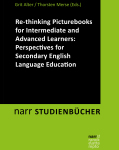
Thorsten Merse is Professor of English as a Foreign Language (EFL) Education at the University of Duisburg-Essen, focusing on Anglophone Literatures and Cultures. His research explores inter- and transcultural learning, cultural diversity, pedagogies of teaching literature, and digital education in EFL. He emphasizes LGBTIQ* diversity and Queer Theory in English language teaching, as well as teachers’ digital competences. He joined UDE in 2021 after positions at the University of Münster (2011–2016) and University of Munich (2016–2021), where he completed his PhD in 2017. PhD in English Education (LMU Munich, 2017) MA in English and Biology (WWU Münster) His research combines theoretical and conceptual frameworks, including meta-views on conducting EFL research. Recent work addresses queer pedagogies, global citizenship, and digital textualities. He co-edits publications such as Re-thinking Picturebooks for Intermediate and Advanced Learners (2023) and Global Citizenship in Foreign Language Education (2022). Articles highlight intersections of queer theory, digital education, and cultural diversity in ELT. Deutsche Gesellschaft für Fremdsprachenforschung (DGFF) Deutscher Anglistikverband (Beirat) International Association of Teachers of English as a Foreign Language (IATEFL) Merse supervises doctoral candidates like Lena Hertzel (Decolonizing Cultural Learning in EFL) and Albert Biel (Queer Teaching Processes in English). He coordinates interdisciplinary projects under the BMBF-funded Qualitätsoffensive Lehrerbildung and contributes to graduate school initiatives (GKQL). His lab work includes the EFL Lab (formerly SLZ), which integrates digital tools and queer pedagogies into language education.
Dongyi Wang is an Assistant Professor in the Department of Biological and Agricultural Engineering at the University of Arkansas, where he directs the Smart Agriculture and Food Engineering (SAFE) Lab. His work bridges advanced technologies like artificial intelligence, robotics, and machine vision with agrifood manufacturing to enhance product quality, safety, and worker welfare. Ph.D. in Bioengineering from the University of Maryland, College Park B.S. in Electrical and Computer Engineering from Fudan University Visiting experience at The Chinese University of Hong Kong Research interests span smart agrifood manufacturing , robotics , machine vision , and artificial intelligence , with applications in crop monitoring, food safety, and healthcare. His lab develops solutions like automated defect detection, pathogen sensing, and sustainable processing systems. Article analysis reveals a focus on AI-driven agricultural automation , hyperspectral imaging , robotic manipulation of bio-products , and food safety innovations . Recent works include YOLO-based tomato defect segmentation, E. coli biosensing, and UAV-based blackberry monitoring. Awards & Memberships College of Engineering Dean’s Award of Excellence Rising Star Research Award (UARK) Outstanding Mentor Award (UARK) Professional memberships in ASABE and IEEE As an educator, he teaches instrumentation and artificial intelligence in agrifood manufacturing . The SAFE Lab, funded by USDA NIFA, NSF, and federal/local agencies (> $7M), prioritizes workforce development in AI/robotics for agrifood industries.
Bruno Gas serves as a Professor at Sorbonne University, affiliated with the ASIMOV research team within the Intelligent Systems and Robotics Institute (ISIR). His academic work bridges robotics, artificial intelligence, and cognitive science through innovative investigations into sensorimotor learning frameworks for embodied agents. Gas's research centers on how naive robotic agents develop spatial and bodily representations through sensorimotor interactions, with particular emphasis on multimodal sensory integration (audition, vision, and touch). His work demonstrates how robots can autonomously construct internal models of their environment through active exploration, utilizing principles from developmental psychology and neuroscience. Key methodologies include neural network modeling, predictive processing architectures, and bio-inspired sensorimotor contingency frameworks that enable agents to learn without pre-programmed spatial knowledge. Analysis of Gas's recent publications (2013-2020) reveals consistent thematic progression in developmental robotics, focusing on the emergence of topological spatial representations, active exploration strategies, and multimodal sensor fusion. His research demonstrates how sensorimotor flow generates internal spatial models, with notable contributions including the Head Turning Modulation System for environment exploration and tactile space representation models. This work establishes critical links between robotics, cognitive science, and neuroscience through experimentally validated frameworks for embodied learning. No explicit information regarding student supervision or research grants appears in the source material, though extensive collaborative publications with researchers like Sylvain Argentieri and J. Kevin O'Regan suggest active mentorship and project leadership within the ISIR ecosystem. His publication record shows sustained interdisciplinary collaboration across European robotics institutions. Gas operates within the ASIMOV team at ISIR (Institut des Systèmes Intelligents et de Robotique), a premier robotics research unit jointly operated by Sorbonne University and CNRS. The team specializes in adaptive systems and intelligent machines, with research spanning embodied cognition, developmental robotics, and human-robot interaction. ASIMOV's experimental platforms focus on sensorimotor learning paradigms for autonomous exploration, positioning Gas at the forefront of bio-inspired robotics research in France.
Hassan Ghasemzadeh is an Associate Professor and Program Director in the College of Health Solutions at Arizona State University (ASU), where he is also on the graduate faculty for biomedical informatics, computer science, computer engineering, and biomedical engineering. Prior to joining ASU, he served as an assistant/associate professor of computer science at Washington State University (2014-2021) and as a postdoctoral research manager at UCLA (2011-2013). Education: PostDoc, Computer Science, University of California Los Angeles PhD, Computer Engineering, University of Texas at Dallas MS, Computer Engineering, University of Tehran BS, Computer Engineering, Sharif University of Technology Dr. Ghasemzadeh's research focuses on digital health, machine learning, and algorithm design, with applications spanning wearable technologies, chronic disease management, and behavioral health. His work bridges computer science with healthcare, developing novel algorithms and systems that use wearable sensors to monitor and improve health outcomes. His research has particular emphasis on diabetes management, Parkinson's disease detection, and stress monitoring through advanced sensor analysis and machine learning techniques. His recent publications demonstrate a strong focus on leveraging large language models, counterfactual reasoning, and advanced deep learning techniques to address challenges in digital health. The research spans multiple domains including glucose prediction, Parkinson's disease assessment, cannabis use monitoring, and activity recognition, showing a consistent thread of applying cutting-edge AI to solve real-world health problems with wearable sensor data. Scientific Awards: 2025 Best Poster Award, ASU College of Health Solutions Faculty Research Day 2024 Research Award, ASU College of Health Solutions 2024 Best Poster Award, ASU College of Health Solutions Faculty Research Day 2018 Early Career Development Award, National Science Foundation (NSF CAREER) 2018 Early Career Award, WSU School of EECS Dr. Ghasemzadeh actively mentors numerous graduate students in the Embedded Machine Intelligence Lab (EMIL), with current PhD students including Eric Junyoung Kim, Ebrahim Farahmad, Saman Khamesian, Shovito Barua Soumma, Pegah Khorasani, and others. His research has been funded by prestigious organizations including the National Science Foundation, with projects often focusing on developing innovative wearable health monitoring systems that have led to commercial applications such as WANDA and Sense4Baby. Dr. Ghasemzadeh leads the Embedded Machine Intelligence Lab (EMIL), which focuses on developing machine learning algorithms for embedded and wearable systems. The lab creates solutions that address real-world health challenges through interdisciplinary research that combines computer science, electrical engineering, and clinical medicine. Current projects include glucose prediction systems, Parkinson's disease detection tools, and personalized hydration monitoring applications.
Kelly Hogan is a Professor of Practice in the Department of Biology at Duke University's Trinity College of Arts & Sciences, serving as Director of Undergraduate Studies since 2023. She holds a PhD from the University of North Carolina at Chapel Hill (2001) and a B.S. from Trenton State College (1996). Her research focuses on improving STEM education through inclusive pedagogy, active learning strategies, and self-regulated learning. She co-designed courses like the 'College Thriving' initiative to support student transition to research universities, and has pioneered methods integrating citizen science into biology curricula. Dr. Hogan teaches courses including BIOLOGY 150 (Teaching Internship), BIOLOGY 201L (Molecular Biology), and BIOLOGY 493 (Research Independent Study). Her work emphasizes fostering equity in STEM through evidence-based practices like learning analytics and inclusive course design. External collaborations include partnerships with Pearson Education and West Virginia University Press. Her research spans topics such as cognitive engagement with instructional videos, predictive analytics for student performance, and motivational frameworks in undergraduate STEM education. Recent publications highlight strategies to retain diverse student populations and address systemic inequities in academic settings.
Sandra Okita is an Associate Professor at Teachers College, Columbia University , where she serves as Program Director in the Communication, Media, and Learning Technologies Design program within the Department of Mathematics, Science and Technology . She holds dual PhDs from Stanford University (Learning Sciences) and Keio University (Human-Computer Interaction). Research Focus : Developing pedagogical agents and virtual environments that enhance learning through social interaction Designing sociable robots as peer learners to study cognition and collaborative learning Exploring virtual reality and mixed reality for science education Theoretical work on self-other monitoring , learning by teaching , and recursive feedback Publication Trends : 15+ publications (2004-2022) on robotics in education, virtual learning environments, and social learning theories Key areas: Human-Robot Interaction , STEM Education , Metacognition , and Technology-Enhanced Learning Notable works: Learning by Teaching , Recursive Feedback Mechanisms , and Therapeutic Robots Awards & Grants : 15+ research grants (2001-2026) from NSF , Google VR Research Program , and Honda Research Institute Recipient of Dean's Faculty Diversity Research Award (2011-2012) 2008 Best Paper Award at International Conference of the Learning Sciences
Dr. Patricia Duff is a Professor at the University of British Columbia in the Department of Language and Literacy Education. Her research focuses on bilingual/multilingual education, identity formation, language ideologies, and decolonizing methodologies in language learning contexts. English and Mandarin language proficiency 604-827-5028 contact Active in language socialization studies across classrooms, families, and diaspora communities Research interests center on language socialization processes in transnational environments, heritage language education, academic discourse communities, and the intersection of pop culture with language pedagogy. She pioneered case study methods in applied linguistics and co-edited the Routledge handbook of research methods in applied linguistics . Key publication trends show sustained focus on Chinese language education (40+ publications), family/workplace language planning (15+), and critical discourse analysis of multilingual identities (25+). Her work spans qualitative classroom research, policy analysis, and sociocultural theory applications.