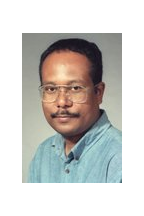
Professor Maja Pantic is a Professor of Affective & Behavioural Computing at the Department of Computing, Faculty of Engineering, Imperial College London. Her research focuses on artificial intelligence, image processing, and audio-visual speech recognition. She leads projects in multimodal systems, including facial analysis, emotion recognition, and speech-driven animation. Affiliations include the AI for Healthcare initiative, the Artificial Intelligence Network, and the Machine Learning Network. Her work addresses challenges in real-time speech enhancement, cross-modal learning, and synthetic data generation. Recent publications emphasize advancements in audiovisual speech synthesis, lip-reading, and emotion-aware systems. She has contributed to datasets like KAN-AV and SEWA DB, advancing research in face analysis and affective computing.
Henrik von Coler is an Assistant Professor at Georgia Institute of Technology's School of Music within the College of Design. His work bridges engineering, electronic music, and empirical research, focusing on spatial audio systems, live electronics, and human-computer interaction in musical contexts. He joined Georgia Tech in 2023 after serving as director of the TU Studio for Electronic Music at Technische Universität Berlin from 2015 to 2023, where he founded the Electronic Orchestra Charlottenburg (EOC) to explore live electronic ensembles in multichannel environments. His research emphasizes the integration of sound, space, and HCI to enhance compositional and performative expressiveness. Notable projects include immersive audio installations, virtual instrument design, and AI-assisted composition. Coler has performed globally on immersive audio systems and curated international concerts. His technical contributions span spatial sound synthesis algorithms, networked music systems, and real-time signal processing tools. Key areas of exploration include volumetric music performances in metaverse environments, hybrid spatial interaction via ARCube, and statistical models for spectral synthesis. He has developed open-source systems like Orchestra (for metaverse performances) and SPRAWL (for ensemble interaction). Coler’s work often combines empirical research with artistic practice, aiming to redefine the boundaries of live electronic music through technological innovation. His academic output spans over 30 peer-reviewed articles since 2011, with recent focus on metaverse applications, AI-human collaboration, and immersive audio design. While no formal awards are listed, his leadership roles and project outcomes highlight significant contributions to music technology and spatial audio engineering.
R. Luke DuBois is an Associate Professor and Co-Chair of the Technology, Culture and Society Department at the NYU Tandon School of Engineering, where he also directs the Integrated Design & Media program and the Brooklyn Experimental Media Center. He holds a DMA in music composition from Columbia University and is a renowned artist, composer, and performer whose work explores intersections between technology, sound, and visual media. His research focuses on digital media, human-computer interaction, and emerging technologies applied to artistic expression and accessibility. Key roles include directing the SONYC initiative (addressing urban noise pollution via AI) and leading the NYU Ability Project (advancing disability studies through technology). He has collaborated with institutions like the Smithsonian and artists such as Maya Lin, and his work has been exhibited globally, including at the Sundance Film Festival and the Aspen Institute. DuBois co-developed the Jitter software suite for real-time data manipulation and performs in avant-garde groups like Bioluminescence and Fair Use. His artistic practice combines time-lapse phonography, interactive installations, and interdisciplinary projects that critique cultural ephemera while advancing accessibility in STEM and the arts. Recent contributions include browser-based tools for accessible music notation (SoundCells) and sonification techniques for calculus education. He serves on the Board of the ISSUE Project Room and has been featured in major publications like the New York Times and TED Conference talks.
Dimitri Scarlato serves as Area Leader in Masters Programmes in Composition for Screen and Doctoral Supervisor at the Royal College of Music's Faculty of Composition. Holding a Doctorate in Composition from the RCM (2014) alongside prior studies at Guildhall School of Music & Drama (2004) and Rome's Conservatorio di Musica S.Cecilia, he maintains active roles in academic leadership and doctoral supervision while continuing professional creative work. His research spans film composition, opera, and contemporary classical music with specialized focus on screen-based media. Key interests include soundtrack production techniques, cross-cultural narrative scoring, and innovative vocal composition for modern contexts. His work integrates academic rigor with industry practice through film scores, operatic productions, and multimedia performances that bridge traditional and contemporary forms. Scarlato's recent creative output demonstrates consistent thematic development in audiovisual storytelling, with increasing sophistication in emotional resonance and cultural contextualization across film and opera formats. His projects frequently explore Italian cinematic traditions while incorporating international perspectives from collaborations at venues like Berlinale Talent Campus and Royal Opera House. 2nd Prize, Opera Harmony Digital Opera Festival (2020) for 'A Life Reset' Award for Soundtrack to Short Film 'Intolerance' (2021) RCM Rising Star Selection (2010) As Doctoral Supervisor, Scarlato guides emerging composers through rigorous academic and creative development, emphasizing practical industry integration. His professional engagements include conducting premieres of contemporary operas across Europe and high-profile collaborations such as coaching Sir Michael Caine for the film 'Youth' (2015). Current projects focus on expanding composition techniques for digital media platforms while maintaining strong connections to traditional performance venues.
Sophie Othman is a Lecturer at the University of Franche-Comté, affiliated with the Centre de Linguistique Appliquée (CLA) and the DEFLET department. She is actively engaged in research and teaching in language didactics, digital education, and innovative pedagogical practices. Her work spans multiple roles in research coordination, program leadership, and international academic collaboration. Research Interests: Her primary research areas include digital technology in language teaching and learning, design of online and distance learning environments, digital engineering in education, pedagogical innovation, comodal and hybrid training models, MOOCs, e-portfolios, and teacher training in ICT. She explores how digital tools transform language education, especially in multilingual and multicultural contexts. The recent scholarly output shows a consistent focus on post-pandemic educational transformation, AI integration in learning systems, and the design of flexible pedagogical scenarios. Her publications appear in journals such as ALSIC and in international conference proceedings, reflecting a strong engagement with digital pedagogy and language education innovation. Leadership and Service: Vice-President, Scientific and Pedagogical Commission, CLA – University of Franche-Comté (2021–present) Co-Responsible, TIPED Research Program, ELLIADD (2017–present) Scientific Coordinator, Innov'FLE Thematic Thursdays (2022–present) Former Coordinator, Master 2 FLE 'Political and Digital Environments' and FLE Track at CTU Besançon (2018–2020) Scientific Committee Member for international conferences (e.g., ADCUEFE, CEDIL, UBEST, EIAH) Expert reviewer for language didactics journals and collective works International trainer for the French Ministry and OIF in over 15 countries Projects and Grants: #ApproprIA: AI Appropriation in Education (2025–...) UNPEAA: Digital Use by Allophone Adults (2024–...) Innov'FLE: Innovation in FLE Teaching (2022–...) HUMANE: Digital Humanities for Education (2019–2022) ANR-IDEFI Innovalangues (2013–2016) Advising and Grants: While no formal students are listed, she has supervised research teams and mentored junior researchers through collaborative projects and editorial roles. She has secured national and international funding, notably through the ANR-IDEFI program, and contributes to large-scale educational initiatives supported by governmental and Francophone institutions. Labs and Teams: She is affiliated with the ELLIADD research laboratory (University of Franche-Comté) and was previously associated with LIDILEM (Université Grenoble Alpes). She leads and participates in interdisciplinary research groups focused on digital language education, teacher training, and innovation in didactics.
Luo Mai is an Assistant Professor at the University of Edinburgh's School of Informatics , with an upcoming promotion to Associate Professor (UK Reader) in August 2025. He leads the Large-Scale Machine Learning Systems Group and co-leads the UK EPSRC Centre for Doctoral Training in Machine Learning Systems and an ARIA Project on Scaling AI Compute by 1000X . PhD in Computer Science (Imperial College London, 2018) MRes in Advanced Computing (Imperial College London, 2012) His research focuses on the intersection of computer systems , machine learning , and data management . Key contributions include award-winning systems like WaferLLM (wafer-scale LLM inference), Tenplex (elastic ML), and ServerlessLLM (serverless LLM serving), published at top venues (OSDI, SOSP, ICML, NeurIPS, JMLR). Recent publications demonstrate trends in GPU-based distributed systems , LLM optimization , and adaptive machine learning . His team has developed groundbreaking open-source projects including TensorLayer , TorchOpt , and ServerlessLLM . Awarded Microsoft Research StarTrack Scholar (2024) , secured ARIA grant (2024) with Imperial College & Cambridge University, and received Google Fellowship during PhD (2012-2016). As an educator, he designed Edinburgh's popular Machine Learning Systems course (150+ students). His group supervises multiple PhD students including Yao Fu (recognized as 2024 Rising Star in ML & Systems) and Leyang Xue .
Dr. Alexander Hunter is a Lecturer and Composition Convenor at the School of Music, Australian National University (ANU). He holds a PhD in composition from Edinburgh Napier University (2014) and has taught composition, theory, and music history since relocating to Canberra in 2014. Hunter founded ANU's Experimental Music Studio, focusing on open-form compositions that engage performers in fluid interpretive roles. His research spans open musical forms, spectralism, acoustic ecology, and intersectional feminism, with a commitment to disability and autistic advocacy in the arts. Education includes studies at Northern Illinois University (BA 2006) and HNC from Colaisde Bheinn na Faoghla (2007). His work integrates multimedia collaborations with artists like Mike Parr and Martyn Jolly, exploring themes of dis/ability, environmental health, and Métis cultural heritage. Key projects include Helping the River Sing (2018–2021), linking river health with artistic expression, and AI-driven music composition research with Charles Martin. Hunter’s performance-led projects often involve magic lantern technology, reimagining 19th-century projection as a medium for contemporary ecological and historical narratives. Research interests also encompass New York School music, reductionist improvisation, and anarchist philosophies in composition. His collaborations with ensembles like Ensemble Dal Niente and the Edinburgh Quartet highlight his commitment to experimental performance practices. Recent publications (2023–2025) explore AI applications in music creation and interdisciplinary performance frameworks.
Hannie A. Gijlers is an Associate Professor at the Digital Society Institute, affiliated with the Department of Instructional Technology in the Faculty of Behavioral, Management and Social Sciences at the University of Twente. Her work bridges technology and education, focusing on innovative learning environments and collaborative processes. Academic Rank: Associate Professor Institution: University of Twente Research Institute: Digital Society Institute Department: Instructional Technology Her research interests center on computer-supported collaborative learning (CSCL) , technology-enhanced STEM education , inquiry-based learning , and the role of emotions and feedback in learning. She investigates how digital tools and agent-facilitated environments support students and teachers in collaborative settings, often through cross-cultural comparisons. Her work integrates physiological and gaze-based data to understand implicit learner emotions, pushing the boundaries of learning analytics. The recent publications (2021–2024) reveal a strong focus on teacher guidance models , gamified STEM apps , clinical reasoning in medical education , and climate change literacy . These works span disciplines including educational psychology, computer science, and environmental education, indicating interdisciplinary collaboration. Keywords across these articles include collaborative learning, emotion detection, technology integration, and cross-cultural studies, reflecting a consistent research trajectory in digital pedagogy and learner support. While no specific awards are listed in the provided text, her sustained publication record in high-impact venues and leadership in collaborative research projects suggest recognition within the academic community. Hannie Gijlers actively supervises research, as evidenced by co-authored works with junior researchers and contributions to practitioner research models. Her involvement in datasets and conference presentations indicates ongoing grant-funded or institutionally supported research activities. She has contributed to both theoretical frameworks (e.g., four-phase mentorship model) and applied tools (e.g., Science Chaser app), demonstrating a balance between scholarship and practical innovation. She is part of a vibrant research network at the University of Twente, collaborating with scholars like T.H.S. Eysink, A.W. Lazonder, and N. Janssen. Her team explores agent-facilitated learning, gamification in STEM, and teacher development, often in international collaborations (e.g., Dutch-Finnish studies). These efforts are supported by digital infrastructure and interdisciplinary datasets, positioning her at the forefront of digital society research in education.
Dr. Yen-Ting (Allen) Yeh is an Assistant Professor in the Department of Computer Science at the University of Saskatchewan, where he leads research in Human-Computer Interaction focusing on mobile interaction techniques, collaborative tools, and creative technologies. PhD, Cheriton School of Computer Science, University of Waterloo MS, Graduate Institute of Networking and Multimedia, National Taiwan University His research explores physical and cognitive human capabilities through: Innovative phone interaction methods (folding, dexterous gestures, side-touch expansion) Collaborative writing environments with privacy controls Creativity augmentation systems for 3D modeling Augmented reality and interactive fabrication tools Recent publications demonstrate strong focus on: Acoustic input techniques using finger snapping Motion-based creative reflection tools Dynamic gesture recognition systems Collaborative editing comfort optimization Scientific recognition includes: ACM Creativity and Cognition 2021 Honorable Mention The research group at the University of Saskatchewan's HCI Lab actively seeks students interested in phone interactions, human factors, AR/VR, collaborative tools, and creative arts applications.
Prof. Elisabeth André is a Full Professor of Computer Science at Augsburg University , leading the Chair for Human-Centered Artificial Intelligence. She holds academic roles including Managing Director of the Institute of Computer Science (2004–2006) and serves on numerous national/international committees such as the Bavarian Artificial Intelligence Council and DFG panels. Her research focuses on multimodal interfaces , affective computing , and social robotics , with emphasis on human-centered design principles and ethical AI. Education: 1988: Diploma in Computer Science (Saarland University) 1995: Dr. rer. Nat. (Saarland University) Research Interests: Multimodal analysis (physiological/gaze/speech/gesture), tangible interfaces, technology-enhanced learning, and AI ethics. She has pioneered projects like CALLAS (affective multimedia systems) and CUBE-G (cultural adaptation for agents). Awards: 2021: Gottfried Wilhelm Leibniz Prize (Germany’s highest research honor) 2013: ECCAI Fellow 2010: Member of Leopoldina and Academia Europaea Grants & Leadership: Led EU projects (e.g., METABO, E-Circus), DFG initiatives, and co-chaired major conferences (ICMI, AAMAS). Supervised over 20+ PhD students and 11 ongoing doctoral candidates. Labs/Teams: Leads the Human-Centered AI team at Augsburg, collaborating on projects like FORSocialRobots and TherapAI. Active in interdisciplinary efforts for ethical AI frameworks and educational robotics.
Sandra Reimann is a Professor of German Philology at the University of Oulu's Faculty of Humanities, leading the German Language and Culture department. She holds a habilitation in linguistic studies of online self-help communication and has held visiting professorships at institutions like Karl Franzens University in Graz. Her career includes roles at the University of Regensburg since 2001 and radio journalism since 1992. Her research focuses on applied linguistics, media communication, business communication (including advertising), and health communication. She investigates technical language in medicine/psychology, emotional linguistics, digital corpus analysis, and interdisciplinary communication challenges. Key projects include leading the Regensburg Advertising Research Archive and exploring sustainability messaging in cross-cultural contexts. Reimann's recent work examines gender language in job advertisements, sustainability communication strategies, and online health information quality. Her publications span 40+ years of advertising analysis, from historical radio spots to modern digital campaigns. She contributes to both academic conferences and practitioner-oriented research through the Regensburger Verbund für Werbeforschung network. Her professional service includes roles as spokesperson for the Regensburg Advertising Research Network and oversees the advertising archives. Though no formal awards are listed, her extensive research collaborations across European universities highlight her disciplinary influence. She actively bridges academic and corporate sectors through applied linguistic studies in branding, health communication, and technical language mediation.
Professor Liu Hongyan is a full-time Professor in the Department of Management Science and Engineering at Tsinghua University's School of Economics and Management, where he has served since 1994, achieving the rank of Professor in 2011 after previously holding positions as Associate Professor (2003-2011) and Teacher. His research bridges theoretical data science with practical applications across e-commerce, healthcare, and social media platforms. Education: PhD in Management, School of Economics and Management, Tsinghua University (2001) His research focuses on big data management , machine learning , and business intelligence with specialized expertise in personalized recommendation systems , medical/financial data analysis , and computer vision applications . Recent work integrates large language models and causal inference to solve complex problems in short video platforms, live streaming, and healthcare analytics, emphasizing real-world impact through industry collaborations. Analysis of his 15 most recent publications (2023-2025) reveals a strong trajectory toward multimodal AI systems combining recommendation engines with computer vision, particularly in 3D animation for advertising and healthcare. Key trends include LLM-enhanced display advertising, emotion-aware facial animation, and medical image annotation using adversarial learning, while maintaining core contributions to behavioral data mining in social networks. Scientific recognition includes: National Archives Administration's Outstanding Scientific and Technological Achievement Award Multiple Best Paper Awards at international conferences Outstanding Doctoral Dissertation Supervisor designation from the Society for Management Science and Engineering Special Award for National Natural Science Foundation project on user behavior pattern discovery Professor Liu has secured leadership roles in major National Natural Science Foundation projects including Innovation Research Groups and international cooperation initiatives. His industry impact is demonstrated through patented recommendation systems adopted by multiple companies, particularly in personalized content delivery for live streaming and short video platforms. As an Outstanding Doctoral Dissertation Supervisor, he mentors the next generation of data science researchers. He serves as Deputy Director of Tsinghua University's Center for Artificial Intelligence and Management Research and holds key positions in national academic societies including the E-Commerce and Cyberspace Management Committee (China Management Modernization Research Association) and the Information Systems Engineering Committee (Chinese Society for Systems Engineering).
Kshirasagar Naik is a Professor in the Department of Electrical and Computer Engineering at the University of Waterloo, Ontario. He is actively involved in graduate research supervision and has been a member of IEEE since 1994. His academic career spans decades, with a focus on wireless communication, energy efficiency, and cybersecurity. 1992, Doctorate in Computer Engineering from Concordia University, Ontario 1988, Master of Mathematics in Computer Science from University of Waterloo, Ontario 1983, MTech in Computer Engineering from Indian Institute of Technology, Kharagpur, India 1981, BScEng in Electronics and Telecommunication from Sambalpur University, India His research interests include Mobile and Ad Hoc Networks , Cybersecurity , Internet of Things (IoT) , and Intelligent Transportation Systems . He has published extensively on energy optimization in wireless devices, delay-tolerant networks, and security protocols for vehicular systems. Recent publications highlight the integration of Machine Learning and IoT in environmental monitoring, particularly forest fire detection and prediction. Other works focus on cybersecurity , vehicular networks , and energy optimization in data centers and handheld devices. Professor Naik is currently accepting graduate students for research in mobile systems, network protocols, and green computing at the University of Waterloo.
Piet Desmet is a full professor at KU Leuven's Faculty of Arts, serving as vice rector of KU Leuven, Kulak Kortrijk Campus, and academic director of the Office of the Academic Director, Bruges Campus. He leads multiple research divisions including itec and its Language and Technology subdivision, and is a member of Leuven.AI - KU Leuven Institute for Artificial Intelligence. As general coordinator of itec and academic director of the imec smart education research program, he oversees significant research initiatives spanning multiple campuses. Desmet's research focuses on the intersection of language learning and technology, with particular expertise in Second Language Acquisition and Technology, Computer-assisted Language Learning (including AI-based chatbots), Learning Analytics, and Language Technology and Corpus Linguistics. His work explores intelligent feedback systems, linguistic complexity prediction, adaptive testing, and natural language processing applications for educational contexts. His research spans theoretical linguistic frameworks to practical educational implementations, with a strong emphasis on empirical validation of technological interventions in language learning. Analysis of Desmet's recent publications reveals a strong trajectory toward integrating artificial intelligence with language education, particularly through conversational AI and learning analytics. His work increasingly focuses on chatbot-assisted language learning, adaptive assessment systems powered by large language models, and the application of computational linguistics to educational problems. The publications demonstrate a consistent methodological approach combining theoretical linguistics with empirical educational research, often employing eye-tracking, ERP studies, and learning analytics to evaluate effectiveness. Desmet actively supervises numerous PhD students and leads multiple major research projects including Smart Education at Schools (2025-2026), Enhancing EFL Learners' Speaking Ability through Chatbot-Assisted Dynamic Assessment Powered by LLMs (2024-2028), and the Flanders Ed Tech Hub (2022-2025). His research portfolio demonstrates significant funding success across multiple national and international initiatives focused on educational technology and language learning. As head of itec (an imec research team at KU Leuven), Desmet leads a substantial research ecosystem focused on smart education technologies. The itec team collaborates extensively with Leuven.AI and the KU Leuven Educational Research Institute (LIVO), creating a multidisciplinary environment that bridges computational linguistics, educational psychology, and artificial intelligence. Recent initiatives include the 'AI in Education' online training course and the network for Edtech and Learntech in Flanders.
Ehud Sharlin is a Professor in the Department of Computer Science at the University of Calgary, Faculty of Science. His research focuses on Human-Computer Interaction (HCI) with specializations in human-robot interaction, tangible interfaces, virtual/augmented reality, and autonomous vehicle interactions. He holds a Ph.D. in Computing Science from the University of Alberta (2003), and M.Sc. and B.Sc. degrees in Electrical and Computer Engineering from Ben-Gurion University of the Negev (1997 and 1990). Teaches CPSC 481: Human-Computer Interaction I Recipient of the NSERC Discovery Accelerator Award (2019), ACM Creativity & Cognition Honourable Mention (2018), and multiple academic excellence awards Active in industry collaborations, particularly in medical simulation (e.g., VRSpineSim) and geosciences (e.g., PLANWELL) Research explores: Embodied interaction through robotics and wearables Autonomous vehicle-pedestrian communication systems Immersive tools for creative and professional domains Accessibility in human-technology interfaces Publications span over 100 peer-reviewed works, emphasizing design methodologies, user experience in XR systems, and ethical considerations in sociotechnical systems. His work bridges technical innovation with human-centered design principles.