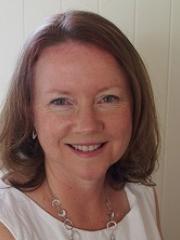
Lisa Ganobcsik-Williams is a Senior Lecturer and Head of the Centre for Academic Writing at Coventry University. With over two decades of experience, she specializes in academic writing pedagogy, writing centers, and multilingual education. Her work focuses on enhancing writing support in higher education through innovative frameworks and digital environments. Role: Head of Centre for Academic Writing Institution: Coventry University Research Themes: Academic Writing, Multilingualism, Online Learning, Writing Centers Her research explores the intersection of writing pedagogy, student development, and technological integration. She has contributed to debates on academic literacy, writing program administration, and the adaptation of writing support in diverse contexts. Recent publications analyze the impact of generative AI on writing instruction, asynchronous tutoring models, and multiliteracy approaches. She advocates for structured support systems to address equity and engagement in student writing. As an active voice in writing center research, she has led projects like the Coventry Online Writing Lab and emphasized collaborative practices in writing development.
Dr. Patricia Duff is a Professor at the University of British Columbia in the Department of Language and Literacy Education. Her research focuses on bilingual/multilingual education, identity formation, language ideologies, and decolonizing methodologies in language learning contexts. English and Mandarin language proficiency 604-827-5028 contact Active in language socialization studies across classrooms, families, and diaspora communities Research interests center on language socialization processes in transnational environments, heritage language education, academic discourse communities, and the intersection of pop culture with language pedagogy. She pioneered case study methods in applied linguistics and co-edited the Routledge handbook of research methods in applied linguistics . Key publication trends show sustained focus on Chinese language education (40+ publications), family/workplace language planning (15+), and critical discourse analysis of multilingual identities (25+). Her work spans qualitative classroom research, policy analysis, and sociocultural theory applications.
Dr Linda Willis is an Honorary Senior Fellow in the School of Education at The University of Queensland. Her research focuses on parent-school-community engagement, educational leadership, and innovative pedagogical practices in teacher education. She has led projects such as the Principal Leadership for Parent-School-Community Engagement in Disadvantaged Schools Project , exploring strategies to enhance engagement in educationally disadvantaged contexts. Her work emphasizes the role of principals in fostering collaborative partnerships, leveraging digital tools for parent involvement, and integrating social justice principles into curriculum design. Willis has contributed to international publications on topics like coteaching, critical visual literacy, and the ethical use of social media in education. Willis has presented at conferences including the Australian Association for Research in Education and the Helping Families Change Conference, and her research has informed policy briefs for the Queensland Department of Education. She holds a PhD in Education from Queensland University of Technology (2013) and has authored/co-authored over 100 scholarly works across books, journal articles, and conference papers.
Lucia Cardenas Curiel is an Assistant Professor in the Department of Teacher Education at Michigan State University's College of Education. She holds a Ph.D. from the University of Texas at Austin. Her research focuses on literacy practices for culturally and linguistically diverse students, particularly Latina/o bilingual children, emphasizing multicultural literature, social justice, and identity development. Dr. Curiel explores innovative pedagogical strategies rooted in community language practices and teacher preparation for diverse classrooms. She is affiliated with the College of Education and Department of Teacher Education. Her work bridges theory and practice through studies on translanguaging, multiliteracies, and bilingual education. Recent research includes community-based learning initiatives, linguistic identity exploration, and critical pedagogies in multilingual settings. She has published widely on topics such as dual-language classroom practices, preservice teacher development, and historical analyses of bilingual education materials. Dr. Curiel’s publications span translanguaging in science education, art museum co-teaching, and sustaining bilingual identities. Her work consistently advocates for culturally responsive teaching and equitable educational practices. She actively prepares teachers to engage linguistically diverse learners through field experiences and community partnerships.
Eveline Chan is an Associate Professor in English, Literacies and Languages Education at the School of Education, Faculty of Humanities, Arts, Social Sciences and Education, University of New England (UNE), Australia. She is based in Education Building (E7), Room 332, and can be contacted at eveline_chan@une.edu.au or +61 2 6773 3818. Her research and teaching expertise lies at the intersection of language, literacy, and multimodal education. She specializes in how learning is mediated by multiple semiotic systems in both physical and digital spaces, with a strong focus on critical transitions in education. Her work has significant implications for literacy development, teaching, and assessment, particularly in academic and disciplinary literacies and reading in hypertext environments. The recent scholarly output of Associate Professor Chan reflects a consistent trajectory in multimodal and disciplinary literacies. Her publications explore the integration of image and text in digital and assessment contexts, particularly in science and language education. Themes include the design of multimodal assessments, the challenges of online reading comprehension, and the pedagogical translation of disciplinary knowledge. Her work bridges theoretical frameworks like systemic functional linguistics with practical classroom applications, influencing both curriculum and assessment design. She is actively engaged in the academic community, serving on the Editorial Review Board of English Teaching: Practice & Critique and as a peer reviewer for journals in Education, Linguistics, and Computer Science Applications. She is also a member of the Executive Committee of the Australian Literacy Educators’ Association Northern NSW Council. PhD (Syd) GradDipTeach TESL (SACAE/UniSA) BEd Hons 1 (Syd) She has supervised numerous PhD candidates to completion, including Lindsay Williams, Lindall Watson, Annemaree O'Brien, and Hajar Alharthi. Her teaching includes coordinating and lecturing units such as EDEE100 English Language in Use, EDEE 312 English Teaching: Focus on Writing and Creating, and EDEE 528 Researching Literacies in Education. She is affiliated with professional organizations including PETAA, ALEA, and ASFLA. Her research is supported by her deep engagement with multimodal theory and systemic-functional linguistics, and she continues to contribute to the evolving understanding of how students navigate and create meaning in complex, multimodal learning environments.
Karla J. Möller is an Associate Professor in Curriculum and Instruction at the University of Illinois at Urbana-Champaign's College of Education. She also serves as Associate Dean for Graduate Programs. Her work focuses on cultural diversity, literacy education, and social justice, particularly through literature-based instruction in K-12 classrooms. Research emphasizes availability and selection of culturally diverse texts Explores pedagogical approaches to literature discussions Advocates for equitable access to quality educational materials Key contributions include studies on LGBTQ-inclusive literature, graphic nonfiction integration, and critical literacy frameworks. She has extensively reviewed children's literature for educational use and collaborated on numerous publications with literacy experts.
Dr. Logan Rath is a Librarian at SUNY Brockport and Adjunct Professor at the University at Albany's Information Science and Technology program. He also serves as Director of Online Learning for the IDS Project, coordinating professional development for interlibrary loan specialists. His academic appointments include active involvement in SUNY Brockport's University Senate and representation at the SUNY University Faculty Senate. Education: PhD, Curriculum, Instruction & the Science of Learning, University at Buffalo, 2022 MS, Information Design & Technology, SUNY Polytechnic Institute, 2012 MLS, School Library Media, University at Buffalo, 2007 BA in Spanish - Adolescent Education 7-12, SUNY Geneseo, 2005 Research Focus: Dr. Rath investigates information literacy as sociocultural practice, examining how librarians conceptualize and implement literacy frameworks. His work emphasizes technology integration in academic settings, multimodal learning environments, and collaborative pedagogy between librarians and educators. Current projects analyze AI perceptions in teacher education and longitudinal patterns in student-library engagement. Awards & Honors: Service to the University Award (2023) Chancellor's Award for Excellence in Librarianship (2016) Professional Contributions: He develops open educational resources including 'Communities of Practice for Library Instruction' and creates technical tools like library discovery layer bookmarklets and QR code generators. He maintains specialized academic resources on x-linked hypophosphatemia (XLH) research.
Emilia Djonov is an Associate Professor in the Macquarie School of Education at Macquarie University, with affiliations to the Lifespan Health and Wellbeing Research Centre and The Centre for Research in Early Childhood Education (CRECE). Her research focuses on multimodal communication, early childhood literacy, and the role of technology in education. She leads major projects like Language for Learning - MQ TaLK and MQ Toddler TaLK, investigating language environments and learning-oriented talk in early childhood settings. Her teaching expertise spans undergraduate and postgraduate courses in language and literacy, emphasizing innovative digital technologies and reflective learning. She serves as an Associate Editor for Linguistics and Education and editorial board member for journals like Multimodal Communication and Journal of Early Childhood Literacy . Research interests include multimodality, social semiotics, and multilingualism, with a focus on how modes (language, visuals, gestures) and technologies shape learning. Key areas of study involve children’s literacy development, digital tools in education, and cross-cultural language experiences. Emilia supervises numerous PhD and Master’s students, guiding projects on topics like multilingual toys, EFL apps, and heritage language maintenance. She has completed over a dozen research projects, including analyses of EFL textbooks and digital documentation apps in early childhood education. Key Projects: MQ TaLK (ARC Discovery, 2018–2023), MQ Toddler TaLK (NSW Department of Education, 2021–2023) Editorial Roles: Associate Editor, Linguistics and Education ; Editorial Board Member, Multimodal Communication , Multimodality & Society , and Journal of Early Childhood Literacy Labs/Teams: CRECE, Lifespan Health and Wellbeing Research Centre
David E. Low is a Professor in the Department of Literacy, Early, Bilingual and Special Education at California State University, Fresno's Kremen School of Education and Human Development. His research examines critical multimodal literacy practices of children and youth in diverse learning spaces, with particular expertise in comics, visual literacy, and critical pedagogy. Dr. Low previously served as Assistant Professor (2015-2020) before advancing to Associate Professor and ultimately Professor. Dr. Low earned his Ph.D. from the University of Pennsylvania, M.A. from New York University, and B.A. from the University of Arizona. His educational background in language, literacy, and culture informs his current research and teaching approaches which center on critical praxis and dismantling educational status quos that harm learners. Dr. Low's research focuses on intersections among multiliteracies, multimodality, racial and cultural identity, antideficit and antiracist pedagogies, popular culture/media, and critical multicultural education. His recent book "Transgressive Humor in Classrooms" (Routledge, 2024) explores humor as a form of social critique in secondary ELA classrooms. He has published extensively in top journals including Journal of Literacy Research, Research in the Teaching of English, Language Arts, and English Education, with over 30 scholarly publications to his name. Dr. Low's scholarly trajectory demonstrates consistent engagement with visual and multimodal literacies, particularly comics and graphic narratives, as tools for critical inquiry, social justice education, and identity exploration. His work spans teacher education, children's literature analysis, and critical examinations of representation across multiple disciplines including mathematics, gender studies, and cultural identity. Dr. Low has received significant recognition for his scholarship: Arthur Applebee Award for Excellence in Research on Literacy (2023) Divergent Publication Award (2023) Keynote speaker at NCTEAR (2025) As an academic leader, Dr. Low chairs the University Personnel Committee at Fresno State (2020-present) and serves on the Executive Committee of ELATE (2023-27). He previously served as the School of Education's Faculty Assembly President (2017-18), co-chaired the Research Committee (2016-19) and Dandoy Committee (2017-23), and convened the César Chávez Education Conference (2017). His teaching focuses on mentoring pre- and in-service teachers to develop frameworks that honor students' cultural and intellectual legacies. He oversees the College's ongoing partnership with the Fresno American Indian Health Project (2015-present). Dr. Low serves on the Editorial Review Boards of Research in the Teaching of English and English Journal. He previously served as Section Editor for Language Arts (vols. 97 and 98, 2019-21) and co-edited a special issue of English Teaching: Practice and Critique. He is past chair and program chair of the AERA Literature SIG (2015-19) and a past member of NCTE's Standing Committee on Research (2018-21).
Erika Hepple is an education academic at Griffith University's School of Education, specializing in intercultural teacher education and transnational learning experiences. Her research focuses on how pre-service teachers develop intercultural competence through international mobility programs, particularly examining Australian-Malaysian educational collaborations. Her research interests center on intercultural competence development in teacher education, with particular emphasis on short-term mobility programs , global citizenship identity formation , and transnational pedagogical approaches . Her methodological approach favors qualitative case studies and reflective practice frameworks to examine how cultural encounters shape professional identities. Analysis of her publication record reveals consistent focus on pre-service teacher development within international contexts, with particular attention to Australian-Malaysian collaborations. Her work demonstrates evolution from initial explorations of cultural encounters (2006-2010) toward more sophisticated frameworks for intercultural competence development (2015-2020), incorporating digital narratives and public pedagogy approaches. Her collaborative work patterns indicate strong research partnerships with colleagues including Donna Tangen, Deborah Henderson, and Jennifer Alford at Griffith University, as well as international collaborators in Malaysia and Hong Kong. These partnerships have produced significant contributions to understanding how structured international experiences transform teacher identity and practice.
Kathy Mills is a researcher at Queensland University of Technology, specializing in multiliteracies, digital media, and educational practices. Her work explores multimodal communication, Indigenous education, and emotional dynamics in teaching. With over 80 publications since 2003, she focuses on how digital tools and multimodal approaches transform literacy and pedagogy. Her research integrates critical theories with empirical studies, addressing topics like autism spectrum disorder, STEM education, and teacher well-being. She advocates for inclusive practices and has contributed to frameworks like the 'multiliteracies classroom' and 'queer critical media literacies.' Publications highlight her analysis of digital composition, emotion management in workplaces, and Indigenous children's visual communication. Her work bridges theory and practice, influencing curriculum design and educational policy.
Jérémie Seror is a Full Professor at the Official Languages and Bilingualism Institute (OLBI) within the Faculty of Arts at the University of Ottawa. He serves as Director and Associate Dean of the Institute. His research focuses on the sociocultural dimensions of academic literacies and multilingual students' educational experiences, informed by 15+ years of language teaching in diverse educational settings. He holds a Ph.D. (2008), M.A (2002), B.Ed. (1996), and B.A. (1995) from the University of British Columbia and University of Ottawa. Research interests include applied linguistics, language policy, bilingual education, and the interplay between social factors and language development. Notable work examines French immersion programs, language ideologies among educators, and technology-mediated language learning processes. His publications address topics like bilingual identity construction, multilingualism in academia, and effective feedback strategies in second language writing. Teaching responsibilities include BIL 5502 (Research Methodologies in Bilingualism Studies) and DLS 2101 (Listening and Reading). He has contributed to curriculum development for French immersion programs at the university level. His work emphasizes improving educational outcomes for multilingual learners through socially responsive pedagogical practices.
Auli Lehtinen is a Postdoctoral Researcher at the University of Jyväskylä, affiliated with the Faculty of Education and Psychology. They work in the EDUCA (Education for the Future) Flagship project and the JYULed research group focusing on digital education and learning environments. Their research emphasizes digitalization's impact on education, teacher development, socioemotional competence, and creative pedagogical methods. Lehtinen's work integrates qualitative and mixed-methods approaches, particularly analyzing collaborative learning in online and blended teacher education contexts. They have explored pre-service teachers' narratives about educational futures and co-constructed knowledge processes in video-based learning. Recent studies investigate how digital tools shape learning outcomes, well-being, and literacy development across early childhood through primary education. They are involved in projects like LearnDigi, examining digitalization’s role in knowledge construction and interaction. Publications span topics from socioemotional interactions in teacher training to adaptive literacy strategies in evolving learning environments. While no formal awards are listed, their contributions address pressing educational challenges related to technology integration and teacher preparedness for evolving educational landscapes.
Brenta Blevins is an Associate Professor of English Communication & Digital Studies at the University of Mary Washington. Her research and teaching focus on Writing Studies, Digital Studies, and emerging technologies like Augmented Reality (AR), Virtual Reality (VR), Mixed Reality (MR), and Multimodality/Multiliteracy. She is based in Combs Hall, Room 329, and can be contacted at sblevin2@umw.edu. Her academic background includes a B.A. from Virginia Tech, an M.A. from Radford University, and a Ph.D. from the University of North Carolina at Greensboro. In her work, Blevins explores the intersection of digital tools and compositional practices, as evidenced by her recent publication in the Modern Language Association's edited volume Writing Changes: Alphabetic Text and Multimodal Composition .
Dr. Clara Vaz Bauler is an Associate Professor at Adelphi University's Ruth S. Ammon College of Education and Health Sciences. She holds a Ph.D. in Education (Applied Linguistics, Cultural Perspectives) from UC Santa Barbara and has 13+ years of international K-12 to adult teaching experience. Educational Background Ph.D. in Education (2012), UC Santa Barbara M.A. in Portuguese Linguistics (2007), Universidade Federal do Rio de Janeiro B.A. in English/Portuguese (2004), Universidade Federal do Rio de Janeiro Her research focuses on: Transforming language education through translanguaging and multimodal practices Challenging standard language ideologies in multilingual classrooms Leveraging digital media for culturally responsive pedagogy Advocating for linguistic diversity in teacher education Examining raciolinguistic discrimination in virtual environments Promoting inclusive STEM education for multilingual learners Recent publications explore: Systemic language biases in remote learning discourse (2023) Critical theories in second language acquisition (2024) Digital tools for affirming multilingual identities (2023) Global-minded teacher development through virtual exchange (2020) Co-teaching strategies for linguistically diverse classrooms (2019) She teaches courses on: Sociolinguistic perspectives in education TESOL methodologies Cultural/linguistic diversity in schools Community-school partnerships