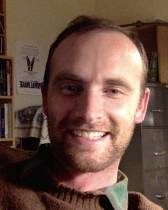
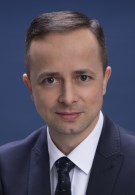
Tristram Wolff is an Associate Professor of English at Northwestern University, affiliated with the Programs in Comparative Literary Studies and Environmental Policy & Culture. He holds a PhD in Comparative Literature from the University of California, Berkeley. His research interrogates intersections of language, time, and nature in transatlantic Romanticism, challenging colonialist and racialized frameworks in literary and linguistic historiography. His first monograph Against the Uprooted Word (2022) re-examines linguistic theories of the Romantic era to contest Enlightenment-era primitivism, while his second book project explores affect theory through Romantic-era critical writing. Wolff teaches courses on William Blake, transatlantic Romanticism, environmental humanities, and literary engagements with geology and extractivism. He co-edited a 2021 special issue of Romantic Circles Praxis Series on public feeling and has published widely in journals like PMLA and English Literary History . His scholarship bridges literary criticism, critical theory, and interdisciplinary environmental studies, emphasizing reparative readings that reimagine social forms through language's material and temporal dimensions.
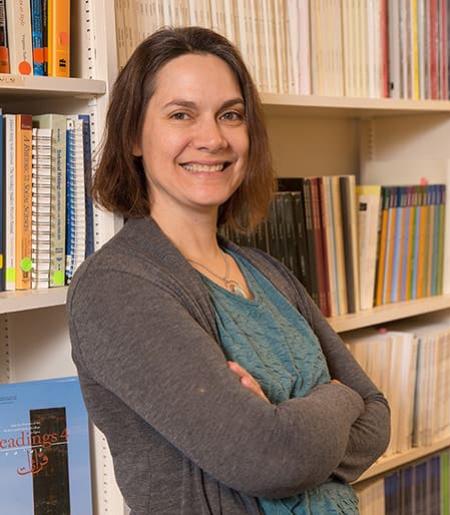
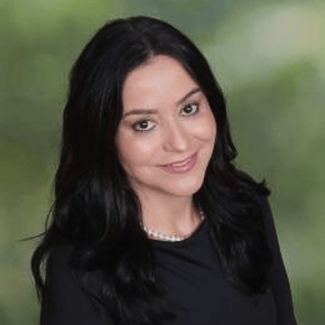
Michelle Crow is a Senior Lecturer at Cornell University and Director of the English Language Support Office within the John S. Knight Institute for Writing in the Disciplines. She is affiliated with the College of Arts and Sciences and supports multilingual graduate and professional students across all ten colleges at Cornell. PhD in Composition-Rhetoric with specialty in ESL writing, University of New Hampshire, 2006 Former Associate Professor of English, Bridgewater State University Founding Director, English Language Support Office, Cornell Founding Chair, Association for Writing Across the Curriculum (AWAC) Co-Founder, Consortium on Graduate Communication Her research focuses on Writing Across the Curriculum (WAC), graduate writing support, and pedagogy for multilingual writers. She has pioneered sustainable models for WAC programs and developed frameworks for supporting non-native English speakers in academic writing. Her work bridges composition theory, program administration, and practical pedagogy in higher education contexts. Her publications include influential books such as Sustainable WAC , Supporting Graduate Writers , and WAC and Second Language Writers . These works highlight trends in interdisciplinary writing support, curriculum development, and inclusive pedagogy, particularly for multilingual graduate students. Her scholarship appears in leading journals like Across the Disciplines , The WAC Journal , and Composition Studies . Scientific Awards: Presidential Award for Excellence in Collaboration to Improve Teaching (2010, BSU) Presidential Award for Distinguished Teaching (2012, BSU) Distinguished Fellow of the Association for Writing Across the Curriculum (2021, AWAC) Best WAC Monograph Award (2021, WAC Clearinghouse) Michelle Crow has led major initiatives in writing program development, including founding the Association for Writing Across the Curriculum and co-developing national standards such as the INWAC Statement of WAC Principles. She has secured recognition through institutional and national awards, reflecting her impact on teaching and program leadership. Her work continues to shape graduate communication support and WAC infrastructure across institutions. She directs the English Language Support Office at Cornell, a central hub providing writing and speaking consultations for multilingual graduate students, postdocs, and professionals. The office operates under the Knight Institute and collaborates across disciplines to promote inclusive academic communication.
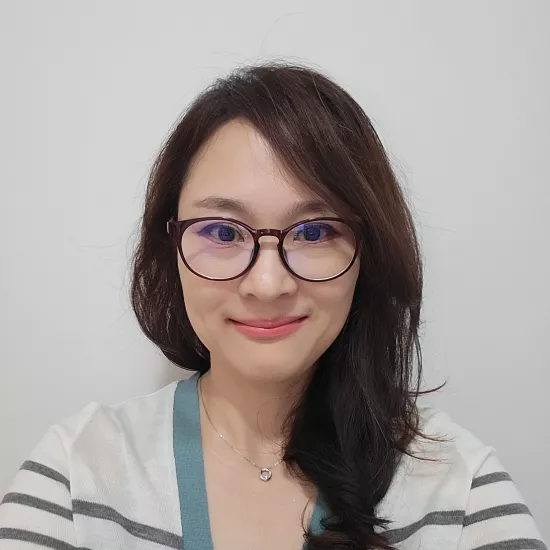
Ji-young Shin serves as an Assistant Professor in the Teaching Stream within Education Studies at the University of Toronto Mississauga's Department of Language Studies. Her position integrates teaching, research, and practical application in language education with emphasis on assessment innovation and technology integration. Her academic credentials include: PhD in English / Second Language Studies & ESL from Purdue University, USA MS in Educational Psychology & Research Methodology from Purdue University, USA MA in Teaching English to Speakers of Other Languages (TESOL) from Hankuk University of Foreign Studies, South Korea BA in English Education (Japanese minor) from Hankuk University of Foreign Studies, South Korea Shin's research program focuses on language assessment, corpus linguistics, and technology-mediated pedagogy. She employs mixed methods with quantitative emphasis, utilizing corpus-informed computational analysis and latent-trait modeling complemented by qualitative discourse analysis. Her work addresses critical gaps in second language acquisition, educational measurement, and digital learning environments, particularly regarding AI applications and test validation across diverse language contexts. Her publication trajectory from 2017-2025 demonstrates consistent innovation in language assessment methodologies and technology integration. Key themes include AI-powered chatbots for L2 Korean instruction, online vocabulary testing for Spanish, and corpus-based writing pedagogy. Her work shows increasing focus on artificial intelligence applications and cross-linguistic validation studies, reflecting evolving priorities in language education research. Shin has secured competitive research funding including: Global Classrooms Grant (2025–2026) for VR-enhanced intercultural competence Black, Indigenous, and/or Racialized Scholar Grant (2025–2026) for cross-border AI language learning IRCC Engage3 Project (2022–2024) as Co-PI on VR/AI educational advancement Advancement Fund Plus (2022) for generative AI in teacher education British Council Award (2019) for technology-mediated assessment development She teaches advanced courses including 'The Future of Ed Tech: Active Learning Classrooms and Artificial Intelligence' (EDS285) and supervises community-based experiential learning (EDS388). Her grant portfolio indicates active supervision of research assistants and collaboration with international teams focused on AI implementation and assessment validation. Current projects explore generative AI for language learning across diverse contexts and virtual reality applications in teacher education. While specific laboratory infrastructure isn't documented, her collaborative publications with researchers across Korea, Spain, and the United States suggest participation in international research networks focused on language assessment technology and corpus applications.
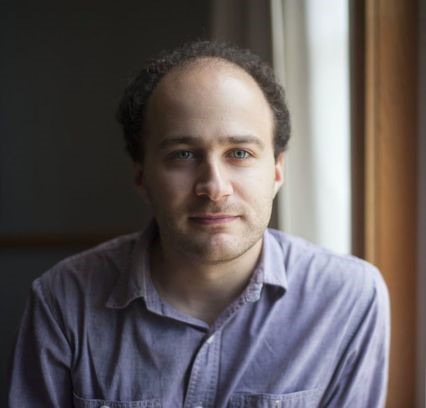
J. Elliott Casal serves as an Assistant Professor in the Department of English at the University of Memphis, where his research centers on applied linguistics with emphases in corpus linguistics, discipline-specific writing, and genre-based language pedagogy. His work bridges theoretical frameworks with practical applications for language teaching and academic literacy development across diverse disciplinary contexts. His academic credentials include: Ph.D. (2016-2020) from Pennsylvania State University M.A. (2012-2014) from Ohio University B.A. (2004-2008) from Ohio University Casal's research investigates functional linguistic conventions in professional communication, development of discipline-specific literacies, and corpus tool integration in language education. His scholarship critically examines syntactic complexity, phraseological patterns, and academic literacy across disciplines through both quantitative corpus analysis and qualitative assessments of learner agency, creativity, and intentionality in writing development. Analysis of his 15 most recent publications (2019-2024) reveals consistent focus on corpus-driven methodologies applied to academic writing across STEM and humanities disciplines. Key trends include syntactic complexity development in L2 legal writing, AI-writing detection ethics, frame-based formulaic features in academic genres, and cross-disciplinary variation in research article structures, demonstrating evolving applications of corpus linguistics to contemporary language education challenges.
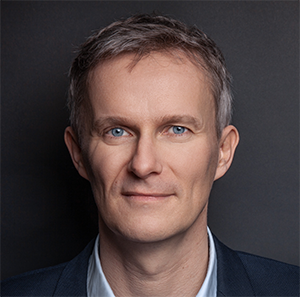
Dr hab. Krzysztof Węcel serves as Professor and current Head of the Department of Economic Informatics at Poznan University of Economics and Business (UEP), appointed on October 4, 2024. His primary affiliation spans over 25 years with UEP's Department of Economic Informatics, which maintains one of Poland's longest-running academic websites since 1998. He holds dual recognition through habilitation from University of Potsdam (2020) and professorship conferred by UEP (June 24, 2020). His academic milestones: Habilitation degree in Economic Informatics, University of Potsdam (2020) Professor title, Poznan University of Economics and Business (2020) Węcel's research centers on Semantic Technologies and data quality assessment across multilingual Wikipedia, with emphasis on company information verification, citation analysis, and open data applications. His work bridges Big Data analytics with practical business solutions, particularly in maritime logistics where he pioneered evolutionary algorithm-based AIS data processing. Current investigations focus on generative AI's dual role in creating and combating disinformation, including ChatGPT's impact on academic writing and fake news propagation. Recent publications (2022-2025) reveal three dominant trends: First, systematic analysis of Wikipedia's reliability across languages during crises like the pandemic and Ukraine war. Second, development of AI-driven fact-checking frameworks (e.g., OpenFact project's CLEF 2023 victory). Third, exploration of generative AI's societal impact ranging from student creativity to disinformation campaigns. Scientific awards received: Best Paper Award at ICIST 2017 Conference Award for most innovative article at NATCON 2018 conference Microsoft Azure for Research Award (2016) As academic advisor, he leads the 'Semantic Technologies' diploma seminar attracting high-achieving students, with participants winning the 29th UEP Foundation Competition (2025) and Eurostat's Web Intelligence Challenge (2024). His grant portfolio includes the 'Maritime Big Brother' project (2017) for ship voyage prediction using AIS data and Microsoft Azure funding for Wikipedia quality enhancement. Ongoing initiatives include OpenFact (fake news detection) and GOBLIN projects. He actively collaborates with SKN Data Science student circle (evidenced by 2024/2025 inaugural meeting) and international consortia like CLEF and QOD workshops. Departmental leadership involves managing the OpenFact research team that achieved top results in CheckThat! Lab competitions, alongside maritime data analytics groups applying evolutionary algorithms to shipping networks.
Dr. David Miranda-Barreiro is a Senior Lecturer in Hispanic Studies at Bangor University’s School of Language, Culture and the Arts. He serves as Undergraduate Course Director and Head of Hispanic Studies, teaching modules in Spanish language, literature, and cinema. His academic journey began with a BA in Hispanic Studies from the University of A Coruña, followed by an MA and PhD at Bangor University, where his thesis Spanish New York Narratives 1898–1936 won the 2012 AHGBI Publication Prize. Research Interests: Mobility (travel writing, migration, exile), Galician-US cultural connections, comics/graphic novels, national/transnational identities. Key Publications: Monograph on Spanish New York narratives (2014), co-editor of Galicia 21 journal, and articles on Galician migration, comics, and exile literature. Awards: AHGBI-Spanish Embassy Postgraduate Prize (2012), Santander Mobility Grant (2009-2010). Co-organizer of conferences on diaspora, comics, and Iberian mobility. Supervision: First supervisor for PhD projects on migrant literature, Galician diaspora, and transnational identities; second supervisor for completed theses on feminist TV series, translation, and women-authored narratives.
Dr. Aline Ferreira is an Associate Professor and Director of the Bilingualism, Translation, and Cognition Laboratory at the University of California, Santa Barbara. She holds a Ph.D. from the Federal University of Minas Gerais (2013) and served as a post-doctoral research fellow in psychology at Wilfrid Laurier University. Her research focuses on bilingualism, translation processes, cognitive aspects of language, and reading. She has co-edited influential works such as The Handbook of Translation and Cognition and The Development of Translation Competence , and her work has been published in journals like Translation and Interpreting Studies and Reading and Writing . Her research interests include cognitive translation processes, bilingual cognition, and sociolinguistic factors in language learning. Recent studies explore food security disparities, indigenous health in Brazil, and the cognitive effects of immersion learning on L2 acquisition. Ferreira’s work bridges psycholinguistics, cognitive science, and applied linguistics to address interdisciplinary questions in translation and interpreting studies. She has contributed to over 50 peer-reviewed publications and serves as a key figure in advancing methodologies for studying translation processes using eye-tracking and retrospective protocols. Her lab focuses on measuring cognitive aspects of bilingualism and translation, with particular attention to marginalized populations such as Indigenous communities in Brazil. Her publications analyze topics ranging from gender and racial disparities in food insecurity to the neurological underpinnings of interpreting tasks. Ferreira’s research also addresses educational outcomes for multilingual learners and the role of sociocultural factors in language acquisition among immigrant populations.
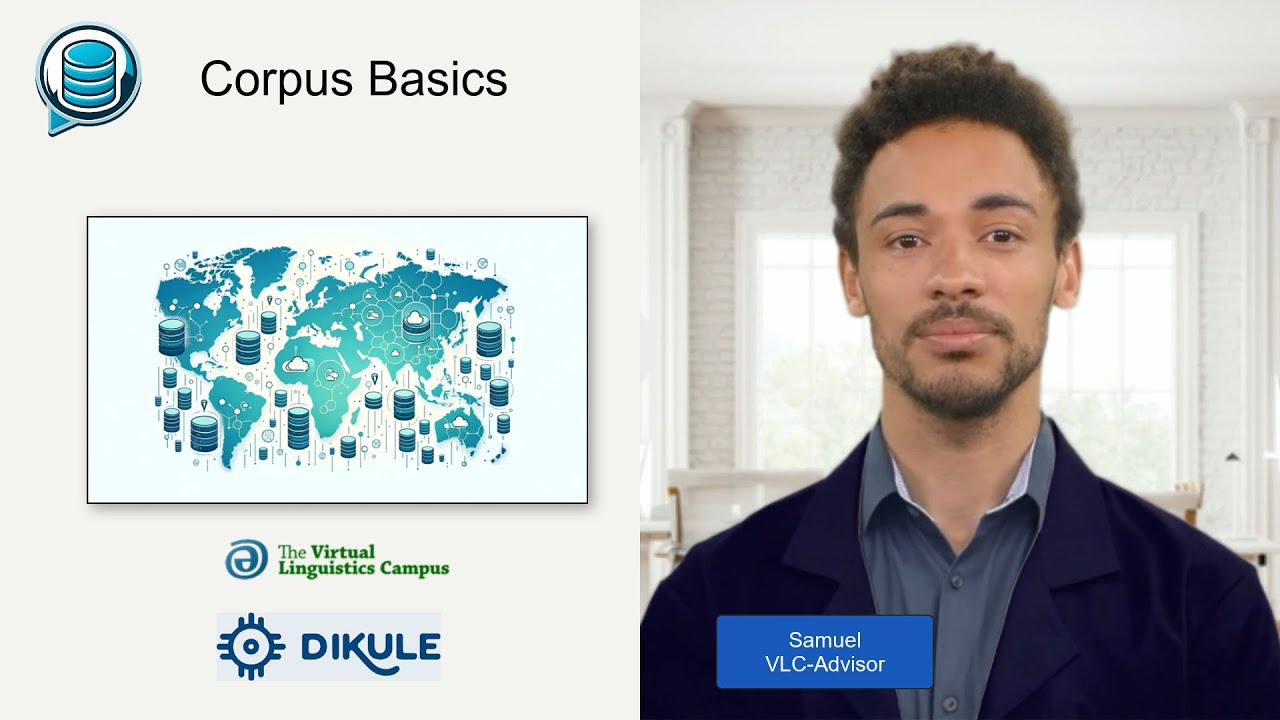
Professor Julia Schlüter is a distinguished academic in the Chair of English Linguistics within the Humanities Faculty at the University of Bamberg, Germany. She has served as Senior Lecturer at the Chair of English Linguistics and Language History under Prof. Manfred Krug since June 2008, holding the title of Professor following her habilitation in 2008. Her institutional profile demonstrates deep commitment to both research and teaching innovation, particularly through her leadership of the KorPLUS project and development of open educational resources for corpus linguistics. Her research interests span corpus linguistics for English language learners, empirical methods for studying language variation and change, and the application of corpus methods to teaching. She specializes in examining grammatical, phonological, and lexical differences between British and American English across historical periods from Middle English to present-day usage. Her work investigates phonological variation (particularly phonotactically controlled alternations), morphological change, and syntactic variation through corpus analysis, with special attention to functional grammar and grammaticalization theory. Professor Schlüter's recent publications (2022-2025) reveal a strategic evolution in her research focus, with increasing emphasis on the intersection of corpus linguistics and digital education. While maintaining her foundational work in historical English linguistics, she has developed significant expertise in applying corpus methods to language teacher education and evaluating AI writing tools. Her work demonstrates consistent methodological innovation, moving from traditional corpus analysis to blended learning approaches and digital educational resource development. Her scientific recognition includes: Winner of the 2025 Teaching Innovation Prize from the International Society for the Linguistics of English for the KorPLUS project University of Bamberg Prize for outstanding habilitation (2009) Lise Meitner Programme post-doctoral scholarship (2005-2006) Rectorate Prize from University of Paderborn for outstanding Ph.D. thesis (2005) Multiple DAAD scholarships for international study Professor Schlüter actively supervises doctoral research, currently guiding three Ph.D. candidates (Katharina Deckert, Aklima Nahar, and Nikolai Beland) while having successfully completed supervision for several others. She leads the KorPLUS project (2021-2025), funded by the Stiftung Innovation in der Hochschullehre, which develops open educational resources for corpus linguistics. Her research has been consistently supported by the German Research Foundation (DFG) and other funding bodies throughout her career. She heads the KorPLUS team (with Carina Großmann and Katharina Deckert) which develops the interactive Open Educational Resource platform for corpus linguistics. Her YouTube channel offers video tutorials on corpus basics, and she has created the Video Podcast Series "How to Update your Grammar" for English teachers. She regularly organizes in-service teacher trainings and collaborates with the Virtual Linguistics Campus at RWTH Aachen University to deliver her educational materials globally.
Jill M Castek is Professor of Literacy, Technology & Bi/multilingual Learners & STEM Education in the Department of Teaching, Learning, and Sociocultural Studies at the University of Arizona's College of Education. As Graduate Advisor for the Second Language Acquisition and Teaching (SLAT) program and Co-Director of the Digital Innovation and Learning Lab (DIALL), she bridges research and practice in digital literacy development. Dr. Castek earned her PhD in Education Psychology (Cognition and Instruction) from the University of Connecticut as a Neag fellow in the New Literacies Research Lab, followed by postdoctoral work at UC Berkeley's Lawrence Hall of Science. Her research examines how digital, visual, and audio storytelling fosters literate capacities across print and digital forms in classrooms and community spaces. Her work centers on digital problem solving , critical media literacy , and equity-centered making practices in STEM education. She investigates intersections of disciplinary literacy, new media, and learning for bi/multilingual students, with strong emphasis on community-based applications through libraries and non-profits like Literacy Connects where she serves on the board. Recent publications (2022-2025) reveal growing focus on AI-era teacher education , digital health literacy , and misinformation challenges , while maintaining core commitments to collaborative problem solving and expansive literacies frameworks. Her scholarship consistently addresses K-12 and adult learning contexts through interdisciplinary lenses. Scientific recognition includes: Neag fellowship during doctoral studies As Principal Investigator on NSF and IMLS grants, Dr. Castek advances digital equity through projects like the Making Equity Network (broadening STEM participation for underrepresented groups) and library-focused digital problem-solving initiatives serving economically vulnerable adults. Her leadership in the Technology Enhanced Language Learning (TELL) cluster hire demonstrates institutional impact. Through DIALL, she cultivates innovations connecting digital storytelling with self-expression at individual and community levels, promoting workforce readiness via creative problem-solving approaches. Her board membership with Literacy Connects extends this community-engaged scholarship to Tucson-based literacy initiatives.
Laurence Anthony is a Professor at Waseda University's School of Creative Science and Engineering, specifically affiliated with the Center for English Language Education in Science and Engineering (CELESE). He has held this position since 2009, having previously served as an Associate Professor at the same institution from 2004-2009. His academic journey began with a BSc from The University of Manchester (1991), followed by an MA (1997) and PhD (2002) from The University of Birmingham. Anthony's research centers on corpus linguistics, educational technology, and natural language processing applications in foreign language teaching. He is renowned for developing AntConc, a widely used freeware corpus analysis toolkit, along with numerous other educational software tools including AntWordProfiler, FireAnt, and ProtAnt. His work bridges linguistic theory with practical classroom applications, particularly in data-driven learning approaches for English as a Foreign Language contexts. His publication record is extensive with over 50 papers, 12,115 Google Scholar citations, and an h-index of 45. His recent work increasingly explores the intersection of corpus linguistics and artificial intelligence, examining how language models can enhance language teaching and analysis. Anthony's research has evolved from foundational corpus tool development to sophisticated applications in vocabulary profiling, writing analysis, and AI-assisted language learning. Among his notable recognitions are the Waseda University 6th e-Teaching Award (2018), the National Prize of the Japan Association of English Corpus Studies (2012), and the L'Oreal Art and Science of Color Gold Prize (2005). He serves on multiple editorial boards including for Studies in Corpus Linguistics, Journal of Asia TEFL, and Corpus Linguistics Research Journal. Anthony actively contributes to the academic community through numerous presentations at international conferences, recent ones including talks on AI integration with corpus methods at Corpus Linguistics 2025 and the LSP-Num Conference. His professional activities demonstrate ongoing engagement with both theoretical developments and practical applications in language education technology.
Inci Dirim is a Professor at the Department of German Studies within the Faculty of Philology and Cultural Studies at the University of Vienna . Her work focuses on German as a Second Language (DaZ) , multilingualism, migration pedagogy, and educational equity. She has developed diagnostic tools for language assessment, contributed to curriculum design, and critically analyzed discrimination mechanisms in language education. Education : Magistra Artium (MA) in Linguistics and German Studies from the University of Bremen (1991); PhD in Educational Science from the University of Hamburg (1997) Her research emphasizes language diagnostics , cultural identity , and reflexive pedagogy , particularly in contexts of linguistic and social heterogeneity. She has led projects like TESSLA (language support for multilingual children) and Unterrichtsbegleitende Sprachstandsbeobachtung DaZ (classroom language assessment). Recent publications explore inter- and transdisciplinary approaches to DaZ, normative foundations in language teaching, and separation practices in language promotion. She serves as a key figure in the Austrian Association for German as a Foreign/Second Language (ÖDaF) and the German Society for Educational Science (DGfE) , advocating for critical perspectives on language, migration, and education. Her teaching includes courses on Basics of German as a Foreign and Second Language , Modern German Literature , and Language Diagnostics .
Torsten Steinhoff is a Professor of Didactics of the German Language at the Department of Germanic Studies, University of Siegen, Faculty of Arts and Humanities. His research and teaching focus on theoretical, methodological, and empirical aspects of language acquisition and instruction from elementary to university levels. His primary research interests include: Writing didactics (Schreibdidaktik) Vocabulary didactics (Wortschatzdidaktik) Language-specific and disciplinary learning (Sprache im Fach) Digital communication and AI in education Development of complex learning arrangements (Lernarrangements) Steinhoff investigates how digital tools like ChatGPT can be integrated into writing instruction, promoting argumentative writing through structured learning tasks. His recent work (2023–2025) analyzes human-AI collaboration in writing, proposing models such as GPT as Ghost, Partner, or Tutor. He emphasizes a post-digital didactic approach, balancing traditional literacy with digital competencies. His publications reflect a strong trend in digital transformation of writing, multilingual education, and empirical interventions in secondary classrooms. He leads research projects funded by BMBF and MKW NRW, including the "AI Writing Arrangements" project tested in 8th-grade classes. Scientific contributions and collaborations: Co-editor of research handbooks on empirical writing didactics Collaborator with scholars like Nicole Marx, Katrin Lehnen, and Joachim Grabowski Active contributor to journals such as Didaktik Deutsch , BiSS-Journal , and Waxmann publications Hosts a research team at lernarrangements.de He advises on academic language development, text procedures, and vocabulary transfer across modalities and subjects. His lab develops open educational resources (OER) for digital writing and communication, contributing to platforms like Twillo.
Aya Matsuda is a Professor of Applied Linguistics at Arizona State University's Department of English, where she directs undergraduate and graduate programs in linguistics and applied linguistics. She holds a Ph.D. in English from Purdue University, along with an M.A. in Linguistics and a B.A. in English from International Christian University in Tokyo. Her research focuses on World Englishes, English as an International Language (EIL), and the implications of globalization for language education. Matsuda has authored and edited influential books including Preparing Teachers to Teach English as an International Language (2017) and Principles and Practices of Teaching English as an International Language (2012). Her work emphasizes rethinking language pedagogy to reflect global English diversity, challenging traditional native-speaker norms. Professional service includes roles as Board Director of TESOL International Association (2014–2017), Treasurer-Secretary of the International Association for World Englishes (2015–2019), and editorial board memberships for journals like TESOL Quarterly and World Englishes . Awards include the NNEST of the Month (2008) and the Walter J. Johnson Award (2000). Her teaching spans courses on Disciplinary Discourses, Global English Contexts, and Second Language Acquisition. She has mentored numerous graduate students, focusing on topics like EIL curriculum design, language policy, and multilingualism.
Douglas K. Hartman is a Professor in the Department of Teacher Education at Michigan State University (MSU) , with a joint appointment in Educational Psychology and Educational Technology. He holds a Ph.D. from the University of Illinois Urbana-Champaign. His research focuses on the application of technologies to enhance human learning across diverse contexts, including schools, communities, workplaces, and sports. Hartman’s work bridges educational theory and practice, emphasizing innovation in teaching methodologies and digital literacy. His research interests span educational technology , new literacies , and technology integration in learning environments. He has contributed to understanding how digital tools impact early childhood education, teacher professional development, and global educational policies. His recent studies explore AI applications in literacy assessment and generative AI’s role in artistic disciplines. Key themes in his publications include cross-cultural educational collaboration (e.g., CLIL approaches in EMI contexts), early literacy development, and teacher roles in online learning. While no awards are explicitly noted, his extensive scholarly output reflects sustained contributions to educational innovation. Hartman’s affiliation with MSU’s College of Education positions him at the forefront of interdisciplinary research, though specific grants or labs are not detailed in the provided texts. He maintains an active research agenda addressing 21st-century challenges in education through technology-driven solutions.
Alexis Housen is a Professor of Linguistics & Applied Linguistics at the LW Academic Unit Linguistics and Literary Studies within Vrije Universiteit Brussel . Their research focuses on second language acquisition, multilingualism, and psycholinguistics. Currently active in over 30 projects, including leadership roles in initiatives like the Eye-Catching project (2021-2024) and the International Francqui Professor program (2023-2025). Research Interests : Housen's work examines language acquisition processes, particularly in second language learning contexts. Key themes include lexis-grammar interfaces, salience effects in SLA, and the role of instruction in phonological acquisition. Their empirical studies integrate psycholinguistic methodologies with corpus-based analyses. Recent Contributions : Recent publications address salience's role in morphology acquisition, complexity metrics in L2 writing, and comparative proficiency analysis across oral/written modalities. Their work demonstrates interdisciplinary influence across linguistics, education, and cognitive science. Recognition : Awarded the European Second Language Association Fellowship (2000). Active in international collaborations, presenting at conferences like the European Second Language Association and Birkbeck College symposia. Grants & Leadership : Oversees €1.2M+ in active funding through projects like SRP-Groeifinanciering: Multilingual language control (2022-2027). Serves in leadership roles including Dean and Head of Research Groups.