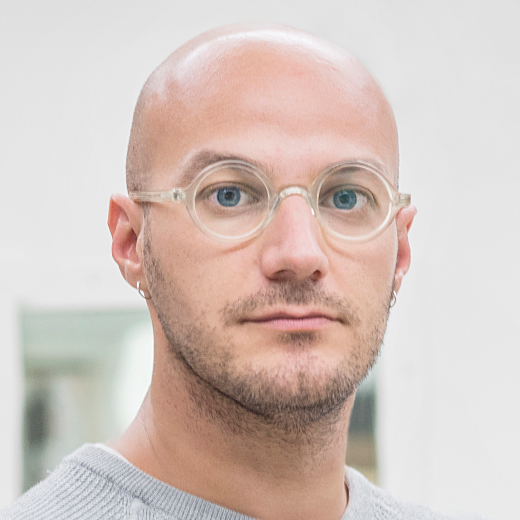
Jeff Hilson is a Reader in Creative Writing at the School of Arts, Humanities, and Social Sciences , with expertise in experimental poetry and poetic form. His academic interests span the British Poetry Revival , The New York School , and humor studies . He has published five books of poetry, including Latanoprost Variations (2017) and Organ Music (2020), and edited the influential anthology The Reality Street Book of Sonnets (2008). He curates the Xing the Line poetry reading series in London. 2021: 6 research outputs (digital works, articles) 2020: 2 research outputs 2017: 1 book 2014: 4 research outputs 2012: 1 research output Research Focus Hilson's work explores UK/US experimental poetry , innovative poetic structures , and the intersection of humor and avant-garde practices. His recent projects include ALDIGRAM digital poetry series and experimental translations like The God-awful Small Affair of the Invisible Organist (2021). Activities include organizing the ECW PG Summer Gathering (2022), participating in the Tentacular Festival (2021), and contributing to Ouse Muse Poetry Reading Series (2020).
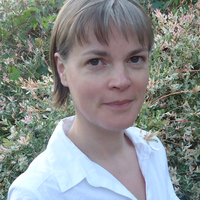
Jennifer Scappettone is Associate Professor in the Department of English at the University of Chicago, where she has taught since 2006. She holds a Ph.D. from the University of California at Berkeley (2005) and is a faculty affiliate of the Committee on Environment, Geography, and Urbanization and the Center for Study of Gender and Sexuality. She founded and advises the Environmental Humanities + Arts Lab (The City and its Others). Her research spans ecopoetics, environmental justice, translingualism, and avant-garde studies across 19th-21st centuries. She investigates vulnerable landscapes, poetic resistance to fascism, and urban geographies through radical documentary methods. Her work bridges poetry, scholarship, translation, and performance with collaborators including Deep Time Chicago, Judd Morrissey, and choreographers. Analysis of her publications reveals sustained exploration of anthropogenic landscapes , linguistic metamorphosis , and spatial justice . Key trends include: geopoetic interventions in urban watersheds, xenoglossic resistance to ethnonationalism, and sensory documentation of toxic sites. Her work consistently connects environmental harm with colonial and fascist violence through experimental forms. Raiziss/De Palchi Book Prize (2012) Italian Ministry Translation Prize (2012) Modernist Studies Association Book Competition Finalist (2014) Creative Capital Award Finalist (2023) She advises the Environmental Humanities Lab and received a 2015-16 Mellon Fellowship for "The Data That We Breathe" project. Current grant-supported initiatives include the 2024-25 "Geopoetics of Urban Rivers" symposia between Chicago and Paris. Her research has been funded by Harvard's Villa I Tatti, Stanford Humanities Center, Getty Research Institute, and American Academy in Rome. Her Environmental Humanities + Arts Lab (The City and its Others) catalyzes interdisciplinary projects on urban ecologies. Recent initiatives include "Sensing the Anthropocene" co-taught with Visual Arts, deploying non-visual senses to document Chicago's anthropogenic landscapes through drawing, scoring, and experimental book-making.
Eva Brumberger is a Professor in the School of Applied Professional Studies at Arizona State University (ASU). Her research focuses on visual communication, technical communication, and pedagogical strategies for integrating visual literacy into academic and professional settings. She explores topics such as AI-generated imagery bias, generational differences in visual literacy, and the role of visual rhetoric in education. Her work bridges academia and industry, emphasizing the importance of aligning curricula with workplace needs. Key themes include the evolution of technical communication in Web 2.0 environments, intercultural visual communication, and the application of eye-tracking technology to study expertise and perception. Brumberger’s publications highlight innovative research methods and interdisciplinary approaches, such as combining qualitative and data-driven analysis. Her contributions span curriculum design, workplace communication practices, and the ethical implications of emerging technologies like AI in visual content creation. While no formal awards or grants are listed, her extensive publication record reflects sustained engagement with visual communication challenges across diverse contexts. She advocates for integrating technological fluency into communication education to prepare students for evolving professional landscapes.
Professor Paul Luna is a distinguished academic at the University of Reading's School of Arts and Communication Design, specializing in Typography & Graphic Communication. He holds a Professorship and has made significant contributions to publishing history, book design, and typographic theory. Affiliations: University of Reading (current) Roles: Professor, Book Designer, Editor His research focuses on typography's role in historical and contemporary publishing, including lexicography, non-Latin scripts, and cultural aspects of design. Notable works include Typography: A Very Short Introduction (2018) and The Bloomsbury Handbook of Global Typography (2025). Professor Luna has designed major publications like the Oxford Shakespeare series, Eliot's poems, and religious texts such as the Qur'an translation and Book of Common Prayer, emphasizing material craftsmanship alongside typographic innovation. Key contributions include studies on punctuation's visual role, Johnson's Dictionary design, and the evolution of printing technologies from metal typesetting to digital systems.
Heather Hornbeak is an active Associate Professor of Web Design in the Art Department at Charleston Southern University (CSU), where she teaches Web Design, UX/UI, and Photography. She joined CSU in 2024 after previously serving as Professor of Interactive Media at Asbury University (2016-2024) and teaching photography at Union University during graduate studies. Her career uniquely bridges academia and industry, with designs featured globally in Apple stores and major trade shows like CES and MacWorld. Education: M.F.A. in Graphic Design & Photography, Azusa Pacific University (2016) B.A. in Graphic Design, Union University (2004) Animation Design Training, School of Visual Arts (2022) Production Design Training, Asbury University (2017) Her research focuses on user-centered digital design, particularly Web Design and UX/UI methodologies. She investigates practical applications of Data Visualization in education and corporate settings, alongside sustainable design innovations demonstrated through her tiny home project and van conversion. Her work consistently connects technical design skills with real-world user behavior and ethical digital communication practices. Recent publications (2016-2024) reveal three key trends: (1) UX/UI design for corporate and educational contexts, (2) data visualization as a communication tool, and (3) design's role in lifestyle innovation. She emphasizes the intersection of technology, user behavior, and physical space optimization, with growing attention to social media's impact on community events. Heather Hornbeak has not received any listed scientific awards or fellowships in the provided text. While no formal graduate students are documented, she mentors through teaching and industry leadership. She trained employees in her AV & Home Automation business and taught photography at Union University. Grant history isn't mentioned, but her corporate work included major accounts for Target, Walmart, and Best Buy, reflecting applied research funding through industry partnerships. She co-owns a studio and AV & Home Automation business with her husband, personally training employee teams. At CSU, she collaborates with the Art Department but no dedicated research lab is specified. Her Creo Art Guild membership and AIGA judging role indicate professional team engagement.
Elvira Topalovic serves as Professor of German Language Didactics at the Institute of German Studies and Comparative Literary Science within the Faculty of Arts and Humanities at University of Paderborn, holding a W3 professorship since April 2012. She directs the Deutsch-Treff initiative and maintains active leadership roles in major German academic organizations. Her educational background includes a Magister Artium from the University of Cologne (1996), doctoral studies completed summa cum laude at the University of Cologne (2002), and earlier academic training at the University of Sarajevo where she earned certification as a German language and literature teacher for secondary schools (1988). Professor Topalovic's research focuses on language acquisition processes, particularly examining written and spoken language development, grammar acquisition, orthography learning, and the intersection of multilingualism with educational settings. Her work increasingly addresses language inclusion practices and digital education methodologies, reflecting contemporary challenges in language teaching. She investigates how children develop causal reasoning in writing across primary school years and analyzes typographic aesthetics in children's literature interpretation. Her current professional activities include serving as co-editor of the journal "Der Deutschunterricht," representing the Society for German Language Teaching in the German Council for German Orthography, and participating in the BMBF-funded "Communities of Practice NRW" project. She previously chaired the Society for University German Studies within the German Association of Germanists (2019-2022) and served as department head at Paderborn (2016-2019). Professor Topalovic has held teaching and research positions at multiple German universities including Münster, Cologne, and Dortmund, with earlier academic roots at the University of Sarajevo where she worked as a teaching assistant in German language and literature during the late 1980s and early 1990s before relocating to Germany.
Eugene Mayer is a Practitioner in Residence and Coordinator of the Graphic and Digital Design program at the Department of Art & Design within the College of Arts and Sciences at the University of New Haven. He brings extensive professional experience as a designer, art director, and video production specialist to his academic role. Education: BFA in Communication Design from Pratt Institute, Brooklyn, NY Continuing Education: Typography courses at Pratt Manhattan Gene’s career spans over a decade as a corporate designer, art director, and founder of Gene Mayer Associates, Inc., which specialized in multilingual corporate design for global clients like General Electric and Tiffany & Company. Since 2012, he co-founded Cork Factory Films+ Communications, a boutique video production company working on corporate and documentary projects. His design practice now focuses on non-profits and small businesses. His teaching at the University of New Haven includes design courses at all levels and the Senior Thesis course in Graphic and Digital Design since 2022. Professional recognition includes accolades from leading design organizations and publications such as AIGA, Type Directors Club, and Graphis.
Eric Kindel is Professor of Graphic Communication at the University of Reading's Department of Typography & Graphic Communication, where he has taught since 1998. He served as Head of Department from 2015 to 2024. His research bridges graphic design history, information design, stencil work technologies, and typographic studies, with particular focus on material history and artifact analysis. He holds an MA from Central Saint Martins College of Art & Design (1990) and BFA from University of Michigan (1988). Kindel's research explores graphic production technologies through historical reconstruction and archival investigation. Key interests include: Stencil work evolution from 18th-century Paris to global industrial applications Isotype's cross-cultural implementation in postcolonial West Africa Hybrid graphic techniques like moiré and overprinting Material histories of letterforms and typographic knowledge systems His publications demonstrate consistent focus on historical graphic techniques, with 68% analyzing pre-20th century methods and 32% examining 20th-century information design. Recent works (2022-2026) increasingly address global design histories and decolonial perspectives. Kindel has led major research projects including the AHRC-funded 'Isotype Revisited' (2007-2011) producing exhibitions and publications, and 'Reconstructing Stencilling' recreating 17th-century techniques. He currently supervises doctoral research in graphic design history and typographic studies.
Natascha Dell is a Lecturer in the Department of Communication Design at Folkwang University of the Arts, serving as Vice Dean of Faculty 4. Specializing in Font Design and Computer-Assisted Design, she teaches and advises on typography and digital design. Education: Diploma in Visual Communication from Fachhochschule Aachen (2004) Professional Experience: Founded Fontfarm.de (2006) with Karl Friedrich Oetzbach, developing custom fonts for global clients. Notable fonts include Ergilo, Caput, and KofiPure. Her research interests focus on typeface creation, corporate typography, and digital design methodologies. Awards include the 'font of the week' recognition from typo.cz (2010) and a Silver Best of Corporate Publishing Award (2009). She actively contributes to exhibitions like the Klingspor Museum's 'Schriftgenuss' (2010) and publishes in design journals like Slanted Magazine. Her work bridges academic teaching with industry applications through Fontfarm.de's design studio.
Prof. Marian Oslislo is a Professor of Fine Arts at the Academy of Fine Arts in Katowice , teaching in the Multimedia Studio within the Faculty of Design. He holds dual roles as an educator and artist, focusing on new media, kinetic typography, and interdisciplinary multimedia projects. Born in 1955, he graduated from the Faculty of Graphic Art at his current institution and has been affiliated with the academy since 1983. Education: Graduate - Faculty of Graphic Art, Academy of Fine Arts in Kraków (Katowice branch) Research Interests: Dynamic visual systems integrating music and multimedia Ergonomics of medical equipment in ambulances Wayfinding systems in complex architectural spaces Preservation of regional visual culture (Upper Silesia) Typography for Central European languages His creative practice spans experimental film, digital publishing standards, and cultural heritage documentation. Awards Highlights: Bronze Medal at ED-Awards 2014 for Symphony Orchestra signage system Special Award at Festival Animator 2018 for NEBULA National recognition for The Insects Project typography study Advancing Design Education: Developed curricula blending traditional and digital design methods Pioneered student collaborations with Bogucice Porcelain and Beijing University of Technology Directed studio projects showcased internationally (Mainz, Beijing, Genoa) Labs & Teams: M-Studio graphic design collective since 1991 Multimedia Activities Studio - UNESCO City of Music initiatives Visual Research & Interaction Department collaborations
Dr. Franck Celhay is a Full Professor at Montpellier Business School, specializing in Marketing, Visual Branding, and Semiotics. He holds a doctorate in Marketing from Bordeaux University and a Bachelor's in Graphic Design from ESMA. His research focuses on intersections between graphic design, semiotics, and visual branding, with publications in top-tier journals like Journal of Consumer Research . He has received awards including the AFM Pedagogical Innovation Award and FNEGE Junior Professor Award. His teaching includes Master in Management and MSc in Marketing programs. Educations: Doctorate in Marketing, Bordeaux University Bachelor in Graphic Design, ESMA Key research interests include brand logo semiotics , color psychology in branding , and cross-cultural typography challenges . Recent studies explore NBA logo symbolism and maintaining brand consistency across writing systems. He has contributed to FERC and AMS World Marketing Congress conferences. Notable projects include analyzing how background colors influence logo perceptions and investigating family business metaphors in French media. His work bridges graphic design principles with consumer behavior theory. Awards: AFM Pedagogical Innovation Award FNEGE Junior Professor Award Design United Research Fellow Grant Professional Activities: Involved in teaching Graphic Design for Branding and advising on packaging design strategies. Engaged with global marketing challenges, particularly in Asian markets.
Gianluca Camillini is an Associate Professor of Communication Design at the Faculty of Design and Art , Free University of Bozen-Bolzano (unibz), where he has taught since 2013. His expertise spans visual communication , design criticism , historiography , and transmedia design . He is the Director of Progetto grafico (2018–present), an international graphic design journal. Education : MA/BA in Design (cum laude) from ISIA Urbino; PhD in Typography and Communication Design from University of Reading, UK. Professional Affiliation : Collaborated with institutions like the Museo Archeologico dell’Alto Adige , Multiplo Design Studio , and ADI Design Museum . His research interests include design history , typography , editorial practices , and transmedia storytelling . Current projects explore design’s role in addressing fragile systems (2024 Diplorama campaign) and historical narratives in graphic design education . Notable publications focus on Futurist artists like Fortunato Depero and Fedele Azari, design pedagogy , archival material , and critical design themes such as sustainability and cultural heritage. He frequently collaborates with Jacopo Pierini on editorial projects.
Paul Rössler is Professor of German Linguistics at the University of Regensburg's Institute of German Studies within the Faculty of Languages, Literature and Cultural Studies. He has chaired the Department of German Linguistics since 2011 after serving as visiting professor (2009-2011) and holding academic positions at the University of Vienna, Janus Pannonius University in Pécs, and Charles University in Prague. PhD (1997) and Habilitation (2005) from University of Vienna FWF research projects on Austrian German written language development (1998-2001, 2002-2005) Numerous international research stays including MIT (2022), Tokyo (2017), and Bristol (2015) Rössler's research centers on historical aspects of German language structure with particular emphasis on grapholinguistics and punctuation systems. His work examines orthographic variation, standardization processes, and language change from the Early New High German period through contemporary usage. He investigates how writing systems reflect social, regional, and confessional identities while maintaining interest in morphological and syntactic developments across historical periods. His recent publications reveal consistent focus on diachronic punctuation studies, with particular attention to the 18th century as a critical period for orthographic standardization. The research demonstrates how typographic elements like the virgule evolved into modern comma usage, reflecting broader processes of linguistic codification and variation. His work bridges historical linguistics with sociolinguistic perspectives on language norms. Rössler actively supervises doctoral and master's students across diverse linguistic topics while teaching courses on historical linguistics, punctuation, and language variation. He leads the 'punctuation network' research consortium and participates in the FoMuR (Multilingualism and Regionality) forum.
Thadeus Dowad holds the Crown Junior Chair in Middle East Studies and serves as Assistant Professor of Art History at Northwestern University. His research focuses on 18th-19th century Franco-Ottoman artistic exchanges, French imperialism in the Middle East/North Africa, and transregional art histories. He examines intersections of capitalism, slavery, and revolutionary politics through visual/material culture. Education: PhD in History of Art, UC Berkeley (2022) MA in History of Art, Williams College BA in History of Art, University of Pennsylvania Visiting Graduate Student, Boğaziçi University (Istanbul) Research Interests: Explores entangled histories of art/architecture across empires, with emphasis on: - French occupation of Egypt (1798–1801) - Ottoman responses to imperialism - Queer theory in Islamic art - Global portraiture traditions - Postcolonial methodologies - Typography/print in colonial contexts Funding & Support: Deutscher Akademischer Austauschdienst (DAAD) American Research Institute in Turkey (ARIT) Center for Advanced Study in the Visual Arts (CASVA) Institut national d’histoire de l’art (INHA) Literary Work: Current book project Empire of Line & Pigment analyzes French Revolutionary artists' collaborations with Ottoman-Egyptian communities during the 1798–1801 Egyptian occupation, using multilingual archives to challenge colonial narratives.
Tekla Dalma Mecsnóber is an Associate Professor at the Department of English Literatures and Cultures within the Faculty of Humanities and Social Sciences at Gáspár Károli Reformed University in Budapest, Hungary. She holds a PhD in Literary Studies (Modern English Literature) from Eötvös Loránd University, with her dissertation titled "The 'Happy Fault' of Signs: Linguistic Self-Reflection in Gerard Manley Hopkins and James Joyce" (2000). Her academic journey includes prior positions at University of Leuven, Pázmány Péter Catholic University, and Eötvös Loránd University. Dr. Mecsnóber earned her MA in English Language and Literature from Eötvös Loránd University in 1993, along with additional qualifications in Hungarian Language and Literature (1990) and Theoretical Linguistics (1994). She has held significant academic leadership roles including Head of Department (2003-2006), Faculty-level BA Coordinator (2005-2006), and co-author of the digital university textbook Introduction to Literature in English (2006). Her research focuses on literary semiotics, the influence of philosophical and religious movements on literature, symbolism of the Fall and Incarnation in artistic expression, and literary projections of stereotypes related to peoples and genders. She specializes in 19th and 20th century Irish prose, particularly the works of James Joyce and Gerard Manley Hopkins, with additional expertise in Anglo-Saxon censorship history, typography, and ideology. Her current research explores how Joyce's works Ulysses (1922) and Finnegans Wake (1939) engage with European cultural, linguistic, and typographic phenomena between the two world wars. Dr. Mecsnóber's scholarly output demonstrates a consistent focus on James Joyce's engagement with Hungarian language and culture, typography, national identity, and linguistic politics. Her publications reveal a sophisticated understanding of how Joyce incorporated diacritics, script styles, and multilingual elements to reflect broader European political and cultural dynamics. Her work bridges literary analysis with historical context, particularly examining Joyce's relationship with Eastern Europe and the complex interplay between language, censorship, and national identity. She has been actively involved in academic service as a member of the International James Joyce Foundation (Trustee 2006-2012), Hungarian James Joyce Society (Board member 2005-2006), and the Hungarian national committee for English BA and MA benchmark standards (2004-2006). She has received research grants including the Klebersberg Research Grant from the Hungarian Ministry of National Heritage and has held research fellowships at institutions including Notre Dame University's Keough-Notre Dame Centre in Dublin, St Cross College at Oxford University, and the Zurich James Joyce Foundation. Dr. Mecsnóber has organized significant academic events including the "Representations of Ireland" conference (2012) and served as academic co-ordinator for the XX. International James Joyce Symposium in Budapest and Szombathely (2006). Her teaching portfolio is extensive, covering English language development, linguistics, and literature courses from introductory surveys to specialized Joyce seminars.