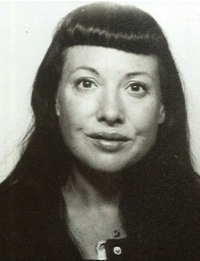
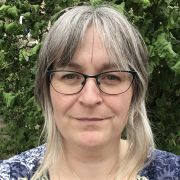
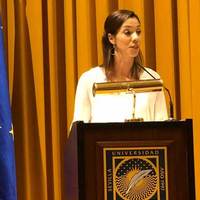
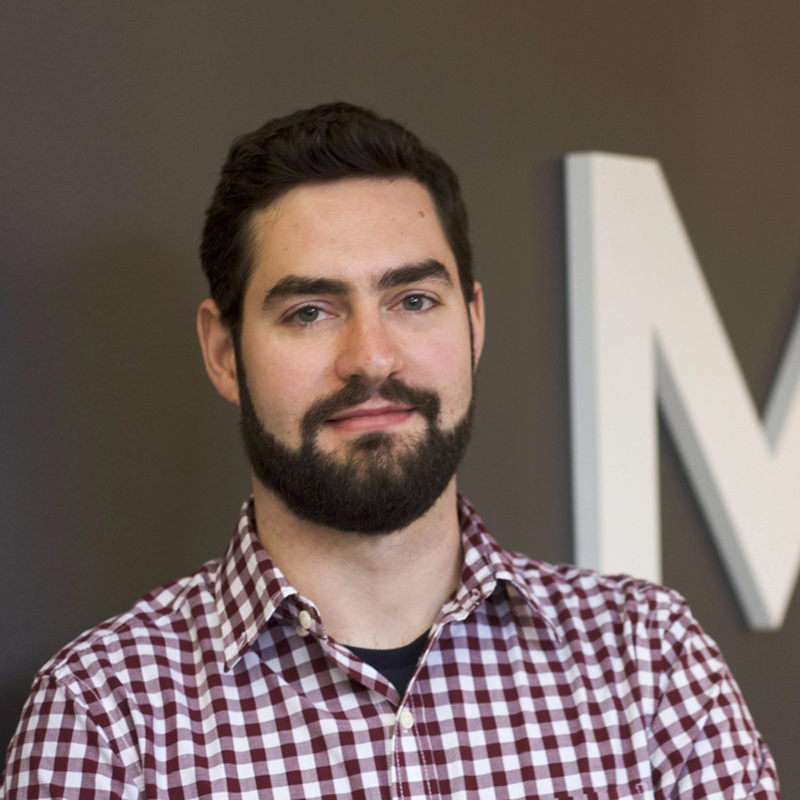
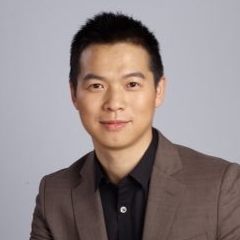
Daniela Tan is a Research Fellow in Japanese Philology at the University of Zurich's Ostasiatisches Seminar (East Asian Seminar) and part of the ERC Advanced Grant TIMEJ project. Her work focuses on contemporary Japanese literature, particularly female authors, trauma narratives, and gender studies. Specializes in Ōba Minako's works Active in e-learning research since 2006 PhD in Japanese Literature (2011) Research areas include comparative literary studies, memory discourse in post-atomic literature, and transcultural translation practices. She has organized academic conferences and contributed to international symposiums on Japanese literature and trauma studies. Her recent publications and presentations explore temporal representations, gendered narratives, and intercultural dimensions in Japanese literary works. She teaches courses on modern Japanese literature, literary criticism, and Japanese cultural studies.
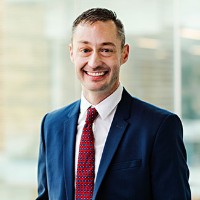
Dr. John W. Schwieter is Professor of Psychology, Linguistics, and Spanish at Wilfrid Laurier University in Waterloo, Ontario, Canada. He holds cross-appointments across multiple departments and serves as Director of the Language Acquisition, Multilingualism, and Cognition Laboratory and Bilingualism Matters @ Laurier. Additionally, he maintains an adjunct position as Professor of Linguistics at McMaster University in Hamilton, Ontario. Dr. Schwieter earned his PhD from Florida State University, an MBA from the University of Wisconsin MBA Consortium, and both his MSEd and BA from Western Illinois University. His academic background reflects a distinctive interdisciplinary approach that bridges psychology, linguistics, and business perspectives to examine language cognition. His research program investigates how humans learn and process multiple languages and the resulting effects on general cognition and executive functioning. Key areas include bi-/multilingualism, language acquisition, neurolinguistics, psycholinguistics, and translation/interpreting cognition. His laboratory conducts psychological and behavioral experiments to understand how multiple language systems interact within a single mind, employing methodologies including EEG, fMRI, and computational modeling. Dr. Schwieter's recent publications demonstrate a sophisticated integration of theoretical frameworks across disciplines, with particular emphasis on bilingual language control mechanisms, cross-language activation phenomena, virtual reality applications in language learning, and the cultural dimensions of language acquisition. His work consistently advances methodological approaches in the field while addressing practical implications for language education. Significant research funding includes: Principal Investigator of Bilingualism Matters in the Waterloo Region and Canada (SSHRC Partnership Development Grant, 2019-2022, $199,678) Co-Principal Investigator of Language experience and linguistic skills among multilinguals in higher education (SSHRC Insight Development Grant, 2018-2020, $74,990) Collaborator on Words in the World (SSHRC Partnership Grant, 2016-2022, $2,499,832) Dr. Schwieter serves in prominent editorial roles as Executive Editor of Bilingual Processing and Acquisition (John Benjamins), Editor-in-Chief of Ampersand (Elsevier), and Co-Editor of Cambridge Elements in Second Language Acquisition (Cambridge University Press), significantly shaping scholarly discourse in the field. Through Bilingualism Matters @ Laurier, he actively engages with the community to translate research findings into practical applications that promote understanding of bilingualism and multilingualism across the lifespan.
Ibrahim Said Ahmad is an Assistant Professor in the Department of Computing and New Media Technologies at the University of Wisconsin–Stevens Point, joining in 2025. He previously served as a Lecturer at Bayero University Kano (2014–2023) and worked as a Postdoctoral Research Fellow at Northeastern University’s Institute for Experiential AI. Education: Ph.D. in Computer Science from Universiti Kebangsaan Malaysia M.S. in Information Technology from The University of Nottingham B.S. in Computer Science from Bayero University Kano His research focuses on Natural Language Processing (NLP) with cultural inclusivity, including ethical AI, bias mitigation in multilingual systems, and democratization of data science. He explores cross-cultural collaborative research and predictive modeling applications. Notable Article Trends: Recent publications emphasize cultural nuances in emotion perception across African languages, multilingual benchmarking (ArtELingo-28), and explainable machine learning approaches for analyzing social media impacts on movie performance. Scientific Awards: Best Resource Paper Award, Association for Computational Linguistics (2025) SemEval Best Task Award co-located with ACL2025 He is affiliated with the Internet Society (ISOC) and teaches courses like Foundations of Artificial Intelligence and Introduction to Computing.
Lars Busterud is a university lecturer in history didactics at the Institute for Teacher Education , Norwegian University of Science and Technology (NTNU). He specializes in Norwegian occupation history (1940-45), microhistory, and innovative history education approaches. His research focuses on gray zones in historical narratives, forced labor during WWII, and combating conspiracy theories in education. Email: lars.busterud@ntnu.no Office: E.C. Dahls gate 10, 445, Kalvskinnet Research interests include: Gray zones in Norwegian WWII history Czech forced laborer experiences in Norway Microhistorical approaches to knowledge production Didactic responses to conspiracy theories in education Recent publications focus on: Occupation period moral complexities Czech-Norwegian wartime connections History teaching methodology Epistemological awareness in education
Maria Magnusson is a Senior Lecturer at the Department of Didactics and Teacher Practice, Faculty of Social Sciences, Linnaeus University. She specializes in early childhood education with a focus on play-responsive teaching (LRU), early literacy, and the transition to school. Magnusson leads the Research Group for Early Childhood Education Research (FOPP) and participates in the Nordic Early Literacy Education and Play-Based Developmental Pedagogy networks. Research Interests: Play-Responsive Teaching (LRU) Early Literacy Development Sustainability in Preschool Classrooms Symbolic Communication Multilingual Education Her recent work explores literacy environments in Nordic preschools, invented writing activities, and read-aloud practices. She collaborates with Åbo Akademi University and contributes to public guides on addressing global events like the Ukraine conflict in preschool settings. Magnusson's grants include funding from the School Research Institute and ULF for projects on prospective thinking and sustainability integration. She organizes commissioned teacher training and serves on the preschool teacher degree program council.
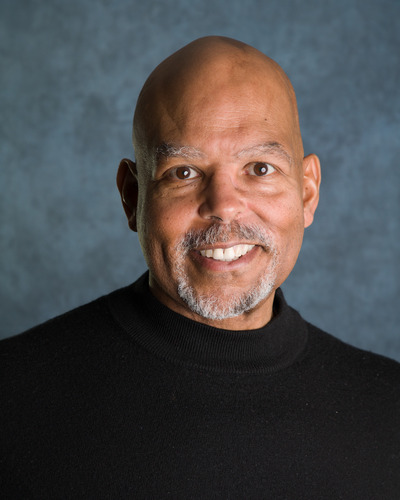
Howard L. Smith is a Professor in the Department of Bicultural-Bilingual Studies at the University of Texas at San Antonio, within the College of Education and Human Development. His work focuses on bilingual education, multicultural curriculum development, and biliteracy instruction for multilingual learners. Research interests include: Designing culturally sustaining pedagogies using multicultural children's literature Addressing socio-cultural dimensions of academic writing Developing dual language programs and teacher education frameworks Advancing equity through critical literacy and community engagement His publications span journals like Bilingual Research Journal , Language Arts , and International Journal of Bilingualism and Bilingual Education , with three co-edited books including the forthcoming Diversity in Society and Schools (with Iyengar).
Prof. Dr. Christine Pflüger serves as Professor of History Didactics at the University of Kassel , Department of Social Sciences. Her work focuses on bilingual history education, historical culture, political communication in the Holy Roman Empire, and memory studies. Director of ALLEN History (extracurricular learning locations for history teachers) Co-leader of projects Cordoba , PRONET² , and BIKA Specializes in competency-oriented history teaching and multilingual educational models Her research examines: Intersections between fiction and historical research Development of historical competence in educational settings Comparative analysis of Franco-German historical narratives Role of museums and memorials in history education Early Modern political communication structures Educational potential of historical epochs Recent publications highlight trends in: Foundational myths of European integration Memory sites and environmental movements Diary sources for historical understanding Competency frameworks in history education Multilingual approaches to subject teaching Cultural representations in textbooks She actively engages with: International academic networks (Argentina, France, Switzerland) Teacher training through practical semesters and portfolio assessments Public history initiatives and museum collaborations Editorial work in didactic reference works
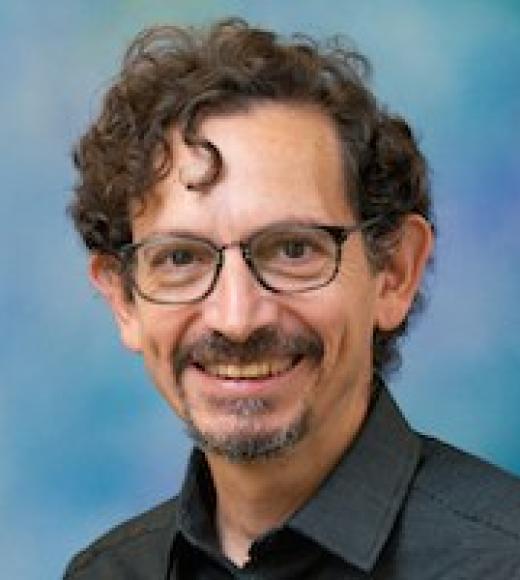
Raul Aranovich is an Associate Professor in the Department of Linguistics at the University of California, Davis, where he has been a faculty member since 2001. Prior to his appointment at UC Davis, he held faculty positions at the Ohio State University and the University of Texas in San Antonio. He received his Ph.D. in Linguistics from UC San Diego in 1996 under the direction of Professors S.-Y. Kuroda and John Moore. Professor Aranovich is a theoretical linguist whose research focuses on the interfaces between syntax, morphology, and semantics, with particular attention to grammatical mismatches across these linguistic levels. His work spans both theoretical and empirical approaches, utilizing natural language processing and corpus linguistics tools. His primary language specializations include Spanish and other Romance languages, as well as Fijian and Shona, representing significant cross-linguistic diversity in his research portfolio. His recent publications demonstrate an expanding interdisciplinary focus, bridging traditional linguistic theory with computational applications, including work in cybersecurity and neural machine translation. This reflects his evolving research trajectory from purely theoretical syntax and morphology toward computational and applied linguistics. His work on computer-mediated communication represents a contemporary extension of his longstanding interest in language structure and variation. Among his notable recognitions is being named a Fellow of the Linguistic Society of America, highlighting his contributions to the field. Fellow, Linguistic Society of America Professor Aranovich's research demonstrates remarkable breadth across linguistic subfields and languages, connecting historical linguistic theory with contemporary computational approaches. His work on Romance languages maintains a strong theoretical foundation while his more recent cybersecurity and machine translation publications show successful adaptation to emerging interdisciplinary opportunities. His continued publication record through 2024 indicates active ongoing research contributions across multiple linguistic domains.
Dr Sabine Little is a Senior Lecturer in Educational Studies (Languages Education) and Director of Education at the School of Education, University of Sheffield . She serves as a Course Director for the MA Education, Teaching and Learning and the iPGCE programs, with a focus on international education contexts. Languages, identity, and belonging Multilingualism as social justice Community-driven research methods Technology integration in education Her research explores heritage language learners' identities , focusing on how multilingual families navigate language transmission. Recent projects include the Multilingual Children’s Library (awarded the Brenda Eastwood Award) and international collaborations in Mexico and The Gambia . She emphasizes participatory methodologies and community engagement. Key publications address digital identity , family language policies , and interdisciplinary pedagogy . Awards include recognition for community-driven research excellence. Director of Education #supervisionaries research group leader Senior Fellow of Higher Education Academy She supervises research students in multilingualism and identity studies , and contributes to global teacher training programs. Her work bridges academic research with practical community interventions.
Christiane Limbach is a contracted researcher at the Department of Philology and Translation , Pablo de Olavide University . She specializes in Accessible Translation , Audiovisual Translation , and Intercultural Communication , with a focus on German-Spanish language pair . She is affiliated with the COMINTRAD research group (code HUM-995) since 2015. PhD in Translation Studies (University of Granada, 2012) Coordination of two teaching innovation projects Participation in R&D projects (FFI-2010-16142, SEJ-2006-01829/PSIC) Her research emphasizes neutrality in audio description and liaison interpreting , particularly in tourism contexts and audiovisual media . She applies Leipzig School translation theory and cognitive linguistics to develop quality standards for accessible translation. Her work with the Game of Thrones character Missandei explores professional ethics and career opportunities in translation. Christiane serves as co-editor for the journal Magazin and peer reviewer for MonTI and Glottodidactica . She has coordinated final degree projects since 2013 and held a Teaching Excellence Mention (Docentia Program, 2017). Her international academic stays include institutions in Düsseldorf , Cologne , Heidelberg (Germany), and Poznań (Poland).
Dr Evi Stamatiou serves as Senior Lecturer in Acting for Stage and Screen and Course Leader for the MA/MFA program at the University of East London's School of Arts and Creative Industries, leveraging over two decades of international experience as a practitioner-researcher in actor training. Her academic credentials include a PhD in Actor Training and Direction from The Royal Central School of Speech and Drama (2013-2021), MA in Theatre Directing from UEL, MA in Arts Policy and Management from Birkbeck College, and certificates in Filmmaking and Acting for Film from the New York Film Academy. Her research pioneers critical acting pedagogy through intersectional frameworks, focusing on decolonizing methodologies, anti-racist praxis, inclusive techniques for second-language actors, and social representation analysis in comedy. This work directly challenges traditional canons while developing innovative studio practices. Analysis of her 15 most recent publications (2019-2024) reveals consistent thematic evolution toward decentering power structures in actor training, with increasing emphasis on intersectionality, pandemic-era adaptation, and screen-specific methodologies – all grounded in materialist and feminist theoretical approaches. Senior Fellow of the Higher Education Academy International awards for creative work Significant research funding for transnational projects As Chair of the Acting Programme at the Association for Theatre in Higher Education and Convener of TaPRA's Performer Training Focus Group, she leads sector-wide initiatives. Her transatlantic pandemic collaboration developed verbatim theater methodologies while directing the forthcoming Critical Acting Pedagogy: Intersectional Approaches (Routledge, 2024).
Alejandro Bolanos-Garcia-Escribano is an Associate Professor in Audiovisual Translation at University College London (UCL) , affiliated with the School of European Languages, Culture and Society (SELCS) . He serves as a Senior Fellow of the Higher Education Academy (SFHEA) and holds Chartered Linguist (CL) and Member (MCIL) certifications from the Chartered Institute of Linguists (CIoL). PhD in Translation Studies (2020), UCL MSc in Audiovisual Translation (2016), UCL MA in Literary Translation for the Publishing Industry (2015), University of Malaga BA Hons in Translation & Interpreting and Humanities Studies (2014), Pablo de Olavide University His research focuses on new technologies in audiovisual translation and innovations in translation education , with recent work exploring automation in dubbing, media accessibility, and the role of technology in language pedagogy. His publications analyze cloud subtitling, ethical implications of AI, and social justice in translation curricula. Recent article trends highlight interdisciplinary intersections between translation technology , media studies , and educational innovation , particularly for accessibility and inclusivity in audiovisual content. Key subtopics include machine dubbing, audience reception, telecollaboration, and curriculum reform. Scientific awards include the Senior Fellow (SFHEA) and Faculty Education Award at UCL, alongside the 9th Francisco Ayala Translation Award (2014). He has held editorial roles at The Interpreter & Translator Trainer and HIKMA , and co-founded the E-Expert Seminar Series in Translation & Language Teaching (8 editions since 2018). Teaching roles span audiovisual translation , translation technology , and Spanish language at UCL’s Centre for Translation Studies (CenTraS) and Department of Spanish, Portuguese and Latin American Studies (SPLAS). He directed the MSc in Translation and Technology (2020–2022) and has convened key modules like Audiovisual Translation and Professional Skills for Translators since 2018.
Raffaele (Raff) Viglianti is an Affiliate Faculty member at the School of Music and a Senior Research Software Developer at the Maryland Institute for Technology in the Humanities (MITH), University of Maryland. He earned his Ph.D. in Digital Musicology from the Department of Digital Humanities at King’s College London. Education: Ph.D. in Digital Musicology, King’s College London His research focuses on advancing digital humanities and textual scholarship , with a particular emphasis on modeling musical notation and textual sources as digital scholarly resources. He advocates for multicultural and multilingual approaches, addressing global access challenges and promoting equitable teaching practices. Recent publications highlight trends in TEI guidelines , static site technologies , minimal computing , and music notation encoding . His work spans topics like gender representation in markup, decentralized publishing, and interoperability solutions. Viglianti contributes to core digital humanities infrastructure as an elected member of the Text Encoding Initiative technical council and Technical Editor of the Scholarly Editing journal. He develops open-source tools like CETEIcean and vscode-sxml to enhance digital publishing workflows. His technical expertise centers on research software development for humanities projects, particularly through frameworks like HTML5 Custom Elements , GitHub , and Static Site Generators .
Sydney Levine is a cognitive scientist working at the intersection of human moral judgment and AI safety. Currently a Visiting Research Scientist at Google Deepmind, she will join New York University as an Assistant Professor in the Psychology Department in Spring 2026. Her research uses cognitive science methods to engineer AI systems that align with pluralistic human moral values while remaining interpretable and steerable. Dr. Levine's academic journey includes: PhD in Psychology from Rutgers University (2016), supervised by Alan Leslie Postdoctoral work at Harvard Psychology Department (supervised by Fiery Cushman) and MIT Brain and Cognitive Sciences Department (supervised by Joshua Tenenbaum) Research Scientist position at the Allen Institute for AI (2022-present) Research Affiliate status with both Harvard and MIT Her research focuses on understanding the cognitive mechanisms underlying human moral judgment and applying these insights to AI safety. She develops computational models of moral cognition, particularly examining how people make judgments about rule-breaking, universalization, and moral compromise. Her work bridges cognitive science, moral philosophy, and artificial intelligence, seeking to create frameworks for value-aligned AI systems that can navigate pluralistic human values. Dr. Levine's publication record demonstrates a strong trajectory in both cognitive science and AI ethics, with articles appearing in top journals like Nature: Machine Intelligence, Behavioral and Brain Sciences, Cognition, and PNAS. Her research shows increasing integration of AI and moral psychology, with recent work focusing on language model alignment with human moral values across cultural contexts. Her scientific achievements include: Best Paper Award at NeurIPS Workshop for 'Language Model Alignment in Multilingual Trolley Problems' (2024) Conference-wide Disciplinary Diversity and Integration Award at Cognitive Science Society (2022) Multiple conference-wide poster awards at Society for Philosophy and Psychology Dr. Levine has secured significant research funding, including a $1.5M Templeton World Charity Foundation grant and a $690K NSF grant, demonstrating strong support for her interdisciplinary research program. She has advised numerous students at various levels and maintains active collaborations with leading researchers in cognitive science and AI. Her upcoming lab at NYU will continue this important work at the intersection of cognitive science and AI safety, with a focus on creating interpretable and steerable AI systems that align with pluralistic human moral values.
Lei Li is an Associate Professor in the Department of Computer Science at the University of California, Santa Barbara (UCSB), where they serve as Co-Director of the UCSB NLP Group. Their research focuses on developing algorithms and systems for machine learning, natural language processing, machine translation, reasoning, and AI-powered drug discovery. Dr. Li received their PhD from Carnegie Mellon University and completed their undergraduate studies at Shanghai Jiao Tong University. Dr. Li's research spans multiple critical areas in artificial intelligence and machine learning. Their work in natural language processing encompasses machine translation, speech translation, multilingual NLP, large language models, text generation, program synthesis, reasoning, privacy, and watermarking. Additionally, they have made significant contributions to AI applications in drug design and efficient machine learning techniques. Their research bridges theoretical foundations with practical applications, particularly in the emerging field of AI for biological discovery. Analysis of Dr. Li's recent publications reveals a strong focus on advancing natural language processing capabilities while addressing critical challenges in model efficiency, security, and evaluation. Their work spans machine translation systems that handle hundreds of languages, techniques for improving large language model capabilities in zero-shot settings, methods for evaluating text generation quality, and novel approaches for protecting intellectual property in language models. Notably, they've also made significant contributions to applying AI to biological problems, particularly in antimicrobial peptide discovery and protein sequence design. Dr. Li has received notable recognition for their research, including: Best Paper Award at ACL 2021 for "Vocabulary Learning via Optimal Transport for Neural Machine Translation" Dr. Li actively advises PhD and Master's students in computer science at UCSB, with recent advisees working on topics including antimicrobial peptide discovery, protein sequence design, diffusion models, speech translation, and language model watermarking. Their research group, the UCSB NLP Group, appears to be well-funded and productive, with consistent publications in top-tier conferences including ACL, EMNLP, ICML, KDD, and NeurIPS. The group has developed several influential frameworks and benchmarks, including MTG (Multilingual Text Generation benchmark) and SEScore2 (text generation evaluation metric). The UCSB NLP Group, co-directed by Dr. Li, maintains an active research agenda with multiple ongoing projects spanning natural language processing, machine learning, and their applications to scientific discovery. The group collaborates with researchers across disciplines, particularly in the biological sciences for drug discovery applications.