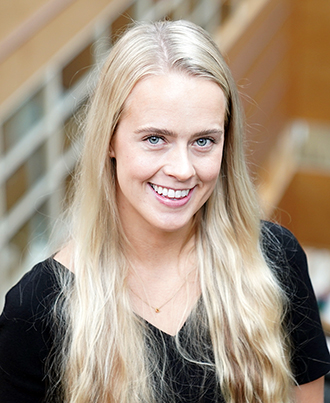
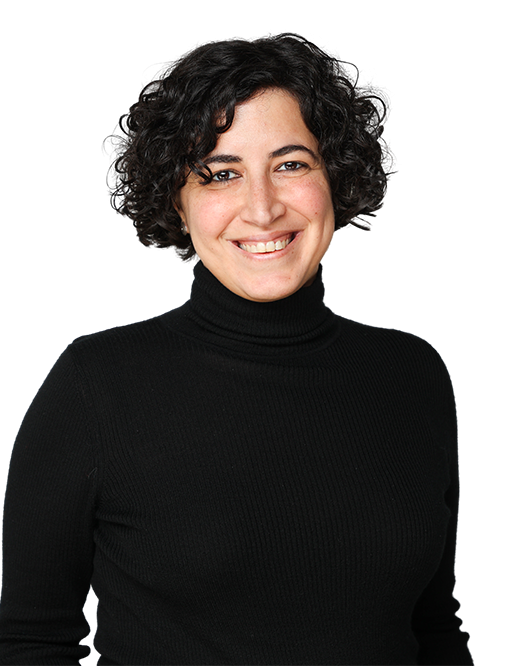
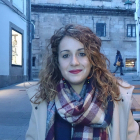
Frida Johanne Holmen is a researcher at the Department of Special Education, University of Oslo. Her work focuses on early language development, particularly in multilingual children and vocabulary acquisition. Education : Master in Special Education (speech therapy), University of Oslo (2020–2022) Background : Research Assistant (2021–2023), support teacher in kindergarten (2016–2021) Research Interests : Language mapping, inferential reasoning, and picture book reading practices in multilingual early education settings. Her 2023 publication examines how kindergarten teachers engage multilingual children in dialogues during picture book reading. Projects : Involved in OPIT (digital language comprehension test) and SL+ Intervention Project. Member of the Communicative Processes (ComPros) research group.
Dr. Manuel de Buenaga Rodríguez is a Faculty Member in the School of Engineering at Universidad Europea de Madrid, where he leads research in the Department of Artificial Intelligence. His work bridges Natural Language Processing, Biomedical Informatics, and E-Health solutions. PhD in Computer Science from Universidad Complutense de Madrid (1996) Specializes in Text Categorization, Semantic Annotation, and Ontology-based Systems Research Highlights: Pioneered the POESIA open-source web filtering system and contributed to the NAVIga platform for elderly healthcare. His work integrates WordNet, UMLS, and Machine Learning in semantic disambiguation and user modeling. Key Publications Trends (2010-2013): Focus on Biomedical document annotation (BioAnnote) Virtual reality rehabilitation systems Lexical database integration for text classification Concept-based medical/tourism information access Spanish language processing challenges Collaborations: Works with José María Gómez Hidalgo, Simone Marchi, and European research networks like MAVIR. Projects span Madrid Region initiatives and translational medicine tools.
Gabriella Lapesa is a Junior Professor for Responsible Data Science and Machine Learning at Heinrich-Heine University Düsseldorf and leads the Data Science Methods team in the Department of Computational Social Science at GESIS Cologne. She is also the leader of the BMBF-funded group E-DELIB at the University of Stuttgart (until December 2024). Her work bridges computational linguistics with social science applications, focusing on NLP methods in interdisciplinary contexts. Her research interests span computational linguistics and Natural Language Processing applications in social and political sciences. She specializes in supporting decision-making in forums with NLP and capturing the dynamics of political debates in newspaper reports. Additional research domains include applying NLP methods to cognitive modeling and linguistics, particularly prediction of speakers' behavior in psycholinguistic experiments and lexical semantics. Lapesa's recent publications demonstrate a strong focus on argumentation mining, political discourse analysis, and moderation in online discussions. Her work shows a trend toward integrating multiple information sources for argument analysis, addressing challenges in modeling subjective phenomena, and developing methods for low-resource NLP scenarios. She has made significant contributions to understanding socio-cultural differences in argumentation and developing NLP tools for political communication analysis. BMBF-funded group E-DELIB (Powering up E-DELIBeration: towards NLP-supported moderation) Lapesa leads the Data Science Methods team at GESIS, which contributes to the GESIS infrastructure for Computational Social Science research by developing novel methods. The team focuses on fostering interaction between NLP and Social Science, developing solutions that integrate multiple information sources and address recent challenges in NLP such as modeling subjective phenomena, low-resource scenarios, and identifying/mitigating bias. The team tackles research questions at the interface between computational argumentation and computational social science, targeting political communication from a broad perspective involving different types of actors and discourse contexts.
Sabine Tittel serves as a Privatdozentin (equivalent to Associate Professor) at Heidelberg University's Department of Romance Studies within the Faculty of Humanities, with primary institutional affiliation at the Heidelberg Academy of Sciences and Humanities. Her office at Seminarstrasse 3 in Heidelberg indicates active university engagement, and she currently leads multiple Digital Humanities initiatives bridging historical linguistics with cutting-edge semantic technologies. Her academic foundation includes: 1991-1997: Studies in Romance Studies (French, Spanish) and Ethnology at Heidelberg University 1998-2003: PhD in French Linguistics at Heidelberg University 2022: Habilitation in Romance Linguistics (focus French) and Digital Humanities at Heidelberg University Tittel's research uniquely intersects medieval Romance linguistics with digital methodologies. She specializes in Old and Middle French linguistic analysis through the lens of Digital Humanities, developing innovative approaches to lexicography, text philology, and semantic resource integration. Her work transforms traditional philological scholarship through Linked Open Data frameworks, creating sophisticated knowledge networks for historical language resources. She has pioneered techniques for connecting dictionaries with text corpora using Semantic Web technologies, establishing new standards for digital representation of historical linguistic data. Her research particularly focuses on lexical semantics in medieval contexts and the application of computational methods to philological problems. Analysis of her recent publications reveals a consistent trajectory toward integrating historical linguistic resources with semantic technologies. She has developed specialized ontologies for historical dictionaries, created frameworks for language identification in digital contexts, and established methodologies for modeling medieval text editions as Linked Data. Her work spans from detailed analysis of specific medieval texts like Gui de Chauliac's Grande Chirurgie to large-scale infrastructure development for linguistic resources across Romance languages. Her scientific recognition includes: Kurt-Ringger-Preis (2024) awarded by the Academy of Sciences and Literature Mainz While specific advisees aren't documented in available sources, Tittel's leadership of major research projects indicates significant mentorship responsibilities. She directs the ALMA project (Wissensnetze in der mittelagerlichen Romania) investigating medieval Romance knowledge networks, the edition2LD project modeling text editions as Linked Data, and previously led digitization of the Dictionnaire onomasiologique de l'ancien gascon (DAG). These projects represent substantial collaborative efforts with significant funding from academic institutions. She heads Digital Humanities initiatives at the Heidelberg Academy of Sciences, directing multidisciplinary teams that combine philological expertise with computational skills. Her current projects focus on creating knowledge networks for medieval Romance languages and developing sophisticated models for representing historical text editions in digital formats, positioning her at the forefront of methodological innovation in historical linguistics.
Marina Piria is a Full Professor at the University of Zagreb's Faculty of Agriculture, Department of Fisheries, Apiculture, Wildlife Management and Special Zoology. Her research focuses on freshwater ecology, invasive fish species, ichthyology, and morphometric analysis of aquatic organisms. Key Projects: Coordinator of 'LIFE for Mauremys' (2022-2026) and 'Aquatic Invasive Species in Europe' (2016-2025). Global Collaborations: Worked with institutions in New Zealand, Czech Republic, and Montenegro on ecological data analysis and invasive species management. Her publications analyze invasion dynamics of species like round goby and topmouth gudgeon, environmental impacts on fish populations, and risk assessment tools. She contributes to EU programs and Croatian science foundations while advising on sustainable fisheries and climate change adaptation. Marina actively participates in the European Inland Fisheries and Aquaculture Advisory Commission (EIFAAC) since 2003 and leads courses on ichthyology and aquatic ecosystem management.
Ana María Medina Reguera is a Full Professor in the Department of Philology and Translation at Universidad Pablo de Olavide, Spain. Her academic journey began with a PhD in Seville (2004), focusing on German graphematics. She leads the COMINTRAD research group on specialized translation and multilingual communication, with a strong focus on economic texts and easy-to-read adaptations. Education: PhD in Philology from the University of Seville (2004), thesis supervised by Dr. Rafael López-Campos Bodineau. Her research spans translation theory, contrastive linguistics, corpus-based studies, and accessibility translation . She has pioneered comparative analyses of economic quantifiers and acronyms in Spanish-German media, and developed methodologies for web localization and cognitive accessibility. Recent work explores easy-to-read practices across Europe and pictographic communication in legal contexts. While her Google Scholar articles highlight the 2025-2024 period covering diverse genres from agri-food specifications to augmented legal communication, her work consistently addresses translation's role in business internationalization and inclusive education. No scientific awards are explicitly mentioned, though her 17+ publications and 6 co-authorships demonstrate substantial academic engagement. As faculty member at Universidad Pablo de Olavide since 2007, she contributes to the Philological, Translation and Cultural Studies doctoral program. Her projects examine corporate web localization, economic press translation, and specialized text typology, particularly in agri-food and viticultural sectors.
Manuel González González is a Full Professor of Romance Philology at the University of Santiago, where he has held academic roles since completing his training. He currently serves as an Affiliated Researcher at the Instituto da Lingua Galega (ILG) and directs the RAG Dictionary. His research spans multiple areas, including linguistic geography, lexicography, terminology, sociolinguistics, language norms, phonetics, and speech technologies. He has coordinated the Galician volume of the Roman Linguistic Atlas and contributed to the Europae Atlas, while leading initiatives in acoustic phonetics and voice synthesis projects like Cotovía and Nós. Director of Galician language and culture courses for foreigners (21 years) Scientific Coordinator of Ramón Piñeiro Center for Humanities Research (since 2002) Director of TERMIGAL (since 1996) President of Puntogal Member of FILGA research group Director of Cadernos de lingua journal His research focuses on lexicography and speech technologies for Galician, with contributions to sociolinguistic mapping and linguistic normalization. Recent publications address AI applications in language technology and historical lexicography. He has served on scientific councils for over twenty linguistic journals and contributed to orthographic standards through RAG-ILG agreements. Current activities include lexicographic innovation, dialectometric studies, and advancing Galician in computational linguistics. Scientific roles include: Full member of Royal Galician Academy (since 1992) Coordinator of Lexicography and Terminology Seminars at RAG Director of DRAG (Spanish National Research Council collaboration) Corresponding member of Institut d'Estudis Catalans
Reyes Rodríguez Rodríguez is a Researcher at the Institute of the Galician Language (Instituto da Lingua Galega) of the University of Santiago de Compostela since 2018. She holds a PhD in Linguistic Studies from the University of Vigo (2022) and a Master's in Secondary School Teacher Training (2015), focusing on Galician sociodialectology in Limia Baixa. Her educational background includes: PhD in Linguistic Studies, University of Vigo (2022) Master's in Secondary School Teacher Training (2015) Degree in Galician and Spanish Studies, University of Vigo Research Interests: Sociodialectology of Galician with emphasis on Limia Baixa Linguistic variation and change in Northwestern Iberian languages Corpus development (CORTEGAL, CORILGA) for academic and oral Galician Multilingualism dynamics in youth and family contexts across three generations Her 2023-2024 publications reveal concentrated research on dialectometric analysis of Galician spatial variation, sociolinguistic documentation of Limia Baixa, and youth multilingualism patterns. These works bridge quantitative dialectology with cultural linguistics, emphasizing regional language preservation in Galicia's border regions. She actively participates in major projects including the Galician Linguistic Atlas (ALGa), Computerized Oral Corpus of Galician Language (CORILGA), and studies on language transmission across generations. Her work involves comprehensive data collection, transcription, annotation, and analysis, though no student supervision or independent grant leadership is documented. The Institute of the Galician Language provides her primary research ecosystem, where she collaborates with linguists on geolinguistic documentation and sociolinguistic change monitoring within Galicia's unique linguistic landscape.
Monica I. Norvik serves as an Associate Professor in Speech Therapy at UiT The Arctic University of Norway, Department of Teacher Education and Pedagogy. With over 20 years of clinical experience from Statped's aphasia team (formerly Bredtvet Competence Center), she brings extensive practical knowledge to her academic role. She also holds a second-year position at NTNU's master's program in speech therapy and was a researcher at MultiLing, UiO from 2013-2024. Her educational background includes training as both a speech therapist and special education teacher, with a specialization in speech therapy and a doctorate in clinical linguistics focused on aphasia and multilingualism. This interdisciplinary foundation supports her work bridging clinical practice and academic research. Dr. Norvik's research centers on speech therapy, multilingualism, and clinical linguistics, with particular emphasis on acquired language, speech, and communication disorders. She specializes in developing assessment and treatment methods for multilingual individuals with aphasia and dementia, investigating how work with multilingual aphasia patients can inform linguistic models of multilingual processing. Her work often examines cross-linguistic adaptation of assessment tools and treatment approaches. Her extensive publication record demonstrates consistent focus on primary progressive aphasia, multilingual aphasia assessment, and cross-linguistic adaptation of clinical tools. Recent work shows increasing emphasis on international collaboration, development of standardized outcome measures, and patient-centered approaches to aphasia management, particularly through co-designed questionnaires and communication partner training. Dr. Norvik actively supervises master's students in speech therapy and special education, as well as two PhD candidates in linguistics at UiO. Her research collaborations include membership in the International Speech and Language Therapy/Pathology Primary Progressive Aphasia Network and the Aphasia Assessments and Outcomes working group of The Collaboration of Aphasia Trialists. She participates in multiple research groups and projects including C-LaBL, Participation and Communication (PAC), VR-based student activities, underrepresented languages in aphasia research, language assessment tools for primary progressive aphasia, The Collaboration of Aphasia Trialists (CATs), Multilingual Aphasia Practices (MAP), and norm data for connected language production.
Aysel Eybil Kucuksu serves as Assistant Professor at the University of Copenhagen's Faculty of Law, specifically affiliated with iCourts - Centre of Excellence for International Courts and Governance. Her academic profile combines legal scholarship with philosophical inquiry, focusing on human rights compliance mechanisms and the impact of digitalization on fundamental rights. She maintains active research collaborations across European institutions and contributes regularly to public discourse through media engagements. Her educational background includes a PhD in Law from the University of Geneva (Magna Cum Laude), a PhD in Philosophy from LUISS-Guido Carli di Roma, an LLM from the University of Copenhagen, and an LLB from Queen Mary, University of London. This multidisciplinary foundation supports her innovative approach to legal research. Kucuksu's research centers on the critical intersection of human rights and emerging technologies, particularly artificial intelligence. Her work examines how digital tools impact fundamental rights enforcement and compliance mechanisms, with specific focus on vulnerability theory applications in international legal contexts. She has developed expertise in analyzing Denmark's relationship with the European Court of Human Rights, producing empirical studies on domestic implementation practices. Her current projects explore how algorithmic decision-making affects access to justice and human rights protection. Her publications reveal consistent focus on human rights compliance, vulnerability frameworks, and digital governance. Recent work demonstrates growing interest in AI applications within public administration and their implications for fundamental rights. The 2022-2024 publications show increasing attention to practical implementation challenges rather than purely theoretical frameworks, reflecting a maturing research trajectory with clear policy relevance. Kucuksu actively participates in research projects including the Human Rights Nudge Project and collaborates with organizations like Algoritmer, Data og Demokrati. She is co-developing the Digitalisering og Individets Grundlæggende Rettigheder Database with Zuzanna Godzimirska, funded by Copenhagen University and Illum Fonden. This database represents a significant contribution to mapping AI applications in public administration. She teaches and supervises BA and MA theses in Fundamental Human Rights (Individets Grundlæggende Rettigheder) in both Danish and English, demonstrating commitment to multilingual legal education. Her international research network spans multiple European countries, with particular emphasis on Scandinavian legal contexts and European human rights mechanisms.
Dr. Eline van Batenburg is a Lecturer and Researcher at the Faculty of Education (FE) of Amsterdam University of Applied Sciences (Hogeschool van Amsterdam) since 2013. Her work focuses on foreign language learning, task-based language teaching (TBLT), content and language integrated learning (CLIL), and multilingualism in vocational education. Education: Not explicitly detailed in provided texts. Her research explores multilingualism in vocational settings, emphasizing digital environments and pedagogical models. Recent work investigates plurilingual repertoires, learner-learner interactions, and teacher beliefs in CLIL classrooms. Key subfields include digital tools, visual mapping, and synchronous communication. She collaborates with scholars like Liz Dale and Marije van de Guchte, contributing to datasets on multilingualism in vocational education. Activities include invited talks and oral presentations on multilingualism and language teaching. External roles include serving as an Inspector at Nuffic since March 2015. No specific scientific awards are mentioned in the provided texts.
Dr. Mirjana Bozic is an Associate Professor at the Department of Psychology, University of Cambridge , affiliated with Cambridge Neuroscience . Her research focuses on the neural mechanisms of spoken language comprehension and the cognitive consequences of bilingualism . Specializes in neuroimaging (fMRI, MEG/EEG) and behavioral studies Key themes: language processing, morphological complexity, selective attention in bilinguals Scientific Awards: No specific awards listed in the provided text. Recent Publications (2025–2005) reveal consistent exploration of: Morphological processing in multilingual contexts Neural substrates of speech comprehension under interference Language evolution and proto-language theories Effects of SARS-CoV-2 on memory function Cognitive benefits of bilingualism Iconicity in spoken/written language Methodologically combines neuroimaging (fMRI, MEG, EEG) with cross-linguistic analysis (German, Italian, Polish, Arabic, Russian, English).
Kristian Jambrošić is a Full Professor at the Department of Electroacoustics, Faculty of Electrical Engineering and Computing, University of Zagreb. With a career dedicated to acoustics and audio engineering, his work spans architectural acoustics, binaural audio systems, and biomedical sound applications. Current Head of the Department of Electroacoustics Research focuses on immersive sound systems, urban soundscapes, and medical acoustics Research Trends from his publications include spatial audio technologies, noise pollution mitigation, and interdisciplinary applications of acoustics in agriculture and medicine. Key Projects involve: Development of the AURALAB auralization laboratory Acoustic design for historical and modern concert venues Advancements in fetal heartbeat detection via audio processing
Dr. Arnaud Gaudinat is an Associate Professor at the Geneva School of Business Administration (HEG Genève), part of the University of Applied Sciences and Arts of Western Switzerland (HES-SO). He is affiliated with the Economy and Services faculty and primarily works within the Department of Information Science. His educational background includes expertise in information science, with teaching responsibilities spanning multiple programs: MSc HES-SO in Information Science - teaching Data Curation and Information Architecture BSc HES-SO in Management Information Systems - teaching On-chain Analysis BSc HES-SO in Information Science - teaching Web Analytics, Survey Techniques, and Advanced Drupal Content Management BSc HES-SO in Business Economics - teaching Data Analytics and Data 4.0 Dr. Gaudinat's research focuses on the intersection of information science, web technologies, and data analytics. His work spans Web Mining, Information Retrieval, Blockchain applications, and Web Analytics. He has made significant contributions to biomedical text mining, developing systems for dataset retrieval and exploring applications of blockchain in information science. His recent work includes stablecoin taxonomy and using AI for information monitoring. Dr. Gaudinat approaches information science with a practical perspective, often developing tools and methods that address real-world information challenges in both academic and industry contexts. His research output shows a consistent focus on practical applications of information retrieval and text mining techniques, with a growing interest in blockchain technologies and their implications for information management. His most recent publications demonstrate expertise in cross-lingual analysis, stablecoin classification, and AI-assisted information monitoring. Dr. Gaudinat has received research funding from multiple sources including Innosuisse, swissuniversities-P5, and HES-SO. His projects often involve collaboration with both academic and industry partners, reflecting his commitment to bridging theoretical research with practical applications. His current research projects include: Precise Intelligence : Big Data Analytics for comprehensive Global Trade Flow Intelligence INCIPIT : Infrastructure Nationale d'un Complément d'Identifiants Pérennes, Interopérables et Traçables GOES : Global Online Expertise Search, a Web mining project for finding relevant people for specific surveys Dr. Gaudinat's work demonstrates a strong commitment to advancing information science through both theoretical contributions and practical applications that address contemporary challenges in data management and analysis.
Prof. Dr. Hacı-Halil Uslucan is a Professor at the Institute of Turkic Studies , University of Duisburg-Essen. His work bridges Social Psychology , Migration Studies , and Intercultural Education , focusing on integration, cultural sensitivity, and religious education. Research Themes : Migration, intercultural conflict, youth violence, Islamic education, multilingualism. Publications : Over 50 peer-reviewed articles on topics like "Gewalt junger Menschen mit Migrationshintergrund" (2024) and "Islamischer Religionsunterricht" (2011). Teaching : Offers courses in "Cultural Studies" and "Schule und Gesellschaft" , with a 2025 summer semester schedule. Grants : Participates in projects like the "Evaluation des islamischen Religionsunterrichts in NRW" (2016). Advisory Roles : Collaborates with institutions such as the Friedrich-Ebert-Stiftung and Bundeszentrale für gesundheitliche Aufklärung . His 2010-2023 publications analyze violence prevention, cultural resilience, and healthcare ethics for migrants.