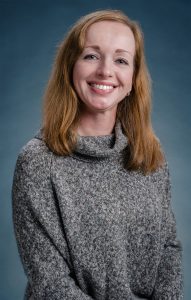
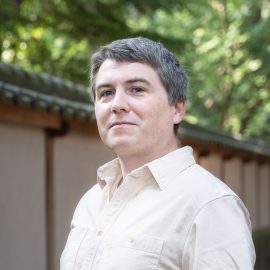
Megumi Terada is a researcher at the Institut für deutsche Sprache und Linguistik within Humboldt-Universität zu Berlin , actively contributing to the Collaborative Research Center 1412 (CRC 1412) under project C06: Seemingly Free (Morpho)Phonetic Variation . She specializes in phonetics, phonology, and language register analysis, with a focus on German spontaneous speech patterns and digital communication impacts. Affiliation: CRC 1412, SFB Project C06 Key Research: Register variation in historical/modern contexts, Zoom-mediated speech effects, L2 German phonetics Her work integrates corpus linguistics with multimodal analysis, examining how situational factors like videoconferencing alter phonetic realizations (e.g., 11.9% reduced vowel space in Zoom contexts). She develops annotation frameworks for spoken corpora (BeDiaCo, CoNNAR), emphasizing inflectional endings, dialogue structure, and acoustic measures. Recent publications address schwa realization in German verbs, orthographic influence on L2 phonetics, and register trends across 2021-2024 datasets. While her awards and student mentoring details aren't explicitly stated, her collaborations with researchers like Christine Mooshammer and Anke Lüdeling demonstrate interdisciplinary engagement in phonetic modeling and register theory.
Geraint Palmer is a Welsh Medium Lecturer at Cardiff University's School of Mathematics, where he teaches mathematics courses primarily in Welsh. His academic journey includes a BSc in Mathematics from Aberystwyth University (2013), followed by an MSc in Operational Research and Applied Statistics (2014) and a PhD in Applied Stochastic Modelling (2018), both from Cardiff University. His educational background includes: BSc in Mathematics, Aberystwyth University (2013) MSc in Operational Research and Applied Statistics, Cardiff University (2014) PhD in Applied Stochastic Modelling, Cardiff University (2018) Dr. Palmer's research spans several interconnected areas within operational research and applied mathematics. His primary focus is on queueing theory and stochastic modeling , with applications in healthcare systems and emergency services. He has made significant contributions to discrete event simulation , notably through the development of the open-source Ciw library. Additionally, his work extends to Welsh language processing, where he has contributed to computational linguistics projects including Welsh word embeddings and stemmers. His interdisciplinary approach combines theoretical mathematical modeling with practical software implementation, often using Python and R. His recent publications demonstrate a strong trend toward applying operational research methods to healthcare challenges, particularly emergency services optimization. His work on ambulance fleet allocation, emergency care transformation, and orthopaedic care systems shows a consistent focus on improving healthcare delivery through mathematical modeling. Simultaneously, his research in Welsh language processing represents a unique interdisciplinary contribution at the intersection of mathematics, computer science, and linguistics. His publication record also highlights his commitment to open-source software development, with contributions to libraries like Ciw (for discrete event simulation) and GCol (for graph coloring). His scientific contributions include: Development of Ciw, an open-source discrete event simulation library Development of GCol, a high-performance Python library for graph coloring Contributions to Welsh language processing tools and resources Co-authorship of "Applied Mathematics with Open-Source Software: Operational Research Problems with Python and R" (2022) Dr. Palmer is actively involved in teaching mathematics at Cardiff University, delivering modules including Preliminary Mathematics II, Problem Solving, and Computational Methods. His bilingual capabilities enable him to provide Welsh-medium instruction, supporting linguistic diversity in higher education. His research projects often involve collaboration with healthcare professionals, operational research specialists, and language technologists, reflecting the interdisciplinary nature of his work. Notably, he has contributed to standardized Welsh language assessment tools, demonstrating his commitment to both academic research and practical community applications.
Professor Elton Prifti is Chair of Romance Philology at Saarland University since 2022, with a distinguished career in Romance linguistics, etymological lexicography, and language contact studies. He previously held positions as Full Professor of Romance Linguistics at the University of Vienna (2019-2022), Junior Professor at the University of Mannheim (2013-2019), and various research positions at Saarland University. His research focuses on historical word research, language history, multilingualism, variational linguistics, contact linguistics, migration linguistics, and digital language science. Prifti's work particularly emphasizes inter-Adriatic language contacts, Romance minority languages, and the digital transformation of etymological dictionaries. Prifti has made significant contributions to the field through his leadership of the Lessico Etimologico Italiano (LEI) project, which he has been responsible for digitizing since 2015. His recent publications reflect a strong trend toward digital humanities approaches to historical linguistics, with numerous articles on digital lexicography, knowledge networks in medieval Romance languages, and the development of digital tools for linguistic research. Premio Cesare Pavese 2020 (Saggistica section) Kurt-Ringger-Preis 2013 from the Academy of Sciences and Literature Mainz Elected as full external member of the Academy of Sciences of Albania (2021) Elected as foreign corresponding member of the Accademia della Crusca (2019) As co-editor of the Journal of Romance Philology and the LEI project, Prifti plays a significant role in guiding scholarly discourse in Romance linguistics. His leadership extends to directing the long-term ALMA project on knowledge networks in medieval Romance languages and serving on various academic boards including the Kurt Ringger Foundation and the scientific committee of the journal Ladinia. Prifti's work spans multiple institutional contexts across Europe, with particular expertise in the linguistic landscapes of the western Balkans, Romance minority communities, and the development of digital tools for historical linguistic research.
Steven Coats is a Lecturer in English Philology at the University of Oulu's Faculty of Humanities. He holds a PhD in Linguistics from the University of Georgia (2015) and a Magister Artium in Deutsche Philologie from Ruprecht-Karls-Universität Heidelberg. His research employs corpus-based methods to analyze language diversity, variation, and change, with specializations in regional English variations, computer-mediated communication, and computational linguistics. Dr. Coats' research interests focus on corpus linguistics, dialectology, and sociolinguistics, particularly examining language variation through large-scale speech corpora. He has created several major linguistic resources including the Corpus of North American Spoken English (CoNASE), Corpus of British Isles Spoken English (CoBISE), and Corpus of Australian and New Zealand Spoken English (CoANZSE). His work frequently intersects with computational methods and digital humanities. His recent publications demonstrate a consistent focus on dialect variation, corpus construction methodologies, and computational analysis of spoken language. Major themes include regional syntactic variations (especially double modals), speech corpus development, and analysis of computer-mediated communication. The research spans multiple English varieties and incorporates both linguistic and technical innovation. Awards and Recognition: Best short paper award at the 20th Annual Workshop of the Australasian Language Technology Association (2022) Dr. Coats leads the development of several major linguistic resources and tools, including the searchable CoANZSE Audio corpus and ZipfExplorer for lexical frequency analysis. He contributes to CLARIN infrastructure development and has organized digital humanities hackathons.
James N. Stanford is a Professor of Linguistics at Dartmouth College, specializing in sociolinguistics, dialectology, and computational sociolinguistics. His research spans Southeast Asia, China, and North America, focusing on language variation, tone systems, and Indigenous language preservation. Research Interests: Dr. Stanford's work addresses language variation and change through acoustic sociophonetics, sociotonetics, and collaborative research with Indigenous communities. Key areas include Sui language studies, computational dialect analysis, and North American English dialects. Co-editor of Language Variation and Change Co-founder of Asia-Pacific Language Variation journal Developed DARLA system for automated phonetic analysis Publications: His recent work explores linguistic contact in China's minority languages, automated transcription tools, and tonal changes in heritage languages. He has published extensively in computational sociolinguistics and dialect mapping. Teaching: Dr. Stanford teaches courses in sociolinguistics, field methods, syntax, and experimental phonetics. He has led international fieldwork programs in Thailand and New Zealand. Fieldwork: Active in China (Sui), Alaska, Cook Islands, and New England regions, he combines traditional linguistic fieldwork with modern computational methods to document and analyze language variation.
Phil Durrant is a Professor of Applied Linguistics and Education at the University of Exeter, with a focus on language learning, academic writing, and corpus linguistics. His work bridges practical educational challenges with methodological innovations in linguistic research. Contact: P.L.Durrant@exeter.ac.uk Research Themes: Writing Development, Academic Vocabulary, Corpus Linguistics, Collocation Studies, English for Academic Purposes (EAP) Current projects include the ESRC-funded Growth in Grammar (2015–2018) and collaborations with Norwegian universities on MULTIWRITE (2021–2025). His publications emphasize quantitative corpus-based approaches to studying language acquisition and proficiency. Recent Books: Corpus linguistics for writing development (2023), Understanding development and proficiency in writing (2021) Key Interests: Academic language challenges, vocabulary sophistication, multilingual writing development, and corpus methodology.
Hans C. Boas is a Professor and Raymond Dickson, Alton C. Allen, and Dillon Anderson Centennial Professor at the University of Texas at Austin, affiliated with the College of Liberal Arts. He directs the Texas German Dialect Project and holds a Ph.D. in Linguistics from the University of North Carolina at Chapel Hill. Education: Ph.D. in Linguistics, University of North Carolina at Chapel Hill Research Interests: His work focuses on syntax, semantics, and computational lexicography with a contrastive English/German perspective. He explores argument structure constructions, Frame Semantics, and Corpus Linguistics. A key project involves applying FrameNet methodology to create a 'Constructicon.' He also studies language contact, endangered dialects (e.g., Texas German), and multilingual semantic frameworks. Awards: 2011 Leonard Bloomfield Book Award for The Life and Death of Texas German 2010 Humboldt Fellowship for research on multilingualism 2007 Hugo-Moser Prize for Texas German documentation Teaching & Leadership: Teaches courses in German linguistics, frame semantics, and language contact. Oversees the Texas German Dialect Archive, documenting over 600 speakers. Collaborates internationally on multilingual semantic frameworks and endangered language preservation. Labs/Projects: Leads the Texas German Dialect Project, developing tools for dialect documentation and analysis. Co-designs German FrameNet and multilingual representation systems for computational linguistics applications.
Zoey Liu is an Assistant Professor in the Department of Linguistics at the University of Florida, leading the Computational Linguistics Lab. Previously, she served as a 2021-2023 Computing Innovation Fellow (NSF/CRSP) and held postdoctoral roles at Boston College. Her education includes a Ph.D. in Linguistics from UC Davis (2020), a B.A. in Translation (Nankai University), and a 2019 internship at Baidu's Cognitive Computing Lab. Research focuses on variation/generalization in language and machines, emphasizing language typology, multilingual NLP evaluation, and non-Western perspectives. Methodologies include data-driven approaches with #BenderRule principles. Key areas: morphological segmentation, low-resource ASR, dependency length minimization, and endangered language documentation. Publications span computational linguistics, cognitive science, and typology, addressing topics like child language syntax, model generalization, and Indigenous language technology. She advocates for community-centric approaches in endangered language tech through collaborations with the Advocates for Indigenous California Language Survival. Recognized for her Computing Innovation Fellowship, Liu's work bridges theoretical linguistics and applied NLP, emphasizing ethical and culturally responsive methodologies.
Stefanie Wulff is an Associate Professor at the University of Florida's Department of Linguistics, part of the College of Liberal Arts and Sciences. She holds a Ph.D. in English Linguistics from the University of Bremen. Her research focuses on corpus linguistics, construction grammar, data-driven teaching, and second language acquisition. She co-directs the UF Corpus Linguistics Lab and is a Co-Editor-in-Chief of Corpus Linguistics and Linguistic Theory . Education: Ph.D. in English Linguistics, University of Bremen. Research Interests: Corpus Linguistics, Construction Grammar, Second Language Acquisition, Data-driven Instructional Methods. Labs/Groups: UF Corpus Linguistics Lab, AcqVA (Acquisition, Variation, and Attrition) Research Group, LAVA (Language Acquisition, Variation, and Attrition) Research Group. Her work bridges theoretical linguistics and pedagogical applications, emphasizing empirical methods. Notable projects include NSF-funded studies on data-driven learning in STEM writing and investigating cross-linguistic influence in morpheme acquisition. She collaborates widely and mentors students in corpus-based and experimental research. Recent publications explore usage-based SLA, bilingualism, and corpus methodologies. Her teaching includes courses on corpus linguistics, second language acquisition, and applied grammar for TESOL contexts.
Daniel Walter is an Associate Professor of German and Linguistics at Emory University's Oxford College, specializing in second language acquisition, psycholinguistics, and German language pedagogy. He earned his BA from Dickinson College, MA from Michigan State University, and PhD from Carnegie Mellon University. His research examines cognitive mechanisms in language learning, focusing on morphosyntax acquisition, pedagogical interventions, and heritage language contexts. Walter's work integrates experimental psycholinguistics with classroom applications, exploring how linguistic theory informs effective teaching practices. Recent publications investigate labor market benefits of heritage languages, technology-enhanced instruction, and pandemic impacts on language educators. He teaches courses spanning elementary German to psycholinguistics and advises undergraduate research projects.
Liam Doherty is a Lecturer in the Cantonese Language Program at the University of British Columbia , within the Department of Asian Studies, Faculty of Arts . His work bridges Chinese as an Additional Language Education , digital literacy , and multilingualism , with a focus on open data-driven tools for language learning. Education Ph.D., Language and Literacy Education, UBC M.Ed., Language and Literacy Education, UBC M.A., Asia-Pacific Studies, University of Toronto B.A., East Asian Studies, University of Toronto Research Interests Lecturer Doherty’s research explores language learner agency , Chinese heritage language education , peer mentorship in online environments , and translanguaging . He investigates how digital tools can enhance language acquisition and cultural understanding, particularly for marginalized communities. His publications emphasize Indigenous language revitalization through digital storytelling, translation pedagogies , and multilingual classroom strategies . While explicit scientific awards are not listed, his collaborative work with the Centre for Research in Chinese Language and Literacy Education (CRCLLE) underscores his contributions to the field. Advising and Collaborations Co-developer of Global Storybooks initiative Collaborator on Indigenous language projects in Canada and Mexico Contributor to translanguaging and identity research
Dr. Jamie Murphy is an Assistant Professor at the School of Irish, Celtic Studies and Folklore, University College Dublin (UCD). His research focuses on translation theory, terminology development in Irish, and the translation of dramatic works, particularly those by JM Synge and Martin McDonagh. He holds a PhD in Translation Studies from Dublin City University (DCU), an MA in Translation from DCU, and a BA in Irish and French from University College Cork (UCC). Education: PhD in Translation Theory (DCU) MA in Translation Studies (DCU) BA in Irish and French (University College Cork) Research interests include drama studies, terminology evolution in Irish (especially ITC and LGBTQ+ terms), and the adaptation of Irish-language translations of classic plays. His work bridges theoretical translation studies with practical applications, such as his time in the Irish translation unit of the European Parliament in Luxembourg. Teaching activities include coordinating modules like Legal Translation and Terminology & Translation at UCD, as well as teaching courses on Irish language and literature. His recent research explores challenges in queer terminology development and the role of corpus-based approaches in technical terminology. Labs/Teams: Collaborates with the DCU translation department and the Irish Terminology Project (Téarma.ie).
Claudio Zoli is a Full Professor of Public Finance at the University of Verona (Department of Economics), holding this position since December 2014. Previously, he served as Associate Professor at Verona and Bologna Universities and Lecturer in Economics at the University of Nottingham. His academic work spans Public Economics, Econometrics, Microeconomics, Development Economics, and Interpreting Studies. He is affiliated with the ERC research sectors SH1_8 (Econometrics), SH1_10 (Microeconomics), and SH1_3 (Development Economics). Prof. Zoli’s research focuses on inequality analysis, redistributive policies, taxation theory, decision-making under risk, and auction theory with applications to public procurement. He also leads innovative work in Corpus-Based Interpreting Studies, notably developing the European Parliament Interpreting Corpus (EPIC) and Directionality in Simultaneous Interpreting Corpus (DIRSI-C). He serves on editorial boards of the Journal of Economic Inequality and Review of Income and Wealth , and previously held roles in ECINEQ (Society for the Study of Economic Inequality). His teaching expertise includes Public Finance and interdisciplinary courses integrating theatrical training for interpreters. Office hours are held Thursdays 3:00–5:00 PM at Polo Santa Marta, Room 1.85. His research has explored topics like intercultural communication dynamics, multilingual crisis communication, and the impact of English as a lingua franca in professional settings. Key contributions include advancing methodological approaches to interpreting studies through corpora, analyzing parliamentary discourse, and evaluating interpreter-mediated communication in high-stakes contexts. His work bridges economics, linguistics, and education, reflecting a commitment to both theoretical rigor and applied innovation.
Idee Edalatishams is Faculty ESL Specialist at George Mason University's Writing Center, training consultants to support multilingual writers through consultations, workshops, and resource development. Her research explores multilingual identity and academic communication using corpus linguistics methodologies. Edalatishams investigates international graduate students' oral communication challenges and L2 pronunciation, developing evidence-based training programs. Her work bridges linguistic analysis with practical interventions in academic support services. Recent publications demonstrate interdisciplinary approaches to language education, including speech recognition technology evaluation and pandemic-induced shifts in writing center pedagogies. Her ongoing projects focus on inclusive support frameworks for diverse learner identities.
Jon A Bakos is an Associate Professor of TESL and Linguistics at the College of Arts & Sciences, Indiana State University . His work bridges sociolinguistics, ESL pedagogy, and dialectology, focusing on language acquisition, regional dialects, and innovative teaching methods. Ph.D. in English (Linguistics emphasis) from Oklahoma State University (2013) M.A. in Linguistics from Michigan State University (2008) B.A. in English and Linguistics from University of Michigan (2001) Bakos’s research explores dialect adaptation, sociolinguistic factors in language learning, and technology-driven pedagogy. His recent work includes studies on the 'naughty-knotty' vowel merger in Indiana and integrating gaming terminology into language education. His publications highlight interdisciplinary approaches combining corpus analysis and cultural studies. Key trends in his scholarship include sociolinguistic fieldwork, ESL/EFL curriculum innovation, and the role of media in language acquisition. His presentations span topics like Southern dialects in music, real-time dialect analysis, and psycholinguistic teaching strategies. Outstanding Supervisor of the Year Award (2017) Professing Excellence and Inspiring Instruction (2020) Mentioned in 2020 Destination Survey Recipient of a Faculty Conference Travel Grant (2024) Bakos has supervised students and collaborated on grants such as the CAS Faculty Fellow: Integrating Transferrable Skills into the Curriculum and led the development of the Center for Language Education and Research (2016). He actively participates in university governance and linguistic conferences, advocating for active-learning methodologies.