معرفی
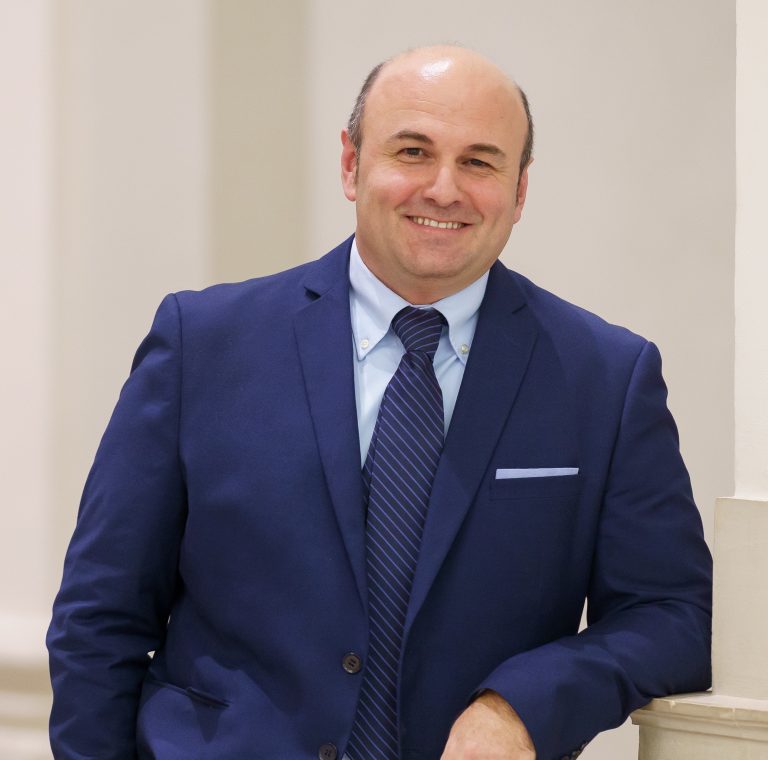
Professor Elton Prifti is Chair of Romance Philology at Saarland University since 2022, with a distinguished career in Romance linguistics, etymological lexicography, and language contact studies. He previously held positions as Full Professor of Romance Linguistics at the University of Vienna (2019-2022), Junior Professor at the University of Mannheim (2013-2019), and various research positions at Saarland University.
His research focuses on historical word research, language history, multilingualism, variational linguistics, contact linguistics, migration linguistics, and digital language science. Prifti's work particularly emphasizes inter-Adriatic language contacts, Romance minority languages, and the digital transformation of etymological dictionaries.
Prifti has made significant contributions to the field through his leadership of the Lessico Etimologico Italiano (LEI) project, which he has been responsible for digitizing since 2015. His recent publications reflect a strong trend toward digital humanities approaches to historical linguistics, with numerous articles on digital lexicography, knowledge networks in medieval Romance languages, and the development of digital tools for linguistic research.
- Premio Cesare Pavese 2020 (Saggistica section)
- Kurt-Ringger-Preis 2013 from the Academy of Sciences and Literature Mainz
- Elected as full external member of the Academy of Sciences of Albania (2021)
- Elected as foreign corresponding member of the Accademia della Crusca (2019)
As co-editor of the Journal of Romance Philology and the LEI project, Prifti plays a significant role in guiding scholarly discourse in Romance linguistics. His leadership extends to directing the long-term ALMA project on knowledge networks in medieval Romance languages and serving on various academic boards including the Kurt Ringger Foundation and the scientific committee of the journal Ladinia.
Prifti's work spans multiple institutional contexts across Europe, with particular expertise in the linguistic landscapes of the western Balkans, Romance minority communities, and the development of digital tools for historical linguistic research.