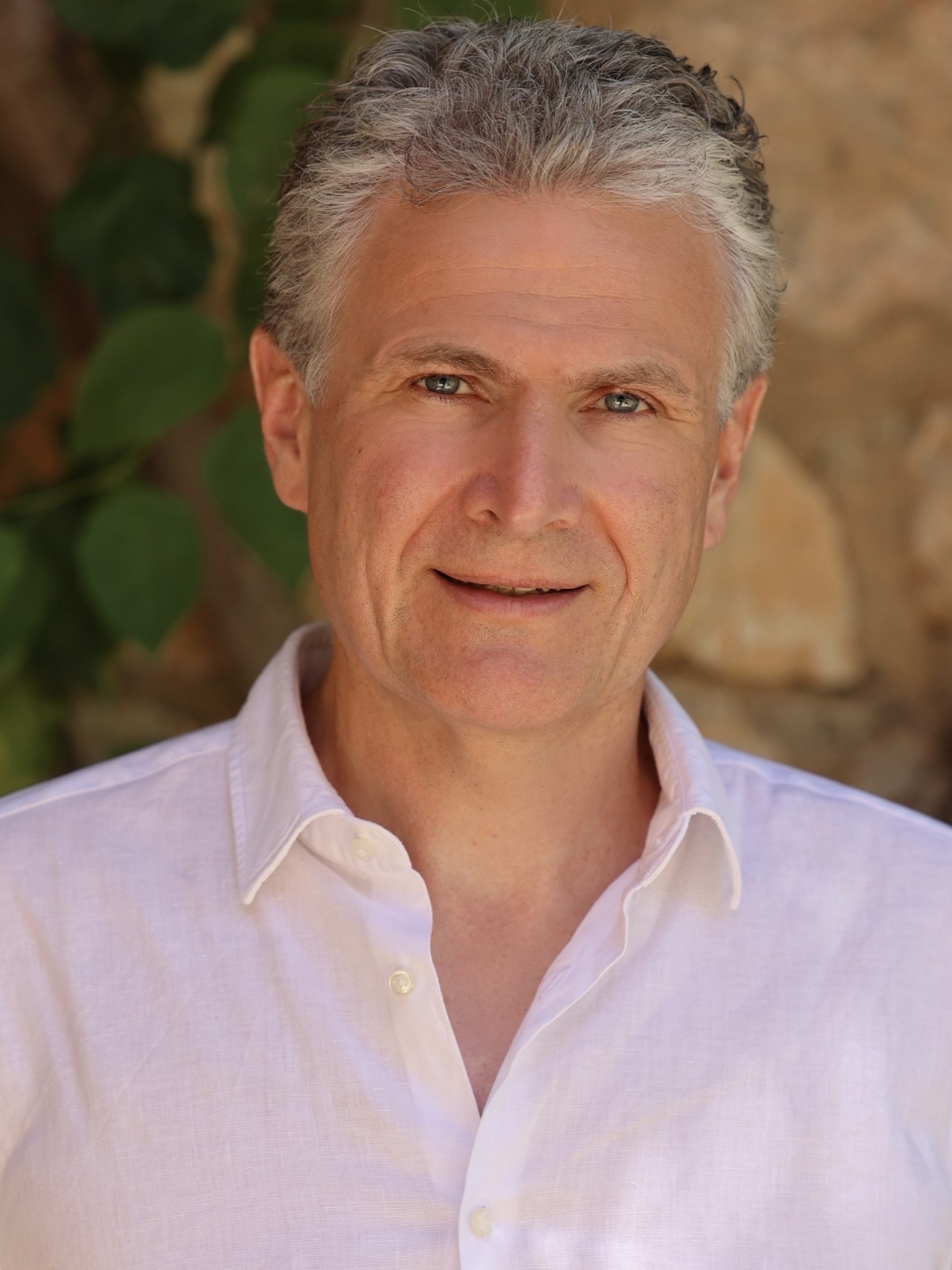
Professor Neil Walker holds the Regius Chair of Public Law and the Law of Nature and Nations at the University of Edinburgh's School of Law . He is a Fellow of the British Academy (FBA) and Royal Society of Edinburgh (FRSE) with a distinguished career spanning institutions like the European University Institute in Florence and the University of Aberdeen. LLB, PhD (Edinburgh) LLD (Honoris Causa), Uppsala University His research focuses on constitutional theory across sub-state, state, EU-supranational, and global levels, examining sovereignty, legal pluralism, and the intersection of security, law, and political community. He also explores broader legal theory and UK/EU public law dimensions. Recent work includes Intimations of Global Law (2015) and the Leverhulme Trust-funded project Law, Community and Utopia (2019-2022). His 178+ publications span constitutionalism, EU law, sovereignty debates, and transnational legal theory. Scientific Awards : Francqui Medal (2017), Leverhulme Trust Major Research Fellowship As director of the Law and Polity Project , he collaborates with Dr. Cormac MacAmhlaigh and Professor Claudio Michelon. He has advised governments on constitutional matters, including Scotland's final appellate jurisdiction review (2008-2010).
Professor Michael Goldhammer holds the Chair of Public Law at EBS Law School, focusing on administrative law, comparative law, and legal philosophy. He serves as Vice Dean and leads research on public law’s European and international dimensions. He earned his doctorate (2012) and habilitation (2018) from the University of Bayreuth, with postdoctoral research visits to Michigan, Melbourne, and Cambridge. His work emphasizes legal foundational questions and disciplinary openness, supported by awards such as the DFG and DAAD scholarships. In 2024, he is on research leave for the Volkswagen Foundation-funded project on 'Kommunikativer Realakt und Ethical Turn.' Educations: PhD in Public Law, University of Bayreuth (2012) Habilitation, University of Bayreuth (2018) LL.M. from the University of Michigan Research Interests: His scholarship bridges administrative law, legal philosophy, and comparative law. Key areas include prognostic decisions by public authorities, the interplay between German and European legal frameworks, and foundational questions in intellectual property law. He critically examines constitutional principles and their application to modern challenges like pandemic governance and AI’s legal status. Articles Overview: Recent works analyze legal reform dynamics (e.g., VwGO-Novelle II), state secrecy under IP law, and fundamental rights conflicts. His publications span administrative procedure law, EU constitutionalism, and ethical dimensions of legal decision-making. The 2025 essay on administrative law reform critiques procedural gaps in German public governance. Awards & Grants: Michigan Grotius Fellowship DFG and DAAD grants Volkswagen Foundation project (2024) Advising & Grants: Though no formal advisees are listed, he leads research initiatives and collaborates internationally. Grants fund projects like pandemic legal governance (2021) and AI legal subjectivity (2024). Teams/Labs: His research group focuses on public law’s epistemological foundations and multilevel governance. Collaborations include the Max Planck Institute for Collective Goods (Bonn) and the University of Melbourne’s constitutional studies center.
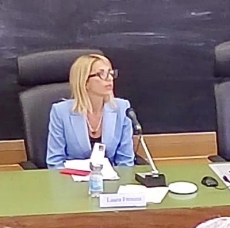
Laura Frosina is an Associate Professor of Comparative Public Law (IUS/21) at the Department of Political Science, Sapienza University of Rome. She teaches courses such as States, Autonomies and Separatisms in the Master's program in International Relations and Comparative Public Law in the undergraduate program in International Cooperation and Development. She is a member of the Doctoral Faculty in Public, Comparative, and International Law and actively participates in national and international research projects. PhD in Theory of the State and Comparative Political Institutions, Sapienza University of Rome (2005) Laurea in Political Science (with honors), Sapienza University of Rome (2000) Postgraduate Course in Assembly Consultants, Sapienza University of Rome (2001) Her research centers on comparative constitutional law, with a strong focus on Spain, Italy, and Latin America. Key themes include multilevel governance, European Union institutions, separatism, autonomy, federalism, parliamentary systems, and constitutional reforms. She analyzes political-constitutional crises, emergency powers, and the evolution of democratic institutions in pluralistic societies. Her work frequently examines the interplay between law, politics, and institutions in contexts of territorial tension. The most recent articles highlight a sustained scholarly engagement with Spanish constitutional dynamics, particularly around the Catalan independence movement, coalition governments under Sánchez, judicial-political conflicts, and broader EU institutional challenges. Trends include the analysis of secession referendums, emergency governance during the pandemic, urban constitutionalism, and the transformation of party systems. Her publications appear in specialized journals such as Nomos , Federalismi.it , and Revista de Derecho Constitucional Europeo , as well as in edited volumes from major academic publishers. Member, Editorial Board of Nomos (since 2001) Responsible, Critical Reviews Section, Nomos (since 2014) Member, Editorial Board, Federalismi.it (2006–2010) Member, Editorial Board, Focus America Latina , Federalismi.it (since 2009) Member, Editorial Board, Quaderni di Nomos (since 2012) Member, Editorial Board, Rivista di Diritto pubblico comparato ed europeo (since 2022) Principal Investigator, Cities and Models of Governance in the 21st Century (Sapienza SEED PNR Project, 2022–2025) Member, Large Ateneo Research Project Following Constitutional Law No. 1/2020, which Parliament? (Sapienza, 2022) Laura Frosina has been involved in numerous research projects funded by the Italian Ministry of Education, Universities and Research (MIUR), CNR, Sapienza University, and the European Committee of the Regions. She has served as a research fellow and principal investigator on topics including intergovernmental cooperation, EU multilevel governance, democratization in South Asia, and urban governance. She has collaborated with the Center of Excellence Integración Europea y Globalización at the University of Granada and participated in international training programs for parliaments in the Balkans. Her academic work bridges doctrinal legal analysis with political science perspectives, contributing to both theoretical and policy-oriented debates. She is affiliated with the Association of Comparative and European Public Law and has coordinated academic events and seminars, including tributes to her mentor Fulco Lanchester. Her institutional page lists regular office hours and remote availability via Google Meet, indicating active engagement with students and the academic community.
Elisa Olivito is a Full Professor of Constitutional Law at the Department of Legal and Economic Studies, Faculty of Law, Sapienza University of Rome. Her research focuses on constitutional theory, fundamental rights guarantees, European constitutional law, immigration law, and gender studies. She is actively involved in teaching courses on Constitutional Law and Public Migration Law. University: Sapienza University of Rome Department: Department of Legal and Economic Studies Research Areas: Constitutional Justice, Multiculturalism, Gender Rights, Migration Policy Recent Publications (2025–2022) analyze: Religious freedom for migrants in multilevel legal systems Constitutional implications of smart city development on social peripheries Tacit amendments in constitutional orders and their existential impact Governability debates through Serio Galeotti’s political philosophy Asylum rights during the Ukraine war Generational shifts in fundamental rights and female subjectivity Office Hours: Tuesdays at the Sezione di Diritto Pubblico, by appointment requested before Sunday. For exams, students must adhere to in-person formats as mandated by the university.
Prof. Dr. jur. Angelika Emmerich-Fritsche serves as an Associate Professor of Law at Friedrich-Alexander-Universität Erlangen-Nürnberg (FAU) since November 27, 2013, with additional teaching responsibilities at the University of Bamberg through the Coordination Office for Legal Sciences. Her academic appointment places her within the Faculty of Law, specifically in the Department of Public Law, where she teaches Public and Constitutional Law, International Business Law, International Law, Public Law with a European Reference, European Law, and German and European Constitutional Law. Dr. Emmerich-Fritsche's educational foundation includes law studies at the Universities of Passau (with specialized French language training), Geneva, and Erlangen (1981-1986). She earned her doctorate from the University of Bayreuth in 1998 and completed both German State Examinations (1987 and 1990), including legal traineeship with an internship at Cleary, Gottlieb, Steen & Hamilton in Brussels. Her academic progression shows steady advancement from research assistant (1990-2002) to senior assistant (2002-2006), culminating in her habilitation at FAU's Faculty of Law in 2006. Her scholarly interests focus on the transformation of legal frameworks in globalization, examining constitutional law, European integration, international economic law, and human rights through a philosophical lens. Her research trajectory consistently explores the evolution from traditional international law toward what she terms 'world law,' addressing critical contemporary issues including national constitutional identity in European context, human rights application to transnational entities, water privatization, and environmental regulation. Analysis of her 15 most recent publications reveals a sophisticated integration of theoretical legal philosophy with practical applications across constitutional, European, and international law domains. Her work demonstrates increasing engagement with global governance challenges, particularly evident in her later publications addressing terrorist financing, democratic rights, and environmental law through a world law perspective. Dr. Emmerich-Fritsche maintains an active dual career as both an academic legal scholar and practicing attorney, having been admitted to the Nuremberg Bar Association in 2007 and becoming a partner at Dr. Maeder & Partner law firm in Fürth. Her professional activities extend to international academic collaborations, including guest lectureships at Immanuel Kant University Kaliningrad and participation in an EU Tempus project with teaching in Minsk, Belarus, reflecting her commitment to transnational legal discourse.
Virginie Mamadouh is a Senior Lecturer in Political and Cultural Geography at the University of Amsterdam's Department of Geography, Planning and International Development Studies. With affiliations to research institutes including the Amsterdam Institute for Social Science Research (AISSR) and former roles at the Amsterdam Metropolitan and International Development Studies (AMIDSt) and its predecessor AME, she has maintained a long-standing academic presence at UvA since 1996. 2005–present: Senior Lecturer (Universitair Hoofddocent) at UvA 1999–2005: Assistant Professor (Universitair Docent) at UvA 1999–2003: Lecturer at University College, Utrecht University Mamadouh's research explores geopolitical narratives, migration dynamics, and the spatial dimensions of governance. Her work bridges political geography with cultural theory, focusing on transnational identity formation, electoral geography, and multilevel governance in the European Union. Key publications analyze immigration discourses, Eurozone governance challenges, and institutional transplantation mechanisms. Her research integrates cultural theory frameworks with empirical studies on territorial identity, media representation of conflict, and transnational policy transfer. 2012–2016: Steering Committee member, IGU's Commission on Political Geography 1992–1996: KNAW research fellowship
Paolo Mazzotti is a Research Fellow and Ph.D. candidate at the Max Planck Institute for Comparative Public Law and International Law (MPIL) in Heidelberg, Germany, under the supervision of Armin von Bogdandy. His academic profile demonstrates significant engagement with international legal frameworks through positions at the UN International Law Commission, United Nations Environment Programme, Banca d'Italia (Italian Central Bank), and multiple academic institutions across Europe. Mazzotti earned his LL.M. in International Law from the Graduate Institute of International and Development Studies in Geneva (summa cum laude, 2022) and a Master's Degree in Law from the University of Trento, Italy (110/110 summa cum laude, 2020). His educational journey included exchanges at Maastricht University and the Graduate Institute in Geneva, along with specialized training at the Europa-Institut and the Academy of European Law. His research centers on the critical intersection of international economic law, environmental governance, and EU constitutional frameworks. Mazzotti examines how legal systems can reconcile economic globalization with climate imperatives, particularly focusing on investment law's relationship with climate policy, enforcement mechanisms for sustainable development in trade agreements, and transnational judicial review in administrative contexts. His work consistently addresses contemporary governance challenges through interdisciplinary lenses that bridge legal doctrine with political and environmental considerations. Analysis of his publication record reveals a sophisticated scholarly trajectory addressing pressing global issues: climate litigation strategies, digital regulation frameworks, sustainability implementation in economic agreements, and constitutional dimensions of transnational governance. His recent work shows increasing focus on the practical implementation of legal frameworks rather than theoretical constructs alone. European Law Institute's Young Lawyers Award (2021) Ph.D. scholarship from Studienstiftung des deutschen Volkes (2022/2023, 2025-2026) 'Donato Menichella' Ph.D. scholarship from Banca d'Italia (2023/2024, 2024/2025) Diploma in EU Law from the Academy of European Law (2023) INPS Scholarship (2015-2020) Affiliation with Collegio Clesio Honours College (2015-2020) At MPIL, Mazzotti actively contributes to institutional life as co-coordinator of Dialoghi italiani and Forum Francophone initiatives, and as a committee member for the Max Planck Law Initiative on Law, Climate Change, and the Environment. He has supervised interns through the Institute's program and served as Internal Ph.D. representative. His teaching activities span multiple institutions including Heidelberg University, Goethe-University Frankfurt, and University of Rome 'Tor Vergata', where he addresses advanced topics in EU law, investment law, and climate governance.
Mary Dobbs is an Associate Professor in the School of Law and Criminology at Maynooth University, joining in September 2020 after roles at Queen’s University Belfast. She specializes in environmental law, agriculture, and GMO governance, with a focus on EU frameworks and post-Brexit implications. Her research explores socio-ecological resilience, regulatory challenges, and transnational governance. She co-leads Horizon Europe projects P2GreeN (nutrient recovery from waste) and GoGreenNext (urban sustainability). Key accolades include the 2023 Prix d'honneur for her book on Brexit and Agriculture. Education: PhD in Law (UCD, 2013), BCL (UCD), Certificat supérieur en droit français (Paris II). Research Interests : Environmental law/governance, risk regulation, agricultural policy, EU constitutional law, and planetary health. Her work bridges legal theory and practice, addressing Brexit’s impact on cross-border environmental governance. Grants & Projects : Over €220k in funding for projects like P2GreeN (€200,302.50) and GoGreenNext. Active in policy contributions, including advisory roles for the Scottish Parliament and Citizens' Assembly on Biodiversity Loss. Labs/Teams : Involved in Maynooth’s Social Sciences Institute (MUSSI) and collaborations with EU networks like Brexit and Environment. Leading workshops on environmental rights constitutionalization.
Prof. Dr. Benjamin Schindler is a Professor of Public Law at the University of St. Gallen (HSG), specializing in administrative law, procedural law, and legal history. He holds a lic. iur. from the University of Zurich (1996) and an MJur from the University of Oxford (2005). His academic career includes a habilitation in Public Law (2010) and roles such as Vorsteher der Rechtswissenschaftlichen Abteilung (2019-2021) and President of the Rekurskommission at HSG (2011-2019, 2022–present). He is a member of the Swiss Jurists’ Association (since 2012, President since 2021) and the German Association of Constitutional Law Professors (since 2024). His research focuses on administrative law foundations, procedural law, and internal security law, with interdisciplinary connections to history and administrative sciences. Currently, he serves as a judge at the Liechtenstein Supreme Court (since 2024). Education: Zurich (lic. iur. 1996), Oxford (MJur 2005) Professional Roles: Chair of Public Law at HSG (since 2010), Judge at Liechtenstein Staatsgerichtshof (2024–present) Leadership: President of Schweizerischer Juristenverein (2021–2024), Board Member of Vereinigung der Deutschen Staatsrechtslehrer (since 2024) Research Interests: Schindler’s work emphasizes legal history and comparative perspectives in administrative law. Key areas include administrative procedures (non-contentious proceedings), legal frameworks for internal security, and the interplay between constitutional, civil, and criminal procedural law. His interdisciplinary approach bridges law with history and administrative studies. Key Projects: Dogmengeschichte des schweizerischen Verwaltungsrechts (SNSF-funded, 2008–2012) Publications: Over 270 outputs, including seminal works on Swiss administrative law, judicial ethics, and federalism. Grants & Supervision: Supervises bachelor’s, master’s, and doctoral theses in constitutional and administrative law. Advises on thesis writing through his co-authored textbook Juristisches Arbeiten (7th ed., 2023). Grants: Förderprofessur from Swiss National Science Foundation (2008–2012) Thesis Guidance: Emphasis on preliminary discussions and adherence to methodological standards. Labs/Teams: Leads a research team at HSG with postdocs (e.g., Dr. Kaspar Ehrenzeller) and assistants (e.g., Ruben Schuler, Julia Koch). Collaborates extensively with institutions like the Swiss Federal Administrative Court and the University of Heidelberg’s constitutional law institute.
Suvi-Tuuli Puharinen is an Assistant Professor of European Law at the Faculty of Law, Maastricht University, where she is affiliated with the Maastricht Centre for European Law. Her research focuses on EU Environmental Law, particularly water and marine environmental law, biodiversity protection, and sustainable corporate governance. Her research interests lie at the intersection of environmental law and sustainability transitions. She explores normative environmental quality objectives, adaptive governance, and the legal frameworks governing offshore renewable energy development, especially in marine contexts. Her work bridges theoretical and applied dimensions of EU environmental regulation. The recent publications highlight a strong trend in transnational environmental governance within the EU, particularly focusing on marine ecosystems and renewable energy infrastructure. Her work integrates legal analysis with policy-relevant insights on sustainability and the rule of law. No scientific awards listed in the provided text. Puharinen is currently accepting PhD students starting in 2025. There is no mention of specific grants or funded projects in the provided content, but her active publication record suggests ongoing research support. She collaborates with leading scholars in environmental law across Europe. She is affiliated with the Maastricht Centre for European Law, a key research hub for EU legal studies, which supports her work on transnational and multilevel environmental governance.
Prof. Dr. Ivo Appel is a Professor of Public Law, Environmental Law, and Legal Philosophy at the Faculty of Law, University of Hamburg. He serves as the acting director of the Research Center for Environmental Law (FORUM) since 2012 and has previously held leadership roles at the Chair of Public Law, Environmental Law, and Legal Philosophy. His career spans academic and administrative roles, including appointments at the University of Augsburg (2003–2011) and the University of Freiburg. Education: Studied Law and Philosophy at Erlangen, Lausanne, and Freiburg i.Br. (1982–1987), completed his first and second state exams, and habilitated in 2001 at Freiburg. Research Focus: His work bridges German, European, and International Environmental Law, with expertise in Planning Law, Bio- and Genetic Engineering Law, Administrative Law reform, Constitutional Law, and legal theories of sustainability and risk regulation. He explores the steering and ordering functions of law, norm-setting, and justice theories. Publications: Authored monographs on topics like state foresight (2005), financial crisis and expropriation law (2009), and risk regulation strategies (2014). His recent articles emphasize planning law under EU influence, privatized administrative procedures, and sustainability integration across legal systems. Scientific Awards: Georg F. Rössler Foundation Prize (1997) for his dissertation at Freiburg. Labs & Teams: Leads the Research Center for Environmental Law (FORUM) at Hamburg, collaborating with scholars like Wolfgang Hoffmann-Riem and Ulrich Ramsauer. He contributes to editorial boards of legal series on bioethics, environmental law, and global economic regulation.
Marlene Wind is a Professor and Chair at the Department of Political Science, University of Copenhagen, where she also serves as Director of the Center for European Politics (CEP) since 2008. She holds a PhD from the European University Institute (EUI) in Florence, Italy, and has built a distinguished career spanning over two decades in European political studies, with particular focus on the intersection of law and politics within the EU framework. Her educational background includes: PhD from the European University Institute (EUI), Florence, Italy MA from Aarhus University MA from University of Massachusetts, USA (1989-1990) Studies at the 'Jyske Musikkonservatorium', Aarhus Professor Wind's research examines the complex dynamics between law and politics in European integration, with special attention to European constitutionalism, judicial politics, and the challenges posed by populism to democratic institutions. Her work bridges political science and legal studies, analyzing how European integration affects national sovereignty and democratic processes. She has made significant contributions to understanding Denmark's unique relationship with the EU, including its opt-outs and ambivalent membership stance. Her scholarship consistently addresses contemporary challenges to European unity and democratic governance. Her recent scholarly output reveals a clear progression toward analyzing the growing challenges to European integration, particularly the rise of populism, illiberal democracy, and the 'tribalization' of European politics. Wind's research increasingly focuses on the tension between national sovereignty and European integration, judicial independence, and the future of liberal democracy in Europe, with particular attention to Central and Eastern European developments. Professor Wind has received several prestigious awards for her contributions to European studies and public discourse: 'Europe's Womans Award' 2009 for outstanding communication on Europe with the public at large Columbusprisen (January 10, 2010) Tøger Seidenfadenprisen (September 9, 2012) Ridder af Dannebrogordenen (Knight of the Order of the Dannebrog, August 25, 2022) Throughout her career, Professor Wind has been deeply engaged in public discourse, serving as a commentator on Danish and international media, delivering numerous public lectures (approximately 40 annually as of 2009), and advising various governmental and non-governmental organizations on European affairs. She has held significant leadership positions including serving on the High Council at the European University Institute (serving as President in 2010) and chairing the Danish EUI selection committee. Her extensive board memberships reflect her influence in European policy circles. As Director of the Center for European Politics, she leads one of Denmark's premier research centers focused on European integration, EU governance, and the political dynamics of European cooperation. The center serves as a vital hub for interdisciplinary research and policy-relevant analysis of European political developments, fostering collaboration between scholars, policymakers, and the public.
Giacomo Delledonne is an Associate Professor of Constitutional and Public Law at the Scuola Superiore Sant'Anna in Pisa, with a focus on DIRPOLIS (Department of Law, Politics and Economics). He collaborates with the Research Department of the Italian Constitutional Court and serves as coordinator of the Jean Monnet Module ENACTING (2022-present) and principal investigator for a PRIN national research project on 'Identitarian public law' (2023). Research Themes : His work spans Italian and comparative constitutional law , EU constitutional frameworks , federalism , and states of emergency . He explores electoral systems and political parties subnational constitutional autonomy constitutional identity crisis governance populism and democratic inclusion Academic Contributions : His recent articles include analyses of German constitutional safeguards , Paris' role in French constitutional identity , and electoral reforms in Italy and France . Notably, he co-edited the Routledge Handbook of Subnational Constitutions (2021), mapping multilevel constitutionalism globally. Scientific Awards : He received the 10th 'Opera Prima – Sergio P. Panunzio Prize' for his monograph on constitutional homogeneity in compound systems (2017). Collaborations : As a convenor of the International Association of Constitutional Law research group (with Prof. Patricia Popelier), he bridges academic and policy debates on constitutional evolution.
Lovleen Bhullar serves as Assistant Professor in Environmental Law at the University of Cambridge Faculty of Law, holding concurrent affiliation with Queens' College. Her academic work bridges environmental governance, climate policy, and human rights frameworks with particular focus on Global South contexts. Her educational background includes: BA LLB from NLSIU Bangalore LLM & PhD from SOAS, University of London MSc from the London School of Economics Professor Bhullar's research examines critical intersections of environmental law with public health and social justice. Her work on environmental constitutionalism analyzes how constitutional frameworks can mandate ecological duties, while her water security research investigates climate adaptation challenges in South Asia. A significant strand explores antimicrobial resistance regulation through environmental and pharmaceutical policy lenses, demonstrating how smart regulatory approaches can address complex planetary health challenges. Her scholarship consistently emphasizes Global South perspectives on environmental governance, challenging Northern-centric paradigms. Her recent publications reveal evolving research trajectories toward integrated solutions for interconnected crises. The growing emphasis on co-benefits approaches demonstrates how antimicrobial resistance, water security, and climate adaptation challenges require synergistic regulatory responses rather than siloed solutions. Increasing attention to gender dimensions and human rights frameworks in sanitation governance reflects her commitment to socially just environmental regulation. Her research is supported by significant competitive funding: British Academy-Leverhulme Small Research Grant for environmental duties research in Africa ERC Advanced Grant as Senior Researcher on water security and climate change in South Asia Professor Bhullar actively contributes to the Faculty of Law's research ecosystem through the Cambridge Socio-Legal Group and the Network of Empirical Labour Law Scholars (NELLS). Her work engages closely with policymakers through the Faculty's outreach initiatives including the Exploring Legal Futures Webinars, translating academic insights into practical governance frameworks for environmental challenges.
Elena Paparella is a Researcher at the Department of Economics and Law of Sapienza University of Rome. She specializes in Public Law, Constitutional Law, and European Union Law, with particular focus on citizenship rights, crisis governance, and constitutional economics. Her teaching responsibilities include courses on Public Law Institutions, Multilevel Constitutional Economic Law, and Competition Law across multiple academic channels (EM, evening, etc.). Her research explores themes such as the evolution of constitutional limits in economic governance, the transformation of the European Parliament toward constitutionalism, and the legal frameworks surrounding citizenship acquisition for second-generation migrants. She has also analyzed the EU’s response to the 2020 pandemic and the role of international financial institutions during the Eurozone crisis. Teaching activities span over a decade, covering disciplines such as public policy, social service law, and advanced legal studies for economics students. Her work bridges constitutional theory with practical applications in EU policy, labor law reform, and crisis management. Key research trends include critical analysis of supranational institutions, constitutional legitimacy in economic policy, and the intersection of law with socio-economic dynamics. No specific scientific awards are listed, but her prolific publication record reflects sustained scholarly engagement in these domains.