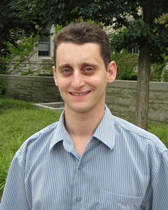
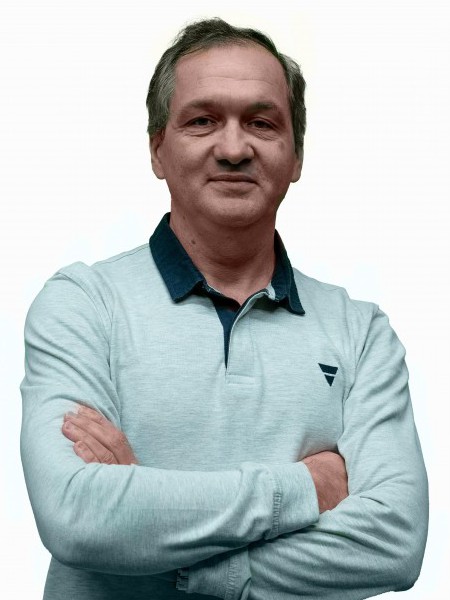
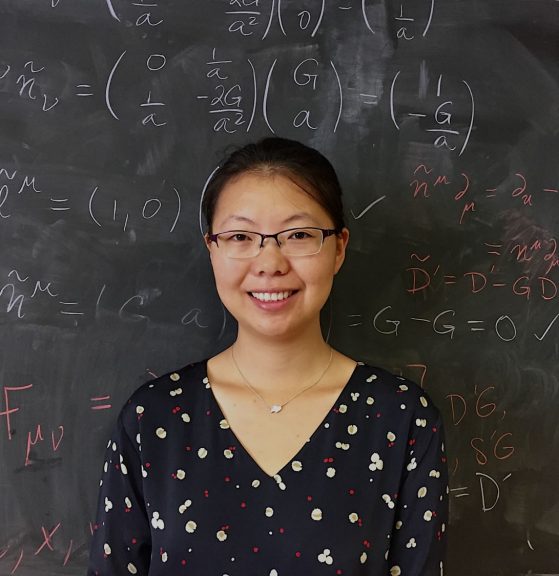
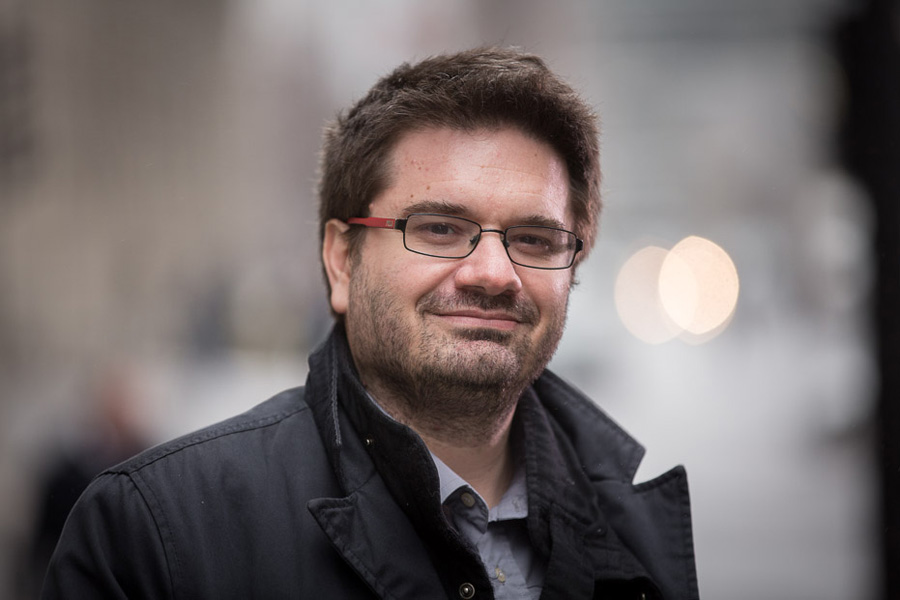
Professor Nathaniel Stern is a faculty member in the Department of Physics and Astronomy at Northwestern University, specializing in quantum interactions of photons with nano-scale systems. He holds a PhD from the University of California, Santa Barbara (2008) and leads the Stern Research Group, focusing on hybrid photonic systems, quantum materials, and light-matter interactions. His research explores novel optical and spin properties in monolayer semiconductors, chiral photonics, and magneto-optical effects. Education: PhD in Physics, University of California, Santa Barbara (2008). Research Interests: Quantum photonics, nano-scale optoelectronics, valley-polarized exciton-polaritons, and applications in quantum information science. His work bridges experimental approaches like time-resolved spectroscopy and single-photon detection with theoretical models for understanding quantum phenomena in 2D materials. Awards: Alfred P. Sloan Research Fellowship (2013), DOE Early Career Award (2014), ONR Young Investigator Award (2016). Advising & Students: Advised PhD students Carin Gavin (2023 Rapid Fire winner) and Hongfei (defended 2023). Current group members focus on quantum emission in van der Waals heterostructures and chiral photonics. Labs/Teams: Stern Research Group explores quantum systems in integrated photonic platforms, collaborating with the Chicago Quantum Exchange as part of the region’s US Tech Hub designation for quantum technologies.
Oleksandr Tkach is a Principal Researcher at the University of Aveiro's Department of Materials and Ceramic Engineering, affiliated with CICECO - Aveiro Institute of Materials. His research focuses on advanced oxide electroceramics, including thermoelectric and piezoelectric materials for energy applications, giant permittivity dielectrics, and energy-efficient sintering techniques. He holds a Ph.D. in Materials Science & Engineering from the University of Aveiro (2005) and a Microelectronics degree from Kyiv Polytechnic Institute (1999). His career includes postdoctoral positions at the University of Barcelona, University of Porto, and Johannes Gutenberg University of Mainz, with extensive EU project involvement (e.g., IFOX, MASPIC, FAME). Dr. Tkach has authored over 100 articles, including high-impact publications in Advanced Functional Materials and Nature Physics . His awards include FCT grants, ERC project participation, and featured articles in prestigious journals. He supervises PhD and Master's students, coordinates research projects totaling €48M, and contributes to editorial boards for six journals. Current research emphasizes energy storage, multiferroic heterostructures, and sustainable ceramic processing. His work bridges fundamental material science with industrial applications in sensors, energy harvesting, and electronic devices.
Daniele Preziosi is a Researcher in Inorganic Materials Chemistry at the University of Strasbourg's IPCMS laboratory. His work explores the properties of transition metal perovskite oxides and their interfaces, with expertise in thin film growth and advanced characterization techniques. PhD in Physics from Martin-Luther-Universität Halle-Wittenberg (2015) MSc in Physics from University of Naples Federico II (2010) Research focuses on rare-earth nickelates/ferroelectric heterostructures, infinite-layer nickelates, and interface-driven magnetotransport phenomena. Utilizes pulsed laser deposition, synchrotron-based methods, and lithography to investigate correlated oxide systems. Grants include: ANR Tremplin 2023 (Principal Investigator), Labex QMAT 2022 (PI), ANR(JCJC) FOXIES 2020 (PI), Idex Attractivité 2018 (PI). Collaborates with groups from Politecnico Milano, CNR-SPIN Napoli, LPS-Univ. Paris-Saclay, and UMPhy CNRS/Thales. Hoshang Sahib (Post Doc 2023-2025) Guillaume Krieger (M2&PhD 2019-2022) Ali Elboutaybi (M1&M2 2019-2020) E. Yesil & N. Bassot (M1 2018 & 2020)
Dr. Urmimala Dey is a Postdoctoral Research Associate (PDRA) in the Department of Physics at Durham University, specializing in condensed matter physics and materials science with emphasis on magnetoelectric materials, high-pressure phenomena, and computational materials design. Her research explores structural and electronic properties of materials under extreme conditions, including pressure-induced orbital reordering, magnetoelectric coupling mechanisms in complex oxides, and spin-splitting manipulation in semiconductors. She employs advanced computational techniques and high-pressure diffraction methods to investigate novel physical behaviors in transition metal compounds, perovskites, and layered materials. Dr. Dey's publication record demonstrates consistent contributions to top-tier physics journals, with recent work focusing on pressure-driven phase transitions, room-temperature magnetization control in layered oxides, and Rashba effect engineering. Her interdisciplinary approach bridges experimental and theoretical physics to advance multifunctional material development for next-generation spintronic and electronic devices. No scientific awards were documented in the provided materials. Information regarding student supervision, grant funding, or laboratory affiliations was not specified in the source content.
Dwight Viehland is the Jack E. Cowling Professor of Materials Science and Engineering at Virginia Tech’s College of Engineering. His research focuses on the physics of advanced materials, particularly in ferroelectrics, piezoelectrics, and magnetoelectric composites. He has pioneered studies on multiferroic nanostructures, phase transitions in ceramics, and energy-efficient material systems. Education: Ph.D. in Solid State Science, Pennsylvania State University (1991) M.S. in Ceramic Engineering, University of Missouri-Rolla (1987) B.S. in Ceramic Engineering/Chemistry, University of Missouri-Rolla (1984) Research Interests: Viehland’s work spans the structural and functional properties of materials, including domain engineering in ferroelectrics, magnetic-electric coupling in heterostructures, and the development of high-performance piezoelectric crystals. He has made significant contributions to understanding spin pumping suppression, nanoscale phase transitions, and energy harvesting via ferroelectric systems. Publications: Recent work emphasizes magnetoelectric sensors, high-temperature material processing, and multiferroic device applications. His articles highlight breakthroughs in low-work-function materials, ultrafast sintering techniques, and strain engineering in lead-free ceramics. Awards: 2007 Fellow, American Ceramic Society 1995 ONR Young Investigator Award Multiple Paper of the Year Awards from the American Ceramic Society Advancing Materials Science: Viehland’s lab explores novel fabrication methods for functional materials, with applications in aerospace, energy storage, and biomedical devices. His work bridges fundamental physics and engineering, enabling next-generation technologies.
Dr. Ekaterina Khestanova is a Research Fellow at the Institute of Photonic Sciences (ICFO), specifically in the Quantum Nano-Optoelectronics research group. She holds a PhD in Condensed Matter Physics from the University of Manchester (UK). Her research focuses on quantum materials, particularly 2D materials and van der Waals heterostructures, with an emphasis on optoelectronic properties, superconductivity, and nonlinear optical phenomena. Her work explores topics such as interlayer excitons in transition metal dichalcogenides, quantum geometry in twisted bilayer graphene, and the mechanical and electronic properties of atomically thin materials. She has contributed to advancements in precision transfer techniques for 2D materials and the study of topological polaritons in monolayers. Key contributions include experimental revelations of intrinsic superconductivity at material interfaces, nonlinear polariton effects, and strain-induced phenomena in nanomaterials. Her research bridges fundamental physics with nanotechnology applications, particularly in optoelectronic device development and interface engineering.
Professor Liuyan Zhao is an Assistant Professor in the Department of Physics at the University of Michigan, affiliated with the Randall Laboratory and Homer A. Neal Lab. Her research focuses on novel quantum materials, particularly exploring magnetic phases in spin-orbit coupled correlated electron systems. She uses advanced optical techniques like pump-probe spectroscopy and nonlinear optical microscopy to study phenomena such as moiré magnetism, chiral antiferromagnetism, and excitonic effects in 2D materials. Key achievements include a 2019 NSF CAREER Award, a 2021 Air Force YIP Award, and a 2023 PECASE Award. Her work has revealed new insights into van der Waals magnets, such as tunable symmetry breaking in twisted bilayers and field-free magnetic switching in layered systems. She leads a research group investigating interfacial engineering of magnetic and optical properties in 2D heterostructures. Research Interests: Quantum Materials, Spintronics, Nonlinear Optics, Van der Waals Heterostructures Awards: NSF CAREER (2019), AFOSR YIP (2021), Sloan Fellowship (2021), PECASE (2023) Experimental Methods: Pump-probe spectroscopy, SHG microscopy, magneto-optical imaging Her group collaborates on projects involving magnetic domain imaging, exciton-polariton dynamics, and twistronics. Current efforts aim to develop quantum-engineered materials for next-generation spintronic and optoelectronic devices.
Peter Liljeroth is a Professor in the Department of Applied Physics and serves as Vice Dean of the School of Science at Aalto University. His research focuses on probing atomic-scale structures and electronic properties of molecules and nanostructures using low-temperature scanning tunneling microscopy (STM) and atomic force microscopy (AFM). He leads the Atomic Scale Physics group , aiming to create designer materials with atomically precise geometries and controlled interactions. Education: PhD in Engineering and Technology from Helsinki University of Technology (2002), Licentiate (2001), and Master's (1999) degrees in similar fields. Awards : ERC Starting Grant (2012), Väisälä Award (2016). Projects : Principal investigator in EU Horizon Europe projects like GETREAL (2025–2029) and Sig-STM (2025–2026), focusing on quantum materials and van der Waals heterostructures. Research interests include 2D materials, quantum phases, and engineered nanostructures. Supervised 16 theses and contributed to over 120 publications and datasets.
Evgeny Y. Tsymbal is a Professor in the Department of Physics and Astronomy at the University of Nebraska-Lincoln . His research focuses on spintronics, ferroelectric materials, and electronic structure at oxide interfaces. Expertise in spin-orbit coupling , magnetoelectric coupling , and 2D electron gas Lead researcher in Materials Research Science and Engineering Center (MRSEC) at UNL Recent work explores antiferromagnetic spintronics , ferroelectric control of magnetic skyrmions , and defect engineering in HfO2 . Collaborates extensively on oxide heterostructures and topological materials. Key themes: quantum transport , interface-driven phenomena , and multiferroic devices . Publications highlight spin-valley locking and noncollinear magnetic structures .
Hiro Nakamura is an Assistant Professor in the Department of Physics at the University of Arkansas, where he has worked since 2019. His research focuses on quantum effects in solid-state materials, including topological materials, 2D systems, and spin-orbit coupling phenomena. Ph.D. in Advanced Materials from the University of Tokyo M.S. in Advanced Materials from the University of Tokyo B.S. in Applied Chemistry from the University of Tokyo Nakamura's research explores quantum materials and light-matter interactions, with an emphasis on: Topological and 2D materials Spin-momentum locking effects (Rashba effect) Multiferroics and metal-insulator transitions Quantum optics and photonics Developing advanced laser-based techniques for imaging electronic states in solids Analysis of his publications reveals strong expertise in strain engineering of 2D materials, spin-orbit coupling mechanisms, and experimental characterization of topological materials. His work frequently combines material synthesis with spectroscopic and transport measurements. Notable awards include his previous designation as a JSPS Research Fellow (2006–2008). His lab has secured significant research funding including: DOD DEPSCoR grant for Nonlinear 2D Ferroelectrics Chancellor’s Fund support for deep-UV laser development Hiro Nakamura actively advises students in his research group, including: Apoorva Bisht (undergraduate researcher, now at UC Boulder) Andrew (SURF Grant recipient) Leonardo Vinaayak Gabriel Michael Ethan Weiche Seth Will Katarina Rodrigo Skyler Sneha Joey Kyle Ram The Nakamura Lab at the University of Arkansas works on: Developing laser-based technologies for imaging electronic states Investigating single photon sources and nanoscale light-matter interaction Collaborating on quantum photonic applications Contributing to the MonArk NSF Quantum Foundry
Federico Rosei is Professor and Director of the Centre for Energy, Materials and Telecommunications (Centre EMT) at Institut National de la Recherche Scientifique (INRS) in Varennes, Canada. He holds the UNESCO Chair in Materials and Technologies for Energy Conversion, Saving and Storage and has been a Canada Research Chair (senior) since 2016. Previously, he served as Director of Centre EMT from 2011 to 2019 and held junior and senior Canada Research Chairs since 2003. His educational background includes a Laurea degree (1996) and PhD (2001) from University of Rome I, followed by postdoctoral work as a Marie Curie Fellow at the University of Aarhus, Denmark (2000-2002). He also held visiting positions including Gledden Fellow and Professor at Large at the University of Western Australia (2008-2012). Professor Rosei's research spans multiple cutting-edge areas in materials science and nanotechnology, with particular focus on quantum phenomena at the nanoscale. His work bridges fundamental surface science with practical applications in renewable energy technologies. He has made significant contributions to understanding and developing multiferroic materials, quantum dots for energy applications, and novel nanofabrication techniques. His research integrates experimental surface science with theoretical modeling to create advanced materials for optoelectronic and photonic devices. Analysis of his recent publications reveals a strong emphasis on energy conversion technologies, particularly solar energy applications. His work consistently bridges fundamental nanoscale phenomena with practical device applications, showing evolution from basic surface science toward increasingly complex functional materials systems. The publications demonstrate expertise across multiple disciplines including materials chemistry, condensed matter physics, and electrical engineering, with a growing emphasis on sustainable energy solutions in recent years. Fellow of the Royal Society of Canada Fellow of the European Academy of Science Fellow of the American Physical Society Fellow of the Optical Society of America NSERC EWR Steacie Memorial Fellowship Rutherford Memorial Medal, Royal Society of Canada Friedrich Wilhelm Bessel Award from Alexander von Humboldt Foundation Khwarizmi International Award from Government of Iran Outstanding Engineer Award from IEEE Canada Professor Rosei has supervised numerous graduate students and postdoctoral fellows, though specific names aren't listed in the provided text. His research has been supported by significant grants including multiple Canada Research Chairs (junior and senior), the UNESCO Chair, and various international collaborations. He has co-organized 96 symposia/workshops/conferences across 21 countries, demonstrating extensive international engagement. His editorial roles include Associate Editor of Journal of Materials Chemistry C and advisory board membership for six international journals. As Director of the Centre for Energy, Materials and Telecommunications at INRS, Professor Rosei leads a multidisciplinary research team focused on developing next-generation materials for energy applications. His laboratory combines advanced characterization techniques with nanofabrication capabilities to investigate quantum phenomena in novel materials systems. The research environment fosters collaboration between chemists, physicists, and engineers working on cutting-edge problems in sustainable energy technologies.
Dr. Miguel Algueró is a Senior Researcher at the Instituto de Ciencia de Materiales de Madrid (ICMM), part of the Spanish National Research Council (CSIC). He holds a BSc in Physics from Universidad Autónoma de Madrid (1992), an MSc in Physics of Materials (1995), and a PhD in Physics of Materials (1998). His career includes roles as a Ramón y Cajal Researcher (2001–2006) and Marie Curie Postdoctoral Fellow (1998–2000). He has led multiple research projects, including MAT2017-88788-R on magnetoelectric materials. His work focuses on multiferroic and ferroelectric materials, particularly their synthesis, processing, and applications in advanced technologies like ceramics, thin films, and composites. He has published 103 JCR-indexed articles, co-edited a book on nanoscale ferroelectrics, and contributed to the European COST Programme in ferroics research. Recognitions include a visiting researcher role in Brazil (2014–2017) and editorial board membership at Journal of Advanced Dielectrics . Research interests span multiferroic ceramics , magnetoelectric composites , and advanced processing techniques like spark plasma sintering. His projects emphasize sustainable, high-performance materials for energy, MEMS, and sensor applications. Key contributions include optimizing BiFeO₃-PbTiO₃ thin films and developing lead-free piezoelectric ceramics with enhanced strain responses. Scientific Awards: Ramón y Cajal Researcher (2001–2006) Marie Curie Postdoctoral Fellowship (1998–2000) Ciência sem Fronteiras Visiting Researcher (2014–2017) Grants & Projects: Leader of 6 major projects (e.g., MAT2017-88788-R on magnetoelectric layered materials) Participant in 33 EU/Spain-funded initiatives Labs & Facilities: Thin Film Preparation Lab Ceramics Processing Lab Magnetoelectric Characterization Lab
Saj Mohan Mohandas Moolayil is a Research Fellow at the Industrial focus group XUV Optics (XUV) within the MESA+ Institute at the University of Twente. He holds a PhD from the Indian Institute of Technology Hyderabad (2013–2019), an MSc in Nanotechnology from Anna University (2010–2012), and a BSc in Electronic and Communication Engineering from Calicut University (2009). He also completed postdoctoral research at Université d'Artois, France (2019–2021) and an internship at Osaka University (2014). His research focuses on developing piezoelectric/ferroelectric/multiferroic devices for industrial applications, including adaptive optics using PZT thin films, epitaxial thin film strain engineering, and pMUT device materials. He has expertise in techniques such as pulsed laser deposition, RF magnetron sputtering, and scanning probe microscopy. His work contributes to UN Sustainable Development Goals related to affordable and clean energy and industry innovation. Key research themes include multiferroic heterostructures, domain wall dynamics, and nanoscale characterization of ferroelectric polymers. His recent articles highlight advancements in lead-free piezoelectric thin films, organic ferroelectric films, and silver nanowire-based transparent electrodes. While no formal awards are listed, his h-index of 70 and over 590 citations underscore his impactful contributions. His lab affiliations include the XUV Optics group and collaborations with institutions in France, India, and Japan.
Dr. Helen He is an Assistant Professor in the Department of Physics at Durham University. She earned her PhD in 2011 from the University of California, Berkeley, under Professor Ramamoorthy Ramesh, and worked as an ALS postdoctoral fellow at Lawrence Berkeley National Laboratory before joining Durham as a lecturer in 2014. PhD in Physics, University of California, Berkeley (2011) Her research focuses on multiferroic materials, ferroelectricity, and strain-driven property manipulation in oxide thin films. She investigates domain wall dynamics, heterostructure interfaces, and nanoscale phenomena using advanced techniques like electron microscopy and x-ray spectroscopy. Recent publications highlight her work on cation-stoichiometric engineering, electric-field-controlled proton evolution, and strain-induced ferroelectricity in materials such as LaCoO3, BiFeO3, and SrRuO3. Key themes include phase transitions, magneto-structural coupling, and interface-driven functionalities.
Prof. Massimo Ghidini is an Associate Professor at the University of Parma , Department of Physics, with affiliations at Diamond Light Source (UK) and the University of Cambridge (UK). His research focuses on magnetoelectric effects , multiferroic heterostructures , and voltage-controlled magnetism , leveraging advanced imaging techniques like X-ray Photoemission Electron Microscopy (XPEEM) and Magnetic Force Microscopy (MFM). His work explores nanoscale magnetism and spintronics , particularly in strain-mediated magnetoelectric coupling and domain engineering. Key projects include imaging magnetic vortices, controlling perpendicular magnetization via ferroelectric substrates, and developing multiferroic nanocomposites . His scientific awards include a Marie Curie Fellowship EPSRC Visiting Fellowship Chercheur Invité (CNRS) at Grenoble. Ghidini has secured competitive research grants from institutions like the Isaac Newton Trust, Diamond Light Source, and the European Community's FP7. He is a prolific conference organizer , having chaired symposia at MRS and Intermag, and serves as a referee for journals like Nature and Physical Review Letters. His teaching includes courses on materials physics and general physics at the University of Parma.