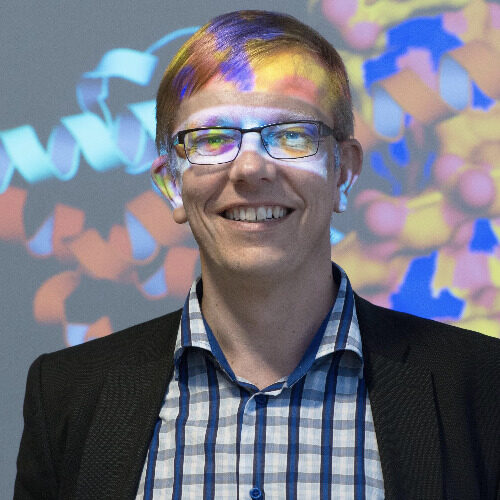
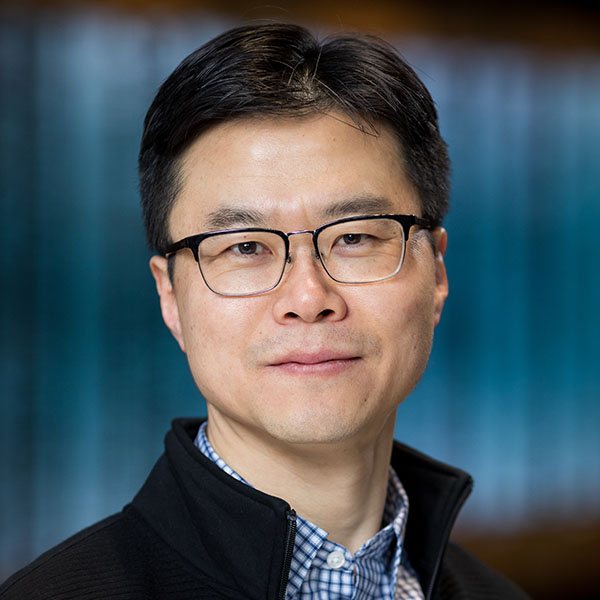
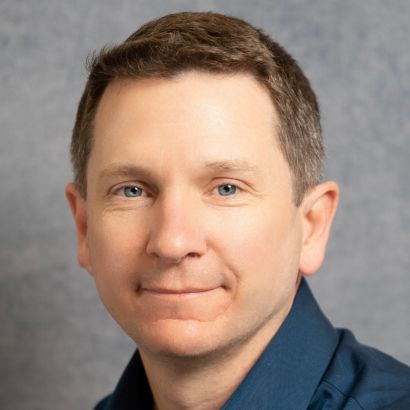
Professor David Grainger is a faculty member at the University of Birmingham's School of Biosciences, specializing in Molecular Microbiology. He leads the Grainger Lab, focusing on bacterial chromosome biology, pathogenicity, and antibiotic resistance. His research integrates high-throughput techniques and single-molecule analysis to study gene regulation and bacterial pathogenesis. Education: PhD (2004), PGCE (2000), BSc (1999) in Biochemistry from the University of Birmingham. Affiliations: Part of the Institute of Microbiology and Infection (IMI), collaborating with experts in genomics, proteomics, and structural biology. Research Interests: Deciphering chromosome biology of pathogenic bacteria, including transcriptional regulation, toxin production control, and antibiotic resistance pathways. Utilizes cutting-edge methods like Hi-C for 3D chromatin analysis and single-molecule microscopy. Recent Articles: Focused on transposon capture mechanisms, bacterial promoter diversity, and quorum sensing signaling. Highlights include studies on Salmonella regulons and Vibrio cholerae biofilm suppression. Awards: Wellcome Trust Career Development Fellowship (2008), Runner-up in 'Science Snaps' competition for scientific communication. Grants: Career Development Fellowship-funded establishment of his research group at the University of Warwick (2008). Labs/Teams: Grainger Lab at the University of Birmingham, part of the IMI network. Engages in public science outreach via Twitter and lab website.
JIANG Xingyu is Chair Professor and Head of the Department of Biomedical Engineering at the Southern University of Science and Technology (SUSTech) . Since 2018 he has led a multidisciplinary team developing advanced micro- and nano-scale tools for analytical chemistry, microfluidics and nanomedicine. Education Postdoctoral Research, Harvard University (2004–2005) Ph.D. in Chemistry, Harvard University (2004) B.S. in Chemistry, University of Chicago (1999) Research Interests Professor Jiang’s research integrates analytical chemistry , microfluidics , biomedical engineering and nanomedicine . His laboratory designs microfluidic chips for point-of-care diagnostics, engineers gold nanoclusters and nanoparticles for antimicrobial and anticancer therapy, and develops soft flexible bio-electronics for neural interfaces and wearable health monitoring. Across 400+ publications, recent work demonstrates a clear trend toward translational nanomedicine : point-of-care viral variant detection, nanoantibiotic strategies against multidrug-resistant bacteria, CRISPR delivery systems for cancer therapy, and conformal electronic tattoos for human-machine interfaces. Scientific Awards & Honours Fellow, American Institute for Medical and Biological Engineering (2020) Fellow, Royal Society of Chemistry (2016) Tencent Science Exploration Award (2019) Chief Scientist, National Key R&D Program (2019–) National Science Fund for Distinguished Young Scholars (2010) Young Investigator Award, Human Frontier Science Program (2007) Research Funding & Teams He currently directs the Nanoscience Laboratory at SUSTech, hosts National Key R&D Program projects as Chief Scientist, and serves on editorial boards of Advanced Healthcare Materials , Lab on a Chip , Nanoscale Horizons , Nanoscale and Nanoscale Advances . The group is actively recruiting post-docs, research professors and technicians across chemistry, materials, biology and medical engineering disciplines.
Kevin Wood was an Associate Professor of Physics and Biophysics at the University of Michigan. He held a dual PhD in Theoretical Physics and Physical Chemistry from the University of California-San Diego (2007), followed by postdoctoral research in Systems Biology (2008-2013) and Chemistry (2007-2008) at Harvard University. His research focused on applying theoretical physics principles to study antibiotic resistance, microbial ecology, and cancer biology. Wood's work emphasized understanding population dynamics in bacterial colonies, drug resistance evolution, and optimizing treatment strategies through mathematical modeling. Education: B.S. Chemical Physics, Centre College (2001) M.S. Biology, University of California-San Diego (2003) Ph.D. Physics and Ph.D. Physical Chemistry, University of California-San Diego (2007) Postdoctoral Fellowships: Harvard University (2007-2013) Wood's research interests included spatial evolution of drug resistance, collateral sensitivity in bacteria, and critical phenomena in cancer cell populations. His lab developed novel frameworks for predicting antibiotic efficacy and designing treatment sequences to combat resistance. Despite his untimely passing, he left a legacy of impactful contributions to biophysics and mentorship of students. Advising and Grants: Wood mentored numerous students but specific grants were not detailed. His Wood Lab was located in the Randall Laboratory and Homer A. Neal Lab at the University of Michigan.
Antti Poso is a Professor of Drug Design at the University of Eastern Finland (Kuopio), affiliated with the School of Pharmacy under the Faculty of Health Sciences. His research focuses on computer-aided molecular design, particularly targeting anti-cancer drugs and anti-microbials. Key projects include the EDCMET project (2019–2024) and the GeneCellNano Flagship (2020–2028). He leads the Molecular Modeling and Drug Design Research Group, specializing in QSAR analysis, kinase inhibition profiling, and systems-level drug response modeling. Recent work includes studies on SARS-CoV-2 inhibitors, endocrine disruptors, and bacterial pathogenesis. His findings bridge chemical structure with biological outcomes, leveraging computational tools like CCA and molecular dynamics simulations. Collaborations span medicinal chemistry, pharmacology, and systems biology, contributing to both academic and applied drug discovery efforts. Education: Not explicitly stated in texts; assumed to hold advanced degrees in pharmacy or chemistry. Research Themes: Drug design, molecular modeling, QSAR, computational biology, and anti-infective agents. Key Contributions: Over 150+ publications, including influential works on chemoinformatics-driven drug response analysis and structure-based inhibitor design. Publications highlight advancements in kinase inhibitors, anti-microbial strategies, and viral hijacking mechanisms. His work emphasizes translating computational insights into therapeutic solutions for cancer, infectious diseases, and metabolic disorders.
Dr. Suman Adhikari is a Conjoint Lecturer at the School of Clinical Medicine , University of New South Wales (UNSW), focusing on Infectious Diseases , Antimicrobial Stewardship , and Clinical Pharmacology . He has contributed to advancements in antibiotic management, sepsis diagnostics, and e-learning tools for healthcare professionals. University: University of New South Wales School: School of Clinical Medicine Email: suman.adhikari@unsw.edu.au Research Interests: Dr. Adhikari’s work spans antimicrobial stewardship in tertiary care, therapeutic drug monitoring of antibiotics like linezolid, and educational technology for vancomycin use. He also explores pharmacokinetics in parasitic infections and contributes to sepsis pathway optimization . Publication Trends: His recent articles (2017–2023) highlight antibiotic safety , digital education , and infection control . Notable studies include multimodal stewardship in ICU, qSOFA criteria validation, and e-learning tool efficacy for vancomycin training. Contact: Phone: 0411817996 | Location: Gray Street, Kogarah 2217 NSW
Dr. John Quale serves as Professor of Medicine in the Division of Infectious Diseases at SUNY Downstate Health Sciences University, where he has maintained continuous affiliation since medical school. For over 25 years, he has been an attending physician in Infectious Diseases at NYC Health + Hospitals/Kings County and currently holds the position of hospital epidemiologist at Kings County Hospital. His educational background includes: MD from SUNY Downstate Health Sciences University Residency at SUNY Downstate Health Sciences University Fellowship at SUNY Downstate Health Sciences University Dr. Quale's research centers on antimicrobial resistance mechanisms in Gram-negative pathogens, with particular expertise in Klebsiella pneumoniae epidemiology. His work investigates porin channel function, KPC carbapenemase expression, and novel antibiotic combinations to overcome resistance. He also focuses on infection control strategies for multidrug-resistant organisms in hospital settings, leveraging his dual role as clinician and epidemiologist to bridge laboratory findings with clinical practice. Analysis of his 2016-2018 publications reveals consistent focus on New York City's resistance landscape, particularly tracking KPC-producing K. pneumoniae evolution and evaluating next-generation beta-lactam/beta-lactamase inhibitor combinations. His studies combine in vitro susceptibility testing, molecular characterization, and epidemiological surveillance to address carbapenem-resistant Enterobacteriaceae threats, establishing him as a key investigator in regional antimicrobial resistance dynamics.
Rada Savic is a Professor in the Department of Bioengineering and Therapeutic Sciences at the University of California San Francisco (UCSF), with a focus on computational pharmacology and precision medicine. She serves as Codirector of the Pharmaceutical Sciences and Pharmacogenomics Graduate Program (PSPG) and is affiliated with the Quantitative Biosciences Institute (QBI). PhD, Pharmacometrics, Uppsala University (2008) MS, Biomedical Sciences, Uppsala University (2004) BSc, Pharmacy, University of Belgrade (2003) Her research integrates computational methods to study drug-disease interactions across molecular to whole-body scales, particularly in tuberculosis, HIV, malaria, and pediatric pharmacology. Key areas include pharmacometrics, systems pharmacology, precision dosing, and translational modeling. Recent work examines drug penetration in tuberculosis lesions, regimen optimization for drug-resistant infections, and pregnancy-related pharmacodynamic models for malaria. She has published extensively in journals like Nature Communications , Clinical Infectious Diseases , and Antimicrobial Agents and Chemotherapy . Leon I. Goldberg Early Investigator Award (2021) UCSF KL2 Career Award (2013) PhRMA Foundation Research Grant (2013) She leads NIH-funded tuberculosis consortia and contributes to global health initiatives through malaria and HIV pharmacology studies. Her collaborations span institutions including University of Belgrade, Uppsala University, and CDC Tuberculosis Trials Consortium.
Martina Wade is a Researcher in the Department of Epidemiology of Microbial Diseases at Yale School of Public Health. Her work focuses on infectious diseases, particularly malaria and antibiotic resistance, with a global health perspective emphasizing sub-Saharan Africa. She collaborates on projects in Cameroon, Uganda, and Burkina Faso, addressing drug resistance mechanisms, diagnostic innovations, and public health interventions. Her research spans clinical trials (e.g., ivermectin mass drug administration protocols), microbiota analysis in livestock and human populations, and environmental transmission dynamics of pathogens. She has published extensively on malaria treatment efficacy, microbiome disruptions from antibiotic use, and novel diagnostic technologies like photoacoustic detection. Her work bridges laboratory science with field epidemiology, aiming to improve clinical outcomes and public health strategies. Key collaborations include Sunil Parikh, Justin Goodwin, and Fangyong Li, focusing on antimalarial resistance tracking and pediatric infection dynamics. Her laboratory is located at 60 College Street, Ste Room 711, New Haven, CT. Contact: martina.wade@yale.edu.
Angela Kashuba, Ph.D., is the John A. and Margaret P. McNeill, Sr. Distinguished Professor and Chair of the Division of Pharmacotherapy and Experimental Therapeutics at the UNC Eshelman School of Pharmacy. She serves as Director of the Clinical Pharmacology and Analytical Chemistry Core at the UNC Center for AIDS Research. Her research focuses on optimizing HIV treatment, prevention, and cure strategies through clinical pharmacology and analytical chemistry, with an emphasis on antiretroviral drug distribution in tissues and adherence monitoring. Education: Bachelor of Science in Pharmacy, University of Toronto (Canada) General Practice Residency, Women’s College Hospital (Toronto) Critical Care Pharmacy Practice, Mount Sinai Hospital (Toronto) Pharm.D., State University of New York at Buffalo Postdoctoral Pharmacology Training, Bassett Healthcare Clinical Pharmacology Research Center Research Interests: HIV drug pharmacokinetics and tissue distribution Development of novel adherence monitoring techniques (e.g., mass spectrometry imaging of hair) Optimizing dosing strategies for HIV prevention and cure interventions Impact of sex, gender, and comorbidities on drug efficacy Long-acting drug delivery systems (e.g., implants, biodegradable formulations) Grants & Projects: NIH P30-AI50410: UNC Center for AIDS Research Core NIH R01AI111891: Multi-Species Mechanisms of Drug Bio-distribution in HIV Tissue Reservoirs NIH/NIAID UM1AI126619: Collaboratory of AIDS Researchers for Eradication (CARE) Industry partnerships (e.g., Chimerix, TaiMed Biologics) Awards: Rawls-Palmer Progress in Medicine Award (ASCPT, 2023) John A. and Margaret P. McNeill, Sr. Distinguished Professorship (UNC, 2013) Labs & Collaborations: Director of the Clinical Pharmacology & Analytical Chemistry Laboratory, pioneering mass spectrometry imaging and drug reservoir analysis. Future Work: Advancing ultra-long-acting HIV PrEP implants Exploring sex-specific pharmacology in transgender populations Global HIV prevention initiatives via data sharing (HIV Pharmacology Data Repository)
Dr. Byeonghwa Jeon is an Associate Professor in the Division of Environmental Health Sciences at the University of Minnesota. His research focuses on antibiotic resistance mechanisms, stress tolerance in foodborne pathogens, and development of antimicrobial alternatives such as bacteriophages and antioxidant-based therapies. Education: PhD in Veterinary Medical Sciences, University of Tokyo, Japan MSc in Food Science and Biotechnology, Lund University, Sweden BSc in Food Science and Technology, Seoul National University, Korea Postdoctorate in Veterinary Microbiology and Preventive Medicine, Iowa State University Dr. Jeon's research employs molecular biology, genomics, and microbial ecology to study Campylobacter jejuni, a leading enteric pathogen, with emphasis on stress responses, biofilm formation, and antibiotic resistance. His work aims to develop interventions to disrupt bacterial survival pathways and reduce public health impacts. Recent publications highlight his exploration of antioxidant-mediated antimicrobial synergy, cold tolerance mechanisms, and phage-based control of multidrug-resistant bacteria. Key collaborations include researchers from South Korea, Canada, and the U.S. Areas of investigation include: Stress tolerance in foodborne pathogens Molecular mechanisms of antibiotic resistance Bacteriophage applications for STEC and Salmonella Oxidative stress and biofilm regulation Wall teichoic acid roles in Listeria Adjuvant strategies for bacitracin against MRSA
Sachi Horibata is an Assistant Professor in the Department of Pharmacology & Toxicology at Michigan State University (MSU), affiliated with the College of Human Medicine. She is also associated with the Precision Health Program and the Neuroscience Program. Her research focuses on cancer biology, drug discovery, and computational genomics, with a particular emphasis on understanding mechanisms of drug resistance in cancers like acute myeloid leukemia (AML) and breast cancer. Dr. Horibata’s work integrates proteomics, transcriptomics, and cellular models to uncover therapeutic targets and biomarkers. She holds a PhD in Biological and Biomedical Sciences from Cornell University (2010–2016). Her research interests include genomic analysis of cancer heterogeneity, enzyme-driven cancer progression (e.g., PAD enzymes), and immune evasion mechanisms in tumors. Her recent studies highlight the role of protein citrullination in cancer cell migration and endocrine resistance. Dr. Horibata’s publications span topics in oncology, immunology, and molecular biology, with a focus on translational research. She teaches PHM 802: Cellular, Molecular and Integrated Systems Pharmacology. Her lab is located in the Interdisciplinary Science and Technology Building at MSU.
Dr. Irma D. Fleming serves as an Assistant Professor of Surgery at the University of Utah School of Medicine, where she maintains clinical practice at the University of Utah Hospital Burn Center in Salt Lake City. Board certified by the American Board of Surgery and its Surgical Critical Care subspecialty, she specializes in acute burn care, burn reconstruction, critical care trauma management, and necrotizing soft tissue infections. Her academic training includes: B.S. in Biology from Spelman College M.D. from Meharry Medical College General Surgery Residency at the University of Chicago Burn Surgery Fellowship at Vanderbilt University Medical Center Anesthesia Critical Care Fellowship at the University of Chicago Dr. Fleming's research integrates clinical burn care with microbiome science, focusing on how microbial communities influence wound healing, sepsis, and surgical outcomes. Her work examines nutritional interventions in burn recovery, electrical injury complications, frostbite management, and antibiotic-resistant pathogens in burn units. She investigates the intersection of trauma, critical illness, and host-microbe interactions using multi-omic approaches and clinical database analysis. Analysis of her 15 most recent publications (2016-2024) reveals consistent emphasis on burn care optimization through microbiome modulation, infection control in burn units, and metabolic/nutritional support. Key trends include translational studies on fecal microbiota transplants for sepsis, outbreak management of multidrug-resistant Acinetobacter baumannii, and innovative techniques like botulinum toxin application in acute burn care. Her work spans clinical trials, multi-omic tissue analysis, and hospital environmental microbiome studies. No scientific awards were documented in the provided materials. While no student mentorship or grant details were specified, Dr. Fleming's collaborative publications suggest active participation in multi-institutional research teams focused on surgical infections and critical care outcomes. Her clinical role involves telemedicine applications and comprehensive burn center care coordination.
Conan MacDougall, PharmD, MAS, BCPS, BCIDP, FIDSA serves as Professor of Clinical Pharmacy in the Department of Clinical Pharmacy at the University of California, San Francisco (UCSF) School of Pharmacy. He provides clinical service to the Infectious Diseases Consult Service at UCSF Medical Center and is actively involved in teaching pharmacy, medical, and nursing trainees at UCSF. Dr. MacDougall holds leadership positions including Chair of the Specialty Council on Infectious Diseases for the Board of Pharmaceutical Specialties and is a member of the School of Medicine's Academy of Medical Educators. Dr. MacDougall's educational background includes: MAS in Clinical Research from University of California, San Francisco (2008) PharmD from University of California, San Francisco (2002) BS in Chemistry from University of California, Davis (1998) Dr. MacDougall's research focuses on innovative approaches to antimicrobial stewardship, interactive learning methods for appropriate antimicrobial use, and the pharmacoepidemiology of antimicrobial utilization in hospitals. His work bridges clinical practice with educational innovation, particularly in developing effective instructional strategies for infectious diseases education. He has made significant contributions to understanding antibiotic resistance patterns, drug-drug interactions involving rifamycins, and the implementation of antimicrobial stewardship programs across healthcare settings. Analysis of Dr. MacDougall's most recent publications reveals a consistent focus on antimicrobial stewardship, infectious diseases education, and pharmacy practice. His research spans clinical investigations of antibiotic efficacy, educational interventions for healthcare professionals, and systematic reviews of drug interactions. Notably, his 2025 publications include important work on the role of infectious diseases pharmacists in antimicrobial stewardship and explorations of how artificial intelligence can support clinical decision-making in infectious diseases pharmacotherapy. Dr. MacDougall has received numerous prestigious awards recognizing his contributions to pharmacy and medical education: Fellow, Infectious Diseases Society of America (2025) Academic Senate Award for Distinction in Teaching, UCSF (2024) Vincent Pons Award for Clinical Infectious Diseases Education, UCSF School of Medicine (2019) Emerging Teaching Scholar Award, American Association of Colleges of Pharmacy (2018) Albert B. Prescott Pharmacy Leadership Award (2012) Multiple Long Prizes for Excellence in Teaching from UCSF School of Pharmacy (2006-2018) As an educator, Dr. MacDougall has twice received the Academic Senate Campus Award for Distinction in Teaching and has been recognized as an Emerging Teaching Scholar by the American Association of Colleges of Pharmacy. He serves as Antimicrobial Section Editor for Goodman & Gilman's The Pharmacological Basis of Therapeutics and is a chapter author in several major medical references including Principles and Practice of Infectious Diseases. His research has been consistently funded through various grants supporting investigations into antimicrobial utilization, educational interventions, and clinical outcomes related to infectious diseases management. Dr. MacDougall has supervised numerous pharmacy students and residents, contributing significantly to the training of future pharmacists specializing in infectious diseases. Dr. MacDougall is actively involved with the UCSF Infectious Diseases Management Program and collaborates with interdisciplinary teams across UCSF Medical Center. His work with the Infectious Diseases Society of America extends to curriculum development initiatives, including the Core Antimicrobial Stewardship Curriculum for Infectious Diseases Fellows. He also contributes to national efforts through his role on the Specialty Council on Infectious Diseases for the Board of Pharmaceutical Specialties, helping to shape certification standards for infectious diseases pharmacotherapy specialists.
Dr. Kerri Thom serves as Professor in the Department of Epidemiology and Public Health and Department of Medicine at the University of Maryland School of Medicine, holding the administrative role of Associate Dean for Student Affairs while directing the Office of Student Research and advising medical students through the Office of Student Affairs. Education: M.D. from University of Florida College of Medicine Internal Medicine Residency and Infectious Disease Fellowship at University of Maryland Medical Center and Baltimore VA Medical Center M.S. in Epidemiology and Clinical Research from University of Maryland School of Medicine Her research concentrates on infection prevention, antimicrobial resistance mechanisms, and transmission dynamics of multidrug-resistant pathogens—especially Acinetobacter baumannii —in healthcare environments. She develops evidence-based interventions for antimicrobial stewardship and infection control, addressing critical gaps in reducing healthcare-associated infections through clinical epidemiology and translational research. Analysis of Dr. Thom's publication record reveals sustained focus on healthcare epidemiology, with methodological diversity spanning clinical trials, observational studies, and mathematical modeling. Her work evaluates interventions across varied clinical contexts—from trauma resuscitation to transplant surgery—emphasizing practical strategies to combat multidrug-resistant organism transmission and antibiotic resistance. Dr. Thom actively mentors medical students through curriculum development and research supervision via the Office of Student Research. She has secured significant competitive funding from NIH, CDC, and AHRQ for projects targeting antibiotic resistance transmission and infection prevention. Selected Grants: CDC: "Transmission of Antibiotic Resistant Bacteria from Patient-to-Patient in Healthcare Setting and the Impact of Contact Precautions" (PI, 9/2018-9/2019) CDC: "Epicenters for the Prevention of Healthcare Associated Infections" (Co-Investigator, 9/2018-9/2020) AHRQ: "Removing barriers to hand hygiene and glove compliance: evaluation of two novel, time-efficient interventions" (PI, 8/2015-5/2019) CDC: "Epicenters for the Prevention of Healthcare Associated Infections (HAI) Cycle II" (Investigator, 9/2015-9/2018) ARLG: "ESBL-producing Enterobacteriaceae in solid organ transplant recipients" (Investigator, 7/2016-7/2018) CDC: "Impact of Post-antibiotic Prescription Review on Antibiotic Use and Resistance" (Co-PI, 9/2013-12/2016) NIH K23: "Epidemiology of Acinetobacter baumannii: An Emerging Nosocomial Pathogen" (9/2010-12/2016) As a key contributor to the CDC Epicenters program, Dr. Thom collaborates with national researchers on healthcare-associated infection prevention while leading student research initiatives that cultivate future clinician-scientists in infectious disease epidemiology.
Vincent Rotello is a University Distinguished Professor of Chemistry at the University of Massachusetts Amherst. He holds multiple affiliations including Faculty in the Graduate Program in Molecular & Cellular Biology, the Center for Bioactive Delivery, the Models to Medicine program, the Center for Personalized Health Monitoring, and the Materials Science and Engineering Interdisciplinary Graduate Program at the Institute for Applied Life Sciences. Dr. Rotello received his B.S. in Chemistry (Honors) from Illinois Institute of Technology in 1985, followed by an M. Phil and Ph.D. in Chemistry from Yale University in 1987 and 1990, respectively. He completed an NSF Postdoctoral Fellowship at the Massachusetts Institute of Technology from 1990-1993 before joining the faculty at UMass Amherst. Professor Rotello's research focuses on supramolecular chemistry, particularly the study and application of non-covalent interactions including hydrogen bonding and aromatic stacking. His work spans nanotechnology, bionanotechnology, bioorthogonal chemistry, drug delivery, and antimicrobial development. His laboratory explores how these molecular recognition concepts can address essential questions in biology, biomedicine, and material chemistry, with particular emphasis on using synthetic organic chemistry to engineer interfaces between synthetic and biological worlds. The group has published over 650 peer-reviewed papers to date. His recent publications reveal a strong trend toward bioorthogonal catalysis, particularly 'nanozymes' and 'polyzymes' - nanomaterial scaffolds incorporating transition metal catalysts for localized drug and imaging agent generation. His research increasingly addresses biomedical applications including cancer treatment, bacterial infection control, and diagnostic development, with significant focus on antimicrobial applications and biofilm eradication. Arthur C. Cope Scholar Award (2023) Highly Cited Researcher by Clarivate (2014, 2015, 2018-2023) Fellow of the American Association for the Advancement of Science Fellow of the Royal Society of Chemistry (UK) NSF CAREER award Cottrell Scholar award Camille Dreyfus Teacher-Scholar Sloan Fellowship Professor Rotello has mentored numerous graduate students and postdoctoral fellows, with recent PhD graduates including Dr. Aarohi Gupta and Dr. Aritra Nath Chattopadhyay. His research group maintains active collaborations across multiple disciplines and has secured significant funding for their work in nanotechnology and bionanotechnology. The group has published over 650 peer-reviewed papers, demonstrating consistent productivity and impact in their field. The Rotello Lab operates within the Lederle Graduate Research Tower at UMass Amherst, with office in room 379 and laboratory space in room 320. The group consists of graduate students, postdoctoral fellows, and visiting scholars from around the world, working collaboratively on projects spanning antimicrobials, bioorthogonal chemistry, drug delivery, and sensing technologies. The lab has documented numerous visiting scholars from institutions across Europe, Asia, and North America, indicating strong international collaborations.