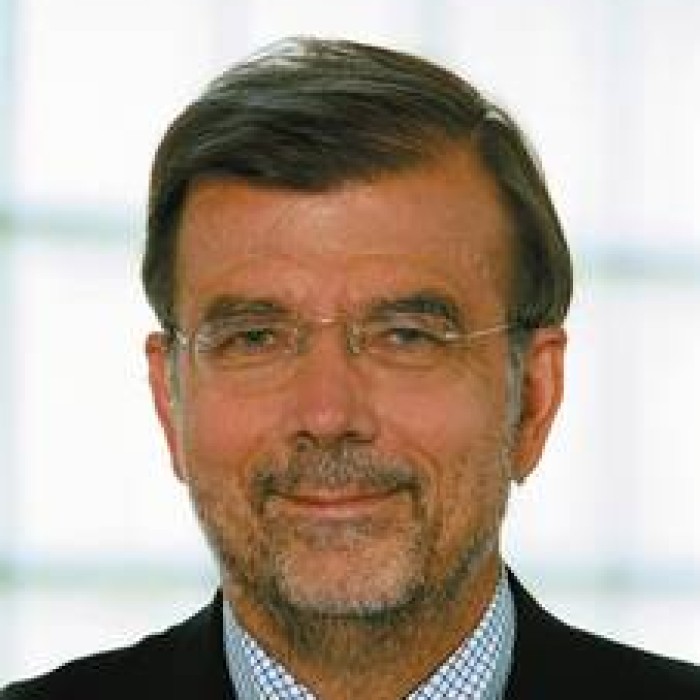
Alfred Kieser is a distinguished academic and EGOS Honorary Member (2012), renowned for pioneering work in organizational theory with a focus on historical institutionalism. As a Professor, he has contributed foundational research on organizational evolution through comparative historical studies of guilds, monasteries, and cross-national business practices. His methodologies emphasize inductive theory-building grounded in historical analysis. Key contributions include exploring how formal organizations replaced medieval guilds and analyzing national institutional differences through the Aston Program's cross-cultural research. He has held leadership roles in EGOS, including serving as Chair in 2000 and co-founding the journal Organization Studies . Kieser's work bridges historical, comparative, and theoretical approaches to understanding organizational practices across time and cultures. Research Focus : Historical institutionalism, comparative management, organizational evolution Methodological Innovation : Inductive theory-building through case comparisons Impact : Shaped EGOS's transnational intellectual community and organizational studies' disciplinary rigor His articles span historical case studies (e.g., guilds, monasteries) to cross-national organizational comparisons, consistently emphasizing institutional context and temporal dynamics.
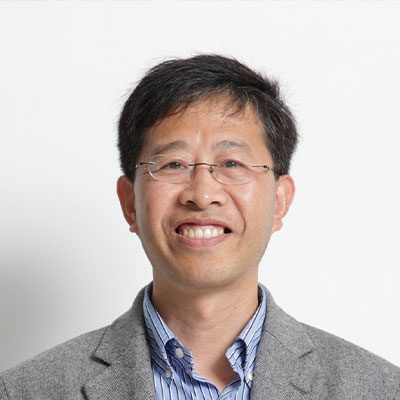
Frada Burstein is an Adjunct Professor at Monash University's Department of Human Centred Computing, affiliated with the Caulfield School of IT. She holds a PhD in Decision Support Systems and has over 30 years of academic experience, specializing in decision theory, healthcare informatics, and knowledge management. She is Director of the Knowledge Management Research Program and leads a laboratory focused on improving clinical decision support and patient-centered care. Education: Doctor of Philosophy (Decision Support Systems), RAS Center for Theoretical Problems of Physicochemical Pharmacology (1984) Master of Science (Applied Mathematics), Tbilisi State University (1978) Graduate Diploma (Graphic Arts), Tbilisi State University (1978) Research Interests: Her work focuses on decision support systems for healthcare, improving user experience across devices, and knowledge management in multidisciplinary contexts. Key projects include developing clinical decision support tools for reducing unnecessary medical tests and creating digital platforms for patient-centered care. She has secured over $3M in grants, including ARC Linkage projects with IBM and the Bureau of Meteorology. Awards: ICT Educator of the Year (2013) Monash Postgraduate Supervisor of the Year (2003) IFIP Outstanding Service Award (2020) AIS Distinguished Member (2019) Grants & Projects: Current roles include co-investigator on projects like 'Nudge CDSS' for clinician decision-making and 'Improving Patient-centered Care through Digital Change.' She has supervised 28 PhD and 13 MRes students, with five ongoing doctoral co-supervisions. Labs & Teams: Leads the Knowledge Management Research Program and collaborates with industry partners on health informatics and emergency management systems.
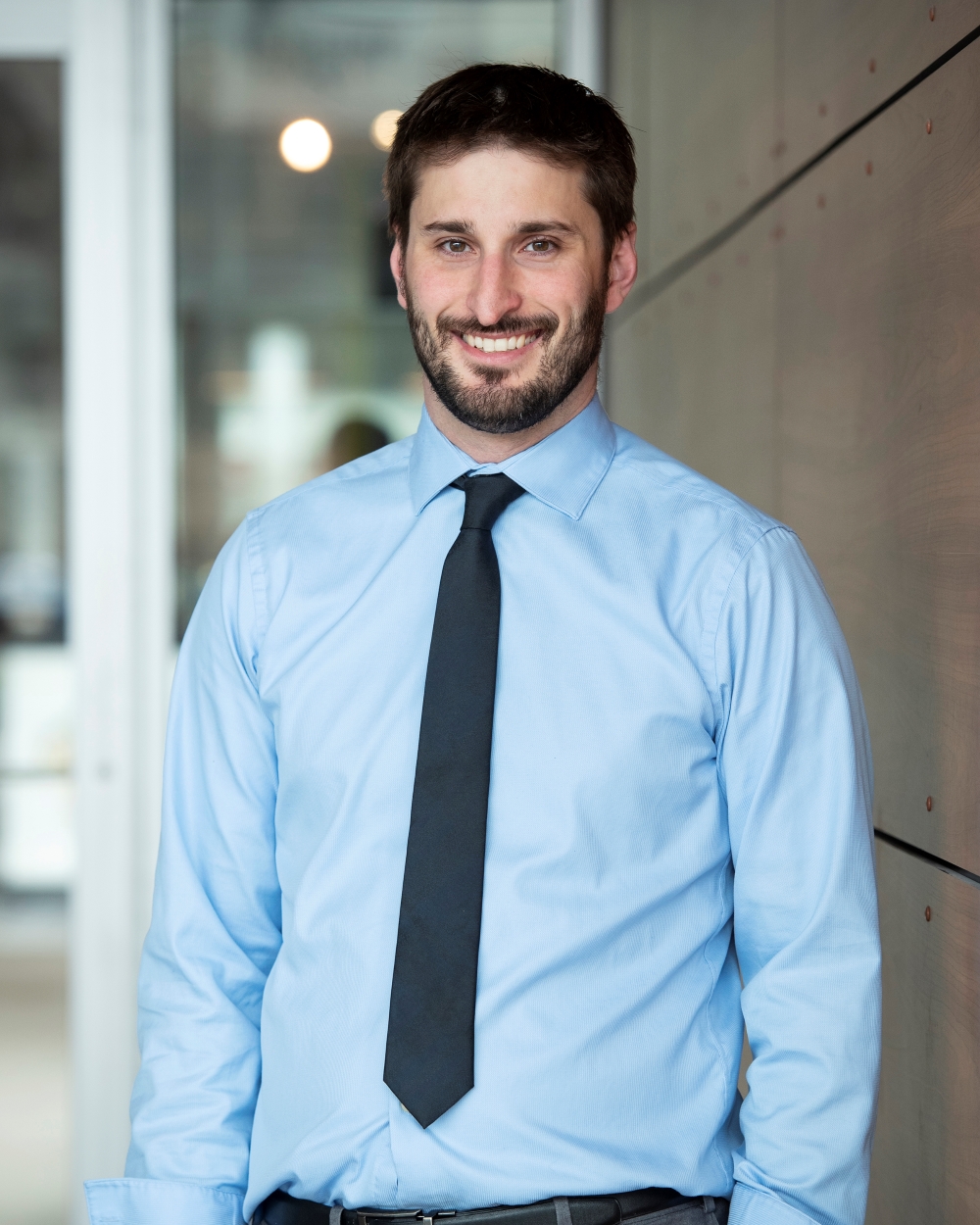
Andrew Sowinski serves as Associate Professor and Vice-dean of Programs at the School of Engineering Design and Teaching Innovation within the Faculty of Engineering at the University of Ottawa. Holding a Ph.D. from the University of Ottawa, his office is located in STE 1024Q with contact details including phone 613-562-5800 ext. 6288 and email sowinski@uOttawa.ca. Education: Ph.D. from University of Ottawa His research spans two primary domains: electrostatic phenomena in gas-solid systems and engineering education innovation. In electrostatics, he investigates contact electrification mechanisms in polyethylene fluidized beds, particle charging dynamics, reactor wall fouling, and pneumatic conveying systems, employing both experimental and computational (CFD) approaches. His education research focuses on developing non-traditional multidisciplinary design programs within conventional engineering faculties, addressing curriculum design, student recruitment, and assessment methodologies. Analysis of his 2021-2025 publications reveals consistent dual-focus work: electrostatics research emphasizes charge generation/mitigation in industrial polymerization processes, while education studies explore structural and implementation challenges of cross-disciplinary programs. His electrostatics work frequently combines particle-level charging experiments with system-level CFD modeling, while education publications document practical frameworks for program development amid traditional faculty structures. Scientific Awards: No scientific awards were documented in provided materials Advising and Grants: Specific details regarding graduate students, research grants, or funding sources were not disclosed in the source documentation, though his program leadership role as Vice-dean of Programs suggests significant administrative responsibilities in curriculum development and resource allocation.
David Madden is an Associate Professor in Sociology and Director of the Cities Programme at the London School of Economics (LSE). He holds a PhD from Columbia University and specializes in Urban Studies, Political Sociology, and Social Theory. His research focuses on housing crises, urban restructuring, and critical urban theory, with ethnographic and archival work in New York City and London. Key publications include the influential book *In Defense of Housing: The Politics of Crisis* (2016, Verso) and articles in *Environment & Planning*, *City: Analysis of Urban Change*, and *Sociologica*. His work critiques neoliberal urbanism, financialized housing markets, and urban exhaustion under late capitalism. Research Interests: Housing policy, public space politics, urban social movements, global urbanization, and critical theory. Teaching: Co-directs the MSc City Design and Social Science Programme and teaches modules on Urban Society, Urban Social Theory, and City Design Research. Contributions: Active in public discourse through *The Guardian*, *Jacobin*, and policy-oriented writing. He leads the Urban Sociology research cluster at LSE and collaborates internationally on projects addressing housing inequity and urban futures.
Prof. J.R. Galán-Mascarós leads the research group at ICIQ, focusing on sustainable materials and electrocatalysis for energy and chemical transformations. His work addresses decarbonization challenges across microscopic reactivity and engineering solutions for device implementation. Research interests include developing advanced materials for energy storage (e.g., artificial leaf systems), molecular memory devices, and chiral-functionalized catalysts. His team’s multidisciplinary approach combines materials science, electrochemistry, and chemical engineering. Key contributions include high-efficiency artificial leaf devices and molecular memory systems. Current projects involve CO₂ conversion technologies and magnetic-field-enhanced catalysis. Funding includes major grants like INHYTECH (metal nitrides applications) and BREATH-CO₂ (carbon mitigation strategies). The group actively collaborates with institutions like the University of Rovira i Virgili and industry partners. Prof. Galán-Mascarós oversees a diverse team of PhD students and visiting researchers, emphasizing innovation and interdisciplinary training.
Genhong Cheng is a Professor in the Department of Microbiology, Immunology, and Molecular Genetics (MIMG) at the University of California Los Angeles (UCLA). His research focuses on understanding the molecular mechanisms of host-pathogen interactions, particularly in viral infections such as Zika virus, SARS-CoV-2, and influenza. Dr. Cheng has made significant contributions to the field of innate immunity, especially in interferon signaling pathways and NF-kappaB regulation. Dr. Cheng's research interests span across virology, immunology, and molecular biology. He has extensively studied how viruses interact with host immune responses, with a particular focus on interferon signaling pathways. His work has revealed critical mechanisms by which viruses evade host defenses and how host cells mount effective antiviral responses. Key areas of investigation include: NF-kappaB signaling in immune responses Interferon-stimulated gene functions Host metabolic changes during viral infection Mechanisms of viral replication and evasion Development of broad-spectrum antiviral strategies Analysis of Dr. Cheng's recent publications reveals a strong focus on emerging viral threats, including SARS-CoV-2 and monkeypox virus. His research consistently explores how host metabolic pathways intersect with immune responses to viral infection. A notable theme is the identification of host factors that can be targeted for broad-spectrum antiviral therapies, particularly those involving lipid metabolism and interferon-stimulated genes. Recent work has emphasized translational applications of basic discoveries in viral pathogenesis. Dr. Cheng's laboratory has been instrumental in advancing our understanding of host-pathogen interactions at the molecular level. His team employs a multidisciplinary approach combining virology, immunology, molecular biology, and systems biology to unravel complex host-virus relationships. Current research directions include exploring novel antiviral strategies targeting host factors that are essential for viral replication.
Cynthia Lin Lawell is an Associate Professor and holds the Robert Dyson Sesquicentennial Chair in Environmental, Energy and Resource Economics at Cornell University's Charles H. Dyson School of Applied Economics and Management. She is a prominent economist with expertise spanning environmental, energy, and resource economics, using advanced econometric methods to address critical policy questions. Dr. Lin Lawell earned her Ph.D., A.M., and A.B. from Harvard University, where she pursued a multidisciplinary major in Environmental Science and Public Policy. Her undergraduate thesis in atmospheric chemistry won the Thomas Temple Hoopes Prize and led to peer-reviewed publications. She has received numerous prestigious awards including the Harvard University Stone Fellow Award, the International Society for New Institutional Economics Award for the Best Ph.D. Dissertation, and the UC-Davis Hellman Fellowship. Her research focuses on environmental, energy, and resource economics, with particular expertise in structural econometric modeling of dynamic games, applied econometrics, and policy analysis. She has published in top journals including the Review of Economics and Statistics, Journal of Environmental Economics and Management, and Energy Journal. Her work examines strategic decision-making in resource extraction, effectiveness of environmental policies, energy efficiency, water management, and renewable energy development. Dr. Lin Lawell's research has been widely featured in major media outlets including the New York Times, Washington Post, and Guardian. Her analysis of Danish wind energy policy demonstrated that government policies, rather than technological advantages, drove Denmark's leadership in wind energy. Her work on Chinese energy policies revealed mixed effectiveness across different policy instruments. Harvard University Stone Fellow Award for Best Paper Written by a Doctoral Student in Environmental and Resource Policy International Society for New Institutional Economics Award for the Best Ph.D. Dissertation 2011 UC-Davis Hellman Fellowship for promising young faculty RePEc Top 3% Female Economists Based on Publications in Last 10 Years 2017 Cornell University Knowledge Matters Fellow Dr. Lin Lawell directs two major research initiatives at Cornell: the Dynamics, Economics, Econometrics, Policy, and Games: Rigorous Environmental, Energy, Natural Resource, Agriculture, and Development Analysis and Research (DEEP-GREEN-RADAR) and the Think-tank for Resources, Energy, and the Environment: Science and Policy-related Economic Analysis and Research (TREESPEAR). She also serves as President of the U.S. Association for Energy Economics Bay Area Chapter and has received multiple grants supporting her research on agricultural-to-energy land use conversions and sustainable resource management.
Florian Hecker is an Affiliate and Lecturer at the Art, Culture, and Technology Program within MIT's School of Architecture and Planning. His work bridges post-war modernist composition, electro-acoustic music, and interdisciplinary art, exploring how sound shapes perception and space. Born in 1975, Hecker holds a diploma in Fine Arts from the Akademie der Bildenden Künste, Vienna, and studied Computational Linguistics and Psycholinguistics at Ludwig Maximilian University, Munich. His research focuses on sonic installations and performances that isolate auditory events to challenge material boundaries, creating immersive works that evoke memory and sensation. He has exhibited globally, including solo shows at MMK Frankfurt, IKON Birmingham, and Chisenhale Gallery London, and participated in dOCUMENTA (13) and Venice Biennale collaborations. Notable projects include No night No day (2009) with Cerith Wyn Evans and Chimerizations (2013), a book co-authored with MIT's Stefan Helmreich. Hecker’s discography spans over 25 releases, collaborating with artists like Aphex Twin and Yasunao Tone. His MIT-linked project Chimerization (MIT Project) (2011) exemplifies his integration of academic and artistic methodologies. Performances include venues such as Tate Modern, MIT Media Lab, and ZKM Karlsruhe.
Professor Vito Ferro specializes in synthetic carbohydrate chemistry and drug design at The University of Queensland's School of Chemistry and Molecular Biosciences. His pioneering work focuses on glycosaminoglycan mimetics for treating cancer, inflammation, viral infections, and lysosomal storage disorders. Key achievements include developing clinical-stage heparanase inhibitors like PI-88 and PG545. Research explores heparan sulfate-protein interactions, pharmacological chaperones for Sanfilippo syndrome, and novel synthetic routes to rare sugars. Current projects span antiviral heparinoids, antifungals, and radical approaches to L-sugar synthesis. Honors include: SCMB HDR Supervision Excellence Award (2023) Fellowship of the Royal Australian Chemical Institute SCMB Engagement Award (2014) Leads multidisciplinary collaborations across 16 countries and maintains extensive industry partnerships. Secured significant funding from NHMRC, ARC, and philanthropic organizations for translational drug discovery programs. Directs a research team advancing peptide therapeutics through innovative synthetic and analytical approaches.
David B Shackelford is a Professor in the School of Medicine at the University of California Los Angeles, specializing in Cancer Metabolism and Mitochondrial Biology . His research focuses on the metabolic vulnerabilities of lung and other cancers, particularly in tumors with LKB1 mutations and KRAS dependencies. Key Research Themes: Mitochondrial heterogeneity, metabolic reprogramming, and drug targeting in oncology. Grants: NIH R01CA208642 (2016–2021) for imaging mitochondrial networks in LKB1 mutant lung cancer. His recent work explores sphosphorylation pathways , amino acid metabolism , and mitochondrial membrane potential imaging . Publications highlight collaborations with multidisciplinary teams and translational studies in liposarcoma , glioblastoma , and fibrolamellar carcinoma . Trends in Publications: 2024 studies emphasize PGC-1α in neuroendocrine cancer, ASCL1 subtypes, and dsRNA trafficking . Clinical Relevance: Trials on metabolic drugs like phenformin and mTOR inhibitors for NSCLC and glioma.
Prof. Dr. Klaus Schmid is a Professor in the Department of Software Systems Engineering at the University of Hildesheim, part of the Faculty of Mathematics, Natural Sciences, Economics, and Computer Science. His research focuses on Machine Learning Operations (MLOps), software product lines, adaptive systems, and variability modeling. He leads projects such as EXPLAIN and ReGaP, emphasizing explainable AI and industrial MLOps integration. His work addresses challenges in Cyber-Physical Production Systems (CPPS), including data management, model calibration, and domain knowledge integration. Key research interests include MLOps architecture design, variability modeling transformations (e.g., UVL to IVML), and incremental verification techniques for software product lines. He has published extensively in venues like IEEE ETFA, IEEE Software, and SPLC conferences. Notable achievements include a Best Paper Award for work on control patterns in self-adaptive systems. Collaborations with industry partners highlight his focus on bridging academic research and practical industrial applications. Prof. Schmid’s contributions extend to tool development, such as EASy-Producer for variability-aware software ecosystems, and frameworks for environment modeling in adaptive systems. His research addresses both foundational challenges (e.g., syntax-preserving slicing) and applied topics like MLOps platform comparisons and industrial case studies in Industry 4.0.
Dr. Hossein Sayadi is an Assistant Professor and Associate Chair in the Department of Computer Engineering and Computer Science at California State University, Long Beach (CSULB). He holds a Ph.D. in Electrical and Computer Engineering from George Mason University, an M.S. from Sharif University of Technology, and a B.S. from K. N. Toosi University of Technology. His research focuses on hardware security , AI/ML applications , cybersecurity , and computer architecture . He leads the iSEC Lab , exploring topics like hardware trust, malware detection, and edge computing security. His work is supported by NSF grants and CSU awards, including the 2024-25 CSU STEM-NET Faculty Fellowship. Education: Ph.D., Electrical and Computer Engineering (George Mason University) M.S., Computer Engineering (Sharif University of Technology) B.S., Computer Engineering (K. N. Toosi University of Technology) His publications span conferences like IEEE ISQED, ISCAS, and DATE. He serves as Technical Program Committee Chair for IEEE ISQED (2024–2025). Awards include NSF ERI grants ($195,305) and the 2023 Multidisciplinary Research Grant. Research opportunities are available for students in machine learning , hardware security , and cybersecurity education .
Maryna Nading is a Professor of Anthropology at Luther College, specializing in medical anthropology, global health, and post-socialist societies. Her work examines gender dynamics in healthcare systems, health workforce challenges, and social responses to crises like the Russia-Ukraine conflict. She teaches courses including Medical Anthropology, Global Health, and Qualitative Research Methods. Education: Ph.D., Anthropology (2010) and M.A. (2004), State University of New York at Albany; B.A., English Philology and Translation (2001), Technological University of Podillia, Ukraine. Research Interests Her research investigates gender segregation in Ukrainian medical specialties, clinical labor ethics, and reproductive labor in war contexts. Current projects explore the Ukrainian volunteer group “Maskuty,” analyzing their camouflage net production for the military as a form of radical hope-building through care work. Key Themes in Scholarship Her articles address Ukraine’s healthcare reforms, physician morality debates, and the intersections of health systems with political economies. Recent work emphasizes solidarity networks and grassroots responses to conflict, linking them to broader anthropological frameworks on hope and resilience. Professional Recognition Recipient of the 2011 Society for Medical Anthropology’s Steven Polgar paper prize for her analysis of vaccination campaigns in post-Soviet Ukraine. Her op-eds and blog posts contribute to public discourse on global health equity and humanitarian crises. Teaching & Mentorship Courses emphasize ethnographic methods, global health disparities, and commodity chain analyses. She mentors students in fieldwork design and ethical research practices, often integrating global health immersion experiences into academic projects. Research Collaborations Works with Ukrainian civil society groups and global health organizations, blending anthropological theory with applied interventions. Her fieldwork bridges academic inquiry with community-driven solutions to healthcare challenges.
Dr. Eike Schneiders is a Lecturer at the School of Electronics and Computer Science, University of Southampton. He holds a PhD in Computer Science from Aalborg University and is a recipient of the UKRI Trustworthy Autonomous Systems Hub Early Career Researcher Award. His research focuses on autonomous and AI-infused systems, investigating how to ensure their trustworthiness and responsible interaction with humans and other agents through interdisciplinary collaborations across art, law, and medicine. His recent work explores the societal impact of Generative AI, particularly examining its influence on legal services accessibility for non-experts through the REGALS project (Principal Investigator) and its effects on creative communities via the ART-I project (Co-Investigator). Dr. Schneiders emphasizes public engagement to enhance AI literacy and employs both qualitative and quantitative methods to study human-computer interaction and ethical implications. Dr. Schneiders teaches courses including COMP6251 (Web and Cloud Application Development), ELEC6259 (Research Methods and Project Preparation), and ELEC6200 (Group Design Project). His pedagogical approach integrates foundational technical skills with critical research methodologies. He has led several interdisciplinary projects including ARTificial Intelligence: Show Me a Story about AI (ART-I) and Responsible Employment of Generative AI for Legal Services (REGALS), and contributes to the Agents, Interaction and Complexity research group. His Cat Royale project received the 2024 Webby Award for Best Integrated Experience. Honors include the Best Paper Award at ACM CHI 2024, multiple Honourable Mentions at CHI and TAS Symposiums, and membership in the Foundation for Science and Technology's Future Leaders Programme.
Juha Pyrhönen serves as Professor of Electrical Engineering at the School of Energy Systems, Lappeenranta-Lahti University of Technology (LUT University) in Lappeenranta, Finland. His research focuses on advanced electric machine design for high-performance applications, with particular expertise in traction motors, synchronous reluctance machines, and thermal management systems. Contact information includes email Juha.Pyrhonen@lut.fi and phone +358 40 571 1645. Professor Pyrhönen's research spans critical areas in electric machine development including high-speed motor design for aerospace and automotive applications, mitigation of parasitic effects like bearing currents, and innovative cooling techniques such as direct liquid cooling. His work addresses electromagnetic design challenges in drum-winding machines, variable reluctance resolvers for position sensing, and material selection for rotors operating under extreme conditions. Recent investigations examine agricultural tractor electrification and compact energy conversion systems for onboard machinery. Analysis of his 2025 publications reveals strong emphasis on improving power density through multidisciplinary approaches that integrate electromagnetic, thermal, and mechanical considerations. Key trends include advanced bearing current mitigation strategies, optimization of axially-laminated rotors, and precision measurement techniques under magnetic saturation. His research consistently targets sustainable solutions for electric propulsion across transportation sectors. No scientific awards were documented in the provided information. Details regarding student supervision, research grants, or collaborative projects were not specified in the available materials. The absence of such information suggests either non-disclosure in the source materials or potential focus on independent research activities. While specific laboratory facilities weren't mentioned, his research scope implies access to advanced testing infrastructure for high-speed machinery, electromagnetic characterization equipment, and thermal validation systems at LUT University's energy research facilities.