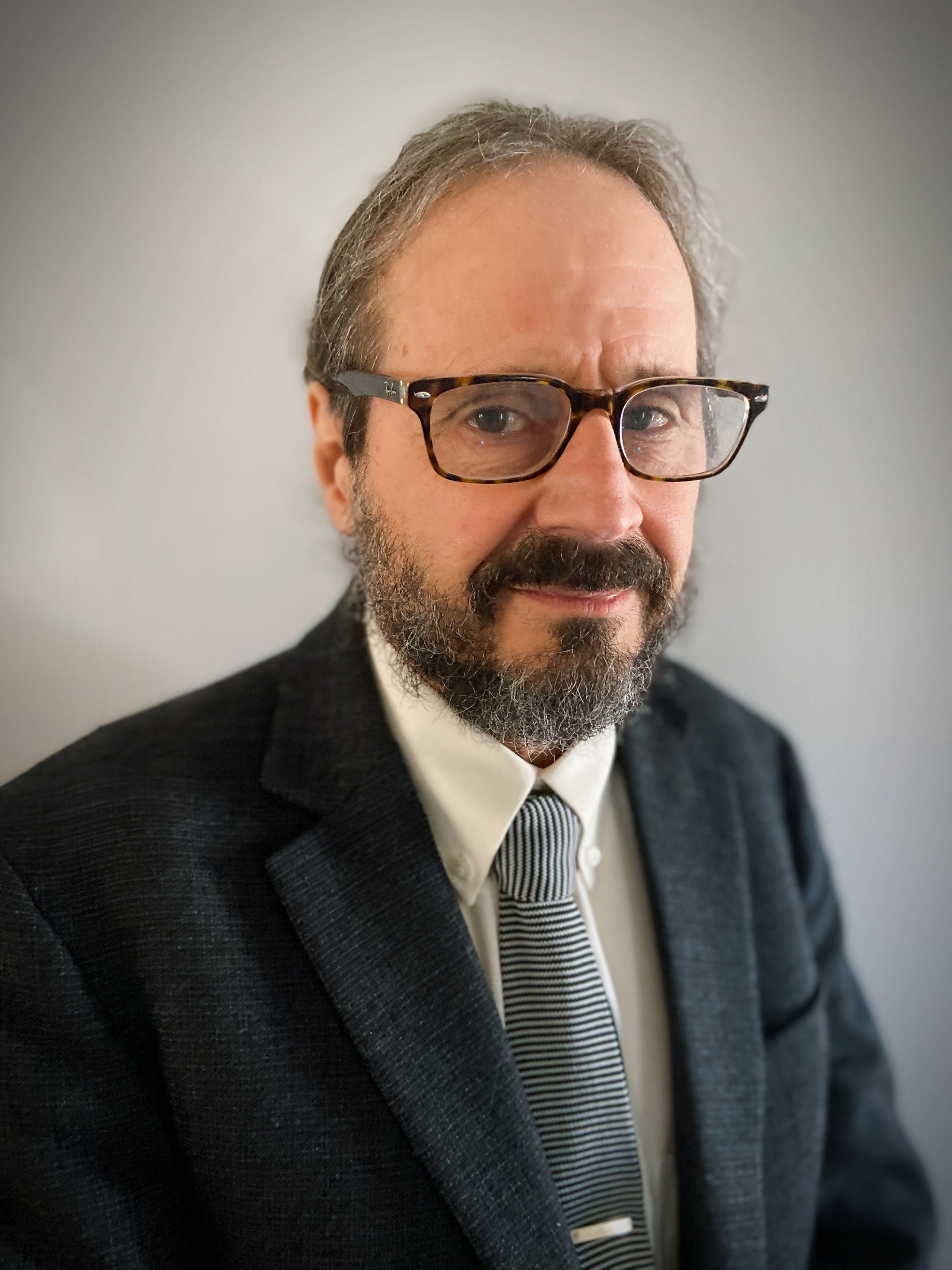
Magnus Nord is an Associate Professor in the Department of Physics, Faculty of Natural Sciences at Norwegian University of Science and Technology (NTNU). His research focuses on advanced electron microscopy techniques and computational tools for materials characterization. Research Interests : Scanning Transmission Electron Microscopy (4D-STEM), Open Source Scientific Software Development (Python), Big Data Processing, Magnetic/Electric Field Imaging, Structural Characterization using Higher Order Laue Zones. Publications span cutting-edge applications in functional materials, nanomagnets, and perovskite thin films, with emphasis on machine learning and precession-enhanced imaging. Key keywords include Materials Science , Electron Microscopy , and Computational Imaging . Software Development : Lead developer of Atomap and pyxem , contributing to HyperSpy and merlin_interface for electron microscopy data analysis. Current Research Funding : InCoMa (Research Council of Norway) IMPRESS (Horizon EU Program)
Professor Minh N. Do is the Thomas and Margaret Huang Endowed Professor in Signal Processing & Data Science at the University of Illinois at Urbana-Champaign (UIUC), with primary appointment in the Department of Electrical and Computer Engineering. He holds multiple affiliate appointments across campus including with the Coordinated Science Laboratory, Beckman Institute for Advanced Science and Technology, Department of Bioengineering, Department of Computer Science, Institute for Genomic Biology, College of Medicine, and School of Computing and Data Science. Additionally, he serves as Director of the joint VinUni-Illinois Smart Health Center and holds an Honorary Vice-Provost position at VinUniversity. Professor Do received his B.Eng. in Computer Engineering (First Class Honors) from the University of Canberra, Australia in 1997, followed by his Dr.Sci. in Communication Systems from the Swiss Federal Institute of Technology Lausanne (EPFL) in 2001. His educational journey was marked by exceptional achievement, earning the University Medal from the University of Canberra and a Silver Medal from the 32nd International Mathematical Olympiad. Professor Do's research focuses on developing new multidimensional signal processing tools with applications across several domains. His primary research interests include smart health, data science, computational imaging, and signal processing. His work spans biomedical imaging, machine learning, computer vision, and robotics, with particular emphasis on geometric image representations, integrating image formation and processing, and image processing from multiple sensors. His research bridges theoretical investigations with practical applications, creating impactful solutions in healthcare, diagnostics, and AI systems. His recent publications demonstrate a consistent trajectory toward multimodal AI systems, robust learning frameworks, and healthcare applications. Professor Do's work increasingly integrates signal processing with deep learning approaches to address challenges in medical imaging, cross-modal transfer, and real-world deployment of AI systems. His research shows strong emphasis on practical applications with societal impact, particularly in healthcare diagnostics and smart health technologies. Professor Do's scientific achievements have been recognized with numerous prestigious awards: Member of the National Academy of Artificial Intelligence (2025) Fellow of Asia-Pacific Artificial Intelligence Association (2023) Thomas and Margaret Huang Endowed Professor, UIUC (2020-present) Fellow of IEEE (2014) Young Author Best Paper Award, IEEE Signal Processing Society (2008) CAREER award from the National Science Foundation (2003) Best Doctoral Thesis Award from EPFL (2001) As an educator, Professor Do has taught numerous courses spanning digital signal processing, probability, data science, and image processing. His teaching excellence has been recognized with multiple "Teachers Ranked as Excellent" awards at UIUC. He also maintains active industry connections through tech-transfer efforts, having co-founded Personify and served as Chief Scientist of Misfit. His leadership extends to administrative roles, having served as Vice-Provost for VinUniversity during 2020-2021. Professor Do leads research initiatives at the intersection of signal processing and healthcare applications, with particular focus on the Smart Health Center collaboration between UIUC and VinUniversity. His lab develops innovative solutions for medical diagnostics, point-of-care testing, and neurological assessment using advanced signal processing and AI techniques.
Affiliations and Roles Michael Bronstein is a Professor at the Università della Svizzera italiana (USI) in the Faculty of Informatics and the Institute of Computational Science . He holds the Chair in Machine Learning and Pattern Recognition at Imperial College London and serves as Head of Graph Learning Research at Twitter . Previously, he was affiliated with the Dalle Molle Institute for Artificial Intelligence (IDSIA USI-SUPSI) as an Adjunct Professor. Education Ph.D. in Computer Science, Technion–Israel Institute of Technology (2007) Visiting appointments at Stanford University, MIT, Harvard University, and Tel Aviv University Research Interests Bronstein's work focuses on geometric deep learning , graph representation learning , and non-rigid shape analysis . He pioneered methods for extending machine learning to non-Euclidean domains like graphs and manifolds. His research combines theoretical advancements in spectral geometry with practical applications in computer vision, robotics, and medical imaging. Publications Trends His articles emphasize geometric deep learning frameworks, functional maps for shape correspondence, and spectral methods for manifold analysis. Key themes include invariant representations, partial shape matching, and applications in 3D reconstruction and graph neural networks. Awards and Honors Five ERC Grants Royal Society Wolfson Research Merit Award IEEE and IAPR Fellowships World Economic Forum Young Scientist Advising and Entrepreneurship Bronstein is a serial entrepreneur, founding companies like Novafora , Invision (acquired by Intel), and Fabula AI (acquired by Twitter). His academic advising spans PhD and Master’s students in machine learning and geometry processing. Labs and Teams Active in the Institute of Computational Science at USI and leads Twitter’s Graph Learning Research team, focusing on real-world applications of geometric deep learning.
Emek Demir serves as an Associate Professor in the Department of Molecular and Medical Genetics at Oregon Health & Science University's School of Medicine, where he directs the Computational Biology program at the Brenden-Colson Center for Pancreatic Care. His academic journey includes a Ph.D. in Computer Engineering from Bilkent University (2005) under Ugur Dogrusoz and postdoctoral training with Chris Sander at Memorial Sloan Kettering Cancer Center's Computational Biology Center. Dr. Demir's research centers on Pathway Informatics, integrating detailed biological pathway information with omic data to solve cancer biology problems. His work spans pathway curation, visualization, NLP, data standardization, machine learning, and mechanistic simulation. He pioneered the BioPAX pathway data standard and developed Pathway Commons—the largest process-level pathway database with over 2 million interactions and 400,000 detailed human reactions. His publication record demonstrates consistent innovation in computational oncology, with recent work focusing on transcription factor activity prediction, spatial tumor mapping, and causal network analysis. Key contributions include algorithms for detecting altered cancer sub-networks, identifying transcription factor modulators, and inferring active networks from proteomic data. His research bridges computational methods with clinical applications in leukemia, prostate cancer, and glioblastoma. Recipient of leadership roles in major NIH-funded initiatives Principal developer of Pathway Commons and BioPAX standards Extensive collaborations with Memorial Sloan Kettering and OHSU clinical departments Dr. Demir directs a computational biology program focused on translating pathway knowledge into clinical insights for pancreatic cancer, with ongoing projects in spatial omics, multi-dimensional tumor atlases, and antiviral nanomaterial applications.
Xudong Fan is a Professor at the University of Michigan specializing in advanced analytical and diagnostic technologies. His work bridges engineering, chemistry, and clinical medicine through innovative device development. His research focuses on: Miniaturized gas chromatography systems for portable chemical analysis and planetary science missions Optofluidic immunoassays using biolasers for ultrasensitive, label-free biomarker detection Machine learning integration for chromatographic data analysis and biosensor accuracy enhancement Breath-based diagnostics for cancer, infectious diseases, and respiratory conditions Microfluidic platforms requiring minimal sample volumes (e.g., 1μL fingertip blood) Professor Fan's 2025 publications reveal a strong emphasis on device miniaturization, automation, and multimodal sensing. Key trends include the convergence of micro-GC with photoionization detectors for field-deployable chemical analysis, deep learning solutions for chromatographic co-elution challenges, and biolaser-based platforms enabling antigen-independent cancer cell detection. These efforts target affordable point-of-care diagnostics with applications in tuberculosis monitoring, COVID-19 immunity assessment, and early lung cancer screening through breath analysis. His work demonstrates significant translational impact, particularly in resource-limited settings where cost, portability, and minimal sample requirements are critical. Current projects show strong alignment with NASA planetary science objectives through micro-GC development for extraterrestrial organic analysis.
Moncef Gabbouj is a Professor of Signal Processing at the Department of Computing Sciences, Tampere University, Finland. He holds a PhD from Purdue University and has held academic positions including Academy of Finland Professor (2011–2015) and Head of the Department of Signal Processing (2002–2007). His research focuses on artificial intelligence, machine learning, multimedia signal processing, and nonlinear signal/image processing. He has authored over 800 papers and supervised 64 doctoral and 72 master’s theses, earning accolades such as IEEE Fellow, Finnish Cultural Foundation Award, and TUT Foundation Grand Award. Education: BS (Electrical Engineering, Oklahoma State University, 1985), MS and PhD (Electrical Engineering, Purdue University, 1986–1989). Visiting roles include Hong Kong University of Science and Technology and University of Southern California. Research interests include Big Data analytics, multimedia content analysis, pattern recognition, and video coding. He leads the Artificial Intelligence Research Task Force of the Research Alliance on Autonomous Systems (RAAS) and directs the NSF IUCRC Center for Visual and Decision Informatics (CVDI). Awards highlight contributions to signal processing and AI, including IEEE Fourier Award Committee membership and leadership roles in EURASIP and IEEE. Grants and projects span EU Horizon programs, NSF, and industry collaborations.
Naveed Mahmud is an Assistant Professor at the Department of Electrical Engineering and Computer Science, Florida Institute of Technology. He specializes in quantum computing, hybrid quantum-classical systems, and reconfigurable computing architectures. His research focuses on optimizing quantum algorithms, data encoding/decoding techniques, and secure communications using quantum technologies. Research interests include quantum-classical integration, algorithm emulation on high-performance reconfigurable computers, and applications of quantum computing in pattern recognition and cryptography. Key areas of exploration are hybrid quantum-classical machine learning, quantum wavelet transforms, and securing free-space optical communications with quantum key distribution. His recent work emphasizes scalability and efficiency in quantum computing frameworks, including frameworks like QASM-to-HLS for quantum circuit acceleration, and decoherence-optimized quantum circuits. Articles highlight advancements in quantum data decoding, algorithm emulation, and secure communication systems. No scientific awards or formal advisees are listed. His profile includes links to ORCID, Google Scholar, and ResearchGate for further details on publications and collaborations.
Dr. Chamith Wijenayake is a Senior Lecturer - Teaching Focused at the School of Electrical Engineering and Computer Science, University of Queensland. He holds a PhD in Electrical and Computer Engineering from the University of Akron (2014) and a BSc (Hons) in Electronic and Telecommunications Engineering from the University of Moratuwa, Sri Lanka (2007). His research focuses on multidimensional signal processing, digital hardware architectures, FPGA-based systems, machine learning accelerators, and engineering education. He has received notable awards, including the 2011 Outstanding Student Research Award and the 2014 IEEE Circuits and Systems Pre-Doctoral Award. Education: BSc (First Class Honours) from University of Moratuwa (2007), PhD from University of Akron (2014). His doctoral work contributed to advancements in signal processing and hardware architectures. Research interests span multidimensional signal processing, FPGA-based system design, and engineering education innovations. He develops low-complexity algorithms for light field processing and multidimensional filters for imaging, sensing, and biomedical applications. His work emphasizes practical implementations in hardware accelerators and educational technologies. Outstanding Student Research Award, University of Akron, 2011 IEEE Circuits and Systems Pre-Doctoral Award, 2014 Teaching and Advising: Focuses on blended learning approaches and project-based instruction in electrical engineering. Prior roles include Lecturer at UNSW Sydney (2015–2019). No explicit student advisee records listed. Grants and collaborations are not detailed in provided texts. Labs/Teams: Involved in multidisciplinary projects integrating signal processing with hardware design, though specific lab affiliations are not specified.
Jay I. Frankel is a Professor and Department Head at the Department of Mechanical & Aerospace Engineering at New Mexico State University (NMSU). He earned his Ph.D. (1986), M.S.M.E. (1982) from Virginia Tech and a B.S.M.E. (1980, Magna Cum Laude) from the University of Maryland. Ph.D., Virginia Tech (1986) M.S.M.E., Virginia Tech (1982) B.S.M.E., University of Maryland (1980) His research focuses on thermal sciences in aerospace contexts, including: Inverse heat conduction problems Calibration methods for thermal sensors Uncertainty and sensitivity analysis High-temperature measurements for hypersonic vehicles His work often employs integral equations and advanced mathematical techniques to solve real-world thermal challenges in propulsion and aerospace systems. Recent publications explore: Calibration methods for heat flux estimation Experimental validation of thermal models Time-spectral approaches for dynamical systems Nonlinear diffusion modeling Key honors include: 2018 AIAA Special Award for CIEM development 2010 General H.H. Arnold Award for thermal analysis in propulsion 2005 AIAA Associate Fellow 2000 Fellow of Computational Mechanics at Wessex Institute He has secured significant funding from the National Science Foundation, Air Force Research Laboratory, NASA, and Department of Energy for projects related to: Hypersonic thermal protection systems Advanced sensor development Calibration methodologies under extreme conditions His laboratory team collaborates on emerging thermal diagnostics and inverse problem solutions.
Professor Weixiang Shen is a full Professor in the Department of Engineering Technologies at the School of Engineering, Swinburne University of Technology, Melbourne, Australia. He holds a PhD in Electrical Engineering and has extensive academic experience across China, Germany, Singapore, and Malaysia. Bachelor of Engineering (BEng), Electrical Engineering Master of Engineering (MEng), Electrical Engineering Doctor of Philosophy (PhD), Electrical Engineering His research focuses on battery management systems for electric vehicles and renewable energy integration. Key areas include battery capacity estimation, charging strategies, fault diagnosis, thermal and mechanical management, and grid integration of EVs. He employs advanced techniques such as physics-informed machine learning, electrochemical modeling, and multidimensional sensing to enhance battery safety and performance. His recent publications (2024–2025) reveal a strong trend toward intelligent battery health monitoring, degradation modeling, and innovative thermal management using origami-inspired designs. These works appear in top journals like Applied Energy , IEEE Transactions , and Journal of Energy Chemistry . Associate Editor, IET Power Electronics Editorial Board Member, Journal of Energy Storage Founding Board Member, Vehicles Guest Editor, Applied Energy , Journal of Cleaner Production , Energy General Chair, ICEEE2018 Program Chair, CoEEPE2023 Professor Shen actively supervises PhD and Master’s students in areas such as battery fault diagnosis, energy storage, and control systems. His research is supported by grants from the Australian Research Council, Department of Industry, Science and Resources, and industry partners. He leads projects on intelligent energy management, battery testing, and EV control systems. His lab explores cutting-edge topics including solid-state batteries, multidimensional sensing, and origami-based thermal solutions for battery packs.
Professor Steven Lee is a leading figure in biophysical chemistry at the University of Cambridge , where he leads the TheLeeLab in the Yusuf Hamied Department of Chemistry . His research focuses on developing advanced single-molecule fluorescence and multidimensional super-resolution imaging techniques to probe fundamental biological processes at unprecedented spatial precision. Developed novel super-resolution microscopy approaches for 2D/3D visualization of T-cell membrane proteins and histone assembly in fission yeast nuclei Pioneer of 15-20nm resolution imaging strategies through fluorophore kinetics and image reconstruction algorithms Recipient of the 2017 Marlow Prize in Physical Chemistry , Lee's lab produces cutting-edge tools with applications in immunology , neurodegeneration , and cellular biophysics . His team maintains active collaborations with Prof Klenerman (FRS MedSci) and Prof Moerner (Nobel Chemistry 2014). Research Highlights : Molecular origins of immunity through T-cell membrane protein interactions 3D histone dynamics during DNA replication/repair Amyloid aggregate quantification for neurodegenerative disease diagnosis Volumetric imaging innovations via vLUME virtual reality platform
Giuseppe Toscani is a Full Professor at the Department of Mathematics of the University of Pavia. His research focuses on mathematical modeling of socio-economic systems, epidemiological dynamics, and kinetic theory. He explores topics such as wealth distribution, opinion formation, and epidemic spread using advanced methods in partial differential equations and statistical mechanics. Key research areas include analysis of inequality indices (Gini Index extensions), multi-agent systems, and nonlinear diffusion processes. His work intersects with applications in public health, economic policy, and social behavior modeling, emphasizing the interplay between theoretical frameworks and real-world phenomena. Education: Not explicitly detailed in provided texts, but his academic role implies a doctoral degree in Mathematics or related field. Labs/Teams: Affiliated with the Methods and Models for Applied Sciences research group. Grants/Awards: No specific grants or awards listed in the text. Recent publications address condensation patterns in opinion dynamics, multidimensional inequality metrics, and pandemic modeling through compartmental systems. His kinetic models provide foundational tools for understanding complex social and biological systems.
David B. Grayden is a Professor at The University of Melbourne, affiliated with the Melbourne School of Engineering and the Department of Electrical and Electronic Engineering . His work spans Biomedical Signal Processing , Computational Neuroscience , and Brain-Computer Interfaces (BCI) , focusing on applications in Epilepsy Research and Cochlear Implants . Melbourne Neural Engineering Laboratory member Collaborator in multidisciplinary biomedical research Key research interests include: Developing Seizure Prediction Algorithms using long-term EEG/iEEG data Neural mass modeling for Epilepsy and Inhibitory Network Behavior Optimizing Cochlear Implants via computational models Advancing Endovascular BCI Systems and Neural Stimulation Recent publications highlight trends in Machine Learning , Path Signatures , and Multi-Frequency Stimulation for SSVEP-based BCIs . His work integrates Computational Modeling with Biomedical Engineering to address clinical challenges in neuroprosthetics and sensory processing. Grayden leads projects on Neural Network Dynamics , Biomedical Signal Analysis , and Neurostimulation , often collaborating with institutions like Monash University and Royal Melbourne Hospital .
William Heath is a Professor and Head of the School of Computer Science and Engineering at Bangor University. He holds the position of Chair of the UKACC from 2024 to 2027. His research focuses on feedback control theory, particularly addressing actuator nonlinearities such as saturation, rate constraints, backlash, and hysteresis. He employs multiplier theory within absolute stability frameworks to analyze model predictive control and antiwindup strategies. His research interests include nonlinear control systems design, stability criteria for Lur’e systems, and discrete-time extensions of classical control methodologies. He has contributed to foundational work on O’Shea-Zames-Falb multipliers and their applications in robust control. Key collaborations involve international researchers in control systems and applications, though specific partnerships are not detailed. His work bridges theoretical advancements with practical implementations, such as in biomedical BCIs and industrial systems like wind turbines and diesel engines. No awards or grants are explicitly listed, but his extensive publication record (105+ outputs) reflects sustained academic engagement. As Head of School, he leads a team advancing interdisciplinary research in computer science and engineering.
Dr. Patrick Vogel is a Habilitation candidate and researcher in the Magnetic Particle Imaging (MPI) group at the University of Würzburg's Faculty of Physics and Astronomy, Department of Experimental Physics V. His work focuses on advancing MPI technology for clinical applications, including imaging safety assessments, interventional procedures, and nanoparticle-based diagnostics. He contributes to the development of portable MPI scanners and hybrid imaging systems, collaborating with the AG Behr research group. His research spans magnetic particle spectroscopy, vascular imaging, and biomaterial characterization. Vogel has pioneered studies on MPI-guided endovascular interventions and the application of MPI in perfusion models. His work bridges physics, biomedical engineering, and clinical practice, with a focus on translating MPI into real-world medical diagnostics and surgery support. Key projects include the design of human-sized MPI scanners, safety evaluations of medical implants, and the use of synthetic tracers like Synomag®. He collaborates with interdisciplinary teams to address challenges in vascular imaging, nanoparticle behavior analysis, and real-time imaging systems.