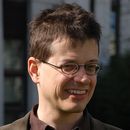
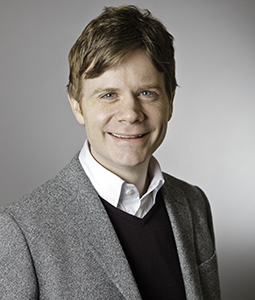
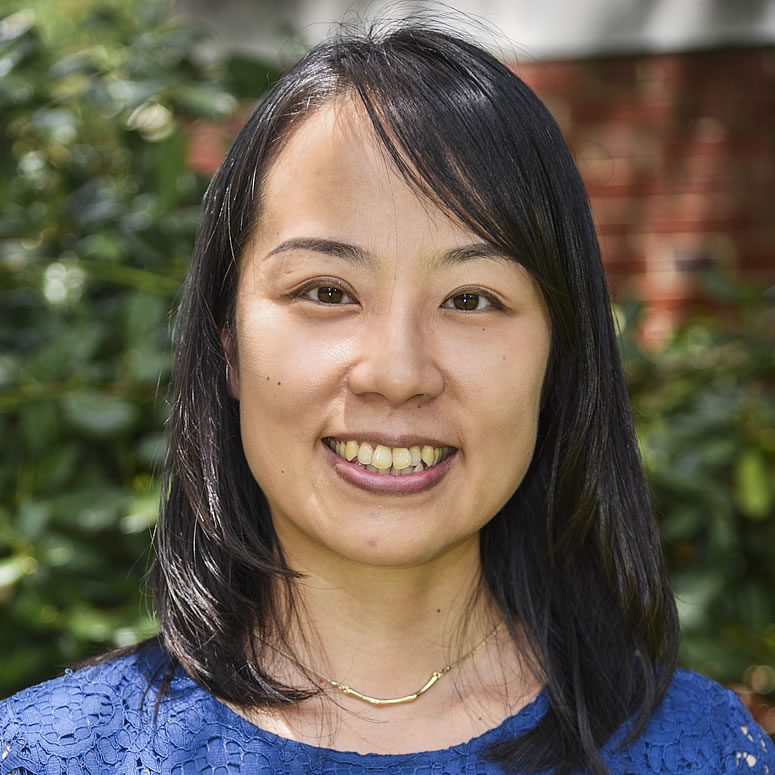
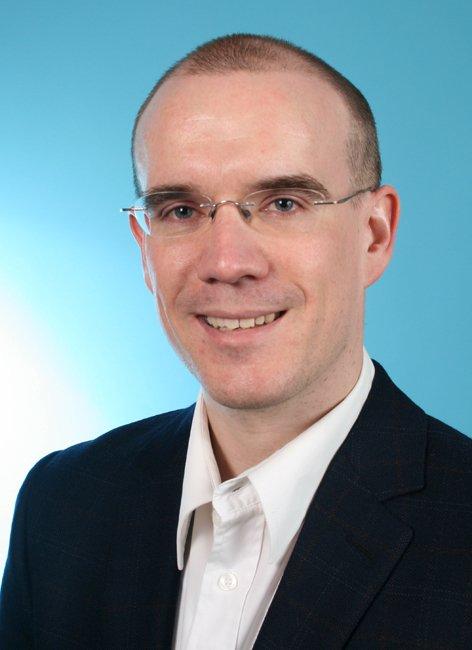
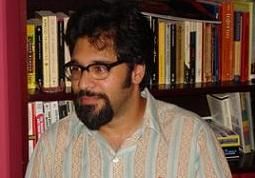
Stefan Rohdewald is a Professor of East and Southeast European History at the University of Leipzig since 2020. His research focuses on the historical entanglements between Eastern Europe and the Middle East, emphasizing transconfessionalism, urban history, and memory discourses. Education: Studied and completed his doctorate at the University of Zurich (2004), habilitation at Passau (2005–2012). Affiliations: Past professor at Giessen (2013–2020), research associate in Passau (2003–2012), and Max Planck scholarship for doctoral research. Research interests span Transottoman studies, examining mobility dynamics between Eastern Europe, the Ottoman Empire, and Persia. He leads the DFG priority program Transottomanica (2017–2023) and contributes to decolonial and transimperial frameworks in Ukrainian history. Recent publications include analyses of geopolitical imaginaries, edited handbooks on the Black Sea region, and studies on Ottoman-Europe knowledge exchange. His work critiques national historiographies and explores multiculturality in Habsburg Bosnia-Herzegovina.
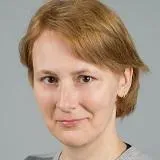
Dr Eva Ogiermann is an Associate Professor in English Language and Applied Linguistics at King’s College London, serving as Programme Director for the MA in Language and Cultural Diversity. She holds a PhD from Carl von Ossietzky Universität Oldenburg (2007) and an MA from the University of Münster (2001). Her research focuses on cross-cultural pragmatics, politeness theory, and bilingual communication, with a particular interest in how language reflects cultural norms and identities. Current Position: Reader (Associate Professor) at King’s College London Previous Institutions: University of Oldenburg (Germany), University of Portsmouth, University of Surrey Editorial Roles: Former associate editor of the Journal of Pragmatics (2010–2018) Her work examines cultural specificity of language use, including studies on apology strategies, request negotiation, and family communication dynamics. Recent projects analyze pandemic-era signage’s role in disseminating risk communication and maintaining social cohesion during crises. She also explores epistemic authority in academic writing tutorials and the pragmatic functions of marketing language. Key research contributions include From Speech Acts to Lay Understandings of Politeness (2019) and numerous articles in top journals like Journal of Pragmatics and Pragmatics and Society . Her teaching spans BA and MA programs in applied linguistics and language education. Dr Ogiermann leads the Implementing Covid-19 measures project, studying how non-official signage adapts government health guidelines. She actively contributes to the Centre for Language, Discourse & Communication, fostering interdisciplinary research at the intersection of language, culture, and society.
JuHyun Lee is an Associate Professor of Architecture and Computational Design in the School of Built Environment at the Faculty of Arts, Design and Architecture (ADA), University of New South Wales (UNSW) Sydney, where they also hold the prestigious title of Scientia Academic. With a professional background in architecture and construction (1998-2002), they have held academic positions across Australia including a five-year post-doctoral fellowship at the University of Newcastle (2012-2017) and a senior research fellowship at the University of South Australia (2018), following earlier research and teaching roles in South Korea (2003-2011). Lee specializes in architectural design computing, design cognition, and urban complexity, integrating computational methods, cognitive science, and architectural theory to advance architectural intelligence and human-centered design. Their research spans architectural visualization, analysis and design methods, algorithm/protocol design, and data visualization with computational approaches. They have established a strong research program examining the intersection of language, culture, and design cognition, particularly focusing on cross-cultural design communication between Australia and Korea. Lee's recent publications demonstrate a clear trajectory toward increasingly sophisticated integration of computational methods with architectural design theory, particularly in the areas of shape grammar, space syntax, and machine learning applications. Their work shows consistent focus on practical applications of computational design methods to real-world architectural problems, with growing emphasis on cross-cultural collaboration and intelligent design systems. The research portfolio reveals a deepening engagement with AI and machine learning techniques applied to architectural design assessment and generation. Scientia Academic at UNSW Sydney Associate Fellow of the Higher Education Academy (AFHEA, 2020) As an educator, Lee develops cutting-edge courses in computational design and Building Information Modeling (BIM), integrating experiential learning and industry engagement. They have secured over $11 million in research funding, including multiple ARC Discovery Projects and an Australia-Korea Foundation grant. Lee co-directs the Advanced Architectural Analytics Laboratory (A 3 LAB), leading interdisciplinary research on design automation, spatial analysis, and machine learning applications in architecture, while also leading cross-cultural initiatives like the Australia-Korea Architects' Network (AKAN). Lee supervises multiple HDR students working on culturally sustainable urban design, socio-spatial patterns in public housing, and computational layout generation. Their research has significant implications for improving design communication across cultural boundaries and developing more coherent, clear, and accessible built environments through computational design approaches.
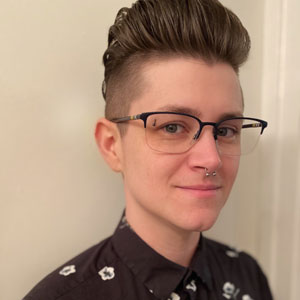
Grey Nelei, PhD, is a Licensed Professional Clinical Counselor and Teaching Faculty member at Antioch University's Clinical Mental Health Counseling program. They hold a PhD in Counselor Education and Supervision (2023) and specialize in queer theory, narrative therapy, and social justice advocacy within counseling practices. Doctor of Philosophy, Counselor Education and Supervision, Adams State University, 2023 Master of Science, Clinical Mental Health Counseling, Northern Kentucky University, 2015 Bachelor of Arts, Psychology (Minor in Sociology & Certificate in Diversity Studies), University of Cincinnati, 2012 Their research focuses on queer and trans counselor experiences, multicultural counseling, and supervision practices. Publications and presentations emphasize systemic inequities, identity exploration, and burnout prevention in counseling. Grey serves as President-Elect of SAIGE of Ohio and has held leadership roles in multicultural counseling organizations. Their teaching philosophy prioritizes ethical practice, cultural humility, and critical analysis of dominant narratives.
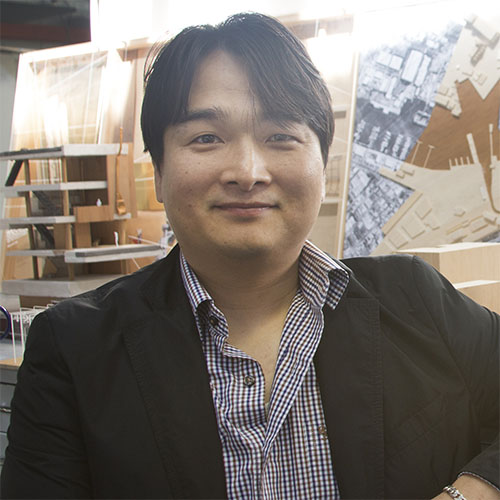
Satoshi Miyazaki is a Professor at Waseda University's Graduate School of Japanese Applied Linguistics and affiliated with the Faculty of International Research and Education . With a Ph.D. from Monash University, his work bridges Japanese language education, second language acquisition, and cross-cultural communication. Education Background: Doctor of Philosophy (Japanese Applied Linguistics) - Monash University (1997) Graduate School of Japanese Applied Linguistics - Waseda University (1982) Research Interests focus on Japanese language pedagogy, natural acquisition mechanisms, and interactional strategies for non-native learners. His innovative use of Eye Mark Recorders (EMR) and Event-Related Potentials (ERP) has advanced understanding of cognitive processes in language learning. Recent Articles (2011-2001) reveal trends in Japanese language education reform, cross-cultural learning challenges, and technology-enhanced teaching methods. Key themes include correctional language programs for foreign inmates, immersion environments, and brain processing studies using advanced neuro-linguistic techniques. Research Projects have received continuous funding from Japan Society for the Promotion of Science, including prison language education programs, foreign care worker competence frameworks, and EMR-based lecture comprehension analysis. His work extends to international collaborations with institutions in Australia, the U.S., and Europe.
Susannah Heschel is the Eli M. Black Distinguished Professor of Jewish Studies at Dartmouth College , chair of the Jewish Studies Program, and faculty member of the Religion Department. She is currently the Joseph Engel Visiting Professor for 2025-2026 at Swartz Hall, Cambridge, and a Guggenheim Fellow researching European Jewish scholarship on Islam. Education: A.B. from Trinity College, M.T.S. from Harvard Divinity School, Ph.D. from the University of Pennsylvania. Research Interests: Her work bridges Jewish and Protestant thought (19th-20th centuries), focusing on biblical scholarship, antisemitism, and Jewish perceptions of Islam. She explores intersections of race, gender, and ethics, particularly in Nazi Germany and modern prophetic traditions. Publications Trends: Recent articles examine Holocaust-era biblical interpretation, prophetic leadership in civil rights, racial theology, and sensory dimensions of antisemitism. Her scholarship spans historical analysis, ethical critique, and interdisciplinary engagements with theology and politics. Scientific Awards: Guggenheim Fellowship National Humanities Center Fellowship Wissenschaftskolleg in Berlin Fellowship Moses Mendelssohn Prize (Leo Baeck Institute) Five Honorary Doctorates Elected Member, American Society for the Study of Religion and American Academy for Jewish Research Grants & Visiting Roles: Recipient of Ford Foundation and Carnegie Corporation grants. Visiting professorships at Universities of Cape Town, Frankfurt, Princeton, Edinburgh, and Lucerne. Convening a 2026 conference on 'Sexual Violence and Antisemitism' with Carnegie support.
Jason Goulah is a Professor at DePaul University’s College of Education, where he directs the Institute for Daisaku Ikeda Studies in Education and the Value-Creating Education for Global Citizenship Doctoral Program. His work bridges Ikeda/Soka studies, transformative learning, and socioecological approaches to language education. Education: Ph.D. in Education, State University of New York, Buffalo LL.M. in International Law, Kwansei Gakuin University, Japan His research explores intersections of language, culture, identity, and sustainability, with a focus on Soka education, global citizenship, and eco-ethical consciousness. He has published extensively in journals and edited volumes, including works on climate change in TESOL and the role of dialogue in peacebuilding. Scientific Awards: 2018 DeGarmo Award for Exemplary Scholarship 2015 American Educational Studies Association Critics Choice Book Award 2013 DePaul University Excellence in Teaching Award 2009 Stephen A. Freeman Award for Best Language Education Article He has held visiting positions at the University of Guelph-Humber, Soka University of America, and the University of Evansville, and has developed curriculum for Chicago Public Schools and New York City Schools. His recent articles analyze Anthropocene-era education and East-West philosophical convergences.
Dr. Chang Pu is a Professor of Teacher Education and Coordinator of the ESOL endorsement program at Berry College. She specializes in TESOL, bilingual education, and heritage language education, teaching both undergraduate and graduate courses including Multicultural Education and ESOL endorsement classes. Her work emphasizes preparing educators to support culturally and linguistically diverse students through collaborations with schools in Georgia (e.g., New Comer Academy) and China. Education: Ph.D. in Culture, Literacy, and Language (University of Texas, San Antonio) M.A. in TESOL (St. Cloud State University) B.A. in English (University of Electronic Science & Tech. of China) Instructional Technology Certificate (St. Cloud State University) Research Focus: Dr. Pu's research centers on heritage language education, virtual exchange methodologies, and equitable practices for linguistically diverse learners. She investigates how bilingual and bicultural competence can be fostered in K-12 settings and teacher preparation programs. Publications: Her work spans topics like at-risk Latino student success, global teacher education collaboration, and Chinese heritage language instruction. Recent contributions include analyses of biliteracy development and innovative pedagogical strategies in multicultural contexts. Awards: 2019 Longview Foundation Global Teacher Educator Fellow Dr. Pu actively engages in community partnerships, co-designing programs with international schools and bilingual immersion initiatives to bridge educational gaps. Her advising focuses on preparing teachers for multicultural classrooms through service-learning and cross-cultural exchanges.
Eunjung Lee serves as Assistant Professor of Business Analytics in the College of Business at Lewis University, bringing extensive industry experience from Samsung and LG alongside prior academic roles at Indiana State University. Her expertise bridges business analytics and educational technology with a pronounced focus on equity-driven research. Her educational foundation includes: Ph.D. in Information Technology Management, University of Wisconsin-Milwaukee M.B.A., Korea University B.S., Kwangwoon University Dr. Lee's research trajectory evolved from business analytics toward educational equity, with recent work emphasizing computational thinking in mathematics education, teacher preparation models, and machine learning applications for gifted identification. She investigates how digital tools transform pedagogy while addressing systemic barriers for underrepresented students. Analysis of her 2022-2025 publications reveals dominant themes in equitable gifted identification through cross-cultural validation of the HOPE rating scale, computational thinking integration in teacher training, and longitudinal studies of enrichment program impacts. Her methodology consistently combines quantitative analysis with equity-centered frameworks. No scientific awards were documented in available sources. While specific advising details remain unreported, her courses in Business Intelligence and Forecasting demonstrate applied analytics instruction. Research grants weren't specified in source materials. Collaborative structures like the Lowell Stahl Center for Entrepreneurship provide institutional context, though dedicated labs or research teams weren't explicitly referenced.
Dr. Alexa Quinn is an Assistant Professor in the Department of Early, Elementary, and Reading Education at James Madison University's College of Education. Her research focuses on culturally responsive teaching, family-school interactions, and inclusive education practices. She holds a terminal degree in Education and is dedicated to preparing future educators to address the diverse needs of students, particularly in early childhood and elementary settings. Her work emphasizes the importance of teacher training programs that foster cultural competence and self-efficacy, alongside strategies for supporting students with disabilities. Dr. Quinn’s scholarship bridges theory and practice, advocating for policies that prioritize equitable educational access and family engagement. Her publications span topics such as inquiry-based learning, morning meeting practices in social studies, and the role of wordless picturebooks in multilingual families. While no formal awards are listed, her contributions to teacher education and policy-relevant research reflect her commitment to impactful educational solutions. Dr. Quinn advises no listed students and does not mention current grants or labs, though her research interests suggest involvement in collaborative projects focused on early childhood education equity and teacher development.
Falk MÜLLER-RIEMENSCHNEIDER is an Associate Professor and Vice Dean (Research) at NUS Saw Swee Hock School of Public Health and holds a joint affiliation with NUS Yong Loo Lin School of Medicine. He leads the Physical Activity and Nutrition Determinants in Asia (PANDA) research programme. With a medical degree from the University of Cologne (2003) and advanced training in Public Health at the London School of Hygiene & Tropical Medicine (2005), he has built a career focused on cardiovascular disease prevention, physical activity promotion, and obesity epidemiology. His academic qualifications include a Doctoral degree from Charité University Medical Centre Berlin (2005) and Habilitation (2011). Professional roles include Senior Lecturer/Research Fellow positions at Charité (2005–2012), and administrative leadership roles such as Teaching Coordinator and Project Division Coordinator for Cardiovascular Research (2008–2012). Research interests center on lifestyle determinants of chronic diseases, with emphasis on physical activity interventions, dietary patterns, and early childhood development. Notable work includes the Singapore Preconception Study and the GUSTO cohort study, examining long-term health trajectories. Media engagements highlight his work on screen time effects in children and urban green space benefits. His recent publications (2021–2025) address mHealth intervention design, park-based physical activity, and 24-hour movement guidelines. Key themes include digital health adoption barriers, longitudinal cohort studies, and culturally tailored public health strategies.
Overview Dr. Adnan Husain is an Associate Professor in the Department of History at Queen’s University, with a cross-appointment in Cultural Studies at the School of Graduate Studies. He holds positions as Queen’s National Scholar and Graduate Chair. His primary research focuses on cross-cultural and inter-religious encounters among Muslims, Christians, and Jews in the Medieval Mediterranean (10th–15th centuries). Education PhD in History, University of California, Berkeley (1998) MA in History, University of California, Berkeley (1992) BA in History, University of California, Berkeley (1991) Research Interests Dr. Husain investigates religious phenomena in pre-modern societies, including Franciscan spirituality and Sufi mysticism. His work explores how religious identities were shaped through polemics and exchanges in the Mediterranean. He is completing a study on Muslim diasporic minorities in the pre-modern West and co-editing a volume on the Qur'an's translation history. Additional Contributions He co-hosts Radio Bandung , a weekly program on Queen’s campus radio (CFRC 101.9 FM), addressing contemporary issues like Islam in Western societies, Middle East politics, and multiculturalism. He also edits the Islam and the West academic series. Supervision Current postdoc: Johan MacKechnie (Department of History)
Ben Rampton is a Professor of Applied and Socio-Linguistics at King's College London, affiliated with the School of Education, Communication & Society and the Centre for Language, Discourse & Communication. He previously directed the Centre for Language Discourse & Communication (founded by him) and the King’s Interdisciplinary Social Science Doctoral Training Centre (2011-2014). He is an Honorary Doctorate recipient from the University of Copenhagen and a Fellow of the Academy of Social Sciences and Royal Anthropological Institute. His research focuses on ethnographic and interactional discourse analysis, addressing topics such as urban multilingualism, youth culture, securitisation, language education, and research methodology. He has held editorial roles in journals like Journal of Sociolinguistics and Applied Linguistics , and edits the Working Papers in Urban Language & Literacies series. His work frequently intersects with anthropology, sociology, and cultural studies. Rampton supervises PhD students in areas including multilingualism, language policy, and sociolinguistic citizenship. His recent publications explore linguistic citizenship in England, securitisation discourse, and interdisciplinary approaches to memory studies. He has contributed to projects on language education coalitions and the methodological challenges of linguistic ethnography. Education: PhD (1987), MA (1978), and BA (1976) from the University of London, University of London, and University of York, respectively. Grants/Projects: Includes research on memory politics, language socialization in diasporas, and sociolinguistics and security funded by the British Academy and Leverhulme Trust. Rampton leads initiatives like the Hub for Education and Language Diversity (HELD), collaborating with academic and third-sector organizations. His teaching spans undergraduate and postgraduate courses in sociolinguistics, language and power, and research methodology.
Bruna Damiana Heinsfeld serves as Assistant Professor of Learning Technologies within the Department of Curriculum & Instruction at the University of Minnesota's College of Education and Human Development. Her research critically examines the intersections of technology, society, and education through the lens of Critical Studies of Education and Technology (CSET), with emphasis on power dynamics and social justice implications. Her academic credentials include: Ph.D. in Interdisciplinary Learning and Teaching (Learning Design and Technologies concentration) from UTSA M.A. in Education (Digital Languages, Media and Education concentration) from PUC-Rio, Brazil Multiple Postgraduate Certificates from Brazilian institutions: Media Discourse Analysis, Ontology and Epistemology, Philosophy/Sociology/Social Sciences, and Distance Learning Management B.A. in English Language and Literature from UERJ, Brazil Dr. Heinsfeld's research program centers on critical discourse analysis of educational technology narratives across corporate, policy, and educational contexts. She investigates how technological discourses are constructed and operationalized, particularly regarding digital equity, participatory exclusion, and the sociopolitical dimensions of technology adoption. Her methodological approach combines Critical Discourse Analysis (CDA) with critical pedagogy to unpack ideological, cultural, and economic factors shaping educational technology implementations. She examines epistemological foundations of technological beliefs and challenges neoliberal narratives in EdTech through rigorous deconstruction of policy documents and marketing materials. Analysis of her recent publications (2019-2023) reveals consistent focus on corporate influence in educational technology, with particular attention to Google and Microsoft's marketing narratives, pandemic-era remote learning disparities, and Latinx student experiences. Her work demonstrates how technological solutions often reinforce existing inequalities through participatory exclusion mechanisms, while her policy analyses expose contradictions between equity rhetoric and actual implementation. Recurring methodological threads include discourse analysis of educational landscape reports and critical examination of public policy frameworks. No scientific awards were documented in the provided materials. As an advisor, Dr. Heinsfeld cultivates a supportive environment grounded in social justice principles, emphasizing critical consciousness development and student autonomy. Her advising philosophy centers on accessible feedback, interdisciplinary exploration, and preparation for meaningful societal engagement. She teaches foundational courses including CI 4311W Technology and Ethics in Society (examining algorithmic bias, privacy concerns, and AI ethics) and CI 8147 Critical Discourse Analysis in Educational Research (focusing on language-power dynamics in educational contexts). While specific research laboratories aren't detailed, her collaborative work spans international contexts with Brazilian institutions and U.S. colleagues, particularly evident in joint publications with researchers like V. Marone and M. Pischetola. Her research trajectory indicates ongoing critical engagement with emerging technologies like AI in education policy, as evidenced by upcoming 2025 conference presentations.
Yoon Ji-hyun is a Professor in the Department of Food and Nutrition at Seoul National University's College of Human Ecology. Her work focuses on food service management, nutrition policy, and dietary behavior analysis, with a particular emphasis on multicultural dietary practices and sustainable development in food systems. Education: Bachelor's in Food and Nutrition (SNU), BBA (SNU), MS in Hotel, Restaurant, and Institution Management (Iowa State University), PhD in Hospitality and Tourism Management (Purdue University). Leadership Roles: Associate Dean (2019-2021), Director of Ho-Am Faculty House (2010-2012), and multiple directorships in nutrition policy centers. Her research integrates public health and consumer behavior, analyzing topics like pandemic-induced dietary changes, school lunch standards, and food safety anxiety. She has led projects on non-face-to-face food safety management, food education policies, and sodium-reduced environments, funded by South Korea's Ministry of Food and Drug Safety, Ministry of Education, and others. Professor Yoon's work also addresses urban dietary trends, including single-person households' kitchen needs and workers' meal patterns, using data from national health surveys and time-use studies. She has contributed to regional and inter-Korean comparative studies on nutritional disparities and dietary guidelines. She teaches courses on foodservice management, consumer market analysis, and graduate-level research methodologies, while serving as Vice President in several academic societies, including the Korean Society of Dietary Culture and Korean Cancer Association.