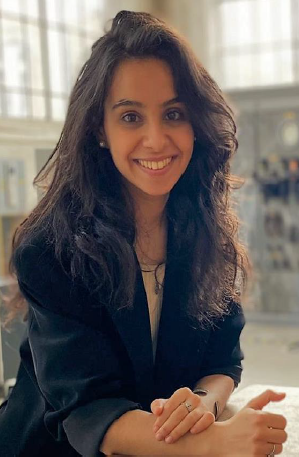
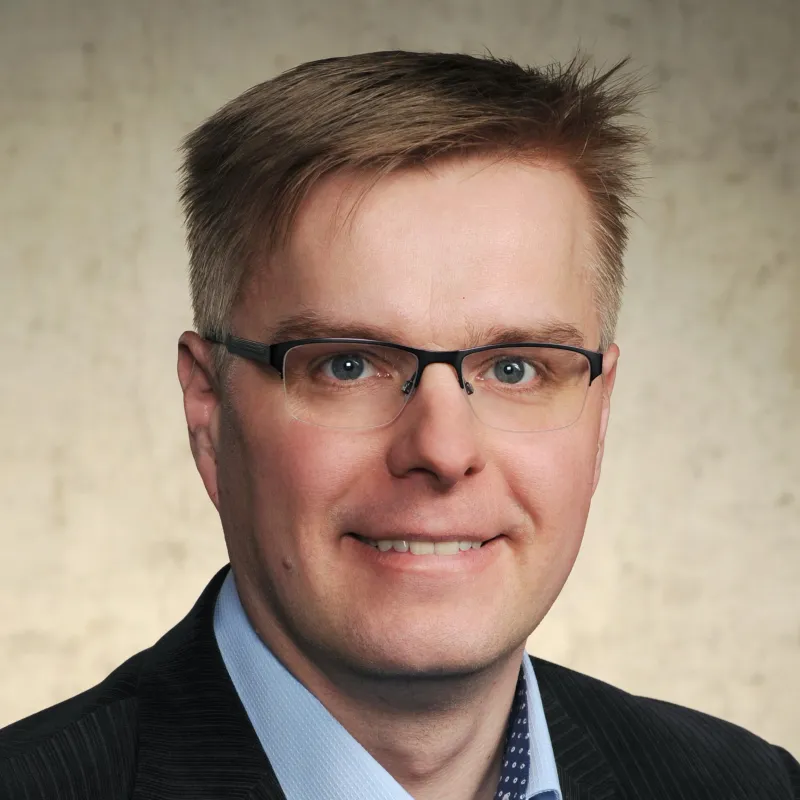
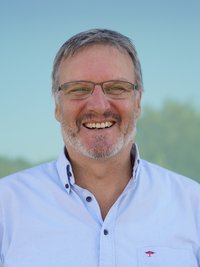
MARIA JESUS GOMEZ GARCIA is an Associate Professor and Secretary of the Department of Mechanical Engineering at the University Carlos III of Madrid. Her research focuses on railway axle diagnostics, multibody system dynamics, and machine learning applications in mechanical systems. She has published extensively on vibration analysis, wavelet transforms, and condition monitoring. Research Trends: Recent articles emphasize railway safety (fatigue crack detection, driveshaft diagnostics), computational techniques (wavelet packet transform, neural networks), and biomedical engineering intersections (tumor microenvironment analysis, oral allergy studies). Contact: Email - mariajesus.gomez@uc3m.es | Phone: 916248380 | Office: 1.1.H22 Agustin de Betancourt, Leganés Campus.
Chiara Gastaldi is an Associate Professor at the Department of Mechanical and Aerospace Engineering (DIMEAS) at the Polytechnic University of Turin, specializing in mechanical design and machine construction. Her academic career spans multiple teaching roles across bachelor's, master's, and doctoral programs, with particular focus on sustainable design, mechanical engineering, and computational methods. She serves on the College of Mechanical, Aerospace, and Automotive Engineering and the College of Biomedical Engineering, contributing to curriculum development and academic governance. Dr. Gastaldi's research centers on bearings, friction, multiphysics modeling, and numerical modeling, with emphasis on sustainable and circular design approaches. Her work bridges traditional mechanical engineering with modern computational techniques, focusing on practical applications in aerospace engineering, computational engineering, fluid mechanics, and sustainable design. She leads the ISED (Industrial Systems Engineering and Design) research group, driving innovation in model-based systems engineering applied to sustainable product development. Her recent publications reveal a strong trend toward integrating sustainability principles into mechanical design, particularly through life cycle assessment methodologies applied to human-powered vehicles and circular design strategies. The research demonstrates growing interest in lattice metamaterials, friction modeling, and computational approaches to mechanical design optimization, with applications ranging from turbine blades to hydrogen storage systems. ASME Yetep Award (2016) ASME Yetep Award (2019) Dr. Gastaldi actively supervises multiple PhD students working on sustainable mechanical design, lattice metamaterials, and circular economy approaches. Her research portfolio includes significant projects funded by competitive calls and commercial contracts, such as PRIME for predictive maintenance, mechanical design of metal scrap crushing machines, CO2 footprint assessment of vehicle aftermarkets, and dynamic design of turbine blades with friction contacts for renewable energy applications. She also serves as an Associate Editor for the PROCEEDINGS OF THE INSTITUTION OF MECHANICAL ENGINEERS. PART C, JOURNAL OF MECHANICAL ENGINEERING SCIENCE and participates in scientific committees including the ASME Technical Committee on Sound and Vibration and the International Committee on Joint Mechanics. Through the ISED research group, Dr. Gastaldi leads collaborative efforts in industrial systems engineering and design, with particular emphasis on sustainable and circular approaches to mechanical product development. Her team works closely with industry partners on practical applications of advanced mechanical design principles, while also mentoring the next generation of engineers through student teams like Policumbent, which focuses on human-powered vehicle design.
Nada El Bouharrouti is a Doctoral Researcher at the Department of Electrical Engineering and Automation, Aalto University. Her work focuses on the intersection of electrical engineering and machine learning for mechanical defects analysis in industrial machinery. School: School of Electrical Engineering Department: Electrical Engineering and Automation Academic Rank: Researcher Research Interests: Driven by electromechanical systems and industrial diagnostics, her research emphasizes: Advanced vibration signal analysis for fault detection Machine learning applications in bearing defect classification Multi-physics simulation of induction machines Time-frequency representation techniques Predictive maintenance of industrial motors Data-driven monitoring system development Publication Trends: Recent articles highlight interdisciplinary approaches combining deep transfer learning, multi-rate signal processing, and 3D mechanical simulations to address bearing faults in induction machines. Collaborative work spans computational electromechanics and industrial automation domains. Contact: Email: nada.elbouharrouti@aalto.fi
Professor Jussi Sopanen holds a DSc (Technology) from LUT University and has extensive experience in mechanical engineering and electric machine design. He currently leads the laboratory of Machine Dynamics and directs the LUT Integrated Energy Conversion Machinery (INERCOM) platform at the LUT School of Energy Systems. His research focuses on high-speed electric machines, rotordynamics, and digital twins, with over 125 publications in dynamic system design and simulation. He has supervised 12 doctoral and 57 master’s students, and his work has garnered 2,700+ citations with an h-index of 25. Education: DSc (Technology), LUT University (2004) Research interests include rotordynamics of high-speed drives, mechanical design of electrical machines, real-time multibody simulation, and digital twins. His work addresses challenges in rotor stability, bearing dynamics, and material selection for high-speed applications. Articles from 2023–2025 highlight advances in laminated rotor materials, fault diagnosis, and computational modeling. Professor Sopanen chairs the 12th IFToMM International Conference on Rotordynamics (2026) and serves on editorial boards, including Shock and Vibration . He leads a team exploring hybrid powertrains and energy-efficient machinery through collaborative platforms like INERCOM. His research bridges mechanical and electrical engineering, emphasizing practical applications in renewable energy and industrial systems.
Dr. Manuel Valdano is an Assistant Professor at the School of Engineering of Comillas Pontifical University, affiliated with the Institute for Research in Technology (IIT). His expertise lies in computational mechanics and biomechanics, focusing on crashworthiness and vehicle safety engineering using multibody and finite element models. Education: Mechanical Engineering (2018), Universidad Nacional de Rio Cuarto, Argentina Research Interests: Collision biomechanics of vehicle occupants Seatbelt system optimization E-scooter rider safety analysis Finite element modeling of human body responses Certification methods for automotive dummy models Key Projects (2021-2027): Development of High Dynamic Actuator (HDA) for crash simulation (EU-funded) Injury mitigation strategies for Vision Zero initiatives (European Commission) Cervical injury prevention in e-scooter users (Fundación Mapfre) WHO global road safety data analysis (2023) Grants & Collaborations: Línea Directa: Gender biomechanical differences in frontal impacts Autoliv: Simulation and active structures (2023 exchange) CEESAR: New occupant seating positions (2021-2024) Labs/Teams: Affiliated with IIT's Vehicle Safety and Biomechanics research groups, collaborating with Autoliv, WHO, and European automotive safety organizations.
Eliza Chircan is a Lecturer and Head of the Department of Mechanical Engineering at the Faculty of Mechanical Engineering, Technical University of Brașov. Her research focuses on finite element analysis, dynamics, and composite materials with applications in multibody systems and mechanical engineering challenges. Her work emphasizes computational mechanics and vibration analysis, with contributions to modal response determination, elastic element behavior, and Kane’s formalism in dynamic systems. Key publications appear in journals like Symmetry and Continuum Mechanics and Thermodynamics, addressing topics ranging from finite element discretization effects to inertial property modeling in complex systems. While no specific awards or grants are highlighted, her publications reflect active engagement in advancing analytical methods for mechanical systems. Advising relationships are not documented in the provided materials.
Prof. Maria Luminița SCUTARU is a Professor in the Department of Mechanical Engineering at the Faculty of Mechanical Engineering, Technical University of Brasov, Romania. Her research focuses on systems dynamics, multibody systems, analytical mechanics, innovative materials, and nanotubes. She has published extensively in high-impact journals such as Mathematics , Nanomaterials , and Polymers , contributing to advancements in composite materials, computational mechanics, and food preservation techniques. Her work bridges theoretical mechanics with practical applications in materials science, particularly in the study of carbon fiber composites and quasi-Newtonian fluid dynamics. Recent studies include investigations into isochoric freezing for agricultural preservation and error estimators in Stokes problems. Prof. SCUTARU’s affiliations include the Department of Mechanical Engineering, where she contributes to both teaching and cutting-edge research initiatives.
Michael Steinbatz is a Professor at the University of Applied Sciences Wels, affiliated with the Research Center Wels. His research focuses on multibody systems, finite element analysis, agricultural machinery design, and fatigue analysis. He has contributed to advancements in simulation techniques for engine components and structural mechanics. Key research areas include modal force approaches in engine simulations, lightweight design methods for agricultural machinery, and optimal control strategies for multibody systems. His work bridges theoretical modeling with practical applications in mechanical engineering and agricultural technology. Steinbatz has presented his research at multiple conferences, including talks on fatigue analysis and virtual prototyping. His publications span topics from fracture plate simulations to elastohydrodynamic contact analysis in engines. Despite his prolific output, no specific awards are listed in the provided materials. He has supervised two academic works and actively engages in industry-relevant projects, such as integrating lightweight computation methods into product development processes.
Dr. Francesco Turci serves as a Lecturer in Scientific Computing within the School of Physics at the University of Bristol, where he conducts theoretical and numerical research on nonequilibrium phenomena in disordered systems. His work bridges statistical physics, soft matter, and biophysics through investigations of emergent properties across diverse systems—from molecular glasses and colloidal gels to biological collectives like zebrafish swarms and bone structures. Education: PhD from Montpellier II University Turci's research centers on heterogeneous disordered media and active matter, with emphasis on collective behavior, spatial organization, and non-equilibrium dynamics. He employs computational methods to unravel hydrophobic interactions in biomolecular contexts, wetting phenomena in active particle systems, and structural signatures of glass transitions. His approach integrates molecular simulations with statistical mechanical frameworks to extract universal principles from system-specific complexities. Analysis of his 15 most recent publications (2020–2025) reveals three dominant thematic clusters: (1) Hydrophobic interactions and solvation thermodynamics featuring inverse temperature dependencies; (2) Active matter systems exploring wetting transitions, phase separation, and collective behavior in biological and synthetic particles; (3) Glass physics investigations linking structural order to dynamical arrest in supercooled liquids. These strands consistently leverage computational physics to address fundamental questions in soft condensed matter. Supervision and Collaborations: Turci has mentored 2 research students, collaborating extensively with N.B. Wilding (Bath), R. Jack (Cambridge), and C.P. Royall (Bristol) across 12 co-authored papers. His work receives support through institutional resources and likely research council grants, though specific funding acknowledgments aren't detailed in the source material. Network analysis indicates strong ties to statistical physics groups in the UK and Europe. He actively contributes to the Theoretical Physics research group at Bristol, where his computational focus complements experimental efforts in soft matter and biophysics. Current projects involve multiscale modeling of active-inertial particle mixtures and structural analyses of biological tissues using zebrafish models, positioning his work at the interface of fundamental physics and biomedical applications.
Prof. Dr. Andreas Rupp serves as a Professor in the Faculty of Mechanical Engineering at Kempten University of Applied Sciences, holding dual leadership roles as Scientific Management of the European Competence Center for Bells (ECC-ProBell) and Institute Management of the Institute for Innovative Vehicle Drive Systems. He additionally directs the Measurement Technology Laboratory, driving research in precision engineering measurement systems and vehicle drive innovation. His research spans Measurement Technology, Engineering Informatics, and Fatigue Strength with specialized focus on stress analysis, operational load measurement, vibration modal analysis, and reliability assessment. He applies Finite Element Method (FEM) and Multibody System (MBS) simulation to solve complex structural integrity challenges in mechanical systems, particularly emphasizing electrical measurement of thermal parameters and software tools for stress analysis. Prof. Rupp provides industry consulting services in strength assessment, load assumption modeling, and FEM-based operational stress simulation. His laboratory work integrates measurement technology with engineering informatics to advance fatigue strength evaluation methodologies for mechanical components.
Haoxiang Lang serves as Department Chair and Associate Professor in the Department of Automotive and Mechatronics Engineering at Ontario Tech University's Faculty of Engineering and Applied Science. His laboratory, GRASP Lab, focuses on advanced robotics and intelligent systems research. Education: PhD in Mechanical Engineering, University of British Columbia (2013) MASc in Mechanical Engineering, University of British Columbia (2008) BSc in Marine Engineering, Ningbo University (2003) Dr. Lang's research spans mechatronics, autonomous robotics, visual servoing, and machine learning. His work focuses on developing advanced control systems for robotic manipulation, autonomous vehicle navigation, and sensor fusion techniques. Recent projects include vision-based combat vehicle control, deep learning for aerial image processing, and thermal management for robotic systems. His publications demonstrate strong emphasis on robotic perception-control integration, with recurring themes in visual servoing, sensor fusion, autonomous navigation, and machine learning applications in robotics. Recent works increasingly incorporate deep neural networks for complex tasks like object manipulation and environment mapping. Dr. Lang leads the GRASP Lab, which develops experimental platforms including autonomous combat vehicles and robotic manipulators. The lab focuses on practical implementations of control theories and collaborates on industrial applications.
Mauro Mancini is a Fixed-term Assistant Professor at the Department of Mechanical and Aerospace Engineering (DIMEAS) at Politecnico di Torino. He belongs to the College of Mechanical, Aerospace, and Automotive Engineering and specializes in Flight Mechanics (Scientific disciplinary sector IIND-01/C) within Area 0009 - Industrial and Information Engineering. Dr. Mancini teaches multiple courses across various degree programs including Aerospace Engineering and Mechatronic Engineering. His teaching portfolio includes Advanced Flight Dynamics: Modeling and Simulation, Control Systems Design for Spacecraft Attitude Dynamics at PhD level, and Fundamentals of Flight Mechanics at undergraduate level. He has also delivered lectures for the English-taught Program at Ho Chi Minh City University of Technology. His research focuses on aerospace control systems with particular emphasis on spacecraft attitude dynamics, UAV control, and autonomous systems. Dr. Mancini employs advanced control techniques including sliding mode control, artificial potential fields, and adaptive control strategies to address challenges in spacecraft maneuvering, orbital dynamics, and precision agriculture applications. His work demonstrates strong interdisciplinary connections between aerospace engineering, robotics, and agricultural technology. Analysis of Dr. Mancini's publication record reveals a consistent research trajectory in spacecraft attitude control and autonomous vehicle systems. His work shows expertise in sliding mode control techniques applied to spacecraft with actuator constraints, orbital simulation for target inspection maneuvers, and precision agriculture applications. A notable trend is the integration of artificial potential fields with advanced control methodologies to solve complex navigation and maneuvering problems in both space and terrestrial environments. Dr. Mancini actively supervises three PhD students: Pierantonio Bertuccio, Jean-Luc Sarvadon, and Riccardo Enrico (whose research focuses on robust control of UAV under uncertain conditions). He has secured commercial research contracts including a 2024 Flight Mechanics project as Scientific Manager and previous collaborations with Ho Chi Minh City University of Technology. He is a member of the Dynamics, Control and Flight Simulation research group at DIMEAS, where he contributes to advancing aerospace control methodologies and their practical applications in both academic and commercial contexts.
Prof. Janusz Frączek is a faculty member at Warsaw University of Technology, holding the academic rank of Professor. His research focuses on computational mechanics, kinematics and dynamics of multibody systems, robotics, and biomechanics. University: Warsaw University of Technology Academic Rank: Professor Contact: janusz.fraczek@pw.edu.pl | New Aviation Building, room 322 Research Interests: Computer methods in mechanics Kinematics and dynamics of multibody systems Robotics Biomechanics Teaching Activities: Dynamics of Multibody Systems Surveying and experimental techniques Theory of Machines and Mechanisms I Article Trends: The 15 most recent publications emphasize computational mechanics, robotics, Hamiltonian frameworks, and optimization. Topics include redundant constraints, parallel computing, nonholonomic systems, and augmented Lagrangian methods.
Håkan Andersson is an Adjunct Associate Professor at Linköping University , affiliated with the Department of Management and Engineering . His work focuses on advanced simulation techniques for hydraulic systems. Research Interests : Mechanical Engineering, Hydraulic Systems, and Computational Modeling. His studies address wear analysis, leakage flow, and dynamic sealing in hydraulic percussion units through multidisciplinary co-simulation approaches. Publications Trends : Recent work (2018–2023) emphasizes co-simulation tools, hydraulic system dynamics, and fluid-structure interactions, with applications in industrial equipment like hydraulic hammers.
Alessandro Saccon is an Associate Professor in the Mechanical Engineering Department at Eindhoven University of Technology (TU/e). His research focuses on robotics, nonlinear control, and optimal control, particularly in dynamic robotic systems with intermittent contacts. He holds a PhD in Control System Theory from the University of Padova (2006) and has held postdoctoral and visiting positions at institutions including Instituto Superior Técnico (Lisbon) and the California Institute of Technology. His work contributes to UN Sustainable Development Goals related to innovation and infrastructure. Education: - PhD in Control System Theory, University of Padova, Italy (2006) - M.Sc. (Laurea) in Computer Engineering, University of Padova (with honors) - Visiting positions at University of Colorado Boulder, Caltech, and Australian National University. Research Interests: - Modeling and control of complex robotic systems - Nonlinear control and estimation - Optimal control and trajectory optimization - Impact-aware robotics and dynamic manipulation - Geometric mechanics and multibody dynamics Awards: Claudio Maffezzoni Best PhD Thesis Award (2006) Dutch Data Prize 2024 (Natural and Engineering Sciences) Advising & Grants: Supervised 64 works (students/research projects). Project Manager for FIDCOM RBT (2024-2029). Labs & Teams: Lead research on Impact-Aware Robotics, with datasets published on 4TU.Centre for Research Data.