معرفی
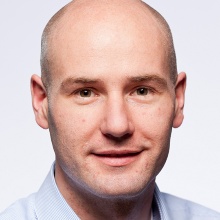
Dr. Francesco Turci serves as a Lecturer in Scientific Computing within the School of Physics at the University of Bristol, where he conducts theoretical and numerical research on nonequilibrium phenomena in disordered systems. His work bridges statistical physics, soft matter, and biophysics through investigations of emergent properties across diverse systems—from molecular glasses and colloidal gels to biological collectives like zebrafish swarms and bone structures.
Education:
- PhD from Montpellier II University
Turci's research centers on heterogeneous disordered media and active matter, with emphasis on collective behavior, spatial organization, and non-equilibrium dynamics. He employs computational methods to unravel hydrophobic interactions in biomolecular contexts, wetting phenomena in active particle systems, and structural signatures of glass transitions. His approach integrates molecular simulations with statistical mechanical frameworks to extract universal principles from system-specific complexities.
Analysis of his 15 most recent publications (2020–2025) reveals three dominant thematic clusters: (1) Hydrophobic interactions and solvation thermodynamics featuring inverse temperature dependencies; (2) Active matter systems exploring wetting transitions, phase separation, and collective behavior in biological and synthetic particles; (3) Glass physics investigations linking structural order to dynamical arrest in supercooled liquids. These strands consistently leverage computational physics to address fundamental questions in soft condensed matter.
Supervision and Collaborations:
Turci has mentored 2 research students, collaborating extensively with N.B. Wilding (Bath), R. Jack (Cambridge), and C.P. Royall (Bristol) across 12 co-authored papers. His work receives support through institutional resources and likely research council grants, though specific funding acknowledgments aren't detailed in the source material. Network analysis indicates strong ties to statistical physics groups in the UK and Europe.
He actively contributes to the Theoretical Physics research group at Bristol, where his computational focus complements experimental efforts in soft matter and biophysics. Current projects involve multiscale modeling of active-inertial particle mixtures and structural analyses of biological tissues using zebrafish models, positioning his work at the interface of fundamental physics and biomedical applications.