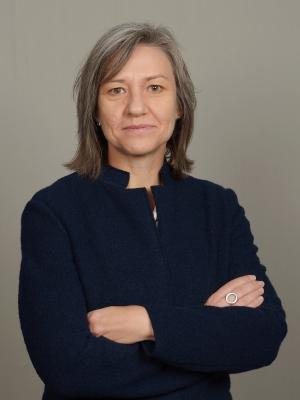
Siva Seetharamanمشاهده پروفایل
استادیار
- Control Systems
- Machine Learning
- Networked Systems
- +۳ مورد دیگر
Siva Seetharaman is an Assistant Professor in the Department of Industrial Engineering at Purdue University's College of Engineering, joining the faculty in 2022. His research bridges control theory, machine learning, and networked systems with critical applications in energy infrastructure and transportation electrification. Affiliated with Purdue's top-ranked engineering programs, he focuses on safety-critical control solutions for real-world cyber-physical challenges. His educational trajectory includes a Ph.D. in Electrical Engineering from the University of Notre Dame, followed by postdoctoral research at Texas A&M University. This foundation supports his interdisciplinary approach to complex system dynamics. Dr. Seetharaman's research centers on risk-aware control synthesis for safety-critical systems, with three core thrusts: (1) Developing risk-tunable control barrier functions for human-robot collaboration and autonomous systems; (2) Creating data-driven energy management frameworks for virtual power plants and grid reliability; (3) Advancing distributed learning methods for stability assessment in large-scale networked systems. His work uniquely integrates formal verification techniques with machine learning to address nonlinear dynamics in transportation electrification and decarbonized energy grids. Analysis of his 15 most recent publications (2021–2025) reveals a decisive shift toward causal safety engineering —evident in risk-tunable control barrier functions and sampling-based safe reinforcement learning—and energy-transportation convergence , particularly in electric roadway charging and heavy-duty vehicle grid impacts. Key technical trends include compositional verification of neural networks (ECLipsE), multi-scale energy datasets, and dissipativity-based modeling for nonlinear systems. His work consistently targets real-world deployment challenges in Texas grid case studies and transportation networks. No scientific awards were documented in the provided materials. No student advisement records or grant funding details were included in the source texts. His collaborative publication pattern suggests engagement with interdisciplinary teams across control theory, machine learning, and power systems domains, though specific mentoring activities remain unreported. While no dedicated laboratory is specified, his research on cyber-physical systems, electric roadways, and grid-transportation integration implies active participation in Purdue's energy and transportation research ecosystems. His focus on synthetic Texas case studies indicates strong ties to regional energy infrastructure initiatives.