معرفی
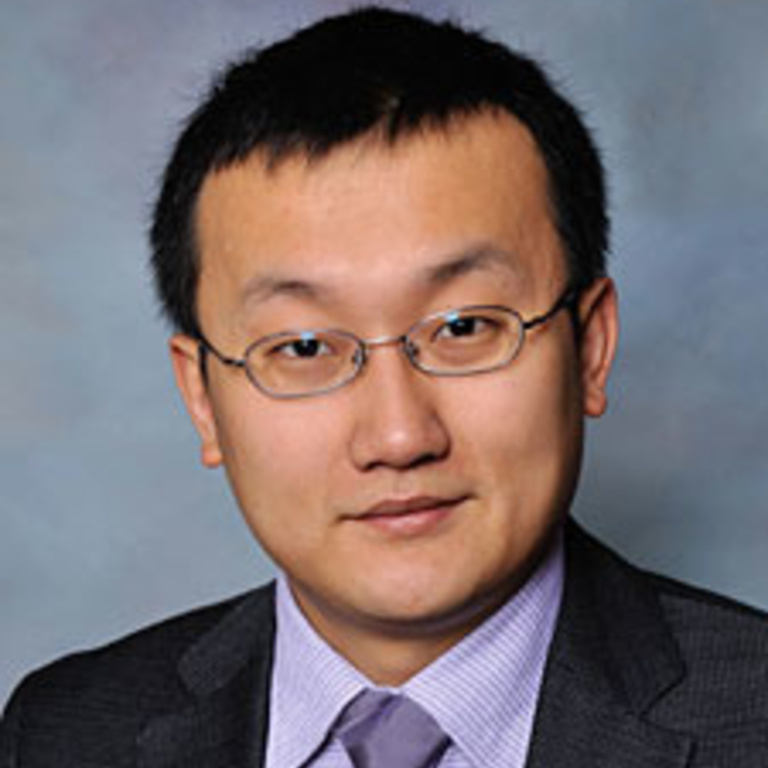
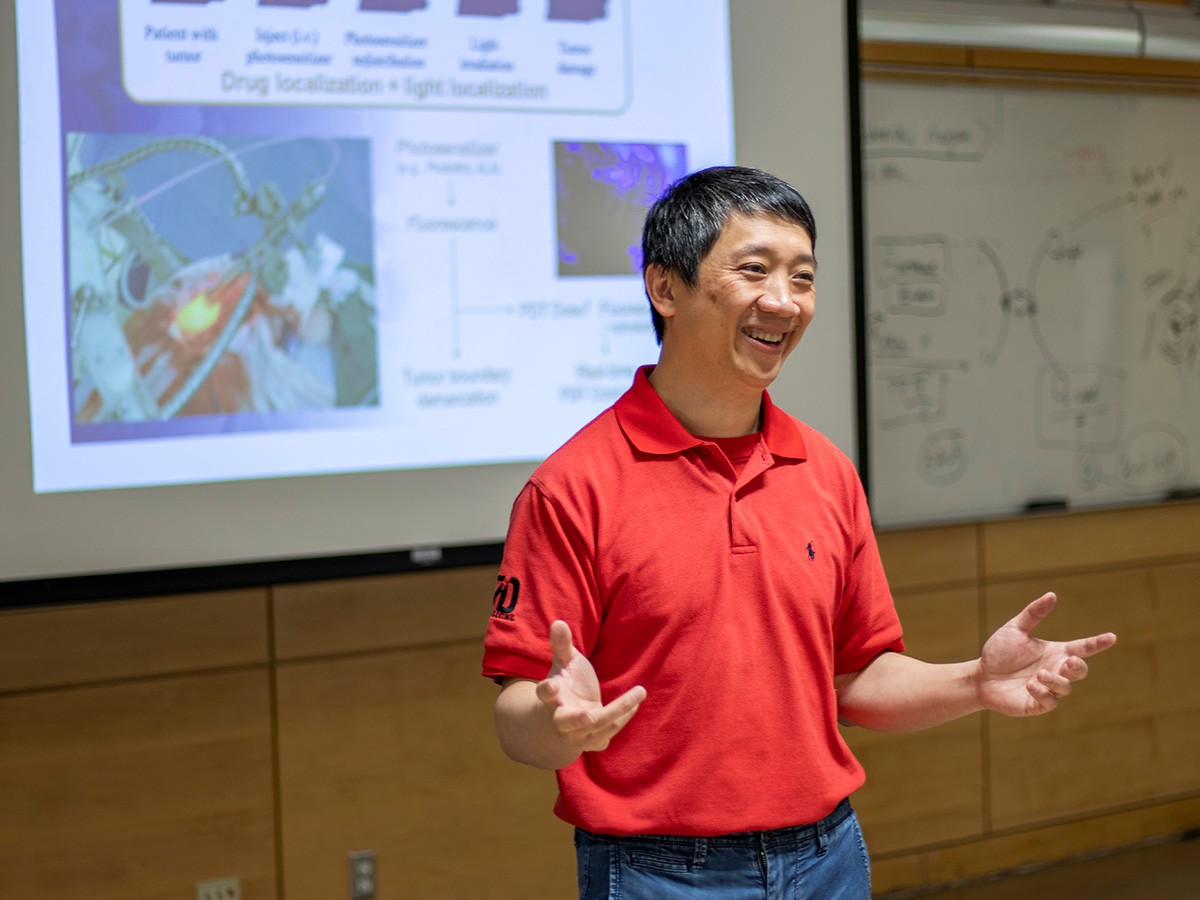
Dr. Victor X.D. Yang is a Professor in the Department of Electrical, Computer, and Biomedical Engineering at Toronto Metropolitan University, holding dual qualifications as a PhD engineer and MD neurosurgeon. His pioneering work in biophotonics has led to commercially deployed surgical systems, including a machine vision-guided platform by 7D Surgical used in over 10,000 implants across 2,000 patients globally. He champions engineering solutions that bridge clinical needs with economic viability, emphasizing scalable impact over individual surgical procedures.
Education:
- MD, University of Toronto, 2006
- PhD, University of Toronto, 2004
- MASc, University of Toronto, 1998
- BSc, University of Toronto, 1997
Research Interests: Dr. Yang's work spans Optical coherence tomography, Machine vision image guidance, and Medical robotics, with focus on intraoperative imaging for neurosurgery and spine procedures. His lab develops real-time imaging systems integrating OCT, fluorescence, and augmented reality to enhance surgical precision. He prioritizes translational research where engineering innovations directly address unmet clinical needs while maintaining commercial feasibility.
Publication Trends: Recent publications (2017-2019) demonstrate consistent advancement in high-speed intraoperative imaging and robotic surgical systems. Key themes include multimodal image registration (MRI/CT/OCT), microvascular perfusion mapping, and coordinate-based surgical navigation. His work increasingly focuses on error-prevention systems, such as detecting wrong-level spine surgery through real-time anatomical verification.
Scientific Awards:
- Congress of Neurosurgeons Innovator of the Year Award (Team), 2018
- George Armstrong Peters Prize, University of Toronto Department of Surgery, 2017
- Frost & Sullivan New Product Innovation Award (Team), 2017
- Canada Research Chair in Biophotonics and Bioengineering, Tier II, 2008-2018
Advising and Professional Activities: Dr. Yang teaches advanced courses including Emerging Biophotonics and Biomedical Capstone Design, mentoring students in translational device development. He maintains active dual licensure as a Professional Engineer (PEng) and medical practitioner, with memberships spanning SPIE (Lifetime), IEEE, OSA, and major neurosurgical associations. His industry collaboration with 7D Surgical exemplifies his philosophy that engineering impact scales through commercialization.
Labs and Teams: Leading a multidisciplinary research group at Toronto Metropolitan University, Dr. Yang's lab operates at the engineering-medicine interface. The team recently developed a GPS-guided surgical robot for spine procedures capable of preventing level-mismatch errors. Current projects focus on integrating machine vision with laser ablation systems and developing augmented reality overlays for complex neurosurgical interventions.