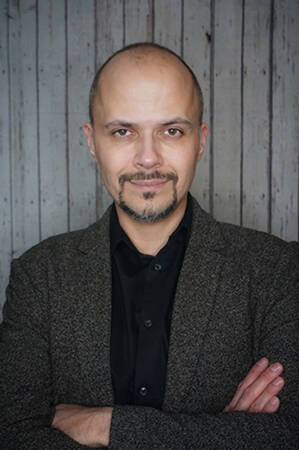
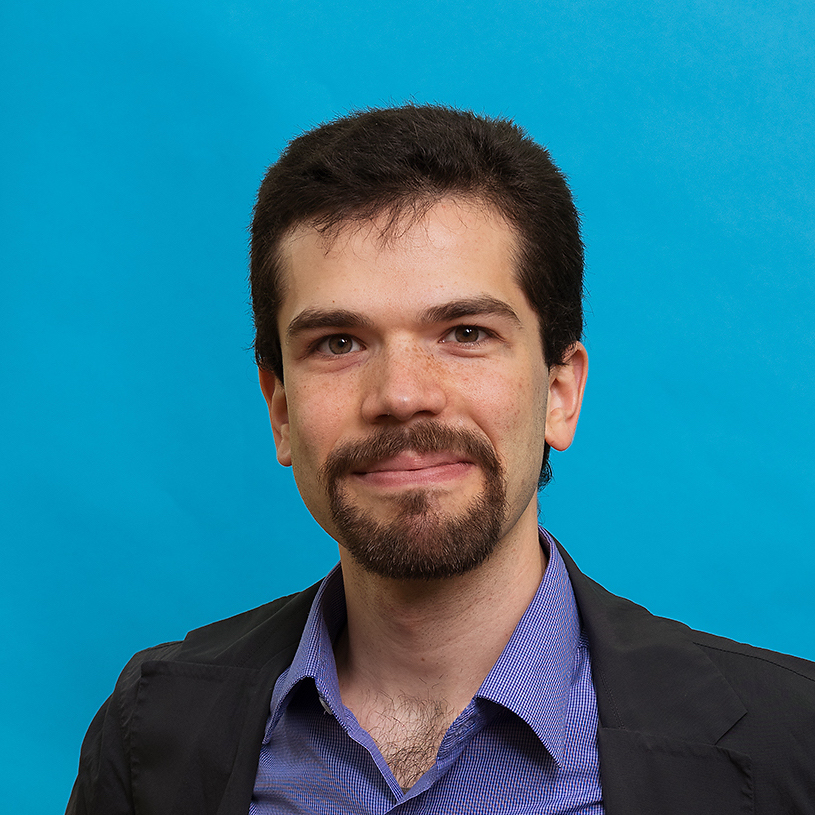
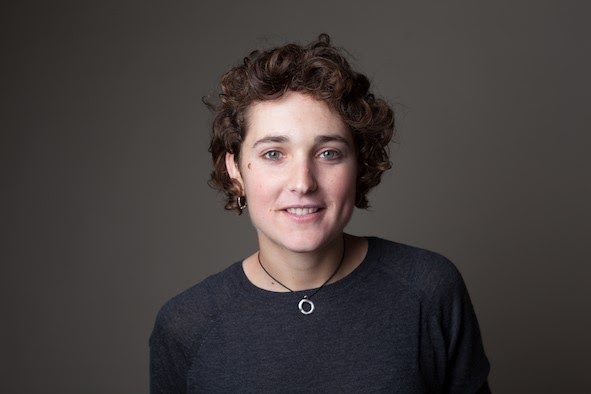
Yuke Zhu is an Assistant Professor in the Department of Computer Science at The University of Texas at Austin, directing the Robot Perception and Learning Lab . His research spans robotics, computer vision, and machine learning, focusing on general-purpose robot autonomy through perception-action integration. Key Affiliations: University of Texas at Austin (Department of Computer Science), Stanford University (Ph.D. alumnus) Research Focus His work explores: Robotic perception and decision-making in unstructured environments Embodied AI frameworks for active, situated agents Sim-to-real transfer and humanoid whole-body control Collaborative methods drawing from neuroscience and philosophy Scientific Contributions Google Scholar profile with 15+ recent publications on visuomotor policies, deformable object manipulation, and robotic foundation models Recipient of the IEEE RAS Early Career Award Developer of open-source frameworks like robosuite and RoboCasa for robotic simulation Lab Leadership The RPL Lab actively investigates robotics and embodied AI, emphasizing: Closing perception-action loops for autonomous systems Computational frameworks for open-world interactions Collaborative research with six ICRA 2025 papers
Laszlo A. Jeni is an Assistant Research Professor at Carnegie Mellon University's Robotics Institute, leading the Computational Behavior (CUBE) Lab. His research focuses on computer vision, digital humans, and computational behavior science, with applications in healthcare, affective computing, and assistive technologies. He develops methods to model human behavior using multi-modal sensors, including facial, body, and physiological data. Current research emphasizes human motion synthesis, clinical movement analysis, and 3D scene reconstruction. Key research topics include action recognition for clinical applications, generative models for 4D scene synthesis, and video-based physiological estimation. Jeni supervises a team of PhD and master's students in the CUBE Lab, advancing interdisciplinary projects at the intersection of AI and behavioral science. His work has led to innovations in non-contact health monitoring and virtual avatar control systems. Notable contributions include frameworks for sim-to-real transfer in human mesh recovery, diffusion-based camera alignment, and video transformers optimized for efficiency. Jeni's lab actively participates in challenges like the V4V (Vision for Vitals) initiative and benchmarks for 3D facial alignment, maintaining a strong presence in both academic and applied computer vision communities.
David Rolnick is an Assistant Professor and Canada CIFAR AI Chair at McGill University's School of Computer Science and Mila – Quebec AI Institute. His research focuses on applying machine learning to address climate change challenges, including biodiversity monitoring, land use classification, climate modeling, and materials discovery. He co-founded Climate Change AI and leads initiatives like the NSF-NSERC Global Center on AI and Biodiversity Change (ABC). Rolnick's work emphasizes developing transfer learning and meta-learning techniques to handle sparse data in climate-related applications, such as predicting energy demand and simulating cloud formations. He has been recognized with the Sloan Research Fellowship and MIT Technology Review's '35 Innovators Under 35' distinction. Education: Postdoctoral research at the University of Pennsylvania (NSF Mathematical Sciences Postdoctoral Fellow), PhD from MIT (NSF Graduate Research Fellow). Research interests span AI applications in climate science, including energy systems optimization, satellite imagery analysis for environmental monitoring, and causal representation learning in climate data. His lab explores ethical AI deployment, particularly mitigating negative applications like oil exploration while addressing energy consumption concerns in ML. Key projects include ClimART (a climate radiative transfer benchmark), OpenForest (a forest monitoring data catalog), and collaborations on fusion energy modeling. Awards include the AI2050 Fellowship for transformative research impact. Awards: Sloan Research Fellow, AI2050 Fellow, MIT TR35 Grants: NSF-NSERC Global Center, Climate Change AI initiatives Labs/Teams: McGill Climate AI Group, Mila collaborations
Helena Andres Terre is a Research Fellow at the Department of Computer Science and Technology, University of Cambridge, and a member of The Mark Foundation Institute for Integrated Cancer Medicine. She holds an honorary role as a Clinical Research Fellow at Moorfields Eye Hospital, London. Her research focuses on AI-driven biomedical data integration, generative models, and interpretable machine learning. She completed a PhD in Artificial Intelligence (University of Cambridge, 2015–2019, nominated for distinguished dissertation), an MPhil in Mathematical Networks (Queen Mary University of London, 2014–2015, with distinction and best student prize), and a BA in Theoretical Physics from the University of Barcelona and Rensselaer Polytechnic Institute. Her work integrates complex systems, mathematical networks, and deep learning to address challenges in cancer diagnosis and treatment. Key areas include unsupervised generative models, graph neural networks, and explainable AI for healthcare. She actively promotes equity in STEM through roles with Women@CL and Trinity College PostDoc Society. Recent research trends emphasize multi-modal data fusion for clinical decision-making, leveraging graph-based architectures and adversarial techniques. Her contributions include CellVGAE for single-cell RNA analysis and REM for interpretable healthcare analytics. Awards include recognition for her PhD and MPhil achievements. Helena supervises Part II/III projects in Physics and Computer Science, teaches Machine Learning at Cambridge Spark, and mentors through initiatives like Code First: Girls. Beyond academia, she is a competitive ultimate frisbee athlete and outdoor enthusiast.
Daniel Jacob Tward serves as an Assistant Professor in both the Department of Computational Medicine and Department of Neurology at the David Geffen School of Medicine, University of California Los Angeles . His research bridges computational mathematics with neuroscience and medical imaging, focusing on developing advanced algorithms for brain mapping and disease analysis. His primary research interests include computational anatomy , neuroimaging , and medical image analysis , with specific expertise in diffeomorphic mapping techniques. Tward's work enables precise alignment of brain structures across different imaging modalities and scales, from microscopic histology to whole-brain MRI. His methodologies are particularly applied to Alzheimer's disease research , where he analyzes neurodegeneration patterns and tau pathology distribution. Analysis of his recent publications reveals a clear progression toward multiscale integration - connecting molecular, cellular, and tissue-level data through computational frameworks. His 2023-2025 work shows increasing emphasis on spatial transcriptomics integration with imaging data, deep learning applications for image registration, and population-level analyses of neurodegenerative diseases. The BRAIN Initiative Cell Census Network collaboration represents his commitment to open neuroscience infrastructure. Tward actively contributes to major research consortia including the Alzheimer's Disease Neuroimaging Initiative (ADNI) and the BRAIN Initiative Cell Census Network . His technical developments in diffeomorphic mapping form the foundation for several computational anatomy tools used in both basic neuroscience and clinical research contexts. His laboratory focuses on developing the Computational Anatomy Gateway - a framework for processing neuroimaging data across multiple scales. Current projects involve integrating spatial transcriptomics with histology, creating 3D digital brain atlases , and developing predictive models for neurodegenerative disease progression using longitudinal imaging data.
Xia Cui is a Senior Lecturer in Software Engineering at the Manchester Metropolitan University, affiliated with the Manchester Metropolitan Joint Institute and the Department of Computing and Mathematics. She leads research in the Human-Centred Computing Lab and Natural Language Processing (NLP) Lab. Her expertise spans Natural Language Processing, Speech Processing, Multi-modal Learning, and Machine Learning Applications. Xia holds a PhD (Computer Science, University of Liverpool 2020), MSc (Web Science and Big Data Analytics, UCL 2015), and BSc (Internet Computing, University of Liverpool 2013). Notable projects include a KTP collaboration with University of Manchester and VoiceIQ Ltd to develop AI systems for detecting speaker vulnerability indicators. She also worked with BBC R&D on speech/music discrimination tools during her MSc. Her research trends focus on advancing NLP techniques for mental health detection, multimodal data fusion, and domain adaptation challenges. Recent work includes developing annotator ranking models for mixed-annotator datasets and multimodal approaches for vulnerability identification. She actively participates in conferences like Society of Psychotherapy Research and Cyberpsychology Annual Conference. Xia advises prospective students on MSc/PhD projects requiring Python and ML/NLP proficiency. She is a member of interdisciplinary labs exploring human-computer interaction and AI ethics.
Jia Tao is an Associate Professor of Computer Science at Lafayette College. His research focuses on the intersection of artificial intelligence, theoretical computer science, and game theory, particularly in knowledge representation and reasoning (KRR) and modal logic. He designs logical systems to model intelligent agents' decision-making processes in strategic contexts. His work explores concepts like blameworthiness, responsibility attribution, and epistemic reasoning in multi-agent systems. Education: Ph.D., Iowa State University (2012). Courses taught include Digital Media Computing, Data Structures and Algorithms, Principles of Programming Languages, and Artificial Intelligence. His research emphasizes formal logic frameworks for agent-based systems, with applications in security games and ethical decision-making. Key research trends in his publications include analyzing responsibility in collective actions, epistemic logic for blameworthiness, and formalizing knowledge dynamics under constraints. His work bridges theoretical foundations with practical AI applications, contributing to both computational logic and multi-agent system design. Advising and Grants: No specific grants or advisee names are listed in the provided text. His teaching philosophy emphasizes active learning through project-based assignments, such as digital media projects and algorithm implementations. Labs/Teams: No dedicated lab or team affiliations mentioned in the text.
Lifang He is an Associate Professor in the Department of Computer Science & Engineering at Lehigh University. She holds a B.S. in Computational Mathematics from Northwest Normal University and a Ph.D. in Computer Science from South China University of Technology. Prior to joining Lehigh, she was a postdoctoral researcher at the University of Pennsylvania’s Perelman School of Medicine and Weill Cornell Medical College. Her research focuses on machine learning/deep learning, data mining, tensor analysis, and biomedical informatics. Notable projects include developing BiomedGPT, an AI model for real-time patient-focused insights, and contributions to structural brain imaging analysis and rare event prediction in materials science. Her work bridges computational methods with healthcare applications, emphasizing multi-modal data fusion and federated learning in medical contexts. Recent publications span topics like self-paced learning for sign language recognition, graph-based brain network analysis, and efficient large language models. She actively participates in symposiums on AI in healthcare and has collaborated on initiatives like the Mountaintop Campus’ interdisciplinary projects.
Jianbo Liu is a prolific researcher with a focus on interdisciplinary fields spanning machine learning, remote sensing, signal processing, and computer vision. His work emphasizes developing advanced algorithms for applications in environmental monitoring, telecommunications, and data-driven decision-making. Liu collaborates frequently with institutions and researchers in China and internationally, contributing to journals like IEEE Transactions on Wireless Communications , Remote Sensing , and Pattern Recognition . Research Interests: Machine learning frameworks for computer vision tasks, remote sensing data analysis, signal processing in communication systems, and optimization of industrial processes. Key Collaborators: Fu Chen, Jimmy S. J. Ren, Ningyuan Cao, Hongsheng Li, and Boyang Cheng. Publications: Over 138 papers across venues such as CVPR, ICCV, and IEEE journals, demonstrating expertise in neural networks, sensor fusion, and spatiotemporal data analysis. His recent work highlights contributions to physics-informed machine learning, gesture recognition via hierarchical attention networks, and secure communication protocols for satellite systems. Liu’s research bridges theoretical advancements with practical applications in environmental science, healthcare, and smart infrastructure.
Aidong Zhang is a SUNY Distinguished Professor Emerita in the Department of Computer Science and Engineering at the University of Virginia. She served as Department Chair from 2009 to 2015. Her primary affiliations include the School of Engineering and Applied Sciences. Dr. Zhang's research focuses on Bioinformatics, Data Mining, and Multimedia Database Systems, with recent work emphasizing robust AI systems, healthcare applications, and interdisciplinary machine learning techniques. Education: PhD in Computer Science from Purdue University (1994). Her academic contributions have been recognized through prestigious awards including IEEE Fellow (202?), CSE Faculty Distinguished Teacher Award (2004), and NSF CAREER Award (1998). Research interests span causal inference, algorithmic fairness, biomedical data analysis, and federated learning. Notable projects include improving group robustness in AI models, developing explainable neural architectures for healthcare, and advancing multimodal data integration. Her work consistently bridges theoretical computer science with practical biomedical and clinical applications. Key awards and honors include: IEEE Fellow UB Exceptional Scholar-Sustained Achievement Award (2003) SUNY Chancellor's Research Recognition Award (2002) NSF CAREER Award (1998) Her recent publications (2023-2025) highlight advancements in spurious bias mitigation, interpretability of large language models, and federated learning frameworks. Collaborative work with medical researchers has produced innovations in Alzheimer’s risk prediction and clinical decision support systems.
Giorgio Mariani is a PostDoctoral Researcher at the University of Milano-Bicocca, having completed his Ph.D. in Computer Science at Sapienza, University of Rome under the supervision of Prof. Emanuele Rodolà. His work bridges theoretical machine learning with practical applications in audio processing and computer graphics. His primary research focuses on: Generative models, particularly autoregressive and diffusion-based approaches Audio and music synthesis technologies Computer graphics applications for animation and gaming Adversarial vulnerabilities in geometric data Mariani's publication trajectory shows significant progression from geometric deep learning toward advanced audio generation techniques. His recent work on music generation using diffusion models has been accepted at ICASSP 2024-2025, with 'Latent Autoregressive Source Separation' earning an oral presentation at ICLR 2024. His foundational work on 'Generating Adversarial Surfaces via Band-Limited Perturbations' (Computer Graphics Forum, 2020) established his expertise in 3D shape analysis security. Notable achievements include: Oral presentation at ICLR 2024 (top 5% acceptance rate) Multiple paper acceptances at ICASSP 2024 and upcoming 2025 conference Research bridging audio processing, computer graphics, and security domains As a postdoctoral researcher, Mariani continues to push boundaries in generative AI for audio applications while maintaining connections to his foundational work in 3D geometric data analysis, demonstrating exceptional interdisciplinary research capabilities.
Filipe Veiga is an Assistant Professor in the Department of Electrical and Computer Engineering at George Mason University. He holds a PhD in Machine Learning and Robotics from Technische Universität Darmstadt, an MSc in Electrical and Computer Engineering from Instituto Superior Técnico, and a BS in Engineering Sciences from the same institution. His research focuses on integrating perception and biomimetic control approaches to enable intelligent robotic behavior, particularly in tactile sensing, dexterous manipulation, and human-robot collaboration. Key areas include real-time state estimation, hierarchical control systems, and tactile feedback mechanisms for robotics applications. His work bridges machine learning with physical systems to solve challenges in manipulation and perception. Veiga's publications emphasize advancements in tactile sensor design, reinforcement learning for robotic tasks, and human-centric robotic systems. His contributions span theoretical frameworks and practical implementations, with applications in both industrial and assistive robotics. No academic awards or grants are explicitly mentioned in the provided materials. His advising record remains undocumented here. His research is anchored in the university's engineering department, though specific lab affiliations are not detailed.
Rafael Valencia Garcia is Full Professor in the Department of Computer Science and Systems Engineering at Universidad de Murcia's Faculty of Informatics. His research develops modeling, processing and knowledge management technologies through semantic approaches. He leads the Tecnomod research group focusing on knowledge extraction and semantic technologies. His 2005 PhD thesis 'Un entorno para la extracción incremental de conocimiento desde texto en lenguaje natural' pioneered incremental knowledge extraction methods under Dr. Jesualdo Tomás Fernández Breis and Dr. Rodrigo Martínez Béjar's supervision. His recent publications demonstrate strong focus on NLP applications for social good: Advanced hate speech detection using multi-task learning Multimodal emotion recognition in Spanish Few-shot learning strategies for low-resource scenarios AI moderation systems for inclusive communication The research consistently integrates transformer architectures with linguistic features across diverse tasks including author profiling, persuasion detection, and emotion analysis. He regularly contributes to SemEval and IberLEF evaluation campaigns, developing state-of-the-art systems for detecting harmful content and analyzing emotional patterns in digital communication.
Dr. Zhidong Xiao serves as Principal Academic (Associate Professor) at Bournemouth University's National Centre for Computer Animation within the Faculty of Media and Communication. With over ten years of leadership experience including roles as Programme Leader, Head of Education, and Deputy Head of Department, he drives academic strategy and research innovation in computer animation and digital media. His work bridges technical excellence with creative industry applications through extensive collaborations across the UK and China. Dr. Xiao's educational foundation includes a PhD in Computer Graphics (2010) and postgraduate certificates in Education Practice (2010) and Research Degree Supervision (2011) from Bournemouth University, complemented by a BEng (Hons) in Thermodynamics from Taiyuan University of Technology, China (1994). PhD in Computer Graphics, Bournemouth University (2010) PGCE in Education Practice, Bournemouth University (2010) PGCE in Research Degree Supervision, Bournemouth University (2011) BEng (Hons) in Thermodynamics, Taiyuan University of Technology (1994) His research spans Computer Graphics, Motion Capture, Artificial Intelligence, and Virtual Reality with focus on physics-based simulation, sign language recognition, and motion synthesis. Recent work integrates partial differential equations with machine learning to solve animation challenges in facial realism, deformation simulation, and 3D reconstruction. His interdisciplinary approach connects computer science with creative industries, healthcare applications, and educational technology while advancing core techniques in neural rendering and motion analysis. Analysis of his 15 most recent publications reveals consistent innovation in physics-based animation techniques (40%), motion capture processing (25%), and neural approaches to 3D reconstruction (35%). Key trends include the fusion of analytical physics models with deep learning architectures, development of efficient real-time simulation methods, and expansion into accessibility applications through sign language recognition systems. Scientific recognitions include: Fellow of British Computer Society (2023) Fellow of Higher Education Academy (2011) Best Poster Award at Pacific Graphics 2014 He maintains active peer review roles for EPSRC, ESRC, IEEE Transactions on Multimedia, and ACM SIGGRAPH conferences. Dr. Xiao has supervised seven PhD students to completion while currently guiding Alexandra Sergeeva Alexdottir's research on Phantom Touch phenomena. His grant portfolio demonstrates strong industry-academia collaboration: Principal Investigator Capturing and representing sign language (British Council, 2025) VE Communication Programme (Erasmus+, 2020) Co-Investigator Rehabilitation Enhancement via Motion Capture (BU Fusion Fund, 2013) Cross-Channel Film Lab (Interreg, 2012) Digital Beijing Opera Project (2010) As a core member of Bournemouth's Computer Graphics and Visualisation Research Group and Centre for Digital Entertainment, he leads initiatives in motion capture technology through AccessMocap Studio. His international outreach includes invited lectures across China on computer animation education and visual effects techniques, strengthening global partnerships in creative technology development.
Dr. Vishwash Batra is a Lecturer (Computing) at Keele University's School of Computer Science and Mathematics. He holds a PhD in Computer Science from the University of Warwick, focusing on neural models for stepwise text illustration, and a BTech in Computer Science and Engineering from IIT Ropar (2015). His research bridges Natural Language Processing (NLP) and Computer Vision, emphasizing machine learning, deep learning, data mining, and knowledge graphs. Industrial experience includes software development in e-commerce, complemented by collaborative projects with Aston University and the Indian Institute of Science, Bangalore. Research interests span structured data representation, semantics, and multi-modal applications. Recent work includes transformer-based models for news classification, fake news detection via multi-modal fusion, and sentiment analysis of Chinese texts. His contributions also address challenges in aspect grouping and domain-specific Twitter analysis for health monitoring. Publications reflect a focus on NLP-CV intersections, including neural caption generation for news images, variational sequence retrieval, and attention-based RNNs for medication intake detection. No scientific awards are explicitly listed. Collaborations span institutions like Aston and IISc, though no students or grants are detailed. Contact him at v.batra@keele.ac.uk at the Colin Reeves Building, Keele University.