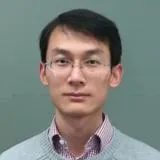
Dr. Haimei Helen Zhao is a Research Fellow and ICT Director at the School of Biomedical Engineering, University of Sydney. She holds a PhD from the Sydney AI Centre (2024) and an M.Eng. from Tsinghua University (2020). Her research focuses on AI-driven biomedical technologies, including generative AI, digital health diagnostics, and translational research. Current projects include SmartClot-AI, a blood coagulation testing platform, and generative AI models for stroke prediction. Education: PhD in Computer Science (University of Sydney, 2024), M.Eng. in Computer Science (Tsinghua University, 2020). Research interests span multimodal machine learning, biosensing, and low-cost diagnostic systems. Awards include the 2024 PERIscope Commercialisation Award and 2024 Faculty of Engineering Career Advancement Award. Leadership roles: ICT Director of School of Biomedical Engineering, interim Snow Manager of Ju-Snow Lab, and former DEI Committee Chair. Active in grant development and industry partnerships.
Professor Fabio Ramos is a Professor of Robotics and Machine Learning at the University of Sydney's School of Computer Science. He holds a PhD from the University of Sydney (2008) and has held postdoctoral fellowships with the Australian Research Council (2008–2010 and 2012–2014). His research focuses on statistical machine learning for data fusion in robotics, environmental monitoring, healthcare, and mining automation. He leads projects in autonomous systems, including robotic navigation, terrain modeling, and human-robot interaction. Educations: B.Sc. and M.Sc. in Mechatronics Engineering, University of Sao Paulo (2001, 2003) Ph.D. in Robotics and Machine Learning, University of Sydney (2008) Research Interests: Professor Ramos' work addresses the integration of sensor data into actionable insights for autonomous systems. Key areas include: Statistical machine learning for large-scale data fusion Occupancy mapping and environment perception Autonomous navigation and path planning Healthcare robotics for patient monitoring Robot perception in unstructured environments Simulation-to-reality transfer in robotics Publications & Trends: His recent work emphasizes real-time robotic systems, including UAV path planning, differentiable simulators, and robust policy learning. Notable contributions include probabilistic trajectory optimization and Bayesian methods for uncertainty quantification. Awards: Sydney Accelerator Fellowship (2017) Supervisor of the Year (2017) Best Paper Awards at Robotics Science and Systems (2017) and IROS (2005) Grants & Labs: He leads the Sydney Institute for Robotics and Intelligent Systems (SIRIS) and collaborates with the Centre for Translational Data Science. His current projects include: Modeling geothermal energy potentials via geophysical data fusion Mobile health (mHealth) systems for mental health monitoring Differentiable simulators for robotic cutting and manipulation Teams: His research group includes students like Ethan HIRSCHOWITZ (Intelligent Reward Design) and Kunal OSTWAL (Curriculum Learning). Collaborations span robotics, healthcare, and environmental science domains.
Leandro Di Bella is a Researcher affiliated with the Department of Electronics and Informatics at the Faculty of Engineering, Vrije Universiteit Brussel (VUB), Belgium. His doctoral research focuses on advanced computer vision techniques, particularly in Kalman filters, deep learning integration, and 3D object detection. He has contributed to innovative solutions for monocular vehicle pose estimation and multi-object tracking, emphasizing temporal consistency and real-time applications. Research interests prominently feature computer vision applications in autonomous systems, attention mechanisms in neural networks, and sensor fusion technologies. Recent work includes developing the DeepKalPose and LAM3D frameworks, addressing challenges in pose estimation and 3D detection through hybrid deep learning approaches. His publications demonstrate expertise in merging classical filtering methods (e.g., Kalman filters) with modern deep learning architectures. Peer review activities include roles at prominent events like the British Machine Vision Conference and IEEE International Conferences on Image Processing. Collaborations span international institutions, focusing on multimedia signal processing and AI-driven vision systems. His research bridges theoretical advancements with practical implementations in autonomous navigation and robotics.
Dr. Jack Parry is a Lecturer in Animation at Swinburne University of Technology, affiliated with the School of Social Sciences, Media, Film and Education and the Department of Film, Games and Animation. He holds a PhD in Animation from Deakin University and brings a unique interdisciplinary perspective combining engineering, philosophy, and art. His educational background includes: Doctor of Philosophy (Animation), Deakin University, 2018–2022 Advanced Diploma in Character Animation, Animation Mentor, USA, 2013–2014 Bachelor of Engineering (Electrical and Computer) Honours 1, University of Wollongong, 1990–1995 Jack Parry’s research is rooted in transcendental phenomenology, exploring how animation serves as a medium for visual inquiry and cognitive transformation. He investigates the lived experience of animation creation and viewing, often integrating virtual reality and hybrid media. His work spans cinema studies, philosophy of mind, and digital capability, with a focus on using animation to transcend conventional thinking. He is fluent in English, French, Spanish, Russian, and Italian. His recent publications reflect a strong trend in philosophical animation, AI-assisted pedagogy, and the sensory foundations of cinematic experience. Articles such as 'The Phenomenology of Animation' and 'Collaborative AI in animation pedagogy' demonstrate his commitment to bridging technology, education, and deep philosophical inquiry. Earlier technical work in speech coding reveals a strong foundation in engineering and signal processing. Jack has received numerous awards for his animated film 'Object of Life', including Best Animation at the Venice International Independent Film Festival and multiple international recognitions. He is a member of the Society for Animation Studies and the Australian Society for Continental Philosophy, and serves as a judge for the Flickerfest International Short Film Festival. He supervises HDR students, including a PhD project on the platypus in eco-critical animation, and is currently funded by a research contract with Broomhild A.I. on the project 'MORE THAN OPERA' (2025–2026). His teaching philosophy integrates phenomenological principles into animation practice, encouraging students to access the 'living energy' within hand-crafted frames. Jack Parry is actively contributing to interdisciplinary research at the intersection of art, science, and philosophy, with a strong presence in both academic and creative communities.
Dr. Alexander Achberger is a Research Associate at the Visualization Institute of the University of Stuttgart (VISUS) , affiliated with the Sedlmair Working Group . His research focuses on Human-Computer Interaction , Virtual Reality , and Haptics , particularly in Automotive Engineering contexts. He has published extensively on haptic feedback devices and immersive visualization tools since 2018. Current position: Research Associate at VISUS Affiliation: Sedlmair Working Group Location: Allmandring 19, Stuttgart, Germany (Room: 01.031) His work explores force feedback systems like PropellerHand , STROE , and STRIVE for automotive VR applications. He also investigates sitting posture recognition and motion guidance memorability in extended reality environments. Recent publications examine multi-type haptic feedback and upper limb representations in VR.
Prof. Dr. Sven Groß is a full professor at Harz University of Applied Sciences, where he has held the chair in transport management since 2005. He serves as coordinator for the master's program in 'Tourism and Destination Management' and previously led the bachelor's program in 'Tourism Management'. He is also deputy director of the Institute for Tourism Research (ITF) since 2022 and a fellow of the German Institute for Tourism Research (2023). Formerly, he was a member of the New Zealand Tourism Research Institute (2007–2023) and held advisory roles at inspektour GmbH (2014–2021) and the German Society for Tourism Research (2015–2018). Doctorate from TU Dresden (2004) Engineering degree from Technical University of Dortmund (1998) Studied tourism geography at University of Trier His research spans tourism and transport systems, including airline management , adventure tourism , and GPS-based mobility analysis . He has pioneered empirical studies on tourist movement patterns using GPS tracking and tablet interviews, particularly in the Harz Mountains. His work explores low-cost airline economics, sustainable tourism practices, and the integration of technology in destination management. Recent publications highlight deep-nature glamping trends and the impact of climate change on outdoor tourism. His 100+ publications include 18 specialist books and analyses of low-cost airline strategies, adventure tourism demographics, and mobility behavior. He contributes methodological innovations in combining GPS data with qualitative interviews. Scientific recognition includes: Fellow of German Institute for Tourism Research (2023) Editorial Board, Tourism Review Ad hoc reviewer for 20+ journals He advises on tourism projects in the Harz region and collaborates internationally on mobility studies. His lab work focuses on software tools like GimTo for tracking tourist behavior and optimizing infrastructure.
Dr.-Ing. Ilja Radusch is Director of the Smart Mobility business unit at Fraunhofer Institute FOKUS and Head of the Daimler Center for Automotive Information Technology Innovations (DCAITI) at Technische Universität Berlin. He received his doctorate in Engineering from TU Berlin in 2008. His research focuses on: Secure car-2-x communication systems Internet-based telematic services Simulation for cooperative vehicles Intelligent transportation networks V2X application development His publications (2011-2015) predominantly address vehicular communication, intelligent transportation systems, and automotive simulation, with recent emphasis on V2X applications, electric vehicle integration, and traffic optimization. He has supervised 28 graduate students on topics including vehicular networks, sensor systems, and traffic simulation. Major research projects include: Industry collaborations with Daimler and Deutsche Telekom BMBF-funded projects: simTD, AVM/eGrain EU projects: TEAM, DRIVE C2X, PRE-DRIVE C2X, e-Sense, BIONETS He leads the Smart Mobility research group at Fraunhofer FOKUS and directs DCAITI at TU Berlin, focusing on automotive IT innovations.
Professor Sara Wilkinson is a distinguished academic at the University of Technology Sydney, where she serves as Professor in the Faculty of Design and Architecture. With over 30 years of experience in the built environment sector, she is recognized as Australia's first female Professor of Property. Her academic leadership extends to her role as Director of ZEMCH (Zero Energy Mass Custom Housing), Australia, and Australian Hub Leader for the Carbon Leadership Forum. Professor Wilkinson's educational background includes: PhD in Building Adaptation from Deakin University (2011) Master of Social Science Research Methods from Sheffield Hallam University (2002) Master of Philosophy in Green Buildings from University of Salford (1996) BSc in Building Surveying from University of Greenwich (1987) Professor Wilkinson's research program sits at the dynamic intersection of sustainability, urban development, and climate change adaptation. Her transdisciplinary work focuses on green infrastructure, particularly green roofs and walls, and innovative building materials like hempcrete. She investigates how new technologies can deliver sustainable building outcomes while addressing urban resilience challenges. Her work spans from building-scale adaptation to city-wide green infrastructure implementation, with growing interest in the application of virtual reality and robotics for sustainable building assessment and maintenance. Her recent publications demonstrate a strong focus on decarbonizing the built environment through innovative materials like hempcrete and green infrastructure technologies. There's a clear trend toward addressing climate adaptation challenges, particularly for vulnerable populations such as older Australians in bushfire-prone areas. Her work increasingly integrates multi-disciplinary approaches, combining engineering, health, and social sciences to develop comprehensive solutions for sustainable urban development. Professor Wilkinson holds significant professional recognition: Fellow of the Royal Institution of Chartered Surveyors (since 1997) Chartered Building Surveyor with the Royal Institution of Chartered Surveyors (since 1987) Member of the Australian Property Institute (since 2010) As an academic supervisor, Professor Wilkinson has guided numerous postgraduate students through their research journeys. Her funded research portfolio is extensive, with projects supported by prestigious organizations including the Australian Research Council, City of Sydney, City of Melbourne, ARENA, RICS, and the Kamprad Family Foundation. Notable projects include the development of a wallbot for green wall inspection, virtual reality assessments of green infrastructure value, and ARC Linkage projects evaluating hempcrete performance. She serves on editorial boards for five international journals and contributes to policy development through her work with government bodies and industry organizations. Professor Wilkinson leads several research initiatives including the Sustainable Temporary Adaptive Reuse (STAR) Toolkit project and the Decarbonising Built Environments with Hempcrete and Green Wall Technology initiative. Her work with the UTS Centre for Autonomous Systems has resulted in innovative robotics applications for green infrastructure maintenance. She collaborates extensively with international partners across Sweden, Malaysia, and New Zealand, reflecting the global relevance of her research on sustainable urban development.
Professor Silvia Cirstea is a faculty member in the Computing and Information Science school at Anglia Ruskin University . Her cross-faculty research bridges computational modelling, artificial intelligence, and healthcare applications. Deputy Head of School, Advanced Computing Research Centre Member, Institution of Engineering and Technology (MIET) Fellow, Higher Education Academy (FHEA) Education: PhD in Imaging Technologies from De Montfort University BSc and MSc in Mathematics from University of Bucharest, Romania PGCE in Learning & Teaching in Higher Education from Anglia Ruskin University Research Interests focus on computational models and AI for medical and engineering systems, including: Explainable AI for health sciences Signal processing for multimodal data fusion Acoustic modelling and echolocation studies Navigation aids for visually impaired individuals Digital healthcare innovations Recent Publications span autonomous driving AI, forensic chemistry, auditory spatial perception, and skin lesion classification, demonstrating interdisciplinary applications of machine learning and computational physics. Research Grants include Innovate UK CyberASAP projects on AI security, EU FP7 funding for sound absorption technology, and ERDF Innovation Bridge grants.
Christine Mooshammer is a Professor at the Institute for German Language and Linguistics , Humboldt University of Berlin, since 2013. Her work focuses on phonetics and phonology, particularly how situational-functionality shapes phonetic form in spoken language. Key Research Areas: Speech production, register variation, phonetic convergence, gender-neutral suffix pronunciation, and listener perceptions of unknown languages. Projects: Co-Principal Investigator in Project C06 "Seemingly Free (Morpho)Phonetic Variation" of the CRC 1412. Creator of the Berlin Dialogue Corpus (BeDiaCo) and Corpus of Non-Native Addressee Register (CoNNAR). Recent Publications examine schwa realization in German inflections, acoustic measures of non-native registers, and cross-cultural register phenomena. She employs corpus-based and experimental methods to analyze phonetic variation across free conversation vs. task-based dialogues. Methodological Contributions include multi-speaker designs, within-subject variability analysis, and digital annotation frameworks for dialogue corpora. Her work bridges phonetics, sociolinguistics, and computational modeling. Labs/Teams: Central member of the Collaborative Research Center 1412 "Register: Language Users’ Knowledge of Situational-Functional Variation" and contributor to international phonetics conferences like ICPhS and Speech Science and Technology.
Luca Onnis is a Professor at the University of Oslo , affiliated with the Center for Multilingualism in Society across the Lifespan. His research focuses on the distributional hypothesis , exploring how statistical structures in language shape acquisition and processing across the lifespan, with applications to bilingualism, cognitive science, and computational modeling. Education: M.A. in Translation Studies, University of Bologna, Italy Ph.D. in Psychology, University of Warwick, UK His research integrates cognitive science , linguistics , and computational modeling to investigate: the role of statistical learning in language acquisition, caregiver speech adaptation, cross-linguistic differences, and social influences on language evolution. Recent studies examine syntactic priming, orthography-phonology consistency, and predictive mechanisms in language processing. His publications span journals like Cognitive Science , Bilingualism: Language and Cognition , and Cognition , reflecting interdisciplinary work with collaborations at MPI for Psycholinguistics , Cornell University , and Nanyang Technological University . Grants: European Research Council (ERC) U.S. National Institutes of Health (NIH) Singapore National Research Foundation He has founded and directed research laboratories, including the Centre for Second Language Research at the University of Hawaii and the Lifespan Research Centre at NTU Singapore. Currently, he serves as associate editor for the Journal of Cultural Cognitive Science .
Prof. Dr.-Ing. Seyed Eghbal Ghobadi is a Professor of Computer Vision and Machine Learning at the Technical University of Central Hesse (Technische Hochschule Mittelhessen), Department of Mathematics, Natural Sciences and Computer Science. He received his PhD in 2010 from the Center for Sensor Systems at the University of Siegen after studying Electrical Engineering at the Technical University of Braunschweig. Research Focus: Deep Learning for Computer Vision, Safe AI, Uncertainty Estimation, Cyber-Physical Systems, and Domain Shift Detection Key Projects: AI-supported highly automated weed control in grassland (KIhUG), AI Safeguarding for Stellantis/Opel Teaching: Courses on Deep Learning for Computer Vision, Pattern Recognition, Fundamentals of AI, and Embedded Systems His recent work explores predictive uncertainty quantification using Dirichlet networks, domain shift detection in cyber-physical systems, and real-time image segmentation with PID Net. He supervises theses on topics including signal denoising and embedded AI applications.
Dr. Zuo Zhang is a Research Fellow at King's College London's Social Genetic and Developmental Psychiatry Centre (SGDP Centre) within the Institute of Psychiatry, Psychology & Neuroscience, School of Mental Health & Psychological Sciences. Since joining King's in 2018, his work focuses on identifying eating disorder biomarkers and predicting disease risk through machine learning applied to neuroimaging data. Education: PhD in Computer Science and Technology, Tongji University, Shanghai His research centers on neurobiological risk factors for eating disorders and developing predictive models using multi-modality data. Expertise spans neuroimaging analysis, statistical modeling, and machine learning frameworks for psychiatric applications. He contributes to the Centre for Population Neuroscience and Precision Medicine (PONS) and previously worked on the completed ESTRA project investigating eating disorder etiology. Publication trends reveal intensive focus on AI-driven psychiatry, with recent work exploring brain-derived psychopathology dimensions, neural network modeling for personalized treatment, and multimodal data integration for early detection of mental illnesses. Key themes include transdiagnostic approaches, adolescent mental health, and computational biomarker discovery. Scientific Awards: No awards documented in source materials Dr. Zhang has no formal advisees listed in available records. His research is supported through institutional affiliations and project-based funding including the ESTRA initiative, which concluded its investigation into eating disorder mechanisms. He operates within the SGDP Centre's collaborative ecosystem, contributing to large-scale studies like the IMAGEN project while advancing machine learning applications for mental health stratification through PONS.
Kovács Viktor is an assistant lecturer in the Department of Automation and Applied Informatics at the Budapest University of Technology and Economics (BME). His office is located in building Q, room B222 on the Magyar tudósok körútja campus in Budapest. Research interests span computer vision and image processing with a strong emphasis on 3-D data analysis, head-mounted projection displays, and robust feature extraction from range images. He also contributes to process automation in pharmaceutical manufacturing and investigates communication-control co-design for connected vehicles in 5G networks. Across 15 recent publications (2012–2022) one observes a clear trajectory from fundamental computer-vision algorithms—edge detection, corner classification, plane segmentation—to applied engineering solutions such as real-time granulation monitoring and immersive 3-D display systems. Medical data analytics and diffusion MRI modeling further diversify his portfolio, illustrating a blend of theoretical depth and practical impact. Contact & Resources E-mail: Kovacs.Viktor@aut.bme.hu Phone: +36 (1) 463-1648 Profiles: BME Publication Registry , ResearcherID , Google Scholar
Philipp Krähenbühl serves as Associate Professor in the Department of Computer Science at the University of Texas at Austin, where he joined the faculty in 2016 as part of the university's Machine Perception Program expansion. His research bridges computer vision, machine learning, and computer graphics with significant contributions to deep learning methodologies. Academic background: Ph.D. in Computer Science, Stanford University Postdoctoral Research, UC Berkeley (2-year appointment) Dr. Krähenbühl's work centers on deep learning for visual understanding , with pioneering contributions in image segmentation , video analysis , and 3D scene reconstruction . Recent research extends into multimodal AI systems combining vision and language, autonomous driving technologies through traffic simulation, and bioinformatics applications for protein structure modeling. His methodology emphasizes efficient model design and leveraging large-scale data. Analysis of his publication trajectory reveals a strategic evolution from core computer vision problems toward interdisciplinary applications. Current work demonstrates strong convergence of vision-language models with autonomous systems, alongside unexpected cross-pollination into structural biology through protein modeling research. Award highlights: NIPS Outstanding Student Paper Award (2011) NSF CAREER Award (2016-17) Multiple Olympiad medals (International Informatics Silver 2005, Swiss Informatics/Mathematics 2004-2005) Research funding includes the NSF RI: SMALL grant for Recognizing objects in images and their properties over time (2020). While specific advisees aren't documented in source materials, he actively mentors graduate students within UT Austin's Computer Science department. His laboratory contributes to the university's Machine Perception Program through cutting-edge work in generative modeling and simulation frameworks. The research group maintains strong industry connections while pursuing fundamental advances in visual representation learning, with current projects focusing on robust autonomy systems and multimodal foundation models.