معرفی
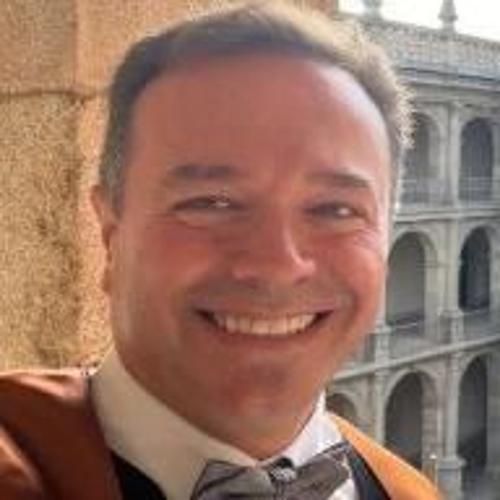
Professor Fabio Ramos is a Professor of Robotics and Machine Learning at the University of Sydney's School of Computer Science. He holds a PhD from the University of Sydney (2008) and has held postdoctoral fellowships with the Australian Research Council (2008–2010 and 2012–2014). His research focuses on statistical machine learning for data fusion in robotics, environmental monitoring, healthcare, and mining automation. He leads projects in autonomous systems, including robotic navigation, terrain modeling, and human-robot interaction.
Educations:
- B.Sc. and M.Sc. in Mechatronics Engineering, University of Sao Paulo (2001, 2003)
- Ph.D. in Robotics and Machine Learning, University of Sydney (2008)
Research Interests:
Professor Ramos' work addresses the integration of sensor data into actionable insights for autonomous systems. Key areas include:
- Statistical machine learning for large-scale data fusion
- Occupancy mapping and environment perception
- Autonomous navigation and path planning
- Healthcare robotics for patient monitoring
- Robot perception in unstructured environments
- Simulation-to-reality transfer in robotics
Publications & Trends:
His recent work emphasizes real-time robotic systems, including UAV path planning, differentiable simulators, and robust policy learning. Notable contributions include probabilistic trajectory optimization and Bayesian methods for uncertainty quantification.
Awards:
- Sydney Accelerator Fellowship (2017)
- Supervisor of the Year (2017)
- Best Paper Awards at Robotics Science and Systems (2017) and IROS (2005)
Grants & Labs:
He leads the Sydney Institute for Robotics and Intelligent Systems (SIRIS) and collaborates with the Centre for Translational Data Science. His current projects include:
- Modeling geothermal energy potentials via geophysical data fusion
- Mobile health (mHealth) systems for mental health monitoring
- Differentiable simulators for robotic cutting and manipulation
Teams:
His research group includes students like Ethan HIRSCHOWITZ (Intelligent Reward Design) and Kunal OSTWAL (Curriculum Learning). Collaborations span robotics, healthcare, and environmental science domains.