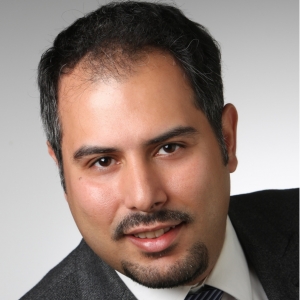
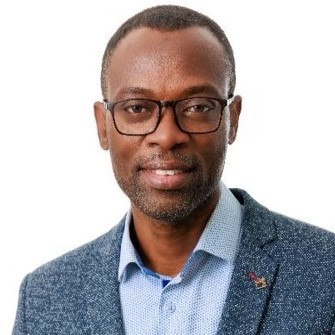
Robin Chhabra is an Associate Professor and Canada Research Chair, Tier 2 in Autonomous Space Robotics and Mechatronics at Carleton University's Department of Mechanical and Aerospace Engineering. He founded and directs the Autonomous Space Robotics and Mechatronics Lab (ASRoM-Lab). His academic journey includes a BASc from Sharif University of Technology, and MASc/PhD in Mechatronics and Space Robotics from the University of Toronto, with a postdoc at the University of Calgary focusing on Geometric Mechanics and Control. Research Interests: Robotics, Nonlinear Control, Multibody Systems, Lie Groupoids, Mechatronics, Multi-objective Optimization, and Hardware-in-the-loop Simulation. Applications include space debris removal, planetary rovers, and autonomous space systems. Key Achievements: Developed geometric reduction techniques for mechanical systems, contributed to space robotics missions (e.g., ExoMars), and holds a Canada Research Chair. His work bridges theoretical control systems with practical space applications. Advising & Grants: Seeks students with controls/robotics backgrounds for advanced research in space robotics. Prioritizes domestic applicants with nonlinear control expertise and international students with strong academic credentials. Students collaborate with leading space industries like MDA. Labs & Teams: Director of ASRoM-Lab, focusing on autonomous robotics for space exploration and mechatronics innovation.
Chris Joslin is a Professor at the School of Computer Science, Carleton University. His office is located in 4302 Canal Building, and he can be reached at Chris.Joslin@carleton.ca. He specializes in interdisciplinary research areas including computer graphics, medical imaging, virtual reality, computer vision, and human-computer interaction. His work bridges theoretical advancements with practical applications in animation, 3D modeling, and medical visualization. Research interests include developing novel techniques for 3D editing, medical image processing, and immersive virtual environments. Notable contributions include advancements in 3D Gaussian splatting, AI-driven MRI analysis, and robust sensor fusion for autonomous systems. His publications span from foundational studies on motion retargeting to applied work in procedural audio generation for soft-body simulations. Recent trends in his articles emphasize integration of deep learning with traditional computer vision tasks, optimization of medical imaging workflows, and enhancing accessibility in virtual reality systems. Despite prolific output, no scientific awards are explicitly mentioned in the provided texts. Advising and grant details remain unspecified, though his involvement in collaborative projects like VPARK and ISIS suggests engagement with interdisciplinary teams. His work is anchored at Carleton’s Herzberg Laboratories, a hub for advanced computational research.
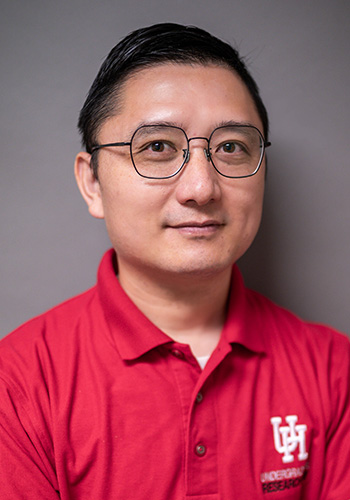
Dr. Jianfeng Zheng is an Assistant Professor in the Department of Electrical & Computer Engineering at the University of Houston, part of the College of Engineering. His research focuses on Magnetic Resonance (MR) Safety, antenna design for medical applications, neurostimulation systems, electromagnetic compatibility, and wireless power transfer in healthcare. He has received the NSF Career Award for his contributions to advancing medical device safety in MRI environments. Dr. Zheng's work emphasizes computational modeling and experimental validation of RF-induced heating risks in implantable medical devices (AIMDs) and orthopedic implants during MRI scans. He develops novel methods for predicting and mitigating thermal hazards, including machine learning-driven approaches like CNN-based prediction systems for RF exposure. His research also explores material solutions such as ferrite shielding and counterpoise designs to enhance device safety. Key areas: MRI safety protocols, electromagnetic modeling, AIMD validation strategies, and biomedical device innovation. Publications span over 50 peer-reviewed articles addressing critical challenges in medical device compatibility with MRI systems. His NSF Career Award supports projects integrating AI techniques to streamline safety evaluation workflows for next-generation medical implants. Dr. Zheng collaborates with industry partners to translate research into clinical applications, ensuring cutting-edge technologies meet rigorous safety standards.
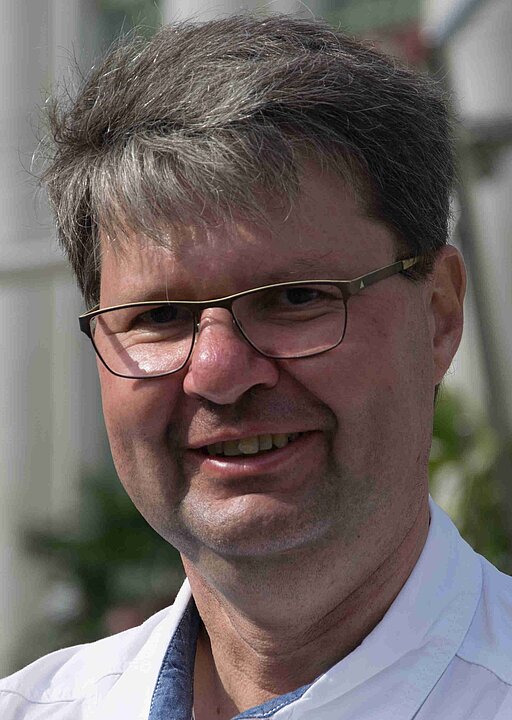
Prof. Werner Porod is a Professor in the Department of Theoretical Physics II at Julius-Maximilians-Universität Würzburg. His research focuses on extensions of the Standard Model, including composite Higgs models, supersymmetric scenarios, neutrino mass mechanisms, and astro particle physics. He is the developer of the SPheno program, a widely used tool for calculating supersymmetric spectra and decay patterns. Porod's work integrates quantum field theory, flavor physics, and dark matter phenomenology with applications to LHC and future collider experiments. He actively contributes to international initiatives like the Snowmass process and serves as spokesperson for the Graduiertenkolleg 2994 (GRK 2994) research training group. His educational responsibilities include teaching advanced topics in theoretical physics, differential equations, and quantum field theory. Porod collaborates internationally on projects such as the Linear Collider Facility (LCF) at CERN and the International Linear Collider (ILC), emphasizing precision measurements and BSM model testing. His research group explores cutting-edge topics like holographic gauge/gravity dualities, dimensional reduction of higher-dimensional theories, and machine learning applications for parameter space exploration. Key contributions include studies on scotogenic dark matter, electroweak spin-1 resonances, and split Next-to-Minimal Supersymmetric Standard Model (NMSSM) realizations. He emphasizes interdisciplinary approaches combining formal theory development with experimental data reinterpretation strategies to address fundamental questions in particle physics.
Hitesh Changlani is an Associate Professor in the Department of Physics at Florida State University, where he joined the faculty in 2018 after serving as an Assistant Professor from August 2018 to 2024. His academic journey includes postdoctoral fellowships at the Institute for Quantum Matter at Johns Hopkins University (2016-2018) and the Institute for Condensed Matter Theory at the University of Illinois at Urbana-Champaign (2013-2016). He received his Ph.D. in Physics from Cornell University in 2013 and earned his B.Tech. in Engineering Physics from the Indian Institute of Technology Bombay in 2007. Changlani's research focuses on theoretical and computational condensed matter physics, specializing in quantum many-body systems. His work spans several key areas including the study of quantum systems with strongly interacting particles, development of novel numerical algorithms for quantum many-body problems, multi-scale modeling of quantum matter, and investigation of frustrated magnets and Mott insulators. He has made significant contributions to understanding quantum spin liquids, particularly in pyrochlore systems like Ce2Zr2O7, and has developed advanced techniques such as density matrix downfolding for constructing effective Hamiltonians from first principles. Analysis of his recent publications (2023-2025) reveals a strong focus on quantum thermalization phenomena, quantum scars, and Hilbert space fragmentation in non-equilibrium quantum systems. His work bridges theoretical concepts with experimentally relevant materials, particularly in frustrated quantum magnetism. Changlani employs advanced numerical methods including tensor networks and quantum Monte Carlo to tackle challenging problems in strongly correlated electron systems, with recent emphasis on kinetic frustration in triangular lattice models and dipole-octupole physics in rare-earth pyrochlores. Changlani maintains active research collaborations and has developed computational approaches that connect ab initio calculations with low-energy model Hamiltonians. His research program addresses fundamental questions about quantum phases of matter, quantum dynamics, and the emergence of exotic quantum phenomena in correlated electron systems.
Wolfgang von der Linden is a full Professor at TU Graz, affiliated with the Institute of Theoretical Physics - Computational Physics. He holds the title of Univ.-Prof. and serves as Dean of Studies, with office hours on Tuesdays 11-12. His research spans quantum many-body systems, superconductivity under extreme conditions, Bayesian statistical methods, and interdisciplinary applications in biomedical engineering and materials science. Key research areas include: quantum transport using neural-network quantum states, high-pressure hydride superconductors (Superhydra project), Bayesian uncertainty quantification in medical diagnostics, and computational discovery of novel materials. He has pioneered methods such as the auxiliary master equation approach for nonequilibrium quantum systems and Bayesian encoder-decoder surrogates for stochastic modeling. His work bridges theoretical physics with practical applications, including aortic dissection detection via impedance cardiography and machine learning-driven material synthesis. Over 100 peer-reviewed articles demonstrate contributions to quantum physics, computational materials science, and statistical methodology. Active in academic governance, he maintains the research group 'Many-Body Physics' at TU Graz.
Rosalba Perna is a Professor of Physics and Astronomy at Stony Brook University since 2014, previously holding positions at the University of Colorado Boulder. She earned a Physics degree in Italy and a Ph.D. from Harvard University, followed by postdoctoral fellowships at Harvard and Princeton. Her research focuses on theoretical astrophysics, including high-energy phenomena like gamma-ray bursts, cosmological studies of black holes and dust, exoplanet magnetohydrodynamics, and dynamics of compact object mergers. She has supervised multiple postdoctoral researchers and teaches courses ranging from introductory astronomy to advanced topics like interstellar medium physics. Notably elected as an APS Fellow in 2014, her work bridges computational models with observational data to explore extreme astrophysical environments. Advising efforts include guiding postdocs through complex simulations of neutron star mergers and AGN dynamics, while her research group investigates gravitational lensing and hypervelocity star formation in galactic nuclei.
Keith Abrams is an Honorary Professor at the University of York's Centre for Health Economics and Partner/ Director at Visible Analytics. Previously, he held a Professorship in Medical Statistics at the University of Leicester, leading the Biostatistics Research Group. His work focuses on methodological advancements in Health Technology Assessment (HTA), including Bayesian statistical methods for clinical trials, evidence synthesis, natural history modeling for rare diseases, and analysis of large-scale electronic health records (EHR). He has extensive involvement with UK regulatory bodies like NICE (National Institute for Health and Care Excellence), serving on multiple committees including the Technology Appraisals Committee and Diagnostics Advisory Committee. His methodological contributions are supported by grants from ESRC, MRC, and industry partnerships. Research interests emphasize statistical innovations for HTA, particularly in oncology, rare diseases, and multimorbidity. He has authored/co-authored seminal books on meta-analysis, Bayesian approaches, and evidence synthesis in healthcare. Recent work includes evaluating surrogate endpoints in Alzheimer's disease and prostate cancer trials, analyzing pandemic impacts using EHR data, and developing natural history models for Duchenne Muscular Dystrophy (DMD). His cross-disciplinary collaborations bridge academia, industry, and policy, addressing evidence-based decision-making challenges in healthcare. Key accolades include NIHR Senior Investigator Emeritus status, Royal Statistical Society Fellowship, and Chartered Statistician designation. His research spans 20+ years, with over 200 peer-reviewed publications and methodological guidelines influencing international HTA practices.
Marco Gillies is a Professor of Computing at Goldsmiths, University of London. He co-directs the Social, Empathic and Embodied Virtual Reality (SeeVR) Lab and the MA/MSc Virtual and Augmented Reality program. Previously, he served as Academic Director for Distance Learning and the Teaching and Learning Innovation Centre. He co-founded the BSc Creative Computing degree, instrumental in establishing Goldsmiths' reputation in applying computing to creative sectors. His research focuses on VR/AI integration, movement-based interaction, and social aspects of immersive technologies. Education: PhD in Computer Science, University of Cambridge (2001) BA in Computer Science, University of Cambridge (1997) Research Interests: Gillies explores the intersection of AI/ML with virtual reality, emphasizing full-body interaction, social dynamics in immersive environments, and interdisciplinary applications in dance, medicine, and education. His work emphasizes human-centered approaches to machine learning and embodied interaction design. Key Projects: ESRC-funded study on children's embodiment in VR (2022) AHRC IIIE project on Sino-UK creative collaborations (2022) EPSRC 4i project on interactive ML for indie developers (2019–2021) Grants & Labs: Principal investigator on multiple grants, including ESRC and AHRC funding. Leads the SeeVR Lab, collaborating with fields like developmental psychology and social neuroscience.
Professor Sylvia Xueni Pan is a leading researcher in Virtual Reality at Goldsmiths, University of London, where she holds the position of Professor of Virtual Reality in the Department of Computing. She co-leads the Goldsmiths Computing MA/MSc in Virtual and Augmented Reality and directs the SeeVR Lab. With nearly 20 years of experience in VR research, she has developed a unique interdisciplinary profile spanning both VR technology and social neuroscience. Previously, she worked as a research associate at University College London (UCL) in both the Computer Science Department (2009-2013) and the Institute of Cognitive Neuroscience (2013-2015), where she maintains an honorary research fellowship. Professor Pan received her PhD in Virtual Reality from UCL in 2009, fully funded by EPSRC and the Rabin Ezra Scholarship, under the supervision of Professor Mel Slater. She earned an MSc in Vision, Imaging, and Virtual Environments (VIVE) from UCL in 2005, and completed her BEng in Computer Science at Beihang University in Beijing, China in 2004. She attended Beijing Jingshan School and Beijing No.4 High School before moving to London in 2004. Professor Pan's research focuses on the intersection of Virtual Reality technology and social neuroscience, with particular emphasis on how immersive environments can be used to study and influence human behavior. Her work spans multiple application domains including cognitive neuroscience, social interaction studies, professional training, education, and psychotherapy. She has pioneered research in areas such as virtual character animation (particularly facial expressions and motion capture), photogrammetry-built virtual environments, and the application of VR for medical ethics training and mental health interventions. Her research on how people interact with virtual humans has been featured in prominent media outlets including BBC Horizon and New Scientist magazine. Analysis of Professor Pan's recent publications reveals a consistent focus on applying VR to understand and improve human social interaction across diverse contexts. Her work demonstrates a strong interdisciplinary approach, bridging computer science, psychology, neuroscience, and clinical practice. Recent research has expanded into novel applications including music performance anxiety, schizophrenia stigma reduction, smoking cessation, climate change education, and multisensory experiences like bubble tea drinking. Her publications consistently explore how different aspects of VR design (avatar appearance, haptic feedback, environmental fidelity) influence user experience, behavior, and physiological responses. Professor Pan has secured significant research funding from prestigious organizations including: Leverhulme Trust (for projects on moral judgment in VR and ethical challenges in professional practice) Wellcome Trust (in collaboration with HENCEL for VR ethics projects) European Research Council (ERC) for the INTERACT project studying subconscious copying in VR UCL Laws and UCL Computer Science (for collaborative projects) As an educator, Professor Pan has developed and taught several influential courses at Goldsmiths including 3D Virtual Environments and Animation, Data Visualisation, Audio-Visual Computing, and Perception and Multimedia Computing. She has also created a highly successful Coursera VR Specialisation with over 100,000 registered learners internationally. Her supervision focuses on the application of Immersive Virtual Reality in cognitive neuroscience, social interaction, training, education, and psychotherapy. Professor Pan leads the SeeVR Lab at Goldsmiths, which focuses on understanding how people see and interact in virtual environments. The lab brings together researchers from computer science, psychology, and neuroscience to develop and study novel VR applications. Current research directions include exploring multisensory VR experiences, developing VR for mental health interventions, and investigating how digital twins can enhance social interaction in location-based VR settings.
Raphael Marschall is a planetary physicist and post-doctoral researcher at the Laboratoire J.-L. Lagrange of the Observatoire de la Côte d’Azur (Nice, France). Previously, he worked at the Southwest Research Institute (USA) and the International Space Science Institute (Switzerland), completing his PhD in Planetary Science at the University of Bern. His research focuses on small Solar System bodies, including comets and asteroids, with a particular emphasis on understanding their evolution and formation through analysis of spacecraft data from missions like Rosetta and Lucy. Education : PhD in Planetary Science, University of Bern (2017) Research Interests : Cometary and asteroidal activity Protoplanetary disk evolution Planetesimal formation mechanisms Collisional dynamics of minor bodies His work integrates observational data with advanced modeling to explore how small bodies preserve clues about the early Solar System. Recent projects include studying comet 67P/Churyumov-Gerasimenko’s coma and proposing the ORIGO mission concept to investigate primordial planetesimals. Publications : Recent work spans cometary composition analysis, protoplanetary disk modeling, and mission concepts. Key themes include refractory-to-ice ratios in comets, inflationary disk phases, and collisional strength of Jupiter Trojans. These studies contribute to understanding how planetesimals formed and evolved in the early Solar System. Grants & Labs : Involved in interdisciplinary collaborations, including ESA mission proposals like ORIGO. No specific grants or lab affiliations listed in current texts.
Dr. Pierre M. Larochelle, P.E. serves as Department Head and Professor of Mechanical Engineering at the South Dakota School of Mines & Technology, where he leads the RObotics and Computational Kinematics INnovation (ROCKIN) Laboratory. He has extensive experience in robotics, kinematics, and mechanical system design, with over 100 publications and three US patents to his name. Dr. Larochelle earned his educational degrees from the University of California system: B.S. from University of California-San Diego M.S. from University of California-Irvine Ph.D. from University of California-Irvine His research focuses on spatial, spherical, and planar kinematics for the design of complex robotic mechanical systems. The ROCKIN Lab, which he directs, is dedicated to developing novel complex robotic mechanical systems that generate spatial motion and force transmission. His work spans several key areas including robotics, computational kinematics, mechanism design, and additive manufacturing. Dr. Larochelle is particularly known for his expertise in motion generation, reconfigurable mechanisms, and enabling creativity and innovation in engineering design. His recent publications demonstrate a strong focus on spatial and spherical kinematics visualization, robotic walking machines, and advanced manufacturing techniques. The research shows progression from fundamental kinematic theory to practical applications in industrial automation, space exploration, and educational tools. Dr. Larochelle has received numerous scientific awards and recognitions throughout his career, including: ASME Fellow (2008) ASME Distinguished Service Award (2023) CARA Philanthropy Award (2025) NSLS Impact Leader Award (2022) Florida Tech Outstanding Professor Award (2014) As an educator, Dr. Larochelle has advised numerous graduate and undergraduate students. His doctoral students include Ismayuzri Ishak and Mark Moffett, who won NSF/ASME Design Essay Competitions in 2017 and 2018. He has secured multiple grants to support his research and educational initiatives, particularly in robotics, kinematics, and innovative mechanical design. Dr. Larochelle currently serves as the Chair of the ASME Committee for Engineering Education (2024-27) and as an ABET accreditation review team chair. Dr. Larochelle leads the ROCKIN Lab, which is equipped with advanced robotic systems including the Motoman SV3 industrial robot, Yaskawa Motoman HC10 human-collaborative robot, and various research platforms for mobile robotics and motion generation. The lab focuses on developing cutting-edge transformative technologies for industrial, manufacturing, and consumer applications.
Ding Zhang is Professor of Operations Management in the School of Business at SUNY Oswego. His research focuses on supply chain network modeling, economic equilibrium analysis, and operational optimization across diverse application domains including public health emergencies and sustainable operations. Key research areas include supply chain competition models, crisis resource allocation mechanisms, energy efficiency optimization, and quantum material applications. His publications demonstrate strong interdisciplinary integration spanning operations research, economics, materials science, and public health. Significant recognitions include the Chancellor's Award for Excellence in Scholarship (2019), Best Paper Prize from IMA Journal of Management Mathematics (2016), and a $900,000 NSF China research grant (2004). Chancellor's Award for Excellence (2019) Best Paper Prize, IMA Journal (2016) NSF Major Research Project Award (2004) Provost's Award for Scholarly Activity
Mark G. Alford is a Professor of Physics at Washington University in St. Louis, specializing in nuclear astrophysics, quark matter, and quantum chromodynamics. He holds a PhD from Harvard University (1995), an AM from Harvard (1992), and a BA from Oxford University (Exeter College). His research focuses on ultra-high density matter in neutron stars, including quark-gluon plasma phases and color superconductivity, with applications to neutron star mergers and multi-messenger astrophysics. Education: PhD in Physics, Harvard University (1995) AM in Physics, Harvard University (1992) BA in Physics, Oxford University (Exeter College) Research interests include neutron star structure, dense matter equation of state modeling (via the MUSES engine), neutrino processes in mergers, and phase transitions in quark matter. His work bridges nuclear physics, particle physics, and astrophysics, with a focus on computational tools for simulating compact objects. Recent articles explore neutron star mergers' dynamics, magnetic field effects on Urca processes, and hybrid star models constrained by NICER observations. Collaborations involve multi-messenger data integration and chiral effective field theory applications. Teaching includes courses like 'Physics of Sustainable Energy' and 'Physics and Society.'
Dr. Martin Agelin-Chaab holds the dual role of Department Chair and Professor in the Department of Mechanical and Manufacturing Engineering at Ontario Tech University's Faculty of Engineering and Applied Science. His expertise spans aerodynamics, thermal systems, and sustainable energy. He earned his PhD in Mechanical Engineering from the University of Manitoba, with prior degrees from institutions in Canada and Ghana. His research focuses on bluff body aerodynamics, turbulent flows, vehicle and battery thermal management, and sustainable energy systems. Notable projects include aero-thermal testing of race cars and thermal analysis of lithium-ion batteries. He has authored over 20 peer-reviewed publications in journals like Applied Energy and the ASME Journal of Fluids Engineering. Awards: Best Instructor Award (2013), NSERC Postgraduate Scholarship (2008-2010), and multiple fellowships from the University of Manitoba. Teaching: Courses include Fluid Mechanics, Energy Systems, and Dynamics. Dr. Agelin-Chaab's work bridges theoretical and experimental approaches, with applications in automotive engineering and renewable energy integration. His lab (AAER) explores cutting-edge solutions for thermal and aerodynamic challenges in modern systems.