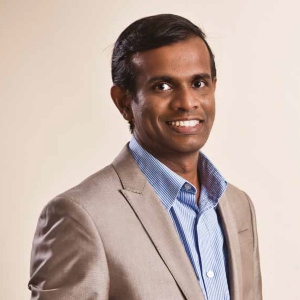
Prof. Ribana Roscher is a leading researcher at Forschungszentrum Jülich's Institute of Bio- and Geosciences (IBG) , specifically within the Plant Sciences (IBG-2) department. Her work bridges plant sciences and data science , focusing on sustainable agriculture and bioeconomy solutions. Expertise: Data Science, Machine Learning, Biology, Plant Research, Bioeconomy Contact: Building 06.2 / Room 305, Forschungszentrum Jülich GmbH, Wilhelm-Johnen-Straße, 52428 Jülich, Germany Research Focus: Roscher's group develops data-driven models for analyzing plant structure and processes. Key areas include: Plant phenotyping Plant-environment interaction analysis Technologies for alternative biomass utilization Integration of molecular, physiological, and ecological approaches Her research emphasizes advanced machine learning methods to address field condition challenges, such as variable environmental factors and complex data structures. Current projects explore: Uncertainty quantification in agricultural decision-making Satellite image editing for climate-conditional analysis Explainable AI for harvest-readiness prediction Core-set selection for efficient land cover segmentation FAIR data principles in environmental risk mapping These methodologies are applied to problems like crop yield prediction , ocean eddy detection , and climate adaptation studies , supporting resource efficiency and climate-resilient agriculture.
Beverly Goodman-Tchernov is an Adjunct Assistant Professor at the Faculty of Earth, Environment & Society at McMaster University. Her research integrates geoarchaeology, marine geology, and coastal geomorphology to study past environmental changes, disaster impacts, and human interactions with coastal systems. Research Themes : Tsunami deposits, sea-level reconstructions, sedimentology, environmental archaeology, paleoclimate proxies Key Regions : Eastern Mediterranean, Red Sea, South Pacific, Anatolia, Maya coast Her recent publications (2022-2024) focus on: Geochemical analysis of anthropogenic harbor development Foraminifera as pollution indicators Tsunami modeling in low-risk regions Multi-proxy sediment studies for disaster history Interdisciplinary approaches linking geology and archaeology
Ender Peker is an Honorary Research Fellow at the British Institute at Ankara and holds a faculty position in the Department of City and Regional Planning at Middle East Technical University (METU) . With a PhD in Real Estate and Planning from the University of Reading (2016), he specializes in climate responsive urbanism , focusing on integrating technical and social knowledge for sustainable urban development. PhD: University of Reading, UK (2016) MSc: Urban Design, METU (2010) BSc: City and Regional Planning, METU (2007) BSc: Planning and Landscape, University of Manchester (visiting, 2005–2006) His research interests span climate responsive design , thermal comfort , participatory planning , and water management . He explores socio-technical dynamics in urban climate action, campus open space impacts on learning, and governance frameworks for resilient cities. A key focus area is urban water systems , particularly through projects like Water in Istanbul: Rising to the Challenge? and Fragile Landscapes: Sustainable Water Management on the Konya Plain . His work bridges historical infrastructure analysis with modern climate adaptation needs. Visiting Fellowship, Leibniz Institute (2019) Mercator-IPC Fellowship (2018) 3 Minutes Thesis Competition Finalist, University of Reading (2016) AESOP Excellence in Teaching Award (2012) He has led grants including Rainwater Harvesting for Climate Change Adaptation (UK International Development Program) and Water in Istanbul: Rising to the Challenge? (British Academy), emphasizing actionable knowledge for municipalities.
Prof. Mark Montgomery is a Professor specializing in spatial demography and environmental exposure assessment, with significant contributions to understanding population dynamics in relation to urbanization and natural hazards. His interdisciplinary work bridges geography, environmental science, and demographic research. His core research interests include: Demography and population dynamics Spatial analysis of urban and environmental systems Disaster risk assessment and infrastructure vulnerability Global urbanization metrics and remote sensing applications Methodological innovation in spatial demography Recent publications demonstrate a consistent focus on real-world applications, particularly examining flood exposure in India, global urbanization measurement challenges, and the evolution of spatial demography as a field. His work emphasizes methodological rigor and cross-disciplinary collaboration. Collaborations span institutions including The Pennsylvania State University and international research teams in public health and geography, reflecting his global engagement in demographic and environmental research.
Dr. Julia Meister is a Junior Professor for Geoarchaeology and Quaternary Research at the University of Würzburg , affiliated with the Institute of Geography and Geology . She is currently on leave (10/2024–09/2025) while holding an Acting Chair at the University of Bamberg. Her research integrates human-environment relations , paleoenvironmental reconstruction , and geomorphological analysis to study ancient water management systems, agricultural strategies, and cultural landscapes across the Mediterranean , Nile Delta , Peruvian Andes , and Southern Asia . Research Themes : Geoarchaeology of sacred landscapes Phytolith-based environmental proxies Terrace agriculture in drylands Climate-human interactions in antiquity Multi-hazard risk assessment Publication Trends (15 most recent): Focus on integrating geoarchaeological methods (e.g., ERT, drone LiDAR, phytolith analysis) with human-environment systems across Egypt, the Andes, and the Mediterranean. Key subfields include ancient water management , pedo-geomorphological land use , cultural soil erosion , and remote sensing applications in archaeological contexts. Scientific Awards : 2023 Wissenschaftspreis für Physische Geographie (Prof. Dr. Frithjof Voss-Stiftung) 2022 Postdoc-Preis der Deutschen Gesellschaft für Geomorphologie (DGGM) 2017 Dissertationspreis (Freie Universität Berlin) 2014 Young Scientist Award (3rd International Landscape Archaeology Conference, Rome) Grants & Collaborations : Leads projects funded by the German Research Foundation (ME 5450/4-3), Free State of Bavaria (ERDF), and Humboldt Foundation . Collaborates with institutions including the Deutsches Archäologisches Institut , University of Kashmir , and University of Bonn . Her Phytolith Laboratory at Würzburg advances microfossil analysis for reconstructing ancient ecosystems, and she co-organizes international workshops like Geoarchaeology of the Nile Delta (2019).
Dr. Runar Nygaard serves as the Director of the Mewbourne School of Petroleum and Geological Engineering and holds the Eberly Family Chair as Professor of Petroleum Engineering at the University of Oklahoma. Originally from Norway, he earned his doctoral degree in Geomechanics from the University of Oslo in 2004 after completing undergraduate and master's studies in Geology and Geotechnics at the same institution. His career spans industry roles in oil and gas and management consulting at McKinsey & Company before transitioning to academia at the University of Calgary, Missouri University of Science and Technology, and Oklahoma State University. His educational background includes: Ph.D. in Geomechanics, University of Oslo (2004) M.Sc. in Geotechnics, University of Oslo (1996) B.Sc. in Geology, University of Oslo (1995) Dr. Nygaard's research program centers on well construction safety and efficiency across energy applications. His work integrates geomechanics, drilling engineering, and well design to address technical, economic, and environmental challenges in oil and gas, geothermal energy development, and CO2 storage projects. Current research focuses on drilling efficiency in hard rock for geothermal systems, downhole sensor deployment for integrity monitoring, and plug-and-abandonment methodologies for offshore wells. His interdisciplinary approach bridges petroleum engineering fundamentals with emerging energy transition technologies. Analysis of his recent publications reveals a strategic pivot toward sustainable energy applications, particularly the repurposing of hydrocarbon infrastructure for geothermal district heating in Oklahoma. His work demonstrates increasing integration of machine learning for real-time drilling optimization and advanced geomechanical modeling for CO2 storage integrity assurance. The publication portfolio shows strong emphasis on practical field applications with immediate industry relevance across sedimentary basin energy systems. As Director of the Mewbourne School, Dr. Nygaard oversees academic programs, industry partnerships, and research initiatives including the Industry Advisory Board and technical seminar series. His leadership connects students with industry professionals through programs like 'Day in the Life of a Driller' and the MPGE Link Tree digital platform. Current projects address critical energy transition challenges through collaborations with Oklahoma's energy sector on geothermal repurposing and well integrity monitoring.
Maria Koliou is an Associate Professor in the Zachry Department of Civil & Environmental Engineering at Texas A&M University. Her research focuses on multi-hazard performance-based design, engineering risk analysis, and post-disaster system functionality to enhance community resilience. She specializes in structural dynamics, collapse assessment, and experimental methods in earthquake engineering, with a particular emphasis on sustainable structural systems and timber structures. Her work integrates economic and social aspects into hazard-resistant design frameworks, aiming to develop resilient infrastructure solutions against natural and man-made hazards. She leads the Koliou Research Group and contributes to the Texas A&M GAANN program in infrastructure resilience through advanced construction methods.
Prof. Dr. Mariele Evers is a Professor of Geography specializing in Ecohydrology and Water Resources Management at the University of Bonn, where she also holds the UNESCO Chair in Human Water Systems since 2021. She previously served as Managing Director of the Geographical Institute of the University of Bonn (2021-2023) and as Vice Dean for Teaching and Studies at the Faculty of Mathematics and Natural Sciences (2016-2018). Her educational background includes studies in Geography at the Universities of Münster, Bonn, and Montpellier (France), culminating in a PhD from the University of Hannover in 2008 on 'Decision Support Systems for Integrated River Basin Management' under the supervision of Prof. Dr. Christina von Haaren and Prof. Dr. Michael Abbott/TU Delft. Prof. Evers' research focuses on the complex interactions between humans and water systems, with particular emphasis on ecohydrology, flood risk management, climate change impacts on water resources, and transdisciplinary approaches to water governance. Her work spans multiple continents including Europe, Africa, and Asia, with significant projects in Ghana, Benin, Togo, Myanmar, and Tanzania. She employs participatory methods, collaborative modeling, and multi-criteria decision analysis to address water-related challenges, particularly in data-scarce environments. Her approach consistently integrates social and hydrological dimensions to develop practical solutions for sustainable water management. Analysis of her recent publications (2022-2025) reveals a strong focus on transboundary water management in West Africa, human-water system interactions, flood risk assessment methodologies, and climate change adaptation strategies. Her work consistently integrates social and hydrological dimensions, emphasizing participatory approaches and stakeholder engagement in water management decision-making processes. The research demonstrates methodological innovation through the development of pluralistic water research concepts that acknowledge multiple perspectives in human-water systems. Professor of the Year Award 2018 (3rd place in Natural Sciences/Medicine category) Teaching Award for outstanding professorial teaching at the University of Bonn 2015 Teaching Award of Leuphana University Lüneburg 2010 Prof. Evers leads an active research group with numerous ongoing projects including Co-HYDIM-SA (Co-Design of a hydrometeorological information system for sustainable water resources management in southern Africa), MisKaRe (Miscanthus in cascade use for flood risk reduction), and ecosystem services assessment of the Emscher floodplains. She has successfully secured funding from multiple sources including BMBF, DAAD, and ERDF. Her team collaborates extensively with international partners through the Bonn Water Network and UNESCO frameworks. She also serves as International Advisor to the National Water Resource Council of Myanmar and advises various German federal ministries on water-related issues. She leads the Ecohydrology and Water Resources Management Working Group at the University of Bonn, which is part of the Bonn Water Network. Her team conducts research on complex human-water interactions, natural hazards and risks, and water in global change contexts. The working group is actively involved in the UNESCO Chair for Human-Water Systems, which aims to advance research and education on the complex interactions between human societies and water systems worldwide.
Dr. Mohamed Al-Hussein is a Professor and NSERC Industrial Research Chair in the Industrialization of Building Construction at the University of Alberta’s Department of Civil and Environmental Engineering. His work focuses on advancing modular and offsite construction technologies through automation, lean principles, and Building Information Modelling (BIM). PhD, Construction Engineering & Management, Concordia University (1999) MASc, Construction Engineering and Management, Concordia University (1995) MSc, Civil Engineering, University of Architecture & Civil Engineering, Bulgaria (1988) BSc, Civil Engineering, University of Architecture & Civil Engineering, Bulgaria (1983) Dr. Al-Hussein’s research spans five key domains: Modular Construction: Pioneering high-efficiency offsite building systems, including rapid assembly of student dorms and mid-rise residential buildings. BIM & Digitalization: Developing 3D/4D modeling frameworks, automated design systems, and digital twin applications for construction optimization. Environmental Sustainability: Quantifying CO2 emissions, exploring nano energy storage, and advancing solar PV integration in residential construction. Urban Planning: Specializing in age-restricted community design, municipal infrastructure maintenance, and housing affordability analysis related to paving standards. Construction Safety: Applying ergonomic risk assessment tools and virtual reality to enhance worker safety and reduce construction-related hazards. His 400+ peer-reviewed publications reflect cutting-edge applications of AI, deep learning, and simulation across construction processes. Recent work explores metaverse integration, blockchain collaboration tools, and advanced crane operation optimization using reinforcement learning. As Editor-in-Chief of the International Journal of Industrialized Construction , Dr. Al-Hussein remains a global authority in this field. He has developed industry-transforming technologies like the Quikmod-2 modular lift frame and PCL lift frame project , with real-world implementations ranging from Shell Scotford complex equipment replacement to CBC News and Forbes featured projects.
Dr. John Hillier is a Professor in Natural Hazard Risk at Loughborough University, holding academic roles since 2010, including Lecturer, Senior Lecturer, and Reader. His professional affiliations include editorial roles for EGU's Geoscience Communication and Heliyon (Elsevier). He specializes in natural hazard risk assessment, GIS applications, climate change impacts, and science communication. Research focuses on compound hazards (e.g., flood-wind co-occurrence), catastrophe modeling, and disaster risk finance. His work bridges academia with industry, particularly through NERC-funded projects and collaborations with insurers like Zurich. Key outputs include the Co-RISK tool for university-industry hazard mitigation projects and open-source R code frameworks for financial risk evaluation. His articles highlight trends in jet stream-driven extreme weather, permafrost degradation impacts on landslides, and AI applications in risk assessment. Awards include the 2017 Loughborough University Research Informed Teaching Award and 2012 Higher Education Academy Fellowship. He has advised on disaster risk finance in Indonesia and pioneered outreach through Nuffield STEM programs. Current projects emphasize climate gentrification and integrating AI into hazard modeling.
Dr. Robert Thomas is a Lecturer in Geomorphology and Flood Risk within the Energy and Environment Institute at the University of Hull. He holds a BSc from the University of Nottingham and a PhD from the University of Leeds, focusing on sand-bedded braided rivers. His research integrates remote sensing, field observations, and numerical modeling to study fluvial systems, flood risk mitigation, and ecological resilience. He currently leads projects like the IMMERSE estuary management initiative and the Flood Innovation Centre, while co-leading sensor array development for sustainable drainage systems. Dr. Thomas teaches physical sciences in the MSc Flood Risk Management program and has contributed to high-impact studies on hedgerow mapping, eel passage optimization, and leaky dam efficacy. He has secured over £900k in grant funding, including EU Interreg and NERC projects. His work bridges environmental engineering, hydrology, and ecology, emphasizing practical solutions for climate resilience and biodiversity conservation. Notable projects include leadership roles in the Ark National Flood Resilience Centre and the EU-funded IMMERSE project. His research also explores the integration of deep learning for landscape analysis and the design of sustainable infrastructure to address anthropogenic barriers for aquatic species.
Peter Wilkinson is the Royal Academy of Engineering Visiting Professor in Fire Safety Design at the School of Architecture, Building and Civil Engineering, Loughborough University. He focuses on integrating fire safety expertise into architectural and built-environment curricula. With nearly 30 years of experience, he is a Chartered Engineer, Chartered Scientist, and Registered Fire Risk Assessor. He founded Pyrology Limited in 2012, a consultancy specializing in fire engineering, risk assessments, and expert witness services. He co-leads the CROSS scheme, a confidential safety reporting initiative expanded to include fire safety, and serves as a Designated Person for anonymizing reports. He chairs multiple BSI technical committees, including FSH/024 (Fire Safety Engineering) and FSH/009 (Fire Terminology), and leads revisions to fire safety vocabulary standards (BS4422). Academically, he holds a BEng (Civil Engineering, Loughborough, 1995), MSc (Fire and Explosion, Leeds, 2003), and an EngD (Resilient Fire Engineering Design, Loughborough, 2013). His professional honors include Honorary Fellowships from the Institution of Structural Engineers and multiple memberships in fire engineering and technology societies. His research emphasizes resilient building design, structural fire safety, fire compartmentation, and evacuation strategies. Notable contributions include advancing BS 7974 standards, BIM-driven fire safety, and probabilistic modeling. He advocates for global fire safety education and chairs Engineering Council initiatives to standardize professional competency for building safety engineers under the Building Safety Act. Awards include Fellowship from the Institution of Fire Engineers and recognition for his role in shaping fire engineering practices. His voluntary roles include IFE International President (2022/23) and trustee roles, highlighting his industry leadership. He collaborates across academia and industry to enhance fire safety through standards, education, and innovative practices.
Khalid Moinuddin is a Professor and Executive Director at Victoria University's Institute for Sustainable Industries and Liveable Cities (ISILC). He leads the Fire Research Group, focusing on computational and experimental studies in combustion, fire dynamics, and fire risk analysis. His research includes developing physics-based wildfire models and naval fire safety systems, generating over $1.4M in grants. He holds a PhD from the University of Melbourne (2004) and a Graduate Diploma in Building Fire Safety from Victoria University (2007). Education: PhD, The University of Melbourne, 2004 Graduate Diploma in Building Fire Safety and Risk Engineering, Victoria University, 2007 Bachelor of Engineering (Mechanical), National University of Science and Technology, Pakistan, 1996 Bachelor of Science, University of Chittagong, Bangladesh, 1991 Research Interests: Wildland fire modelling, enclosure fire dynamics, fire suppression systems, pyrolysis modelling, and naval fire safety engineering. He has pioneered two major research streams: wildfire models ($1.4M grants) and fire safety in naval applications ($360K grants). Grants & Funding: 2024: Physics-based modelling of field-scale junction fire ($105K) 2023: ABCB Cavity Barrier Literature Review (undisclosed) 2021: Discovery Projects on extreme fires and gravity currents ($11K total) Advising & Teaching: Supervised 7 completed PhDs, 1 Master’s, and currently oversees 4 PhD students. Taught courses like Fire Safety Engineering Applications and Fluid Dynamics. Modernized fire safety curricula to align with professional certifications. Labs & Teams: Part of ISILC’s Fire Research Group, collaborating with institutions like the Defence Science and Technology Group and BAE Systems. Research focuses on firebrand transport, water mist suppression, and fire spread prediction.
Holly Jarman is an Associate Professor in Health Management and Policy at the University of Michigan School of Public Health, with a secondary appointment as Associate Professor of Global Public Health. She holds affiliations with the Weiser Center for Europe and Eurasia. Her expertise lies in political determinants of health, focusing on how governance, trade policies, and international agreements shape health outcomes. Jarman earned her PhD in Political Science from the London School of Economics (2009), alongside an MRes (2006) and BA Honors (2002) in British Politics and Legal Studies from the University of Hull. Her research investigates trade policy’s impact on health systems, EU health governance, and Brexit’s consequences for UK healthcare. Notable publications include "The Politics of Trade and Tobacco Control" (2015) and analyses of transatlantic trade agreements. She teaches courses on public health policy, qualitative methods, and health systems research, emphasizing interdisciplinary approaches to policy analysis. Jarman’s work bridges political science and public health, addressing systemic challenges like vaccine hesitancy, pandemic preparedness, and global health equity. Her current projects explore post-Brexit health systems, regulatory frameworks for emerging health technologies, and comparative health policy dynamics in high-income nations. Media engagements include CNN discussions on U.S. pandemic response failures and Brexit’s health implications. Jarman advises policymakers on trade-related health risks and advocates for transparent governance models to strengthen health systems globally.
Dr. Kaushal Keraminiyage is a Reader in Quantity Surveying at the University of Salford with over 15 years of academic experience across the UK and Sri Lanka. He specializes in disaster risk management, urban resilience planning, and post-disaster reconstruction. Active in competitive research funding, he has secured over £600,000 in grants, leading projects like RECADOS-TM (Erasmus+ funded) and RenoZEB (Horizon 2020). His work emphasizes resettlement integration, risk assessment methodologies, and collaborative stakeholder frameworks. Research interests include disaster-induced relocation dynamics, complexity in project management, and disaster-resilient infrastructure. He has published extensively in journals like International Journal of Strategic Property Management and Disaster Resilience in the Built Environment , with a focus on community engagement and policy analysis. Dr. Keraminiyage currently supervises PhD students and conducts doctoral assessments, while contributing to international conferences and guest lectures globally. Notable projects include the 'Host and resettled community integration in flood-affected areas' (Sri Lanka, 2016) and CADRE (EU-funded disaster resilience education initiative). He is also affiliated with the University of Salford's THINKlab, a research center addressing resilience and smart cities. His educational contributions include curriculum development for disaster management and professional practice in construction education.