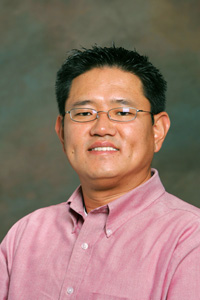
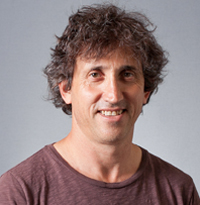
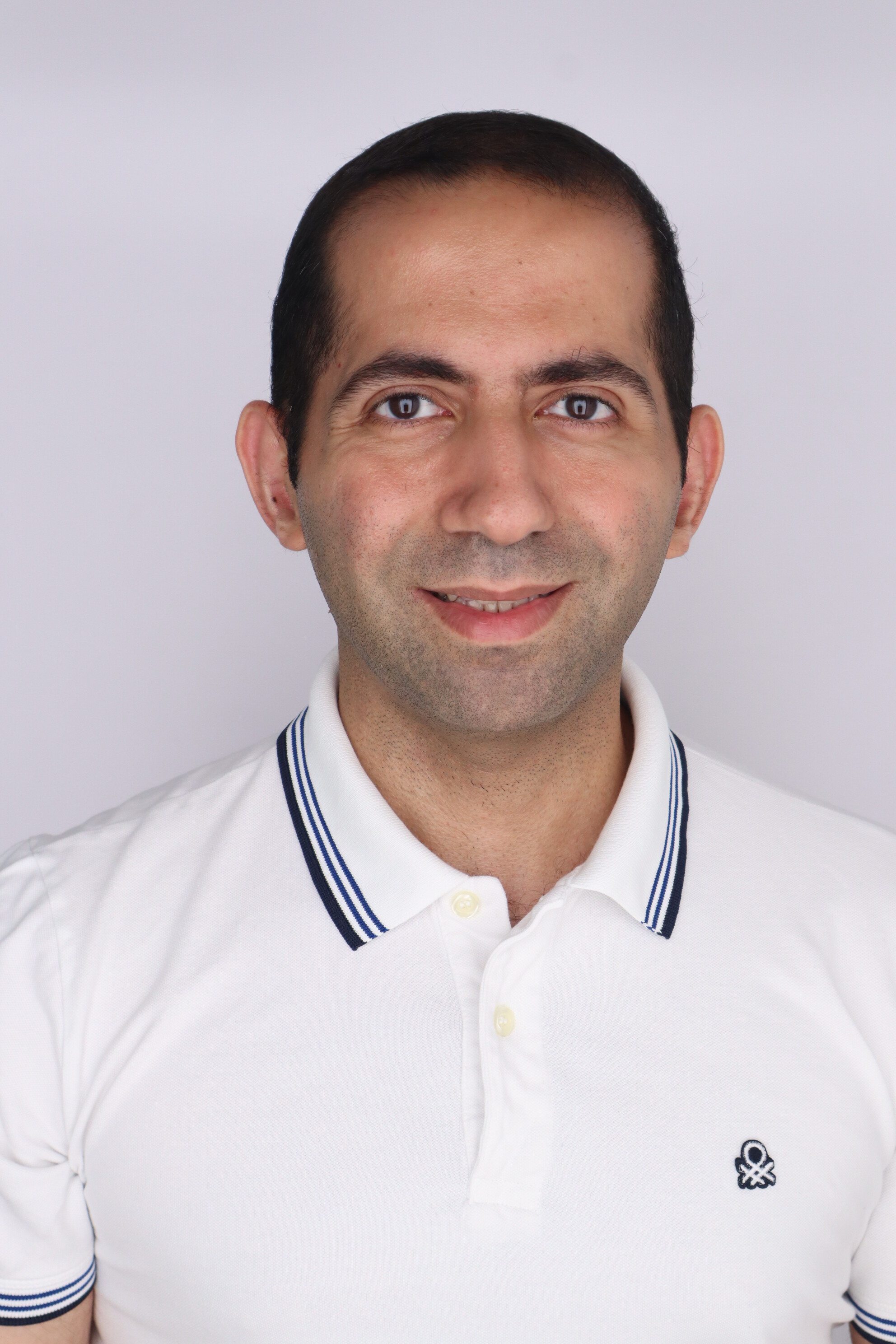
Dr. Ranga Vemuri is a Professor in the Department of Electrical and Computer Engineering at the University of Cincinnati since 1989. His research focuses on Hardware Security, VLSI Design, Formal Verification, Reconfigurable Computing, and Electronic Design Automation. He has advised over 40 PhD and 60 MS students, and his work is funded by agencies like AFRL, DARPA, NSF, and industry partners. Education: Ph.D. in Computer Engineering, Case Western Reserve University (1988) M.Tech. in Computer Engineering, Indian Institute of Technology Kharagpur (1984) B.Tech. in Electronics and Communications Engineering, Nagarjuna University (1983) Research Interests: Dr. Vemuri's work spans Hardware Trust and Security , VLSI Design and Architectures , Formal Methods , and Reconfigurable Computing . He pioneers techniques in analog and digital circuit synthesis, FPGA architectures, and leakage-power reduction strategies. His contributions include innovations in post-silicon validation, secure IC design, and side-channel attack mitigation. Grants & Collaborations: He has led over 20 grants totaling millions in funding, including projects on secure system design (SETS), obfuscation of hardware designs, and formal security assertions. Key collaborators include Galois Inc., Air Force Research Laboratory, and EDAptive Computing. Labs & Teams: His research group focuses on secure embedded systems, trusted microelectronics, and post-silicon validation methodologies. Collaborates extensively with industry and government labs on hardware security and design automation challenges.
Lingyu Wang is an Affiliate Professor at the Concordia Institute for Information Systems Engineering, Concordia University. He holds a Ph.D. in Information Technology from George Mason University (2006). His research focuses on cloud security, SDN/NFV security, security metrics, network security, software security, and privacy preservation. Dr. Wang has published extensively on topics including differential privacy systems, proactive security policy enforcement in containers, and cross-cluster security models for edge-core environments. His work also addresses challenges in securing industrial systems like IEC 61850 substations and 5G networks, leveraging techniques such as state auditing and event monitoring. His recent articles emphasize balancing security with performance efficiency, such as optimizing anomaly detection while preserving privacy and developing tools for real-time inconsistency detection in NFV environments. He has contributed to frameworks like ProSAS for proactive security auditing and VinciDecoder for automated forensic reporting in cloud environments. Dr. Wang’s research bridges theoretical cybersecurity principles with practical applications in cloud infrastructure, emphasizing resilience against zero-day attacks and supply chain vulnerabilities. His work frequently integrates machine learning and deep learning for enhanced security analysis and tool development.
Sergei Turitsyn is a Professor and Director of the Aston Institute of Photonic Technologies (AiPT) at Aston University. He holds the Royal Society Wolfson Research Merit Award since 2005 and specializes in nonlinear science, optical communications, and fiber laser technologies. His work spans soliton theory, high-speed optical systems, and Raman-based amplification. He leads the Photonics Research Group within the School of Engineering and Applied Science. Education: Joint MSc/BSc in Physics (1982) and PhD in Theoretical and Mathematical Physics (1986) from Novosibirsk University and Institute of Nuclear Physics, Russia. Prior to Aston, he was a Humboldt Fellow at Heinrich-Heine University (1992–1998). Research focuses on nonlinear dynamics, fiber lasers, and machine learning applications in communications. Recent articles emphasize neuromorphic photonics, dispersion compensation, and bi-chromatic laser systems. Awards include the Royal Society Wolfson Merit Award for sustained research excellence. Supervised 27 PhD students in areas like fiber lasers and nonlinear devices. Active in international conference committees and collaborates globally on projects like multiwavelength Raman lasers and bismuth-doped amplifiers. Leads AiPT, advancing photonic technologies through interdisciplinary research.
Dr. Michel Ballings is an Associate Professor and James and Joanne Ford Faculty Research Fellow at the University of Tennessee's Haslam College of Business, where he directs the JTV Center Intelligence Lab. His research develops machine learning systems for business outcomes using large-scale social and marketing data. Core research areas: Predictive modeling for entertainment and retail Social media analytics and digital engagement Recommender systems in financial services Emotion analytics in commerce Recent publications demonstrate applications in livestream retail analytics, movie success prediction, and B2B customer acquisition. His industry collaborations include Amazon's Visiting Academics program.
Isambo Karali is an Assistant Professor in the Department of Informatics and Telecommunications at the National and Kapodistrian University of Athens, a position she has held since November 2007. Prior to this, she served as a Lecturer at the same department from September 1999 to November 2007. Her academic career spans over three decades with significant contributions to knowledge representation, uncertainty reasoning, and semantic web technologies. Dr. Karali's educational background includes: PhD in Informatics (1995) from the University of Athens MSc in Computer Science (1988) from University College, University of London Bachelor of Mathematics (1986) from the Department of Mathematics, University of Athens Dr. Karali's research focuses on Knowledge Representation and Reasoning with Uncertainty, Artificial Intelligence, Logic Programming, and Object-Oriented Programming. She has made significant contributions to applying Dempster-Shafer theory for handling uncertainty in Semantic Web applications. Her work bridges theoretical foundations of logic programming with practical applications in knowledge representation, particularly in distributed and heterogeneous environments. She has supervised numerous PhD and master's theses in these areas. Her recent publications demonstrate a strong trend toward integrating uncertainty reasoning with Semantic Web technologies, particularly using Dempster-Shafer theory and fuzzy logic. Her work addresses challenges in managing imprecise and uncertain information in large-scale knowledge systems, with applications in recommendation systems, news analysis, and semantic search. The interdisciplinary nature of her research connects artificial intelligence, knowledge representation, and web technologies to solve complex information management problems. Dr. Karali has been actively involved in research funding and collaboration: Principal Investigator for "Handling uncertainty in data intensive applications on a distributed computing environment (cloud computing)" under the "Thalis" Program Scientific Responsible for "Artificial Intelligence and Logic Programming Techniques for Knowledge on the World Wide Web" at the National and Kapodistrian University of Athens Scientific Responsible for "Semantic Web and Logic Programming - Application to Guided Search" at the National and Kapodistrian University of Athens Participant in multiple EU research projects including MISSION, COSMOS, ADDSIA, PARACHUTE, APPLAUSE, and EDS As an educator, Dr. Karali has taught core undergraduate courses including Object-Oriented Programming and Logic Programming, as well as graduate courses on Knowledge Technologies and Artificial Intelligence. She has supervised numerous PhD and master's students, with a focus on uncertainty reasoning, semantic web technologies, and logic programming applications. Her mentorship extends to student competitions, including guiding the Department's team in the Microsoft ImagineCup 2009. Dr. Karali has also contributed to the academic community through service activities, including membership on program committees for conferences like IEEE ICTAI, reviewer for prestigious journals, and organizational roles in academic events. From 2000 to 2012, she was responsible for the Department's website, contributing to its architecture design and system development.
Marcus Völp is an Associate Professor and head of the CritiX research group at the University of Luxembourg's Interdisciplinary Centre for Security, Reliability and Trust (SnT). His research focuses on ultra-reliable operating systems, fault and intrusion tolerant systems for cyber-physical environments, and hierarchical hybridization techniques to construct resilient computing platforms. His work bridges theoretical foundations with practical implementations, particularly in developing dependable systems-on-chip that can withstand faults and intrusions. Research spans formal verification methods, radiation-hardened hardware, blockchain security, and autonomous vehicle safety systems. Recent publications demonstrate advancement in parameterized system verification, radiation effects on routers, and N-version machine learning for autonomous systems. His group maintains strong focus on practical resilience mechanisms for real-time and critical systems across computing layers.
Rukmani Bai is a Researcher at the Institute for Theoretische Physik III (Institute for Theoretical Physics III), specializing in quantum simulation with ultracold atomic systems. Her work bridges theoretical modeling and experimental quantum physics, focusing on complex quantum phases in engineered lattice systems. Her research centers on quantum many-body phenomena in optical lattices, particularly dipolar bosonic mixtures and Rydberg atom arrays. Key interests include topological phases (fractional Chern insulators, quantum Hall states), supersolids, Bose glass transitions, and artificial gauge field effects. She employs advanced theoretical frameworks to predict experimentally accessible quantum states, with strong emphasis on connections to cold atom experiments. Article analysis reveals evolving expertise: early work (2018-2020) established foundational understanding of dipolar quantum gases and gauge field effects, while recent publications (2022-2024) target topological matter and multi-component phase transitions. This trajectory shows increasing focus on experimentally viable quantum simulation schemes for exotic topological states. Bai actively contributes to the Institute's research ecosystem through collaborations with experimental groups led by H.P. Büchler, T. Lahaye, and A. Browaeys. She has taught core theoretical physics tutorials including Quantum Mechanics, Electrodynamics, and Statistical Mechanics across multiple academic years (2019-2024), demonstrating consistent institutional engagement.
Marko Kosunen is an Associate Professor at Aalto University's Department of Electronics and Nanoengineering. He holds M.Sc., Lic.Sc., and D.Sc. (Tech.) degrees from Helsinki University of Technology (now part of Aalto University), completed in 1998, 2001, and 2006, respectively. He served as a visiting scholar at the Berkeley Wireless Research Center, UC Berkeley (2017–2019), supported by a Marie Sklodowska-Curie EU grant. He co-chairs Microelectronics Finland, a collaborative body linking academia and industry in microelectronics research and education. His research focuses on programmatic circuit design methodologies, digital-intensive time-based data converters, transceiver circuits, and RISC-V-based microprocessor implementations with DSP accelerators. He has authored/co-authored over 100 peer-reviewed papers and holds multiple patents. His work spans VLSI systems, RF IC design, and energy-efficient signal processing architectures. Recent articles highlight advancements in automated comparator design frameworks, 5G transmitter hardware, and neural network accelerators. His contributions often bridge theoretical design methodologies with practical applications in wireless communication and AI hardware. Dr. Kosunen actively collaborates with industry partners, evidenced by his role in Microelectronics Finland and co-authored works addressing real-world challenges like 5G transceiver efficiency and in-sensor neural processing.
Professor Martin Schoeberl is affiliated with the Department of Applied Mathematics and Computer Science at the Technical University of Denmark (DTU). His research focuses on real-time systems, worst-case execution time analysis, and embedded systems engineering. He is actively involved in projects such as Rigoletto, aiming to develop high-performance automotive processors using RISC-V architecture. Research Interests: Schoeberl's work spans time-predictable processors, network-on-chip architectures, and hardware-software co-design for cyber-physical systems. He explores methodologies to ensure deterministic behavior in multicore environments and develops tools for WCET analysis. His contributions include advancements in compiler optimizations for neural networks and temporal semantics in embedded systems. Advising & Grants: Schoeberl supervises PhD students such as E. Khodadad (on rigorous design of time-predictable systems) and A. Cerioli (on compiler optimizations for neural networks). He leads or participates in funded projects including Rigoletto (2025-2028) and Multi-Core Architecture for L1 Deterministic Processing (2022-2025). These projects aim to enhance real-time capabilities in embedded systems and automotive computing platforms. Labs & Teams: As part of the Embedded Systems Engineering group at DTU, Schoeberl collaborates on hardware generators using Chisel and designs reactor-oriented architectures for cyber-physical systems. His work integrates reconfigurable logic and synchronous models to create efficient, time-predictable solutions.
Alam Shah is an Associate Professor in the Department of Mechanical and Industrial Engineering at Texas A&M University-Kingsville. His research focuses on composite materials for armor systems, fatigue/fracture mechanics, and structural design. He holds a Ph.D. from Louisiana State University (2005) and has extensive academic credentials including M.S. degrees from South Dakota School of Mines & Technology and Bangladesh University of Engineering & Technology. His work emphasizes numerical analysis, ballistic impact behavior, and renewable energy applications. Research interests include multi-scale modeling of composites, additive manufacturing, and renewable energy systems. Recent studies explore advanced hybrid composite armors, ceramic armor systems, and composite overwrapped pressure vessels. His publications (2020-2024) highlight computational modeling of material behavior under ballistic and impact loads, emphasizing failure mechanisms and structural integrity. Publications trends reveal a focus on composite armor systems, material layer interactions, and numerical simulation techniques. His work bridges theoretical models with practical applications in defense engineering and structural safety. Grants and advising details are not explicitly stated in provided materials.
Oh Joon-Yeoul serves as Associate Professor in the Department of Mechanical and Industrial Engineering at Texas A&M University-Kingsville's College of Engineering, specializing in optimization methodologies for telecommunications and public infrastructure systems. His academic credentials include: Ph.D. in Industrial Engineering (Operations Research), New Mexico State University (2003) M.S. in Industrial Engineering (Engineering Management), New Mexico State University (2000) M.S. in Industrial Engineering (Operations Research), Chong-Ju University (1998) B.S. in Industrial Engineering, Chong-Ju University (1995) Dr. Oh's research integrates mathematical programming and algorithmic development to solve complex industrial problems, with core expertise in Network Optimization , Wireless Telecommunication Systems , and Queueing Theory . His work bridges theoretical operations research with practical applications in municipal services, robotics, and emergency management, emphasizing non-linear and heuristic integer programming approaches for large-scale systems. Analysis of his 15 publications (2015-2020) reveals consistent focus on vehicle routing optimization (including multi-vehicle scenarios), facility location for public safety infrastructure, and multi-criteria decision frameworks . His research demonstrates strong methodological continuity in applying combinatorial optimization to real-world challenges like garbage collection routing, fire station allocation, and telecommunication network expansion, primarily through conference presentations at INFORMS and industrial engineering forums. Dr. Oh actively mentors graduate researchers as evidenced by student co-authorship on projects involving blockchain applications, humanoid robotics, and municipal service optimization. While specific grant details aren't documented, his collaborative work with colleagues like Amir Hessami indicates engagement in funded research initiatives addressing regional infrastructure challenges in South Texas. His research team focuses on practical implementation of optimization models for Kingsville municipal operations, particularly in waste management and emergency response systems, though dedicated laboratory facilities aren't specified in available materials.
Gabriela Nicolescu is a Professor at Polytechnique Montréal , affiliated with the Department of Computer Engineering and Software Engineering and the LAMA-WeST (Web, Semantics and Text) research group. Her work focuses on design methodologies , programming , and security for advanced systems integrating 3D SoCs , optical networks , and heterogeneous technologies . Education: B.Sc. and M.Sc., Politehnica Bucharest Ph.D., Institut National Polytechnique de Grenoble (2002), awarded Best Thesis in Microelectronics Research Interests include cybersecurity for avionics , security by design for cyber-physical systems , advanced programming models for multi-core systems , and modeling/simulation of heterogeneous systems . She has contributed to fields like optical networks on chip , real-time embedded systems , and edge computing security . Recent Publications highlight her leadership in all-optical neural networks , formal verification , and security for avionic systems . Her work spans machine learning-driven intrusion detection , photonic integrated circuits , and ontology-based cybersecurity frameworks . Scientific Awards: Best Thesis in Microelectronics, Institut National Polytechnique de Grenoble (2002) Student Supervision encompasses doctoral and master’s theses in areas such as multi-core RTOS , security in autonomous systems , AI-based penetration testing , and performance optimization in avionics . Current advisees include Felipe Magalhaes , Julien Carayol , and Kacem Khaled , while completed supervision includes A. S. Shahnejat Bushehri and Rami Zrelli . She is actively involved in collaborative research projects addressing national cybersecurity priorities and safer aircraft design , as highlighted in media outlets like The Globe and Mail and Science-Presse .
Nir Shavit is a Professor of Electrical Engineering and Computer Science (EECS) at the Massachusetts Institute of Technology (MIT), affiliated with the Computer Science and Artificial Intelligence Laboratory (CSAIL). He leads the Multiprocessor Algorithmics Group and Computational Connectomics Group, focusing on algorithms for multi-core systems and neural tissue computation modeling. Education: B.Sc. and M.Sc. in Computer Science from the Technion - Israel Institute of Technology (1984, 1986); Ph.D. in Computer Science from the Hebrew University of Jerusalem (1990). Research interests include multiprocessor algorithms, software transactional memory, connectomics, and neural network analysis. Notable contributions include applying algebraic topology to shared memory computability and co-authoring The Art of Multiprocessor Programming . Awards: 2004 Gödel Prize and 2012 Dijkstra Prize. Active in MIT’s Theory of Computation Community of Research and affiliated with the Algorithms Group.
Laure Erwin is a Researcher at the Department of Computer Architecture and Parallel Systems, Faculty of Informatics, Technical University of Munich. She is affiliated with the Lehrstuhl für Rechnerarchitektur & Parallele Systeme (Prof. Schulz). Her research interests focus on computer architecture and parallel systems, including high-performance computing and hardware design optimization. Education: Holds a Doctorate (Dr. rer. soc. oec.) in a related field. Research Interests: Laure's work addresses challenges in scalable parallel architectures, energy-efficient computing systems, and advanced system-on-chip (SoC) designs. Her expertise includes optimizing memory hierarchies and interconnect technologies for modern multi-core processors. Labs/Teams: Active within the Rechnerarchitektur & Parallele Systeme research group led by Prof. Schulz, contributing to collaborative projects in high-performance computing systems.
Shervin Hajiamini is an Assistant Professor of the Practice of Computer Science at Vanderbilt University's School of Engineering. He holds a Ph.D. from Washington State University, an M.Sc. from Delft University of Technology, and a B.Sc. from Azad University. His research focuses on green computing, particularly energy efficiency in multi-core systems, including dynamic voltage/frequency scaling (DVFS), voltage-frequency islands (VFI), and task scheduling optimizations. Recent work explores energy efficiency through heuristic algorithms, stochastic models, and dynamic programming frameworks. His articles (2015–2023) emphasize energy-time tradeoffs, cache optimization, and power-aware scheduling in multi-core architectures. No scientific awards are explicitly listed. His advising and grants sections are currently empty. He is affiliated with the School of Engineering's Computer Science department at Vanderbilt University.