Anna Abrahams is a Senior Programmer Artist Film and Artistic XR at Eye Filmmuseum in Amsterdam and teaches Moving Image at the Royal Academy of Art, The Hague, within the Photography department. She has been active in experimental film since 1989 as a co-founder of Rongwrong, an independent production foundation. Education: Studied film theory at the University of Amsterdam. Her research and practice focus on experimental film, virtual reality (XR), and moving image art. She bridges traditional film techniques (35mm, 16mm) with digital innovations, emphasizing immersive storytelling and artistic exploration of landscapes, urban spaces, and sociocultural themes. The films she has directed or co-directed, spanning 1995–2022, explore topics like psychogeography, counterculture, and digital experimentation. Her 2022 VR work Angels of Amsterdam highlights her engagement with extended reality technologies. As a co-author, she contributed to publications including Warhol Films , mm2. Experimental Film in the Netherlands , and film³ [kyü-bik film] , documenting avant-garde film practices and theoretical frameworks.
Justin Harvey is a Lecturer at the University of Technology Sydney (UTS) within the Faculty of Design, Architecture and Building, specializing in Media Arts and Production. He is an active member of the Creative Practice Research Group and serves on the Faculty Board and Faculty Research Committee. Harvey holds a PhD in Media Art & Design from the University of New South Wales and a Bachelor of Arts in Communication (Media Arts & Production) with First Class Honors from UTS. Harvey's research interests focus on creative uses of generative Artificial Intelligence, experimental approaches to media art making, and creative practice led research. His artistic practice spans moving image, installation, and virtual reality experiences, with a particular fascination for human-machine interaction and the creative potentials of digital technologies. He explores glitch aesthetics, digital video feedback, and imagery generated using diffusion models, often collaborating with AI systems in unexpected ways. Harvey has exhibited his work internationally at venues including VIVID Sydney, ISEA (International Symposium on Electronic Art) in Vancouver, Hong Kong, and South Korea. His 2023 collaboration with generative AI, Unprompted Studies 1-3 , was a finalist in the Fisher's Ghost Art Award. In 2024, he was selected as a Scholar in the Sydney Powerhouse Museum's Research Scholars Program for the "Knit Forward" project, which reimagines historical garments using generative AI and seamless knitwear technology. His research on creative applications of GenAI directly informs his teaching in Experimental Media and Creative Project Development. Harvey has extensive studio-based teaching experience since 2010, covering subjects such as Situated Media Installation Studio, Drama Production, and Experimental Media. Fisher's Ghost Art Award (2023 finalist) Powerhouse Museum Scholars Program funding (2024) UTS ECR Capability Development Initiative funding (2024) FASS ECR Funding (2024) Harvey supervises PhD and Masters of Research students in creative practice research and has mentored hundreds of students through capstone projects in drama, documentary, animation, and media arts installation. His current research projects include collaborations with Dr. Doris Li on reimagining historical garments using AI, and exploring the intersection of Surrealist techniques with generative AI in works like Oneironaut , exhibited at VIVID Sydney 2025.
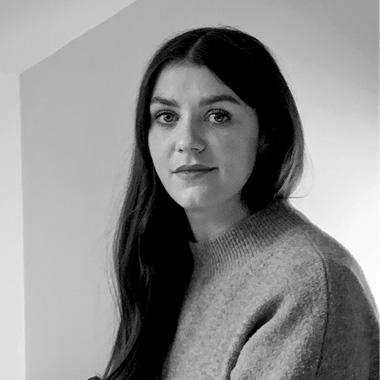
Kimberley O'Neill serves as a Lecturer in Design-Communication Design at The Glasgow School of Art. Her practice encompasses visual arts, media arts, and cross-disciplinary methodologies, often exploring intersections between installation art, digital media, and conceptual frameworks. 2023 : Featured in Berwick Film Festival through Screentime exhibition and screening. 2019 : Presented solo exhibition 'Enigma Bodytech' and participated in Artists Moving Image Festival. 2018 : Coordinated 'Rough Music Workshop' and exhibited at Plymouth Arts Centre. 2017 : Showcased 'Circuits of Bad Conscience' and contributed book chapter 'Slippery Women'. 2016 : Participated in 'Conatus TV' and 'Line of Sight' group exhibition. 2015 : Collaborated on 'Nos Algae's' and 'Amygdala N.O.S' projects. Her research focuses on experimental visual practices that synthesize technology, environmental themes, and spatial interventions. Recent works like 'Screentime' (2023) and 'Porpoise Escape' (2017) demonstrate her interest in abstract narrative structures and digital-physical intersections. Collaborative projects such as 'Visualising the Rite' (2013) highlight educational methodologies that bridge traditional and contemporary art approaches. Exhibition activity spans diverse contexts including Edinburgh Art Festival (2016), South London Gallery (2015), and Glasgow's Tramway (2019). While specific awards and student mentorship data aren't provided, her extensive exhibition record indicates significant contributions to contemporary art practices through installations, video works, and participatory formats.
Jeremy Moss is an Associate Professor of Film and Director of the Film and Media Arts Program at Franklin & Marshall College. His work bridges experimental filmmaking, surrealist aesthetics, and critical engagement with themes of fluidity and transgression. Born in Saint George, Utah, his films critically explore cultural norms and environmental landscapes through non-normative cinematic forms. Moss' films have screened globally at venues like TIFF Bell Lightbox, Anthology Film Archives, and festivals such as Jihlava International Documentary Film Festival. Education details are not explicitly stated, but his training in independent narrative and documentary filmmaking informs his pedagogical approach. Research interests center on avant-garde film practices, the materiality of film media, and cultural critique through experimental forms. Moss co-founded the Gleaners Film Festival (2022), a platform showcasing non-normative works, and programs for Moviate Underground Film Festival. His films are distributed by Light Cone. Key themes across his works include resistance to fixed narratives, boundary exploration, and sensory experimentation. Advising details are unavailable, but his teaching includes courses on film production, experimental techniques, and documentary practices.
Alanna Thain is an Associate Professor in the Department of English and Director of the Institute for Gender, Sexuality, and Feminist Studies at McGill University. Her work intersects film theory, affect studies, and performance, focusing on bodies in media and their temporal dynamics. She leads the Moving Image Research Lab (MIRL), exploring the body in post-digital cinema, and runs Cinema Out of the Box, a bicycle-powered mobile cinema project. Thain holds a Ph.D. in Literature from Duke University and a B.A. (Honours) from McGill. Her research spans minoritarian horror, sleep as sociable practice, dance on screen, and feminist media communities. Key projects include the SSHRC-funded Anarchival Outbursts examining dance and post-digital cinema, and States of Immersion on bodies and technology. Her publications include Bodies in Suspense: Time and Affect in Cinema (2017) and co-edited volumes like Lo Tech Pop Cult: Screendance Remixed (2024). Awards include SSHRC grants and the Richard Plant Award for her work on Dave St-Pierre’s performance art. Thain’s interdisciplinary approach blends scholarly research with creative practice, emphasizing "research-creation" that bridges theory and embodied experience. Current projects explore reproductive horror, queer post-apocalyptic practices, and ecological mobile cinema.
Dr. Sara Oscar is a Senior Lecturer in Visual Communication at the University of Technology Sydney's Faculty of Design and Society. She serves as Responsible Academic Officer for Plagiarism (since May 2018) and Ethics Committee Member (since June 2019) in the School of Design. Her work bridges academic scholarship with creative practice in visual arts, focusing on how images shape historical memory and contemporary discourse. Her educational background includes: Doctor of Philosophy (Visual Arts) from the University of Sydney (2008) Oscar's research centers on photography and moving image practices that explore the archive as a starting point for creative work. She employs strategies of appropriation and digital collage to examine how visual culture mediates our understanding of the past and present. Recent work increasingly addresses the implications of AI and deepfake technologies on visual representation, identity formation, and spectatorship. Her scholarship demonstrates sophisticated engagement with feminist film theory, particularly Laura Mulvey's concepts of the 'male gaze' and 'curious spectatorship,' applied to contemporary digital contexts. Analysis of her recent publications reveals a consistent trajectory exploring visual representation through multiple lenses: historical, technological, and theoretical. Her work demonstrates growing engagement with digital technologies' impact on visual culture while maintaining connections to foundational questions about photography's ontology and politics. She has created significant exhibitions including 'From Here to Eternity' (2015) at the Centre for Contemporary Photography and 'Dress Code: The World's Longest Bar' (2013) at the Palimpsest Biennial. Her notable recognition includes: John and Margaret Baker Fellowship, National Photography Prize (2022) Dr. Oscar is available for Masters Research and PhD student supervision, teaching courses including Critical Approaches to Visual Culture, Research Through Design, Photography and Memory, and Narrative, Form and Time. She is an active member of the Faculty Visualisation Institute (VI) Research Network. Her media contributions address contemporary visual culture issues, including analyses of deepfakes, AI art, and social media censorship of women's bodies as seen in her widely discussed commentary on Instagram's removal of her childhood photos. Her creative practice extends into prominent public exhibitions including 'Under the Sun: Reimagining Max Dupain's Sunbaker' at the State Library NSW and Monash Gallery of Art, and 'An Elegy to Apertures' at the Centre for Contemporary Photography in Melbourne. Her work is held in numerous public and private collections.
Catriona MacLeod is Vice Provost for the Arts and the Frank Curtis Springer and Gertrude Melcher Springer Professor at the University of Chicago , affiliated with the College and the Department of Germanic Studies. She holds a Ph.D. from Harvard University (1992) and an M.A. from the University of Glasgow (1986), teaching at UChicago since 2019. Her research spans German literature and culture of the 18th–19th centuries, integrating History of Art, Gender and Sexuality Studies, and Literature and Media . She focuses on intermediality, material culture, and hybrid forms in German Classicism and Romanticism, with expertise in ekphrasis, narrative theory, and objects in literature and film. Recent publications include Water and Sea in Word and Image / L’Eau et la mer dans les textes et les images (2023, co-edited) and Stifter’s Natives and Wandering Exotica (2024). Her book Fugitive Objects: Sculpture and Literature in the German Nineteenth Century (2014) won the Jean-Pierre Barricelli Prize, and she received an ACLS Fellowship (2018) for her work on Romanticism. Scientific awards include: Jean-Pierre Barricelli Prize (2014) ACLS Fellowship (2018) She has collaborated with art historians on projects like the 2019 conference Romantic Prints on the Move and serves as Editor-in-Chief of the journal Word & Image . She previously held leadership roles in the International Association of Word and Image Studies and the Goethe Society of North America (2019–2022).
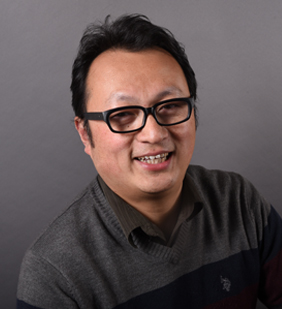
Wenhua Shi serves as Associate Professor in the Art Department at the University of Massachusetts Boston, where he teaches courses including Intro to Video, Sight and Sound, Time and Motion, and Digital Studio. His practice spans film, video, animation, sound art, and interactive installations, with works exhibited internationally at venues including the International Film Festival Rotterdam, European Media Art Festival, Venice Biennale, and Shenzhen-Hong Kong Bi-City Biennale. His educational background includes an MFA from the University of California, Berkeley (2009) and dual BFA/BA degrees from the University of Colorado, Boulder. His research focuses on poetic approaches to moving image making and conceptual depth in time-based media, exploring themes of temporal perception, sensory experience, and cultural memory through experimental techniques in video, sound, and interactive technologies. Shi's creative output reveals consistent exploration of time perception and sensory embodiment across diverse media formats. His work demonstrates technical mastery in video mapping, generative algorithms, and site-specific installations, often incorporating audience participation and cultural symbolism. The recurring themes of fragmentation, cyclical time, and environmental interaction reflect his conceptual depth in contemporary art practice. Scientific Awards: Mass Cultural Council (2024) New York Foundation for the Arts (2015) New York State Council on the Arts LEF Foundation (2021) Juror’s Award from the Black Maria Film and Video Festival Shi has secured significant research funding including grants from Mass Cultural Council (2024), New York Foundation for the Arts (2015), New York State Council on the Arts, and LEF Foundation (2021). He serves as jury member for prestigious events including the Ann Arbor Film Festival (2024) and National Endowment for the Arts (2017-2021). As founder and curator of RPM Festival (2013-Present), he leads collaborative projects including Revolution Per Minutes: Sound Art China and co-curated exhibitions with artists like Zoe Strauss and Sergio De La Torre. His studio practice integrates teaching, curation, and experimental production across moving image, sound, and interactive media.
Michael Newman is Professor of Art Writing at Goldsmiths, University of London , where he has worked since 2008. He has also held visiting roles, including at Lesley University's MFA programme and as a tenured associate professor at the School of Art Institute of Chicago. Previously, he served as head of Art History and Theoretical Studies at the Slade School of Art (1994-1998) and taught at Central St. Martins, UCL, University of Warwick, and Canterbury School of Architecture. PhD in Philosophy (1996, University of Leuven) DEA in History of Philosophy (1992, University of Paris I) MA in Continental Philosophy (1988, University of Essex) MA in History of Art (1979, Courtauld Institute) BA in English (1976, University of Oxford) His research focuses on art criticism , philosophy of art , and contemporary visual culture . He explores themes like memory , political method in art , and postmodernism , often bridging continental philosophy (Heidegger, Derrida, Benjamin) with art theory . His recent articles examine temporal art , avant-garde drawing , and identity in portraiture . Michael has supervised numerous practice-based PhDs in Fine Art, including works on theatricality , video art , and digital media . He has co-edited books like The State of Art Criticism (2008) and curated exhibitions at institutions such as Tate Modern, ICA London, and Drawing Room, UK.
Tess McKenzie is a Lecturer in Design at Goldsmiths, University of London, with a background in sculpture, video, sound art, and theatre design. She earned an MFA in Sculpture from the Slade School of Fine Art (2016) and a BFA from the Victorian College of the Arts (2009). Her practice explores the intersection of theatre and design through choreography, script, and collage, examining the human body's relationship with its environment. She co-leads the MA Design Expanded Practice Culture & Ecologies Studio and teaches in both BA and MA Design programs. McKenzie has exhibited internationally, with solo shows including 'Nettie crotch' at BUS Projects and 'Fogging' at Seventh Gallery. Sidney Nolan Trust Residency (2016) Sir Arthur Sims Travelling Scholarship (2015) Ian Potter Cultural Trust Grant (2013) Australia Council ArtStart Grant (2011)
Kelly Sears is an Associate Professor and Associate Chair for Undergraduate Studio Arts in Cinema Studies and Moving Image Arts at the University of Colorado. She also serves as Interim Director of the Brakhage Center. Sears holds an MFA from the University of California, San Diego, and has taught at Pitzer College, Scripps College, Rice University, and the University of Houston. Her work focuses on experimental animation that critiques American social and political legacies through collage, archival intervention, and speculative storytelling. Films blend historical documents with fictional twists to create uncanny narratives merging history and myth. Education: MFA, University of California, San Diego Her research explores animation as a critical practice, using cut-and-collage techniques to disrupt source material contexts. Films like Applied Pressure (2019) and In the Vicinity (2016) have screened at Sundance, Ann Arbor Film Festival, and the Pacific Film Archives. Awards include the Core Program Fellowship (2018) and juror roles at the Ottawa International Animation Festival. Sears has participated in residencies at MacDowell, Yaddo, Djerassi, and the Galveston Artist Residency. Her work emphasizes art's role in resistance and activism, exemplified by collaborative exhibitions like Tear It Up, Tear It Down (2017), which coincided with Trump's presidency.
Rakesh Mohindra is an Associate Lecturer at Camberwell College of Arts (University of the Arts London) and teaches fine art and photography at the University of Westminster and National Portrait Gallery. His practice focuses on expanded photography, blending it with sculpture and other media to explore themes of transition, identity, and situatedness. He co-founded pic.london (an artist support platform) and Image Assembly (an experimental art collective responding to written texts). Key collaborations include Walworth Living Room (a community collage project) and Moving with the Camera (a global seminar series on photography and body movement). He exhibited internationally, including at the National Portrait Gallery and Pingyao International Photography Festival. His work interrogates photography’s relationship to materiality, perception, and psychical space. Exhibitions: Taylor Wessing Photographic Prize (2015), Beyond the Camera (China, 2016), Unfolding (2020). Research: Explores expanded photography’s potential to transform viewer and artist through intermedia practices.
Kirsten E. McAllister is a Professor in the School of Communication at Simon Fraser University, where she has established herself as a leading scholar in interdisciplinary research at the intersection of memory studies, visual culture, and critical race theory. Her academic journey includes a PhD in Sociology from Carleton University, an MA in Communication from Simon Fraser University, and a BA in Geography from the same institution, followed by an SSHRC Postdoctoral Fellowship at Lancaster University. McAllister's research focuses on political violence, racism, migration and diaspora through interdisciplinary approaches drawing on Memory Studies, Visual Studies, Ethnography, Critical Race Studies, and Indigenous Studies. Her methodological toolkit incorporates Art History, Ethnography, Literary Studies, and Autoethnography, with significant community-based research projects examining WWII Japanese Canadian internment camps, asylum seekers, and contemporary Asian Canadian artists exploring sites of memory regarding war, military occupation, colonialism, and environmental disaster. Her scholarly output reveals consistent engagement with transnational memory practices, particularly examining how communities navigate trauma, memorialization, and cultural identity across borders. The trajectory of her work demonstrates increasing focus on the intersections between Indigenous and Japanese Canadian experiences, settler colonialism, and redress politics, with recent publications addressing questions of whiteness in communication studies and the limitations of state-led reconciliation processes. SSHRC Insight Grant (2013-2016): 'Transpacific Memories: Moving from the Trauma of Canada's National Past to the Transnational Present' SSHRC Standard Grant (2006-2010): 'Public Discourses of Fear and Containment: Refugees in Canada and Scotland' National Association of Japanese Canadians funding (2008): 'Tracing the Lines: A Symposium on Contemporary Poetics and Cultural Politics to Honour Roy Miki' SSHRC Post-doctoral Fellowship (2000-2002): 'Re-presentations of Everyday Life in Internment Camps: Hostile Environments or Familiar Landscapes?' McAllister actively contributes to academic discourse through conference participation, including organizing panels on #CommunicationSoWhite and participating in Scholarstrike Canada's 'Anti-Asian Racism Undone' symposium. She teaches courses including Design and Method in Qualitative Communication Research and The Media of Memory: Political Violence, mentoring the next generation of critical communication scholars.
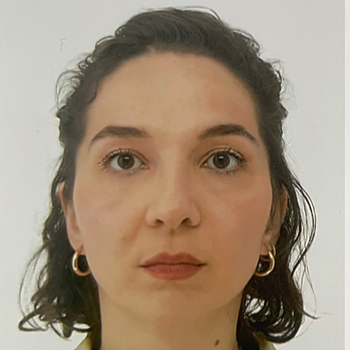
Deniz Ünal is a Lecturer in BA Fine Art at Goldsmiths, University of London, where she teaches in the Department of Art. Previously, she has held teaching positions at Slade School of Fine Art (UCL), HFBK University of Fine Arts in Hamburg, and AKV St Joost University in the Netherlands. Her academic background combines fine art practice with literary studies, reflecting her interdisciplinary approach to creative work. MFA Fine Art, Piet Zwart Institute, Rotterdam (2012) BA Fine Art, London Metropolitan University (2005-2008) BA English Literature and Media Studies, Sussex University (2001-2004) Ünal's research explores the intersections of performance, pedagogy, and therapeutic practices through queer, decolonial, and feminist lenses. Her work critically examines questions of intimacy, desire, and control within contemporary social structures. Working across performance, moving image, installation, soft sculpture, and textiles, she creates immersive experiences that challenge conventional boundaries between audience and performer, public and private, and the physical and digital. Her practice often incorporates participatory elements that invite viewers to engage with complex emotional and political landscapes through embodied experience. Analysis of Ünal's recent projects reveals consistent engagement with themes of relationality, materiality, and spatial politics. Her work frequently employs everyday objects transformed into sites of political and emotional significance, creating what might be described as 'soft resistance' through textile and sculptural interventions. The trajectory of her practice shows increasing sophistication in blending digital and physical realms, particularly evident in her online performance works during the pandemic period. Her projects often function as research laboratories for exploring alternative social formations and intimate connections within constrained contemporary conditions. While specific scientific awards are not documented in the available materials, Ünal's work has been consistently presented at significant contemporary art venues across Europe, including Camden Art Centre, Overgaden Institute of Contemporary Art, and Kunstraum London. Her practice has developed through numerous residencies at institutions such as Kingsley Hall, Bijlmarair, and Kunsthuis SYB, which have provided crucial spaces for experimentation and development. As an educator, Ünal brings her practice-based research directly into the classroom, creating learning environments that mirror the experimental and participatory nature of her artistic work. Her teaching spans multiple prestigious institutions in London and Europe, reflecting her standing within contemporary art education. She has also contributed to publications including Almanac Quarterly, Petunia Magazine, and TOHAVEANDTOHOLD, further extending her influence beyond the studio and classroom into critical discourse. Ünal maintains active studio practice through ongoing projects like 'It Was Over Long Before Last Night' (2021-2025), which continues her investigation into performance and film research. Her work often emerges from collaborative networks and collectives, reflecting her commitment to community-based artistic production. The Edible Amulet Ingestion Ceremony exemplifies her interest in creating ritualistic social spaces that blend food, performance, and intimate exchange.
Daniel Shipsides is a Senior Lecturer in Art & Design at the Belfast School of Art , Ulster University. Based in Belfast since 1995, he co-directs the MFA Fine Art program and operates from Orchid Studios as part of his multidisciplinary practice. Education: MFA (1997), Ulster University Collaboration: Shipsides and Beggs Projects (2004–present) His research explores landscape and spatial narratives through cultural, social, political, and environmental lenses, framed by his concept of pata-perception —a hybrid approach to imaginative and experiential inquiry. His work spans image, moving image, drawing, installation, music, and performance , often questioning the intersections of natural and human-made environments. Scientific awards include the ACNI Major Artist Award (2004) , Nissan Art Award (2000) , and Perspective Award (1998) . Recent works like Starmaps: Borderlands (2017) and Canoe / Curraghs (2023) emphasize hybrid design and heritage reinterpretation . He contributes to global dialogues on art and the environment, including the podcast From Deep Blue to Pale Blue (BBC Radio 3, 2021). Notable Exhibitions: ACCA Melbourne (2004), The MAC Belfast (2018), Arnolfini Bristol (2018), Museum of Contemporary Art Sydney (2013)