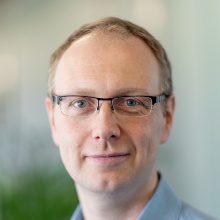
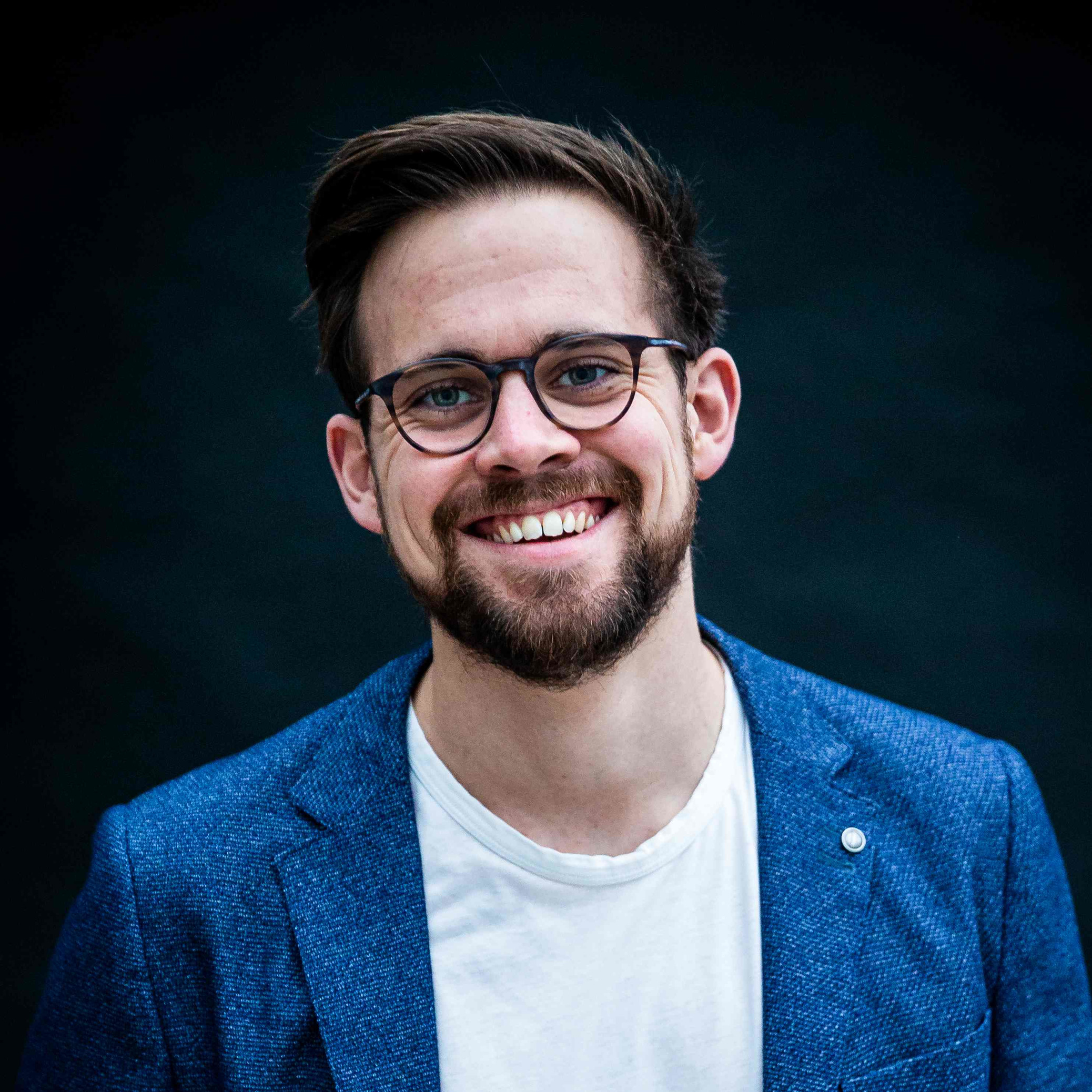
Prof. Dr. Andreas Bulling is Full Professor of Computer Science at the University of Stuttgart , leading the Collaborative Artificial Intelligence research group at the Institute for Visualization and Interactive Systems. He is also a founding director of the Stuttgart ELLIS Unit and serves on multiple prestigious boards including IEEE Transactions on Visualization and Computer Graphics . Education: MSc in Computer Science (KIT), PhD in Information Technology (ETH Zurich) Research Interests: Human-Computer Interaction, Eye Tracking, Wearable Computing, Computer Vision, and Privacy-Preserving AI Scientific Leadership: UbiComp Steering Committee member, ACM ETRA General Chair (2020), and extensive editorial/guest editor roles Key Awards: ERC Starting Grant (2018), Henriette Herz Scout (2024), and multiple best paper awards at CHI, ETRA, and UIST Technical Contributions: Developed datasets (LPW, VisRecall++), created novel methods for gaze estimation, mental face reconstruction, and saliency prediction in visualizations His work bridges AI and Human-Computer Interaction with applications in immersive systems and healthcare technologies.
Peter Lucas Hulen is a Professor in the Music Department at Wabash College , where he has taught for nearly 25 years. His work bridges classical acoustic composition with experimental computer-generated electronic music, informed by his classical training and later shift toward digital techniques. Research interests include: Electronic music history Music technology pedagogy Digital synthesis methods (FM, subtractive, granular) Integration of acoustic and electronic sound Algorithmic composition Interdisciplinary applications His compositions explore: Microtonal scales using superparticular ratios Wireless performance interfaces Choral liturgy adaptation Cultural sound symbolism Speaker array design Temporal structure manipulation Recent works combine academic rigor with technical innovation: 2017: Homage and Refuge , Wobbly 2015: Organum IV 2014: Magnificat , Sitting 328b 2013: Les substances botaniques , Primitive 2012: Lamentationes Jeremiae I He developed a systematic electronic music curriculum including: History and Literature Computer Programming (Max/MSP) Performance Ensembles Theory and Composition
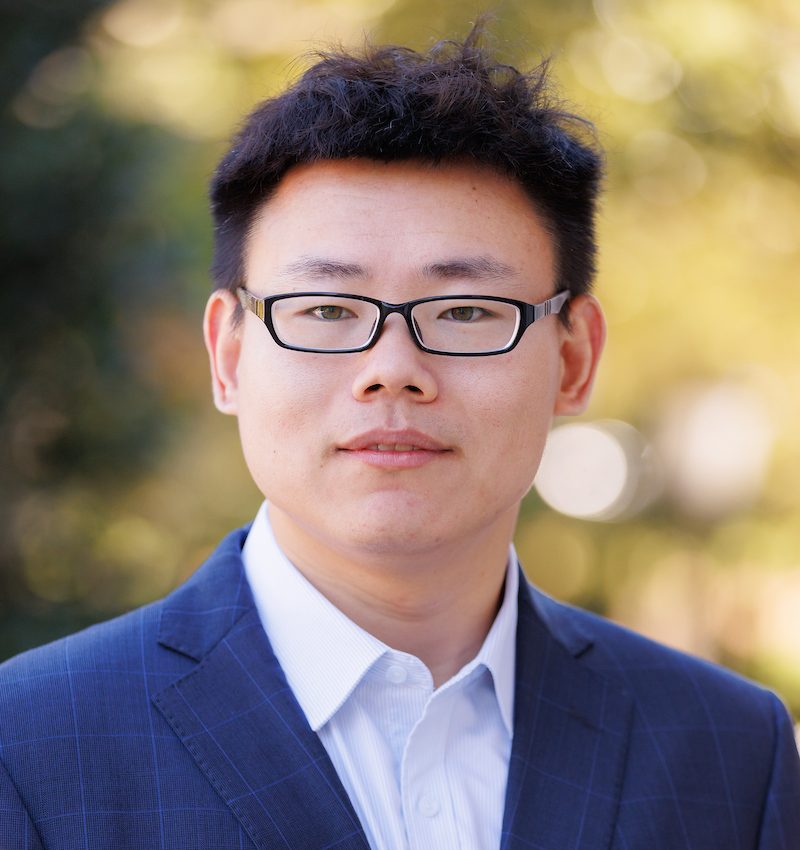
Qiang Zhang is an Assistant Professor in the Department of Mechanical Engineering and an Adjunct Faculty in the Department of Chemical and Biological Engineering at The University of Alabama, College of Engineering. He joined the Mechanical Engineering department in August 2023 after serving as an Advanced Rehabilitation Research and Training (ARRT) Post-Doctoral research fellow at the UNC/NCSU Joint Department of Biomedical Engineering. Dr. Zhang's educational background includes: B.S. in Mechanical Engineering from Wuhan University (2014) M.S. in Mechatronics Engineering from Wuhan University (2017) M.S. in Mechanical Engineering from The University of Pittsburgh (2019) Ph.D. in Biomedical Engineering from The University of North Carolina at Chapel Hill & North Carolina State University (2021) His research focuses on the intersection of robotics, biomechanics, and artificial intelligence to develop wearable robotic devices for rehabilitation. Key areas include biological signal-based neuromusculoskeletal modeling , human motion intent detection , nonlinear and adaptive control , and machine learning-based control . His work leverages surface electromyography and ultrasound imaging for real-time control of wearable robots, aiming to provide personalized assistance for individuals with mobility challenges such as stroke, spinal cord injury, and multiple sclerosis. Dr. Zhang's recent publications demonstrate a strong trend toward integrating advanced machine learning techniques, particularly reinforcement learning and deep learning, with wearable robotics. His research emphasizes closed-loop control systems that adapt to individual users, with applications in ankle, hip, and hand exoskeletons. He has pioneered the use of ultrasound imaging for prosthetic control and human-robot interaction. Among his notable scientific achievements: Finalist for the Best Student Paper Award, IEEE/RAS-EMBS ICORR 2019 UNC/NCSU BME Department Ph.D. Student Research Award 2021 ASME DSCD Rising Star Award 2022 Dean’s Distinguished Dissertation Award, UNC-Chapel Hill 2023 Finalist for the Journal of Biomechanics Award 2023 Diversity Travel Award at ASB 2023 Finalist at the NIDILRR-sponsored Early Career Investigator Symposium 2023 Dr. Zhang mentors graduate students including PhD candidates Yun Chen and Oluwasegun Akinniyi. His research is supported by grants including funding from the SEC Faculty Travel Program and the Office for Research and Economic Development (ORED) at The University of Alabama. He serves as an associate editor for the IEEE RAS EMBS 10th International Conference on Biomedical Robotics and Biomechatronics (BioRob 2024) and as the ASME DSCD Mechatronics TC Secretary for 2024. He leads the Enhanced NeuroRobotics Autonomy and Biomechanical Engineering (ENABLE) Lab, which brings together expertise in robotics, biomechanics, neuromuscular modeling, and artificial intelligence to create effective systems for improving quality of life. The lab utilizes multiple robotic platforms including Baxter manipulator, Kinova arm, and quadcopters for control development.
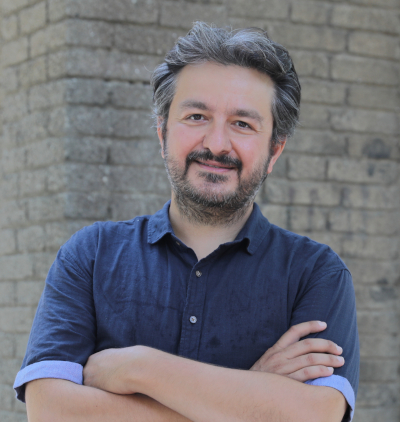
Emre Ugur is an Associate Professor in the Department of Computer Engineering at Bogazici University, where he serves as the head of the Cognition, Learning and Robotics (CoLoRs) laboratory. His research focuses on bridging the gap between continuous sensorimotor experiences and discrete symbolic representations in robotics. Funded by major international sources including the European Commission's Horizon 2020 program and TUBITAK, his work has significant implications for cognitive robotics and autonomous systems. Education: PhD in Computer Engineering from Middle East Technical University (METU, Turkey) Ugur's research interests center on cognitive and developmental approaches to robotics, with particular emphasis on neuro-symbolic integration, affordance learning, and symbol emergence. His work explores how robots can autonomously develop high-level cognitive capabilities through continuous interaction with their environment, similar to human cognitive development. His approach combines machine learning, cognitive science, and robotics to create systems that can learn, predict, and reason about their actions. His recent publications reveal a strong trajectory toward neuro-symbolic robotics, where he develops methods for extracting discrete symbolic representations from continuous sensorimotor experiences. This work enables robots to perform complex planning and reasoning tasks while maintaining connection to physical reality. There is also significant focus on social robotics, particularly in human-robot interaction, social navigation, and embodied cognition. Scientific Awards: The Young Scientist Award by the Science Academy (BAGEP) The Excellence in Teaching Award by the Faculty of Engineering (2023) As Principal Investigator of major projects including INVERSE (EU Horizon 2025), DEEPPLAN (TUBITAK), and previously DEEPSYM and IMAGINE, Ugur has established a robust research program that bridges theoretical advances with practical applications. He has supervised numerous PhD and Master's students who have made significant contributions to the field. His leadership extends to organizing major workshops at top robotics conferences including IROS, RSS, and ICRA. At the Cognition, Learning and Robotics (CoLoRs) lab, Ugur leads research on cognitive robotics, developmental robotics, and neuro-symbolic AI. The lab explores fundamental questions about how robots can develop understanding of their actions, learn from interaction, and form abstract representations necessary for high-level cognition. Current projects focus on symbolic reasoning, prediction, and planning in robotic systems.
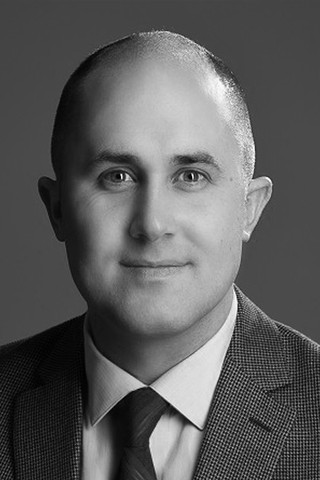
Matthias O. Franz is a Professor in the Department of Computer Science at Hochschule Konstanz University of Applied Sciences, Konstanz, Germany, since 2007. His academic work spans theoretical and applied research in Machine Learning, Computer Vision, and Computational Neuroscience. Research Interests His research focuses on interdisciplinary applications of computational methods, including: Machine Learning algorithms for image analysis and signal processing Computer Vision techniques in object recognition and 3D reconstruction Computational Neuroscience studies on echolocation and visual saliency Quantum Physics applications in space missions Notable contributions include kernel methods for image modeling, steganalysis frameworks, and biomimetic navigation systems inspired by biological processes. Publication Trends Dr. Franz’s 15 most recent publications (2022–2011) demonstrate a trajectory from foundational work in nonlinear system modeling to applications in space technology, computer vision, and acoustic signal analysis. Key trends include: 2022: Image novelty detection using mean-shift algorithms for sensor technology 2015: Dual-species atom interferometry for space-based physics and hybrid image registration 2014: Geometric primitive classification in point clouds and multi-camera stereo matching 2013–2011: Steganalysis, Gaussian process calibration, and computational models of echolocation 2008–2007: Early work on Wiener series and visual saliency prediction
Dr. Jonathan DeVore is an Assistant Professor in the Department of Social and Cultural Anthropology at the University of Cologne. His research focuses on distributive justice, political ecology, and agrarian reform in Brazil. Research Interests : Political ecology of land and resource redistribution Anthropology of resilience and crisis Extractivism and financial systems in rural contexts Intersections of moral philosophy and social movements Degrowth theory and redistributive democracy Ethnographic studies of Brazilian cacao lands Publications : His work spans topics from resilience theory in the Anthropocene to the racialization of food practices in Brazil, with a focus on the enduring effects of land ownership over state-distributed goods.
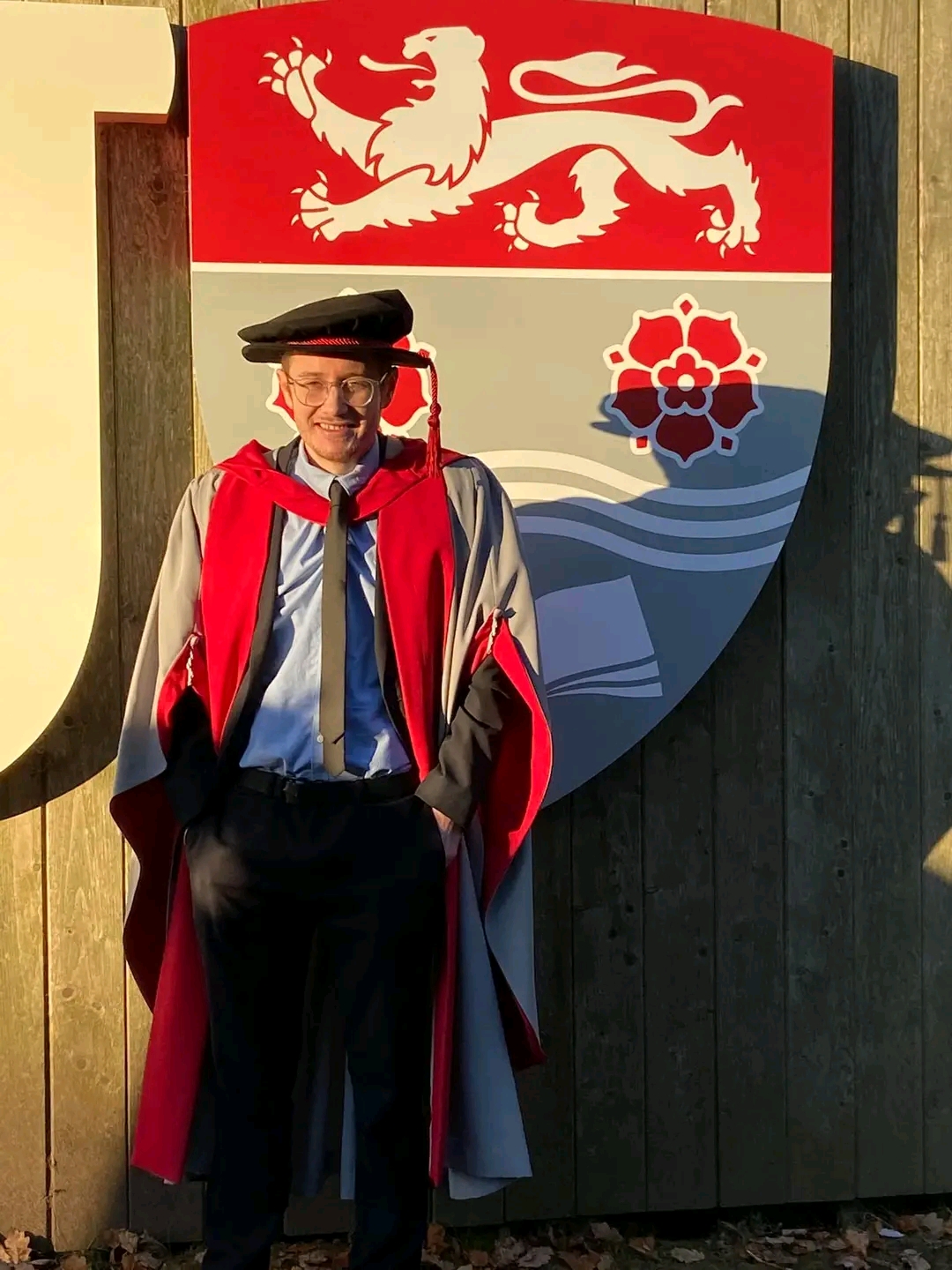
Declan Lloyd is a former academic at Lancaster University, specializing in interdisciplinary studies bridging literature, art history, and cultural studies. He holds a PhD from Lancaster (2020) and has authored influential monographs such as The Art of Orality (2025) and Authors and Art Movements of the Twentieth Century (2022). His research explores the intersection of orality, literacy, and visual art, particularly focusing on how cultural transitions impact artistic expression. Co-editing volumes like Digressions in Deep Time (2024) highlights his contributions to ecocritical theory. Education : PhD in Literature (2020), Lancaster University. Research interests include ecocriticism, modernist literature, and the aesthetic interplay between oral traditions and visual art. His recent work examines deep time in literature and the role of ecological anxiety in contemporary discourse. Key publications analyze figures such as J.G. Ballard, Douglas Coupland, and Marshall McLuhan. His articles span journals like Textual Practice and World Art , exploring ekphrasis, tribal art, and surrealism. While no formal grants or labs are listed, his collaborative projects with Warren Mortimer and others reflect active academic engagement.
David S. Areford is a Professor of Art & Art History at the University of Massachusetts Boston, specializing in late-medieval European devotional art and printmaking. His research bridges the fifteenth century and twentieth-century American art, particularly the works of conceptual artist Sol LeWitt. His expertise includes early European woodcuts and metalcuts manuscript illumination modern printmaking analysis . Education: PhD in Art History, Northwestern University (2001) MA in Art History, Florida State University (1995) BA in English, Longwood College (1985) His research interests focus on the intersection of medieval devotional practices and printmaking, examining how mass-produced images shaped religious experience. Recent projects analyze Sol LeWitt's printmaking legacy, positioning him as a pivotal figure connecting historical and conceptual art. Scientific awards and grants include Fulbright Fellowship (1998-1999) National Endowment for the Arts "Art Works" grant (2013) International Fine Print Dealers Association Book Award (2011 Honorable Mention) Alfred H. Barr, Jr. Award finalist (2007) Newberry Library Weiss/Brown Publication Award (2001) Publications span books like Strict Beauty: Sol LeWitt Prints (2020) and The Viewer and the Printed Image in Late Medieval Europe (2017). He has also co-authored catalogues on early European printmaking, highlighting fifteenth-century woodcuts and their audiences.
Mustafa Haykır is a Professor at Trakya University, Faculty of Fine Arts, Department of Painting , where he has been employed since 2023. He previously served as Associate Professor (2017-2023) and Assistant Professor (2011-2017) at the same institution. His doctoral degree (2010) and master’s degree (2003) in Fine Arts Education were completed at Dokuz Eylül University , while his bachelor’s degree (1995) was earned at Gazi University . Doctoral Thesis: "Students’ Attitudes Toward Mainart Atelier Lessons and Aesthetic Taste Levels" Master’s Thesis: "Problems in Anatolian Fine Arts High Schools and Their Impact on Art Education" Research Interests : Haykır’s scholarly work focuses on visual prejudices in art , artistic perception , and ideological critiques of capitalism through conceptual art. His studies explore the collective unconscious in art (e.g., the "Leda and Swan" theme), ethics of war representation , and interdisciplinary intersections like autoamata in Islamic art and food plating design. His research spans art education , postmodernism , and social commentary . Scientific Contributions : Haykır’s publications analyze institutional criticism (e.g., Hans Haacke), psychoanalytic frameworks in Renaissance art, and philosophical paradoxes in contemporary practice. He has presented at international conferences in Turkey, Greece, Moldova, and Poland, emphasizing art’s role in peace advocacy and critical pedagogy . Advising and Projects : He has chaired at least one master’s thesis on body transformation in performance art and co-directed the " Art Talks " project (2018-2019) with TÜBAP funding. Haykır has also participated in numerous international art colonies and workshops, including the 4th Cucuteni International Art Camp .
Norikazu Hirose is a Professor at the Faculty of Sport Sciences, School of Sport and Sciences at Waseda University. With a PhD from the University of Tokyo, he has established himself as a leading expert in sports science with a focus on athletic training and injury prevention. His professional experience spans across multiple elite sports organizations including INAC Kobe Leonessa Conditioning Advancer (2025.06-Present), Nippon TV Tokyo Verdy Beleza Physical Coach (2022.02-2022.05), and the Japan Football Association where he served as Physical Coach for the Japan Women's National Football Team from 2008-2021. Dr. Hirose earned his PhD from the University of Tokyo Graduate School, Division of General Culture in 2004, and completed his undergraduate studies in Sports Sciences at Waseda University Faculty of Human Science in 1997. His academic foundation combines deep theoretical knowledge with extensive practical application in elite sports settings. Dr. Hirose's research centers around Athletic Training, Injury Prevention, Talent Identification, Growth & Maturation, and Soccer performance. His work bridges laboratory research with practical sports applications, with particular emphasis on understanding movement mechanics, muscle activation patterns, and recovery protocols. Recent work has expanded into interdisciplinary areas including the relationship between primitive reflex retention and social development in children with developmental disorders. Analysis of Dr. Hirose's recent publications reveals a strong focus on biomechanics of athletic movement, particularly in soccer players. His work examines change of direction mechanics, hamstring injury prevention, and the effects of various training interventions using advanced measurement techniques including motion capture systems and electromyography. His research increasingly incorporates interdisciplinary approaches, combining sports science with child development and neurological considerations. 100th Anniversary Merit Award (2025.03) - Saitama Prefectural Sports Association Good Practice Report (July 2023) - Japanese Society of Athletic Training 100th Anniversary Special Achievement Award (2021.09) - Japan Football Association Best Poster Award (2017.12) - NSCA Japan Young Scientific Researcher Award (2016.01) - Japan Training Instructors Association 優秀ポスター賞 (2015.12) - NSCA Japan Dr. Hirose serves as Associate Member of the Science Council of Japan, Board member of the World Federation of Athletic Training and Therapies, and Editorial Board Member of the Japan Society of Training Science. He has been instrumental in developing consensus recommendations for sports injury and illness surveillance in Japan. His committee memberships include Director of the Japanese Society of Athletic Training and multiple editorial roles in prominent sports medicine journals. Dr. Hirose leads a research laboratory focused on athletic performance and injury prevention, with particular emphasis on soccer biomechanics and youth athlete development. His team utilizes advanced motion analysis systems and physiological monitoring to investigate movement patterns associated with performance and injury risk. Current projects include examining primitive reflex retention in children with developmental disorders and its relationship to motor skills, as well as optimizing injury prevention protocols for elite athletes through innovative approaches like Nordic hamstring exercises with varying knee and hip angles.
Kay Pompetzki is a Ph.D. student and Lecturer at the Intelligent Autonomous Systems Lab in the Department of Computer Science at Technische Universität Darmstadt . Previously known as Kay Hansel, his research focuses on Robot Learning , Machine Learning , and Human-Robot Interaction . He has contributed to projects involving optimal control , reinforcement learning , and visuo-tactile integration . Bachelor's in Applied Mathematics, RheinMain University of Applied Sciences Master's in Autonomous Systems, TU Darmstadt Visiting Scholar, Intelligent Robotics and Biomechatronics Laboratory (Nagoya University, 2023) Junior Expert Exchange Program delegate (2024) His publications span robot motion planning , goal inference , and sensor integration . Recent work includes tensor-based motion planning, kinematic graph matching, and telerobotics with haptic feedback. He has received recognition for Best Paper Awards in IEEE conferences. Advisor for 20+ theses and projects Reviewer for IEEE IROS, ICRA, CoRL, RSS, and ML workshops
Didier Demolin is a Professor at Grenoble Alpes University (formerly Université Stendhal) and researcher at Gipsa-lab in Grenoble, France, holding this position since 2010. Previously, he was Professor at Université Libre de Bruxelles (2003-2010) and held visiting professorships at Universidade de São Paulo, Brazil (2003-2007, 2013). His career began in 1982 with field research in Rwanda, followed by work at the American Museum of Natural History and Harvard Ituri project. Education: PhD in Linguistics, Université Libre de Bruxelles (1992) Professor Demolin's research focuses on experimental phonetics and laboratory phonology, with extensive fieldwork on African languages and Sub-Saharan phonetics. His interdisciplinary work bridges speech production mechanics, evolution of language, primate vocalizations, and ethnomusicology. He has pioneered MRI applications in articulatory phonetics and investigated phonological universals through understudied languages. His publication trends reveal consistent innovation in speech imaging techniques (particularly real-time MRI), analysis of rare phonetic phenomena like palatal implosives, and theoretical contributions to phonological emergence. Work spans acoustic analysis of nasal vowels, cross-linguistic phonetic patterns, and evolutionary frameworks for speech development, often integrating biological and cultural perspectives. Scientific Awards: Freeman Prize, University of Massachusetts, Amherst (2010) Francqui chair, Belgium (2009-2010) Coup de cœur de l’Académie Charles Cros (2004, 2007) Membre titulaire de l’Académie Royale des Sciences d’Outre-Mer de Belgique (2004) Prix de l’International Phonetic Association (1999) Choc du Monde de la Musique (1990-1992) Prix de la Fondation belge de la Vocation (1982) Professor Demolin has received no documented research grants in available sources and no doctoral students are listed in public records. His advising activities remain unreported in institutional documentation. As a core researcher at Gipsa-lab, he leads MRI-based speech production studies within interdisciplinary teams combining signal processing, linguistics, and biomedical engineering. His lab collaborations focus on real-time articulatory imaging, biomechanical modeling of vocal tract dynamics, and cross-species vocalization comparisons to elucidate speech evolution.
Nicholas R. Gans is an Associate Professor in Computer Science and Engineering at UT Arlington and Principal Research Scientist leading the Autonomation and Intelligent Systems Division at UTA Research Institute. His research spans robotics, computer vision, and autonomous systems. Research focuses on vision-based control, multi-agent systems, and safe human-robot interaction. Current projects include intelligent UAS detection, robotic terrain classification, and distributed formation control. Education: PhD in Systems Engineering, University of Illinois Urbana-Champaign (2005) MS in Electrical Engineering, University of Illinois Urbana-Champaign (2002) BS in Electrical Engineering, Case Western Reserve University (1999) Awards: Rising STAR Award (UT System) ACM Transactions Best Paper Award (2019) Outstanding Faculty Teaching Award (2018)
Heather Curtis is a Professor of Religion, History, and Studies in Race, Colonialism, and Diaspora at Tufts University, holding the Warren S. Woodbridge Chair in Comparative Religions. She directs the Center for the Humanities. Her research focuses on global Christianity, American religious history, and the intersections of religion with humanitarianism, health, and reform movements. Curtis earned her ThD from Harvard University (2005), MA from Gordon-Conwell Theological Seminary (1998), and BA from the University of Virginia (1991). Her work explores theological motivations behind evangelical humanitarianism, the global expansion of Pentecostalism, and the role of religious media in shaping philanthropy. Notable publications include Holy Humanitarians: American Evangelicals and Global Aid (Harvard, 2018), which traces the historical roots of modern aid debates. Her research has been supported by major grants and fellowships, including from the Henry Luce Foundation and the Lilly Endowment. Curtis has advised numerous grants and served on academic committees, including the American Society of Church History. She teaches courses on American religious history, global Christianity, and the history of philanthropy. Her articles analyze topics like religious media’s impact on global aid, divine healing movements, and the relationship between religion and science. Her awards include the Frank S. and Elizabeth D. Brewer Prize for her first book. She actively engages in public lectures and interdisciplinary collaborations, bridging historical scholarship with contemporary issues in race, colonialism, and global health.
Christa Schleper is a Professor in the Department of Functional and Evolutionary Ecology at the University of Vienna, where she leads groundbreaking research on archaea—microorganisms central to understanding the origin of complex life. She has held academic positions in the USA (Caltech, UC Santa Barbara), Norway (Bergen), and Germany (Darmstadt), and is recognized as a pioneer in applying metagenomic methods to environmental microbiology. Her research focuses on the evolutionary and ecological significance of archaea, particularly their role in the emergence of eukaryotic cells. She led the team that first successfully cultivated Asgard archaea, revealing complex cellular structures such as a primitive cytoskeleton—previously thought to exist only in eukaryotes. Her work also uncovered the widespread presence of archaea in everyday environments like soil and river sediments, including the identification of Nitrososphaera viennensis , a key player in the nitrogen cycle. The 15 most recent articles reflect a strong focus on archaeal evolution, environmental distribution, and biogeochemical impact. They span fields such as microbial ecology, evolutionary biology, and sustainable agriculture, with recurring themes including the origin of eukaryotes, nitrogen cycling, metagenomics, and climate-relevant microbial processes. Her scientific achievements have been recognized with top honors, including: ERC Advanced Grant (2016) FWF Wittgenstein Prize (2022) As a highly cited researcher, Schleper actively promotes science communication and environmental responsibility, co-teaching a lecture series with the 'Fridays for Future' movement. Her work bridges fundamental biology with global challenges such as fertilizer overuse and oceanic dead zones. She leads a research group conducting fieldwork in extreme environments like volcanoes and hydrothermal vents, contributing to both theoretical and applied microbiology. Her lab continues to explore the cellular complexity of archaea and their potential to inform sustainable agricultural practices, positioning her at the forefront of 21st-century microbial research.