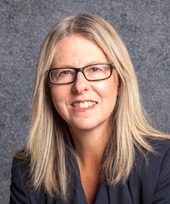
Dr. Laurence Davis is a Senior Lecturer in Government and Politics at University College Cork (UCC), specializing in radical political thought, utopian studies, and anarchism. He holds a B.A. from Columbia University and a D.Phil. from the University of Oxford. His research focuses on grounded utopianism, the intersection of anarchism and utopianism, and contemporary ecological and anti-capitalist politics. Davis is a Series Editor of the Manchester University Press Contemporary Anarchist Studies book series and Co-Convenor of the U.K. Anarchist Studies Network. He has been recognized with awards such as the Frank McGrath Perpetual Award for Equality and Welfare (2021) and the Kenneth M. Roemer Innovative Course Design Award (2018). Davis directs UCC’s MSc in International Public Policy and Diplomacy and leads modules on U.S. politics, ecological activism, and democratic theory. His academic affiliations include membership in the UCC Future Humanities Institute, ISS21, and the UCC Eco-Humanities Research Group. Davis has authored or edited over 40 books and peer-reviewed articles, including seminal works on Ursula K. Le Guin’s utopian fiction and William Morris’s political philosophy. His recent projects explore grounded utopianism’s role in addressing climate change and social justice. Davis actively engages in public scholarship through blogs, media commentary, and advocacy for academic freedom and Palestinian solidarity.
Dr Gregory Leplatre serves as a Lecturer at Edinburgh Napier University's School of Computing Engineering and the Built Environment. He is actively involved with two major research groups: the Centre for Interaction Design and the Centre for Algorithms, Visualisation and Evolving Systems. His work spans across multiple interdisciplinary domains where technology meets human experience. Leplatre's research interests focus on the intersection of sound, visualization, and human interaction. He has made significant contributions to audio-visual interface design, particularly in developing tools that translate sound into visual representations through cymatics. His work extends to therapeutic applications, especially in using real-time 3D graphics to enhance music therapy sessions for individuals on the autism spectrum. Leplatre also investigates speech articulation, soundscape mapping, and multimodal interfaces that create natural cross-modal mappings between visual inputs and sound synthesis. His publication record reveals a consistent trajectory exploring how visual representations of sound can enhance user experience and therapeutic outcomes. Over the past decade, his research has increasingly focused on therapeutic applications for autism spectrum disorder, while maintaining strong foundations in sound synthesis techniques and interface design principles. The work demonstrates a progression from theoretical exploration of audio-visual correspondences to practical implementations with real-world impact. As an academic supervisor, Leplatre has directed or co-supervised numerous doctoral projects, including research on sketching interfaces for sound synthesis, real-time 3D graphic augmentation of music therapy, and emotion recognition in conversational agents. His grant portfolio includes projects like 'Micro-phonics' funded by the Scottish Funding Council and 'Personalisation and the ATM' funded by Innovate UK, demonstrating his ability to secure research funding across different domains. Within the Centre for Interaction Design and the Centre for Algorithms, Visualisation and Evolving Systems, Leplatre contributes to a vibrant research ecosystem focused on creating meaningful human-computer interactions through innovative visualization and sound techniques. His work bridges artistic expression with technical innovation, creating tools that make sound visible and tangible for both therapeutic and creative purposes.
PD Dr. Marco Dohle is a Senior Lecturer at the Department of Communication and Media Studies within the Faculty of Philosophy and Social Sciences at Heinrich Heine University Düsseldorf . Since 2010, he has been a staff member, completing his Habilitation in 2015. He has held substitute professorships at Johannes Gutenberg University Mainz, TU Dortmund University, and Heinrich Heine University Düsseldorf. Research Interests: Political Online Communication, Media Influence Perception, Political Consumerism, Migration and Integration Media Coverage, Sports Communication Projects: Directed DFG-funded subprojects on political online influence consequences (2011–2018), BMBF-funded migration media analysis (2017–2020), and a citizen science project on everyday political consumerism (2024–present). Education Media Management with minor in Psychology, Institute for Journalism and Communication Research, Hanover University of Music and Drama Guest semester at Örebro University, Sweden Recent Publications focus on fake news , political consumerism , media trust , and migration reporting , with interdisciplinary ties to political psychology , digital sociology , and media ethics . His work spans empirical studies on social media dynamics , audience polarization , and media's role in democratic processes . Collaborations include partnerships with Gerhard Vowe , Ole Kelm , and institutions like DGPuK and ECREA . He actively contributes to scientific conferences and editorial work in communication journals.
R. Joseph Huddleston is an Associate Professor in the School of Diplomacy and International Relations at Seton Hall University. His research focuses on diplomatic activities of secessionist movements, civil war responses, and the role of civilian populations in conflict zones. He is affiliated with the Center for Peace and Conflict Studies and directs the Diplomacy Research Lab (DiploLab). During the 2024-2025 academic year, he is a Tenured IR Scholar with the Council on Foreign Relations and a Foreign Policy Fellow in Senator Cory Booker’s office. Affiliations: Center for Peace and Conflict Studies, Diplomacy Research Lab Research Interests: Self-determination diplomacy, secessionist movements, UN peacekeeping (especially MINURSO), North African politics, and academic-policy crossover work. He has published extensively in journals like the Journal of Peace Research and Foreign Affairs , and co-edited volumes on Western Sahara and international relations research methods. Grants & Projects: Collaborated on policy reports with GIZ and EU-funded initiatives on Yemen’s economy. His current book project explores diplomatic strategies of self-determination governments. Affiliations & Roles: Director of Middle East and International Security specializations, Senior Fellow at the Center for Peace and Conflict Studies. Courses taught include International Security, Causes of War, and Research Methods.
Dr. Tatiana Khripachenko is a Researcher at the Department of Eastern European History, University of Bonn, and a Fellow of the Cologne-Bonn Academy in Exile. She joined the University of Bonn in September 2022 as a postdoctoral researcher after previous positions at the Southern Scientific Center of the Russian Academy of Sciences and as a Visiting Scholar at the University of Vienna. Education: PhD in Comparative History from Central European University (2007-2014) PhD program at European University at St. Petersburg (2006-2010) MA in Central European History from Central European University (2005-2006) Equivalent MA in Russian History from Taganrog State Pedagogical Institute (2000-2005) Research Focus: Her work examines imperial disintegration, nationalism, and state formation in Eastern Europe, with particular emphasis on autonomy movements, federalism, and refugee histories. She investigates how legal frameworks shaped national identities in the Russian Empire and Soviet Union, and analyzes contemporary politics of historical memory in education systems. Publication Trends: Her scholarly output demonstrates consistent focus on decentralization debates in imperial contexts, with recent work expanding into refugee studies and international law. Articles and chapters systematically explore tensions between imperial governance and nationalist movements through legal-historical frameworks. Awards and Fellowships: Gerda Henkel Research Grant (2023-2025) German Historical Institute Moscow Short Term Grant (2023) Gerda Henkel Scholars at Risk Grant (2022-2023) COST Action Short Term Scientific Mission Grant (2021) Joint Excellence in Science and Humanities Fellowship (2019) Teaching and Academic Service: At Bonn, she developed and teaches courses on refugee history and Russia's engagement with international law. She co-directed a specialized summer academy in Vilnius on imperial/national transformations and previously assisted in comparative imperial history courses at Central European University.
Elena Martinez is Professor of Spanish and Latin American Literature in the Department of Modern Languages and Comparative Literature at Baruch College, City University of New York, with additional affiliation to the Department of Black and Latinx Studies. She has served on the faculty of the Latin American, Iberian and Latino Studies program at the CUNY Graduate Center since 2005. Her educational background includes a Ph.D. and M.A. in Spanish from New York University and a B.A. in Spanish from the University of Puerto Rico. Martinez served as Department Chair of Modern Languages and Comparative Literature from 2001 to 2015 and has directed the Paul André Feit Lectures on Latin American and Caribbean Cultures since 2008. Specializes in Latin American and Caribbean literatures with focus on women's and LGBTQ+ literature Expertise in diaspora studies, Afro-Caribbean literature, and gender representation Editorial board member of Chasqui: Revista de Literatura Latinoamericana since 1996 Author of three books including the influential Lesbian Voices from Latin America (1996, reprinted 2016) Her 15 most recent publications demonstrate consistent scholarly output across Latin American literary studies, with particular emphasis on Puerto Rican women writers, Cuban diaspora poetry, and erotic narratives. The works span journals such as Confluencia , Chasqui , and Revista Iberoamericana , reflecting her prominence in Hispanic literary criticism. Magna Cum Laude, University of Puerto Rico (1978) Antonio S. Pedreira Award (1978) Multiple PSC-CUNY research grants totaling over $13,000 Extensive editorial contributions to major literary journals Professor Martinez has directed over 20 PhD dissertations at the CUNY Graduate Center while serving on numerous tenure review committees at institutions including Northwestern University, NYU, and University of Pittsburgh. Her research has been supported by four PSC-CUNY grants focusing on Caribbean women writers, Cuban cinema, and Puerto Rican masculinities. She has organized significant academic events including the Paul André Feit Lecture series and co-organized conferences on Latin American women writers at the Americas Society and New School for Social Research.
Dr. Richard Redding serves as Professor and Ronald D. Rotunda Distinguished Professor of Jurisprudence at Chapman University's Dale E. Fowler School of Law, where he concurrently holds the position of Associate Dean for Academic Affairs. He maintains a dual appointment as Professor of Psychology in Crean College of Health and Behavioral Sciences. Previously, he held professorial roles at Villanova University School of Law, Drexel University (Research Professor of Psychology), and the University of Virginia School of Law, where he began his academic career. His educational credentials include a B.A. from Hampden-Sydney College (with honors), an M.S. from Vanderbilt University, a J.D. from Washington and Lee University (Frances Lewis Law Fellow), and a Ph.D. in Psychology from the University of Virginia. He clerked for Judge Michael W. Farrell at the D.C. Court of Appeals. Dr. Redding is nationally recognized for pioneering research on sociopolitical diversity and the impact of ideological attitudes on professional practice and public policy. His work critically examines political bias in social science research and its application in law, mental health professions, and educational settings. He has made seminal contributions to juvenile justice reform, forensic psychology, and cognitive task analysis for complex skill training. His interdisciplinary approach bridges legal scholarship, clinical psychology, and social science methodology. Analysis of his recent publications reveals a concentrated focus on ideological polarization in academia, with particular emphasis on viewpoint diversity in psychology and its implications for scientific integrity. His scholarship consistently addresses the tension between diversity initiatives and free inquiry, examining how political attitudes infiltrate research design, therapeutic practice, and legal policymaking. The interdisciplinary nature of his work spans legal theory, psychological methodology, and public policy analysis. His distinguished honors include: Election to the American Law Institute Fellowship in the American Psychological Association Fellowship in the Association for Psychological Science Fellowship in the American Bar Foundation Awards from the American Psychology-Law Society and Society for Psychological Study of Social Issues Chapman University's Wang-Fradkin Chair—the institution's highest faculty honor As an academic leader, Dr. Redding has directed the JD/PhD Program in Law and Clinical Psychology at Villanova and Drexel Universities. His research has secured substantial funding from federal agencies including the U.S. Air Force, Navy, Federal Aviation Administration, and Department of Justice for projects addressing juvenile justice reform and cognitive task analysis. He has served on Virginia juvenile justice task forces and as a consultant to the U.S. Justice Department's Office of Juvenile Justice and Delinquency Prevention. Dr. Redding founded and serves as President of the Society for Open Inquiry in Behavioral Science and directs research at the Open Therapy Institute, where he promotes evidence-based practice and methodological rigor in psychological research and clinical applications.
Steven D. Edgington is Professor of History and Vice President for Academic Affairs at Hope International University (HIU), where he has served since 1990. He previously held leadership roles as Academic Dean and Dean of the College of Arts and Sciences. His academic home is in the Department of History within the College of Arts and Sciences. Education: B.A. in Social Science, Pacific Christian College (1977) M.A. in Social Science, California State University, Fullerton (1980) Ph.D. in History, University of California, Los Angeles (1996) Visiting Research Associate, Department of History, University of Zimbabwe (1989–1990) Dr. Edgington's research centers on Colonial Zimbabwe , the economic and social history of Christian missions in Africa , 20th-century U.S. civil rights , and California political history of the 1960s–70s. His work bridges religious, social, and political history across continents. He integrates oral history and archival research, particularly in documenting California governance and African colonial dynamics. His recent scholarly output reflects a strong focus on the interplay between religion and power in colonial contexts, especially in Southern Africa, as well as on American conservatism and civil rights. The publications and presentations span oral histories, mission studies, and regional political analysis, indicating a multidisciplinary and globally engaged scholar. Scientific Awards: Faculty Excellence Award, Hope International University (2002) Dr. Edgington has advised students through directed research, oral history projects, and study-abroad programs, particularly in Europe and Southern Africa. He has led international travel courses and mentored student researchers, though formal names of advisees are not listed. He has not been awarded external research grants in the provided text. He is active in professional organizations including the American Historical Association and the Conference on Faith and History . He has contributed to public history through newspaper articles and extensive oral history interviews with California political figures. His leadership extends beyond research to academic administration, shaping curriculum and faculty development at HIU.
Luís Nuno Rodrigues is a Full Professor in the Department of History at ISCTE-Instituto Universitário de Lisboa, where he also directs the PhD in International Studies. He is an Integrated Researcher at CEI-Iscte - Center for International Studies, focusing on Global Politics and Security. He holds a PhD in American History from the University of Wisconsin and a PhD in Modern and Contemporary History from ISCTE-IUL, and has served as a Visiting Professor at Brown University. PhD in American History, University of Wisconsin (2000) PhD in Modern and Contemporary History, ISCTE-IUL (specializing in History of International Relations) Aggregation in History, ISCTE-IUL (2008) Master's and Bachelor's in History, Faculty of Social Sciences and Humanities - UNL (1995, 1990) His research focuses on the History of International Relations , particularly during the Cold War, with expertise in 20th-century Portuguese and U.S. foreign policy , decolonization , and Atlantic relations . He has extensively published on Luso-American relations, military bases, and diplomatic history. His recent publications continue to explore themes of transatlantic diplomacy, cultural exchange (e.g., the Fulbright Program), and the international dimensions of Portuguese colonialism. The body of his research reflects a consistent engagement with diplomatic history , military strategy , and global geopolitical shifts in the 20th century. He has received significant recognition for his scholarly contributions: Mário Soares Foundation Prize Aristides Sousa Mendes Prize Luís Nuno Rodrigues has supervised dozens of doctoral and master's theses and has been actively involved in academic leadership, including as former Editor of the Portuguese Journal of Social Science and Director of the Center for International Studies at ISCTE. He has organized and presented at over a hundred academic events internationally, demonstrating strong engagement with the global scholarly community. He is affiliated with the CEI-Iscte - Center for International Studies , where he contributes to research on Global Politics and Security, working within interdisciplinary teams focused on contemporary and historical international affairs.
Jacqueline Couti is the Laurence H. Favrot Professor and Department Chair of Modern and Classical Languages, Literatures and Cultures at Rice University. She holds core faculty roles in French Studies and European Studies programs, and serves as Associate Director of the Center for the Study of Women, Gender, and Sexuality. Her academic journey includes previous appointments at the University of Virginia and the University of Kentucky. Couti has organized major conferences, including the 2020 landmark event Des féminismes noirs en contexte (post)impérial français? in Paris, which redefined French and Francophone Black womanhood. She has directed study-abroad programs in France, Morocco, and Martinique, and secured grants from organizations like the VolkswagenStiftung. Educated at the University of Virginia (PhD), her research focuses on transatlantic/transnational connections in French and Francophone cultural productions, with a particular emphasis on gender, race, sexuality, and postcolonial identity. She explores how colonial and postcolonial discourses shape Caribbean literatures and self-awareness through representations of sexuality. Teaching specialties include Francophone Studies, Women’s Gender and Sexualities Studies, and Transatlantic Studies. Couti’s work bridges literary analysis and activism, examining topics like ‘doudou’ rituals, Black feminist thought, and creole identities. Her publications span monographs, edited volumes, and articles in journals such as Cités and Nouvelles Études Francophones . She has also curated special issues on transnational identity in Caribbean literature and 19th-century Martinican narratives. Couti’s interdisciplinary engagement extends to collaborative projects with artists and institutions, reflecting her commitment to decolonizing knowledge and centering marginalized voices in academic discourse.
Aleksandra Ancite-Jepifánova is a Research Fellow at King’s Legal Clinic, King’s College London, and Research Affiliate with the Refugee Law Initiative (University of London) and Central European University’s Democracy Institute. Her work focuses on migration, asylum, and nationality law with an emphasis on family reunification and refugee exclusion mechanisms. She holds a PhD in Law from Queen Mary University of London and has taught EU Law at the London School of Economics. Her research explores the intersection of migration policies, conflict, and human rights in post-Soviet and EU contexts. Key themes include EU-Belarus border crises, Yezidi genocide survivor rights, and post-invasion Ukrainian citizenship regimes. Her 2024 monograph analyzes marriages of convenience in EU free movement law, revealing discrepancies between EU directives and UK enforcement practices. Her publications critique legal instrumentalisation tactics used to justify restrictive asylum policies. Recent works examine migrant exploitation narratives at the EU-Belarus border and the erosion of asylum-seeker rights in Eastern Europe. Ancite-Jepifánova combines doctrinal analysis with empirical fieldwork, including interviews with affected individuals. She has advised the CEU Rule of Law Clinic on third-party interventions before the European Court of Human Rights.
Brenda Cossman is a Professor of Law at the University of Toronto Faculty of Law, holding the Goodman-Schipper Chair and serving as Associate Dean Research. She earned her LL.M from Harvard University, LL.B from the University of Toronto, and B.A. Hons from Queen's University. Dr. Cossman has directed the Mark S. Bonham Centre for Sexual Diversity Studies from 2009-2018 and held visiting professorships at Harvard Law School. Education LL.M, Harvard University (1988) LL.B, University of Toronto (1986) B.A. Hons, Queen's University (1982) Her research focuses on family law, law and gender, law and sexuality, and equality rights jurisprudence. She has published extensively on topics including: Queer legal studies and feminist theory Gender identity legal recognition History of LGBTQ+ censorship Evolution of conjugality in family law Charter of Rights applications #MeToo movement legal implications Recent publications emphasize intersections between law, gender theory, and social change, with collaborative works on constitutional law and gender diversity. Her scholarship appears in leading journals like: University of Toronto Law Journal Critical Analysis of Law Canadian Journal of Family Law Law and Social Inquiry Awarded Fellow of the Royal Society of Canada (2012) and the Mundell Medal (2009), she collaborates with scholars such as Bruce Ryder and Ratna Kapur. Current projects include analyzing corporate responses to sexual violence through #MeToo narratives.
Kaylena Ehgoetz Martens serves as an Associate Professor in the Department of Kinesiology and Health Sciences at the University of Waterloo, where she directs the Neurocognition and Mobility Lab. Her research program integrates movement kinematics, functional neuroimaging, psychophysiology, and cognitive neuroscience to investigate the neural basis of gait control and its disruption in neurodegenerative conditions, with particular emphasis on Parkinson's disease, dementia with Lewy bodies, and isolated REM sleep behavior disorder. She focuses on the complex interplay between cognition, emotion, and motor function to develop translational approaches for early diagnosis and intervention in mobility disorders. Dr. Martens' academic training includes a BSc in Kinesiology & Physical Education from Wilfrid Laurier University, an MA in Psychology from the University of Waterloo, a PhD in Cognitive Neuroscience from the University of Waterloo, and postdoctoral training at the Medicine, Brain and Mind Centre, University of Sydney, Australia. Her educational background established the foundation for her multidisciplinary approach to movement neuroscience. Her research program centers on three interconnected aims: (1) investigating cognitive-emotional interactions in gait and balance control; (2) leveraging gait complexity to identify subclinical predictors of neurodegeneration; and (3) developing technology-enhanced diagnostic and intervention tools using virtual reality and mobile recording devices. This work addresses critical gaps in understanding how anxiety, threat processing, and autonomic dysfunction contribute to movement impairments in aging and neurodegenerative diseases. Analysis of her recent publications (2023-2025) reveals a strong trajectory in subtype-specific characterization of freezing of gait, identification of sex-specific neurodegeneration patterns, and development of AI-driven detection methods. Her work increasingly incorporates machine learning for gait analysis while maintaining clinical relevance through biomarker discovery and therapeutic innovation, particularly in the prodromal phases of synucleinopathies. Scientific Awards: No specific awards were documented in the provided source material. Dr. Martens actively supervises graduate students across all levels including undergraduate theses, MSc, PhD, and postdoctoral fellows within her Neurocognition and Mobility Lab. She provides research opportunities for volunteers, coursework interns, and research coordinators, with a focus on translating laboratory findings to clinical applications. While specific grant details weren't provided, her extensive use of advanced neuroimaging, wearable sensors, and virtual reality technologies indicates substantial research funding supporting her program. The Neurocognition and Mobility Lab operates as a collaborative hub bridging basic neuroscience with clinical practice, working closely with healthcare providers to develop practical tools for early mobility impairment detection. Current projects emphasize translating gait complexity metrics into clinical biomarkers and developing anxiety-targeted interventions to prevent falls in neurodegenerative populations, with particular attention to preserving functional independence throughout the lifespan.
Hermann Schwameder is a full Professor and Head of the Department of Sport and Exercise Science at the University of Salzburg, where he also leads the Biomechanics Working Group. His research focuses on biomechanical modeling, human movement analysis, and workload measurement in sports. Key projects include directing the FFG-funded DiMo-Next initiative and the Running Laboratory PLUS. His research explores kinematic patterns in trail running, locomotor-respiratory synchronization via mobile technology, and clinical shoulder mobility assessments. Schwameder holds leadership roles in scientific societies, including former presidency of the Austrian Society of Sports Science (2018-2022) and the International Society of Biomechanics in Sports (2005-2007). He obtained his doctorate in Sports Science from the University of Salzburg (1994) and completed habilitation in Human Movement Science (2003). Current responsibilities include chairing the Department Council and overseeing graduate curricula in Sport and Exercise Science.
Laurent Vidal is a Professor of contemporary history at the University of La Rochelle and serves as Deputy Director of the Research Center for International and Atlantic History (CRHIA). He is also a research director at the Institute of Advanced Latin American Studies (University of Paris III). His educational background includes a doctorate in history from IHEAL - Paris III (1995) and a graduate degree from the Grenoble Institute of Political Studies (1987). He completed his Habilitation à Diriger des Recherches in 2005 with the thesis "Un historien aux marges de la ville: du Brésil en particulier et du Nouveau Monde en général." Vidal's research focuses on the history of Brazil, the founding of cities, the relationship between city and politics, France-Brazil migrations, and more broadly, the history of American Atlantic societies with particular attention to cultural circulations, displacements, and rhythms of waiting and slowness. His work combines urban history with transnational perspectives, examining how cities evolve through cultural exchange and political transformation. His scholarly contributions demonstrate a consistent focus on urban development in the Atlantic world, with particular expertise in Brazilian history and Franco-Brazilian relations. Vidal's publications reveal an evolving interest from specific urban case studies toward broader theoretical considerations of urban mobility, waiting as a social phenomenon, and the circulation of urban models across the Atlantic. Among his notable recognitions: Elected foreign corresponding member of the Institute of History and Geography of Brazil (2012) Recipient of the Prix France Culture "La ville à lire" (2006) Prime d'Excellence Scientifique (PES) and Prime d'encadrement doctoral et de recherche (PEDR) from the French Ministry of Higher Education and Research (since 2010) Finalist for prix du Sénat du livre d'histoire and prix Augustin Thierry (2014) Vidal has directed significant research projects including the ANR Terriat on "Mobilities, societies, displacements: The territories of waiting in the American worlds" and currently coordinates the Franco-Brazilian project BALNEOMAR on seaside space production in coastal cities. He has served as Director of the Rochelle pole of the CRHIA since January 2008 and has held various leadership roles including responsibility for the International Relations and Atlantic World History master's program (2007-2012). As part of the CRHIA (Centre de Recherche en Histoire Internationale et Atlantique), Vidal works within a research team of 25 faculty-researchers and 35 doctoral students with an annual budget of approximately 120,000 euros. His international collaborations include extensive work with Brazilian institutions, having served as visiting professor at multiple universities in Brazil.