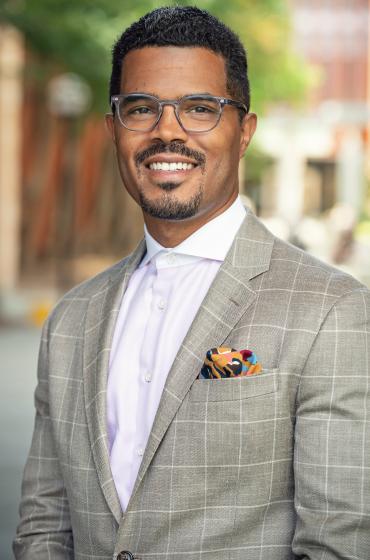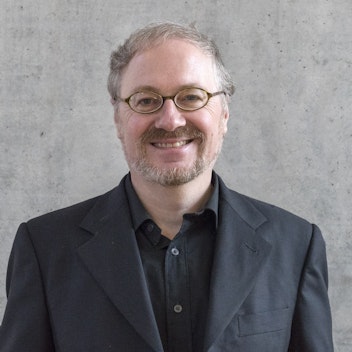
Roland Benedikter serves as a Lecturer at the Faculty of Design and Arts, Free University of Bozen-Bolzano and as Co-Head of the Center for Advanced Studies at Eurac Research. He holds the prestigious UNESCO Chair in Interdisciplinary Anticipation and Global-Local Transformation and is an Ordinary Member of the European Academy of Sciences and Arts. His work bridges academic scholarship with practical policy applications across European and global contexts, with particular focus on South Tyrol/Alto Adige as a model region. Benedikter's research interests span futures studies, societal transformation, re-globalization, neuroethics, and the intersection of technology with humanity. He specializes in interdisciplinary anticipation approaches that integrate macro, meso and micro perspectives to address complex global challenges. His expertise encompasses geopolitical analysis, international and local development, public policy, governance, and European Union affairs, with particular attention to the evolving relationship between global frameworks and local implementation. His recent publications reveal a strong emphasis on futures literacy as a critical capability for navigating systemic crises, with particular focus on neurotechnology standards, sustainable development trajectories, and the evolving nature of globalization. Benedikter's work consistently examines how societies can develop anticipatory governance capacities to better manage uncertainty and complexity in an era of rapid technological change. UNESCO Chair in Interdisciplinary Anticipation and Global-Local Transformation Ordinary Member of the European Academy of Sciences and Arts Co-Head of Center for Advanced Studies at Eurac Research Extensive publication record on re-globalization and futures studies Benedikter actively engages with policymakers and practitioners to translate futures research into actionable strategies. His work with the Center for Advanced Studies facilitates interdisciplinary collaboration across scientific disciplines to address complex societal challenges. He frequently contributes to public discourse on the future of European SMEs, digital transformation, and the ethical implications of emerging technologies, emphasizing the need for inclusive and participatory approaches to societal transformation.