Dr. Josephine Fechner is a researcher at the University of Göttingen's Seminar for Ancient Near Eastern Studies, specializing in Mesopotamian mythology, proverbial literature, and ritual practices. As coordinator of the DFG Research Group 2064 STRATA, she focuses on transmedial comparative analysis of underworld narratives and mythological demonology. Her work bridges textual studies with iconographic analysis, particularly examining the Apkallū figures and Dumuzi myth cycles. Research Focus: Mesopotamian mythological traditions, Akkadian/Sumerian proverbs, ritual hermeneutics Current Projects: Edition of Lamentations on Netherworld Demons; Analysis of the 7 Sages tradition Academic Affiliation: University of Göttingen (Faculty of Humanities) Her recent publications explore intertextuality in underworld myths, transformative ritual language, and human-animal encounters in proverbial texts. She actively contributes to international conferences including Rencontre Assyriologique Internationale and SOAS Cuneiforum, while teaching advanced seminars on Mesopotamian wisdom literature and comparative mythology.
Professor Lucyna Przybylska is a social scientist affiliated with the University of Gdańsk's Faculty of Social Sciences, Department of Spatial Economy. Her work focuses on sacralization processes, public space dynamics, and the interplay between religion, tourism, and urban development. A graduate of geography and theology, she employs observational methods and digital tools to explore topics like roadside memorials, flag displays, and pilgrimage practices. Her research projects include long-term studies on 'Sacralization of Public Spaces in Poland' and 'Accident Crosses on Polish Roads,' with Gdynia frequently serving as a case study. She emphasizes critical source analysis and visual literacy in her pedagogy, guiding students through essay and photo-essay projects. Recent publications analyze the proliferation of roadside memorials and crosses in post-communist Poland, flag symbolism in urban landscapes, and the socio-spatial functions of maritime pilgrimages. Her work bridges cultural geography with sociology, offering insights into how communities negotiate meaning in shared spaces.
Dr. Francisco Pérez Fernández is a Professor at Camilo José Cela University (UCJC) in both Psychology and Criminology & Security departments, and holds a PhD in Philosophy & Education Sciences from Complutense University of Madrid (1997). He serves as coordinator of Criminology Degrees (2018-present), former Criminology Department Coordinator (2008-2013), and has been Academic Mentor Accreditation holder since 2008. His international collaborations include Evidentia University (Florida, USA) since 2022. PhD in Philosophy & Education Sciences (UCM, 1997) Postgraduate in Cognitive Sciences, Emotion & Stress (UCM) Accredited Academic Mentor (Spanish Mentoring Network) Civil & Commercial Mediator (UCJC) His research focuses on intersections between History of Psychology , Criminal Psychology , and Cultural Criminology , particularly examining: Crime-cultural system interactions Penitentiary system evolution Popular culture's role in criminal narratives Forensic science historical development Collective psychological phenomena Scientific contributions include establishing the Psychological Autopsy as investigative technology and developing the Method VERA behavioral analysis framework. His publications span: 15+ peer-reviewed articles (2019-2024) 6 book chapters on cultural anthropology 2 edited volumes on violence phenomena 1 book on vampire psychology 1 book on Batman's cultural origins Scientific recognition includes: 2015 In Memoriam Prof. Orozco Acquaviva Award 2016 Real Colegio de Médicos de Sevilla Award 2023 SECCIF Gold Insignia As academic leader, he has: Directed 60+ academic committees Mentored numerous doctoral candidates Coordinated postgraduate programs (2015-2016) Co-edited EduPsykhé journal Reviewed for 10+ international publications Current affiliations: Secretary of Spanish Society for the History of Psychology (SEHP, 2016-present) Member of American Psychological Association (APA) Full member of Spanish Society of Criminology and Forensic Sciences (SECCIF) Editor-in-Chief of EduPsykhé. Journal of Psychology and Education
Oliver Janz is Professor of Modern History at the Department of History and Cultural Studies at Free University of Berlin, where he has been teaching since 2007. He previously served as Dean of the Department from 2017-2021 and has held visiting professorships at institutions including the German Historical Institute in Rome, University of Bern, and University of Trient. His academic leadership extends to editorial roles for multiple book series and journals focusing on modern Italian history, transnational history, and World War I studies. Doctorate (1991): Freie Universität Berlin - History of Protestant clergy in Prussia 1850-1914 (summa cum laude) Magister Artium (1985): Freie Universität Berlin - History Studies (1978-1985): History, Philosophy and Sociology at University of Heidelberg, Bielefeld, and Freie Universität Berlin Professor Janz specializes in several interconnected research areas that examine European history through transnational and comparative lenses. His primary focus is on the history of World War I, particularly examining commemoration practices, the cult of fallen soldiers, and the war's transnational dimensions. He has extensively researched the history of the European bourgeoisie, nation and nationalism in Europe, and the intersection of family, gender, and political identity. His work on Italian history spans from the Risorgimento through the Fascist period, with particular attention to religious and cultural dimensions of political movements. Janz is a leading scholar in transnational history methodology, exploring how historical phenomena transcend national boundaries and how comparative approaches can illuminate shared European experiences. Janz's scholarly output demonstrates a consistent focus on memory, commemoration, and the cultural dimensions of warfare, particularly World War I. His work reveals how societies process collective trauma through rituals, monuments, and narratives that intertwine religious, familial, and national identities. The international encyclopedia project 1914-1918-online represents a significant contribution to digital humanities, creating a global platform for understanding the war's multifaceted impacts. His research increasingly examines the digital representation of historical memory, bridging traditional scholarship with contemporary digital culture. Research fellowship from the DFG (2000-2004): "The Cult of the Fallen: Soldiers in Italy during the First World War" DAAD Fellowship (1996): "Exchange of Young Scholars between Italy and Germany" Fellow of the FAZIT-Stiftung (1990) Maison des Sciences de l'Homme Fellowship (1985) Fellowship Grant from the "Studienstiftung des Deutschen Volkes" (1979-1985) Professor Janz has supervised numerous master's students at Freie Universität Berlin, with thesis topics spanning European history from the 19th century to the contemporary period. His students have examined subjects including war commemoration, gender history, colonial encounters, and political movements across Europe. As editor of the "1914-1918-online" International Encyclopedia of the First World War, he has coordinated significant international research funding. His leadership extends to multiple research projects including Collaborative EuropeaN Digital/Archival Infrastructure (CENDARI), Making War, Mapping Europe, and studies on German Soldiers and the Ottoman Empire. Janz leads the research team focused on World War I studies at the Friedrich-Meinecke-Institut, which includes multiple researchers working on the 1914-1918-online encyclopedia project. His team collaborates with international partners across Europe and beyond, creating a network of scholars dedicated to transnational approaches to war history. The research group maintains strong connections with institutions including the German Historical Institute in Rome and participates in the Berlin Program for Advanced German and European Studies.
Prof. Weijing Lu is a Professor of History at the University of California, San Diego, specializing in Chinese women’s history, family dynamics, and late imperial social/cultural history. She holds a B.A./M.A. from Fudan University and a Ph.D. from UC Davis. Her research explores gender norms, marriage practices, and personal writings in pre-modern China. Education: B.A./M.A. Fudan University (Shanghai), Ph.D. UC Davis (2001) Her primary research interests focus on Chinese women’s experiences, family structures, and moral discourses in late imperial China. Recent work includes Arranged Companions: Marriage and Intimacy in Qing China (2021), analyzing personal writings from the 17 th –19 th centuries. She has guest-edited special issues on China for the Journal of the History of Sexuality (2013) and co-edited collections like Gender and the Family in Late Imperial and Modern China (2021). Her scholarship has been supported by NEH fellowships, ACLS grants, and the Institute for Advanced Study. Awards include the 2008 Berkshire Conference First Book Prize for True to Her Word . Grants: NEH, ACLS Current Projects: Marriage and intimacy in Qing China, using diaries/poetry Teaching includes courses on East Asian history, women’s history, and cultural studies. She advises graduate students in late imperial Chinese history and mentors through UCSD’s history department.
Dr. Olga Ulturgasheva is a Senior Lecturer in Social Anthropology at The University of Manchester. Her research focuses on climate change impacts, Indigenous knowledge systems, and socio-cultural transformations in Siberia, the Arctic, and Amazonia. She holds a PhD from the University of Cambridge and has conducted interdisciplinary fieldwork for over a decade. Current leadership roles include Principal Investigator for the ERC Synergy Grant-funded 'Cosmological Visionaries' project (2020–2026) and advisory roles at the University of Alaska Fairbanks' Institute of Arctic Biology. Education: PhD in Social Anthropology, University of Cambridge. Research Interests: Climate resilience, Indigenous futurities, shamanism, post-Soviet transformations, human-animal relations, and Arctic geopolitics. Her work bridges anthropology with environmental science, emphasizing collaborative knowledge production. Recent publications include Risky Futures: Climate, Geopolitics and Local Realities (2022) and edited volumes on animism and Siberian studies. Awards: ERC Synergy Grant (2020–2026) supporting cross-disciplinary Arctic research. Projects include community-based studies in Siberia and Alaska exploring climate adaptation strategies. Advising & Grants: Supervises PhD students researching Siberia, Arctic regions, and Eurasia. Leads international collaborations funded by NSF, ERC, and Horizon 2020. Active in UN Sustainable Development Goals related to climate action and sustainable communities. Labs/Teams: Coordinates the 'Cosmological Visionaries' research collective, integrating anthropological, climatological, and Indigenous perspectives to address Arctic challenges. Collaborates with King's College London and University of Alaska Fairbanks.
Ori Tavor is Senior Lecturer in Chinese Studies and Director of the Master of Arts Program in the Department of East Asian Languages and Civilizations at the University of Pennsylvania's School of Arts & Sciences. His research explores early Chinese religion and thought, with emphasis on ritual practices, ancestor worship, and the relationship between religion and medicine in ancient Chinese society. Research Focus Examines cultural trauma responses through ritual and music, the role of the body in religious contexts, and Confucian utopian visions. His work integrates textual analysis with anthropological approaches to understand therapeutic dimensions of religious practices. Academic Service Serves on the steering committee of the Confucian Traditions Unit at the American Academy of Religion and editorial board of the Journal of the American Academy of Religion.
Desmond Upton Patton is the Brian and Randi Schwartz University Professor at the University of Pennsylvania, with joint appointments in the School of Social Policy & Practice and Annenberg School for Communication, and a secondary appointment in the Department of Psychiatry at the Perelman School of Medicine. His work bridges social work, data science, and digital sociology to address issues like social media's impact on marginalized communities, AI bias, and violence prevention. Education: B.A., University of North Carolina at Greensboro (2004); M.S.W., University of Michigan (2006); Ph.D., University of Chicago (2012). Research focuses on social media's role in trauma, grief, and violence among Black and Hispanic youth. He developed the Contextual Analysis of Social Media (CASM) methodology to address cultural biases in AI. Key projects include studying grief pathways on Twitter, digital mourning practices, and algorithmic equity in child welfare systems. Notable awards include the Deborah K. Padgett Early Career Achievement Award (2018) and fellowships at Harvard's Berkman Klein Center and the Harvard Kennedy School. He advises platforms like Twitter and Spotify on safety and bias. Grants include an NSF-funded program supporting STEM researchers from underrepresented backgrounds. He directs SAFELab, which explores digital safety and equity. Courses taught include 'Advocacy in Emergent Technology' and 'Journey to Joy: Designing a Happier Life.' Future work emphasizes AI ethics, inclusive tech policy, and leveraging community insights to shape equitable digital tools.
Miranda Brown is a Professor of Chinese Studies in the Department of Asian Languages and Cultures at the University of Michigan, holding dual appointments as the Yi-tsi Mei Feuerwerker Collegiate Professor and Arthur F. Thurnau Professor. She has been affiliated with the university since 2002, currently serving as Director of the Honors Program in the College of Letters, Sciences, and Arts. Her research bridges cultural history with culinary and medical traditions in early China, focusing on foodways, mourning rituals, and historical texts. Education details are not explicitly stated in the provided texts, but her academic trajectory is evident through her extensive publications and roles. Her research interests center on the intersection of food, medicine, and culture, particularly in pre-modern China. Notable projects include a forthcoming book on pre-20th-century dairy history in China and co-authorship of A Brief History of Chinese Civilization (2012). She teaches courses such as ASIAN 258: Food and Drink of Asia and mentors graduate students through advanced seminars like ASIAN 535: History of Chinese Science. Her recent articles (2019–2022) explore topics like Mr. Song's Cheeses in Ming-Qing China, transnational food translation challenges, and cultural narratives around Chinese diets during the COVID-19 pandemic. Awards and grants are not explicitly listed, but her dual professorships reflect institutional recognition. She actively collaborates with students and maintains an engaged social media presence (@Dong_Muda) documenting culinary explorations in China.
Elisa Carandina, HDR lecturer and Associate Professor of Contemporary Hebrew Literature at INALCO's Department of Hebrew and Jewish Studies, is a leading scholar in self-writing, gender studies, and sacrificial motifs in Hebrew literature and Israeli art. She serves as Deputy Director of CERMOM, Gender Equality Officer, and Master's Manager, integrating academic leadership with cultural critique. Education: Habilitation à Diriger des Recherches (HDR) Her research explores body politics in Miriam Oren's poetry, Bracha Seri's pseudonymic practices, and Michal Heiman's art through "horizontal genealogies"—non-linear, community-based self-narration. She pioneers intersections between graphic narratives and Jewish identity, analyzing works like Noga Melzer's There's No Place Called Home and Rutu Modan's Ha-nekes . Recent publications include the 2020 edited volume Maternal Sacrifices and the 2021 monograph La Cura dell'Accidentale , which reframes contemporary Hebrew literature through "horizontal toledot"—genealogies of suppressed stories. Her work spans 22 books , 14 peer-reviewed articles , and 4 translations , with a focus on Israeli comics, gender performativity, and biblical intertextuality. Key Contributions: Mapping female corporeal resistance in Hila Lahav's poetry Deconstructing sabra identity crisis in Yehudit Katzir's fiction Translating modern Hebrew authors (e.g., Nir Baram, Shifra Horn)
Victoria Mills is a Senior Lecturer in Victorian Literature and Culture at Birkbeck, University of London, within the School of Creative Arts, Culture and Communication. She serves as Co-Director of the Birkbeck Centre for Nineteenth-Century Studies and Programme Director for the MA in Victorian Studies. Previously, she held a Research Fellowship at Darwin College, Cambridge and a Teaching Fellowship in Nineteenth-Century Literature at King's College, London, following a career in the museum sector at institutions including the Victoria and Albert Museum and The Museum of the Home. Her educational background includes: PhD, University of London MA Victorian Studies, University of London MA Museum Studies, University of Leicester BA (Joint Hons.) Ancient and Modern History, University of Oxford Dr. Mills' research spans the intersection of literature, visual and material cultures, with particular focus on museums, collecting practices, the history of the book, gender and sexuality (especially Victorian masculinities), nineteenth-century classical reception, and the Arts and Crafts Movement. Her work often examines how material objects function within literary texts and how literature engages with visual culture. She has published extensively on nineteenth-century writers including George Eliot, Oscar Wilde, Henry James, and Charles Kingsley, exploring themes of collecting, gender, and visual representation. Her recent publications reveal a consistent focus on material culture approaches to Victorian literature, with increasing attention to gender studies and museum practices. The trajectory of her work shows movement from analyzing specific literary texts to broader cultural studies of collecting practices, museum spaces, and the material conditions of reading and writing in the nineteenth century. Her research demonstrates interdisciplinary engagement with art history, museum studies, gender theory, and book history. Her scientific recognition includes: British Academy Small Research Grant (2024-2026) for 'Art, Labour and Devotion: Uncovering the Victorian Art-Workman' Co-curator of 'Victorian Sentimentality' at Tate Britain (2011) Researcher for 'The Fallen Woman' exhibition at the Foundling Museum (2015) Dr. Mills actively supervises doctoral research and teaches across the BA in English literature and MA in Victorian Studies. Her supervision focuses on nineteenth-century literature and culture related to her research interests, with current doctoral work examining topics like 'Fashioning Victorian Femininity in UK Museums.' She has received research funding including a British Academy Small Grant (2024-2026) for her project on the Victorian art-workman and has co-organized international workshops including 'Mediating History's Materiality' and 'Books in and out of time.' Her grant activity demonstrates strong external funding success and international collaboration. She is actively involved with research centers including the Centre for Nineteenth-Century Studies and the Centre for Museum Cultures, and serves on the steering committees of these institutes. Her professional engagement extends to committee membership with the British Association for Victorian Studies and fellowship in the Higher Education Academy.
Olivia Bloechl is a Professor in the Department of Music at the University of Pittsburgh's Dietrich School. Her work focuses on early modern music (1500-1800), particularly French and British Atlantic empires, postcolonial theory, and global music historiography. She holds a PhD from the University of Pennsylvania and has held positions at UCLA and Bucknell University. Her research includes seminal works like Opera and the Political Imaginary in Old Regime France (2017) and Native American Song at the Frontiers of Early Modern Music (2008). She co-edited Rethinking Difference in Music Scholarship (2015) and co-founded the AMS Global Music History Study Group. Teaching encompasses graduate seminars on global musicologies and undergraduate courses like 'Experiencing Music History in Pittsburgh.' Her current project explores music/sound in 18th-century colonial conflicts around present-day Pittsburgh. She has received major fellowships including the ACLS Ryskamp Fellowship. Active in editorial roles, she co-edits the upcoming Oxford Handbook of Global Music History and has guest-edited special issues on topics like 'Colonial Contrafaction.' Her work bridges musicology with postcolonial theory, sound studies, and decolonial methodologies.
Franca Tamisari is a Full Professor in the Department of Humanities at Ca' Foscari University of Venice, specializing in Demoethnoanthropological disciplines. She serves as coordinator of the Master's program in 'Cultural Anthropology, Ethnology, Ethnolinguistics' (ACEL) since 2020. Her research interests span Indigenous Australian studies, anthropology of performance, dance anthropology, cosmology, epistemology, and anthropology of art. She has conducted extensive fieldwork among the Yolngu people in Northeast Arnhem Land, Northern Territory, Australia since 1990, and has recently expanded her research to include ecological knowledge of fishermen and hunters in the Venice lagoon. Tamisari's recent publications reveal a strong focus on enacted knowledge, relationality, and performance in Indigenous Australian contexts. Her work examines how knowledge is performed rather than merely represented, with particular attention to dance, music, and sensory experience as vehicles for cultural transmission and continuity. Her academic career includes teaching positions at the University of Sydney (1996-2001) and the University of Queensland (2002-2005) before joining Ca' Foscari University of Venice. BA and PhD in Social Anthropology from the London School of Economics and Political Science (1994) Research among Yolngu people since 1990 Coordinator of MA in Cultural Anthropology, Ethnology, Ethnolinguistics since 2020 Tamisari teaches Cultural Anthropology, Ethnographies of Oceania, Indigenous Art and Performance, and Cross Cultural Communication across multiple degree programs including Cultural Anthropology, Hospitality Innovation, Philosophical Sciences, History, and History of Arts.
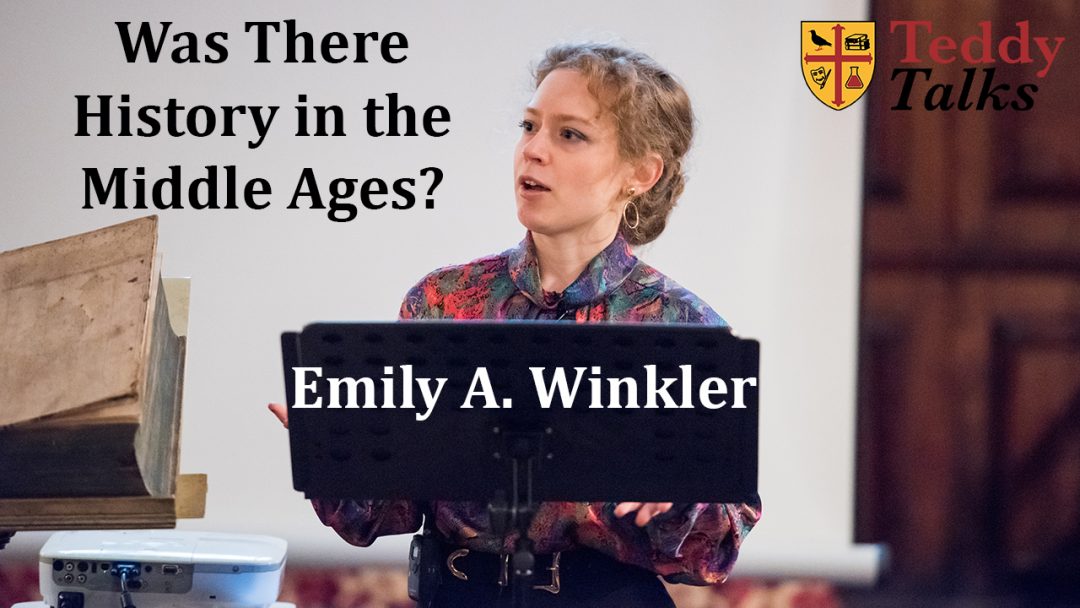
Dr Emily A. Winkler is a Lecturer in Medieval History at the University of Oxford, affiliated with St Edmund Hall and Hertford College, and an Associate Member of the Faculty of History. Her work bridges historical writing, political culture, and emotional history of the high Middle Ages, focusing on the British Isles, Anglo-Norman world, and North Sea zone. Educational Background: AB from Dartmouth College, USA MSt and DPhil from University of Oxford Research Interests center on medieval historical thought, phenomenology of lived experience, and cross-disciplinary analysis of art/architecture/archaeology. She investigates how medieval chroniclers framed the past through diplomatic relations, border concepts, conquest narratives, and emotional frameworks. Her project 'The Search for Parity' (2019–2022) examined ruler relationships in British chronicles. Scientific Awards : AHRC Early Career Research Grant (2018) Alexander von Humboldt Research Fellowship (2017–2019) John Cowdrey Junior Research Fellowship (2015–2018) Academic Leadership includes serving as Acquisitions Editor for Medieval Institute Publications and Vice President for Europe of the Haskins Society. She supervises graduate students in History and Medieval Studies, with past advisees including Harriet Strahl, Nia Moseley-Roberts, and Liam Fitzgerald.
Dr. Heath A. Thomas serves as the 16th President of Oklahoma Baptist University (OBU) since 2020, concurrently holding the title of Professor of Old Testament. Previously, he was dean of the Hobbs College of Theology and Ministry and associate vice president for church relations. He holds a B.A. in English Literature (OBU, 1998), M.A. in Theology (Southwestern Baptist Theological Seminary), and a Ph.D. in Old Testament (University of Gloucestershire, UK). His academic leadership includes roles at Southeastern Baptist Theological Seminary and Baylor University's leadership program. Thomas specializes in Old Testament theology, biblical hermeneutics, and interdisciplinary approaches to Scripture. His research focuses on prophetic literature (especially Habakkuk and Lamentations), divine violence, creation care ethics, and theological interpretation methodologies. Notable works include Faith Amid the Ruins: The Book of Habakkuk , co-authored A Manifesto for Theological Interpretation , and commentaries on Samuel and Isaiah-Ezekiel. His publications span peer-reviewed articles in Currents in Biblical Research , Vetus Testamentum , and Bulletin for Biblical Research , alongside edited volumes addressing holy war in the Bible and lamentation studies. He actively bridges scholarly exegesis with pastoral and missional applications, emphasizing Christ-centered engagement with Scripture. Awards and recognition are not explicitly listed, but his influence is evident through academic appointments and prolific writing. Thomas advocates for holistic theological education, integrating biblical scholarship with practical ministry and ethical stewardship of creation.