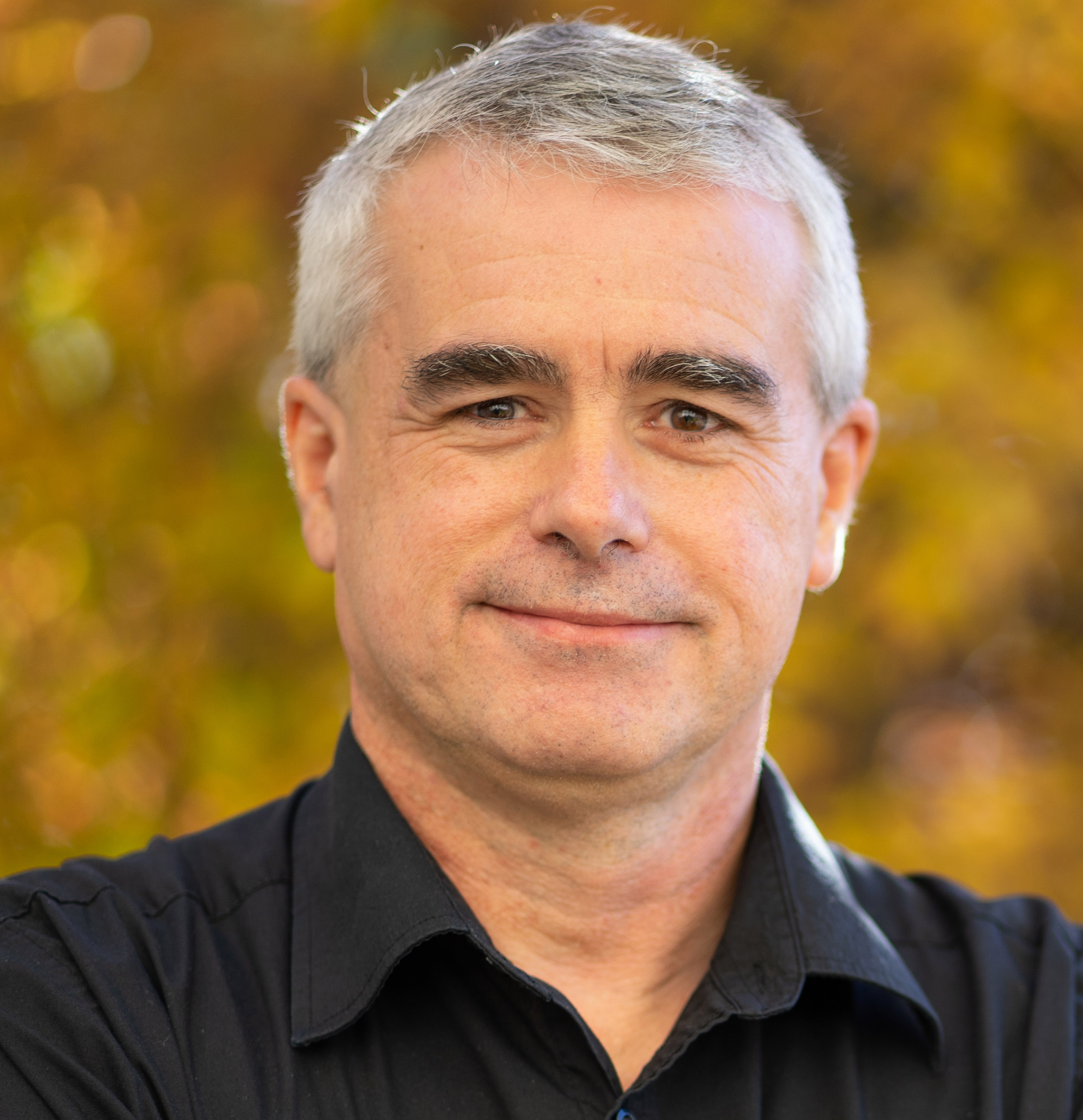
Jun G. San Juan is Professor and Kinesiology Graduate Program Coordinator at Western Washington University's College of Humanities and Social Sciences (Health and Human Development department). His research focuses on biomechanics of injury prevention/rehabilitation, EMG biofeedback applications, and lower extremity kinematics. Education: PhD in Biomechanics from University of Oregon; MA in Biomechanics/Athletic Training from San Diego State University; BS in Sport Science from University of the Philippines. Research: Investigates movement mechanics across diverse populations (athletes, older adults, clinical groups) using motion capture and EMG. Current projects analyze elliptical training biomechanics, supplementation effects on performance, and climbing-related muscle activation. Directs the Biomechanics Laboratory. Teaching: Courses include KIN 311 (Biomechanics), KIN 510 (Lab Techniques), and graduate biomechanics seminars. Emphasizes practical measurement skills and clinical applications.
Felix Huang is a Lecturer in the Department of Mechanical Engineering at Tufts University's School of Engineering. He joined Tufts in 2019 and holds expertise in human motor control, robotic rehabilitation, and surgical training. Previously, he served as a Research Assistant Professor at Northwestern University and Research Scientist at Shirley Ryan AbilityLab. Huang earned his Ph.D. and M.S. from the University of Michigan and B.S. from UC Berkeley. Education: PhD in Mechanical Engineering (University of Michigan, 2006), M.S. Mechanical Engineering (University of Michigan Medical School), B.S. Mechanical Engineering (UC Berkeley, 1996) His research focuses on neuro-rehabilitation robotics, haptic device control, and motor learning in stroke survivors. He has contributed to advancements in surgical skill training through virtual reality and robotics. Huang is actively involved in teaching, mentoring, and curriculum development in human factors engineering and mechanical systems. He has advised students on assistive technology projects and served as a judge in innovation competitions. His work bridges biomechanical research with clinical applications, emphasizing practical solutions for motor rehabilitation.
Lorenzo Casertano is an Assistant Professor in the Department of Rehabilitation Sciences at Tufts University School of Medicine, part of the DPT Phoenix program. He holds advanced degrees including a Doctor of Physical Therapy (DPT) from Columbia University Medical Center and an EdD in Movement Science from Teachers College, Columbia University. His clinical expertise includes board certification in Neurologic Physical Therapy and over 11 years of clinical experience, previously serving as an advanced clinician in acute neurology services at New York-Presbyterian Hospital. Education: BA in Neuroscience and Behavior, Columbia University (2009) DPT, Columbia University Medical Center (2012) EdM in Motor Learning, Teachers College (2020) EdD in Movement Science, Teachers College (2024) Research focuses on stroke, brain injury management, and acute care physical therapy. He has pioneered studies on holistic predictors of success in physical therapy education and the impact of early rehabilitation on neurological recovery. His work also addresses post-COVID musculoskeletal and neurological sequelae and AI applications in clinical evaluation. Teaching includes courses in Clinical Neuroscience, Movement Sciences, and Neuromuscular Practice Management at Tufts University. He has prior adjunct roles at Columbia University's DPT program. Certifications: Board Certified Clinical Specialist in Neurologic Physical Therapy (ABPTS, 2017–2027). Fluent in Spanish (Latin American) and Italian.
Diego Andrés BLANCO MORA is a Postdoctoral Researcher at the University of Luxembourg's Luxembourg Centre for Systems Biomedicine (LCSB), specializing in the AI Modelling and Prediction department. His work focuses on interdisciplinary research at the intersection of neuroscience, neurorehabilitation, and technology. Key areas include motor control, brain-computer interfaces (BCI), and applications of virtual reality (VR) in healthcare, particularly for stroke rehabilitation. He also explores urban neuroscience, investigating how brain activity relates to urban environments and public health. Diego's research combines advanced neuroimaging techniques like fMRI and EEG with innovative technologies such as tACS, tDCS, and VR-BCI systems. His recent studies highlight causal roles of beta-band oscillations in motor control, long-term VR-BCI training outcomes in stroke patients, and the predictive power of brain imaging for urban behavior. He has also contributed to developing urban stimulus datasets derived from social media and ethical considerations in pain detection for non-communicative patients. His publications reflect a strong emphasis on translational research, aiming to bridge fundamental neuroscience discoveries with clinical and urban applications. Diego collaborates across disciplines, engaging in projects that address neurorehabilitation challenges and the neuroscientific underpinnings of urban design.
Erika L. Blanck is a Clinical Associate Professor in the Department of Cell Biology & Anatomy at the University of South Carolina School of Medicine Columbia. She serves as Director of the Gift of Body Program and Course Director for the Foundational Medical Anatomy Course. Her roles include teaching anatomy to first-year medical students and advising on post-baccalaureate education pathways. Education: Bachelor of Science in Sports Medicine (1996-2000), Central Michigan University Doctor of Physical Therapy (2001-2005), University of South Carolina Dr. Blanck’s research interests focus on dance medicine, pilates-based rehabilitation, and the impact of physical activity on quality of life. She has contributed to studies on mobility training for traumatic brain injury patients, stroke rehabilitation, and dance therapy for children with cerebral palsy. Her publications emphasize evidence-based approaches to neurological and pediatric rehabilitation, leveraging comparative trials and gait analysis methodologies. She actively participates in admissions and institutional committees at the School of Medicine.
Dr. Joseph M. Santin is an Assistant Professor of Biological Sciences at the University of Missouri's College of Arts and Science. His research focuses on understanding how neural circuits maintain stability and functionality under physiological stressors such as energy deprivation, inactivity, and environmental challenges. He uses an integrative 'genes-to-behavior' approach, combining electrophysiology, molecular biology, and in vivo physiology to study respiratory control systems in amphibians, particularly the American bullfrog. Dr. Santin holds a Ph.D., M.S., and B.S. in Biological Sciences from Wright State University and the University of Akron. His work bridges fundamental neuroscience and clinical applications, aiming to uncover novel strategies for human health challenges like stroke and neurodegenerative diseases. He leads the Santin Lab, which explores neural energetics, synaptic plasticity, and circuit-level adaptations to stress. His research interests include: Neuronal energetics and energy crisis responses Neuroplasticity mechanisms in disuse and hibernation CO2/pH signaling in respiratory control neurons Neuronal survival under anoxic conditions Dr. Santin has received notable awards, including the 2025 College of Arts and Science Assistant Professor of the Year Award and the 2024 Beverly Petterson Bishop Award for Excellence in Neuroscience. His lab employs cutting-edge techniques such as patch-clamp electrophysiology, RNAseq, and in vivo respiratory measurements to elucidate how neural circuits adapt to extreme physiological challenges.
Philip Abery serves as an Assistant Professor within the Faculty of Health Sciences & Medicine at Bond University, based at the Bond Institute of Health and Sport in Robina, Queensland, Australia. His academic role centers on advancing knowledge in allied health and rehabilitation science, with specific emphasis on stroke rehabilitation, hemorrhage control methodologies, and the integration of exoskeleton technology into clinical practice. Dr. Abery maintains active engagement in both teaching and research, contributing to evidence-based clinical protocols across emergency and rehabilitation settings. Academic Qualifications: MPhil (Research) - Adherence of allied health clinicians to the Stroke Foundation clinical guidelines for management of stroke (2010): a retrospective clinical record audit of both acute and rehabilitation services (Awarded October 9, 2018) BSc (Hons) in Physiotherapy from the University of Hertfordshire (Awarded June 23, 1999) Dr. Abery's research program demonstrates rigorous methodological approaches to critical clinical questions. His work consistently focuses on improving patient outcomes through systematic reviews of clinical guidelines adherence, hemorrhage control techniques, and rehabilitation technologies. Key interests include translational applications of pressure point tourniquet systems in emergency scenarios, evidence synthesis for stroke rehabilitation protocols, and biomechanical analysis of exoskeleton-assisted mobility. This research bridges laboratory findings with real-world clinical implementation in both pre-hospital and rehabilitation contexts. Analysis of his recent publications (2023-2025) reveals two dominant research trajectories: 1) comparative effectiveness of hemorrhage control methods (tourniquets versus pressure point techniques) in emergency medicine, and 2) technological interventions for post-stroke rehabilitation (particularly upper/lower limb exoskeletons). These studies predominantly employ systematic review and randomized controlled trial methodologies, generating high-impact evidence for clinical practice guidelines in stroke management and trauma care. Supervision and Professional Engagement: Dr. Abery has supervised five non-HDR students on clinically relevant projects including obstacle avoidance training for stroke patients, exoskeleton applications in community rehabilitation, and fluid dynamics in surfing populations. His 38 recorded professional activities encompass extensive student mentorship (29 instances), professional memberships, conference participation, and committee service. Notably, his December 2023 media contribution on exoskeleton technology garnered significant academic attention, including Wikipedia references and international social media discussion across X and Bluesky platforms. Based at the Bond Institute of Health and Sport, Dr. Abery collaborates within an interdisciplinary research ecosystem connecting rehabilitation science, emergency medicine, and sports health. His current projects involve partnerships with Australian clinicians to develop evidence-based protocols for stroke rehabilitation and hemorrhage control, with potential applications in military and remote emergency settings.
Dr. Samantha Walker is an Assistant Professor in the Department of Social Sciences at Northumbria University. Her research focuses on criminal justice, social work education, and health policy with a particular emphasis on violence against women, honour-based violence, and interventions for marginalized populations. She has contributed to studies on neurosurgical outcomes, youth rehabilitation, and the socio-economic impacts of criminal justice policies. Her work integrates interdisciplinary approaches, addressing topics such as the cultural dimensions of violence, the role of technology in conservation, and the challenges faced by criminalized youth in accessing social enterprises. Notable projects include evaluations of health interventions for individuals under community supervision and analyses of systemic barriers within probation systems. Dr. Walker’s publications span medical literature reviews, policy analyses, and case studies, reflecting her commitment to bridging academic research with real-world applications. She actively engages in scholarly discussions on topics such as UAVs in environmental management and the digital transformation of social work education. Her recent research highlights include a randomized trial on neurosurgical embolization techniques and a systematic review on UAV applications in conservation. She continues to explore the intersection of criminal justice reforms, public health, and cultural dynamics in addressing systemic inequalities.
Dr Richard Mills is a Senior Lecturer in Biomechanics at Manchester Metropolitan University’s Institute of Sport. His research focuses on postural control mechanisms across the lifespan, particularly in clinical populations like those with Cerebral Palsy, Developmental Coordination Disorder, and Normal Pressure Hydrocephalus. He holds a PhD from the University of Ottawa, MSc from Liverpool John Moores University, and BKin(Hons) from McMaster University. Dr Mills’ academic career includes completing the PGCLTHE course, earning Fellowship of the Higher Education Academy. His teaching spans undergraduate programs in Sport and Exercise Science and Health and Exercise Science. Research outputs emphasize innovative methodologies, such as Kinect depth camera applications and virtual reality interventions for pediatric populations. His work bridges biomechanics with clinical practice, addressing balance deficits through biomechanical analysis and intervention design. Recent studies explore dual-task effects on postural control and exergaming for developmental coordination disorder. Collaborations with clinical partners highlight his commitment to translating research into practical solutions. Awards: Fellow of the Higher Education Academy Advising: Supervised multiple successful PhD and master’s students in biomechanics Facilities: Utilizes the Institute of Sport’s advanced motion capture and gait analysis infrastructure
Dr. David M. Corey is a Senior Professor of Practice in the Department of Psychology at Tulane University's School of Science & Engineering. His research focuses on cognitive neuroscience (brain asymmetry, auditory processing, language production, and sex differences in speech fluency) and quantitative methods (statistical simulations, accuracy of correlation-based tests, and dichotomization effects). Education: Ph.D., Psychology, Tulane University (1999). Research Interests: Cognitive neuroscience of speech and language, emphasizing sex differences in stuttering and brain anatomy. Quantitative methodologies, including statistical modeling of correlation coefficients and dichotomization impacts. Publications Trend: His work spans neuroimaging studies of brain asymmetry, clinical research on swallowing disorders, and statistical simulation studies. Recent articles address anatomical variability in perisylvian regions and swallowing recovery post-stroke. No scientific awards or grants were explicitly listed. Courses taught include Introductory Psychology, Univariate Statistics, and Multivariate Analysis.
Dr. Kwadwo Appiah-Kubi is an Assistant Professor in the Department of Physical Therapy at Clarkson University's Lewis School of Health & Life Sciences. His research investigates sensory reweighting mechanisms in postural control and develops VR-based vestibular rehabilitation protocols. Current NIH-funded projects examine how concurrent vestibular activation and postural training using virtual reality recalibrate sensory integration in neurological populations. Additional work develops low-cost balance assessment tools for stroke patients in resource-limited settings. Teaches graduate courses in Neuromuscular Physical Therapy and Research Methods. Recipient of NIH Loan Repayment Award (2022-2024) and Restore Center Pilot Project Award (2023-2024). Holds PhD in Neuromotor Science from Temple University and clinical degrees from Cardiff University and University of Ghana.
Amitabha Bose is a Professor in the Department of Mathematical Sciences at New Jersey Institute of Technology (NJIT). His research focuses on mathematical neuroscience, particularly modeling neural networks and circadian rhythms. He has actively contributed to understanding synaptic plasticity, rhythmic timing mechanisms, and oscillatory systems through interdisciplinary approaches combining mathematics and biology. His work spans circadian entrainment dynamics, phase resetting in neural networks, and applications of mathematical models to music perception and sleep disorders. Bose has secured multiple NSF grants, including projects on undergraduate biology-mathematics training programs and the role of synaptic plasticity in neuronal networks. His research outputs include over 50 peer-reviewed articles in journals such as Mathematical Biosciences , Scientific Reports , and Journal of Theoretical Biology . Key Projects : Conference on Frontiers in Applied and Computational Mathematics (2022) UBM Training Program in Biology and Mathematics (2004–2010) Role of short-term synaptic plasticity in feedback neuronal networks (2006–2010) Bose’s grants and collaborations reflect his expertise in bridging mathematical analysis with biological systems, particularly in rhythm generation and neural network behavior. His recent work includes studies on circadian misalignment in shift work and jet lag, as well as biophysical models for rhythmic timing in recurrent neural networks.
Simone Lise Dorsch is an Associate Professor in the School of Allied Health, Faculty of Health Sciences. Her research focuses on neurological rehabilitation, particularly post-stroke recovery through physiotherapy interventions. She has led studies on motor recovery strategies, telehealth applications, and the efficacy of strengthening programs for stroke survivors. Key research areas include the comparative effectiveness of therapies like Bobath versus task-specific training, the role of muscle strength in mobility outcomes, and the integration of technology in rehabilitation (e.g., functional electrical stimulation, iPad-based therapy). She has contributed to randomized controlled trials evaluating interventions like the Activity and MObility UsiNg Technology (AMOUNT) trial, exploring digital health solutions for mobility and activity enhancement. Her work emphasizes evidence-based practices, with a focus on systematic reviews to inform clinical guidelines. Notable publications address both upper and lower limb rehabilitation, gait analysis, and the feasibility of innovative therapies in clinical settings. She has collaborated on trials investigating goal-oriented instructions and group exercise programs to optimize rehabilitation intensity and patient outcomes.
Dr. Joel Lanovaz is an Associate Professor and Associate Dean Academic at the University of Saskatchewan's College of Kinesiology, where he teaches biomechanics courses and conducts research in human movement science. His work focuses on understanding balance control, neuromuscular adaptations, and bone health across various populations. B.Sc. Mechanical Engineering (1990), University of Saskatchewan M.Sc. Mechanical Engineering (1996), University of Saskatchewan Ph.D. Mechanical Engineering (2006), Queen's University Dr. Lanovaz's research primarily explores biomechanics and motor control, with specific emphasis on walking balance control in individuals with spinal cord injury, development of upper limb computational models, and the relationship between muscle strength and bone properties in children. His work in healthy aging investigates fall prevention strategies for older women, including the Fall Arrest Strategy Training (FAST) program. He also studies clinical applications such as ankle-foot orthoses for children with cerebral palsy and the effects of haptic input on balance control during walking. His research approach integrates engineering principles with human movement science to develop evidence-based rehabilitation interventions. Analysis of Dr. Lanovaz's recent publications reveals a strong focus on balance assessment and fall prevention across multiple populations including older adults, individuals with spinal cord injury, and children with cerebral palsy. His work consistently applies biomechanical principles to solve clinical problems, with increasing attention to sex and gender differences in balance research. The research demonstrates methodological diversity, utilizing motion capture systems, computational modeling, and clinical trials to address questions related to neuromuscular control, bone health, and rehabilitation effectiveness. Dr. Lanovaz co-directs the Biomechanics of Balance and Movement Lab at the University of Saskatchewan, where he supervises graduate students and collaborates with clinicians and researchers across disciplines. His research program includes multiple ongoing projects examining walking balance after spinal cord injury, upper limb computational modeling, bone health in children, and fall prevention strategies for older adults. While specific grant information is not provided in the available text, his extensive publication record suggests successful funding for his research initiatives.
Dr. Laura Krisa is a Professor in the Department of Occupational Therapy at Drexel University, with a focus on spinal cord injury research and neuroimaging. She holds a PhD in Neuroscience from Drexel University and has conducted extensive postdoctoral research at the Shriners Hospitals for Children. Her work integrates advanced neuroimaging techniques to study spinal cord injury mechanisms, regeneration, and pediatric neurological development. Her research interests center on spinal cord injury rehabilitation, neuroimaging biomarkers, and pediatric neurological outcomes. Key grants include studies funded by the Craig H. Neilsen Foundation and National Institutes of Health (NIH), focusing on spinal cord MRI standards, metal artifact reduction in imaging, and DTI-based biomarkers for pediatric spinal injuries. Dr. Krisa’s publications emphasize diffusion tensor imaging (DTI), neuropathic pain mechanisms, and clinical outcome assessments. Her work bridges preclinical models and clinical applications, with contributions to spinal cord injury rehabilitation protocols and imaging methodologies. She actively participates in professional organizations such as the American Spinal Injury Association (ASIA) and International Spinal Cord Society (ISCoS), contributing to standards in autonomic function measurement and electronic communication. Her research has explored pediatric spinal cord injury pathophysiology, including thalamic microstructural changes and autonomic dysfunctions. Collaborations with radiologists and clinicians have produced innovative imaging solutions and systematic reviews in pediatric locomotor training.