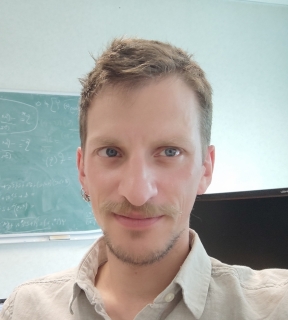
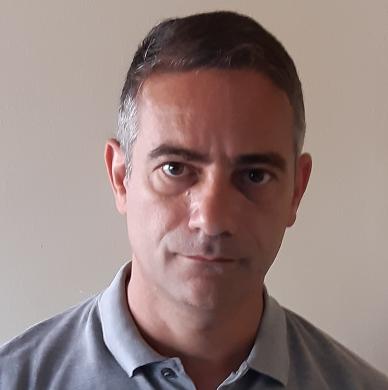
Francesco Pilati is an Associate Professor at the Department of Industrial Engineering, University of Trento, where he serves as local coordinator for the scientific field ING-IND/17 (Industrial Plants and Logistic Systems). He chairs the research group on Industrial Plants, Production Systems, and Logistics, and teaches courses in Industrial Plants and Design of Digital Production and Assembly Systems. As coordinator of the Master's program in Management and Industrial Systems Engineering and University Coordinator for the EIT double degree in Zero-Defect Manufacture, Pilati bridges academic leadership with advanced manufacturing research. He has also served as Invited Lecturer at universities in Vienna and Göttingen. His research focuses on integrating environmental sustainability with technical-economic criteria through multi-objective optimization and impact assessment. Key areas include: Distribution networks and warehousing systems Manufacturing and assembly line design Hybrid energy production systems Digitization of manual production processes using depth cameras Recent publications highlight applications of Industry 4.0 technologies to pandemic safety, logistics optimization, and smart manufacturing. Pilati has received significant recognition including the Philip Morris Italia Empowering Research Award (2016) and Autostrade per l'Italia academic recognition. His editorial contributions include guest editing special issues on Digital Twins and Smart Factories in Q1 journals.
Marilena Vendittelli is a Professor at Sapienza University of Rome, affiliated with the Robotics group. Her research spans control systems, biomedical robotics, motion planning, and autonomous systems. Research Areas: Control systems for robotics and nonholonomic systems Biomedical applications (hyperthermia therapy, needle insertion) UAV navigation and obstacle avoidance Haptics and human-robot interaction Adaptive estimation algorithms Recent Publications focus on adaptive control of bio-heat equations, safe UAV motion planning, soft robotics actuation, and haptic feedback in medical procedures.
Riccardo Raheli is a Full Professor at the University of Parma , Department of Engineering and Architecture, with a career spanning over three decades in Information and Communication Technologies (ICT). He has served as Chair of the Councils for Telecommunications and Communication Engineering programs, and as representative of the University of Parma in CNIT and its Members' Assembly. Education: Laurea in Electronic Engineering (University of Pisa, 1983), M.Sc. in Electrical and Computer Engineering (University of Massachusetts, 1986), Postgraduate Diploma (Scuola Superiore Sant'Anna, 1987) Key Roles: President of Degree Councils (2002-2018), CNIT Committee Member (2000-2005), Editorial Board member for IEEE Transactions, Springer and MDPI journals His research bridges telecommunications , digital signal processing , and healthcare applications , producing extensive international publications and industrial patents. He has co-authored monographs including Detection Algorithms for Wireless Communications (Wiley, 2004) and LDPC Coded Modulations (Springer, 2009). Recent article trends show interdisciplinary work in automotive stress monitoring (IoT/Matlab-based systems), video processing for healthcare (neonatal seizures, respiratory monitoring), and acoustic field control (microphone virtualization, personal sound zones). His work spans machine learning applications in automotive systems, stochastic acoustic modeling , and power-line communications . Scientific Leadership : Co-Chair for IEEE conferences (ICC 2010, GLOBECOM 2011, ISPLC 2020) Editorial roles in 7+ international journals Grants & Collaborations : Led industrial patents in communications systems Coordinated CNIT Technical Reports series (2025) He teaches Wireless Communications and Digital Signals Laboratory , emphasizing Matlab/Simulink proficiency. His laboratory sessions focus on practical implementation of signal processing algorithms, requiring full software installation on personal devices.
Donato Romano serves as Associate Professor at The BioRobotics Institute of Scuola Superiore Sant'Anna, Italy, where he coordinates the Bio-Robotic Ecosystems Lab and co-founded the spin-off company HUBILIFE srl. His interdisciplinary work bridges robotics, biology, and AI to develop biohybrid systems for biodiversity preservation, sustainable environmental management, and life support in extreme scenarios including space exploration. With over 90 publications and an H-index of 27 (Scopus, March 2025), he has established significant academic leadership through editorial roles across 12+ international journals. Romano's educational foundation includes advanced degrees with honors: an M.Sc. in Agriculture Science and Technologies (2014) and a PhD in BioRobotics (2018), both from Scuola Superiore Sant'Anna. His academic journey includes visiting scholar positions at Khalifa University and substantial industry-academia collaboration through HUBILIFE srl, which commercializes bioinspired devices for human daily life improvement. His research program focuses on bioinspired and biomimetic robotics with particular emphasis on animal-robot interaction, biohybrid systems, and natural intelligence. Key projects address critical global challenges: SENSORBEES develops biohybrid environmental surveillance for ecological monitoring; REGOLIFE investigates lunar soil-terrestrial organism interactions for space agriculture; and OCEAN ROBOCTO explores marine ecosystem solutions. This work demonstrates a strategic progression from fundamental behavioral studies toward applied ecological and extraterrestrial systems. Analysis of his recent publications reveals strong trends in AI-driven behavioral analysis, with deep learning increasingly applied to entomological studies and pest management. The research spans agricultural applications (precision monitoring traps, larval detection systems), ecological conservation (biodiversity surveillance), and extreme-environment adaptation (lunar regolith studies). A distinctive feature is the consistent integration of biohybrid approaches where living organisms and robotic systems create synergistic capabilities exceeding either component alone. Romano's scientific recognition includes election as Junior Fellow of the Italian Academy of Engineering and Technology (2025), the Lucani fuori dal Comune award (2024), and multiple best-thesis prizes. His editorial leadership spans high-impact journals including IEEE Transactions on Medical Robotics and Bionics and Pest Management Science, where he serves as Associate Editor. As principal investigator, Romano coordinates major international projects totaling over €15M in funding: HORIZON-EIC's SENSORBEES (2024-2029), ASI's REGOLIFE (2024-2027), National Geographic's OCEAN ROBOCTO (2024-2026), and PRIN's COSMIC (2023-2025). His teaching portfolio includes PhD courses in Biosystems for Biorobotics and M.Sc. instruction in Bionics Engineering at Scuola Superiore Sant'Anna and University of Pisa. The Bio-Robotic Ecosystems Lab under Romano's direction pioneers biohybrid technologies where living organisms and robotic systems create integrated solutions. Current initiatives include SENSORBEES' environmental monitoring swarms, REGOLIFE's moonworm colonization systems, and HUBILIFE's commercial vector-control devices. The lab maintains active collaborations with space agencies, agricultural institutes, and conservation organizations, positioning biohybrid systems as next-generation tools for planetary-scale challenges.
Andrea Garulli is a Professor in Control Systems at the Department of Information Engineering and Mathematics (DIISM), University of Siena. He served as Dean of the Faculty of Engineering (2011-2012) and Director of DIISM (2015-2021). His research focuses on control systems, including system identification, state estimation, robust control, multi-agent systems, and aerospace applications. He co-authored the book *Homogeneous Polynomial Forms for Robustness Analysis of Uncertain Systems* and developed the LFR_RAI toolbox for robustness analysis of uncertain models. Garulli has led projects like ACANTO (social robot navigation) and DALi (autonomous navigation for elderly care). His teaching includes courses on system dynamics, state estimation, and filtering. He is an Associate Editor for *Automatica* and has contributed to initiatives like the Automatic Control Telelab for remote experiments with mobile robots.
Enzo Mastinu is an electronic engineer specialized in embedded systems for biomedical applications, holding an Associate Professor qualification in Bioengineering. He earned his bachelor's and master's degrees in electronic engineering from the University of Cagliari and a PhD in biomedical signals and systems from Chalmers University of Technology, Sweden. His research focuses on advanced prosthetics and neuroprostheses for upper limb amputations, incorporating embedded systems design, control algorithms, sensory feedback, signal processing, AI, and osseointegration. Key projects include the HAND and HAND2 initiatives, funded by the EU and the Italian Ministry of Research, aiming to develop semi-autonomous prosthetic hands. He has published 25 journal articles (75% in Q1) and 21 conference papers, contributing to a PCT patent. Mastinu is a Senior Member of IEEE EMBS and RAS, reviews for ~90 journals/conferences, and edits Transactions on Medical Robotics and Bionics (IEEE) and Scientific Data (Nature). He has supervised ~40 students across PhD, master's, internships, and postdocs, and teaches courses in biomedical engineering and STEM education. His scientific awards include the Marie Skłodowska-Curie Fellowship (2021), National Qualification as Associate Professor (2024), and a Young Researcher Grant (2025). Research emphasizes clinical implementation of prosthetics with neural feedback and intuitive control, as highlighted in high-impact journals like the New England Journal of Medicine.
Bernardo Tellini is a Full Professor of Electrical and Electronic Measurements at the Department of Energy, Systems, Land, and Construction Engineering (DESTEC) at the University of Pisa, where he also serves as Vice-Rector for Doctoral Research. He has held this institutional role since 2020, overseeing doctoral program planning, accreditation, and admission procedures. Previously, he chaired the doctoral program in Energy, Electrical, and Thermal Engineering from 2012 to 2016 and served on the Leonardo da Vinci Doctoral School in Engineering from 2008 to 2016. Education: PhD in Electrical Engineering, University of Pisa (1999) Degree in Electrical Engineering, University of Pisa (1993) Postdoctoral research at Karlsruhe Research Center for Technology and Environment Industry experience at ABB Tellini's research focuses on electrical and magnetic measurement methodologies for high-power pulsed applications, characterization of electrical and magnetic properties of materials, aging processes in battery cells, and electromagnetic emissions from power circuits. His work spans from fundamental measurement theory to practical industrial applications, particularly in railway technologies where he represents the University on the Steering Committee of the District for Railway Technologies, High-Speed, and Network Safety in Tuscany. He has served as president of the European Pulsed Power Laboratories agreement and chaired major IEEE conferences including I2MTC 2015 and MELECON 2020. His recent publications reveal a strong emphasis on RFID-based localization systems , nanoparticle-enhanced optical sensors , and advanced battery characterization techniques . The research trajectory shows increasing integration of measurement science with emerging technologies like plasmonic sensing, microwire-based transducers, and smart systems for industrial monitoring. His team has developed innovative approaches for battery health monitoring under vibration stress, temperature sensing using magnetic materials, and precise localization methods using phase-based RFID systems. Professional Service: President of Italian Section of IEEE (2019-2021) Scientific director of Pisa research unit in Association of Electrical and Electronic Measurements (GMEE) Member of Certification Committee of Italcertifer SpA (since 2019) Representative on District for Railway Technologies Steering Committee (since 2013) Tellini has authored approximately 200 publications in international journals and conference proceedings. His leadership extends to academic governance through roles on the DESTEC Department Human Resources Committee and various university committees overseeing scientific qualifications and doctoral programs. His research bridges theoretical measurement principles with practical engineering solutions for energy systems, transportation infrastructure, and industrial monitoring applications.
Federica FERRAGUTI is an Associate Professor at the Department of Engineering Sciences and Methods, University of Modena and Reggio Emilia. Her research focuses on robotics, control systems, and automation, with a particular emphasis on collaborative robotics, surgical robotics, and industrial applications. She teaches courses such as Industrial and Collaborative Robotics, Automatic Controls, and Collaborative Robotics for Smart Industry. Her work integrates advanced control strategies, safety protocols, and human-robot interaction principles to enhance automation in both industrial and medical contexts. Research Interests: Federica’s research spans robotics control, human-robot collaboration, surgical robotics, and safety-critical systems. She develops novel algorithms for motion planning, trajectory generation, and real-time control, with applications in manufacturing and healthcare. Her recent work includes AI-driven augmented reality systems for surgery, energy-efficient safety frameworks, and intuitive robot-assisted welding solutions. Publications: Over 40 peer-reviewed articles in journals and conferences, including work on collaborative robotics safety, real-time surgical AR integration, and industrial automation. Key contributions include high-velocity walk-through programming for industrial robots and energy-based control architectures for shared autonomy. Labs/Teams: Active in the ARSControl research group, focusing on advanced robotics systems. Collaborates with industry partners on projects like MyWelder, an intuitive welding system for SMEs. Engages in EU-funded initiatives like the SARAS project for surgical teleoperation.
Cristian Secchi is a Full Professor in the Department of Engineering Sciences and Methods at the University of Modena and Reggio Emilia. His research focuses on robotics, control systems, and human-robot collaboration with an emphasis on safety, automation, and industrial applications. He teaches courses such as Industrial and Collaborative Robotics and Control of Robotic Systems. Research Interests: Design and implementation of control architectures for collaborative robots. Development of safe human-robot interaction frameworks compliant with ISO/TS 15066 standards. Integration of AI (e.g., large language models) into robotic motion planning. Autonomous systems for urban environments and surgical robotics. Publications highlight advancements in: Energy-efficient trajectory planning. Adaptive control strategies for uncertain environments. Multimodal human-robot communication. Diagnosis of mechanical systems via signal analysis. He leads the ARSControl research group and actively contributes to evolving production systems through smart modular technologies. His work bridges theoretical control frameworks with practical industrial and medical applications.
Giovanni Indiveri is an Associate Professor at the Department of Computer Science, Bioengineering, Robotics, and Systems Engineering (DIBRIS) under the Polytechnic School of the University of Genova . He serves as the Director of the Interuniversity Research Center for Integrated Systems for the Marine Environment (ISME) and is a member of the Technical-Scientific Committee of the University's Strategic Center for Marine Engineering. His work bridges theoretical and applied research in maritime autonomous systems. Research interests focus on Robotics , Control Systems , and Autonomous Vehicles , particularly for marine environments. His contributions include motion planning algorithms, cooperative system design, and navigation optimization for autonomous underwater and surface vehicles. This aligns with broader themes in Systems Engineering and Artificial Intelligence . Recent publications highlight advancements in multi-vehicle motion planning , dynamic scenario navigation , and cooperative autonomous systems . Keywords across his work include Robotics , Control Systems , and Marine Engineering , with subfields like Bearing-Only Tracking and Formation Control . Indiverii is involved in institutional leadership, directing ISME and advising on strategic marine research initiatives. He teaches courses such as Control of Multi-Variable Systems and Automatic Controls for Robotics and Computer Engineering programs. Office hours are available by email appointment.
Andrea Cristofaro is an Associate Professor at the Department of Computer, Control and Management Engineering, Sapienza University of Rome. He holds an M.Sc. in Mathematics (2005) from Sapienza University of Rome and a Ph.D. in Information Science and Complex Systems (2010) from the University of Camerino. His academic trajectory includes postdoctoral positions at INRIA Rhône-Alpes (France) and the Norwegian University of Science and Technology, followed by faculty appointments at the University of Camerino and University of Oslo before joining Sapienza in 2019. His research spans: Robotic systems : Fault-tolerant control, multi-agent coordination, and hybrid dynamics Distributed parameter systems : Stability analysis, observer design, and optimal control of PDEs Hybrid systems : Control synthesis for systems with state-driven jumps and switching logic Recent publications (2024-2025) predominantly explore fault-tolerant control architectures for multi-robot systems, decentralized task allocation, adaptive observer designs for biological and thermal systems, and optimal control of reaction-diffusion equations. This reflects a consistent focus on robustness in complex dynamical systems with applications ranging from industrial robotics to biomedical engineering. He serves as Associate Editor for Automatica and IEEE Transactions on Control Systems Technology , and is a member of the IEEE CSS Conference Editorial Board.
Mario Annunziato is a Researcher in Mathematics at the Department of Physics, University of Salerno, since 2004. His work focuses on numerical methods for stochastic processes and optimal control. Institution: University of Salerno Department: Department of Physics Academic Rank: Researcher Research Interests include numerical solutions of PDEs and integral equations for stochastic processes, probability density function optimization, and modeling random phenomena. His work addresses positivity, monotonicity, and conservation in discrete PDFs. Article Trends span stochastic control frameworks, computational finance, biophysics applications, and numerical methods for jump-diffusion processes. Key topics involve Fokker-Planck equations, Hamilton-Jacobi-Bellman formulations, and splitting methods. Advising and Grants include teaching Numerical Analysis until 2013 and securing funding from the University of Salerno's FARB program, INdAM-GNCS, and the European Science Foundation's OPTPDE grants. He participated in the STRIKE Marie Curie ITN network. Labs & Teams : Collaborated with Prof. Alfio Borzì at Würzburg University and contributed to open-source tools like MATLAB Central File Exchange for PDP solvers.
Prof. Vincenzo Romei is a Full Professor at the University of Bologna's Department of Psychology, leading the Consciousness Group. He holds a Ph.D. from the University of Rome 'La Sapienza' and has held roles at Harvard Medical School, Geneva Neurology Department, and the University of Essex, where he was a Full Professor. His research focuses on neural correlates of consciousness, using EEG, neurostimulation, and behavioral studies. He directs the Second Cycle Degree in Neuroscience and Neuropsychological Rehabilitation. Education : Ph.D. in Psychology, University of Rome 'La Sapienza' (2005) BSc/MSc in Psychology (110/110 cum laude), University of Rome 'La Sapienza' (2001) Research Interests : His work examines temporal properties of brain communication, alpha oscillations' role in sensory selection, and consciousness mechanisms. Techniques include EEG, TMS, and tACS to study perception, memory, and attention. Awards : 2020 Best Contribution Award (Transcranial Brain Stimulation Workshop) 2019 BIAL Grant (€47k) for boosting working memory 2016 Most Cited Current Biology Article (Thut et al., 2011) Grants & Leadership : Directed grants totaling over €400k, including an ERC Starting Grant and a BIAL-funded study. Serves as a Reviewer for journals like Current Biology and Neuron . Labs/Teams : Leads the Consciousness Group at the University of Bologna, collaborating internationally on neurostimulation and predictive coding models.
Carlo Alberto Avizzano serves as Associate Professor in Robotics and Automation at the University of Pisa's School of Engineering, Department of Information Engineering. He coordinates the Department of Excellence in Robotics & Artificial Intelligence (MUR) and leads the Intelligent Automation System Research Group. Research spans robotics, human-robot interaction, computer vision, and control systems Specializes in creating intelligent automation systems with cognitive capabilities Integrates AI, machine learning, and mechatronics for robust autonomous systems His research focuses on developing robots that learn from human examples, adapt to changing environments, and interact through advanced perception systems. Current work emphasizes wearable robotics, UAVs, and industrial automation solutions with applications in medical rehabilitation, firefighting, and manufacturing. He employs distributed computing architectures integrating sensors, real-time control, and knowledge transfer algorithms. Publications reveal strong emphasis on practical implementations: 15 recent works cover exoskeleton design (2024), UAV firefighting systems (2024), industrial bin-picking datasets (2024), and haptic interfaces (2012-2023). Key trends show progression from virtual reality systems (2006-2008) toward modern AI-integrated robotics with industrial and medical applications. Teaching responsibilities include PhD courses in Sensors for Construction, Python Programming for HealthScience, and Digital Perception; plus undergraduate Mechatronics and Computer Vision labs. He serves on PhD boards for Emerging Digital Technologies and Health Science Technology. Extensive patent portfolio including haptic interfaces (2012), sailing simulators (2006), and UAV systems (2024) Research directly translated to commercial products and spin-off companies
Sabrina Pitzalis is an Associate Professor at the University of Rome 'Foro Italico', Department of Human Motor Sciences and Health. She serves as Delegate for Gender Budget and Head of the SACS (Student Counselling and Help Desk). Her research focuses on cognitive neuroscience, functional neuroimaging, and brain mapping, with specializations in neural mechanisms of perception, sensorimotor functions, and brain plasticity induced by motor activity. She leads projects like the 2019 study on neuromuscular electrical stimulation effects. Her work integrates neuroimaging techniques to explore topics such as anticipatory brain activity and motion perception. Pitzalis teaches courses in sport psychology, neuroscience, and pedagogy, emphasizing the interplay between cognitive and motor systems. Her research highlights neural adaptations to sensory and motor interventions, including multifocal contact lenses and exoskeleton-assisted rehabilitation. Research Themes: Neural basis of perceptual and sensorimotor functions Brain plasticity and motor learning Anticipatory neural processing during action preparation Integration of visual and motor signals in spatial navigation Recent Contributions: Her articles (2022–2025) reveal insights into how brain circuits process self-motion, adapt to sensory interventions, and modulate during complex cognitive-motor tasks. These studies use advanced neuroimaging and electrophysiological methods to map functional brain dynamics. Ongoing work explores neurocognitive trade-offs in dual-task scenarios and the role of parietal cortex in visuomotor integration. Teaching and Leadership: Pitzalis contributes to degree programs in Sports Sciences (L22), Preventive Motor Activities (LM67), and Sports Technology (LM68). She promotes interdisciplinary approaches, combining neuroscience with sport pedagogy. Her leadership roles emphasize institutional quality assurance and student support initiatives. Labs/Teams: Collaborates within university labs specializing in motor neuroscience and neuroimaging, contributing to projects on neural adaptation mechanisms and clinical applications in rehabilitation.