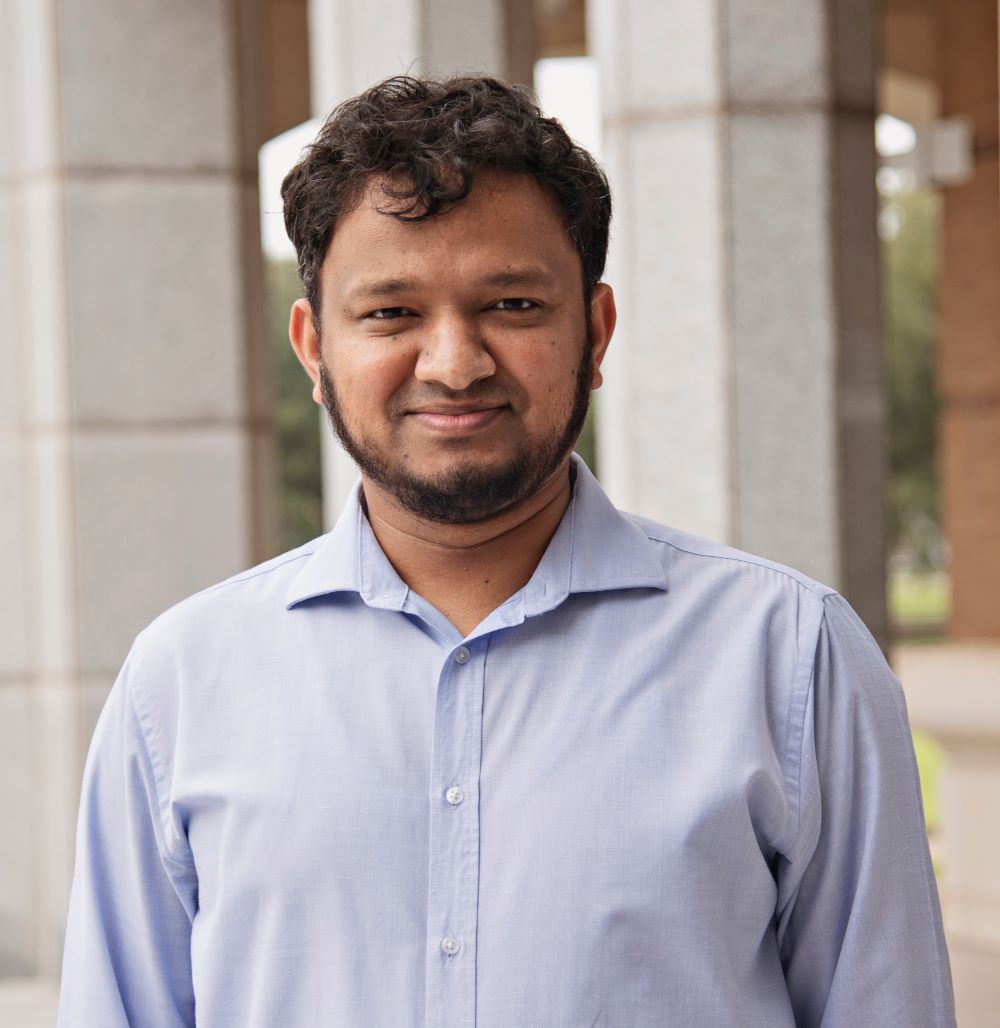
Timo Sprekeler is an Assistant Professor in the Department of Mathematics at Texas A&M University's College of Arts & Sciences. He joined Texas A&M in 2024 after serving as a Peng Tsu Ann Assistant Professor at the National University of Singapore (2021-2024). Sprekeler completed his Ph.D. in Mathematics at the University of Oxford (2017-2021) following a MASt from the University of Cambridge and BSc from TU Dortmund University. His research specializes in numerical multiscale methods, homogenization theory, and finite element techniques for partial differential equations. Recent publications focus on developing computational frameworks for elliptic equations and optimization problems, with applications to materials science and control systems. Sprekeler maintains an active research group and teaches graduate-level courses in computational mathematics. His office is located in Blocker 608L, and he can be contacted via email.
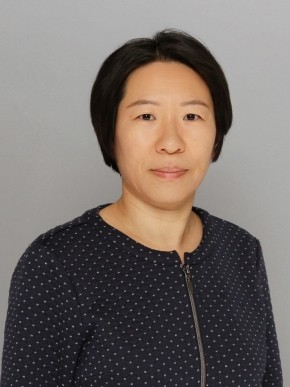
Kangkang Yin is an Associate Professor in the School of Computing Science at Simon Fraser University (SFU). His research focuses on computer animation, computer graphics, humanoid robotics, machine learning, and multimedia analysis. He teaches courses such as Computer Animation and Scientific Computing, and holds a PhD from the University of British Columbia (2007), MSc from Zhejiang University (2000), and BSc from Zhejiang University (1997). His work bridges robotics and animation through projects like physics-based character controllers, motion diffusion models, and robotic manipulation. Key contributions include the SIMBICON biped locomotion framework and research into emotion-driven dance animation. Recent efforts emphasize reinforcement learning applications in motion synthesis and robust visual navigation for unmanned ground vehicles. Yin's publications span over two decades, addressing challenges in motion control, physics-based simulation, and machine learning applications. His lab contributes to both academic advancements and practical robotics solutions. Current research trends show strong emphasis on combining generative AI with traditional animation techniques, as seen in recent work on auto-regressive motion models (AAMDM) and physics-augmented reinforcement learning (PARC).
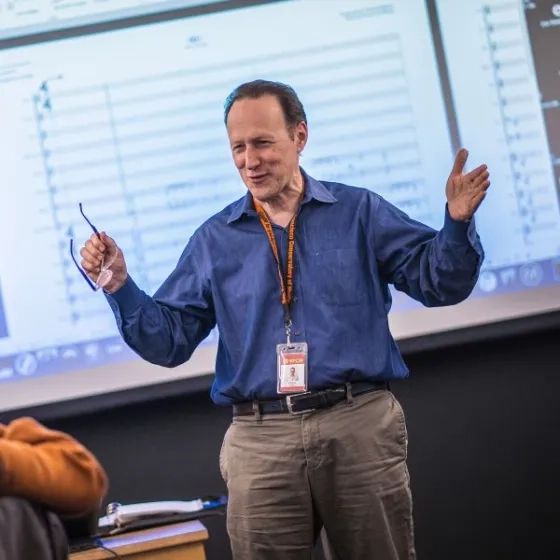
Lennie Moore serves as a faculty member in the Technology and Applied Composition (TAC) program at the San Francisco Conservatory of Music (SFCM), where he teaches Applied Lessons, Tools, Techniques and Analysis, and Orchestration for the Media Composer. With decades of experience as a composer, arranger, and orchestrator for video games, commercials, film, and television, Moore brings real-world industry expertise to his academic role. His teaching extends beyond SFCM, having developed and taught courses in Composing for Video Games at USC and UCLA Extension. Moore's research interests focus on the complex puzzle of video game scoring, emphasizing the deconstructionist approach required for interactive media. His work explores how to break down compositions into vertical layers and horizontal procedural components that can be implemented into music playback systems in real-time based on player choices. He specializes in open-world environments where music must smoothly transition through different game areas. His passion for building computers and video games outside of traditional music informs his innovative approach to media composition. His recent work includes the 2024 release of Outcast: A New Beginning , a sequel to his groundbreaking 1999 score for the original Outcast game, which was one of the first live orchestra and choir scores in gaming history. This new project involved approximately two hours and fifteen minutes of music with complex interactive elements, recorded during the pandemic with remote sessions. Best Soundtrack Album, G.A.N.G. Awards, 2011 Best Interactive Score, G.A.N.G. Awards, 2011 Best Audio — Other, G.A.N.G. Awards, 2008 Moore actively mentors students in the TAC program, with notable alumni including Kyle Randall (winner of the American Prize in composition), Shengyuan Li (Top 10 Finalist in the Berlin International Film Scoring Competition 2023), and Shawne Workman (now SFCM TAC faculty). His 2023 album Mentors pays tribute to his influences including Weather Report, Steps Ahead, Arif Mardin, Michael Gibbs, Don Grolnick, David Mash, Nick & Andy, Ken Kraintz, and Toshiko Akiyoshi. Moore emphasizes to students that 'Failure is an option' and encourages them to consider 'Who am I as an artist?' early in their development.
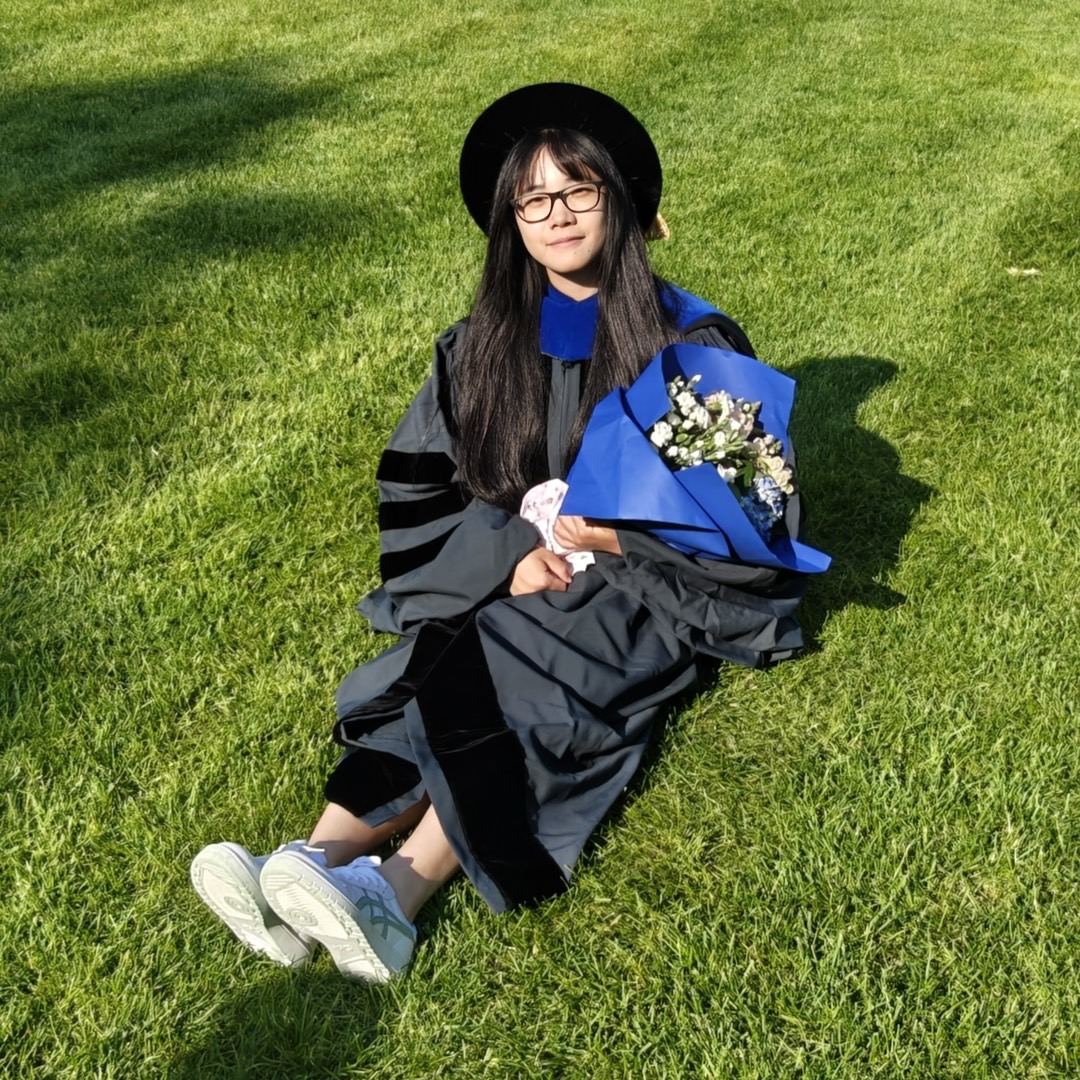
Luyang Zhao is an incoming tenure-track Assistant Professor in the Department of Electrical and Computer Engineering at Clemson University (starting August 2025). He earned his PhD in Computer Science and double undergraduate degrees in Computer Science and Mathematics from Dartmouth College and the University of Minnesota respectively. Academic Affiliation : Clemson University (Assistant Professor) Education : PhD in Computer Science (Dartmouth College), BS in Computer Science & Mathematics (University of Minnesota) His research focuses on Robotics , particularly soft robotics, modular systems, and bio-inspired designs. Key areas include: Large Language Models for robotic design automation Modular tensegrity systems for self-assembling structures Swarm coordination strategies Multi-environment adaptability (land/aquatic/aerial) Simulation tool integration for design optimization Recent publications highlight his work on SoftSnap modular platforms, LLM-driven swarm intelligence, and bioinspired dolphin robots. He received the Neukom Outstanding Graduate Research Prize for his contributions. Industry Experience : Research internships at Amazon Robotics and TuSimple Mentorship : Advised 6+ graduate/undergraduate researchers Open-Source Contributions : Developed SoftSnap platform for rapid prototyping Academic Service : Workshop co-organization (IROS 2023), peer reviewing (RA-L, ICRA, IROS, RoboSoft, BioRob)
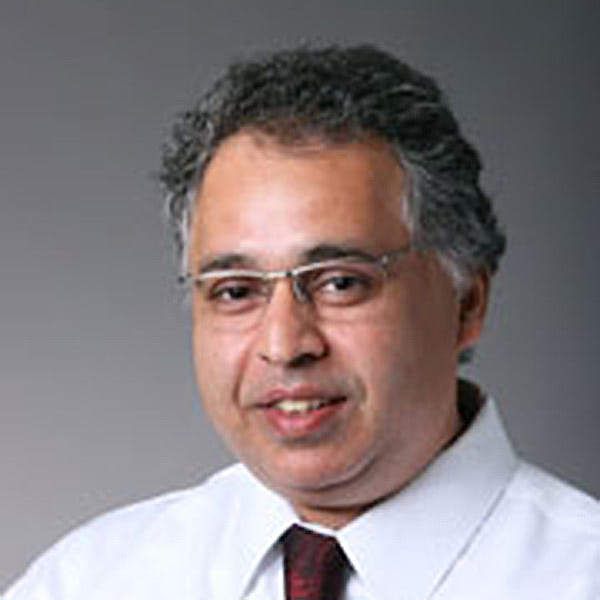
Sohail K. Mirza, MD, MPH is a Professor of Engineering at Dartmouth College's Thayer School of Engineering, specializing in biomedical engineering and orthopaedic surgery. His dual roles as a clinician and researcher focus on spinal biomechanics, surgical innovation, and healthcare policy. He received a BA in Physics from Colorado College (1985), an MD from the University of Colorado (1989), and an MPH from the University of Washington (2005). Research Interests: Dr. Mirza's work bridges clinical practice and engineering, with a focus on improving spinal surgery outcomes through advanced imaging techniques (e.g., intraoperative stereovision), reducing surgical overuse via policy analysis, and developing evidence-based guidelines for lumbar fusion procedures. His innovations include systems for pain measurement post-surgery and handheld stereovision tools for surgical navigation. Awards & Recognition: 2014 American Academy of Orthopaedic Surgeons Kappa Delta Award 2002/2008 University of Washington Service Excellence Award 1998 Cervical Spine Research Society Award Grants & Collaborations: His research has been supported by the National Institutes of Health and the Dartmouth College NSF I-Corps. He collaborates with biomedical engineers like Keith Paulsen and clinicians such as Roberts DW on projects like image-based registration for spine surgery. Labs & Teams: Leads the Spinal Surgery Innovation Lab at Thayer School, focusing on translating engineering solutions into clinical practices. Co-directs the Dartmouth Center for Surgical Innovation.
Dr. Yu Xiang is an Assistant Professor of Computer Science at the University of Texas at Dallas (UT Dallas), leading the Intelligent Robotics and Vision Lab (IRVL) . He holds a Ph.D. in Electrical and Computer Engineering from the University of Michigan (2016) and prior roles include Senior Research Scientist at NVIDIA (2018–2021) and postdoctoral research at the University of Washington. Research Focus : His work centers on robotics and computer vision , particularly enabling robots to perceive 3D environments, plan actions, and interact autonomously in human-centric spaces. Key areas include unseen object segmentation, 6D pose estimation, manipulation trajectory optimization, and lifelong learning through robot-environment interaction. Key Contributions : Developed datasets like MultigripperGrasp and HO-Cap , and pioneered methods such as DeepIM for 6D pose estimation. His lab’s robot Ramp focuses on tasks like object manipulation and human-robot collaboration. Grants : NSF SMILE grant ($750K), DARPA Perceptually-enabled Task Guidance (co-PI), Sony Research Award (PI). Awards : NVIDIA Academic Grant (2024), Sony Research Award (2022), ECCV Best Paper (2018). Lab Activities : Engages in STEM outreach, including mentoring high school students in the 2024 Summer Bridge Camp. Current projects emphasize self-supervised learning and embodied AI for robotic systems.
Diego Patiño is an Assistant Professor in the Department of Computer Science and Engineering at the University of Texas at Arlington (UTA), a position he began in September 2024. He earned his Ph.D. in Computer Engineering from the National University of Colombia in 2020, following M.S. and B.S. degrees from the same institution. Prior to joining UTA, he served as a Postdoctoral Fellow at Drexel University and a Postdoctoral Researcher at the GRASP Laboratory, University of Pennsylvania. B.S. in Computer Engineering, National University of Colombia, 2010 M.S. in Computer Engineering, National University of Colombia, 2012 Ph.D. in Computer Engineering, National University of Colombia, 2020 Dr. Patiño's research centers on geometric computer vision and machine learning, with applications in robotics and 3D vision. His primary interests include 3D reconstruction, graph neural networks, symmetry detection, physics-informed machine learning, and reinforcement learning. He develops algorithms that integrate geometric priors and physical constraints into deep learning models to improve robustness and generalization in real-world robotic systems. His recent publications demonstrate a strong trend in leveraging implicit neural representations for 3D shape reconstruction, applying graph neural networks to swarm robotics, and enhancing computer vision tasks with self-supervised and physics-informed learning. Work spans high-impact venues such as IEEE RA-L, ICRA, ICPR, and MICCAI, showing a consistent focus on geometric reasoning, robotic perception, and medical imaging applications. His scientific contributions have been recognized with awards from the UTA Division of Student Affairs for exceptional dedication and positive impact (2024 and 2025). He is actively involved in securing research funding, with multiple grants under review from NSF, Air Force SBIR, and industry partners like Sony. Exceptional dedication and positive impact recognition, UTA Division of Student Affairs (December 9, 2024) Exceptional dedication and positive impact recognition, UTA Division of Student Affairs (April 30, 2025) Dr. Patiño advises and serves on committees for multiple graduate students in computer science and engineering, including doctoral and master’s candidates. He is also leading or co-leading several research grants under review, covering topics such as aerial swarm navigation, neuromorphic sensing, and industrial computer vision. He teaches graduate courses in computer vision and is involved in service roles including PhD admissions and faculty appointments committees. He is affiliated with research initiatives at UTA, including the UTARI Research Institute, where he has presented on geometric modeling and physics-informed learning. His lab focuses on developing next-generation computer vision algorithms for robotics, industrial inspection, and safety-critical systems.
Dr. Clark N. Taylor is an Associate Professor of Computer Engineering and Director of the ANT Center at the Air Force Institute of Technology (AFIT), located at Wright-Patterson Air Force Base, Ohio. He is actively engaged in research and education within the Graduate School of Engineering and Management, focusing on advanced navigation and sensor fusion technologies for autonomous systems. Ph.D., Electrical and Computer Engineering (Computer Engineering), University of California, San Diego, 2004 M.S., Electrical and Computer Engineering, Brigham Young University, 1999 B.S., Electrical and Computer Engineering, Brigham Young University, 1995 Dr. Taylor's research spans computer engineering, navigation systems, and autonomous robotics, with a strong emphasis on sensor fusion, state estimation, and robust uncertainty modeling. His work integrates vision, inertial, magnetic, and pressure sensors for navigation in GPS-denied environments, particularly for unmanned aerial vehicles (UAVs). He is a leading expert in factor graph-based estimation, visual-inertial odometry, cooperative localization, and magnetic navigation. His publications demonstrate a consistent trend toward robust, uncertainty-aware estimation frameworks. Over the past decade, his research has evolved from early work on visual stabilization and pose estimation to advanced topics such as conservative covariance estimation, invariant filtering, and machine learning for spacecraft pose estimation. His recent articles focus on factor graphs, multi-agent fusion, and deep learning, indicating a trajectory toward intelligent, resilient navigation systems for defense and aerospace applications. Scientific awards include a Best Presentation in Session award at the ION GNSS+ conference in 2021. His research is supported by the U.S. Air Force and related defense agencies, with applications in surveillance, autonomous refueling, and on-orbit inspection. Dr. Taylor has advised numerous MS and PhD students, particularly in the areas of UAV navigation, sensor fusion, and cooperative localization. His lab, the ANT Center, focuses on advanced navigation and tracking, bringing together students and researchers to develop cutting-edge solutions for real-world operational challenges. The team conducts both simulation and experimental work, often integrating novel sensor modalities and estimation algorithms for improved system performance.
Helen Oleynikova is a Lecturer at the Department of Mechanical and Process Engineering at ETH Zürich, where she is part of the Autonomous Systems Lab. She works on the intersection of perception and planning, particularly for micro-aerial vehicles. Her research focuses on real-time onboard mapping, planning, and localization using visual-inertial systems and signed distance fields. Research Interests: Helen's work spans robotics, autonomous systems, and computer vision, with a focus on enabling safe and efficient navigation in complex environments. She specializes in visual-inertial odometry, SLAM, 3D mapping using signed distance fields, and real-time path planning for MAVs. Her projects often involve embedded systems and FPGA-based high-speed vision for obstacle avoidance. Publication Trends: Her recent publications (2023–2019) show a consistent focus on real-time, onboard algorithms for autonomous navigation. Key themes include signed distance function maps, collision-free motion generation, global localization, and efficient exploration. She frequently publishes in top-tier robotics conferences such as ICRA and IROS, and journals like IEEE RA-L and Journal of Field Robotics. Professional Experience: Senior Researcher, Autonomous Systems Lab, ETH Zürich Senior Software Engineer, Isaac 3D Perception, Nvidia Senior Scientist, Microsoft Mixed Reality and AI Lab, Zürich Software Engineer, Google (StreetView) Contributor, Willow Garage (ROS, TurtleBot Arm) Education: PhD in Robotics, ETH Zürich (2019) MSc in Robotics, ETH Zürich BSc in Robotics, Olin College of Engineering (2011) Advising and Grants: While no formal students are listed, she has collaborated extensively with researchers at ETH Zürich and industry labs. Her work has been supported through institutional affiliations and industry research roles. She has contributed to open-source robotics software, particularly in ROS-based systems for manipulation and navigation. Labs and Teams: Helen is a key member of the Mobile Manipulation team at the Autonomous Systems Lab at ETH Zürich. She has also been involved in projects at Nvidia, Microsoft, Google, and Willow Garage, focusing on real-world deployment of autonomous systems.
Alan Kuntz is an Assistant Professor at the University of Utah's Kahlert School of Computing (KSoC) and a core member of the Robotics Center. He leads the interdisciplinary Kuntz Research Lab, focusing on robotics and computational methods with medical applications, particularly in healthcare and surgery. His work spans robot motion planning, autonomous systems, and robot design optimization. Education: Ph.D. in Computer Science from the University of North Carolina at Chapel Hill, with research in the Computational Robotics Research Group. Previously a postdoctoral scholar at Vanderbilt University's Medical Engineering and Discovery Lab. Research interests include surgical robotics, continuum robots, needle steering, and medical device design. Recent projects include autonomous needle navigation, continuum lung staplers, and metamaterial-based robots. His team has published extensively on topics like kinematic modeling, uncertainty quantification, and medical intervention systems. Notable awards include the 2022 IEEE Access Best Video Award for his group's work, and mentoring over 15 students through the University of Utah's Undergraduate Research Opportunities Program. The Kuntz Lab actively collaborates on clinical applications, presenting at top conferences like IROS, Hamlyn Symposium, and ISMR. Labs/Teams: Directs the Kuntz Research Lab, known for its innovative medical robotics projects. The lab's work has been featured in Forbes and other media outlets for breakthroughs like in vivo needle steering demonstrations.
Merve Acer Kalafat is an Associate Professor in the Department of Mechanical Engineering at Istanbul Technical University. She specializes in robotics, control systems, compliant mechanisms, and additive manufacturing, with a focus on sensor integration and advanced material applications. Her research involves origami-inspired mechanisms, tactile sensors, and flexible electronics. Her work spans interdisciplinary areas such as piezoelectric actuators, parallel manipulators, and neural network-based performance analysis. Collaborations include studies on textile-based strain sensors and inkjet-printed flexible electronics. She has supervised 3 ongoing theses and contributed to over 20 publications since 2011. Key research interests include improving manufacturing processes (e.g., FDM parameters), developing foldable robotics systems, and advancing tactile sensing technologies for soft robotics applications.
Peter K. Allen is a Professor of Computer Science at Columbia University's School of Engineering and Applied Science, with a career spanning over three decades in robotics research. His work focuses on robotic grasping , 3D vision and modeling , and medical robotics , where he has made significant contributions to autonomous manipulation and sensor integration. Current affiliation: Columbia University Robotics Lab Academic rank: Professor Key research areas: Robotics, Computer Vision, Artificial Intelligence Education A.B. in Mathematics-Economics from Brown University M.S. in Computer Science from University of Oregon Ph.D. in Computer Science from University of Pennsylvania (recipient of CBS Foundation Fellowship, Army Research Office Fellowship) Research Interests Allen's research bridges fundamental robotics challenges with applied domains. His work on robotic grasping explores low-dimensional subspaces and semantic task suitability, while 3D vision contributions include illumination coherence and texture registration methods. In medical robotics , he develops surgical imaging tools and BCI-enabled grasping systems. Recent publications show trends in: Deep learning for robotic manipulation (2017-2022) Human-robot interaction through BCI and augmented reality Deformable object manipulation (garments, thin shells) Multi-modal sensing (vision-tactile fusion) Scientific Recognition NSF Presidential Young Investigator Award Best Student Paper Award (2007) for collaborative work Over 30 years of continuous funding from NSF, Army Research Office, and medical grants Teaching and Mentorship He has taught graduate courses in robotics (COMS 4733/6731) since 2010, emphasizing hands-on projects with advanced platforms like Baxter, PR2, and Fetch robots. His lab provides immersive training in: 3D photography Humanoid robotics Autonomous navigation Grasp planning
Tauhidul Alam serves as Assistant Professor in the Department of Computer Science within the College of Arts and Sciences at Louisiana State University Shreveport (LSUS), where he has taught since 2019. His research focuses on advancing autonomous robotic systems through innovations in artificial intelligence and cyber-physical applications. Dr. Alam holds a Ph.D. in Computer Science awarded in 2018. His scholarly work centers on robotics challenges including motion planning for underwater vehicles, multi-robot coordination under resource constraints, and energy-aware autonomous navigation. Key research domains span artificial intelligence, cyber-physical security using blockchain, and persistent monitoring in constrained environments. Analysis of his 14 recent publications reveals a strong emphasis on solving real-world robotics problems in marine and aquatic settings. His work consistently addresses uncertainty handling, multi-agent coordination, and security vulnerabilities, with increasing integration of data-driven methodologies across autonomous systems research. Scientific recognition includes: Best Student Paper Finalist at MTS/IEEE OCEANS Conference (2018) Dr. Alam teaches undergraduate courses including Computer Architecture (CSC 242), Database Systems (CSC 315), and Artificial Intelligence (CSC 465), alongside graduate-level instruction in Programming Languages (CSC 620) and Cloud Computing (CSC 690). Information regarding advised students, research grants, or laboratory affiliations is not specified in available materials.
Dr Raja Akrom is a Senior Lecturer in the Department of Computer Science , School of Natural and Computing Sciences , University of Aberdeen since July 2020. Previously, he held research positions at Royal Holloway, University of London (Post Doctoral Research Assistant), University of Waikato (Research Fellow), and Edinburgh Napier University (Senior Research Fellow). PhD in Information Security from Royal Holloway, University of London MSc in Information Security and Computer Science from Royal Holloway and University of Agriculture, Faisalabad BSc in Mathematics and Physics from University of the Punjab His research focuses on user-centric applied security and privacy architectures , data ownership in heterogeneous computing , security for machine learning , and security in emerging technologies such as blockchain, UAVs/drones, and autonomous vehicles. Key technical interests include smart card security, cryptographic protocols, IoT security, and Trusted Execution Environments. The article list reveals expertise in: edge computing security (DECML 2025), medical AI applications (2024), embedded device ownership (CO-TSM 2024), NFC transaction security (2024), and malware detection with ML (2024). Earlier work explored UAV security , blockchain governance , and smart card protocols . Currently teaching courses in Operating Systems , Secure Software Design , and Enterprise Security Architecture . Supervises postgraduate MSc Cybersecurity program.
Guillermo Gallego is a Professor of Robotic Interactive Perception at the Faculty of Electrical Engineering and Computer Science , Technische Universität Berlin , holding the Einstein Center Digital Future (ECDF) Professorship since 2019. His research bridges robotics , computer vision , and applied mathematics , focusing on optimization methods for interdisciplinary imaging and control problems. Education : PhD in Electrical and Computer Engineering (Georgia Tech, 2011), MS in Mathematics (Georgia Tech, 2009), MS in Electrical Engineering (Georgia Tech, 2007), MS in Mathematical Engineering (Universidad Complutense de Madrid, 2005). Gallego's work explores event-based vision to enhance robot perception through low-latency sensing and real-time 3D reconstruction . He previously held postdoctoral positions at the Institute of Neuroinformatics (University of Zurich/ETH Zurich) and Technical University of Madrid (Marie Curie Experienced Researcher). His interdisciplinary projects span applications in ocean remote sensing , autonomous driving , and space exploration . Key scientific awards include the Fulbright Fellowship (2005-2010) and Marie Curie Experienced Researcher (2011-2014). His recent publications focus on event camera algorithms for optical flow , SLAM , and noise estimation , reflecting his leadership in event-based vision research. Collaborations include institutions like University of Zurich , Georgia Tech , and University of Pennsylvania . Research Grants : Funded through ECDF and Marie Curie programs. Labs : Affiliated with the Einstein Center Digital Future and Institute of Neuroinformatics (Zurich/ETH Zurich).