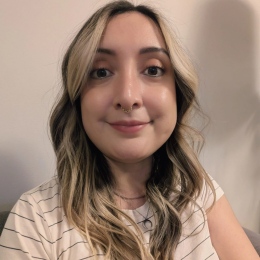
Katherine Mosquera is a vector biologist at Stockholm University's Department of Molecular Biosciences, part of the AnkarklevLab. Her research focuses on malaria transmission biology, vector behavior, and microbial ecology of insects like Aedes aegypti and Rhodnius spp. She holds a PhD from FIOCRUZ (Brazil) and conducted postdoctoral research at Uppsala University on mosquito trap efficacy using bacterial profiling. Her current work integrates computational tools to predict host competence for vector-borne diseases. Education: Bachelor's in Biotechnological Engineering, Universidad de las Fuerzas Armadas – ESPE (Ecuador) Master’s and PhD in Health Sciences (Infectious/Parasitic Diseases), FIOCRUZ (Brazil) Research Interests: Chemical ecology of vectors, symbiotic bacteria interactions, disease pathway analysis, and big data approaches in vector biology. Labs/Groups: Group Ankarklev (Stockholm University), previously part of Vector Behavior & Pathogen Interaction Group (FIOCRUZ) and Dr. Olle Terenius' lab (Uppsala).
Veronica De Sanctis is a Staff Scientist and Head of the Next Generation Sequencing Core Facility at CIBIO, Università di Trento, Italy, since 2011. She leads genomic sequencing initiatives, protocol development, and technical support for research projects. Her academic career includes postdoctoral research at UCLA (2005–2007) under Michael Grunstein, focusing on chromatin structure and transcriptional regulation, and at Università di Roma 'La Sapienza' (2003–2005). She earned a PhD in Genetics and Molecular Biology from Rome, with a thesis on Saccharomyces cerevisiae transcriptional regulation. Her research expertise spans epigenetics, gene expression regulation, and genomic technologies. Key areas include histone modifications, miRNA regulation, and NGS applications in cancer and microbiome studies. She has contributed to projects on p53 pathways, CRISPR-Cas9 editing, and SARS-CoV-2 diagnostics. Publications highlight her work on cancer genomics, epigenetic mechanisms, and microbiome analysis. She has developed methods for miRNA detection and optimized NGS workflows. Her professional memberships include the CTLS Core Technologies for Life Science (2020–present) and SIGU (2013–2019).
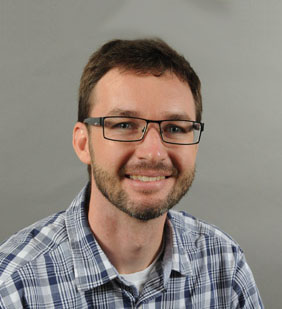
Michael Rubbo is a Clinical Professor in the Department of Environmental Studies and Sciences at Dyson College of Arts and Sciences, Pace University, where he conducts research and teaches in environmental science and conservation biology. He is based at the Dyson Environmental House in Westchester, NY, and maintains active office hours. PhD in Biology, Pennsylvania State University (2004) MS in Biology, University of Louisiana at Lafayette (2000) BS in Environmental Biology, SUNY College of Environmental Science and Forestry (1995) His research centers on conservation biology, particularly the ecology of suburban and urban ecosystems, with a focus on reptiles and amphibians, wetlands, disease ecology, and human-wildlife interactions. He studies how land development affects wildlife and how natural systems like wetlands can mitigate public health risks such as mosquito-borne diseases. His work bridges field ecology with environmental policy and education. The publications listed span from 2004 to 2012 and reflect a consistent focus on aquatic and terrestrial ecosystem dynamics, particularly in temporary forest ponds and urban landscapes. These works explore themes such as leaf litter decomposition, species interactions, carbon subsidies, amphibian breeding behavior, and the role of wetlands in disease control. Collectively, they highlight an integrative approach to ecosystem ecology, linking biodiversity, community structure, and ecosystem function in human-impacted environments. Dr. Rubbo has taught numerous courses including Fundamentals of Environmental Science, Ecology of Freshwater Ecosystems, Field Studies in Natural History, and Environmental Project Design. He mentors students through research (ENS 792, ENS 793), senior experiences, internships, and thesis preparation, fostering hands-on learning in environmental science. He is actively engaged in research and fieldwork, particularly in the Hudson Valley region, and contributes to environmental education and interpretation. While no formal lab or research team is named, his collaborative publications suggest strong ties with researchers at institutions such as Penn State and involvement in field-based ecological experiments.
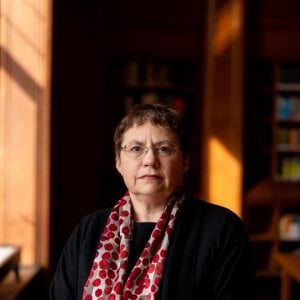
Valérie Choumet is an Assistant Professor and Group Leader at the Pasteur Institute, where she has been conducting research since 1991. She leads multiple research projects focused on arthropod-borne viruses, tick-borne pathogens, and vector-pathogen-host interactions. Her work spans virology, entomology, and immunology, with particular emphasis on understanding transmission mechanisms of diseases like Lyme disease, Chikungunya, Dengue, Zika, and Japanese encephalitis. Education: Doctorate of Pharmacy – Faculty of Pharmacy of Paris 5 (1987) Master 2 – Fundamental and Applied Toxicology (1987) PhD – Fundamental and Applied Toxicology (1992) Habilitation à diriger les Recherches (2000) Dr. Choumet's research focuses on the complex interactions between vectors, pathogens, and hosts. Her work examines how arthropod vectors like mosquitoes and ticks transmit pathogens, with particular interest in the role of vector saliva in enhancing pathogen transmission. She investigates the molecular mechanisms of viral tropism, pathogenesis, and vector competence for various arboviruses including Chikungunya, Dengue, Zika, and Japanese encephalitis viruses. Her laboratory employs advanced techniques including electron microscopy, proteomics, and in vivo models to study these interactions at cellular and molecular levels. Analysis of Dr. Choumet's recent publications reveals a strong focus on arbovirus pathogenesis, particularly the mechanisms by which viruses like Chikungunya and Zika infect specific cell types. Her research increasingly incorporates vaccine development approaches, as evidenced by recent work on Lyme disease mRNA vaccines. There's also a clear trend toward translational research, connecting basic virology with clinical outcomes and potential interventions for vector-borne diseases. Advising and Grants: Dr. Choumet has mentored numerous students and researchers throughout her career: PhD Students: Thomas Garrigues, Virginie Jan, Vincent Legros, Essia Belarbi, Souheyla Benfrid Master's Students: Aleksandar Zocevic, Edouard Bourguet, Stéphane Tchankouo-Nguetcheu, Divya Babin, Samir Mechai, Axelle Marchant, Alain Le Coupanec, Faustine Ryckebusch Postdoctoral Trainee: Violaine Cotté She currently leads multiple research projects including studies on tick-borne pathogens in dogs, Oropouche virus tropism, African Alphavirus Babanki, Lyme disease vector transmission, alphavirus myopathies, Rift Valley fever virus transmission, Japanese encephalitis transmission, Zika infection mechanisms, and the KerArbo project on salivary factors of Aedes albopictus. Dr. Choumet is a key member of the Arbovirus Group within the Environment and Infectious Risks Unit at the Pasteur Institute. This group, created in 2014, focuses on arthropod-borne viruses with special attention to emerging and re-emerging arboviruses. Her laboratory employs a multidisciplinary approach combining virology, entomology, immunology, and molecular biology to address critical questions in vector-borne disease transmission and pathogenesis.
Dr. Carlos Barceló Seguí is an Associate Professor at the University of the Balearic Islands (UIB) Department of Biology, with significant contributions to entomology, parasitology, and vector ecology. His research focuses on medically and agriculturally important Diptera species, particularly Culicoides (bluetongue vectors) and Aedes albopictus (tiger mosquito). He earned a Biology degree (2011) and Marine Ecology Master's (2014) from UIB, completing his PhD in Biotechnology (2019) on Culicoides seasonality. University of the Balearic Islands (Biology, 2011) University of the Balearic Islands (Marine Ecology, 2014) University of the Balearic Islands (Biotechnology, 2019) His research interests include: Vector ecology and bionomics Surveillance of invasive insects Pathogen transmission dynamics Entomological monitoring systems Impact of climate change on vector distribution Development of control strategies for agricultural pests Research projects include participation in EU initiatives like EDENext, FruitFlyNet, and VectorNet, alongside national programs targeting vector-borne diseases. He has contributed to studies on Wolbachia presence in Stomoxyini flies, malaria risk modeling via Anopheles distribution, and machine learning approaches for Culicoides abundance prediction. Teaching spans parasitology, zoology, agricultural pests, and biodiversity assessment across five academic programs at UIB. His technical expertise involves DNA barcoding, SEM sample preparation, and vector behavior analysis.
Anna-Bella Failloux is a leading researcher at the Institut Pasteur in Paris, where she heads the Arboviruses and Insect Vectors (AIV) laboratory within the Virology Department. Her research focuses on understanding the interactions between arboviruses and mosquito vectors, particularly Aedes species, and their role in the emergence and transmission of diseases such as dengue, chikungunya, Zika, yellow fever, and West Nile fever. Her work spans virology, entomology, epidemiology, and public health, with a strong emphasis on vector competence, transmission dynamics, and the impact of environmental changes on disease spread. She leads and participates in numerous national and international research projects, including those funded by ANR, H2020, and DARPA, often in collaboration with the Pasteur International Network. The recent publications highlight a strong trend in arbovirus surveillance, molecular epidemiology, and vector control strategies, particularly involving Wolbachia and climate change impacts. Her research combines experimental infection studies, genomic analysis, and field surveillance to assess the risk of arboviral disease emergence in new regions, such as the Caribbean and metropolitan France. Researcher, Institut Pasteur Head, Arboviruses and Insect Vectors (AIV) laboratory Member, Virology Department Scientific Awards: No specific awards mentioned in the provided text. Advising and Grants: Dr. Failloux mentors PhD students such as Benjamin Dupuis and Lazare Brézillon-Dubus. She leads or co-leads multiple research projects, including ENVIRON-MOS (on West Nile virus and environmental changes), CHIPARBO (high-throughput screening of arboviruses), and has been a work package leader in major consortia like ZIKALLIANCE and Infravec2, demonstrating her significant role in securing and managing research funding. Labs and Teams: She leads the AIV laboratory, which maintains mosquito colonies (including Aedes aegypti, Aedes albopictus, and Culex species) and conducts experimental infections under high-containment (P3/A3) conditions. The team includes technicians, engineers, PhD students, and post-doctoral researchers, working collaboratively on vector-pathogen interactions.
Dr. Douglas C. Woodhams is an Assistant Professor at UMass Boston's Department of Biology, specializing in disease ecology, immunological ecology, and conservation medicine. His research focuses on microbial contribution to immunity, microbiome manipulation for biotherapies, and symbiotic microbiota function in amphibian and mosquito systems. Assistant Professor, UMass Boston, Department of Biology NSF Faculty Early Career Development Award recipient Director of the Woodhams Lab, a multidisciplinary team with over 150 co-authors in 100+ publications Research Interests: The lab investigates host-symbiont-pathogen dynamics across scales, with two main programs: Amphibian Chytridiomycosis mitigation through microbiome research and probiotic development Mosquito microbiome studies for arbovirus transmission reduction Maintains biosecure insectary, microbial culture collection, and chemostat facilities Scientific Awards: NSF CAREER Award (2021) UMass Boston Endowed Faculty Career Development Award Education: Mentors over 30 students including PhD candidates, postdocs, and undergraduates through programs like NSF IGERT, McNair Scholars, and NIH IMSD. Former lab members have moved to positions at Penn State, Arcaea Biotech, and Tufts University.
Brian Lovett is a Post-Doctoral Researcher at the Division of Plant and Soil Sciences at West Virginia University . His research focuses on chestnut blight biotechnology and the pathology/evolution of entomophthoralean fungi. Contact: brian.lovett@mail.wvu.edu . Education PhD in Entomology, University of Maryland BSc in Microbiology, Michigan State University Research Interests : Transcriptomic and genomic studies of Metarhizium species in agricultural/vector biology systems. Development of transgenic fungal strains for mosquito control in sub-Saharan Africa and fungal interactions with plant roots. Collaborative work includes semi-field trials in the MosquitoSphere facility in Soumousso, Burkina Faso.
Ellie Sherrard-Smith is an Honorary Research Fellow at the School of Public Health, part of the Faculty of Medicine at Imperial College London. She holds a UKRI Future Leaders Fellowship and co-leads the Imperial College Network of Excellence in Malaria. Her affiliations include the MRC Centre for Global Infectious Disease Analysis and the Malaria Modelling Research Group. Her work focuses on integrated vector control strategies for malaria, particularly analyzing how mosquito behavioral adaptations and human activities influence intervention efficacy. Her research interests include: Entomological impacts of insecticide resistance in mosquitoes Seasonal and spatial variations in mosquito biting patterns Cost-effectiveness of novel vector control tools like larval source management Development of transmission-blocking interventions (TBIs) using hierarchical Bayesian models Her approach emphasizes ecologically sustainable control methods that enhance community resilience against malaria. Notably absent are specific publication titles or grant details in the provided text.
Holly C Tuten serves as an Associate Research Scientist in Vector Ecology at the University of Illinois Prairie Research Institute, specifically within the Illinois Natural History Survey (INHS) Medical Entomology Lab. She also maintains affiliate appointments in Entomology and the National Center for Supercomputing Applications (NCSA), where she contributes to the IDPH-funded Illinois Statewide Tick Surveillance Program and BiteMap project. Her educational background includes: PhD in Entomology from Clemson University (2011), where she was an NSF Graduate Research Fellow MSc in Entomology from Clemson University BSc in Biology with Chemistry minor from University of North Carolina at Chapel Hill (2006) Dr. Tuten's research employs an integrated methodology combining molecular analyses (microbiome characterization, pathogen detection), taxonomy, organismal experimentation, mathematical modeling, and socioeconomic analysis. Her work focuses on invertebrate vectors, particularly mosquitoes and ticks, with field and laboratory research conducted throughout Illinois for vector-borne pathogen surveillance and vector control improvement. Analysis of her publications reveals strong expertise in tick-borne diseases, with recent work documenting the expansion of Gulf Coast ticks and Lone Star ticks in Illinois, associated pathogens like Rickettsia parkeri and Heartland virus, and microbiome relationships to conditions like alpha-gal syndrome. Her earlier research examined mosquito ecology in zoological settings and science communication pedagogy. Her scientific recognition includes: NSF Graduate Research Fellowship for mosquito ecology research in zoological parks As an educator, Dr. Tuten teaches IB481 "Vector-borne Diseases" at UIUC during Spring of even years and provides guest lectures on vector biology. She conducts extensive outreach on ticks and mosquitoes for various community groups, connecting her research to public health education. Within the INHS Medical Entomology Lab, Dr. Tuten leads field collection efforts across Illinois, integrating traditional entomological methods with computational approaches through NCSA collaborations. Her team's work provides critical baseline data for monitoring emerging vector species and associated pathogens in the Midwest region.
Changhyun Raymond Kim serves as an Associate Research Scientist in Medical Entomology at the Illinois Natural History Survey (INHS), University of Illinois Urbana-Champaign, with research centered on mosquito vector ecology, microbiome dynamics, and environmental drivers of disease transmission. His work emphasizes Illinois-specific systems involving Aedes aegypti, Aedes albopictus, and Culex mosquitoes, integrating field ecology with molecular techniques to address vector-borne disease risks. Kim's research interests focus on how land cover, seasonality, and nutritional stress impact mosquito abundance, microbiome diversity, and vector competence for pathogens like dengue virus and eastern equine encephalitis. He investigates carry-over effects from larval to adult stages, examining how temperature and diet influence mosquito immunity, development, and longevity. His interdisciplinary approach bridges ecological theory with public health applications to understand disease transmission dynamics. Analysis of Kim's recent publications (2022-2024) reveals a cohesive program exploring environmental determinants of mosquito communities. Key themes include land development effects on Culex microbiomes, nutritional stress compromising antiviral immunity, and landscape-scale patterns in Culicidae distribution. His work demonstrates methodological integration of field surveys, controlled experiments, and genomic analyses to address ecological drivers of vector-borne diseases. No scientific awards were mentioned in the provided text. The provided text does not specify any graduate students advised by Kim or grant funding he has received, though his collaborative network includes researchers like Christopher M. Stone and Jessica Yan across multiple publications. Kim operates within the Illinois Natural History Survey's vector ecology team, conducting field and laboratory research on mosquito surveillance, microbial interactions, and disease transmission dynamics in Illinois. His work involves interdisciplinary collaboration with entomologists, ecologists, and public health specialists to translate ecological findings into vector control insights.
Sylvie Manguin is a Full Research Professor at the Institute of Research for Development (IRD), based at the University of Montpellier, France. She is a leading medical entomologist specializing in mosquitoes and vector-borne diseases, particularly malaria and dengue. Her research focuses on Anopheles mosquitoes across three continents (Asia, Africa, Americas), with expertise in molecular species identification, population genetics, phylogenetic studies, vectorial capacities, spatial surveillance, midgut microbiota biodiversity, salivary immunological markers, and vector control approaches. Dr. Manguin has authored 90 indexed publications, six book chapters, and three major books including Anopheles mosquitoes: New insights into malaria vectors (2013) and Biodiversity of malaria in the World (2008). Her recent work has focused on malaria elimination strategies, examining multidrug-resistant malaria, vaccine development, cross-border transmission challenges, and insecticide resistance. Secretary General of the International Federation of Tropical Medicine (IFTM) Member of Editorial Boards of Malaria Journal and Acta Tropica Reviewer for more than 20 international scientific journals Her research contributes significantly to global malaria elimination efforts, with particular emphasis on understanding vector biology to develop more effective control strategies across diverse geographic regions.
Zachary Brown is an Associate Professor in the Department of Agricultural and Resource Economics at North Carolina State University, affiliated with the Chancellor’s Faculty Excellence Program cluster in Genetic Engineering and Society. His work bridges economic theory with biological systems, emphasizing biotechnology's role in sustainable development and environmental policy. Academic Rank: Associate Professor University: North Carolina State University Department: Agricultural and Resource Economics Cluster: Genetic Engineering and Society Email: zsbrown2@ncsu.edu Research Interests: Brown specializes in economic modeling of biotechnology adoption, pesticide resistance management, and household behavior in environmental health contexts. His work spans agricultural economics, behavioral economics, and genetic engineering policy, with geographic focus on Africa and Southeast Asia. Scientific Contributions: His 15 most recent publications analyze topics including gene drives in agriculture, phosphorus management, Wolbachia-based dengue control, and cookstove adoption in Ghana. The articles demonstrate cross-disciplinary approaches combining computational economics, environmental science, and public health policy. 2009 Peccei Prize (IIASA) 2012 Outstanding Doctoral Dissertation Award (Agricultural & Applied Economics Association) Brown teaches and advises for the NSF-funded Ph.D. minor program in Genetic Engineering and Society, connecting technical innovation with socioeconomic implications.
Sven Warris is a researcher at BIOS Applied Bioinformatics within Wageningen University & Research. His work spans bioinformatics, genomics, and microbiome studies, with a focus on developing computational tools for genomic and metagenomic data analysis. PhD in Bioinformatics (2013-2019), Wageningen University Research Interests: Bioinformatics tool development for high-throughput data Gut microbiome analysis in insects Symbiotic virus colonization in parasitoids Metagenomic approaches to disease-suppressive soils Scientific Contributions: Developed Pacasus for palindromic sequence correction Contributed to chromosomal assembly of parasitic wasp genomes Studied gut bacteria impact on arbovirus transmission Advancing functional amplicon sequencing methodologies Projects: Microservices to connect genetic maps to (pan)genomes (2019) Low-cost high-performance biocomputing (PhD project, 2013-2019)
Professor Sian Clarke is a leading epidemiologist at the London School of Hygiene & Tropical Medicine (LSHTM), where she serves in the Department of Disease Control within the Faculty of Infectious and Tropical Diseases. She has been instrumental in advancing malaria control strategies in low-income countries, particularly focusing on school-aged children in sub-Saharan Africa. Her research has directly influenced WHO recommendations, especially regarding intermittent preventive treatment in schools. Professor Clarke holds several leadership positions including being the LSHTM Programme Director of the MSc One Health and LSHTM Co-Director of the OneZoo Centre for Doctoral Training, a multi-university PhD program addressing environmental drivers of zoonoses. From 2017-2021, she served as Co-Director of the LSHTM Malaria Centre, a network of over 200 malaria researchers. Her academic career at LSHTM has progressed steadily from Lecturer (2002-2008), to Associate Professor (2008-2018), to her current position as Professor in Epidemiology and Global Health (2018-present). Her research program encompasses infectious disease epidemiology with a focus on malaria control strategies in resource-constrained environments. She has conducted numerous intervention studies in sub-Saharan Africa, including randomized controlled trials on malaria control in schools, seasonal malaria chemoprevention (SMC), perennial malaria chemoprevention (PMC), malaria prevention during pregnancy, and the use of malaria rapid diagnostic tests by community health workers. Her work has drawn attention to the previously overlooked area of malaria in school-aged children, demonstrating the impact of intermittent preventive treatment in schools (IPTs) on Plasmodium infection, anaemia, and cognitive function. Professor Clarke's recent publications reveal an expanding research portfolio that integrates malaria control with nutrition, education outcomes, and a One Health approach to antimicrobial resistance. Her work increasingly examines the medicines retail sector, access to quality medicines, and the role of private providers within health systems, particularly during public health emergencies like the COVID-19 pandemic. She is a strong advocate for interdisciplinary research, bringing together insights from multiple disciplines to address pressing public health challenges. Her work spans multiple countries including The Gambia, Kenya, Mali, Senegal, Uganda, Cameroon, Côte d'Ivoire, Tanzania, Thailand, Benin, and Mozambique. As an educator, Professor Clarke has been the academic coordinator of the MSc module on 'Epidemiology and Control of Malaria' at LSHTM and teaches across several MSc programs including Public Health in Developing Countries, Control of Infectious Diseases, Epidemiology (distance learning), Infectious Diseases (distance learning), and the Diploma of Tropical Medicine and Hygiene.