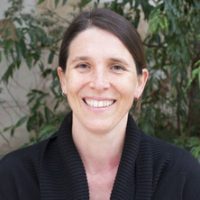
Dr. Stacey Pitsillides is an Associate Professor at Northumbria University's School of Design Arts and Creative Industries, actively researching intersections between technology, design, and death studies. Her work contributes to UN Sustainable Development Goal 4 (Quality Education) through innovative approaches to death literacy. Active PhD researcher in digital death practices Recipient of 2017 award (specific name not stated) Over 380 citations in Scopus Engaged in public outreach with hospices and at major festivals Research focuses on: Social design approaches for sensitive contexts Technological reframing of death and bereavement Digital ethics in legacy creation Curatorial practices as knowledge production Materiality of digital heritage Posthumanist memorialization Recent publications examine thanobotics, digital twins, and feminist immortality frameworks, with a strong emphasis on participatory design methods and death-positive initiatives. Collaborations include academic and artistic partnerships in UK and European contexts. 2017 Award recipient Actively supervises PhD students while maintaining public engagement through media appearances, exhibitions, and festival participation.
Dr. Eugenia Nijgh de Sampayo Garrido is a Research Fellow at the University of Queensland 's School of the Environment within the Faculty of Science . Her research focuses on coral reef ecology , particularly the symbiotic relationships between corals and Symbiodinium algae, and how these associations influence reef resilience under climate change . Education : PhD in Coral Symbiosis (University of Queensland, 2008) Key Research Areas : Symbiotic flexibility in climate-stressed corals Latitudinal range dynamics of coral communities Larval recruitment and settlement ecology Microbial community interactions in reef systems Publication Trends show consistent focus on coral-Symbiodinium interactions (2008-2023), with recent work on marine heatwave impacts (2023), microbiome plasticity (2020), and adaptive mechanisms in marginal reef populations (2017). She collaborates extensively with Prof. John Pandolfi 's lab and contributes to PeerJ consensus studies (2023). Supervision : Available for supervision, with completed roles as associate advisor for three PhD projects (2019-2022) examining coral range dynamics , early life history interactions , and maternal investment trade-offs .
Dr. Abenaa Jones is an Assistant Professor in the Department of Human Development and Family Studies at Pennsylvania State University, where she holds the Ann Atherton Hertzler Early Career Professorship. As director of the Addiction, Sex, and Infectious Diseases (ASID) Lab, her research focuses on the syndemic of substance use disorders, violence, sexual risk behaviors, and HIV/STIs, particularly among marginalized and criminal justice-involved women. B.S., 2012, Public and Community Health, University of Maryland Ph.D., 2016, Epidemiology, University of Florida Her work examines racial disparities in opioid overdose training, naloxone administration, and treatment access, with a focus on gender-specific interventions for criminal justice-involved women. She evaluates structural and behavioral strategies to reduce substance use harms, including medication-assisted treatment (MAT) and trauma-informed care integration. Dr. Jones’ research emphasizes multidisciplinary approaches to addiction, intersecting with social determinants like housing instability and incarceration stigma. She has secured significant funding, including an NIDA K01 Career Development Award and NIH T32 training grant, to develop interventions that address systemic barriers to recovery. Scientific awards include: Ronald E. McNair Scholar’s Program (2009) McKnight Doctoral Fellowship (2012) NIDA Diversity Scholar (2019) Bloomberg American Health Initiative Travel Award (2019) She mentors PhD students in Human Development and Family Studies and collaborates across institutions, including the Consortium to Combat Substance Abuse and the Edna Bennett Pierce Prevention Research Center. Her lab integrates expertise from epidemiology, demography, and clinical practice to address addiction and infectious disease intersections.
Pekka Nuorti is a Professor of Epidemiology and Director of the Global Public Health Research and Education Center at the University of Tampere, Finland. He leads the International Doctoral Programme in Epidemiology and Public Health (IPPE) and holds an academic position within the Faculty of Social Sciences, Department of Epidemiology. His research focuses on vaccine effectiveness, infectious disease surveillance, and global health challenges, particularly in low-resource settings. Nuorti has contributed extensively to studies on pneumococcal vaccines, SARS-CoV-2 transmission dynamics, and public health policy. Research Interests: Vaccine impact and effectiveness Infectious disease epidemiology and surveillance Global health equity and NCD prevention Climate change and vector-borne diseases Public health interventions in humanitarian crises Recent Work Trends: Recent articles emphasize vaccine efficacy in Africa and Asia, transmission dynamics of respiratory pathogens, and the intersection of climate change with disease patterns. Collaborations span multi-country analyses, particularly in Eastern Europe and Sub-Saharan Africa. Advising & Grants: As a program director, Nuorti oversees doctoral training in epidemiology and public health. His grants focus on global health research, including WHO-funded studies on pneumococcal vaccines and pandemic preparedness. Labs/Teams: Active in the Global Public Health Research and Education Center, coordinating international projects on infectious disease control and vaccine implementation.
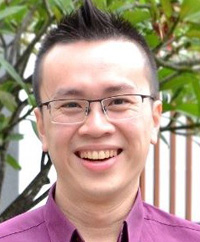
Dr. Peter Chew is an Associate Professor of Psychology at James Cook University Singapore (JCUS). He specializes in behavioral addictions, particularly internet gaming disorder, social media addiction, and problematic pornography use. His research focuses on prevalence, correlates, interventions, and effects of these addictions. He also explores Terror Management Theory and psychometrics. Education: PhD in Psychology (2012-2016, JCU), BPsych (Hons I, 2008-2011, JCU), and a Graduate Certificate in Academic Practice (2018-2020, JCU). Research interests include behavioral addiction mechanisms, intervention strategies, and the psychological impact of mortality salience. He has published extensively in journals like Addictive Behaviors and Psychiatric Quarterly . His recent work examines cross-cultural addiction pathways, pandemic-induced death anxiety, and sleep quality mediated by addiction. He mentors both graduate and undergraduate students, co-authoring over 40 publications.
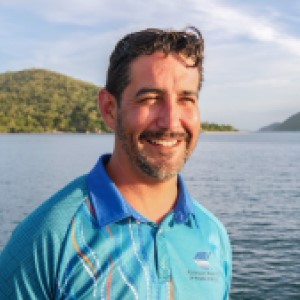
Dr. Manuel Gonzalez Rivero is a Research Fellow and Team Leader of Reef Process Dynamics at the Australian Institute of Marine Science (AIMS). His work focuses on multidisciplinary approaches to understand coral reef ecosystem dynamics, combining ecological theory, mathematical modeling, and advanced technologies like AI and 3D mapping. He leads initiatives integrating global coral reef monitoring with climate change impact assessments. Education: PhD in Biological Sciences (University of Exeter, UK, 2012), BSc in Biological Sciences (Universidad Central de Venezuela, 2005). Research Interests: Spatial and disturbance ecology of coral reefs Climate change effects on reef resilience Automated coral reef monitoring using AI and autonomous systems Long-term trajectories of reef communities Technological advancements in habitat mapping and 3D modeling Publications highlight contributions to coral reef recovery dynamics, AI-driven monitoring, and global bleaching impacts. His work emphasizes scalable solutions for reef conservation amid climate pressures. Grants and Labs: Active in AIMS-led projects, including XL Catlin Seaview Survey and Reef 2050 monitoring. Collaborates with institutions like the University of Queensland and UNESCO.
Dr. Shawn Lehman is a Professor in the Department of Anthropology at the University of Toronto. His research program integrates evolutionary ecology and conservation biogeography to model primate responses to anthropogenic disturbances, focusing on lemurs in Madagascar's tropical dry forests around Ankarafantsika National Park. Specializes in primate evolutionary ecology Conservation biogeography of Madagascar and South American primates Director of the Tropical Research in Edge Effects (TREE) program Active in Madagascar since 1998 with long-term research in Guyana and Suriname Research focuses on forest loss , fragmentation , and edge effects using GIS and remote sensing. Key projects include: Ambanjabe Forest Fragment Project (42 fragments) Maririano Coastal Region Studies Perrier's Sifaka Conservation Fandriana-Marolambo Corridor Assessment Collaborates with Malagasy Institute for the Conservation of Tropical Environments (MICET). Research integrates primate behavior , plant-animal interactions , and climate change mitigation strategies. Supervises graduate students Malcolm S. Ramsay, Fernando Mercado-Malabet, and Tristan Frappier-Brinton.
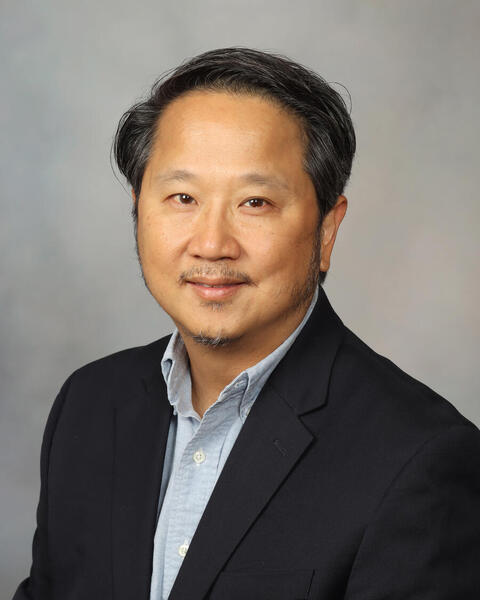
Horng H. Chen, M.D., is a board-certified adult heart failure cardiologist and physician-scientist at Mayo Clinic in Rochester, Minnesota, holding the position of Professor of Medicine in the Department of Cardiovascular Medicine at Mayo Clinic College of Medicine. Dr. Chen serves as Chair of the Division of Circulatory Failure and is the Co-Director of Mayo Clinic's Cardiorenal Research Laboratory, where he has established an independent research program in human cardiorenal physiology in heart failure. Primary Appointment: Consultant, Division of Circulatory Failure, Department of Cardiovascular Medicine Administrative Appointment: Chair, Division of Circulatory Failure, Department of Cardiovascular Medicine Academic Rank: Professor of Medicine Location: Rochester, Minnesota Dr. Chen is a board-certified cardiologist with subspecialty certification in heart failure and transplantation and adult comprehensive echocardiography. With over 20 years of experience in translational research, he has advanced the field of cardiorenal therapeutics in heart failure, filing 10 patents for cardiorenal syndrome therapeutics. His pioneering work has changed thinking in congestive heart failure and cardiorenal biology by advancing the concept of cardiac natriuretic peptides as cardiorenal protective properties via cyclic guanosine monophosphate (cGMP) signaling. He is pursuing subcutaneous administration of native and novel designer natriuretic peptides, along with nanotechnologies like nanoparticles with embedded natriuretic peptides. Cardiorenal dysfunction: Established and developed independent research program in human cardiorenal physiology in heart failure Natriuretic peptide therapeutics: Advanced concepts of cardiac natriuretic peptides as cardiorenal protective properties Novel therapies: Bridging laboratory discoveries to patient care for cardiorenal dysfunction Dr. Chen's research has significant clinical impact, particularly through the Renal Optimization Strategies Evaluation in Acute Heart Failure (ROSE-AHF) study, which changed management approaches for acute heart failure patients. His work continues to discover and translate novel therapeutics for heart failure with a translational focus through Mayo's Center for Clinical and Translational Studies Activities (CTSA). Elected member, The American Society for Clinical Investigation (2012) Stanford University Names World's Top 2% Scientists (2021) Multiple Jay N. Cohn Young Investigator Awards from the Heart Failure Society of America Cardiovascular Diseases Outstanding Achievement Award Mayo Clinic (2001) Mayo Foundation Scholar Mayo Clinic (2001) Dr. Chen has been continuously NIH-funded since 2005, currently serving as principal investigator on three NHLBI research grants and co-investigator on the NHLBI Heart Failure Clinical Research Network. His mentoring extends through the NIH/NHLBI Cardiovasology T32 Training Grant, supporting the development of young cardiovascular researchers in the Department of Cardiovascular Diseases. As Co-Director of the Cardiorenal Research Laboratory, Dr. Chen leads a team actively developing novel therapeutics for heart failure and cardiorenal syndrome. The laboratory collaborates closely with Mayo's Center for Clinical and Translational Studies Activities to translate discoveries from bench to bedside, with particular focus on advancing nanotechnologies for therapeutic applications in cardiovascular medicine.
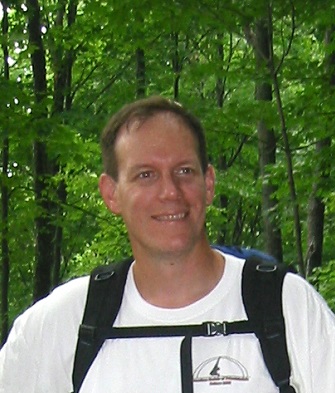
Dylan Schwilk is an Associate Professor in the Department of Biological Sciences at Texas Tech University, where he conducts research and mentors graduate students in plant and fire ecology. He is based in the College of Arts and Sciences and leads the Schwilk Lab, which investigates plant flammability, community assembly, and climate change impacts in fire-prone ecosystems. Education: B.A. in Biology and English & Comparative Literary Studies, Occidental College (1996) Ph.D. in Ecology and Evolution, Stanford University (2002) His research interests center on plant ecology and evolution, with a focus on how fire acts as a selective force shaping plant traits and community dynamics. He integrates field experiments, garden studies, comparative phylogenetic methods, and theoretical models to explore how plants influence fire behavior and how fire, in turn, drives evolutionary adaptations. Key areas include plant flammability, the interaction of drought and temperature on tree performance, and the ecological significance of fire-adapted traits in semi-arid systems. His work has implications for understanding vegetation shifts under climate change and improving fire management strategies. His recent publications reveal a strong focus on fire ecology, functional traits, and community assembly. Trends in his work include the use of trait-based approaches to predict fire behavior, the role of phylogenetic diversity in mediating ecosystem responses, and the evaluation of fuel reduction techniques. He has published in top journals such as Ecology Letters , Journal of Ecology , and Ecological Applications , demonstrating a consistent and impactful research trajectory. Scientific Awards: No awards listed in the provided text. Dylan Schwilk is actively advising graduate students, including Xiulin Gao, and is currently accepting new Master’s and Ph.D. students. He emphasizes the development of independent research projects aligned with students' professional goals and encourages applications for external funding such as the NSF Graduate Research Fellowship. His lab collaborates with researchers like Helen Poulos (Wesleyan University) on ecophysiological mechanisms controlling tree distributions. The Schwilk Lab utilizes field sites in regions such as the Sierra Nevada and northern Sierra Madre Oriental, conducting multi-species analyses of plant responses to environmental stressors.
Karla Wagner is an Associate Professor in the School of Public Health at the University of Nevada, Reno. She is a behavioral scientist whose research focuses on mitigating health harms among people who use drugs, with continuous funding from the National Institutes of Health (NIH) and the Centers for Disease Control and Prevention (CDC) since 2008. Her work employs mixed methods and qualitative approaches to study harm reduction interventions, overdose prevention, and substance use patterns, particularly related to methamphetamine and opioids. Education: Ph.D. in Preventive Medicine (Health Behavior Research), University of Southern California Postdoctoral Fellowship, Division of Global Public Health, University of California, San Diego M.A. in Applied Anthropology, Northern Arizona University B.A. in Anthropology and Minor in Biology, University of Colorado, Boulder Her research interests include harm reduction, overdose prevention, substance use disparities, social determinants of health, and the intersection of public health and criminal justice. She has led and co-led multiple federally funded studies, including projects on naloxone distribution, methamphetamine use in the Mountain West, and social networks of overdose responders. Her recent publications reflect a strong trend in qualitative and mixed methods research focused on marginalized populations, with recurring themes of fentanyl contamination, peer recovery support, and structural barriers to health. She frequently collaborates with students and community partners, evidenced by co-authored publications and community-engaged research. Scientific Awards: No awards explicitly mentioned in the text. Dr. Wagner actively mentors students, as indicated by the asterisked student authors on her publications. She has received significant grant funding from NIH/NIDA and CDC, supporting her ongoing research in public health interventions. She teaches graduate courses in mixed methods and applied public health research, contributing to the training of future public health professionals. Her work is often conducted in collaboration with community-based organizations and public health departments, particularly in Nevada and New Mexico, focusing on real-world implementation of harm reduction strategies. She is involved in developing tools such as simulation models for public health officials and evaluating peer-based interventions in emergency departments.
Michel Coleman is a Professor of Epidemiology and Vital Statistics at the London School of Hygiene and Tropical Medicine (LSHTM), where he has led the Cancer Survival Group since 1995. His work focuses on cancer incidence, mortality, and survival disparities across socioeconomic, geographic, and ethnic groups , with applications to public health policy . He co-directs LSHTM's annual short course on "Cancer survival: principles, methods and applications" and supervises doctoral students. Academic Background : BA (Oxford, 1971), BM BCh (Oxford, 1975), MSc Epidemiology (LSHTM, 1981), MFCM (1985), FFPH (2006) Professional Roles : Honorary Consultant in Oncology (UCL Hospitals NHS), Visiting Professor (Newcastle University), Cybersecurity Forum member (LSHTM) His research drives the CONCORD program , a series of global cancer survival studies spanning 31 countries (CONCORD-1, 1999) to 71 countries (CONCORD-3, 2018) and 350+ registries in CONCORD-4 (2023–2025). This includes analyzing 90 million adult and 650,000 pediatric cancer cases to assess 30-year survival trends and pandemic impacts. Scientific recognition includes the Calum S. Muir Memorial Award (2018) for advancing cancer registry capacity and training. Current grants from St Jude Children’s Research Hospital , Cancer Research UK , and Institut National Du Cancer fund ongoing CONCORD-4 work. His team collaborates with 720 CONCORD Working Group members and 25 Lancet Global Commission colleagues.
Carola Vinuesa is a leading immunologist currently serving as Principal Group Leader and Royal Society Wolfson Fellow at The Francis Crick Institute (London, UK). She previously held academic leadership roles at the Australian National University (ANU), including Professor of Immunology (2010) and Head of Department (2011). Education : MD (University Autónoma of Madrid, 1992), PhD (University of Birmingham, 2000) Leadership : Founder/co-Director of NHMRC Centre for Personalised Immunology (2014), Director of China-Australia Centre for Personalised Immunology (2022), Advisory Professor at Jiaotong University (2018) Her research focuses on immunology , genetics , and autoimmune diseases , particularly identifying T cell subsets (Tfh, Tfr) that regulate antibody responses and autoimmunity. She connects genetic variation to lupus pathogenesis and explores mechanisms of immune tolerance. Recent publications highlight her work in genetic immunology , with studies on TLR7 gain-of-function variants , ZEB2 in B cell aging , and neuritin in Tfr cell function . Her team integrates genomics , flow cytometry , and model organisms to study immune checkpoints. Scientific Awards : Royal Society Fellow (2022), Gottschalk Medal (AAS), Lupus Insight Prize (2023), Johann Anton Merck Award (2023), Life Scientist of the Year (2008) She collaborates with institutions in Australia, China, and the UK, advancing personalized immunology and translational research . Her lab’s work informs diagnostic strategies and targeted therapies for autoimmune conditions.
Paulina Oliva is a Professor in the Department of Economics at the University of Southern California. Her research focuses on environmental economics, development economics, and the intersection of pollution with health and labor dynamics. PhD in Economics from UC Berkeley (2009) Specializes in air pollution effects, climate change adaptation, and environmental policy evaluation Her recent publications examine: 2024: The impact of air pollution on mental health in China 2024: Environmental migration patterns 2022: Pollution-migration linkages in China 2020: Technology adoption under climate uncertainty in Zambia She teaches graduate-level courses in empirical methods, urban economics, and environmental economics at USC.
Susie Lee is a Research Scientist and Deputy Head of the Laboratory of Fertility and Well-Being at the Max Planck Institute for Demographic Research (MPIDR). She is also a co-director of the BIOSFER project. Her work integrates biological and social perspectives to study human fertility and reproductive health at the population level, using comparative approaches that include non-human primates. PhD in Anthropology, New York University (2013–2019) Her research focuses on the biological and social determinants of fertility, including maternal age, BMI, pubertal timing, interbirth intervals, and the impact of disasters like the COVID-19 pandemic. She employs both human demographic datasets and primate field data to explore evolutionary and contemporary influences on reproduction. Her work bridges demography, anthropology, and public health. Her recent publications (2021–2025) show a strong trend in analyzing fertility patterns in response to social and biological factors across diverse populations—from South Korea and Norway to 42 low-income countries. She frequently uses large datasets such as the Demographic and Health Surveys and NLSY79. A unique aspect of her research is the integration of non-human primate studies, particularly on rhesus macaques, to inform human life history evolution. PNAS 2019 Cozzarelli Prize nominated She has taught graduate courses such as "Evolutionary approaches to population health" at MPIDR and served as a teaching assistant at NYU. She has not listed any advisees in the provided materials. Her research is supported by her position at MPIDR and collaborative projects like BIOSFER. She maintains active research profiles on OSF, ORCID, and ResearchGate. Susie Lee leads and contributes to interdisciplinary research teams focused on fertility, well-being, and life course dynamics. Her laboratory, the Fertility and Well-Being group, conducts population-level studies using both human and primate data, emphasizing methodological rigor and open science practices.
Tina Hernandez-Boussard is an Associate Dean of Research and a Professor at Stanford University, holding appointments in Medicine (Biomedical Informatics), Biomedical Data Science, Surgery, and Epidemiology & Population Health (courtesy). Her research focuses on leveraging AI and big data to improve healthcare equity, mitigate algorithmic bias, and enhance clinical decision-making. She leads projects like optimizing postoperative pain management and prostate cancer care using EHRs. Dr. Hernandez-Boussard has received awards such as the American College of Medical Informatics Fellowship and Stanford's Innovation Award in Population Science. She advises on national healthcare committees and teaches courses on deploying fair AI in healthcare. Education: PhD in Computational Biology (1999), MPH in Epidemiology (1993), and dual BS in Psychology & Biology (1991). Key Projects: Includes AHRQ-funded work on postoperative pain metrics and NCI-funded prostate cancer quality metrics. Research Interests: AI ethics, EHR analysis, healthcare equity, and precision medicine. Awards: Fellow of the American College of Medical Informatics (2020), Stanford Innovation Awards (2011-2012). Labs/Teams: Boussard Lab focuses on responsible AI in healthcare and EHR-driven research.