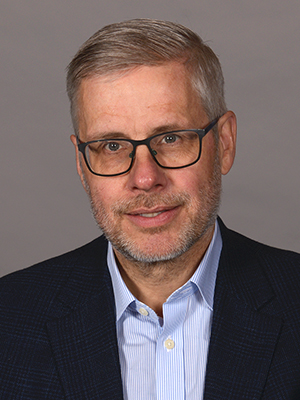
Anders Winroth is a Professor of History at the University of Oslo, affiliated with the Department of Archaeology, Conservation and History within the Faculty of Humanities. Previously, he held positions at Yale University, including the Birgit Baldwin Professorship (2018–2020). He earned his BA from Stockholm University (1990) and MA, MPhil, PhD from Columbia University (1996). His research focuses on medieval legal history, particularly Gratian’s Decretum, Scandinavian Viking Age conversion processes, and interdisciplinary approaches to medieval Europe. He teaches courses on medieval history, Viking Age studies, and legal culture. Notable publications include The Conversion of Scandinavia (2012) and The Age of the Vikings (2014), translated into multiple languages. Awards include the MacArthur Fellowship (2004–2008) and Fellow of the Medieval Academy of America (2015). Winroth has advised over 14 PhD students, many of whom have published groundbreaking works in legal and medieval studies. His research groups include Critical Historiography and MINiTEXTS, focusing on marginalia and medieval manuscript culture. His work bridges legal, religious, and cultural dimensions of medieval Europe, emphasizing primary sources and interdisciplinary methods.
Synnøve Midtbø Myking is a Research Fellow at the Norwegian Institute in Rome (affiliated with the University of Oslo's Faculty of Humanities), funded by the Hans Rasmus Astrup Foundation. Her postdoctoral project explores Rome's perception in 12th-century Scandinavia, focusing on a Vatican Library manuscript formerly owned by the Danish Esrum monastery. She holds a Ph.D. in Medieval Studies from the University of Bergen (2017) and previously led the Research Council of Norway-funded project 'Flanders, Norway, and Denmark: Relations and Intertextual Exchanges in the High Middle Ages' (2019–2023). She has held positions at Paris’ Institut de recherche et d'histoire des textes (IRHT), the Royal Danish Library, and been a guest researcher at the University of Southern Denmark and Ghent University. Her research specializes in medieval manuscripts, Nordic-Continental Europe cultural exchanges, and Scandinavian manuscript culture. She teaches courses like ROMA2020 ('Rome – Place and Symbol') and HIS2145 ('Rome as Pilgrimage Destination in Medieval Europe'). Her publications analyze manuscript provenance, monastic networks, and saint cults in medieval Scandinavia. Recent work includes studies on Danish Cistercian manuscripts, French-Norwegian literary connections, and liturgical artifacts.
Dr. Helen Birkett is a Senior Lecturer in Medieval History at the University of Exeter, specializing in 12th-13th century British and Irish history with particular emphasis on monasticism, hagiography, and medieval communication networks. She holds a PhD from the University of York (2009) and has held postdoctoral fellowships at the Pontifical Institute of Mediaeval Studies (Toronto) and the Institute for Advanced Studies in the Humanities (Edinburgh). Her research explores how news and information were transmitted in the Middle Ages, focusing on Cistercian Order networks and textual construction. She is co-lead on the 'Section 28 and its afterlives' oral history project addressing social justice themes. Her academic career includes roles such as External Examiner for the University of Southampton's MA programs and peer review activities. Notable publications include her monograph *The Saints’ Lives of Jocelin of Furness* (2010) and articles on medieval news systems. She has been recognized as a Fellow of the Royal Historical Society. Birkett's research supervision spans topics like medieval religious culture, text creation, and communication studies. She actively engages with media and public history initiatives through the University of Exeter's Press Office, offering expertise in medieval history modules reform and interdisciplinary historical methodologies. Her current research projects investigate medieval news dissemination mechanisms and the practical operations of Cistercian communication systems, alongside the socio-political legacy of Section 28. She maintains affiliations with Exeter's Heritage @Exeter network and collaborates widely across academic institutions.
Corinna Bottiglieri is a University Researcher in Medieval and Humanistic Latin Literature (SSD FLMR-01/A) at the Department of Humanities, University of Salento. She teaches courses including Romance Philology, Latin Classics in the Western Literary Tradition, and Digital Laboratory of Medieval and Humanistic Philology for the 2025/2026 academic year across multiple degree programs including Modern Letters (LM 14) and Modern Languages, Literatures and Translation (LM37). Her research interests focus on Medieval Latin Literature with particular emphasis on early medieval Latin poetry, Carolingian cultural centers, medieval monastic hagiography, transmission of classics in the early Middle Ages, and the culture of southern Italy during the Norman period. She has developed a specialized expertise in the tradition of late medieval medical texts and pharmacopoeia, particularly the work of the Angevin-era Salerno physician Matteo Silvatico. Her philological approach combines textual criticism with cultural history to explore how medieval texts were produced, transmitted, and adapted across different cultural contexts. Dr. Bottiglieri's scholarly output demonstrates a consistent engagement with interdisciplinary approaches to medieval studies, bridging literary analysis with historical, medical, and cultural perspectives. Her work shows particular strength in examining the transmission and transformation of classical texts through the medieval period, with special attention to southern Italian contexts. She has made significant contributions to our understanding of how medical knowledge was preserved and transformed in medieval southern Italy. National qualification as associate professor Mercator Fellow at Universität Heidelberg (March-December 2020) Dr. Bottiglieri has served as principal investigator for the research project ARC.AA: Archivum Apuliae Aragonensis (2020-2023) and is currently a research fellow within the PRIN PNRR project MIReSIta, Material and Immaterial Resources in Southern Italy (1250-1550): a realities' digital repertoire (2024-2025). She is an active member of the research team for Hospitalibus. Los sistemas asistenciales urbanos en la corona de Aragón: cambios y continuidades (1300-1550) at Universitat de Barcelona. Her international collaborations reflect her standing in the field of medieval studies. Based in her office at Studium 2000 Building 5, Via di Valesio, Lecce, she maintains active participation in several scholarly organizations including CoMUL (Consultancy for the Latin Middle Ages and Humanism), SISMEL (International Society for the Study of the Latin Middle Ages), CESURA (European Centre for Studies on Humanism and the Aragonese Renaissance), and the Interdepartmental Centre for Medieval Studies of the University of Salento.
Prof. Dr. Silvia Negri holds the SNSF-funded professorship at the History Department of the University of Zurich , where she leads the project Humility in theory and practice. Historical approaches across cultures (1250-1500) (2024-2029). Her work spans medieval cultural history, historical anthropology, gender studies, and manuscript transmission, with a focus on humility as an embodied and situated value. PhD in Book Studies (2014, University of Siena/University of Freiburg) Recipient of Wetzstein Prize (University of Freiburg) and SNSF Starting Grant Previously: Senior Assistant at UZH (2019-2024), Habilitation in Italy (2022), Fritz Thyssen Foundation fellowship Current research examines humility through interdisciplinary approaches : historical semantics, material philology, and digital tools. Subprojects investigate European and Mamluk contexts , manuscript artifacts, prayer gestures, and environmental practices. Awards include editorial roles for Historical Anthropology and contributions to major conferences. Team: Dr. James Weaver (Senior Researcher), Elena Lampp (PhD), Michele Marchioni (PhD), Lukas Bickel (Associated PhD) Recent publications explore Girolamo Savonarola's theology, medieval prayer gestures, and environmental humility narratives
Dominique Stutzmann is an Honorary Professor at Humboldt University of Berlin (since 2023) and Research Professor ( Research Director ) at the Institute for Research and History of Texts (IRHT-CNRS) since 2010. Specializing in Latin Palaeography , they lead the Department of Latin Palaeography at IRHT and coordinate the "Cluster 3: Artificial Intelligence" within the EquipEx Biblissima+ infrastructure. Their work bridges Medieval Manuscript Studies with Digital Humanities , focusing on text-image alignment , script classification , and machine learning applications for historical document analysis. Academic Education 2021: Qualification for a professorship ( Venia legendi ) from the Conseil National des Universités 2009: Habilitation thesis on Cistercian library networks 2002: Doctoral thesis Summa cum laude on Fontenay Abbey 2000: Paleographic Archivist diploma Summa cum laude Research Interests encompass medieval writing systems , digital paleography , manuscript digitization , and computational analysis of historical documents . They pioneered AI-driven full-text search engines for medieval manuscripts and developed open-source tools like Oriflamms for text-image alignment. Scientific Leadership includes Managing €2M+ in national/international grants Organizing colloquia and workshops Advisory roles for ERC projects DiDip and PRAYER Key Collaborations involve institutions such as the Bibliothèque Nationale de France , University of Hamburg , and University of Pennsylvania . Their editorial work spans journals like Scripta and Humanités numériques .
Marlene Hennessy is a Professor of English at Hunter College, City University of New York, affiliated with the School of Arts and Sciences and the Department of English. She serves on Hunter's Council on Honors and specializes in medieval literature, manuscript studies, and religious culture. Her research spans Chaucerian contexts, late medieval Scottish manuscripts, and visual-liturgical intersections. B.A., Bard College Ph.D., Columbia University (2001) Andrew W. Mellon Post-Doctoral Fellow (2003-2004) Hennessy's research focuses on Middle English literature , medieval manuscript culture , and religious practices , particularly in Scottish and Carthusian contexts. She examines symbolic elements like blood piety , devotional imagery , and book ownership by diverse medieval communities. Her recent publications include An Index of Images in English and Scottish Manuscripts (2022) and studies on Charterhouse manuscripts. She has co-edited collections on medieval illuminators and is working on Blood Writing: Manuscripts and Metaphors in the Late Middle Ages , while preparing collaborative projects on merchant book ownership and late medieval women's roles. Scientific awards include the Donald Bullough Fellowship (2012). She has taught courses on Chaucer, Early British Literature, and Medieval Women, contributing to graduate and undergraduate education at Hunter College.
Samu Niskanen is Professor of Medieval History at the University of Helsinki's Faculty of Arts, Department of Philosophy, History and Art Studies. He is also affiliated with the Helsinki Institute of Sustainability Science (HELSUS) and Helsinki Institute of Urban and Regional Studies (Urbaria). His research focuses on intellectual life in the Middle Ages, medieval literature publication, transmission, and reception, with special emphasis on letters, monastic theology, and crusades. Niskanen serves as Principal Investigator for major research projects including Medieval Publishing from c. 1000 to 1500 (ERC-funded) and Authorial Publishing in Early Medieval Europe (Academy of Finland). He supervises doctoral candidates in Language Studies and History/Cultural Heritage programs, and mentors postdoctoral researchers. His key publications examine medieval publication practices, textual transmission, and intellectual networks. Recent works explore authorial publication patterns, manuscript dissemination, and the relationship between power structures and textual production from Late Antiquity through the Renaissance. Honors: Vuoden opettaja 2024 (Teacher of the Year Award) Niskanen maintains extensive international collaborations as Hugh Price Fellow at Jesus College Oxford and General Editor for Toronto's British Writers series. He regularly organizes academic workshops on medieval publication practices and Victorine influences in Scandinavia.
Dr. Annemieke Klijn is a part-time Assistant Professor at the Faculty of Arts and Social Sciences, Maastricht University. She combines her academic role with curatorial duties as Conservator of the Arts and Heritage Commission at the same institution. Education: MA in History (1981, Ghent University), PhD in History (1990, University of Groningen) focusing on comparative Belgian-Dutch socialism (1933-1946) under supervisor E.H. Kossmann. Her research spans modern history with concentrations on: Social democracy history Psychiatry and mental health care Academic medicine development Cultural heritage preservation Limburg regional history University institutional growth Article trends reflect her focus on institutional histories, medical evolution, and cultural narratives, particularly in Limburg and Dutch academic contexts. Key themes include healthcare architecture, interwar socialism, and archival analysis of travel literature. Scientific Awards: Dutch Organisation for Scientific Research (NWO) grant for comparative socialism study Klijn supervises research projects and contributes to curriculum development in historical methodology. She actively engages in heritage conservation through Maastricht University's Arts and Heritage Committee.
Apostolos Spanos is a Professor in the Department of Religion, Philosophy and History at the University of Agder, Norway. His research focuses on historical consciousness, innovation studies, Byzantine history, and the application of AI and gaming in historical education. He has authored major works such as Games of History: Games and Gaming as Historical Sources (2021) and History-made: How past and future shape your life, identity and thoughts (forthcoming 2024). His work bridges disciplinary boundaries by integrating digital tools with traditional historiography. Spanos has organized interdisciplinary conferences like Lesbos Dialogues: Technology and the Refugee Crisis (2017) and contributed to projects like CONSENSE (AI for Education). His teaching includes courses on historical theory, digital history, and the use of games as historical sources. He actively explores innovative pedagogical methods such as flipped classrooms and AI-assisted learning strategies. Key research areas include the study of historical time dimensions, modeling historical phenomena, and examining innovation through Byzantine case studies. His edited volumes and articles reflect deep engagement with primary sources like Byzantine manuscripts and liturgical texts, emphasizing their role in understanding political and cultural dynamics. Spanos' contributions span academic leadership in UiA's CeDiT (Centre for Digital Transformation) and research groups focusing on social simulation and historical methodologies. His work consistently highlights the interplay between past and present through technological and conceptual innovation.
Dr. Petra Hauke is a Lecturer at the Institute of Library and Information Science at Humboldt University in Berlin. She holds a master's degree (2000) and a doctorate (2007) in Library Science and Art History from the same institution. Her professional journey includes roles at the Max Planck Society Archive (1986–2006) and teaching positions at Potsdam University of Applied Sciences (1998–2003), Hanover University of Applied Sciences (2000–2003), and the Austrian Library Association (2017–present). She specializes in library management, sustainability practices in libraries ('Green Library'), and historical library architecture. Her research emphasizes sustainability in library operations, evidenced by her 2021 article on ecological footprints and leadership in the IFLA Environment, Sustainability and Libraries Section (ENSULIB). She has been a pivotal figure in global library networks, including founding the Green Library Network (2018–present) and serving in IFLA committees since 2005. Notable publications include Strategies for the Library as a Place (2017 Festschrift) and works on Max Planck Society archives. Education: Master's in Library Science & Art History, Humboldt University (2000) Doctorate in Library Science, Humboldt University (2007) Professional Memberships: Member, IFLA Standing Committee (since 2000) Co-founder, Green Library Network Recipient of IFLA Scroll of Appreciation (2021) Her work bridges historical library practices with modern sustainability challenges, advocating for eco-conscious library design and community engagement. She actively contributes to international initiatives promoting libraries as agents of environmental and cultural sustainability.
Professor Daniel Anlezark is the McCaughey Professor of Early English Literature and Language at the University of Sydney's Discipline of English and Writing within the Faculty of Arts and Social Sciences. He holds a BA (Macquarie), BTh (SCD), MStud (Oxford), and DPhil (Oxford), and is a Fellow of the Australian Academy of the Humanities (FAHA). His research focuses on Old and Middle English language and literature, with particular emphasis on Anglo-Saxon manuscripts, biblical poetry, and the intersection of medieval literature with scientific ideas. Research Interests: His work spans Old English philosophical literature, Anglo-Saxon literary patronage, and the influence of Old Norse texts on Beowulf. Current projects include an ARC-funded study of early medieval literature and scientific thought, and a collaborative project on Norse analogues to Beowulf with Andy Orchard and Francis Leneghan. Publications: Notable works include Alfred the Great (Arc Humanities Press, 2017), Old Testament Narratives (Harvard UP, 2011), and Water and Fire: The Myth of the Flood in Anglo-Saxon England (Manchester UP, 2006). He has also edited volumes such as Myths, Legends, and Heroes: Essays in Honour of John McKinnell (2011). Awards & Grants: Recognized as a FAHA Fellow, Anlezark has received Australian Research Council grants for projects like Medieval Science Fiction (2015) and Anglo-Saxon Literary Patronage (2012). His media appearances include ABC Radio National discussions on early medieval mysticism and female authors. Labs/Teams: Member of the Vere Gordon Childe Centre, focusing on interdisciplinary early medieval studies.
Dr. Anika Lenke Kovács is a Senior Lecturer with a PhD in the Department of Catalan Philology and General Linguistics at the University of the Balearic Islands, where she also served as Vice-Dean and Head of Studies of the Degree in Catalan Language and Literature (2020/2021). Her academic career spans multiple prestigious institutions including Universitat Rovira i Virgili (2001-2017), Universität Bremen, Germany (2012-2017), and Universitat Autònoma de Barcelona (2008-2013). Her educational background includes: Bachelor in Catalan Philology (1998) Post-graduate in German Studies (2004, with special award) Master in Foreign Language Teaching (2010) PhD in Catalan Philology (2013, with special doctoral award) Dr. Kovács specializes in Medieval Catalan Drama, with particular expertise in the Majorcan Llabrés Manuscript (Ms. 1139) housed in the Catalan National Library. Her research examines typological interpretation, special effects, female characters, and spiritual dimensions of medieval Catalan plays. She has made significant contributions to understanding the Dance of Death tradition, Memento Mori themes, and religious processions in medieval Iberia. Her interdisciplinary approach combines literary analysis with performance studies, religious history, and cultural anthropology to provide comprehensive insights into medieval theatrical practices. Her recent publications demonstrate sustained scholarly productivity, with a consistent focus on the Majorcan play texts. She analyzes how medieval playwrights depicted angels, represented mortality concepts, and conveyed spiritual dimensions through theatrical performance. Her work often bridges textual analysis with practical considerations of medieval staging, examining how these plays would have been experienced by contemporary audiences through processions, music, and visual elements. Her scientific recognition includes: Special award for Post-graduate in German Studies (2004) Special doctoral award for PhD in Catalan Philology (2013) Dr. Kovács has supervised numerous graduate students and has participated in multiple research projects including 'Theatres of Persuasion in the Long Sixteenth Century' (2017-2020), 'Estudis interdisciplinaris sobre la dansa a l'edat mitjana i moderna' (2014-2015), 'Choreutic Heterotopias' (2018-2020), and 'Monastic Landscapes' (2019-2022). She currently serves as president of the Société Internationale pour l'étude du Théâtre Médiéval (2019-2022) and is part of the Benedictine Oblates of Montserrat since December 2022. She is an active member of the research team FILOHUMSIDOR (Filología y Humanismo en el Siglo de Oro) at the Institut d'Estudis Hispànics en la Modernitat and the Centre de Recerca en Arts Escèniques (UAB). Her work with the research groups 'Literatura, Art i Representació a la llarga edat mitjana' and 'Iconodansa' continues to advance understanding of medieval theatrical traditions and their cultural significance.
María del Mar Albero Muñoz is an Associate Professor in the Department of History of Art at the University of Murcia, affiliated with the Faculty of Arts and Humanities. She earned her Doctorate from the same institution in 2008 with her thesis Fisiognomía y expresión de las pasiones y su influencia en los tratados artísticos del Siglo XVII en España , supervised by Dr. Cristóbal Belda Navarro and Dr. María Concepción de la Peña Velasco. Her research focuses on the intersection of physiognomy, emotional expression, and artistic theory in Baroque Spain, particularly examining the libraries and treatises of artists like Velázquez, Carducho, and Pacheco. She explores how these sources influenced artistic practice and theoretical training. Her work extends to digital humanities, actor network theory, and the analysis of cultural heritage, including studies on conventual patrimony and 19th-century portraiture at the MUBAM museum. Albero Muñoz has contributed to international conferences and co-organized events like the Marqués de Lozoya Seminar. Her publications span over two decades, addressing topics such as Renaissance engraving (Giacomo Laurentiani), Valencian drawing manuals, and the aesthetic representation of gender in early modern art. Her scholarship bridges historical methodologies with contemporary debates on cultural memory and preservation in the Mediterranean region.
Christophe Chaguinian is a Professor of French at the University of North Texas, specializing in medieval French literature and 19th-century French novels. His primary research focuses on the literatures of medieval France (langue d’oïl and d’oc), including chanson de geste, medieval theater, lyric poetry, and religious knowledge among laypeople. He also examines the works of 19th-century novelist Barbey d’Aurevilly, with particular attention to moral and psychological themes. His academic work bridges textual analysis with institutional history, exploring how liturgical practices and medieval Latin texts influenced theatrical performances. He has extensively studied the Jeu d’Adam , investigating its monastic/secular origins, linguistic provenance, and performance contexts. Recent research explores post-Tridentine liturgical reforms and their impact on Good Friday ceremonies. Dr. Chaguinian’s scholarly output spans critical editions, intertextuality analyses, and comparative liturgical studies. His articles frequently engage with manuscript studies, performance theory, and the intersection of religion and culture in medieval Europe. Though no formal awards are listed, his prolific publications reflect significant contributions to medieval French studies. His advising and grant activities are not detailed in the provided materials, but his UNT faculty profile indicates active engagement with students and research initiatives. No specific lab or collaborative team affiliations are mentioned.