

Mu'izz Abdul Khalid is a Visiting Research Scholar and Fung Global Fellow (2024-25) affiliated with Princeton University. He concurrently serves as a Research Associate at the Global Awareness and Impact Alliance (GAIA), Brunei Darussalam's first non-governmental research organization, and an adjunct lecturer at Universiti Brunei Darussalam's Department of History and International Studies. His expertise lies in comparative politics and Southeast Asian history, with a focus on monarchical regimes and the interplay of colonial and indigenous governance structures. He holds a Ph.D. from the National University of Singapore (NUS) and a master's from University College London (UCL). Current research involves analyzing British colonial influences on Brunei's absolutist state formation. His recent articles explore civic subjecthood in Brunei and digital resilience against misinformation.
جستجوی استاد راهنمای دانشگاهی
برای مسیر پژوهشیتان، استاد راهنما، استاد دانشگاه و پژوهشگر مناسب را پیدا کنید و با آنها ارتباط بگیرید.
نمایش ۱-۱۵ از ۱۱۴ استاد راهنما
اطلاعات پروفایلها از صفحات عمومی دانشگاهها گرفته شده و ممکن است بهروز نباشد.
Klaas Van Gelderمشاهده پروفایل
استادیار
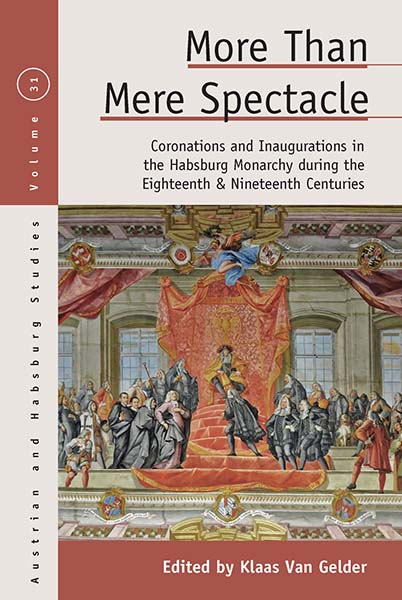
Klaas Van Gelder is an Assistant Professor of History at Vrije Universiteit Brussel (VUB) , specializing in early modern history. He is affiliated with the SHOC research group and serves as Archivist at the General State Archives in Brussels. His academic journey includes an MA (2005) and PhD (2012) from Ghent University, followed by postdoctoral fellowships at Ghent and the University of Vienna. He has held visiting roles, including at Saint Mary's University in Halifax (2024). Van Gelder’s research focuses on social, political, and cultural history of early modern Europe, particularly access to justice, litigants’ profiles, and legal rituals. Key projects include the FED-tWIN project ACCESS , examining Brabant’s legal systems, and studies on seigneurial police regulations. He has authored books like Regime Change at a Distance (2016) and edited volumes such as More Than Mere Spectacle (2021). He has received awards including the André Schaepdrijverprijs (2005) and Frans Stephan Preis (2014). His grants and collaborations include leadership roles in projects like Onderzoeksgroep Alliantie VUB-UGent . He co-edits journals and participates in international conferences, addressing topics like AI in historical archives and rural revolts.
Christopher Brooke is a Professor of Modern European Political Thought at the University of Cambridge and Fellow/Director of Studies in Politics at Homerton College. He holds a PhD from Harvard University and has held academic positions at Oxford, Bristol, and Cambridge. His research focuses on early modern political thought, the Enlightenment, Stoicism, and the works of Rousseau. Key areas of interest include the historical interplay between classical philosophy and modern political theory, the sociological foundations of equality, and the intellectual legacy of Enlightenment thinkers. He has authored influential works such as *Philosophic Pride: Stoicism and Political Thought from Lipsius to Rousseau* and contributed to edited volumes on Rousseau's reception and educational philosophy. Education: PhD in Political Thought from Harvard University. Research highlights include explorations of Stoic influences on Grotius and Hobbes, Montesquieu’s aristocratic honor theory, and Malthus’s Rousseauist underpinnings. His work bridges historical scholarship with contemporary debates in political theory. Labs/Teams: Affiliated with the POLIS Department and Homerton College, contributing to interdisciplinary research on political thought and intellectual history. His teaching and supervision cover early modern political philosophy, Enlightenment studies, and methodologies in the history of political thought.
Adria Lawrenceمشاهده پروفایل
دانشیار
Adria Lawrence is the Aronson Associate Professor of International Studies and Political Science at Johns Hopkins University, holding a joint appointment between the Paul H. Nitze School of Advanced International Studies (SAIS) and the Department of Political Science at the Krieger School of Arts & Sciences. Her research focuses on Middle Eastern and North African politics, colonialism, nationalism, and conflict dynamics. She earned her PhD from the University of Chicago and a BA from Vassar College. Her groundbreaking book, *Imperial Rule and the Politics of Nationalism: Anti-Colonial Protest in the French Empire* (2013), examines post-WWII anti-colonial movements and has received prestigious awards including the J. David Greenstone Book Prize and the L. Carl Brown Book Prize. Current research explores colonial resistance and contemporary Arab world dynamics. Teaching interests include colonial rule, state formation, and qualitative research methods. She advises on topics such as Moroccan political cleavages, autocracy, and social movements in North Africa. Office hours are held via Zoom or in-person at 270 Mergenthaler Hall. Affiliations: Krieger School of Arts & Sciences, SAIS (Program Chair for International Studies Program) Research Sites: Morocco, Tunisia, France (archival work)

Rania Maktabiمشاهده پروفایل
دانشیار
Rania Maktabi is an Associate Professor at the Department of Welfare, Management and Organization, Østfold University College. Her research focuses on political relations in the Middle East, particularly the legal status of Arab women, citizenship, and the interplay between religion, law, and politics in Lebanon, Syria, Kuwait, Qatar, Morocco, and Egypt. Key research areas include citizenship studies , gender and law , legal reforms in authoritarian regimes , and post-Arab Spring dynamics . She has published extensively on female lawyers' mobilization , patriarchal nationality laws , and women's political participation , including the 2018 edited book Brennpunkt Midtøsten: Byene som prisme . Her notable awards include the 2014 Prize for Research Dissemination . Collaborations include projects like "The Unfolding Transformation of the State System in the Middle East" (2019–ongoing) and "Gender and Judging in the Middle East & Africa" (2016–2022). She is actively involved in the interdisciplinary research group AreaS , focusing on electoral politics, medialized politics, and women's political participation in the Middle East and beyond.

Magnus Linnarsson is a Professor of History at Stockholm University's Department of History, specializing in political history with a focus on early modern and modern Sweden. His research examines institutional change, public-private service organization, and the evolution of the welfare city. He leads undergraduate programs and supervises students at all levels. PhD in History (2010), Lund University Associate Professor (2017), Stockholm University His research spans four centuries of political conflicts over public services, state formation, and urban development. Key works include analyses of Sweden's postal, customs, and welfare systems, comparing hierarchical and contractual state organization models. Recent publications (2024) in Nordic Welfare Cities explore urban citizenship and inclusive welfare systems since 1850, challenging national narratives by emphasizing local governance. Earlier studies (2022–2018) dissected regime shifts, mercantile-state relations, and publicness concepts in tramway and telecom debates. Current projects include: Skiftande regimer (2021–2025): State formation and administrative reform (Vetenskapsrådet-funded) Olika vägar till välfärdsstaden (2021–2025): Nordic urban welfare debates (Riksbankens jubileumsfond-funded) He advocates for interdisciplinary analysis of political economy, institutional loyalty, and spatial dynamics, connecting historical debates to modern policy challenges.
Mohsen Milani is a Full Professor of Politics at the University of South Florida (USF), affiliated with the College of Arts and Sciences and the School of Interdisciplinary Global Studies. He serves as the Founding Executive Director of the Center for Strategic & Diplomatic Studies (CSDS) at USF, established to analyze global security challenges and foster expert dialogues. His academic leadership spans over two decades, including chairing the Department of Government & International Affairs (1998-2012) and editing a Middle East book series for the University of Florida Press (2008-2012). Education: Ph.D. Political Science, University of Southern California (1980s) M.A. Political Science, University of Southern California B.A. Political Science, California State University, Hayward Research Interests: Milani specializes in Comparative Politics, Iranian Foreign Policy, and the dynamics of revolutions. His work examines modern Iran’s geopolitical strategies, regional alliances, and the interplay between domestic politics and international relations. His seminal book The Making of Iran’s Islamic Revolution remains a foundational text in Middle Eastern studies, widely adopted in academic curricula globally. Publications & Media Engagement: With over 60 publications, Milani has contributed to Foreign Affairs , Washington Quarterly , and peer-reviewed journals. His analyses on Iran’s role in Syria, Yemen, and the nuclear deal have shaped global discourse. He is frequently cited in major media outlets, including the New York Times , BBC, and Al Jazeera. Awards & Fellowships: Fellowships at Harvard University (1990), Oxford University (1995), and Ca’ Foscari University (1998) Recipient of the USF’s Center for Strategic & Diplomatic Studies’ 6-year research grant (2012–present) Teaching & Outreach: Milani teaches undergraduate and graduate courses on comparative revolutions, Middle East politics, and American foreign policy in the Persian Gulf. He founded the “Conversation Series on Global Security” at USF, inviting experts to discuss critical issues like nuclear proliferation and regional conflicts. Current Projects: He is completing a book on Iranian foreign policy and advising governments and think tanks on Middle East dynamics. His research emphasizes Iran’s evolving strategies amid U.S. sanctions and regional rivalries.
Stéphane Lacroix is an Associate Professor of Political Science at Sciences Po and a permanent researcher at the Centre for International Research (CERI). He serves as co-director of Sciences Po's Chair of Religious Studies. An Arabist specializing in the Middle East, Lacroix holds fluency in five languages: French (mother tongue), English, Arabic, Spanish, and functional Russian/German. His research focuses on religious politics in the Arab world, particularly examining Salafism, Islamic movements, and state-religion dynamics in Saudi Arabia and Egypt. Key themes include revolutionary Islamism, religious dissent, and political transitions following the Arab Uprisings. His methodological approach combines extensive field research with historical and political analysis. Lacroix's publications reveal consistent scholarly engagement with Middle Eastern religious politics across three decades. His work demonstrates evolving focus from Saudi Islamism (2010-2011) to Egyptian revolutionary dynamics (2015-2018), culminating in contemporary analyses of Salafism (2024). The publications show increasing interdisciplinary scope, integrating political science, religious studies, and security perspectives. Lacroix teaches graduate courses including: The Dynamics of Religion in the Contemporary World Islam and Politics in a Changing Middle East States and Social Transformation in the Arab World States and Societies in the Arab World Research Training Workshop on the Middle East As a core CERI researcher, Lacroix contributes to the center's mission of interdisciplinary international research. His leadership in the Chair of Religious Studies shapes academic discourse on religion's political dimensions. While specific grant details aren't public, his co-edited volumes with Cambridge University Press and Harvard University Press indicate significant research funding support.
Eizo Nakauchi is a Professor at the Faculty of Political Science and Economics , Waseda University , with a Master of Political Science degree from the same institution. His career spans decades of research and teaching in European political history, legal traditions, and political philosophy. Education Background: 1992: Graduate School, Division of Politics, Waseda University 1982: Faculty of Political Economics, Waseda University His research focuses on Prussian absolutism , Max Weber's political theory , and the historical evolution of political institutions . His publications analyze bureaucratic systems in 18th-century Prussia, Weber's conceptualization of political elements ("dignified leisure" and "spiritual imprint"), and intersections between ancient Greek political thought and modern European philosophy. Scientific awards include the Sakuradakai Encouragement Award (1995) for his early contributions. His academic memberships span the Japanese Political Science Association , Japan Legal History Association , and Comparative Legal History Society . He actively teaches graduate courses in European political history , political thought , and Max Weber studies , while participating in internal research projects at Waseda's Institute of Comparative Law since 1989. His work bridges historical analysis with contemporary political theory.

Daniel Beer is Professor of Modern History at Royal Holloway, University of London, specializing in Russian history with particular focus on the social and cultural history of the Russian Empire. He is affiliated with the Department of History and the Conflict, Violence and Terrorism Research Centre at Royal Holloway. Professor Beer's research interests center on crime and punishment in Imperial Russia, Siberian exile systems, revolutionary movements, and political violence. His acclaimed work explores how the human sciences shaped attempts by liberal elites to create a civil society governed by rule of law, as well as the development of Russian political culture through confrontations between revolutionaries and the state. His recent publications reveal a consistent focus on the intersection of political power, punishment, and resistance in Imperial Russia. Beer's scholarly output demonstrates expertise in both broad historical narratives and specific case studies of political violence, exile systems, and revolutionary ideologies. Cundill History Prize (2017) for The House of the Dead: Siberian Exile Under the Tsars Shortlisted for Wolfson Prize Shortlisted for Longman History Today Prize Shortlisted for Pushkin House Book Prize Professor Beer has supervised research students in Russian history and secured research funding from prestigious organizations including the Leverhulme Trust and British Academy. His current research project explores the 'Emperor Hunt' - the revolutionary campaign from 1879 to 1881 to assassinate Tsar Alexander II. He is actively engaged in public scholarship through contributions to major publications and media appearances. Professor Beer teaches undergraduate courses including 'The Russian Empire in the Age of Reform and Revolution', 'Stalinism', and 'European Culture in the Fin de Siècle', while welcoming research students interested in biopolitics, empire, law, punishment, and violence in Modern Russia.
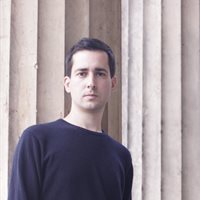
David Motadelمشاهده پروفایل
دانشیار
David Motadel is an Associate Professor of International History at the London School of Economics and Political Science (LSE) . He holds a PhD in History from the University of Cambridge , where he was a Gates Scholar . His academic career includes a Research Fellowship at Gonville and Caius College, Cambridge and visiting positions at Harvard , Yale , Oxford , Sciences Po , and the Sorbonne . His research focuses on Modern European History , Global History , and the History of Europe’s Global Entanglements . He has authored influential works such as Islam and Nazi Germany’s War and Revolutionary World: Global Upheaval in the Modern Age , with research spanning topics like Nazi-Muslim relations , anti-colonial movements , and global social transformations . His articles appear in journals like the American Historical Review , Past and Present , and Journal of Global History . He has received numerous accolades, including the Philip Leverhulme Prize (2018) and Walter Laqueur Prize (2014), and is a Fellow of the Royal Historical Society . His teaching includes undergraduate courses on Nazi Germany’s warfare and postgraduate seminars on European empires during WWII , such as European Empires and Global Conflict, 1935-1948 . He supervises PhD students working on themes like British Empire and Islam and Eritrean Foreign Policy .

Abdeslam E. M. Maghraoui is an Associate Professor of the Practice of Political Science at Duke University, affiliated with the Trinity College of Arts & Sciences. He is core faculty in the Duke Islamic Studies Center and the Duke University Middle East Studies Center. His research focuses on political identity, institutions, and behavior in Arab and Muslim-majority countries, particularly Morocco and the broader Middle East. Education: Ph.D., Princeton University (1991) M.A., Princeton University (1985) B.A., University of California, Santa Cruz (1982) Research Interests: Maghraoui examines authoritarian endurance, political reform, and the interplay between culture and politics. His work includes analyses of the Moroccan monarchy's resilience during the Arab Spring and the dynamics of governance in North African contexts. Professional Activities: He has presented widely on topics such as sovereignty in Western Sahara, democracy in Morocco, and U.S.-North African relations. Recent courses include 'Introduction to Middle East Politics' and 'U.S. Policy in the Middle East.' Affiliations & Outreach: Maghraoui participates in Bass Connections projects on Middle Eastern networks and has engaged with organizations like the World Bank and NATO College. His media commentary addresses contemporary political developments in Egypt, Morocco, and the region.
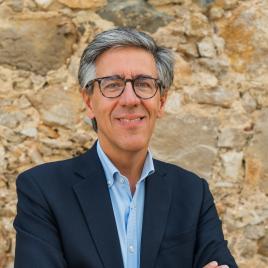
Professor José Miguel Sardica is a Full Professor at the Faculty of Human Sciences, Catholic University of Portugal, specializing in Portuguese and international history of the 19th and 20th centuries. His research focuses on political, institutional, cultural, and intellectual history. He has authored over 130 academic works, including books such as Alfredo da Silva e a CUF and Napoleonic Europe and Portugal , which earned him prestigious awards like the Calouste Gulbenkian Prize (2021) and the National Defense Award (2011). As a researcher at the Center for Communication and Culture Studies and a professor at the Institute of Political Studies, he also contributes to public discourse via radio and television commentary. He served as Dean of the Faculty of Human Sciences (2012–2016) and currently leads the Interuniversity Doctoral Program in History. His work bridges historical scholarship with contemporary societal issues, emphasizing communication’s role in shaping public memory and political discourse. Notable exhibitions curated by him, such as D. Maria II (2022), highlight his interdisciplinary approach. Awards also include the Best Temporary Exhibition Prize for this work.
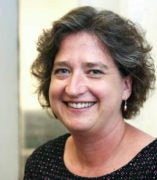
Ellen McClure is a Professor of French and History at the University of Illinois at Chicago (UIC), where she also serves as Director of the Institute for the Humanities. Her research focuses on the intersection of religion, history, and literature in early modern France, with notable works including The Logic of Idolatry in Seventeenth-Century French Literature (2020) and Sunspots and the Sun King (2006). She co-edits the book series Rethinking the Early Modern and previously directed the Mellon-funded Engaged Humanities Initiative. Education: PhD in Comparative Literature from the University of Michigan (1997) and BA from Swarthmore College (1990). Research interests include early modern French literature, religious history, cultural studies, and interdisciplinary approaches to authorship and representation. Her work explores themes like idolatry, absolutism, and the interplay between science and literature in 17th-century France. Selected honors include a Mellon Postdoctoral Fellowship (2000-2001) and an Institute for the Humanities Fellowship (2009-2010). Her articles analyze texts by authors such as La Fontaine, Racine, and Corneille, addressing topics like neosticism, Cartesianism, and diplomatic narratives. Advising and grants: McClure has advised numerous graduate students and led initiatives like the Engaged Humanities Initiative, fostering community-linked humanities research. She is affiliated with UIC’s Department of French and Francophone Studies and History. Labs/Teams: Collaborates with interdisciplinary groups, including the CAHSA lecture series and the Newberry Library’s research workshops.
Prof. Dieter Pohl is a leading historian at Klagenfurt University, serving as Professor of Contemporary History with a focus on Eastern/Southeastern Europe. He heads the Department of Contemporary History and the Institute of History, overseeing research on Nazi policies, mass violence, and Soviet-Ukrainian contexts. Born in 1964, Pohl earned his PhD in Munich (1995) and habilitation in 2007. His career includes leadership roles at the Munich Institute for Contemporary History before joining Klagenfurt in 2010. His research prioritizes European and Soviet history, emphasizing 20th-century mass violence, Nazi occupation dynamics, and post-war consequences. Key areas include Holocaust studies, Ukrainian-Soviet relations, and global historiographical trends. Notable projects include editing the multi-volume Die Verfolgung und Ermordung der europäischen Juden and analyzing Himmler’s SS operations via decrypted records. Pohl’s work frequently addresses transnational fascism, colonial policies in occupied territories, and the interplay between military strategy and genocide. His publications bridge academic rigor with public engagement, influencing debates on historical memory and collaboration in occupied Europe. Though no awards are explicitly listed, his prolific output and institutional leadership underscore his scholarly impact. His research often intersects with legal and ethical questions about historical accountability, particularly regarding Nazi crimes and post-Soviet memory politics.