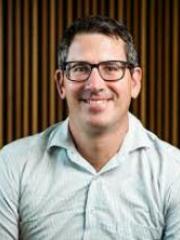
Ki Pyung Kim is a Senior Lecturer at the University of South Australia (UniSA STEM) , specializing in Building Information Modeling (BIM) , Construction Project Management , and Sustainable Construction technologies. His work bridges digital engineering tools with practical applications in infrastructure, housing refurbishment, and smart city development. Research Interests: BIM integration with Design for Manufacture and Assembly (DfMA) Digital twin applications in modular construction Social risk management for smart cities Life cycle assessment (LCA) of sustainable housing Productivity optimization in BIM-enabled environments Scientific Trends: His recent publications emphasize BIM’s role in sustainability, including waste reduction, carbon footprint analysis, and digital workflows for adaptable building systems. He explores blockchain applications in housing safety diagnostics and investigates global challenges in scaling prefabrication technologies.
Professor Wensu Chen is a Director of the Centre for Infrastructural Monitoring and Protection (CIMP) and holds the position of ARC Future Fellow at Curtin University's School of Civil and Mechanical Engineering. He leads research in protective structures and materials, structural resilience, and multi-hazard mitigation. With a BE/MSc from Tianjin University, ME from the University of Melbourne, and a PhD from the University of Western Australia, his career spans academia and industry. His research focuses on novel metaconcrete materials, blast-resistant designs, and modular construction. He has secured multiple ARC grants (Discovery, DECRA, Linkage) and collaborates with industry/government bodies like DEMIRS WA and Engineers Australia. Research interests include metamaterials, structural strengthening, and dynamic response analysis under impact and blast loads. Key awards include the Curtin Early-Career Researcher of the Year and Western Australian Premier’s Science Award nominations. He supervises over 20 PhD students and teaches courses in structural analysis and dynamics. His work emphasizes sustainable, resilient infrastructure with applications in building envelopes, seismic control, and tunnel safety under explosive threats.
Dr Rachel Couper is a Lecturer and Research Project Manager with the Future Building Initiative at Monash University. She holds a PhD in Architecture from the University of Sydney and specializes in bridging industry and research through applied design research, particularly in mass timber construction, industrialized building, and offsite construction. Her role as Project Manager for the Building 4.0 CRC Lighthouse Projects involves developing innovative solutions and prototypes for the construction industry. Trained in both architecture and art, she also engages in design practice through temporary pavilions and art installations. Education: PhD in Architecture, University of Sydney (2017) MArch(Hons), University of Sydney (2012) Bachelor of Architecture, University of Sydney (2009) Bachelor of Arts (Visual), Southern Cross University (1996) Research Interests: Industrialized construction, modular design, sustainable materials, and prototyping. Her work emphasizes practical applications and collaboration between academia and industry to address challenges in modern construction practices. Recent projects include the Innovation in Advanced Manufacture of Multi-Storey Housing CRC-Project and the NCHA Independent Living Lab Prototyping Project. Awards: Byera Hadley Travelling Scholarship (2014) Advising & Grants: Rachel leads multiple research projects funded by industry and government collaborations, including roles in the Building 4.0 CRC and Project #61: Building Productivity. She actively contributes to interdisciplinary teams focused on scalability, logistics optimization, and sustainable building innovations. Labs/Teams: Core member of the Future Building Initiative and lead in the Building 4.0 CRC Prototyping and Fabrication Technologies Theme. Collaborates with global networks in architectural design, engineering, and construction management.
Dr. Michael Heitzmann is an Associate Professor at the School of Mechanical and Mining Engineering, The University of Queensland, and Co-Director of the Centre for Advanced Materials Processing and Manufacturing (AMPAM). He leads a research group focused on high-temperature composites and composite durability, with a strong industry-oriented approach. His research spans composite materials, manufacturing process development, and hybrid systems like FRP-timber and concrete/FRP composites. He has secured over $8.5M in research funding as Chief Investigator, including ARC Linkage and CRC projects. Recent publications highlight advancements in biocomposites, nanocomposite coatings, and tribological performance under extreme conditions. His work addresses fire safety, mechanical properties, and industry applications in aerospace and civil infrastructure. He has graduated 6 PhD and 2 MPhil students and currently supervises 10 PhD candidates. His industry collaborations include Lockheed Martin, Thales, and Cricket Australia, where he developed certification standards for cricket balls. As an inventor of 3 patents, he emphasizes practical impact, such as coal seam gas wear guides used nationwide. His expertise also includes reactive resin transfer molding, filament winding, and automation in composite manufacturing.
Professor Igor Shparlinski is a faculty member at the University of New South Wales (UNSW) within the School of Mathematics & Statistics, holding the rank of Professor with an active research profile as evidenced by publications dated 2025. His work bridges pure number theory and cryptographic applications, maintaining international collaborations with institutions like the University of Sydney and Max Planck Institute. Research interests include: Analytic number theory (exponential/character sums) Cryptographic security (Diffie-Hellman, RSA, and pseudorandom generators) Finite field arithmetic and polynomial dynamics Arithmetic combinatorics and additive number theory Distribution of primes/smooth numbers modulo p Elliptic curve structures over finite fields His publications consistently address foundational problems with computational implications, particularly focusing on sum bounds and modular arithmetic. Recent trends (2023-2025) show intensified work on multilinear character sums, matrix statistics over finite fields, and dynamical system orbits. Key journals include Journal of Number Theory and Finite Fields and their Applications , with frequent co-authorship on exponential sum bounds and cryptographic vulnerabilities. Scientific awards: No awards, prizes, or fellowships are documented in the provided text. Advising and grants: No student listings or grant information appears in the source material. Research output suggests sustained funding but lacks explicit details.
Paul Jaschke is a Senior Lecturer in Synthetic Biology at Macquarie University's School of Natural Sciences, affiliated with the Centre of Excellence in Synthetic Biology. He holds a PhD from the University of British Columbia and completed postdoctoral research at Stanford University. His work focuses on bacteriophage engineering for antimicrobial therapies, overlapping genes, and genetic code expansion to combat antibiotic resistance. Education: PhD in Microbiology and Immunology, University of British Columbia NSERC-funded Postdoctoral Fellowship, Stanford University Research Interests: Engineering bacteriophages (T4, T7) for targeted therapy against uropathogenic E. coli Functional roles of overlapping genes in genome evolution Designing synthetic genetic codes for biocontainment and orthogonal translation systems Recent Article Trends: Recent publications emphasize phage-based antimicrobial strategies, synthetic gene design, and viral-host interactions in chemotrophic environments. Key themes include biocontainment systems, host response mechanisms, and modular genome engineering. Awards: People's Choice Award – BioInnovation Initiative Conference (2024) Inter-Departmental Collaboration Award (2022) Advising & Grants: Supervised 9 MRes and 8 PhD students. Active in projects like the International Genetically Engineered Machine (iGEM) Competition and phage therapy development. Lab alumni work at institutions like Harvard Medical School and companies like EnGeneic. Labs/Teams: Leads a research group within the School of Natural Sciences, collaborating with the Centre of Excellence in Synthetic Biology on interdisciplinary projects.
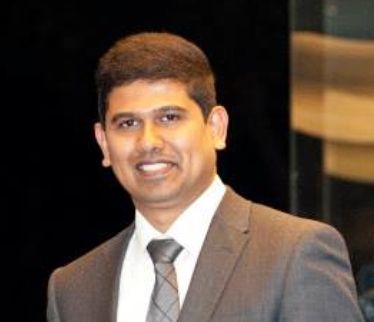
Dr. Pushpitha Kalutara serves as Head of Course for Built Environment at Central Queensland University's School of Engineering and Technology, holding a PhD in Civil Engineering from RMIT University. With over 17 years of post-graduate experience spanning academia and industry, he maintains active roles as Principal Supervisor for multiple PhD candidates and reviewer for the Journal of Engineering, Construction and Architectural Management. Education: BEng (Civil Engineering) - University of Moratuwa, Sri Lanka PhD (Civil Engineering) - RMIT University, Melbourne, Australia His research focuses on integrating digital solutions with sustainable practices in construction, particularly advancing Building Information Modelling (BIM) for facility management, developing lean procurement frameworks, and pioneering suicide prevention through architectural design. Recent publications demonstrate a shift toward mental health applications in built environments, with significant work on social-spatial design interventions for suicide prevention alongside traditional expertise in asset management and structural health monitoring. Key research trends: Analysis of 15 most recent publications reveals dual trajectories - ongoing development of decision-making frameworks for sustainable community building management (using AHP and neuro-fuzzy systems), and emerging focus on mental health applications in construction (suicide prevention design, industry mental health interventions). His work consistently bridges Australian industry needs with academic research, particularly for councils and infrastructure operators. Awards: Post Graduate Research Award by Engineers Australia and National Asset Management Council (2013) Australian Postgraduate Award Industry (APAI) by ARC Industry Linkage Scheme (2010) Dr. Kalutara actively supervises multiple PhD candidates including projects on construction industry suicide prevention frameworks, AI impacts on road construction project management, and counterterrorism design for critical infrastructure. His industry collaborations span Victorian local councils, Municipal Association of Victoria, and major construction firms. Professional software expertise includes SAP, Revit, AutoCAD, and statistical tools like SPSS and MATLAB for construction analytics.
Dr. Constance Bailey is a Senior Lecturer and group leader in the School of Chemistry at the University of Sydney . She holds affiliations with the Centre for Drug Discovery Innovation and the Sydney Nano Institute . Her research focuses on synthetic biology applications of polyketide synthases, cell-free protein synthesis, and metabolic engineering for natural product discovery. Bailey earned a B.A. from Reed College (2010), a PhD from the University of Texas at Austin (2015), and completed a NIH Postdoctoral Fellowship at UC Berkeley and Lawrence Berkeley National Laboratory (2016-2018). Research Interests Her work integrates in vitro systems with microbial engineering to advance biosynthetic pathway design. Key areas include: - Engineering polyketide synthases for targeted biofuel/chemical production - Optimizing cell-free protein synthesis platforms for nonribosomal peptides - Investigating metabolic crosstalk in prokaryotes - Discovering novel antibiotics via actinomycete genomics Grants & Awards - 2024: SABA Program Funding - 2023: Sydney ID Seed Grant for antibiotic discovery - NIH Postdoctoral Fellowship (2016-2018) Lab & Collaborations Bailey's CBBaileyLab develops synthetic biology tools for sustainable chemical production. Her team collaborates with institutions like the Joint BioEnergy Institute and the Lawrence Berkeley National Lab.
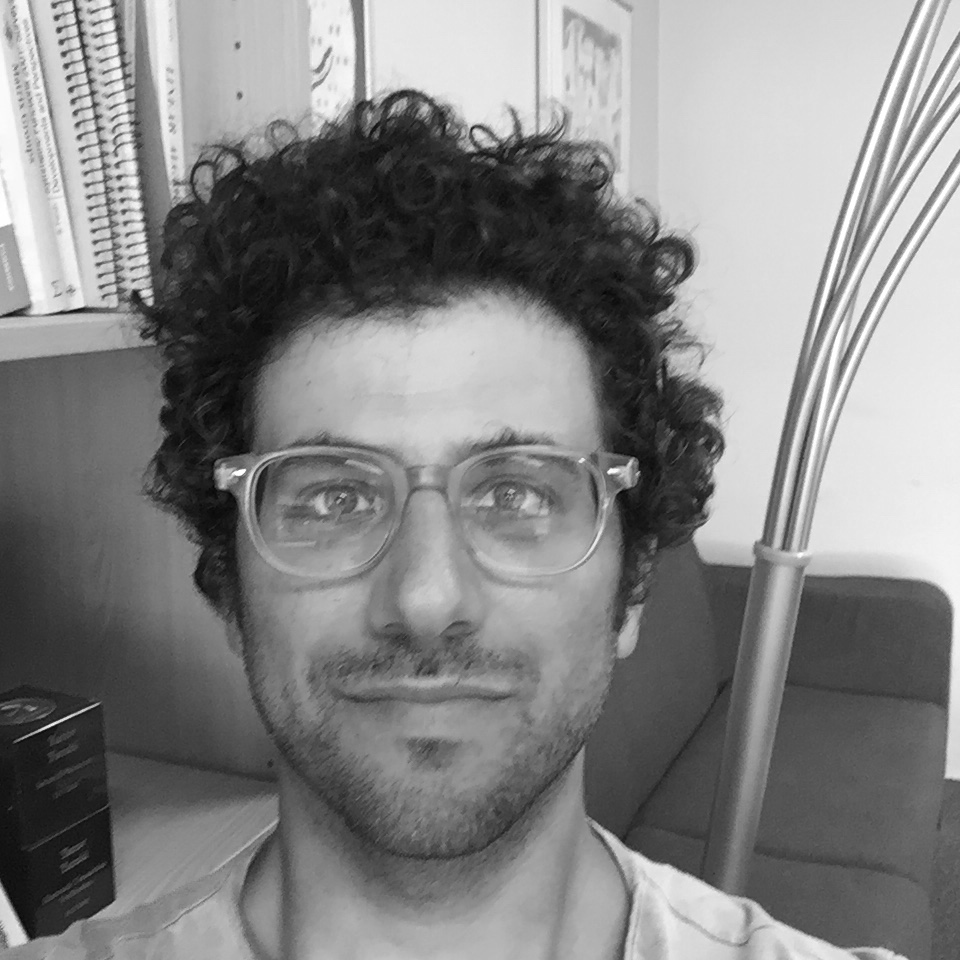
Associate Professor Oded Yacobi is affiliated with the University of Sydney's Faculty of Science. His research focuses on advanced algebraic structures, including representation theory, categorification, and geometric methods in quantum groups. He holds a Ph.D. from the University of California, San Diego (2009), followed by postdoctoral roles at the University of Toronto and Tel Aviv University. Yacobi is actively involved in grants exploring dualities in representation theory and braid group dynamics. His work bridges algebraic geometry and combinatorics, with recent articles addressing Weyl groups, braid group actions, and affine Grassmannians. He leads a vibrant research program with collaborations spanning North America and Australia. Education: Ph.D. in Mathematics, University of California, San Diego (2009) Postdoctoral Fellowships: University of Toronto, Tel Aviv University Research Interests: Representation theory of algebraic groups and quantum groups Categorification techniques and their applications Geometric methods in Lie theory and combinatorics Braid groups and their algebraic structures Key Grants: 2023: ARC DP Grant (Braid groups via representation theory and machine learning) 2018: ARC DP Grant (New Dualities in Modular Representation Theory) Professional Activities: Maintains an active research group and collaborates internationally. His work has been published in top journals like Mathematische Zeitschrift and Advances in Mathematics. He is also engaged in teaching advanced algebra courses at the University of Sydney.
Santiago Badia is a Professor of Computational Mathematics at Monash University's School of Mathematics since 2019. Previously, he held roles at UPC (Universitat Politècnica de Catalunya) as Professor of Computational Science and Engineering (2009–2019) and was an adjunct researcher at CIMNE (Barcelona), leading the Large Scale Scientific Computing Department. He earned his PhD in 2006 from UPC, with prior work at Politecnico di Milano (2006) and Sandia National Labs (2007–2008). His research focuses on numerical approximation of PDEs using finite element methods, with applications in fluid/solid mechanics, electromagnetics, and multiphysics problems. He leads high-performance computing projects like FEMPAR (scalable PDE solvers) and Gridap (Julia-based PDE framework). His work includes perfect weak scalability on supercomputers and solving PDEs with up to 60 billion unknowns. Research interests span computational science, numerical analysis, parallel computing, and numerical linear algebra. Projects address challenges in fusion energy, additive manufacturing, and nuclear waste repositories. He actively supervises PhD students through funded projects, emphasizing computational modeling and simulation. Collaborations include international teams in geophysical fluid dynamics and stochastic inverse problems. His software frameworks (FEMPAR, Gridap) are widely used for industrial and academic research, emphasizing scalability and usability.
Peter Brown serves as an Honorary Senior Lecturer at the School of Mathematics and Statistics, University of New South Wales (UNSW), Sydney. His academic role centers on undergraduate education as a casual tutor across first and second-year pure mathematics courses, while maintaining active research contributions in theoretical and historical mathematics. His research program bridges Number Theory and History of Mathematics, with significant work in Diophantine equations, arithmetic functions, and elliptic curves alongside cultural studies of Chinese mathematics and ancient Greek texts. This dual focus manifests in publications spanning rigorous theoretical proofs and contextual historical analysis, demonstrating consistent scholarly output from 1997-2015. Publication trends reveal evolving expertise: early work concentrated on classical number theory problems (Pell equations, Möbius functions), while later research incorporated historical dimensions (Chinese mathematics, cultural revolutions) and educational monitoring. The interdisciplinary nature connects abstract mathematical structures with socio-historical frameworks. Scientific Recognition Vice Chancellor's Teaching Award (2009) Science Faculty Lecturer of the Year (2016) Brown's teaching excellence has been formally acknowledged through university-wide awards, highlighting his effectiveness in foundational mathematics instruction. While specific grant funding and doctoral advising aren't documented, his sustained publication record and educational monitoring work indicate ongoing scholarly activity. The absence of laboratory facilities aligns with his theoretical research profile in pure mathematics.
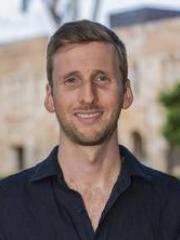
Dr William Woodgate is a Lecturer in the School of the Environment at The University of Queensland and holds dual appointments as an Amplify Research Fellow and Principal Investigator at the CSIRO/TERN-OzFlux Tumbarumba tall forest research site. His research focuses on scaling remote sensing technologies to monitor vegetation productivity and health, particularly using sun-induced chlorophyll fluorescence (SIF) and integrating LiDAR, optical, and thermal imagery. He has been an ARC DECRA Fellow and leads the Tumbarumba flux tower site, one of Australia’s longest-running and globally significant environmental monitoring sites. His research interests span remote sensing applications in climate science, ecosystem monitoring, and environmental satellite product validation. Recent work emphasizes bridging leaf-to-canopy-scale observations and advancing models for evapotranspiration, carbon fluxes, and vegetation structure analysis. Key achievements include contributions to FLUXCOM-X scaling frameworks, development of thermal and hyperspectral proximal sensing systems (THEMS), and validation of satellite products using ground-based measurements. Awards include the ARC DECRA Fellowship (2019) and UQ Amplify Research Fellowship. Collaborations span institutions globally, including CSIRO, TERN, and international research networks like OzFlux. His work addresses critical challenges in climate resilience, water resource management, and ecosystem health through innovative sensing technologies.
Dr. Lukas Gerstweiler is a Lecturer in the School of Chemical Engineering at the University of Adelaide, within the Faculty of Sciences, Engineering and Technology. His research focuses on advancing biomanufacturing processes, particularly continuous bioprocessing, downstream purification techniques, and virus-like particle (VLP) technology. He explores novel chromatography methods using porous co-polymers and mechanistic modeling to optimize biomolecule separation. His work aims to enhance efficiency in producing biotherapeutics, recombinant proteins, and vaccines. Dr. Gerstweiler’s research group emphasizes interdisciplinary approaches combining engineering, biology, and computational sciences. Key areas include VLP-based vaccine platforms for emerging pathogens and process intensification strategies for cost-effective biomanufacturing. He actively supervises research students in Masters and PhD programs, fostering innovation in sustainable protein production and healthcare solutions. His publications highlight contributions to VLP stability analysis, chromatography optimization, and continuous manufacturing systems. Collaborations are sought to address global health challenges through transformative biomanufacturing technologies.
Dr. Urs Bette is a Lecturer and Program Director of the Master of Architecture (MArch) at the School of Architecture and Built Environment, University of Adelaide. His academic and professional work bridges experimental design, urban interventions, and speculative architectural practices across Australia, Austria, Bhutan, Ghana, and Japan. His research interests center on performative and experimental architectural design , with a focus on conceptual innovation, spatial mutation, and context-responsive forms. Through studios like the 'Jump Studio', he encourages students to explore architecture through natural phenomena and mechanical processes, fostering identity and creativity beyond constraints. The body of his work, including competition-winning and built projects, demonstrates a consistent engagement with parasitic architecture, adaptive reuse, territorial geopolitics, and urban catalysts . Notable projects such as the AEAF rooftop studio, the Okinotori-shima ritual intervention, and the Adelaide Riverbank Bridge reflect a deep integration of conceptual rigor with practical and symbolic dimensions. Among his recognitions is the 1st Prize in the Thalia NEU architectural design competition in Graz, Austria. His work has also contributed to cultural, educational, and residential projects internationally, often in collaboration with renowned firms such as Coop Himmelb(l)au, Sam/Ott-Reinisch, and eichinger oder knechtl. Dr. Bette actively supervises design research and integrates practice into pedagogy, though no formal list of advisees is provided. He has led significant architectural projects involving structural innovation, cross-cultural collaboration, and public space transformation. His design philosophy emphasizes catalytic, surprising, and supplementary architectural roles within the urban fabric. He has been involved in diverse architectural teams, including as a project architect with Steven Holl, design architect with eichinger oder knechtl, and team member at Coop Himmelb(l)au on international competitions. His lab-like design approach is evident in experimental installations such as Unreasonable Topographies and the Dragon in the Sea , which function as both artistic and architectural inquiries.
Professor Yu Bai is a Professor in Structural Engineering at Monash University's Department of Civil and Environmental Engineering, part of the Faculty of Engineering. He holds a B.E. and M.E. from Tsinghua University and a Ph.D. from the Swiss Federal Institute of Technology Lausanne (EPFL). His research focuses on composite materials, modular construction, robotics in construction, and structural resilience under extreme conditions. He directs the Smart Structures and Construction research theme and leads the Laboratory of Robotic Construction. Key research pillars include: Composite materials for lightweight structures Modular design and manufacturing Construction automation and robotics Prof. Bai has secured major grants including an ARC Discovery Early Career Researcher Award and leads projects in sustainable construction, fire dynamics of composites, and robotic fabrication. He collaborates internationally and has over 290 peer-reviewed publications. Teaching responsibilities include courses on structural design and bridge engineering. His labs integrate cutting-edge facilities for structural testing and robotic systems. Awards include recognition for advancing prefabricated housing and low-carbon construction technologies. Current initiatives include the ARC Training Centre for Advanced Manufacturing of Prefabricated Housing and Building 4.0 CRC for smart construction innovations.