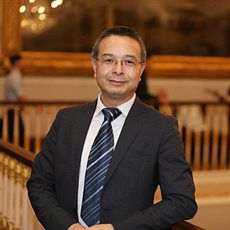
Prof. Dr. Markus Zimmermann leads the Chair of Product Development and Lightweight Design at the Technical University of Munich (TUM). With a background in mechanical engineering from TU Berlin and the University of Michigan, and a doctorate from MIT on solid-state singularities, he bridges academic rigor with industrial application. His career spans 12 years at BMW focusing on vehicle development before transitioning to academia. Specializes in solution space engineering for robust design Expert in additive manufacturing and systems engineering Develops methodologies for managing design complexity and uncertainty His research focuses on multidisciplinary design optimization and lightweight structures , particularly in robotics and automotive systems . His team applies digital twin frameworks and attribute dependency graphs to enhance design processes. Recent publications emphasize topology optimization in robotic systems and thermal management for medical X-ray sources. Key trends in his 2024-2025 publications include: Topological optimization for additive manufacturing and robotics Application of solution spaces to manage design uncertainty Development of compact X-ray systems for medical therapy Integration of digital twin technologies in industrial contexts
Amy E. Fraley is an Assistant Professor at ETH Zürich, Department of Chemistry and Applied Biosciences, and leads the Medicinal Chemistry Research Group. Her cross-disciplinary work bridges natural products biosynthesis, pharmaceutical sciences, and environmental sustainability through enzymatic chemistry and biotechnology. BSc in Chemistry, Millersville University of Pennsylvania (2014) PhD in Medicinal Chemistry, University of Michigan College of Pharmacy (2019) Postdoctoral work at ETH Zürich Institute of Microbiology under Prof. Jörn Piel Her research focuses on harnessing biosynthetic enzymes (e.g., halogenases, monooxygenases, Diels-Alderases) to create sustainable bioactive metabolites. She explores natural product biosynthesis in fungi and marine bacteria, targeting disease mechanisms and green chemistry applications. Recent work includes metagenomic studies of Lake Chilika microbial mats and polyketide synthase engineering. Notable scientific awards include the 2024 JSP Fellow at Bürgenstock Conference, 2018 Rackham Predoctoral Fellowship, and multiple University of Michigan honors. Her group secured funding from the ETH4D Doctoral Mentorship Grant and Messerli Foundation . Collaborations span structural biology, synthetic chemistry, and microbiology, with key contributions to flavoenzyme characterization and bioactive compound libraries . The lab emphasizes interdisciplinary training and innovation in biocatalytic tools for organic synthesis.
Associate Professor Bambang Trigunarsyah holds a position at RMIT University since 2018, affiliated with the School of Property, Construction and Project Management (PCPM). He earned his BSc in Civil Engineering from Colorado School of Mines, a Master's in Civil Engineering (Construction Management) from the University of Indonesia, and a PhD in Engineering Project Management from the University of Melbourne. His career spans industry roles, including project engineering in Indonesia's oil and gas sector, academic leadership at the University of Indonesia, and international teaching/research appointments at Queensland University of Technology (QUT) and King Fahd University of Petroleum and Minerals in Saudi Arabia. Research interests focus on post-disaster reconstruction, infrastructure project governance, constructability of infrastructure, and project management in developing countries. Notable projects include risk management frameworks using blockchain, circular economy in Saudi construction, and BIPV energy solutions. He actively supervises HDR students in areas like public-sector project success determinants and thermal environment studies. Bambang serves as Higher Degree Research Delegate Authority (HDR DA) for the School of PCPM and teaches postgraduate project management programs. Professional memberships include AIPM, PMI, and ASCE. His industry advisory roles include Indonesia's National Construction Service Development Board (2002-2007) and Australia-Indonesia Centre's Infrastructure Cluster (2016-2018). Recent research emphasizes BIM applications in infrastructure preservation, risk assessment methodologies, and climate-resilient construction. His work bridges theory and practice, addressing challenges in emerging economies and complex project environments.
Claudio Canizares is a University Professor and Hydro One Endowed Chair in the Department of Electrical and Computer Engineering at the University of Waterloo. He also serves as Executive Director of the Waterloo Institute for Sustainable Energy (WISE). With a career spanning over 30 years, his research focuses on power systems stability, smart grids, microgrids, and renewable energy integration. He has secured nearly $118 million in grants and supervised 180+ researchers/students. Education: PhD (1991) and MSc (1988) in Electrical Engineering from University of Wisconsin-Madison; Electrical Engineering Diploma (1984) from Escuela Politécnica Nacional, Ecuador. Research Interests : Nonlinear systems theory, FACTS/HVDC applications, energy storage systems, microgrid stability/control, renewable integration in remote communities, and smart grid analytics. His work emphasizes bridging academic research with industrial applications through collaborations with utilities and tech firms. Key Achievements : IEEE Transactions on Smart Grid Editor-In-Chief; multiple IEEE Fellowships (IEEE, Royal Society of Canada, Canadian Academy of Engineering); 2017 IEEE PES Outstanding Educator Award; 2016 IEEE Canada Electric Power Medal. His publications (370+) include landmark papers on microgrid stability definitions and control frameworks, cited over 29,000 times. Teaching: Recently taught ECE 140 (Linear Circuits), ECE 467 (Power Systems Analysis), and graduate courses ECE 6601PD/ECE 6613PD on power systems modeling and analysis.
Henri Darmon is a Distinguished James McGill Professor in the Department of Mathematics and Statistics at McGill University, affiliated with the Centre Interuniversitaire en Calcul Mathématique Algébrique (CICMA) and the Centre de Recherches Mathématiques (CRM). He holds citizenships of Canada, France, and Switzerland. His research focuses on algebraic number theory, particularly elliptic curves, modular forms, and L-functions, with contributions to the Birch and Swinnerton-Dyer conjecture and Stark conjectures. Education: B.Sc. Mathematics & Computer Science, McGill University (1987) Ph.D. Mathematics, Harvard University (1991) Key Positions: Director of CICMA (1998–2024) Editorial roles at journals like Commentarii Mathematici Helvetici and Transactions of the AMS Organizer of major conferences including CNTA, ICM satellite events, and thematic programs at MSRI and CRM Research Interests: Stark-Heegner points and Euler systems p-adic L-functions and Iwasawa theory Arithmetic of modular curves and Shimura varieties His work bridges analytic and algebraic approaches to number theory, emphasizing computational and geometric methods.
Jonathan Conway is an Assistant Professor in the Department of Chemical and Biological Engineering at Princeton University and an associated faculty member of the High Meadows Environmental Institute (HMEI). He leads the Conway Lab, which focuses on engineering plant-microbe interactions for applications in bioagriculture, bioenergy, and biochemical industries. Education: B.S. Chemical Engineering, University of Notre Dame (2011) M.S. Chemical Engineering, North Carolina State University (2013) Ph.D. Chemical Engineering, North Carolina State University (2017) Postdoctoral Fellow, University of North Carolina Chapel Hill & Howard Hughes Medical Institute (2017-2021) Research Interests: The Conway Lab develops genetic engineering approaches for non-model bacteria at plant-microbe interfaces. Key research areas include: chemical signaling between plants and microbes, microbiome impacts on plant immunity, environmental stress responses in agricultural systems, and enzymatic degradation of lignocellulosic biomass using thermophilic bacteria. The lab employs bacterial genetics, systems biology, and biomolecular engineering to create technologies for sustainable bioindustries. Publication Trends: Recent work demonstrates strong emphasis on molecular mechanisms of plant-microbe communication (2020-2024), enzyme characterization in biomass degradation (2024-2025), and development of synthetic microbial communities for climate resilience (2024). Earlier research focused on extremophile enzymology and metabolic engineering (2012-2019). Student Advising: Currently mentors 4 graduate students and 8 undergraduates. Alumni include 9 former advisees who graduated between 2022-2024. The lab actively recruits students through Princeton's Chemical Engineering graduate program and undergraduate research initiatives. Laboratory: The Conway Lab develops microfluidic systems for root microbiome studies and genetic tools for engineering plant-associated bacteria. Current projects include designing thermophilic microbial consortia for consolidated bioprocessing and characterizing bacterial immune evasion strategies.
Prof. Dr. Ingo Scholtes is Chair of Machine Learning for Complex Networks at Julius-Maximilians-Universität Würzburg's Center for Artificial Intelligence and Data Science (CAIDAS). His research spans network science, graph machine learning, and computational social science, with applications in software engineering, ecology, biology, and physics. He received a Juniorfellowship from the German Informatics Society (2014) and an SNSF Professorship (CHF 1.5Mio, 2018). Current affiliations: JMU Würzburg (since 2021), University of Zurich (2018-2024), Bergische Universität Wuppertal (2019-2021) Research focus: Higher-order network modeling, temporal graph analysis, AI for collaborative systems, causality-aware machine learning His recent publications demonstrate strong trends in temporal network analysis , graph neural networks for time-series, and higher-order models across software engineering and social science domains. He co-chairs multiple international workshops on complex networks and serves as associate editor for EPJ Data Science and Advances in Complex Systems. Key scientific contributions: Foundational work on higher-order network models published in Nature Physics Methodological innovations in temporal network visualization (HOTVis) and path-based analysis (pathpy) As both educator and organizer, he leads the Computational Social Science Section at GI e.V., mentors across disciplines, and develops tools like git2net for collaboration analysis. His work bridges theoretical foundations with practical applications in network science.
Michael Lepech is a Professor of Civil and Environmental Engineering and Senior Fellow at the Woods Institute for the Environment at Stanford University. His research focuses on integrating sustainability into civil engineering through quantitative assessment and multi-scale modeling, particularly via the Sustainable Integrated Materials, Structures, Systems (SIMSS) framework. He also leads the Stanford Center at the Incheon Global Campus (SCIGC) in South Korea, exploring smart city technologies for urban sustainability. Education : PhD in Civil and Environmental Engineering (2006), MBA in Finance and Strategy (2008) from the University of Michigan. Research Areas : Sustainable infrastructure design, biopolymer composites, life cycle assessment, digital twinning, smart city technologies, and multi-physics deterioration modeling. Leadership : Director of SCIGC, advancing research on smart and sustainable urban environments in Songdo, South Korea. His recent publications focus on biopolymer-bound composites, traffic signal optimization, and life cycle sustainability analysis. He has received recognition as a Senior Fellow at Stanford’s Woods Institute for environmental research.
Nicholas Mortimer is a Senior Lecturer in Design at Goldsmiths, University of London. He holds an MA in Design Interactions (Royal College of Art, 2013) and a BA in Fine Art Sculpture (University of Brighton, 2005). His work focuses on socially engaged design practices, reimagining historical performance traditions to address contemporary labor and societal issues. As co-founder of Post Workers Theatre (PWT), he explores workers’ theatre and creative resistance through collective writing, performance, and design. His research spans topics like gig economy critiques, housing privatization, and community activism, often blending performance, sound, and participatory methods. Education: MA Design Interactions, Royal College of Art, 2013 BA Fine Art Sculpture, University of Brighton, 2005 Research Interests: Performance as social critique Historical folk traditions and modern labor struggles Community-driven design practices Radical pedagogy and participatory methods Key Projects: Post Workers Theatre : Investigates politically engaged performance, addressing labor inequality through updated workers’ theatre forms. Autohoodening : Critiques Amazon labor practices via a reimagined midwinter ritual. Rave of the Ritualesque : Examines rave culture’s potential for collective resistance. Affiliations: Department of Design, Goldsmiths, University of London IASPIS (Swedish Arts Grants Committee) residency collaborations Labs/Teams: Post Workers Theatre collective Collaborations with institutions like Tate Liverpool, Luleå Arts and Crafts Biennale, and the Maidstone Museum
Professor Terry Rudolph is a Professor of Quantum Physics at the Department of Physics within the Faculty of Natural Sciences at Imperial College London. His affiliations include the Quantum Engineering, Science and Technology group, Quantum Optics and Laser Science Group, and The Light Community. His research focuses on quantum-anything, encompassing optical physics, quantum computing, photonics, and related interdisciplinary fields such as nanotechnology and communications technologies. Rudolph’s work emphasizes photonic quantum computing architectures, entanglement generation, and fault-tolerant quantum systems. His recent publications highlight advancements in cluster state generation, photonic multiplexing, and reconfigurable entangling systems. He has contributed to scalable quantum hardware design, including silicon photonic platforms and error-correction protocols. His academic contributions span theoretical and experimental quantum mechanics, with a focus on bridging quantum theory and practical implementation. Notable themes in his research include deterministic teleportation, photonic integrated circuits, and fusion-based quantum computing. He has also engaged in educational initiatives to introduce quantum information science to high-school students. Affiliations: Quantum Optics and Laser Science Group, Quantum Engineering Centre, and The Light Community at Imperial College London.
Pavel Etingof is Professor of Mathematics at the Massachusetts Institute of Technology (MIT), Department of Mathematics, where he has been a distinguished faculty member for many years. He serves as the Chief Research Adviser of MIT-PRIMES, an all-year high school math research program that provides exceptional research opportunities for talented high school students. Additionally, he holds the prestigious position of Editor-in-Chief of Selecta Mathematica. Professor Etingof's research spans multiple advanced areas of pure mathematics with a particular focus on representation theory, tensor categories, Lie algebras, Hecke algebras, and algebraic structures. His work consistently bridges algebra, geometry, and mathematical physics, revealing deep connections between abstract algebraic structures and physical phenomena. His research has evolved to increasingly explore tensor categories in positive characteristic, connections between representation theory and fractal structures, and applications to quantum field theory. His recent publications (2021-2025) demonstrate continued productivity and innovation, with numerous papers on tensor categories in various characteristics, representation theory of Lie groups, and connections to mathematical physics. These works show sophisticated exploration of representation theory in prime characteristic, novel applications to quantum field theory, and deep investigations into the structure of tensor categories. Editor-in-Chief of Selecta Mathematica Chief Research Adviser of MIT-PRIMES Professor Etingof has mentored numerous Ph.D. students at MIT and other institutions, establishing a significant mathematical genealogy in representation theory. His teaching includes advanced courses on algebraic groups, Lie theory, representation theory, and specialized topics. He has also co-organized many student seminars on cutting-edge mathematical topics including Deligne categories, symplectic reflection algebras, quantum cohomology, and double affine Hecke algebras, fostering collaborative research environments for students and colleagues.
Jan Knippers is a Professor and Institute Director at the University of Stuttgart's Faculty of Architecture and Urban Planning , leading the Institute of Building Structures and Structural Design (ITKE) . He co-founded Knippers Helbig Advanced Engineering and established Jan Knippers Ingenieure in 2018 to focus on innovative fiber composite and timber structures. Key roles: Deputy Executive Director of Cluster of Excellence IntCDC , former Vice-Rector for Research (2019-2021), and Dean of Faculty of Architecture (2021-2023) Technical focus: Hybrid FRP-Timber systems, computational design, and biomimetic principles His projects include the 2024 Hybrid Flax Pavilion , Urbach Tower (2024), and BUGA Fiber Pavilion (2019). He contributes to European standardization committees and serves as 2024 Leverhulme Visiting Professor at University College London.
Dr. Andre Kahles is a Lecturer in the Department of Computer Science at ETH Zürich, specializing in biomedical informatics. His research focuses on computational methods for analyzing large-scale genomic and transcriptomic data, with applications in cancer genomics, metagenomics, and precision medicine. He has contributed to the development of tools such as SplAdder for alternative splicing analysis, MetaGraph for petascale genomic data exploration, and SECEDO for subclone detection in cancer genomes. His work bridges algorithmic innovation with biological insights, addressing challenges in single-cell analysis, genome graph alignment, and multi-omics integration. Key research themes include: Developing scalable algorithms for processing nanopore sequencing and metagenomic data Characterizing somatic mutations and non-coding drivers in cancer genomes Advancing genome graph-based alignment and annotation methods Integrating multi-omics data for clinical decision-making and tumor profiling His publications span topics like RNA-seq analysis, chromothripsis in cancers, and global urban microbiome tracking through the MetaSUB consortium. Kahles has collaborated on landmark projects including the Pan-Cancer Analysis of Whole Genomes (PCAWG) and the Tumor Profiler Study.
Dr Yong Lin is an Associate Professor in Operations and Supply Chain Management at the Department of Management, Birmingham Business School, University of Birmingham. He joined the university in September 2021, having previously held academic positions at the University of Greenwich and Huazhong University of Science & Technology. He has also served as a visiting researcher at the Institute for Manufacturing (IfM), University of Cambridge, and as a research assistant at the Hong Kong University of Science & Technology. PhD in Management Science and Engineering, Huazhong University of Science & Technology, 2002 MSc in Industrial Engineering and Management, Huazhong University of Science & Technology, 1999 Dr Lin’s research focuses on digital transformation and sustainability strategies in operations and supply chains. His key interests include supply chain risk and resilience, digital logistics platforms, business ecosystems, and manufacturing strategies. He explores how digital technologies such as blockchain and RFID can enhance transparency, efficiency, and sustainability across supply networks. His recent publications reflect a strong trend toward digitalization, resilience, and sustainability in supply chains, with studies on modular resilience in multinational platforms, blockchain in remanufacturing, and digitalization in healthcare logistics. His work frequently appears in top-tier journals such as International Journal of Operations and Production Management , Journal of Cleaner Production , and Technological Forecasting and Social Change . Senior Fellow of the Advance HE (Higher Education Academy) Certified Management and Business Educator, Chartered Association of Business Schools (CABS) Chartered Fellow, Chartered Institute of Logistics and Transport (CILT) Dr Lin has led and coordinated several research projects funded by the National Natural Science Foundation of China (NSFC), the 863 Program, and the European Regional Development Fund. He actively engages in industry consulting to transfer research outcomes into practical business solutions. He welcomes PhD applicants interested in digital transformation, sustainability, logistics platforms, and business ecosystems. He is also involved in advising and mentoring graduate researchers in these domains. Dr Lin is affiliated with the Department of Management at Birmingham Business School, where he contributes to research, teaching, and knowledge exchange in operations and supply chain management. His work bridges academic rigor with real-world application, particularly in digital and sustainable supply chain innovation.
Prof. Dr.-Ing. Elisabeth Clausen is a Professor and Director of the Chair and Institute for Advanced Mining Technologies at RWTH Aachen University. She holds key roles in the Specialist Group for Raw Materials and Disposal Technology, serves as a rectorate representative, and leads the Commission for EU Research Funding. Her research spans Underground mining automation Acoustic emission diagnostics Sustainable mining systems Space resource extraction Advanced sensor technologies Her recent publications focus on autonomous mining machinery, underground communication systems, and acoustic emission analysis across 15+ studies from 2013–2025, with particular emphasis on Ultra-wideband positioning Thermographic detection Crack monitoring in planetary gearboxes Explosive atmosphere safety Mineral processing diagnostics Digitalization trends Prof. Clausen contributes to mining education reform through initiatives like CDIO™ and has developed innovative learning spaces in underground mines. She coordinates international educational labs and integrates sustainability into mining engineering curricula, with publications on Adaptive ventilation systems Mining education frameworks Future-proof mineral extraction Entrepreneurial mindset in engineering