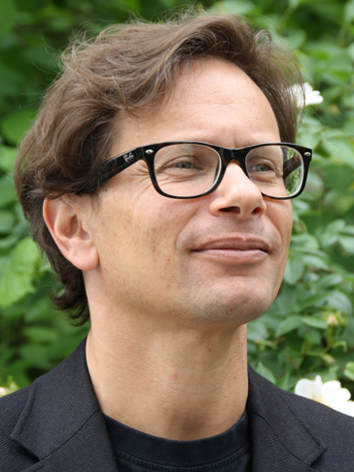
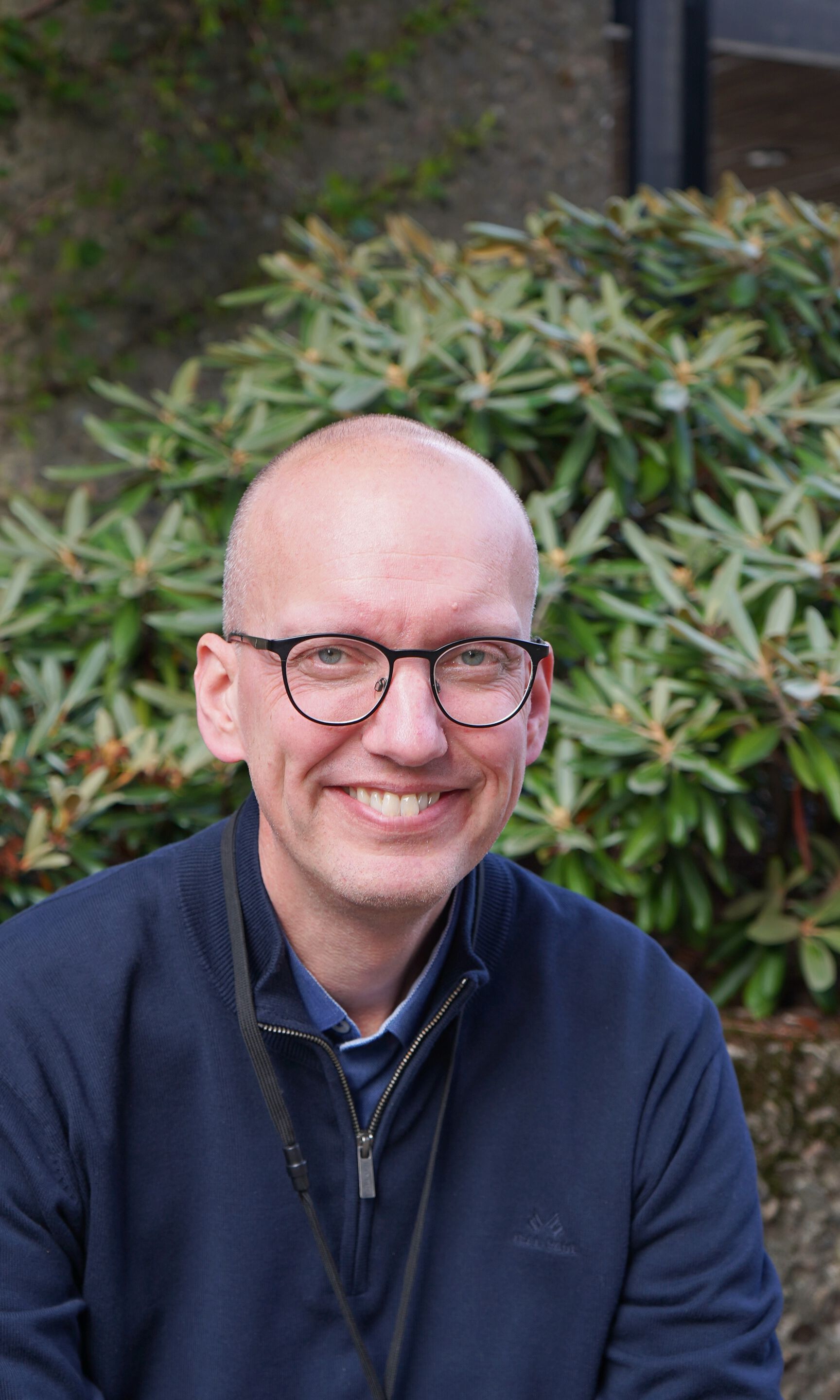
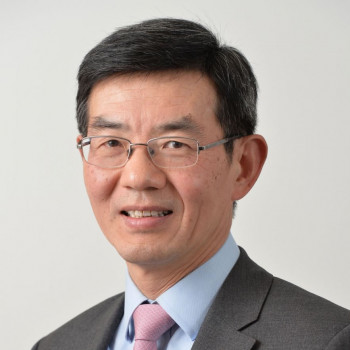
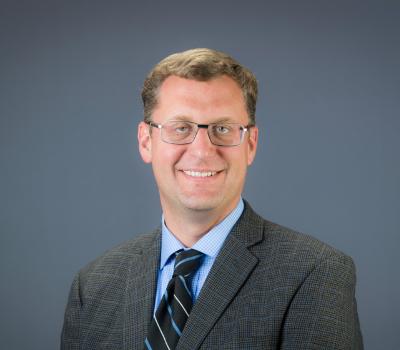
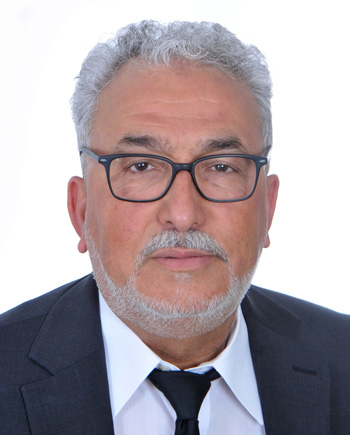
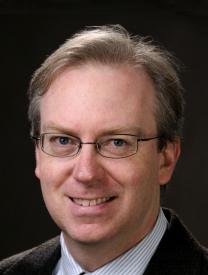
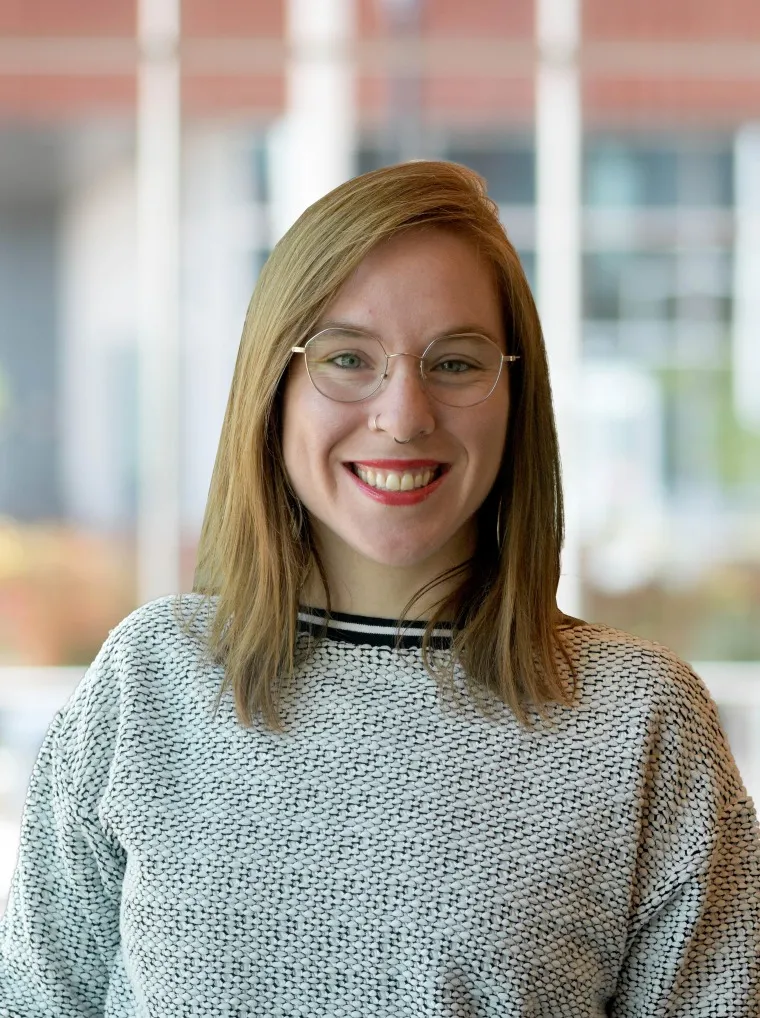
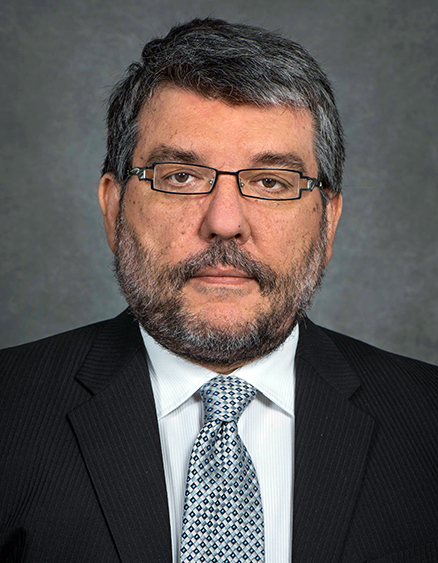
Prof. Fakher Assaad is a Professor of Theoretical Physics I at Julius-Maximilians-Universität Würzburg. His research focuses on quantum many-body systems, with expertise in numerical methods like quantum Monte Carlo simulations. He investigates metal-insulator transitions, heavy fermion compounds, and correlated electron systems. His work spans topics including Hubbard models, graphene physics, and topological quantum phases. Assaad leads the Theoretical Physics I team and collaborates with postdocs and students such as Dr. Marcin Raczkowski and Jonas Schwab. Research interests include quantum phase transitions, strongly correlated systems, and emergent phenomena in condensed matter. His studies often address challenges like sign problems in fermionic simulations and the interplay between magnetism and topology. Recent publications highlight advancements in quantum criticality, lattice models, and topological defects. His work bridges theoretical frameworks with computational methods to explore novel materials and quantum phenomena. Advising includes supervision of PhD and master’s students in theoretical physics. His group is part of the Wilhelm Wien Institute and contributes to the FOR1807 research network. The team is based at the M1 Computer Science/Physics building in Würzburg.
Youssef M A Hashash is the W. W. Grainger Chair and Professor in the Department of Civil and Environmental Engineering at the University of Illinois. His research focuses on geotechnical and earthquake engineering, with emphasis on seismic site response analysis, soil-structure interaction, and advanced computational methods like the Discrete Element Method (DEM). He has led projects on infrastructure resilience, including studies of buried water reservoirs, railway systems, and post-earthquake reconnaissance. Hashash has developed influential models for site amplification in Central and Eastern North America, contributing to seismic hazard assessments. His work integrates experimental centrifuge testing, numerical simulations, and field data. Notable contributions include guidelines for implementing NGA-East ground motion models and advancements in pore-water pressure generation models for liquefaction evaluation. Key Research Areas: Ground movement, seismic response, soil dynamics, and geotechnical data systems Major Projects: NGA-East Geotechnical Working Group, Beirut Explosion Analysis, and LA Metro Tunnel Projects Recipient of prestigious awards including the NAE Membership (2022), PECASE (2000), and Walter L. Huber Prize (2006), he collaborates internationally on earthquake engineering and geotechnical innovations. His lab develops tools like the DEEPSOIL software for nonlinear site response analysis and explores AI applications in geotechnical data interpretation.
Carson Slabaugh is an Assistant Professor in the Department of Aeronautics and Astronautics and holds a courtesy appointment in the Department of Mechanical Engineering at Purdue University. His research focuses on advanced propulsion systems, particularly combustion dynamics in rotating detonation engines (RDEs), rocket combustors, and ramjet configurations. He leads studies on high-pressure flames, laser diagnostics, and fuel injection mechanisms. Key research areas include detonation wave propagation, pressure gain combustion, and the application of advanced optical diagnostics (e.g., CARS, PLIF) to study transient phenomena in extreme environments. His work addresses challenges in next-generation propulsion systems, including hydrogen-blend fuels, methane-oxygen rocket ignition, and solid-fuel ramjet performance. Recent studies emphasize geometric optimization of RDEs, fuel injection dynamics under detonation conditions, and the impact of flow parameters on combustion stability. Collaborations involve experimental validation with high-speed imaging and computational fluid dynamics (CFD) modeling to bridge theoretical predictions with real-world performance. Slabaugh’s laboratory develops novel diagnostic tools for megahertz-rate imaging of mixing and combustion processes, advancing understanding of transient flame structures and instability mechanisms. His contributions aim to improve efficiency and operability of propulsion systems for aerospace and terrestrial applications.
Roles and Affiliations: Fred Espen Benth is a Professor in the Department of Mathematics at the University of Oslo, affiliated with the Risk and Stochastics research group. He holds a Dr. scient (PhD equivalent) in mathematics from the University of Oslo (1995). His academic journey includes roles as a researcher at the Norwegian Computing Center, a postdoc at the Universities of Aarhus and Oslo, and an Associate Professor at the University of Trondheim before becoming a full professor in 2002. Research Interests: Benth’s research focuses on mathematical finance, particularly energy and weather markets, commodity derivatives, and stochastic analysis. He explores modeling, estimation, and simulation of spot and forward prices, as well as pricing options and portfolio optimization. Recent work extends to climate systems, energy transition dynamics, and machine learning applications in financial and environmental modeling. Publications and Projects: His extensive publication record includes over 150 journal articles and book chapters, with a focus on energy markets, stochastic processes, and climate-related financial instruments. Notable projects include ‘Spatial-Temporal Uncertainty in Energy Systems (SPATUS)’ and contributions to interdisciplinary energy informatics. His work bridges theoretical stochastic analysis with practical applications in energy systems and risk management. Labs and Collaborations: Benth collaborates with the Stochastics of Renewable Energy Markets (STORE) group and contributes to initiatives like the ‘Computational Modelling and Machine Learning for Applications in Hydropower’ project. His research emphasizes the integration of stochastic methods with real-world energy and climate challenges.
Prof Wen Wang is Professor of Biomedical Engineering and Vice-Principal and Executive Dean for Science and Engineering at Queen Mary University of London, affiliated with the School of Engineering and Materials Science and the Centre for Bioengineering. He is a Chartered Engineer and holds fellowships from the Institution of Mechanical Engineers (FIMechE), Higher Education Academy (FHEA), American Institute for Medical and Biological Engineering (FAIMBE), and the Royal Academy of Engineering (FREng), reflecting his leadership and technical excellence in engineering and biomedical sciences. His research focuses on vascular bioengineering , biomaterial mechanics , and cell biomechanics , with particular emphasis on the endothelial glycocalyx , vascular stem cells , and transmembrane transport . He employs advanced techniques such as AFM nano-indentation, confocal microscopy, and microfluidic platforms to study the mechanical properties, shear stress responses, and structural stability of biological systems. His work spans from fundamental biophysics to translational applications in drug delivery and cardiovascular disease. Prof Wang has led multidisciplinary research projects in the UK and through international collaborations with partners in the US, China, and Japan. His recent publications highlight sustained contributions to understanding microcapsule mechanics , extracellular vesicles , biofluid dynamics , and biomolecular sensing . His work integrates experimental and computational modeling, particularly in microcirculation and cellular transport phenomena. He has received notable scientific recognition through multiple prestigious fellowships and has published extensively in high-impact journals including Nature Communications , Journal of Controlled Release , Biosensors and Bioelectronics , and Journal of Fluid Mechanics . His research demonstrates a strong trajectory in both fundamental discovery and applied biomedical innovation. Prof Wang actively supervises research and collaborates with clinical and engineering partners at Queen Mary and King's College London. His leadership in the School of Engineering and Materials Science underscores his role in shaping academic strategy and research excellence in science and engineering at Queen Mary University of London.
Michael Scott is a Professor in the Department of Civil and Construction Engineering at Oregon State University, part of the College of Engineering. He holds a Ph.D. in Structural Engineering from the University of California, Berkeley (2004), an M.S. from the same institution (1999), and a B.S. in Civil Engineering from North Carolina State University (1998). His research focuses on nonlinear structural analysis, dynamics, numerical methods, and software design, particularly in the context of bridges and fluid-structure interactions. He has developed widely used tools like OpenSees and contributed to multi-hazard resilience frameworks for infrastructure. Key research areas include tsunami impacts on coastal bridges, GPU-accelerated analysis, and machine learning applications for structural simulation. His work emphasizes sensitivity analysis and software reliability, with notable contributions to OpenSees and PFEM methodologies. He has been recognized with the 2019 Celebrate Excellence Awards for Online Teaching. His research also addresses bridge loading from truck platooning, seismic sensitivity, and ponding effects on structural steel roofs. Educations: Ph.D., Structural Engineering, UC Berkeley (2004) M.S., Structural Engineering, UC Berkeley (1999) B.S., Civil Engineering, NC State University (1998) Awards: 2019 Celebrate Excellence Awards, Online Teaching Award Key Contributions: Development of OpenSees software framework Pioneering work in PFEM for fluid-structure interaction Multi-hazard engineering for tsunami resilience
Abdeldjelil Belarbi is the Hugh Roy and Lillie Cranz Cullen Distinguished Professor of Civil and Environmental Engineering at the University of Houston’s Cullen College of Engineering. He holds fellowships from the American Concrete Institute (ACI), Structural Engineering Institute (SEI), American Society of Civil Engineers (ASCE), and other leading organizations. His academic career spans over three decades, including roles as Department Chair (2009–2013) and faculty positions at the University of Missouri-Rolla (now Missouri S&T), where he contributed to research centers like the Intelligent Systems Center and Materials Research Graduate Center. Belarbi’s education includes a Ph.D. (1991) and M.S. (1986) in Civil/Structural Engineering from the University of Houston, and a B.S. (1983) from the University of Sciences and Technology of Oran, Algeria. His research focuses on sustainable infrastructure, corrosion-resistant materials, FRP-reinforced concrete, and seismic resilience. He has pioneered studies on prestressed concrete girders, bridge pile repair, and shape memory alloy confinement for columns. His 150+ publications emphasize FRP applications, structural durability, and innovative repair techniques. Awards include the Cullen Distinguished Professorship and recognition as a Fellow in multiple engineering societies. Belarbi has advised numerous students and led interdisciplinary projects on infrastructure sustainability and advanced materials. Awards: Cullen Distinguished Professorship, ACI Fellow, ASCE Fellow, IIFC Fellow Key Research: FRP-reinforced concrete, corrosion-resistant steels, bridge retrofitting, shape memory alloys Leadership: Department Chair (UH), Dean’s Teaching Scholar (MU-Rolla)
Charles Kane is the Christopher H. Browne Distinguished Professor of Physics at the University of Pennsylvania's School of Arts & Sciences, Department of Physics and Astronomy. His research focuses on quantum electronic phenomena in solids, particularly topological insulators, quantum spin Hall effects, graphene, and carbon nanotubes. He holds numerous academic chairs and fellowships, including the Class of 1965 Endowed Term Chair and IBM Predoctoral Fellowship. His honors include the Benjamin Franklin Medal, National Academy of Sciences membership, and the Oliver Buckley Condensed Matter Prize. Education: Ph.D. in Physics from MIT (1989) and B.S. in Physics from the University of Chicago (1985). Research Interests: His work integrates quantum field theory and numerical simulations to explore topological phases of matter. Key areas include the theory of topological insulators, quantum spin Hall effects, and nanoscale electronic systems. He emphasizes experimental collaboration to bridge theoretical and applied physics, with a focus on materials like graphene and carbon nanotubes. Articles Trends: Recent publications highlight advancements in topological density correlations, Fermi sea topology, and topological superconductivity. His work often addresses symmetry-enriched phases, quantum transport, and novel electronic states in low-dimensional systems. Awards: Benjamin Franklin Medal (2015) Elected to National Academy of Sciences (2014) Lindback Award for Distinguished Teaching (2014) Physics Frontiers Prize (2013) Grants & Advising: Recipient of Simons Investigator grant (2012) and Oliver Buckley Prize (2012). His research group advises on topological materials and quantum phenomena, though specific student names are not listed in the text. Labs & Teams: Leads research in Penn's Department of Physics, contributing to advancements in condensed matter theory and topological quantum computing.
Caitlyn Hall is a Joint Assistant Professor of Practice in Hydrology and Atmospheric Sciences, Assistant Professor of Practice in Biosystems Engineering, and Director of the Future Earth Resilience minor program at the W.A. Franke Honors College. She founded the Arizona Science Policy Network and advises decision-makers on equitable legislation. Her roles span multiple departments at the University of Arizona, integrating environmental science with policy and community engagement. Educations: PhD in Environmental Engineering, Arizona State University BS and MS in unspecified fields from the University of Arizona Research Interests: Hall focuses on environmental justice, natural hazard resilience, and science policy, particularly in water governance, sustainability, and soil/water remediation. Her work emphasizes community-driven solutions and equitable policy development, leveraging transdisciplinary approaches to address climate adaptation and disaster recovery. She has pioneered efforts in open science and inclusive geoscience education. Articles Trends: Her recent publications emphasize integrating earth observation technologies with policy, advancing microbial-based ground stabilization techniques, and promoting equity in post-disaster recovery. Key themes include climate action frameworks, cross-cultural sustainability solutions, and open hydrology practices. Awards: No specific awards listed. Advising & Grants: Leads the Future Earth Resilience minor program and advises policymakers on legislative frameworks. Active in curriculum development for interdisciplinary environmental studies and community-driven research initiatives. Labs/Teams: Founder of the Arizona Science Policy Network, collaborates with global hydrology platforms like eWaterCycle, and engages in initiatives addressing US-Mexico border sustainability challenges.
Professor Stuart Phinn is a distinguished academic at the University of Queensland, serving as Professor in the School of the Environment and Centre Director of the Remote Sensing Research Centre (Earth Observation Research Centre). He also maintains affiliations with the Centre for Marine Science. With a career spanning over two decades, Professor Phinn has established himself as a leading expert in earth observation and environmental monitoring, with over 559 publications including 295 journal articles. His educational background includes a Bachelor (Honours) of Science (Advanced) from The University of Queensland and a Doctor of Philosophy from San Diego State University. Professor Phinn's leadership extends to founding directorships of Australia's national earth observation coordination body (www.eoa.org.au) and collaborative research infrastructure (www.tern.org.au), as well as a world-leading research-to-operational program supporting government environmental monitoring (www.jrsrp.org.au). He also leads the Earth Observation for Government Network. Professor Phinn's research focuses on monitoring environmental change using earth observation and field data. His work primarily involves using images collected from satellites and aircraft, combined with field measurements, to map and monitor Earth's environments and how they change over time. This research is conducted in collaboration with environmental scientists, government agencies, NGOs, and private companies. A growing aspect of his work focuses on national coordination of earth observation activities and the collection, publishing, and sharing of ecosystem data. His work provides solutions to support sustainable development and resource use for governments, industries, and communities. His recent publications demonstrate a consistent focus on applying earth observation technologies to solve environmental challenges across multiple domains. The 15 most recent articles reveal strong themes in coral reef mapping and monitoring, land cover change detection, fire resilience analysis, and advanced remote sensing techniques including multi-sensor fusion and machine learning applications. His work spans terrestrial, coastal, and marine environments, with significant contributions to understanding environmental change in Australia and internationally, particularly in Indonesia. Professor Phinn has secured substantial research funding from diverse sources including government agencies (Queensland Government, Great Barrier Reef Marine Park Authority), industry partners (SmartSat CRC, Blue Economy CRC), and international organizations (Google Inc, Vulcan Inc). Current projects include evaluating impacts of threats to endangered reptiles, automating tree-scale vegetation structure monitoring, and continuing the Joint Remote Sensing Research Program. As an academic supervisor, Professor Phinn has mentored numerous PhD and Master's students, with current supervision spanning topics from forest disturbance analysis to kelp forest mapping and fire resilience of mine site rehabilitation. His extensive supervision history demonstrates his commitment to training the next generation of earth observation scientists. The Earth Observation Research Centre he directs fosters a collaborative research environment focused on transforming satellite and airborne images with field survey data into meaningful environmental information for decision-making.
George Moridis is a Professor in the Harold Vance Department of Petroleum Engineering at Texas A&M University, holding the Robert L. Whiting Chair in Petroleum Engineering. He specializes in advanced numerical methods for reservoir engineering, with a focus on unconventional gas resources, gas hydrates, and coupled process modeling. His work integrates thermal operations, enhanced oil recovery, and high-performance computing. Education: Ph.D., Reservoir Engineering, Texas A&M University (1987) M.S., Agricultural Engineering, Texas A&M University (1982) M.Eng., Chemical Engineering, National Metsovion Technical University (1980) B.Sc. (honors), Chemical Engineering, National Metsovion Technical University (1979) His research interests include analytical modeling techniques, coupled flow-geomechanical systems, and thermal operations in reservoirs. He has pioneered methods for simulating gas production from hydrate deposits and tight/shale gas reservoirs. His work emphasizes real-world applications in energy resource optimization and environmental impact mitigation. Notable awards include the Karen E. Olson Excellence in Research Award (2019), John Franklin Carll Award (2019), and recognition as a Distinguished Member of the Society of Petroleum Engineers (2010). He has led projects at Lawrence Berkeley National Laboratory and collaborated with the U.S. Department of Energy. His research group focuses on high-performance computing frameworks for multiphase reservoir simulation. He advises on federal energy initiatives and maintains an active Google Scholar profile with over 150 publications.
Marco Toffolon is a Full Professor at the University of Trento's Department of Civil, Environmental and Mechanical Engineering, where he leads the Physical Limnology Laboratory. He serves as Deputy Director for International Relations and previously directed the Environmental Engineering programs. His research spans ecohydraulics, sediment transport, lake hydrodynamics, and environmental modeling. He investigates physical limnology, tidal morphodynamics, and stratified flows using analytical and numerical approaches. His work integrates field measurements with machine learning for water quality prediction and climate impact assessment. His publications focus on lake dynamics, river morphodynamics, and sustainable water management, with recent emphasis on climate-driven changes in alpine systems. Research demonstrates strong interdisciplinary linkages between hydraulics, ecology, and climate science. Awards: 2016 Coastal Engineering Journal Award 2013 Enrico Marchi Lecture invitation He leads international collaborations with institutions like EPFL and Sun Yat-sen University, and organizes conferences including the Physical Processes in Natural Waters workshop series.
Ljiljana Trajkovic is a Professor in the Department of Engineering Science at Simon Fraser University's Faculty of Applied Sciences. She holds a Ph.D. from the University of California, Los Angeles (1986), M.Sc. from Syracuse University (1979), and Dipl.Ing. from the University of Pristina (1974). Her research focuses on communication networks, nonlinear circuits, and machine learning applications for network security. She actively contributes to IEEE initiatives, including roles as conference committee chair and editorial board member. Education highlights include a strong foundation in electrical engineering and advanced studies in circuit theory and systems science. Her work bridges theoretical analysis with practical applications, such as anomaly detection in communication networks using machine learning. She teaches courses like ENSC 220 D100 Electric Circuits I, integrating research insights into education. Research interests emphasize network security, traffic analysis, and distributed systems. Recent articles explore BGP anomaly classification, ransomware detection, and virtual network embedding. She collaborates on tools like VNE-Sim and Anonym for network analysis. Awards and recognitions are highlighted through her leadership roles in IEEE and academic contributions. Advising and grants involve mentoring graduate students in cybersecurity and networking projects. She leads research teams exploring complex networks and their applications in autonomous systems. Her lab focuses on interdisciplinary projects merging electronics engineering with AI-driven network solutions.
Garrett M. Morris is an Associate Professor in Systems Approaches to Biomedicine at the University of Oxford, affiliated with the Department of Statistics and Green Templeton College. He holds roles as Deputy Director of Graduate Studies, Co-Director of the SABS R³ Centre for Doctoral Training, and Research Fellow at Green Templeton College. His research focuses on computational chemistry, drug discovery, and AI integration in biomedicine. He earned his DPhil from Oxford under Prof. W. Graham Richards, with subsequent work at The Scripps Research Institute and Oxford spinouts like InhibOx and Crysalin. Research interests include protein-ligand docking, virtual screening, and machine learning applications in cheminformatics. Notable contributions include the AutoDock software and the FightAIDS@Home project. He co-organizes conferences like the Royal Society of Chemistry’s 'AI in Chemistry' and founded Comp Chem Kitchen. His lab, Oxford Protein Informatics Group (OPIG), develops novel methods for drug discovery and evaluates AI-based docking methods' validity (e.g., PoseBusters). Recent work critiques AI docking methods' physical plausibility and generalizability. He advises numerous graduate students in statistics and drug discovery, with alumni in academia, pharma, and venture capital. Publications span molecular generation, scoring functions, and computational tools for drug design. Collaborations emphasize reproducibility, responsible research, and cloud computing in biomedicine.
David J. Olinger is a Professor of Aerospace Engineering at Worcester Polytechnic Institute (WPI). He specializes in renewable energy technologies, particularly airborne and hydrokinetic systems involving tethered kites and gliders for energy extraction from wind and ocean currents. His research emphasizes experimental and computational approaches to optimize these systems, including a low-cost kite-powered water pump for underdeveloped regions. Education: BS in Engineering (Lafayette College, 1983), MS in Mechanical Engineering (Rensselaer Polytechnic Institute, 1985), PhD in Mechanical Engineering (Yale University, 1990). Research focuses on fluid dynamics, aerodynamics, and fluid-structure interaction. His articles span advancements in tethered systems control, energy harvesting, and simulation techniques. Recent work integrates computational models and physical experiments to refine underwater kite systems and airborne wind energy solutions. Awards: Summer Faculty Research Fellow (1993, U.S. Navy) WPI Teaching Technology Fellowship (2000) ASME National Curriculum Innovation Award Honorable Mention (2001) Advising & Grants: Supervises graduate/undergraduate project teams in MQP (Major Qualifying Project) initiatives. Focuses on applied engineering solutions, such as renewable energy systems and fluid dynamics experiments. Labs/Teams: Leads a research group developing emerging energy technologies, emphasizing interdisciplinary collaboration between mechanical engineering and fluid dynamics.