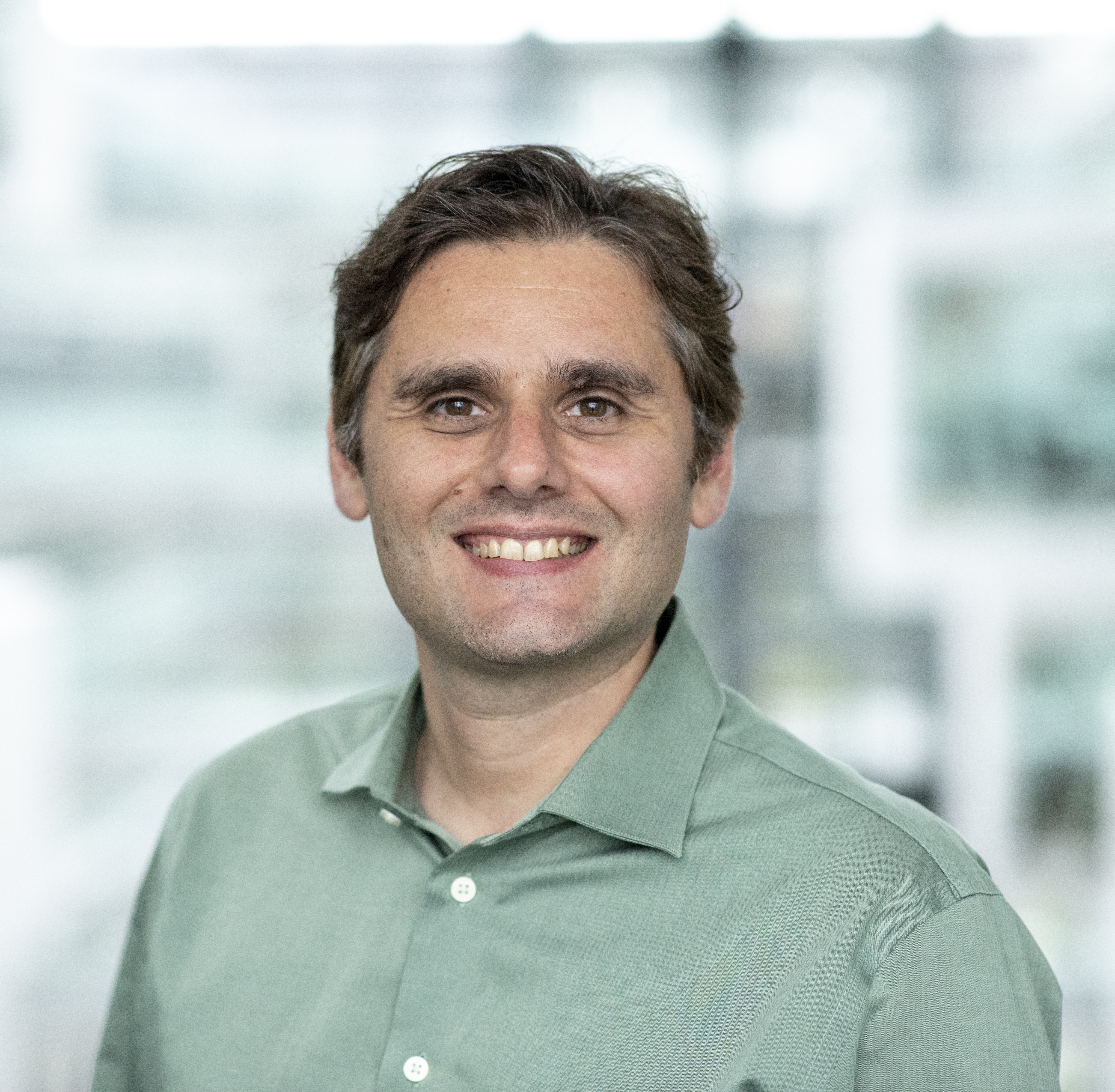
Joe Alexandersen is an Associate Professor in the Department of Mechanical Engineering at the University of Southern Denmark (SDU), affiliated with the Institute of Mechanical and Electrical Engineering. His research spans structural optimization, heat transfer, fluid dynamics, and high-performance computing, with applications in heat sink design, microfluidic devices, and additive manufacturing. Research Interests Topology and shape optimization Conjugate heat transfer Navier-Stokes flow modeling Finite element methods High-performance computing Scientific Awards 2022 Fluids 2020 Best Paper Award 2017 DTU Young Researcher Award 2015 ISSMO/Springer Prize for Young Scientist Key Projects HiHeaT: Topology optimization for high heat flux components (2024–2027) Structural Analysis of Large Modular Vessels (2025–2027)
Katja Hose is a Professor in the Department of Computer Science at Aalborg University's Technical Faculty of IT and Design. Her research focuses on Data, Knowledge and Web Engineering with specializations in AI for the People and Artificial Intelligence and Machine Learning. She maintains an active research profile with numerous publications and projects. Department of Computer Science Technical Faculty of IT and Design Aalborg University Research areas: Query Processing, Semantic Web, Linked Data, Knowledge Graphs Professor Hose's research interests center on knowledge representation, semantic web technologies, and AI applications. Her work spans from theoretical database systems to practical applications in healthcare, environmental assessment, and microbial data analysis. She has made significant contributions to knowledge graphs, large language models, and semantic search technologies, with particular emphasis on addressing hallucinations in AI systems and improving table search in semantic data lakes. Her recent publications demonstrate a strong trend toward integrating knowledge graphs with large language models, developing evaluation frameworks for AI hallucinations, and applying data science to diverse domains including healthcare and environmental sustainability. Her research bridges theoretical computer science with practical applications that address real-world challenges. NLP4KGC Best Paper Award (2023) ESWC 2023 Best Demo Award (2023) 2020 AMiner AI 2000 Most Influential Scholars AIME 2020 Best Paper Nomination (2020) ESWC 2019 Best Demo Award Nomination (2019) Professor Hose leads multiple significant research projects including ARISTOTLE (AI for clinical risk assessment), DarkScience (microbial data analysis), and the Poul Due Jensen Professorate in Big Data and AI. She has supervised numerous PhD students and collaborates extensively across disciplines, particularly in healthcare applications of AI and environmental assessment technologies. Her research has attracted substantial funding from sources like Villum Fonden and Danish E-infrastructure Cooperation. She is actively involved in several interdisciplinary research teams, including collaborations with microbiologists on microbial dark matter projects and with environmental scientists on digital environmental assessment systems. Her work on the ARISTOTLE project demonstrates strong connections between AI research and clinical applications, while her DarkScience project bridges computer science with microbiology.
Matteo Acclavio is an Assistant Professor in Computer Science at the School of Engineering and Informatics, University of Sussex, affiliated with the Foundations of Software Systems (FoSS) research group. A logician specializing in proof theory and its applications to computer science, his work bridges mathematical logic with concurrency theory and process calculi. Education: PhD in Mathematics, Aix-Marseille University, France Master in Discrete Mathematics and Foundations of Theoretical Computer Science, Aix-Marseille University Master in Mathematics, Roma Tre University, Italy Bachelor in Mathematics, Roma Tre University His research focuses on graphical proof systems, linear logic, modal logic, and concurrency theory. Publications highlight contributions to deep inference, sequent calculus, and the intersection of logic with distributed systems. Recent work explores logical frameworks for concurrency, such as choreographic programming, and graphical models for proof systems. He teaches courses like Operating Systems and maintains active collaborations in theoretical computer science.
Michael Reichhardt Hansen is an Associate Professor at the Department of Applied Mathematics and Computer Science (DTU Compute) at the Technical University of Denmark. He holds a MSc in Engineering (1982) and a PhD in Computer Science (1987) from DTU. He has held postdoctoral and visiting roles, including a fellowship at IBM Research Center (1984–1985) and a guest professorship at Oldenburg University (1992–1993). His research focuses on formal methods, embedded systems, and real-time systems, emphasizing mathematically grounded software development. He has authored/co-authored three books and over 70 scientific articles. Research interests include model-based program construction, temporal logic, functional programming, and ontology alignment. He has led projects on ontology matching frameworks (e.g., MDMapper) and formal methods for real-time systems. Hansen has supervised PhD students in areas like data integration and genetic circuit synthesis. He has contributed to international conferences and serves as a reviewer/examiner for academic programs. His work bridges theoretical foundations with industrial applications, particularly in embedded systems and data management. He has collaborated internationally, with projects addressing ESG reporting standards and regulatory compliance through automated data traceability.
Dr. Rosario Giustolisi is an Associate Professor in the Department of Computer Science at the IT University of Copenhagen . His research centers on computer security with a focus on cryptographic protocols for decision systems (e.g., voting and exams), automated security analysis, accountability frameworks, and sociotechnical security aspects. Before joining ITU, he held postdoctoral roles at SICS RISE and Lund University, Sweden, and earned his PhD from the University of Luxembourg with work on secure exam protocols, culminating in his book Modelling and Verification of Secure Exams (Springer, 2018). Research Trends: His 15 most recent articles (2016–2025) span cryptographic protocol design, coercion-resistant voting/exams, zk-SNARK applications, differential privacy, automated security analysis, and sociotechnical threat modeling. Key subfields include secure decision systems, privacy-preserving mechanisms, and formal verification. Scientific Awards: Best Paper Award, NordSec 2017 Best Paper Award, SECRYPT 2014 Villum Experiment Grant (Sole PI) 2020 ICT TNG Postdoc Grant (Sole PI) 2016 CSC Best PhD Thesis Award 2016 Acknowledgments from Apple for Security Advisory Professional Service: Organized cybersecurity breakfast talks at ITU and served on conference committees for ACM SAC (Security track), STAST, E-VOTE ID, and NordSec. He also contributed as a journal referee and sub-reviewer for multiple conferences.
Mateja Novak is an Assistant Professor at AAU Energy, Aalborg University, Denmark, within the Department of Applied Power Electronic Systems under the Faculty of Engineering and Science. Her research focuses on model predictive control, multilevel converters, machine learning, and reliability of power electronic systems, contributing to sustainable energy systems and renewable energy integration. She holds a Ph.D. from Aalborg University (2020) and an M.Sc. from Zagreb University (2014). Previously, she was a Postdoc at AAU Energy (2020-2023) and a visiting researcher at Kiel University (2018) and Danfoss (2023). Notable achievements include the EPE Outstanding Young EPE Member Award (2019) and 2nd place in the 2021 IEEE-IES Student and YP Competition. Her work spans projects like ALL2GaN (2023-2026) and AI-Power (2022-2027), addressing GaN IC solutions and AI-driven power electronics advancements. She is actively involved with IEEE societies including the Power Electronics Society and IEEE Women in Engineering. Her research outputs emphasize control strategies for power electronics, reliability analysis, and optimization techniques. Key areas of exploration include thermal stress balancing in converters, statistical model checking, and multiobjective control algorithms. Collaborations with industry partners like Danfoss and academic institutions like Kiel University underscore her interdisciplinary approach to advancing power electronics technology.
Alvaro Torralba is an Associate Professor in the Department of Computer Science at Aalborg University, Denmark, affiliated with the Technical Faculty of IT and Design. His research focuses on symbolic search, heuristic functions, and planning algorithms within artificial intelligence and machine learning. Notable projects include the ConAn initiative exploring contrastive analysis for state-space exploration. He has contributed extensively to classical planning, probabilistic planning, and automated planning competitions, earning awards such as the First Prize in the Agile Track of the 10th International Planning Competition (IPC’23). His work often bridges theoretical advancements with practical applications, including game-based network update synthesis and believable non-player character development. Research outputs include over 60 publications since 2011, with a focus on optimizing search algorithms and enhancing planning efficiency through techniques like operator-potential heuristics and bidirectional search strategies. His scientific contributions span algorithmic innovation, verification methodologies, and large-scale abstraction evaluation. Collaborations and datasets include foundational work on PDDL generators and pattern databases, with open-access resources available via Zenodo. As a program committee member and award-winning researcher, Torralba actively contributes to advancing the frontiers of AI planning and decision-making systems.
Harry Lahrmann is an Associate Professor and Research Group Leader at the Department of Construction, Urban and Environmental Engineering within Aalborg University's Faculty of Engineering and Science. He specializes in traffic safety research with a focus on cyclist-pedestrian interactions, vehicle inspection systems, and urban mobility solutions. Key Research Areas: Bicycle traffic, road safety analysis, traffic engineering, and data-driven transportation policy Recent Work Trends: Utilizes ambulance data and self-reporting mechanisms to identify hazardous road locations; investigates impact of vehicle inspection programs and cycling safety technologies Awards: 1994 - First prize in bicycle safety at intersections Advising & Grants: Supervises PhD students and secures funding from institutions like TrygFonden for projects such as "Better Data on Traffic Accidents." Labs & Teams: Leads the Traffic Research Group, collaborating with experts in infrastructure, hydraulic engineering, and environmental technology.
Leon Derczynski is an Associate Professor of Computer Science at the IT University of Copenhagen , with a dual role as Principal Research Scientist/LLMSEC at NVIDIA . He leads the Strømberg NLP research group and coordinates NLP South at ITU, while also being affiliated with the Machine Learning group. Specializes in Natural Language Processing , Machine Learning , and LLM security Focus on Misinformation detection , Clinical text mining , and Danish language technology Research grants include Verif-AI (2.9M DKK), ClinRead (544K DKK), and LITHME (EU COST action, €11K). He has coordinated major projects like COMRADES and PHEME , and contributed to uComp and TrendMiner . Scientific recognition includes the University of Sheffield Exceptional Contribution Award (twice), WEBIST Best Student Paper award , and FP7 funding . His technical work includes the garak.ai LLM vulnerability scanner and generalised-brown clustering library. Actively supervises students and maintains numerous GitHub repositories (86 public projects) related to NLP, machine learning, and computational linguistics. He has delivered keynotes and guest lectures , including at Innopolis University (Russia) and PET (Danish Security and Intelligence Service).
Carsten Schürmann is a Professor of Theoretical Computer Science at IT University of Copenhagen, where he serves as Center Manager for the Center for Information Security and Trust. His research spans information security, cryptographic voting protocols, identity management, and digital democracy, with significant contributions to security ceremonies and formal verification of protocols. Professor, Department of Computer Science Center Manager, Center for Information Security and Trust Principal Investigator for multiple DIREC projects through 2025 Active researcher with 64 publications and 20 projects listed His research focuses on the intersection of theoretical computer science and practical security challenges, particularly in voting systems and security ceremonies. Schürmann has developed formal methods for analyzing security protocols, with emphasis on human factors in security implementations and cryptographic voting systems. His work bridges logical frameworks with real-world security applications, addressing both technical and socio-technical aspects of security. Analysis of his recent publications reveals a strong emphasis on voting security, with multiple papers on risk-limiting audits, receipt-free voting, and election integrity. His work increasingly incorporates formal logical frameworks to verify security properties, while also addressing human factors in security ceremonies. The research spans theoretical foundations in linear logic to practical applications in election systems. As Principal Investigator, Schürmann leads several major projects funded by the Innovation Fund Denmark, including DIREC initiatives focused on Capacity Building, PhD School, Voting, and Entrepreneurship (2020-2025). He has also established working groups in Adversarial AI and Machine Learning. Organized workshops on Code Scanning (2014) and Verifying Security Protocols in Tamarin (2016) Active media commentator on security issues with 311 media appearances through 2025 Principal Investigator for 7 ongoing and 13 completed research projects Schürmann directs the Center for Information Security and Trust, which serves as a hub for interdisciplinary security research connecting theoretical computer science with practical security applications. His center focuses particularly on voting systems security and security ceremonies, bringing together researchers from multiple disciplines to address complex security challenges.
Guangya Yang is an Associate Professor at the Department of Wind and Energy Systems, Technical University of Denmark (DTU), with expertise in power system stability, control, and protection of low-inertia systems, particularly in offshore wind applications. He has worked full-time as an electrical design and simulation specialist at Ørsted (2020-2021) and maintains active roles in IEEE, IEC standardization, and editorial work as lead editor for IEEE Access PES. PhD in Electrical Engineering (University of Queensland, 2008) Senior Member of IEEE Former expert member of European Technology & Innovation Platform for solar PV His research focuses on electromagnetic transient simulation, cyber-physical energy systems, and grid compliance for wind power plants. He leads the Horizon 2020 InnoCyPES project (€12m+ grants), training 15 early-stage researchers in cyber-physical energy systems. Key contributions include validating synchronous condensers for low-inertia systems and developing industry training programs on offshore wind control strategies. Coordinated Hardware-in-the-Loop test bench standards (IEC61400-21-5) Advances in grid-forming converter stability and fault ride-through assessment Developed digital twins for power grid validation Scientific Recognition: World’s Top 2% Scientists (Elsevier/Stanford, 2024) Advising & Grants: Supervises 5 PhD students in projects related to machine learning, digital twins, and predictive maintenance. Coordinates €12m+ in research grants, including Horizon 2020’s InnoCyPES. Labs & Collaborations: Works with Ørsted, industry partners, and international universities on offshore wind validation and digitalization.
Paul Cosma is a Postdoctoral Researcher at the Department of Computer Science (DIKU), University of Copenhagen, specializing in the Software, Data, People & Society (SDPS) section. His work focuses on declarative process modeling, formal verification, and explainable AI systems, with strong connections to process mining and Petri net theory. He completed his PhD at the University of Copenhagen's Faculty of Science in 2024 with a thesis on declarative process models as verifiable AI. His research interests center on declarative process modeling and formal verification of complex systems. Cosma develops techniques for improving model simplicity through nested group discovery and creates frameworks like BERMUDA for participatory mapping of domain activities to event data. His work bridges theoretical computer science with practical applications in business process management and AI explainability, emphasizing human-centered design principles where software systems are developed with societal impact in mind. Cosma's publication record shows a clear trajectory in process modeling research, with recent work focusing on transforming Dynamic Condition Response Graphs to Safe Petri Nets (2023) and improving declarative model simplicity (2024). His research demonstrates strong interdisciplinary connections between formal methods, AI verification, and human-computer interaction, particularly in making complex process models accessible and verifiable. Cosma actively collaborates with researchers including Thomas Hildebrandt, Tijs Slaats, and Axel Christfort, primarily within the SDPS section at DIKU. His work receives consistent citations in process mining literature, with his 2023 PETRI NETS paper accumulating 1 citation and his CAiSE 2024 paper gaining 2 Scopus citations. He maintains an ORCID profile (0000-0001-8022-6402) and contributes to open-access research through the university's Pure repository. Based in Sigurdsgade 41, Copenhagen N, Cosma operates within DIKU's collaborative research environment that emphasizes industry partnerships and interdisciplinary work. His recent PhD defense (June 13, 2024) marks his transition from doctoral candidate to postdoctoral researcher, positioning him to expand his contributions to process-aware information systems and verifiable AI.
Omry Ross is an Associate Professor at the Department of Computer Science, University of Copenhagen. His research focuses on Programming Languages and Theory of Computation, with significant contributions to decentralized finance (DeFi), blockchain technology, and algorithmic governance. Research Interests: Decentralized Finance (DeFi) and Smart Contract Systems Blockchain Protocol Design and Cryptoeconomics Programming Language Theory and Formal Verification Token Governance in Decentralized Autonomous Organizations (DAOs) Algorithmic Game Theory and Market Mechanisms Recent publications highlight his work in AI moderation of online communities, compliance reporting in DLT systems, and MEV optimization in multi-block scenarios. His research bridges theoretical computer science with practical applications in financial cryptography. Scientific Awards: Nasdaq Nordic Foundation Grant (2021) Omry Ross collaborates extensively with researchers in blockchain and DeFi, including contributions to the Financial Cryptography and Data Security workshops.
Dr. Daniel Malz is an Assistant Professor at the Department of Mathematical Sciences, University of Copenhagen. His research focuses on quantum many-body systems, quantum optics, and quantum computing, with affiliations to research groups QA, QMATH, and QfL. His work bridges theoretical physics and mathematical modeling, addressing topics like superradiance, entanglement dynamics, and quantum state preparation. Key research interests include quantum information theory, non-Markovian dynamics, and the development of efficient quantum simulation techniques. His recent publications explore advanced topics such as photonic cluster states, tensor network simulations, and cross-platform quantum network verification. Much of his work addresses foundational questions in quantum mechanics while maintaining practical relevance for quantum technologies. His contributions span both theoretical derivations and numerical methods, with a focus on bridging classical and quantum many-body dynamics.
Brian Nielsen is an Associate Professor at Aalborg University's Department of Computer Science, under The Technical Faculty of IT and Design. His research focuses on Distributed Systems, Embedded Systems, Real-Time Systems, Model Checking, IoT Networks, and Autonomous Vehicles. He has been actively involved in projects such as domOS (operating system for smart buildings), FED (Flexible Energy Denmark), and compositional verification of multicore avionics systems. His work emphasizes model-based validation, formal methods, and industrial applications, particularly in safety-critical systems. Recent research highlights include energy-efficient motion planning for autonomous vehicles, comparative analysis of network simulators, and sigfox-based IoT modeling. He has received awards including the Application Coordinator Pool and START funds (both in 2007). Key Projects: domOS, FED, compositional verification of multicore systems Grants: Multiple EU-funded projects (e.g., Horizon Europe) and industry collaborations Awards: Application Coordinator Pool (2007), START funds (2007) His publications span over 80 articles, with a focus on real-time systems, IoT interoperability, and model-driven development. He has advised two PhD students and has been actively involved in organizing international conferences and workshops.