معرفی
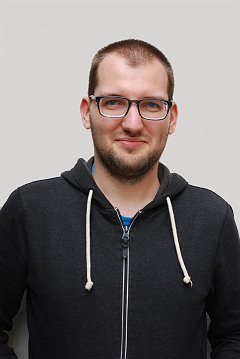
Paul Cosma is a Postdoctoral Researcher at the Department of Computer Science (DIKU), University of Copenhagen, specializing in the Software, Data, People & Society (SDPS) section. His work focuses on declarative process modeling, formal verification, and explainable AI systems, with strong connections to process mining and Petri net theory. He completed his PhD at the University of Copenhagen's Faculty of Science in 2024 with a thesis on declarative process models as verifiable AI.
His research interests center on declarative process modeling and formal verification of complex systems. Cosma develops techniques for improving model simplicity through nested group discovery and creates frameworks like BERMUDA for participatory mapping of domain activities to event data. His work bridges theoretical computer science with practical applications in business process management and AI explainability, emphasizing human-centered design principles where software systems are developed with societal impact in mind.
Cosma's publication record shows a clear trajectory in process modeling research, with recent work focusing on transforming Dynamic Condition Response Graphs to Safe Petri Nets (2023) and improving declarative model simplicity (2024). His research demonstrates strong interdisciplinary connections between formal methods, AI verification, and human-computer interaction, particularly in making complex process models accessible and verifiable.
Cosma actively collaborates with researchers including Thomas Hildebrandt, Tijs Slaats, and Axel Christfort, primarily within the SDPS section at DIKU. His work receives consistent citations in process mining literature, with his 2023 PETRI NETS paper accumulating 1 citation and his CAiSE 2024 paper gaining 2 Scopus citations. He maintains an ORCID profile (0000-0001-8022-6402) and contributes to open-access research through the university's Pure repository.
Based in Sigurdsgade 41, Copenhagen N, Cosma operates within DIKU's collaborative research environment that emphasizes industry partnerships and interdisciplinary work. His recent PhD defense (June 13, 2024) marks his transition from doctoral candidate to postdoctoral researcher, positioning him to expand his contributions to process-aware information systems and verifiable AI.