معرفی
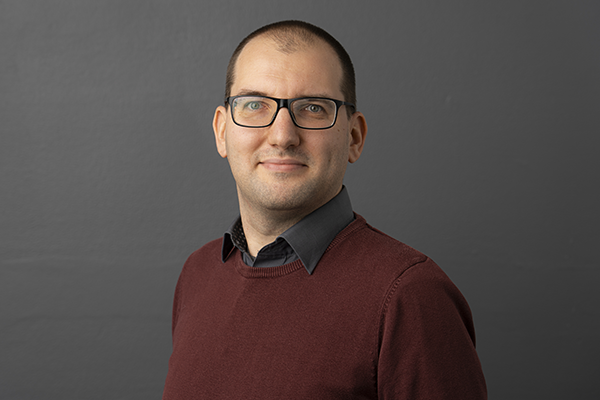
Dmitriy Traytel is an Associate Professor at the Department of Computer Science (DIKU), Faculty of Science, University of Copenhagen, where he leads the Software, Data, People & Society (SDPS) section. He earned his PhD from TU München under the supervision of Tobias Nipkow in 2015 and previously held a senior researcher position at ETH Zürich's Information Security Group.
His primary research interests include interactive theorem proving, runtime verification, logic, automata, decision procedures, and coinduction. He works extensively with the Isabelle/HOL proof assistant, developing foundational theories and verified tools. His work bridges theoretical logic and practical system verification, focusing on correctness, expressiveness, and scalability.
The recent publications highlight a strong focus on verified runtime monitoring, formalization of logical systems, and efficient query evaluation. Key themes include the development of formally verified monitoring tools (e.g., TimelyMon, WhyMon, VeriMon), foundational work on corecursion and datatypes in Isabelle, and translations of logical formalisms into executable and verifiable code. Several publications have received distinguished paper awards, indicating high impact in the programming languages and verification communities.
- Distinguished Paper Award, POPL 2025: 'Barendregt Convenes with Knaster and Tarski: Strong Rule Induction for Syntax with Bindings'
- Distinguished Paper Award, POPL 2023: 'Admissible Types-to-PERs Relativization in Higher-Order Logic'
- Distinguished Paper Award, ATVA 2018: 'Optimal Proofs for Linear Temporal Logic on Lasso Words'
- Best Student Paper Award, FSCD 2016: 'Formal Languages, Formally and Coinductively'
Traytel has (co)supervised numerous PhD, MSc, and BSc students, many of whose projects contribute directly to his research agenda in verified systems and formal methods. He is actively involved in the academic community, serving on program committees for POPL, ITP, RV, and CPP, and has chaired conferences such as CPP 2023 and 2024. His tools, including TimelyMon, VeriMon, and WhyMon, are practical outcomes of his research, enabling scalable, explainable, and trustworthy runtime verification.
He leads a research group focused on trustworthy stream processing, distributed streaming computations, and explainable monitoring. His work often involves collaboration with researchers at ETH Zürich and other institutions, particularly in the areas of security and monitoring.