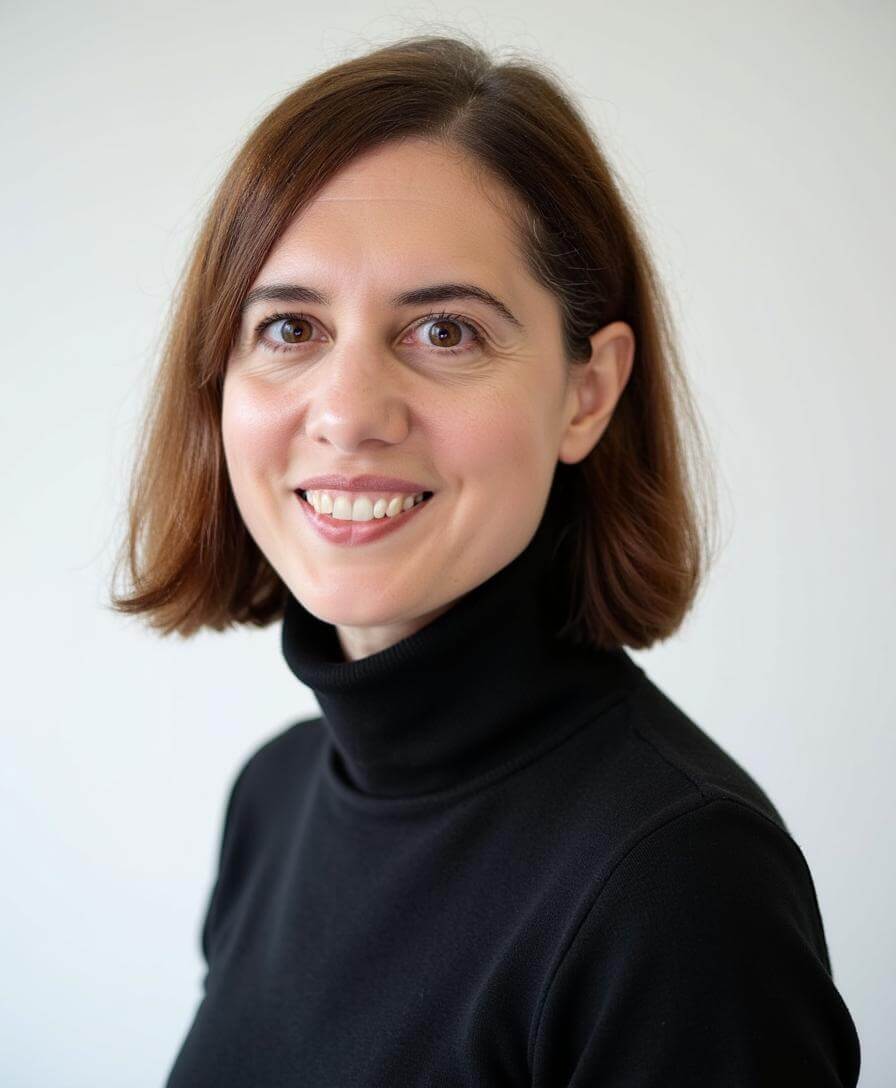
Nicklas Andersen is a Part-time Lecturer in the Department of Computer Science at Aalborg University, affiliated with The Technical Faculty of IT and Design. His work bridges computer science with healthcare, education, and interdisciplinary technology applications. He specializes in Virtual Reality (VR) systems for therapeutic and educational contexts, including autism therapy, choral singing, and clinical nutrition studies. Research interests focus on human-computer interaction, clinical informatics, and software engineering tools like the CAAL concurrency workbench. His recent work (2021) emphasizes VR's potential in sensory-based therapies and collaborative artistic experiences. Earlier contributions (2015) include formal methods in concurrency analysis. No scientific awards or grants are listed in the provided text. He has no recorded advisees or students listed. His research spans labs within the Department of Computer Science, though specific lab affiliations are not explicitly stated.
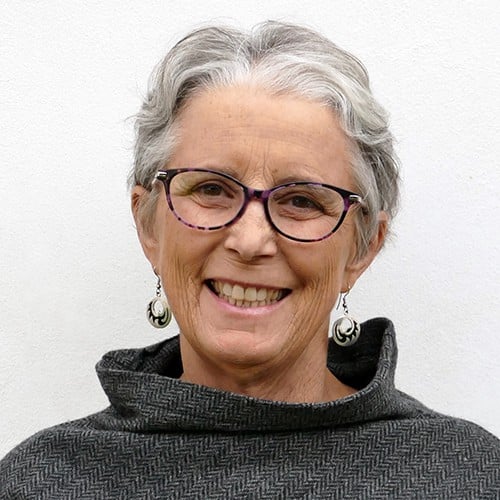
Ioanna Lykourentzou is an Associate Professor at Utrecht University, leading the Collaborative Technologies Lab and coordinating Computing Science Master's and Information Sciences Honors Bachelor's programs. She holds a PhD and ECE degree from the National Technical University of Athens. Her research focuses on collaborative systems, combining computational science (machine learning, optimization) with social sciences (team dynamics, personality assessment). Education background includes a PhD and ECE degree from National Technical University of Athens. She has held postdoctoral and visiting roles at Carnegie Mellon University, INRIA Nancy-Grand Est, and Henri Tudor. Research interests span computational team formation, Human-AI collaboration, and cultural heritage accessibility. Recent work includes projects on GenAI in education (NWO Take-off grant), algorithmic team formation for game development (EU MSCA funding), and ethical AI frameworks. Active in open science initiatives as an Open Software Fellow and Ethics Review Board member. Key collaborations include MIT-Netherlands Seed Fund projects on Human-AI design, and interdisciplinary work in digital humanities through Utrecht's AI in Cultural Inquiry SIG. Her lab hosts researchers like Pedro Zambon (MSCA fellow) and Heleen Kerstholt (AI-enabled teamwork).
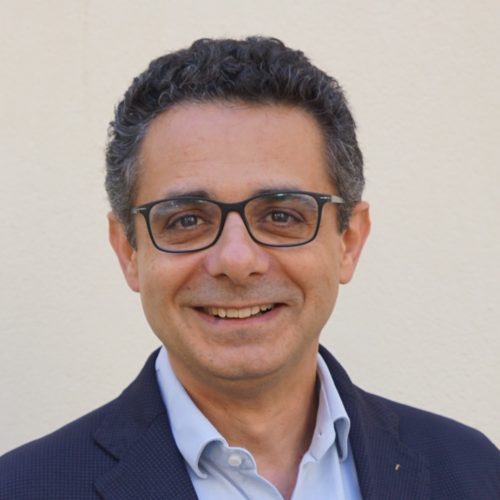
Johnny Jakobsen is an Associate Professor in the Department of Materials and Production at Aalborg University's Faculty of Engineering and Science. His research focuses on composite materials, wind turbine engineering, and structural mechanics, with a particular emphasis on failure phenomena in advanced composites and sandwich structures. He has contributed to projects addressing localized effects in sandwich components, automated composite manufacturing, and fatigue analysis. His work spans theoretical modeling, experimental validation, and industrial applications, including collaborations on optimizing draping processes for wind turbine blades and developing novel reinforcement methods for composite components. Jakobsen has authored or co-authored over 70 publications since 2005, with recent contributions focusing on automated manufacturing, composite reinforcement strategies, and material characterization under complex loading conditions. Notable projects include the Integrated Design and Processing of Lightweight Composite and Sandwich Structures and studies on peel stopper designs for sandwich beams. His research has been supported by industry partnerships and has led to patents, such as the Method of Manufacturing a Fibre Reinforced Composite Component . Jakobsen also serves on academic review committees and has been featured in media for contributions to structural engineering advancements.
Morten Grud Rasmussen is an Associate Professor at the Department of Mathematical Sciences, Faculty of Engineering and Science, Aalborg University. His research spans renewable energy systems, mathematics education, and problem-based learning (PBL). He has contributed to projects like 'myPBL-VRMath: Micro-PBL in Mathematics using Virtual Reality' (2024-2025) and 'PBL og matematik: Hvordan kan PBL fungere på universitetets grundfag?' (2018-2019). His work emphasizes integrating VR for abstract mathematics teaching and optimizing renewable energy systems. Collaborations include projects on near-optimal solutions for highly renewable energy systems and pedagogical innovations in engineering education. Research interests include energy system flexibility, socio-economic analysis of renewables, and PBL methodology. He has published on topics ranging from solar power generation to interdisciplinary curriculum design. His recent work explores student experiences with VR-based learning and PBL contextualization in mathematics education. Notable contributions include modeling renewable energy alternatives and exploring storage synergies in pan-European grids. He actively participates in educational workshops and collaborates with institutions like the University of Agder, Norway.
Mads Valentin Bram is an Associate Professor at the Aalborg University (AAU) , affiliated with the Faculty of Engineering and Science , specifically within the Esbjerg Energy Section focusing on Offshore Renewable Energy Systems . His work contributes to UN Sustainable Development Goals related to clean energy and responsible consumption. Education & Research Areas : Bram’s expertise centers on hydrocyclone engineering, produced water treatment, and process control. He has led and participated in multiple research projects, including GFCS: PtX Grid Feed Control Software (2022-2023) and Grey-Box Modeling for Offshore Water Treatment (2017-2020). His research integrates advanced control strategies, predictive modeling, and sustainable energy solutions. Research Trends : His recent publications emphasize optimization of green methanol plants, corrosion modeling in CO₂ pipelines, and nonlinear control of hydrocyclones. These studies highlight themes like decarbonization, renewable energy systems, and offshore process automation. Collaborations & Awards : Bram collaborates with institutions like EIT DIGITAL and the Danish Energy Agency. While no explicit awards are listed, his work has garnered significant media attention, including features on LEGO robotics competitions and green innovation initiatives. Advising & Outreach : He actively engages in educational outreach, such as organizing science competitions for youth and hosting events like Energiensfolkemøde 2024 . His labs focus on offshore renewable energy systems and control-oriented modeling.
Mia Thyrre Sørensen is an Assistant Professor at Aalborg University's Department of Sustainability and Planning within The Technical Faculty of IT and Design. She is affiliated with the Aalborg Centre for Problem Based Learning in Engineering Science and Sustainability and the Institute for Advanced Study in PBL. Her work focuses on interdisciplinary learning, project-based learning (PBL), and the role of technology in education. She has contributed to institutional development projects such as 'PBL Future' and 'Flexible Education and Facilitation.' Her research explores hybrid learning environments, group collaboration dynamics, and the design of educational systems that foster interdisciplinary competencies. Key areas include student engagement in interdisciplinary studies, technology-mediated learning, and the adaptation of PBL frameworks to modern educational challenges. She has also investigated social media's role in education and digital learning tools such as the Dassault Systemes' ILICE platform. Dr. Sørensen has been involved in projects addressing flexible educational frameworks, interdisciplinary curriculum design, and institutional change strategies. Her work emphasizes structured freedom in learning, transparency in pedagogy, and the integration of networked learning approaches. She has presented at international conferences, including a 2020 presentation on institutional development projects. She is currently active in research projects extending through 2027, focusing on interdisciplinary competence development, flexible educational environments, and the future of problem-based learning paradigms. Her research outputs include peer-reviewed journal articles, conference proceedings, and systematic reviews analyzing interdisciplinary education trends.
Stephanie Forrest is a Professor in the School of Computing and Augmented Intelligence (SCAI) at Arizona State University (ASU), where she also serves as Director of the Biodesign Center for Biocomputation, Security and Society. She is an External Faculty member of the Santa Fe Institute (SFI), where she previously held leadership roles including Co-Chair of the Science Board (2010–2013) and Interim Vice President for Academic Affairs (1999–2000). Prior to joining ASU, she was a Regents Distinguished Professor and Department Chair of Computer Science at the University of New Mexico (2006–2011). B.A., St. John's College M.S., Ph.D., University of Michigan, Computer Science Her research lies at the intersection of biology and computation, focusing on computational immunology, automated software repair, evolutionary computation, and modeling complex systems such as cancer and immune responses. She pioneers bio-inspired algorithms for cybersecurity and develops evolutionary techniques for software optimization and repair. Her work integrates principles from immunology, genetics, and complex adaptive systems to solve problems in computer science. The trends in her recent publications reveal a sustained focus on automated program repair using evolutionary computation, GPU code optimization, and modeling biological systems. Her work increasingly combines machine learning with mutation-based search, explores semantic representations in code repair, and applies bio-inspired models to real-world software and security challenges. ACM/AAAI Allen Newell Award (2011) Presidential Young Investigator Award (1991) Stanislaw Ulam Memorial Lectures, SFI (2013) IEEE Fellow UNM Annual Research Lecture (2012) IEEE S&P Test of Time Award (2020) ICSE Most Influential Paper Award (2019) ACM/SIGEVO Impact Award (2019) SEAMS Best Paper Award (2019) WEIS Best Paper Award (2015) Stephanie Forrest has advised numerous students and researchers, often in collaboration with W. Weimer, C. Le Goues, and M. Moses. Her research is supported by major funding agencies including the National Science Foundation (NSF), Defense Advanced Research Projects Agency (DARPA), Air Force Research Laboratory (AFRL), and the Santa Fe Institute. She has also contributed to public policy as a Jefferson Science Fellow at the U.S. Department of State (2013–2014), advising on cyber-policy. She currently chairs the Government Affairs Committee of the Computing Research Association (CRA). She leads the Biodesign Center for Biocomputation, Security and Society, which brings together interdisciplinary teams to study the co-evolution of technology and society. Her research group has developed tools for intrusion detection (e.g., STIDE, pH, RISE), automated software repair (e.g., GenProg), and biological modeling (e.g., CancerSim). Current projects include engineering diversity for enhanced cybersecurity, measuring internet censorship, and modeling immune and cancer systems.
Vittorio Loreto is a Full Professor of Physics of Complex Systems at Sapienza University of Rome and an External Faculty member. He served as Director of SONY Computer Science Laboratories (CSL) in Paris from 2017 to 2023 and founded the new Sony CSL in Rome (CSL-Rome) in 2021 through a joint initiative with the 'Enrico Fermi' Research Centre. His work focuses on interdisciplinary applications of statistical physics to complex systems. His research interests center on the statistical physics of complex systems , with applications in innovation dynamics , network theory , social dynamics , urban sustainability , and creativity . He explores how systems evolve through the 'adjacent possible,' modeling phenomena from text evolution to open-source software collaboration and urban planning. His work bridges physics, computer science, and social sciences to understand emergent behaviors in complex environments. Analysis of his recent publications (2017–2024) reveals a strong focus on urban sustainability (e.g., 15-minute cities), innovation and discovery processes , network dynamics , and data-driven modeling of social and creative behaviors . His interdisciplinary approach combines statistical physics with real-world data to address challenges in science, cities, and information ecosystems. Vittorio Loreto has received recognition through high-impact publications in journals such as Nature Human Behaviour , Physical Review Letters , Scientific Reports , and PLOS ONE . Though no specific awards are listed, his leadership in founding CSL-Rome and directing an international research lab underscores his scientific influence. He has advised or collaborated with researchers such as P. Gravino, B. Monechi, E. Ubaldi, F. Tria, and V. D. P. Servedio. His projects include Kouzan , a blockchain-based system for knowledge transfer, and urban sustainability games. He has been involved in major research initiatives addressing Sustainable Development Goals, particularly in sustainable cities and the infosphere. He leads the 'Innovation, Creativity and Artificial Intelligence' team and co-founded CSL-Rome, which focuses on Sustainable Cities, the Infosphere, and Augmented Creativity. His lab integrates physics-based modeling with AI and data analytics to tackle real-world complexity in urban and digital environments.
Euan D. Lindsay, a researcher at Aalborg University in Denmark, focuses on the intersection of artificial intelligence and educational technology. His work explores the transformative potential of generative AI in academic feedback systems, learning analytics, and problem-based learning environments. A recurring theme in his research is the ethical and practical implications of automating educational processes. Research Interests: Lindsay’s scholarship spans Artificial Intelligence , Educational Technology , and Learning Analytics , with specific attention to generative AI applications, automated assessment tools, and pedagogical innovation in problem-based learning. He also investigates systemic reforms in higher education, particularly through the lens of academic leadership in Poland. Recent Work: In 2025, Lindsay published on generative AI ethics , Polish higher education reform , and student perspectives in AI-integrated classrooms. Earlier in 2024, his studies concentrated on automated assessment systems , learning analytics dashboards , and large language models for feedback . These contributions highlight his commitment to leveraging AI for scalable, data-driven educational improvements.
Louise Møller Haase is Vice-Dean at the Faculty of Technical Sciences, Aarhus University, with her primary affiliation in the Dean's Office. She is a key academic leader and researcher focusing on circular economy, sustainable design, and engineering education. Her work bridges academic research, policy development, and industrial application. Institution: Aarhus University Faculty: Faculty of Technical Sciences Department: Dean's Office Role: Vice-Dean and active researcher Her research interests center on enabling systemic transitions toward sustainability. Key areas include circular economy, product longevity, sustainable public procurement, and digital tools such as the Digital Product Passport. She emphasizes relational and systemic approaches to sustainability, advocating for stakeholder engagement and value preservation in sufficiency-based models. The recent publications reflect a strong trend in applying design thinking and systems theory to sustainability challenges. Her work spans industrial case studies, policy recommendations, and educational innovation, particularly in engineering contexts. She develops practical tools like the LaST Tool and guides for circular procurement, demonstrating an applied, transdisciplinary approach. Louise Haase has not received any explicitly mentioned scientific awards in the provided text. She leads and participates in multiple research projects, including PROLONG, CircularTex, and Design2.Use, often securing competitive grants. These projects involve collaboration with industry, public institutions, and interdisciplinary teams. While no formal students are listed, her collaborative publications suggest mentorship and team leadership. Her work in engineering education reform highlights her influence beyond research into academic strategy and institutional development. She is involved in several research labs and teams focused on sustainable design and circular transitions, including those developing tools for design rationale, longevity assessment, and digital disruption. These teams operate at the intersection of design, engineering, and policy, supporting both academic and practical implementation of circular economy principles.
Riccardo Riva is a Special Consultant at the Department of Wind and Energy Systems at the Technical University of Denmark , specializing in wind turbine engineering and aeroelastic stability analysis. His work focuses on combining high-fidelity numerical modeling with machine learning for wind farm optimization, structural response prediction, and control system development. Key research areas: Wind turbine structural dynamics, surrogate modeling, and data-driven control systems Active supervisor in 4 PhD projects (2024-2027) related to wind farm co-design and structural modeling Recent publications address uncertainty propagation, vortex-induced vibrations, and multi-fidelity modeling approaches His research contributes to UN Sustainable Development Goals 7 (Affordable Energy) and 9 (Infrastructure Innovation). Current projects emphasize digital twin technology and floating offshore wind farm optimization.
Christoph Matheja is an Associate Professor at the Technical University of Denmark , affiliated with the Department of Applied Mathematics and Computer Science . His work focuses on formal verification, probabilistic programming, and software systems engineering. Research Highlights : Operational semantics for probabilistic programs, fixed-point characterizations of rewards in MDPs, and data-driven Petri net modeling for process mining. Publications span formal verification techniques, probabilistic programming paradigms, and tools for process mining, emphasizing interdisciplinary applications in computer science and software engineering. Scientific Awards : POPL 2021 Distinguished Paper Advising & Grants : Supervises PhD students in automated reasoning about randomized algorithms, with project funding active from 2023 to 2026. Professional Activities : Serves on committees for ACM SIGPLAN Symposium on Principles of Programming Languages (2022–present), International Conference on Computer Aided Verification (2023–present), and Formal Methods Symposium (2022–present). Organizer of the 2022 Workshop on Verification of Probabilistic Programs.
Ole Lehrmann Madsen is a Professor in the Department of Computer Science at Aarhus University, Denmark, specializing in object-oriented systems and software engineering with over 70 research outputs spanning five decades. His research centers on Object-Oriented Programming (100% fingerprint intensity), Object-Oriented Languages (93%), and Software Architecture, with significant contributions to distributed systems, concurrency models, and virtual machine design. Recent work explores foundational programming paradigms, debugging innovations through object-sequence diagrams, and reducing documentation needs via supplementary properties. Publications from 2022-2024 reveal consistent focus on object-oriented theory evolution, blending historical analysis with practical tool development. Key themes include modeling fundamentals, language semantics, and philosophical critiques of programming concepts, often co-authored with B. Møller-Pedersen. No scientific awards are documented in the source material. Madsen actively engages in research policy through committee memberships including Innovationsfonden (2014), CONNECT Advisory Forum (2013-2015), and DTU NanoTech Advisory Board (since 2009), demonstrating sustained influence in Danish technical education and funding frameworks.
Marco Carbone is a Professor of Theoretical Computer Science at IT University of Copenhagen. His research focuses on session types , concurrency theory , structured communication , and formal verification of distributed systems. He leads the Center for Information Security and Trust and serves as Head of Education for the Master of Science in Computer Science program. Research Areas: Session Types, Concurrency, Security Protocols, Trust Management, Programming Logic Projects: GAINER (2023-2024), MECHANIST (2021-2025), PROBABILIST (2025-2028), BeHApi (2018-2023) Scientific Awards: International Prize (2018) His recent work explores probabilistic choreographies, asynchronous session subtyping, and mechanized proofs for session type systems. He has published extensively in venues like Logical Methods in Computer Science and Lecture Notes in Computer Science .
Jan-Matthias Braun is an Associate Professor at the Maersk Mc-Kinney Moller Institute, University of Southern Denmark, specializing in Applied AI and Data Science. His research bridges artificial intelligence, robotics, and medical device engineering. Current projects focus on explainable AI integration in colon capsule endoscopy Development of real-time FPGA-based systems for colorectal diagnostics Biomechanical modeling for adaptive orthotic devices His work emphasizes cross-disciplinary applications of machine learning in healthcare, particularly for gastrointestinal disease detection and assistive robotics. Publications demonstrate expertise in deep neural networks, hardware acceleration, and smart environment control systems. Teaching responsibilities include: Advanced cybersecurity courses Deep learning applications in epilepsy detection Mentorship in capsule endoscopy image analysis